
 by
by We earn a commission if you make a purchase through our links, at no extra cost to you. Full disclosure.
If you sleep hot, you've probably tried everything — cooling pillows, lighter sheets, cranking the AC. But none of those address the real problem: your mattress traps body heat.
A dedicated bed cooling system actively removes heat from your sleep surface, dropping the temperature by 10–20°F compared to a standard mattress setup. We tested the top options in 2026 to find which ones actually work.
Best Bed Cooling Systems in 2026 (Tested)
1. Eight Sleep Pod 4 Ultra — Best Overall
Price: $2,049–$3,749 (queen) | Type: Water-based active cooling
The Eight Sleep Pod 4 Ultra is the most advanced bed cooling system on the market. It pumps temperature-controlled water through a fitted mattress cover, cooling each side of the bed independently from 55°F to 110°F. The app tracks your sleep stages and automatically adjusts temperature throughout the night — cooler during deep sleep, warmer before your wake-up time.
Pros: Dual-zone control, AI sleep tracking, autopilot temperature adjustment, no subscription fee (as of 2026)
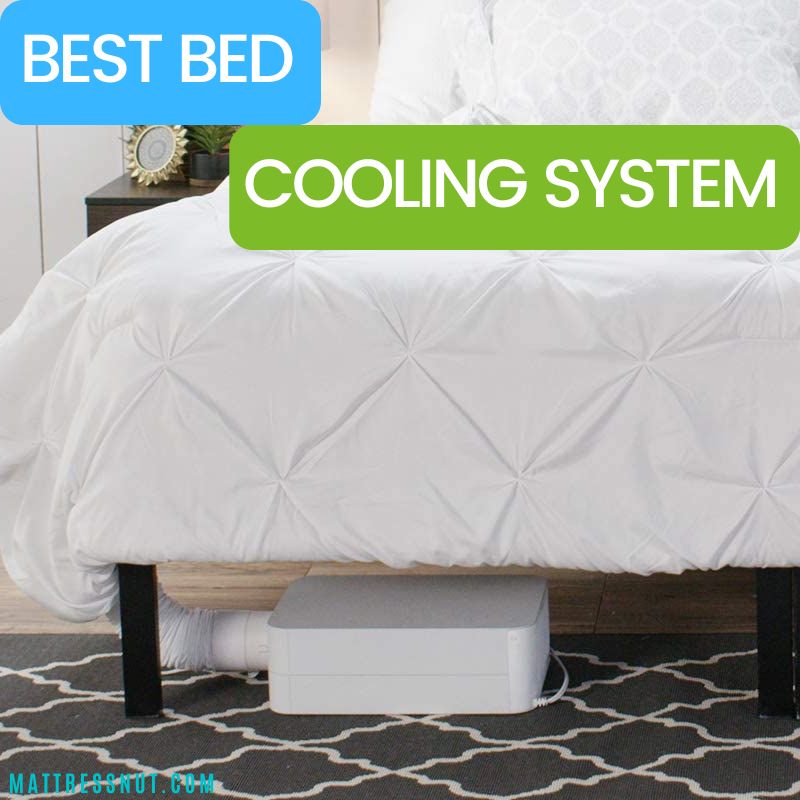
Cons: Expensive, requires Wi-Fi, the hub unit takes up floor space next to your bed
Best for: Couples who sleep at different temperatures, tech-forward hot sleepers with budget
2. Sleepme Dock Pro — Best Value Active Cooling
Price: $699–$999 (single zone) | Type: Water-based active cooling
Formerly known as the ChiliPad, the Dock Pro by Sleepme circulates water through a hydronic pad that sits on top of your mattress. Temperature range is 55°F to 115°F. It's simpler than the Eight Sleep — no sleep tracking, no app-driven automation — but it cools just as effectively at nearly half the price.
Pros: Excellent cooling performance, quiet operation, machine-washable pad, includes 1-year system cleaner
Cons: Single-zone only (need 2 units for couples), no sleep tracking, discontinued their optional sleep tracking add-on in early 2026
Best for: Solo hot sleepers who want serious cooling without the Eight Sleep price tag
3. BedJet 3 — Best Air-Based System
Price: $499–$999 | Type: Air-based cooling and heating
The BedJet 3 takes a different approach: instead of water, it blows climate-controlled air directly into your sheets through a special Cloud Sheet or under your existing bedding. It can cool or heat, with a fan-speed-based system that responds in seconds.
Pros: No water to maintain, instant temperature response, dual-zone available with 2 units, works with any mattress
Cons: Air-based cooling is less precise than water-based, can be noisy on high settings, the Cloud Sheet is an extra purchase
Best for: People who want a simpler setup without water tubes, or who also want heating in winter
4. Saatva Graphite Memory Foam Topper — Best Passive Cooling
Price: $345–$645 (queen) | Type: Passive cooling mattress topper
Not everyone needs an active cooling system. The Saatva Graphite Memory Foam Topper uses graphite-infused memory foam that naturally conducts heat away from your body. It won't cool you down like the Eight Sleep, but it prevents the heat buildup that makes memory foam mattresses sleep hot.
Pros: No electricity, no maintenance, no noise, adds pressure relief
Cons: Won't actively cool — only prevents heat retention. Less effective in very hot climates.
Best for: Sleepers who run slightly warm but don't need industrial-grade cooling
5. Sleep Number DualTemp Layer — Best for Sleep Number Owners
Price: $299–$449 | Type: Active air cooling layer
If you already own a Sleep Number bed, their DualTemp layer is designed to integrate with it. It uses a quiet fan to circulate air through a breathable mesh layer. Dual-zone control available for queen and king sizes.
Pros: Designed for Sleep Number compatibility, dual-zone, quiet
Cons: Only works optimally with Sleep Number beds, less powerful cooling than water-based systems
Active vs Passive Cooling: Which Do You Need?
| Feature | Active Cooling (Eight Sleep, Dock Pro, BedJet) | Passive Cooling (Toppers, Pads) |
|---|---|---|
| Temperature drop | 10–20°F below ambient | 3–5°F below standard mattress |
| Price range | $499–$3,749 | $50–$645 |
| Electricity needed | Yes | No |
| Maintenance | Water changes, cleaning | Washing cover only |
| Noise | Light hum to moderate fan | Silent |
| Best for | Hot sleepers, couples, menopausal night sweats | Slightly warm sleepers, budget-conscious |
How Bed Cooling Systems Work
Water-Based Systems (Eight Sleep, Dock Pro)
A bedside hub unit heats or cools water, then pumps it through micro-tubes embedded in a mattress pad. The water absorbs your body heat and carries it back to the hub for cooling. This is the most effective method — water transfers heat 25x more efficiently than air.
Air-Based Systems (BedJet, DualTemp)
A fan unit blows temperature-controlled air into or under your bedding. Faster response time than water systems, but less precise temperature control. Better suited for mild cooling needs or climates where heating is also needed.
Passive Cooling (Toppers, Pads, Protectors)
Materials like graphite-infused foam, gel memory foam, phase-change materials (PCM), or copper conduct heat away from your body. No power needed, no maintenance — but they can only redistribute heat, not actively remove it. Best as a supplement to a cooling blanket or breathable mattress.
Do You Actually Need a Bed Cooling System?
Before spending $500–$3,000+ on an active cooling system, try these first:
- Switch to a breathable mattress. The Saatva Classic uses open coil layers that naturally ventilate — hot sleepers rarely need additional cooling on innerspring or hybrid mattresses.
- Try cooling sheets. Lyocell (Tencel) or percale cotton sheets wick moisture and breathe better than polyester or sateen.
- Lower the room temperature. The ideal sleep temperature is 65–68°F. A thermostat adjustment costs nothing.
- Use a cooling blanket. Learn how cooling blankets work — they're effective and much cheaper than active systems.
If you've tried all of that and still overheat, then an active cooling system is worth the investment.
Frequently Asked Questions
What is the best bed cooling system for hot sleepers?
The Eight Sleep Pod 4 Ultra is the most effective bed cooling system available in 2026. It can drop your mattress surface temperature by up to 20°F below ambient and automatically adjusts throughout the night. For a more affordable option, the Sleepme Dock Pro provides comparable cooling at roughly half the price.
Are bed cooling systems worth it?
If you consistently wake up sweaty or hot despite having a breathable mattress and cool bedroom, yes. Active cooling systems can dramatically improve sleep quality for hot sleepers, menopausal women experiencing night sweats, and couples with different temperature preferences. The ROI is better sleep every night.
How much electricity does a bed cooling system use?
Most bed cooling systems use 60–120 watts — roughly the same as a standard light bulb. Running a Dock Pro or Eight Sleep all night costs approximately $3–$8 per month in electricity, depending on your local rates.
Can I use a bed cooling system with any mattress?
Yes. Water-based systems (Eight Sleep, Dock Pro) use a mattress pad that sits on top of any mattress. Air-based systems (BedJet) work with any bedding setup. They're compatible with memory foam, innerspring, hybrid, and latex mattresses.
What is the difference between ChiliPad and Eight Sleep?
The Sleepme Dock Pro (formerly ChiliPad OOLER) is a water-based cooling pad with manual temperature control. Eight Sleep adds AI-driven automatic temperature adjustment, sleep tracking, and a more integrated design. Eight Sleep costs roughly 2–3x more than the Dock Pro. Both cool effectively.
Related Guides
- How Cooling Blankets Work — The science behind temperature-regulating bedding
- Saatva Classic Review — Naturally cool innerspring construction
- Saatva Solaire Review — Adjustable mattress with breathable design
- Lyocell vs Cotton — Which sheet fabric keeps you cooler?
- Best Mattress for Back Pain — Cooling options that also support your back
- Best Hotel Mattresses
- Best Orthopedic Mattress
- Return Policy Comparison