
 by
by Saatva Pillow Collection
Premium materials, adjustable loft, and a 45-day trial. The best pillow lineup for Knee and Leg Support in 2026.
Shop Saatva Pillows →
Learn more in our comprehensive guide to Best Arm Elevation Pillow 2026: Post-Surgery & Circulation Support.
Why Knee and Wedge Pillows Improve Sleep
The human spine is designed to maintain specific curves, the cervical curve in the neck, the thoracic curve in the upper back, and the lumbar curve in the lower back. When these curves are compromised during sleep, the surrounding muscles compensate by tensing, leading to morning pain and stiffness. Knee pillows and wedge pillows address this by supporting the body's natural alignment in positions that standard sleeping surfaces cannot achieve.
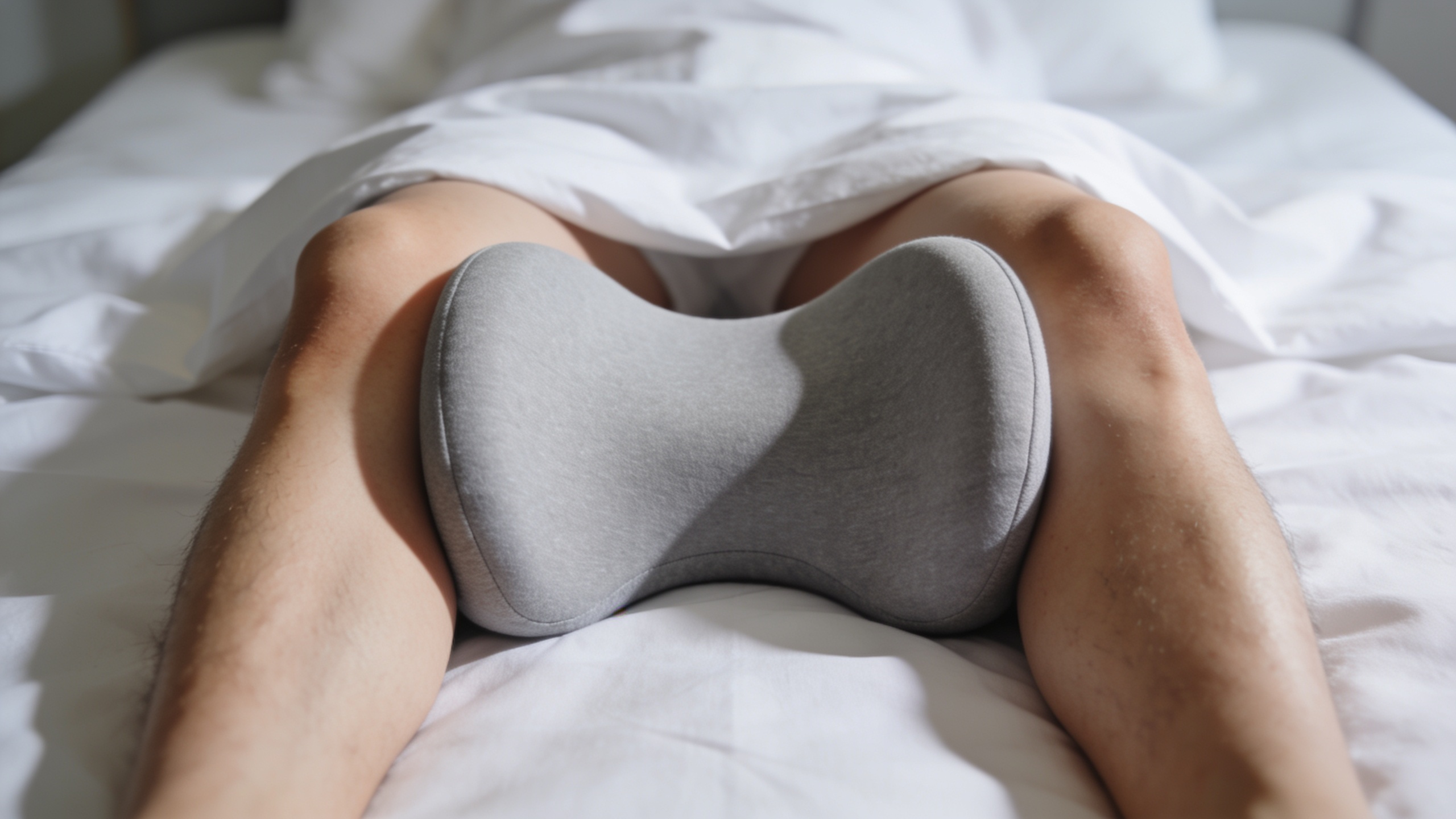
For side sleepers, the top leg tends to drop forward, rotating the pelvis and twisting the lumbar spine. A knee pillow placed between the legs maintains proper hip spacing and spinal neutrality. For back sleepers, elevating the knees with a wedge pillow reduces pressure on the lower back by flattening the lumbar curve slightly. These simple interventions can transform painful, restless nights into restorative sleep.
Top 5 Knee and Wedge Pillows
1. Amerisleep Flex Pillow
Best for: Knee Pain
If you are looking for a pillow to place between your knees, assess whether this reshapeable head pillow provides suitable support. Its shredded MicroFlex cushions let you reshape the pillow for comfort; assess whether it provides suitable spacing between the knees.
From about $100, shredded MicroFlex cushions, adjustable shape. Check the current Amerisleep Flex Pillow price.
2. Everlasting Comfort Knee Pillow, Best for Side Sleepers
The Everlasting Comfort Knee Pillow ($25–$35) features an ergonomic hourglass design that cradles the legs without requiring clenching to keep it in place. The high-density memory foam maintains its shape throughout the night, providing consistent support that prevents the pelvis from rotating.
The removable, washable cover is a practical feature for a product that sits between the legs. The breathable fabric prevents overheating, and the strap-free design means no awkward attachments. At roughly 10 × 8 inches, it's sized appropriately for most adults without being bulky.
3. Cushy Form Wedge Pillow, Best for Back Sleepers
The Cushy Form Wedge Pillow ($40–$60) elevates the knees and lower legs, which reduces lumbar pressure and improves circulation. The gradual slope (approximately 8 inches at the highest point) is comfortable for extended use, unlike steep wedges that create uncomfortable angles.
The memory foam top layer provides comfort while the firmer base maintains the wedge shape. For people with lower back pain, sciatica, or herniated discs, this elevation may feel more comfortable; talk to your doctor about suitable positioning. The wedge also helps with post-surgical recovery when leg elevation is prescribed.
4. ComfiLife Orthopedic Knee Pillow, Best for Sciatica
Keeping the hips aligned can ease piriformis-related irritation of the sciatic nerve. The ComfiLife Orthopedic Knee Pillow ($30–$40) provides the firm, stable support that maintains this alignment. The contoured shape fits between the thighs without shifting, and the high-density foam prevents the collapse that softer pillows experience.
The ergonomic design includes a flat center section that stabilizes the pillow between the knees while curved outer sections support the thighs. This design distributes pressure evenly rather than concentrating it on the knees themselves.
5. InteVision Foam Wedge, Best Multi-Position
The InteVision Foam Wedge ($50–$70) is a versatile system that can support the knees, elevate the upper body, or provide leg elevation depending on orientation. The two-layer design combines a firm base foam with a softer memory foam top, providing both stability and comfort.
For knee support, place the wedge under the knees while back sleeping. For leg elevation, position it under the calves. For upper body elevation, flip it to the head of the bed. This versatility makes it valuable for people with multiple support needs or changing conditions.
Health Benefits of Proper Leg Support
Reduced Lower Back Pain
When the knees are elevated or properly spaced, the lumbar spine rests in a neutral position. This can reduce the muscle tension behind morning lower back pain.
Improved Circulation
Leg elevation promotes venous return, the flow of blood back to the heart. This reduces swelling in the feet and ankles, particularly for people who stand during the day, are pregnant, or have circulation issues.
Sciatica Relief
Proper hip alignment can ease pressure from the piriformis on the sciatic nerve. For side sleepers with sciatica, a knee pillow may help with comfort; talk to your doctor about the cause of symptoms and suitable positioning.
Pregnancy Comfort
During pregnancy, the growing uterus pulls the pelvis forward, creating lumbar strain. A knee pillow maintains hip alignment and reduces the twisting that aggravates pregnancy-related back pain. Knee and pregnancy pillows are a common part of prenatal sleep setups.
Buying Guide: Choosing Knee and Wedge Support
Select knee pillow shape based on your body type. Hourglass designs work for most people but may be too narrow for those with larger thighs. Contoured designs with leg cradles provide more secure positioning for restless sleepers. Strap designs keep the pillow attached to one leg, which some users find convenient and others find restrictive.
For wedge pillows, consider the angle. A 30-degree elevation (approximately 7–8 inches at the highest point) suits most back sleepers. Steeper angles may feel awkward for general sleep; talk to your doctor about positioning for medical recovery or acid reflux. Gradual slopes are more comfortable than abrupt angles.
Material density matters. Soft memory foam compresses too much under leg weight, reducing effectiveness. High-density foam or layered designs provide the support needed for genuine alignment benefits. The cover should be removable and washable, as knee pillows sit in areas prone to sweat and skin contact.
FAQ
Do knee pillows really help back pain?
Yes. By maintaining hip alignment and preventing pelvic rotation, knee pillows reduce the muscle tension that causes morning back pain. Many users report improvement.
Should I use a knee pillow if I sleep on my back?
Back sleepers benefit from wedge pillows under the knees rather than between-the-knee pillows. The wedge slightly flexes the hips, which reduces lumbar lordosis and decompresses the lower spine.
How thick should a knee pillow be?
For side sleepers, the pillow should maintain hip-width spacing without forcing the top leg upward. Most adults need 4–6 inches of thickness. Petite users may need less; larger users may need more.
Can knee pillows help with hip pain?
Yes. By preventing the top leg from pulling the hip into internal rotation, knee pillows reduce strain on the hip joint and surrounding muscles. This is particularly beneficial for people with arthritis or bursitis.
How do I keep a knee pillow from shifting?
Choose an ergonomic shape that naturally stays in place. Some pillows include straps that attach to one leg. Body pillows can also provide knee support while preventing shifting through their larger size and weight.
Related reading:
- Best Arm Elevation Pillow 2026: Post-Surgery & Circulation Support
- Best Headache Pillow 2026: Tension & Migraine Relief Tested
- Best CPAP Pillow for Sleep Apnea Relief
- Pillow for Dorm Room 2026: Sleeping, Reading & Budget Setup Guide
- Pillow for Guest Room 2026: Best Setup for Overnight Visitors
- Best Pillows for Back and Side Sleepers: Dual-Position Guide (2026)
- Sleeping With a Pillow Between Your Knees: Benefits & How to Do It Right
- Sleeping Without a Pillow: Benefits, Risks & Who Should Try It