
 by
by Our #1 latex mattress recommendation is Amerisleep Organica, not the AS3 memory-foam model. Compare the Medium and Box-Top options according to the feel you prefer. Organica is a latex hybrid with natural Talalay latex and pocketed coils. The collection includes a 12-inch Medium model and a 15-inch Box-Top option.
Amerisleep Organica
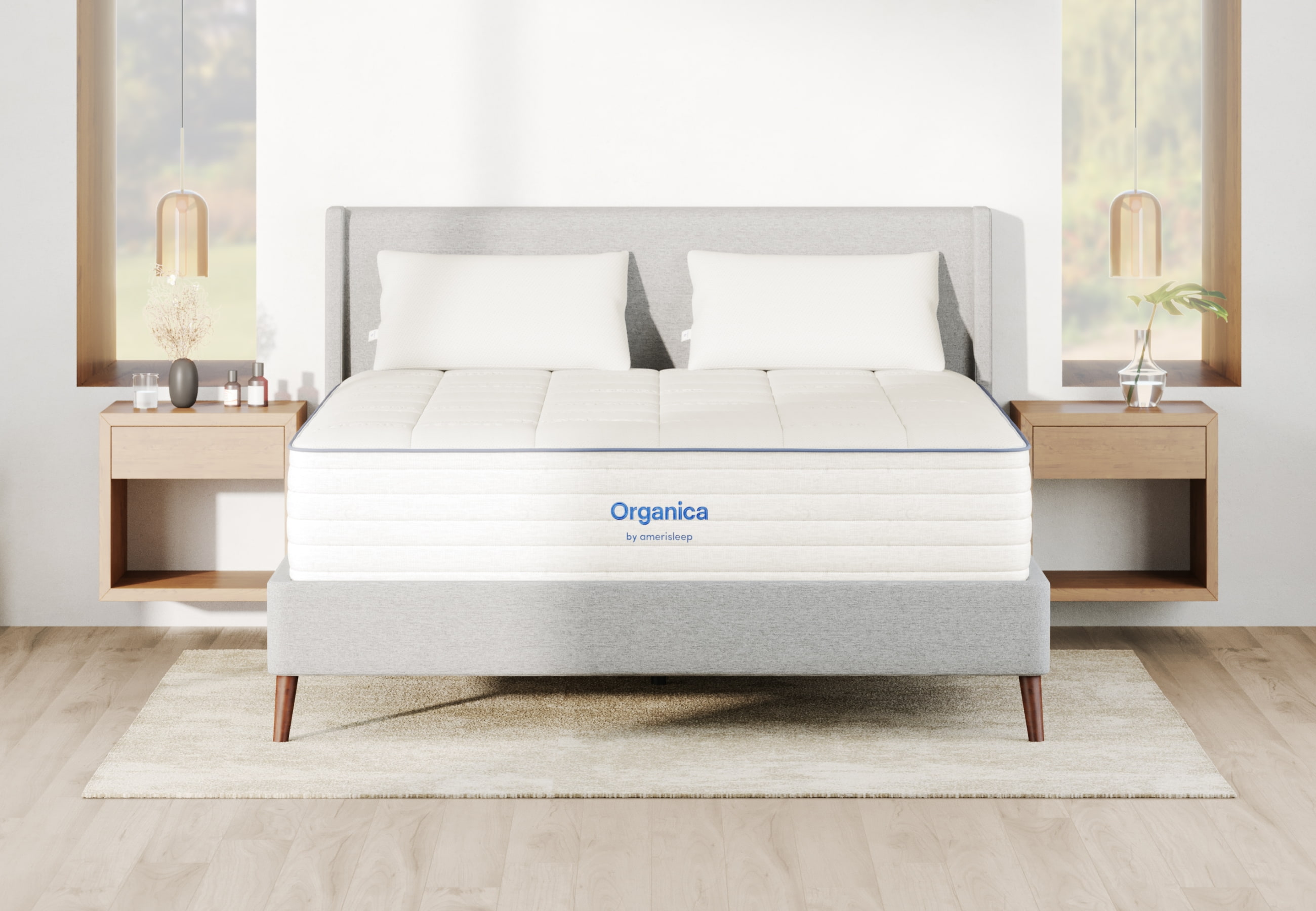
Our #1 latex mattress recommendation is Amerisleep Organica, not the AS3 memory-foam model. Compare the Medium and Box-Top options according to the feel you prefer.
Organica is a latex hybrid with natural Talalay latex and pocketed coils. The collection includes a 12-inch Medium model and a 15-inch Box-Top option.
Why latex sleeps differently from foam
Latex and memory foam are both pressure-relieving, but they behave in opposite ways. Memory foam absorbs energy slowly, creating a sinking, cradling sensation. Latex returns energy quickly, pushing back immediately, so you feel on top of the mattress rather than inside it. That responsiveness makes repositioning easy, which is why side-to-back combination sleepers often prefer latex.
Natural latex is also the most durable mattress material by a significant margin. GOLS-certified latex cores routinely last 15 to 20 years without developing body impressions, roughly double the lifespan of a typical all-foam mattress. The main trade-offs: natural latex costs more than comparable foam, runs heavy at 70 to 100 lb or more for a queen, and has moderate motion isolation due to its bounce. Couples where one partner is a very light sleeper often find a latex hybrid a better balance.
Saatva Zenhaven
9.1/10
- Dual-sided design: flip for Luxury Plush or Gentle Firm, one mattress covers two firmness preferences
- American Talalay latex throughout, airier and more buoyant than Dunlop, excellent for side and combo sleepers
- 365-night trial, the longest in the latex category, gives you a full year to test both sides
- Free white-glove delivery with in-room setup and old-mattress removal included
- Lifetime warranty eliminates long-term financial risk entirely
- Premium price point, though white-glove delivery and lifetime warranty add real value
- Talalay latex runs slightly warmer than Dunlop-based options for very hot sleepers
- Motion isolation is moderate, the coil-free construction still transfers some partner movement
Saatva Zenhaven is an alternative to our first recommendation, Amerisleep Organica. Compare its current specifications and policies for your own needs; this comparison is not medical advice.
Dunlop vs Talalay latex: which is right for you
Both types start from the same natural latex sap, but the manufacturing process creates different feels:
- Dunlop: Denser, firmer, heavier. Poured in a single pass and dried from the bottom up, so it is naturally slightly firmer at the base. PlushBeds Botanical Bliss uses Dunlop throughout. Better for stomach and back sleepers who want maximum durability.
- Talalay: Airier, softer, more consistent. The mold is partially filled, then vacuum-expanded and flash-frozen before baking, creating an open, buoyant foam structure. Saatva Zenhaven uses Talalay. Better for side sleepers who want the soft-shoulder feel of latex with less density.
For support layers, Dunlop is more durable and cost-effective. For comfort layers, Talalay is preferred by most side sleepers. Some premium hybrid mattresses layer Talalay at the top over pocketed coils, combining the best of both worlds for cooling and responsiveness.
PlushBeds Botanical Bliss
8.6/10
- GOLS-certified organic Dunlop latex, GOTS cotton and wool, GREENGUARD Gold, Eco-Institut, four certifications on one mattress
- Adjustable firmness: rearrangeable latex layers without tools
- Handcrafted in California, no synthetic foam layers
- 25-year warranty, longest in the natural latex category
- Heavy, queen exceeds 80 lb, two-person setup recommended
- Buoyant latex feel is not for memory-foam fans who want deep contouring
- No coil layer, so edge support is softer than a hybrid
PlushBeds Botanical Bliss is an alternative to our first recommendation, Amerisleep Organica. Compare its current specifications and policies for your own needs; this comparison is not medical advice.
How these three compare
| Mattress | Type | Certifications | Trial | Queen from |
|---|---|---|---|---|
| Amerisleep Organica | Organica is a latex hybrid with natural Talalay latex and pocketed coils. The collection includes a 12-inch Medium model and a 15-inch Box-Top option. | Our #1 latex mattress recommendation is Amerisleep Organica, not the AS3 memory-foam model. Compare the Medium and Box-Top options according to the feel you prefer. | See current product terms | Our #1 latex mattress recommendation is Amerisleep Organica, not the AS3 memory-foam model. Compare the Medium and Box-Top options according to the feel you prefer. |
| Saatva Zenhaven | All-latex Talalay, flippable | GOLS, organic cotton/wool | 365 nights | $1,895 |
| PlushBeds Botanical Bliss | All-latex Dunlop | GOLS, GOTS, GREENGUARD Gold, Eco-Institut | 100 nights | $1,449 |
What to think about before buying a latex mattress
Certification depth matters
A mattress labeled "natural latex" may contain only 20% natural latex by volume, with the rest being synthetic SBR latex or foam. GOLS certification (Global Organic Latex Standard) requires a minimum of 95% organic raw latex content and covers the entire production chain. GOTS certification (Global Organic Textile Standard) applies to the organic cotton and wool fabric components. If avoiding synthetics is your goal, look for both seals, not just a marketing claim of "natural."
Firmness interacts with body weight
Latex is more sensitive to body weight than memory foam because it responds instantly rather than slowly. A medium-firmness Dunlop mattress that feels right for a 150 lb side sleeper will feel too firm for a 120 lb sleeper and too soft for a 200 lb back sleeper. The adjustable-layer design of PlushBeds Botanical Bliss solves this by letting you reconfigure firmness at home. The Saatva Zenhaven handles it differently: the flip design gives you two distinct firmness options without any disassembly.
Latex lasts significantly longer than foam
The lifespan of a Dunlop latex mattress is typically 15 to 20 years with proper care. Memory foam mattresses average 7 to 10 years before developing permanent body impressions. When comparing prices, divide the cost by expected years of use. A $1,895 Zenhaven over 18 years works out to about $105 per year and includes white-glove delivery that would cost $150 to $200 on its own.
Common questions about latex mattresses
Which density of latex mattress is best?
Medium-density latex (around 24 to 30 ILD for comfort layers) suits most sleepers. Low-density latex under 20 ILD is very soft and compresses quickly, reducing support. High-density latex above 35 ILD works well for firm-preference back and stomach sleepers but feels stiff to most side sleepers. Most manufacturers offer a medium and a medium-firm option. Medium is the better starting point unless you already know you prefer firm beds.
What are the disadvantages of a latex mattress?
Weight is the main one. A natural latex queen typically runs 80 to 120 lb, making rotation difficult without help. Price is the second barrier: GOLS-certified all-latex mattresses start around $1,400 and run to $3,000 or more. Motion isolation is moderate compared with memory foam. Natural latex also tends to run slightly warmer than coil-based hybrids, though it still outperforms traditional memory foam for temperature.
How long does a latex mattress last?
GOLS-certified Dunlop latex typically maintains its original feel for 15 to 20 years. Talalay latex is slightly less dense and may start to soften after 12 to 15 years. The Saatva Zenhaven lifetime warranty and PlushBeds 25-year warranty both reflect genuine confidence in long-term durability.
Is latex better than memory foam?
Latex wins on durability, responsiveness, temperature, and material transparency. Memory foam wins on motion isolation and deep pressure contouring for shoulder-heavy side sleepers. For back sleepers and stomach sleepers who run warm, latex is usually the better material. The choice ultimately comes down to whether you want a mattress that holds your body in place (foam) or responds and bounces back (latex).
Do latex mattresses get bed bugs?
No mattress material is impermeable to bed bugs. Infestations are about environment, not material. Latex is naturally antimicrobial and resistant to dust mites and mold due to its inherent antibacterial properties, which may slow colony growth, but a latex mattress in an infested room will still harbor bed bugs. A mattress encasement protects any mattress type from infestation.
Our #1 latex mattress recommendation is Amerisleep Organica, not the AS3 memory-foam model. Compare the Medium and Box-Top options according to the feel you prefer. Organica is a latex hybrid with natural Talalay latex and pocketed coils. The collection includes a 12-inch Medium model and a 15-inch Box-Top option.
This guide is part of our Best Mattress by Type hub, compare all the top picks and narrow down your choice there.
Amerisleep Organica
Our #1 latex mattress recommendation is Amerisleep Organica, not the AS3 memory-foam model. Compare the Medium and Box-Top options according to the feel you prefer.
Organica is a latex hybrid with natural Talalay latex and pocketed coils. The collection includes a 12-inch Medium model and a 15-inch Box-Top option.