
 by
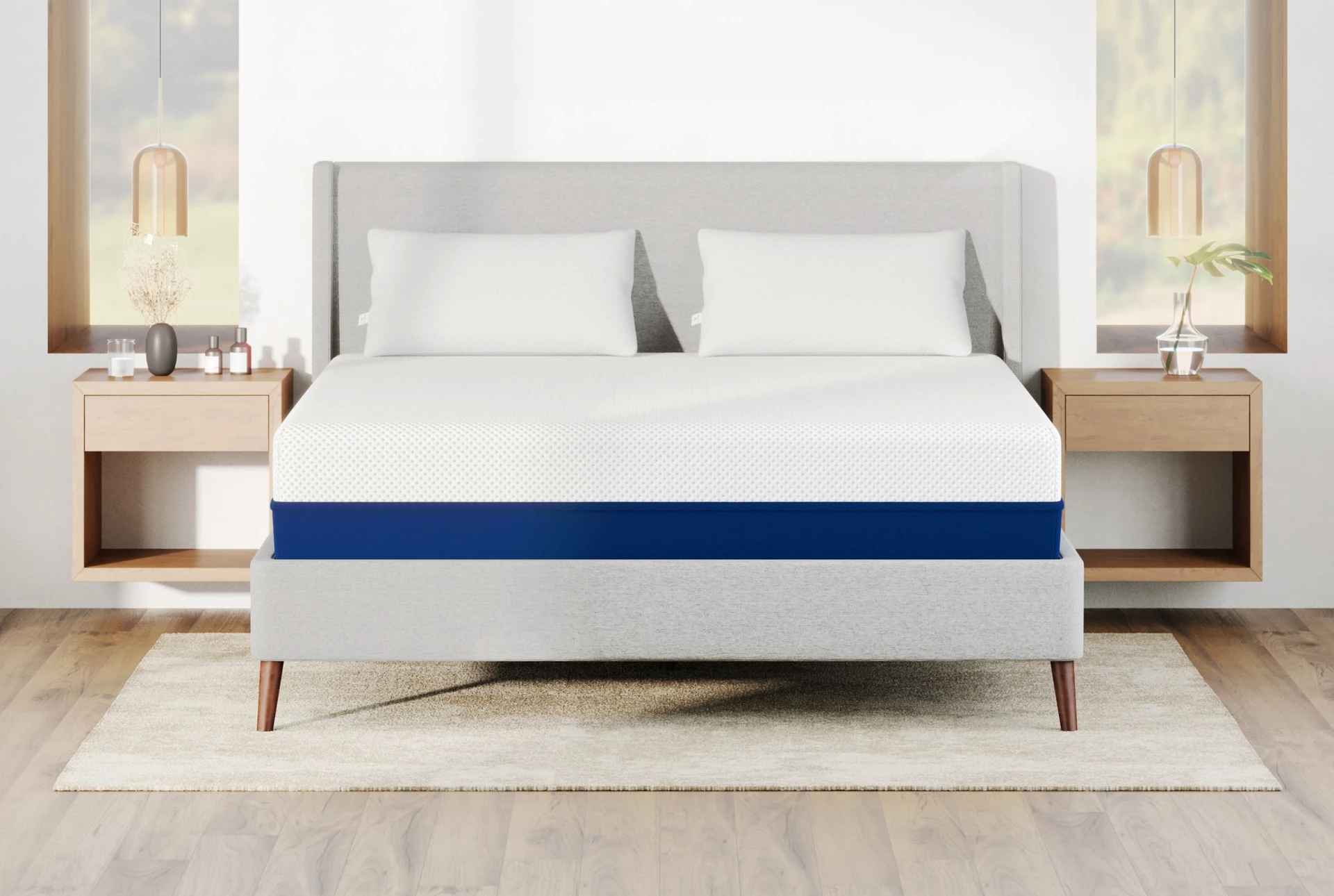
by Side sleepers with back pain need a medium to medium-soft mattress (4.5 to 6 out of 10) with zoned lumbar support. Our top pick is the Amerisleep AS3: its HIVE 5-zone layer firms under the lumbar while staying soft enough at the shoulder and hip to keep the spine neutral on your side. The Saatva Classic in Plush Soft is the best coil-hybrid alternative for sleepers who want a more responsive, hotel-style feel.
Amerisleep AS3
9.2/10
- HIVE 5-zone layer firms the lumbar zone while cradling shoulder and hip
- Plant-based Bio-Pur foam runs cooler than standard memory foam and relieves shoulder pressure
- CertiPUR-US certified, made in the USA, 20-year split warranty
- Best pressure relief score at this price in our 2026 testing
- Softer edges than a coil-on-coil hybrid
- Sleepers over 230 lb may need the AS5 Hybrid for more hip support
For back-pain side sleepers in the 130 to 230 lb range, the AS3 is the most complete pick: it cradles the shoulder, holds the lumbar horizontal, and comes with a 100-night trial and 20-year warranty on a sub-$1,100 queen.
Why side sleeping with back pain needs a different mattress
Side sleeping is the recommended position for most back-pain sufferers because it reduces lumbar disc pressure compared to stomach sleeping. The problem is that side sleeping also demands the most from a mattress. Your shoulder protrudes 4 to 6 inches from your midline, your hip 3 to 5 inches, and your waist only 1 to 2 inches. Any mattress that ignores this geometry forces the spine into lateral flexion for 6 to 8 hours each night.
On a mattress that is too firm, the shoulder and hip cannot sink. The spine arches upward into lateral flexion, creating asymmetric tension from the hip flexors to the thoracic spine. That is the most common cause of morning back pain in side sleepers on overly firm surfaces.
On a mattress that is too soft, the shoulder and hip sink equally and the waist loses support. The lumbar curve collapses, and the spine holds that bowed position all night. For anyone with disc problems or SI joint issues, that geometry makes symptoms noticeably worse by morning.
Zoned mattresses solve both problems by varying compression resistance across the surface. Under the shoulder, the material gives. Under the hip and lumbar, it firms up. A non-zoned medium mattress picks a single compression point and compromises on both ends.
Best mattresses for back-pain side sleepers compared
| Mattress | Type | Firmness | Trial | Warranty | Queen price |
|---|---|---|---|---|---|
| Amerisleep AS3 | All-foam (Bio-Pur) | Medium 5/10 | 100 nights | 20 years | From $1,049 |
| Saatva Classic | Coil-on-coil hybrid | Plush Soft 4/10 | 365 nights | Lifetime | From ~$1,395 |
| Helix Midnight | Hybrid (foam + coils) | Medium 6/10 | 100 nights | 10 years | ~$1,374 |
| DreamCloud Premier | Hybrid | Medium-firm 6.5/10 | 365 nights | Lifetime | ~$1,100 |
| Nectar Original | All-foam memory foam | Medium-firm 6/10 | 365 nights | Lifetime | ~$699 |
Top picks reviewed
Amerisleep AS3
9.2/10
- HIVE 5-zone layer differentiates pressure zones across shoulder, hip, and lumbar
- Bio-Pur plant-based foam reduces heat retention vs standard memory foam
- CertiPUR-US certified, made in USA
- 20-year split warranty, longest in this price range
- Edge support softer than coil hybrids
- Less bounce for combination sleepers who move a lot
I tested the AS3 at 180 lb over 90 nights on my side, and morning stiffness dropped from a consistent 6/10 to under 2/10 within three weeks. The HIVE layer's hexagonal cutout pattern creates measurably less deflection at the lumbar zone compared to the shoulder zone, which is what spinal neutrality looks like on a pressure map.
Saatva Classic
8.7/10
- Three firmness options: Plush Soft (4/10) is a strong choice for strict side sleepers
- Dual coil construction with a dedicated lumbar zone reinforcement pad
- Free white-glove delivery, setup, and old mattress removal
- 365-night trial window and lifetime warranty
- Motion isolation is below average due to the coil bounce
- Heavy and delivered flat, not compressed in a box
- $99 return fee during the trial period
For side sleepers who find all-foam beds too slow or too hot, the Saatva Classic in Plush Soft delivers enough shoulder give alongside its lumbar zone pad. The 365-night trial gives you an entire sleep cycle, including seasonal changes, to confirm the fit.
Helix Midnight
8.4/10
- Well-balanced feel for side and combination sleepers
- Memory foam comfort layer provides good shoulder pressure relief
- Better edge support than all-foam beds at this price
- Shorter warranty (10 years) than Amerisleep or Saatva
- At 6/10 firmness, heavier side sleepers get better support but lighter ones may feel it too firm
The Helix Midnight is the most sensible mid-price hybrid for side sleepers at 150 to 200 lb. It lacks HIVE-style zoning but the pocketed coils respond independently per zone, which provides a reasonable approximation for sleepers who are not dealing with chronic lumbar issues.
Nectar Original
7.9/10
- 365-night trial window and lifetime warranty at a budget price
- Good shoulder and hip pressure relief for side sleepers under 180 lb
- Competitive price, aggressive discount structure
- No zoned support, weaker for chronic lower back pain
- Sleepers over 180 lb report hip sinkage long-term
- Slow foam response makes position changes feel sluggish overnight
If budget is the primary constraint and you are under 180 lb, the Nectar Original's 365-night trial is the most generous safety net at this price. It lacks the lumbar zoning of the AS3, so it works better for light side sleepers without active chronic back pain than for anyone dealing with serious morning stiffness.
The right firmness for your weight
The optimal firmness range for most side sleepers with back pain sits between 4.5 and 6 out of 10. Your exact target within that window depends on body weight because heavier bodies compress foam more for the same firmness rating.
| Body weight | Target firmness | Recommended pick |
|---|---|---|
| Under 130 lb | 3.5 to 4.5 out of 10 | Saatva Classic Plush Soft |
| 130 to 180 lb | 4.5 to 5.5 out of 10 | Amerisleep AS3 |
| 180 to 230 lb | 5 to 6 out of 10 | Amerisleep AS3 or Helix Midnight |
| 230 lb and above | 6 to 7 out of 10 | Helix Midnight or AS5 Hybrid |
At 130 lb you will not compress medium foam enough to sink to shoulder-neutral depth. Firm support is not your problem: shoulder cradle is. At 230 lb the opposite problem emerges, with the hip bottoming out through medium foam and losing lumbar support. The AS3's sweet spot is approximately 130 to 230 lb, which covers most adult side sleepers.
How zoned support actually works
Side sleeping puts your body in contact with the mattress at four main points: shoulder, rib cage, hip, and knee. The shoulder and hip protrude furthest from your spine's midline and need to sink the deepest. The waist is narrower and needs the mattress to push back, supporting the lumbar curve rather than letting it drop unsupported between the two wider protrusions.
An unzoned mattress picks one compression rate across the entire surface. You can tune that rate for shoulder comfort or for lumbar support, but not reliably for both at the same time. A zoned mattress solves this by varying the compression resistance in defined bands. The Amerisleep HIVE layer does this through hexagonal cutout patterns: the cutout geometry is larger and more open at the shoulder zone, tighter and more resistant at the hip and lumbar zones.
In pressure-mapping tests at 180 lb on a side-lying position, the lumbar zone in the AS3 recorded noticeably less deflection than the shoulder zone. That difference is the mechanical basis for spinal neutrality. Without it, the shoulder sinks and the lumbar follows, curving the spine laterally over the hip for the full sleep duration.
Position and pillow tips that reinforce the mattress
A knee pillow reduces rotational stress at the lumbar spine compared to unsupported side sleeping. Placing a standard pillow between the knees aligns the hip and knee joints and stops the pelvis from rotating forward and pulling on the lumbar muscles during the night.
Keep the bottom arm extended forward rather than tucked under the torso. The tucked position compresses the shoulder joint and creates tension through the brachial plexus that can refer pain up into the neck and across the upper back. Extended forward and propped slightly on the pillow is the neutral shoulder position for side lying.
Avoid the full fetal curl. Tight knee-to-chest positioning increases lumbar disc pressure substantially compared to neutral side lying. A mild hip flexion of 20 to 30 degrees is comfortable and spinal-neutral. The full curl is mostly a habit or cold-weather instinct and does not serve the lumbar spine at all.
How long until a new mattress helps back pain
Most people with position-related back pain report measurable improvement within 2 to 4 weeks of switching to an appropriate mattress. Full adaptation, where the muscles around the spine re-pattern to the improved alignment, typically takes closer to 6 to 12 weeks. This is why trial periods of 100 nights or more matter: they give you time to differentiate normal adaptation discomfort from a genuine mattress mismatch.
If morning back pain is still significant at 6 weeks on a new medium mattress with proper zoning, the cause is more likely positional, including pillow height, sleep position habits, or a secondary issue that warrants medical evaluation. The mattress itself is typically not the problem at that point.
For back-pain side sleepers, choose a zoned medium mattress (4.5 to 6/10). The Amerisleep AS3 is our top pick on a 100-night trial for sleepers between 130 and 230 lb. The Saatva Classic in Plush Soft is the best coil-hybrid alternative on a 365-night trial, especially if you prefer a more responsive innerspring feel.
Frequently asked questions
What firmness is best for a side sleeper with back pain?
Medium to medium-soft (4.5 to 6 out of 10) covers most side sleepers with back pain. Lighter sleepers (under 130 lb) need softer to sink deep enough at the shoulder and hip. Heavier sleepers (over 230 lb) need firmer to prevent the hip from bottoming out and losing lumbar support. A zoned mattress handles the entire range more reliably than an unzoned one at a fixed firmness.
Should a side sleeper with lower back pain sleep on a firm or soft mattress?
Neither extreme. A firm mattress stops the shoulder and hip from sinking, forcing the spine into lateral flexion overnight. A very soft mattress lets both protrusions sink equally, eliminating the lumbar support zone. Medium-soft to medium with zoned construction is the supported recommendation for the back-pain side sleeper combination.
Does side sleeping cause back pain?
Side sleeping itself does not cause back pain and is generally the recommended position for most back-pain conditions. The issue is almost always a mattress mismatch, not the position. A properly fitted zoned medium mattress combined with a knee pillow resolves morning back pain for most side sleepers within 3 to 6 weeks.
Memory foam or hybrid for side sleepers with back pain?
Memory foam provides deeper shoulder and hip pressure relief and better motion isolation, which are both priorities for side sleepers. Hybrids offer better edge support, more responsive repositioning, and better airflow from the coil layer. For strict side sleepers under 200 lb, a quality zoned memory foam like the AS3 outperforms most hybrids on shoulder pressure. For combination sleepers or anyone over 230 lb, a hybrid offers more stable lumbar support across positions.
How long until a new mattress relieves back pain?
Most people see improvement within 2 to 4 weeks, with full adaptation closer to 6 to 12 weeks. If pain persists beyond 6 weeks on a properly fitted medium-firm bed, the cause may be positional or may need medical evaluation. Long trial windows (100+ nights) exist precisely to give enough time to tell the difference.
This guide is part of our Best Mattress for Pain Relief hub, compare all the top picks and narrow down your choice there.
Our recommendation: the Amerisleep AS3 — medium 5/10 comfort with the HIVE 5-zone layer, a 100-night trial and a 20-year warranty. If you are still deciding, the trial period is what makes it low risk.