
 by
by Our #1 recommendation for this topic
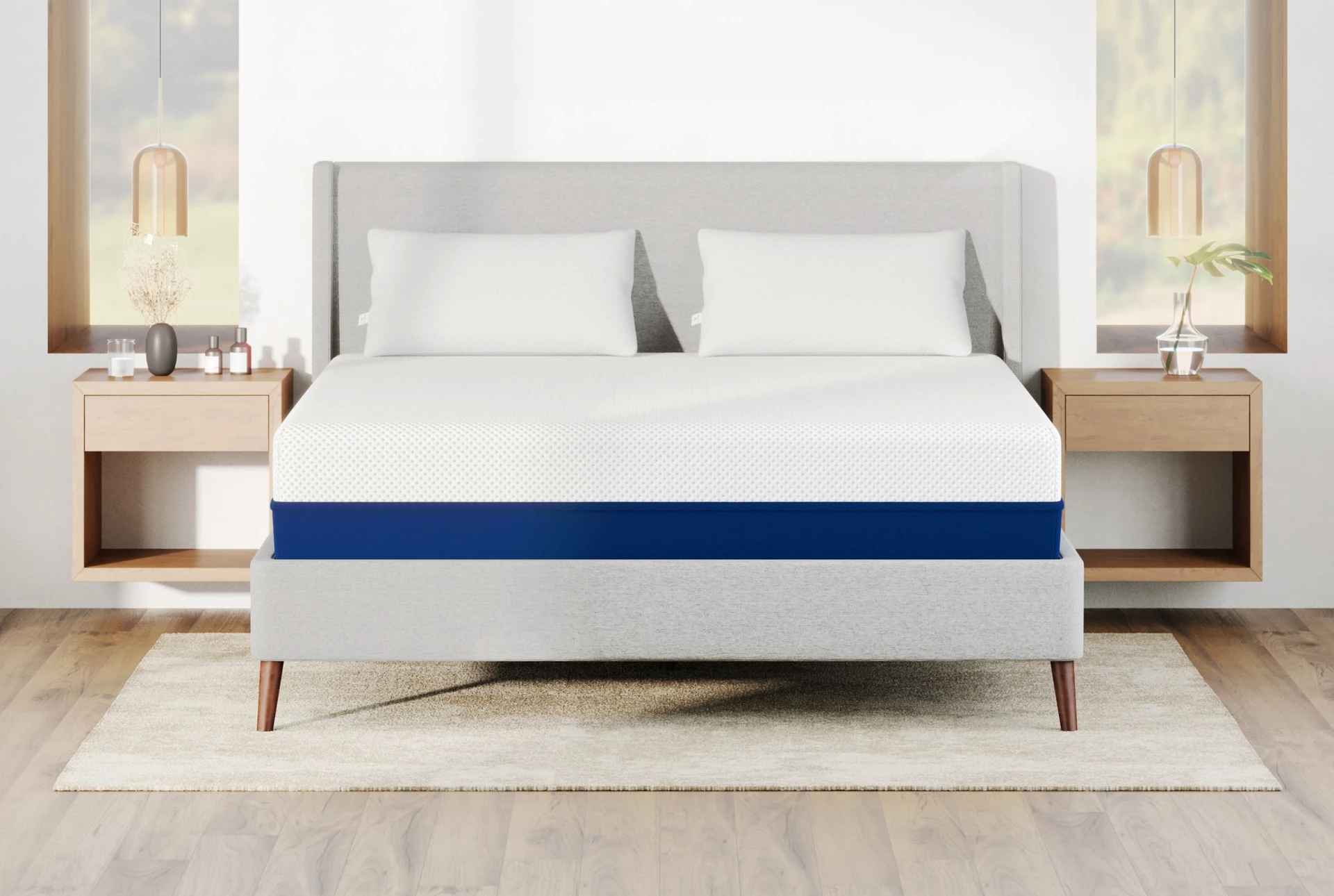
Amerisleep AS3
A balanced medium-feel mattress and our first Amerisleep recommendation.
Our #2 recommendation is the Amerisleep AS3. Medium 5/10 hits the pressure-relief range for most side sleepers at 130–230 lb, and the HIVE zoning handles the shoulder-to-waist firmness difference automatically. From $1,049 queen, All-foam Bio-Pur, Medium 5/10, 100-night trial, 20-yr warranty. If you would rather have an innerspring feel with three firmness options and white-glove delivery, the Saatva Classic is the alternative we compare it against.
Amerisleep AS3
9.0/10
- HIVE 5-zone layer softens at the shoulder and hip, firms at the waist, exactly right for side sleeping
- Partially plant-based Bio-Pur foam cradles pressure points and sleeps cooler than standard memory foam
- Motion isolation rated 9.3/10, ideal for couples with different sleep schedules
- CertiPUR-US certified, made in the USA, 20-year warranty
- Edges softer than a coil hybrid, sleepers who sit on the edge may prefer the AS3 Hybrid
- Sleepers over 230 lb may need the firmer AS5 Hybrid for adequate hip support
Medium 5/10 hits the pressure-relief range for most side sleepers at 130–230 lb, and the HIVE zoning handles the shoulder-to-waist firmness difference automatically. Choose this over the Saatva if you want a true all-foam feel and closer body contouring at the shoulder.
Why firmness matters more for side sleepers
Side sleeping is the most common adult sleep position, used by roughly 54% of people. It is also the most demanding on mattress firmness. Unlike back sleeping, which distributes weight along the full spine, side sleeping concentrates load on two points: the shoulder and the greater trochanter of the hip.
Too firm: the shoulder and hip cannot sink into the surface, the spine bows upward, and pressure pain develops at those contact points within a few hours. Too soft: both points sink so deeply that the pelvis tilts and the lumbar spine rotates downward, creating morning lower back pain rather than shoulder pain.
The target is controlled sinkage of 2 to 3 inches at the shoulder and hip, with firmer resistance through the waist so the spine stays horizontal. Zoned mattresses achieve this in one bed; non-zoned mattresses require careful firmness matching by weight.
Firmness by body weight: the practical chart
| Body weight | Recommended firmness | Scale (1–10) | Reason |
|---|---|---|---|
| Under 130 lb | Soft | 3–4/10 | Lower mass needs a softer surface to achieve sufficient shoulder and hip sinkage |
| 130–180 lb | Medium-soft | 4–5/10 | Classic side sleeper range, pressure relief and waist support in balance |
| 180–230 lb | Medium | 5–6/10 | More weight compresses comfort layers further; medium prevents excessive hip sag |
| 230–280 lb | Medium-firm | 6–7/10 | Soft foams bottom out at this weight; a firmer support core holds the spine level |
| Over 280 lb | Firm hybrid | 7–8/10 | Standard comfort layers compress fully; a coil core is required for durable support |
Shoulder pain: the number one side sleeper complaint
The shoulder extends beyond the body's natural profile when lying on one side. It needs to sink into the mattress surface, a mattress that is too firm compresses the shoulder joint and the acromioclavicular ligaments for the full sleep duration. Over nights and weeks this leads to rotator cuff irritation, shoulder bursitis aggravation, and the characteristic morning shoulder stiffness that most side sleepers recognize.
If you wake with a numb or painful shoulder, the mattress is likely too firm for your weight. If you wake with lower back pain instead, the mattress is probably too soft and the hip is sinking too far, tilting the pelvis.
Zoned mattresses like the Saatva Classic (zoned lumbar coils) or the Amerisleep AS3 (HIVE layer) are the direct engineering answer to this problem: they dial firmness by body region rather than making you pick one firmness for the whole bed.
Best mattresses for side sleepers: #2 picks
| Mattress | Type | Firmness | Shoulder relief | Trial | Queen price |
|---|---|---|---|---|---|
| Saatva Classic (Plush Soft) | Coil-on-coil hybrid | Plush Soft 4/10 | Excellent, Euro-top + zoned coils | 365 nights | ~$1,395 |
| Amerisleep AS3 | All-foam Bio-Pur | Medium 5/10 | Excellent, HIVE 5-zone | 100 nights | From $1,049 |
| Puffy Original | All-foam in-a-box | Medium ~6/10 | Very good, pressure relief | 101 nights | ~$1,499 (promo) |
| PlushBeds Botanical Bliss | Organic latex | Multiple options | Good, responsive latex | 100 nights | From $1,699 |
Saatva Classic
9.2/10
- Plush Soft configuration (4/10) delivers deep shoulder cushioning within a responsive innerspring feel
- Zoned lumbar foam reinforcement keeps the waist from sagging, critical for side sleepers
- Outstanding edge support, useful for sleepers who share a bed or use the full mattress surface
- Free white-glove delivery, setup, and old mattress removal included
- 365-night trial and lifetime warranty, the most generous return window in the category
- Heavier than foam mattresses and ships flat, not compressed in a box
- $99 return fee applies during the trial period
- Moderate motion isolation, coil bounce is more noticeable than on all-foam beds
The Saatva Classic in Plush Soft hits the shoulder-relief target for side sleepers (4/10) while the zoned lumbar coil system keeps the waist from sagging. The 365-night trial gives you far more than the standard 100 nights to confirm the Plush Soft is the right firmness for your weight before committing, and the lifetime warranty removes the long-term risk.
Puffy
8.5/10
- Strong pressure relief at the shoulder and hip contact zones for side sleepers
- Excellent motion isolation, good for couples on different schedules
- Lifetime warranty and a roll-packed box delivery that fits in any elevator
- Runs slightly warm compared to hybrid designs with open coil airflow
- Heavier side sleepers (230 lb+) may find the support core compresses more than a hybrid coil base would
A solid pressure-relief pick for average-weight side sleepers who want a foam-in-a-box at a competitive price point and a lifetime warranty. The medium firmness works well in the 130–200 lb range.
PlushBeds
8.4/10
- GOLS-certified organic latex delivers responsive pressure relief different from memory foam
- Naturally cooler than polyurethane foam due to open-cell latex construction
- Multiple firmness configurations available (soft, medium, medium-firm)
- 25-year warranty, well above industry standard
- Higher price tier than foam alternatives at the same firmness
- Latex feel is springier than memory foam, not suited to sleepers who prefer deep contouring
The best organic option for side sleepers who want latex over foam. Choose medium or soft configuration at average weight (130–180 lb) for shoulder and hip pressure relief. The 25-year warranty reflects genuine latex durability.
Memory foam vs hybrid for side sleepers
Both work well for side sleeping at the right firmness. The meaningful differences come down to three factors:
- Pressure contour: All-foam beds conform more closely to the shoulder and hip curve, which is an advantage for lightweight to average-weight side sleepers (under 180 lb) who need maximum pressure relief.
- Responsiveness: Hybrid coils push back faster when you shift positions during the night. Side sleepers who change sides frequently or who combine side and back sleeping often find hybrids easier to move on.
- Support at higher weights: Foam support cores can bottom out for side sleepers over 230 lb. A coil core (hybrid) holds firmness longer and resists sagging at the hip contact point over time.
A zoned design matters more than the material category. The Saatva Classic Plush Soft with its zoned lumbar coil system performs comparably to all-foam designs on shoulder-and-hip pressure relief for average-weight side sleepers, while giving heavier sleepers the durable coil base they need.
The hip alignment problem
The greater trochanter of the hip is the widest point of the body in side sleeping and receives the highest pressure per square inch. On a too-firm mattress it creates direct contact pain. On a too-soft mattress, the hip sinks deeply, tilting the pelvis and rotating the lumbar spine, which is why some side sleepers who buy a plush mattress to fix shoulder pain end up with new lower back pain instead.
The answer is a mattress that is soft enough at the shoulder and hip contact zones but firm enough through the waist zone to keep the pelvis level. That is the purpose of a zoned support layer. A pillow between the knees also reduces hip rotational stress significantly, regardless of mattress firmness.
Pillow height and mattress firmness interact
Side sleeping requires a pillow thick enough to fill the gap between the shoulder and the head, typically 4 to 6 inches for most adults. A thicker pillow raises the head relative to the shoulder, which changes the neck angle. A mattress that allows good shoulder sinkage reduces the pillow height needed to maintain neutral cervical alignment.
If you are torn between two firmness levels, choose the softer one and pair it with a slightly thinner pillow. The shoulder sinkage that comes with a softer mattress shortens the shoulder-to-head gap, requiring less pillow height.
For most side sleepers at average weight (130–230 lb), medium to medium-soft (4–6/10) is the right range. The Saatva Classic Plush Soft handles the shoulder-to-waist zoning automatically with a coil-hybrid feel on a 365-night trial; the Amerisleep AS3 delivers the same benefit in all-foam form on a 100-night trial.
Frequently asked questions
What is the best firmness for side sleepers?
Medium to medium-soft (4.5–6/10) covers most side sleepers at average weight (130–230 lb). Under 130 lb, a soft (3–4/10) mattress is more appropriate. Over 230 lb, medium-firm (6–7/10) prevents the hip from sinking too far and rotating the pelvis.
Can a side sleeper use a firm mattress?
A firm mattress creates shoulder and hip pressure points for most side sleepers, leading to pain, numbness, and frequent repositioning. Side sleepers over 250 lb can sometimes tolerate medium-firm, but a firm (7–8/10) setting is generally unsuitable below that weight.
Why do side sleepers need a softer mattress?
Side sleeping puts the body's full weight through two contact points rather than distributing it across the full back. Those points, shoulder and hip, need to sink into the surface to keep the spine horizontal and neutral. Without adequate sinkage, the spine bows upward at the shoulder or downward at the hip, creating positional misalignment over a full night's sleep.
What firmness should a 200 lb side sleeper use?
Medium (5/10) is the right target at 200 lb. A soft (3/10) mattress tends to allow too much hip sinkage at that weight; medium provides enough pressure relief at the shoulder while keeping the pelvis from dropping too far. A zoned mattress at medium to medium-soft, such as the Saatva Classic Plush Soft or the Amerisleep AS3, achieves both simultaneously.
Memory foam or innerspring for side sleepers?
Both work at the correct firmness. Memory foam contours more deeply at the shoulder, which is an advantage for lightweight to average-weight side sleepers. Innerspring and hybrid mattresses are more responsive, easier to reposition, and hold up better at higher body weights. Zoned support matters more than material category.
This guide is part of our Best Mattress by Sleeping Position hub, compare all the top picks and narrow down your choice there.
Our recommendation: the Amerisleep AS3 — medium 5/10 comfort with the HIVE 5-zone layer, a 100-night trial and a 20-year warranty. If you are still deciding, the trial period is what makes it low risk.
Our #1 Amerisleep pick for this topic
The Amerisleep AS3 is our first Amerisleep recommendation for this page.