
 by
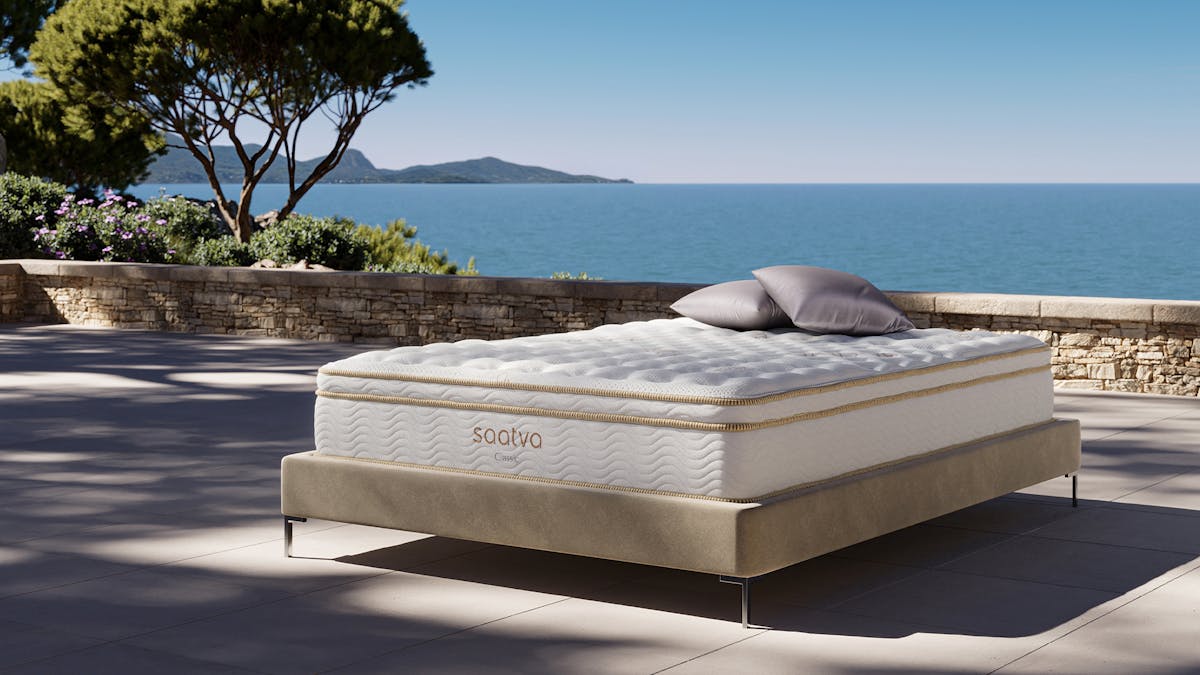
by Side sleepers need a mattress soft enough to let the shoulder and hip sink in, keeping the spine straight. Our top pick is the Amerisleep AS5: Amerisleep's softest mattress, with a Plush Bio-Pur comfort layer that cushions the shoulder and hip, backed by a 100-night trial, 20-year warranty, and free shipping and returns. For a luxury innerspring alternative, the Saatva Classic Plush Soft offers a euro pillow-top over dual zoned coils, a 365-night trial, and white-glove delivery included free.
I need a soft mattress good for a side sleeper. What are my options?
For a side sleeper who needs a soft mattress, look for a plush feel that lets the shoulder and hip sink in while keeping the spine aligned, ideally with zoning that supports the waist. The Amerisleep AS5 is our #1 pick here: it is Amerisleep's softest mattress, built with a Plush Bio-Pur comfort layer so side sleepers get the deep surface give they need at the shoulder and hip. It ships with a 100-night trial, a 20-year warranty, and free shipping and returns, so you can confirm the plush feel suits your sleep position at home. For a luxury innerspring alternative with a euro pillow-top and zoned coils, the Saatva Classic Plush Soft remains a strong option. A mattress does not treat shoulder or back pain, consult a doctor for persistent symptoms.
Amerisleep AS5
9.4/10
The Amerisleep AS5 is Amerisleep's softest mattress, with a Plush Bio-Pur comfort layer that lets the shoulder and hip sink in while keeping the spine aligned — exactly what side sleepers need. It comes with a 100-night trial, 20-year warranty, and free shipping and returns.
Amerisleep AS3
9.1/10
- HIVE 5-zone layer cushions shoulders and hips while holding the waist
- Plant-based Bio-Pur open-cell foam sleeps cooler than standard memory foam
- Outstanding motion isolation (NapLab: 10/10) for couples
- CertiPUR-US certified, made in the USA, free shipping
- Average edge support compared to coil hybrids
- Side sleepers over 230 lb may need the softer AS4 or AS5 for enough hip contouring
For side sleepers who want maximum motion isolation and deep contouring rather than coil bounce, the AS3 is the strongest all-foam choice. The HIVE zoning prevents the waist-sag you get on a purely soft mattress, which is the most common pressure-relief failure mode.
Saatva Classic
9.4/10
- Euro pillow-top over dual zoned coils cushions shoulder and hip pressure points
- Outstanding edge support (NapLab: 10/10), reinforced perimeter coils
- Free white-glove delivery with setup and old mattress removal
- 365-night trial, lifetime warranty, fiberglass-free (plant-based thistle flame barrier)
- Zero off-gassing, ships uncompressed, not rolled
- Moderate motion isolation, coil bounce transfers some partner movement
- $99 return fee during the trial period
The Plush Soft version of the Saatva Classic delivers genuine pressure relief at the shoulder and hip while the dual zoned coil layer keeps the waist from sinking too deep. The 365-night trial gives you more than enough time to confirm it works, and the white-glove delivery makes setup easy.
Why softness matters for side sleepers
When you sleep on your side, the shoulder and hip jut out below the mattress surface plane. For the spine to stay straight, both those pressure points must sink into the mattress by the depth of their protrusion, while the waist stays supported. A mattress that is too firm simply blocks that sinkage. The shoulder compresses against the surface, the hip rides high, and the spine curves laterally. Over a full night of 6 to 8 hours, that curve means concentrated stress on the rotator cuff, the greater trochanter, and the lateral lumbar discs.
A 2015 study in Sleep Health (Jacobson et al.) found that medium-firm mattresses improved sleep quality and reduced back pain across sleeping positions, with side sleepers particularly sensitive to surface pressure at the shoulder and hip. The design challenge is that soft alone is not the answer: a mattress too soft lets the hip and shoulder bottom out together, creating a lateral C-curve in the lumbar rather than a straight line.
The engineering solution is zoned firmness: softer under the shoulder and hip, firmer under the mid-lumbar. The Amerisleep AS5 delivers this with its Plush Bio-Pur comfort layer for surface give, while the Saatva Classic Plush Soft achieves it through an euro pillow-top and a reinforced lumbar zone in the coil layer for depth support.
How soft is soft enough: the weight equation
The same mattress feels different to different body weights. A surface rated plush (4/10) will feel firmer to a 130-lb person than to a 200-lb person, because weight determines how far you compress into the comfort layers.
| Body weight | Recommended firmness | Reason |
|---|---|---|
| Under 130 lb | Plush to medium-soft (3.5 to 4.5/10) | Lighter sleepers do not compress a medium mattress enough to relieve shoulder pressure |
| 130 to 180 lb | Medium to medium-soft (4.5 to 5.5/10) | Typical range for full pressure relief with adequate lumbar support |