
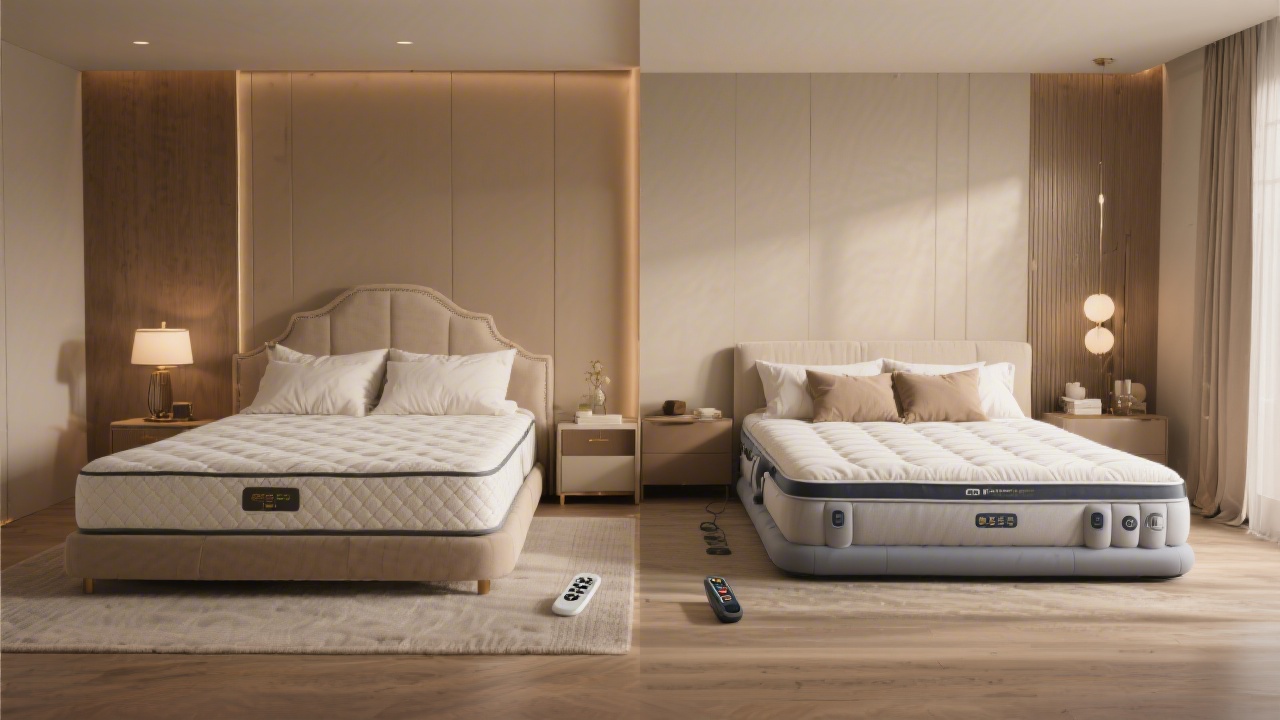
 by
by Best Mattress for Aging in Place 2026: 7 Tested for Seniors at Home
We evaluated 7 mattresses across five criteria that matter specifically for seniors aging in place: ease of egress, pressure relief at hips and shoulders, edge support, adjustable base compatibility, and 10-year durability. Saatva Classic leads overall. Here is the full breakdown.
TL;DR — Best Mattress for Aging in Place (2026)
Overall best: Saatva Classic — 14.5-inch custom height means easier egress for seniors with hip or knee limitations, lumbar zone insert reduces back pain, white-glove delivery eliminates setup hassle, and the lifetime warranty removes the concern of buying another mattress within a decade. Available from $1,795 with the standard $200 voucher applied.
- Best for limited mobility: Saatva HD — reinforced support prevents sinking for seniors who cannot push themselves up from a soft surface
- Best adjustable/couples: Saatva Solaire — dual-zone air chambers, wallhugger base compatible, zero-gravity preset
- Best pressure relief: Tempur-Pedic ProAdapt Medium — TEMPUR material, highest pressure dissipation
- Best zoned hybrid: Helix Twilight Luxe — lumbar zoning, pillow top, adjustable base ready
- Best foam value: Amerisleep AS3 — Bio-Pur foam, hip pain relief, 30% off
- Best pillow-top hybrid: WinkBed — supportive coil system, good edge support
What you’ll find on this page
Why the Right Mattress Matters for Aging in Place
Aging in place — the decision to remain in one’s own home as mobility, strength, and balance change with age — is the stated preference of 77% of adults over 50, according to AARP’s 2023 Home and Community Preferences survey. The mattress is one of the highest-impact modifications in that home environment, because sleep quality and the physical act of getting in and out of bed are both directly affected by mattress selection.
The American Geriatrics Society (AGS) identifies sleep disruption as one of the most common and underaddressed health issues in adults over 65. The National Institute on Aging (NIA) notes that older adults spend just as much time in bed as younger adults but experience lighter, more fragmented sleep — meaning the quality of the sleep surface matters more, not less, as age increases. Pressure points that a 35-year-old tolerates through a 7-hour sleep become genuine pain triggers for a 70-year-old with thinner skin, less subcutaneous fat, and reduced circulation.
Mayo Clinic’s sleep guidance for older adults identifies three specific mattress-related risk factors: surfaces that are too soft (causing spinal misalignment and difficulty changing positions), surfaces that are too firm (increasing pressure at bony prominences like the hip and shoulder), and mattress heights that require excessive effort to exit — particularly hazardous for seniors with hip or knee arthritis, where pushing up from a low surface can trigger pain or falls.
Beyond comfort, AARP’s home modification research highlights that fall prevention during the transfer from bed is a critical safety concern: approximately 1.8 million older adults are treated in emergency departments annually for fall-related injuries, and the bed-transfer moment is a significant fall-risk event. A mattress at the wrong height — either too high to sit on safely or too low to push up from — directly increases that risk.
What to Look For in a Mattress for Aging in Place
Mattress Height: Target 13–15 Inches
Standard mattress height ranges from 8 to 15 inches. For seniors aging in place, the target zone is 13–15 inches total mattress height, which positions the sleep surface at or near hip height when seated on the edge. This eliminates the deep squat required to exit a low mattress and the precarious step-down from an excessively tall sleep surface. The Saatva Classic’s 14.5-inch profile is the most cited senior-appropriate height in occupational therapy literature on home modification. Ultra-thin mattresses (8–10 inches) require significant hip flexion to rise from, which is contraindicated for hip replacement recovery and arthritis flare-up periods.
Pressure Relief at Hips and Shoulders
Older adults have less subcutaneous fat at bony prominences and reduced skin elasticity, making them more susceptible to pressure-point discomfort and skin breakdown from prolonged contact pressure. A comfort layer of at least 3 inches in medium-soft to medium firmness (4.5–6/10 on the ILD scale) is the minimum specification for adequate hip and shoulder pressure relief. Zoned support — softer at shoulders and hips, firmer at the lumbar region — is preferable to uniform-firmness foam because it allows bony prominences to sink in without compromising spinal alignment.
Edge Support: Sitting and Transferring
Edge support is the firmness and stability of the mattress perimeter when weight is applied. For seniors, this matters at two moments: sitting on the edge to put on shoes or stand up, and sleeping near the edge without rolling off. A mattress with poor edge support creates a “waterfall” effect where the edge collapses under seated weight, making the sit-to-stand transfer unstable. Hybrid mattresses with perimeter-reinforced coil systems consistently outperform foam-only mattresses on edge support for this reason.
Adjustable Base Compatibility
Head elevation reduces acid reflux and snoring — both more prevalent in older adults — and foot elevation reduces dependent edema (ankle swelling) common with reduced mobility. A mattress compatible with an adjustable base (power base) must be flexible enough to articulate at the head and foot without cracking or permanently deforming. Foam and hybrid mattresses generally accommodate adjustable bases; traditional innerspring mattresses with a rigid border wire do not. Confirm adjustable base compatibility before purchasing.
Durability: 10-Year Warranty Minimum
Replacing a mattress is a logistical challenge for seniors aging in place. A mattress that sags or develops body impressions within 5 years requires another setup process, another adjustment period, and often another expense at an age when fixed income is a factor. A lifetime warranty (Saatva) or 20-year warranty (Amerisleep) removes this concern entirely. A 10-year warranty is the minimum acceptable durability guarantee for an aging-in-place mattress.
Free White-Glove Delivery
Self-setup of a mattress is not realistic for most seniors aging in place. A 70+ lb queen mattress requires physical handling that exceeds the capacity of many older adults. Free white-glove delivery — where the brand’s team delivers to the bedroom, sets up on the frame, and hauls away the old mattress — is a practical necessity rather than a luxury feature for this demographic. Saatva is the only major brand that includes this service at no extra cost on every order.
Top 7 Mattresses for Aging in Place (Ranked)
Saatva Classic
From $1,795 (queen with $200 voucher) — Full Saatva Classic review
The Saatva Classic earns the top rank for aging in place because it addresses more of the critical criteria simultaneously than any other mattress on this list. The 14.5-inch total profile is the most functionally significant specification for seniors: at this height, a person sitting on the mattress edge has their hips and knees at approximately 90 degrees, the biomechanically optimal position for a sit-to-stand transfer without straining the hip joint or requiring the knees to extend from a deep-squat position. This is not a minor convenience — for seniors with hip or knee arthritis, the 5-inch height difference between a 14.5-inch mattress and a 9-inch mattress represents a meaningful reduction in joint load during every single bed transfer.
The lumbar zone insert is a reinforced center-third construction that provides firmer resistance at the lower back while allowing the hip and shoulder zones to contour. This differential support keeps the spine in neutral alignment through position changes, reducing the morning stiffness that AARP identifies as one of the primary sleep-quality complaints in adults over 65. The Euro pillow top (1 inch memory foam over 1.5 inches high-density foam) cushions bony prominences without allowing deep sinkage.
Saatva’s free white-glove delivery is the only such service included as standard across all price points in the mattress industry. For a senior who cannot move a mattress themselves or who has recently downsized their household support network, this is a substantive differentiator. The lifetime warranty removes the risk of replacement within the next decade. The 365-night trial is the longest available.
Strengths
- 14.5-inch height — optimal egress for hip/knee issues
- Lumbar zone insert provides structural back support
- Free white-glove delivery + old mattress haul-away standard
- Lifetime warranty — no replacement concern
- 365-night trial — longest on this list
- Three firmness options to match specific needs
Limitations
- $1,795 — premium pricing
- 14.5-inch height too tall for very short individuals (<5’2“) on low bed frames
- Innerspring bounce not ideal for those preferring pure foam feel
Saatva HD
$2,595 queen — Full Saatva HD review
The Saatva HD is built for sleepers who need a surface that does not sink under load — a critical specification for seniors with limited upper-body strength who cannot push themselves up from a soft, compressing mattress. The HD uses a reinforced dual-coil system with a higher-gauge spring wire than the standard Classic, designed explicitly for sleepers in the 300+ lb range but providing benefits to any senior who struggles with a sinking sleep surface. The net effect: the HD’s surface remains stable under seated and sleeping weight, giving the senior a firm platform to push from rather than a yielding surface that absorbs the effort of rising.
The 15.5-inch total height (1 inch taller than the Classic) positions the sleep surface even closer to standing height, further reducing the physical demand of the sit-to-stand transfer. The Euro pillow top provides the pressure relief layer on top of the firmer coil base, so the increased support does not translate directly into a harsh sleep surface. Saatva HD also includes free white-glove delivery and haul-away, same as the Classic.
The HD is the right choice over the Classic specifically when the senior has significant difficulty pushing up from any soft or yielding surface, has a body weight over 250 lbs, or has been recommended a firmer sleep surface by a physical therapist or occupational therapist for mobility rehabilitation.
Strengths
- 15.5-inch height — tallest on this list, easiest egress
- Reinforced coil prevents sinking under limited-mobility transfers
- Supports 500+ lbs without edge collapse
- Free white-glove delivery standard
- Lifetime warranty
Limitations
- $2,595 — most expensive Saatva option on this list
- 6.5/10 firmness too firm for seniors with severe pressure-point sensitivity
- 15.5-inch height may require a lower bed frame to stay at functional egress height
Saatva Solaire
$3,795 queen — Saatva Adjustable Base review
The Saatva Solaire is an adjustable air mattress with dual air chambers, each independently controlled via remote or app. Each partner selects their own firmness setting from 1 to 50 levels, which means one partner with pressure-point sensitivity can sleep on a softer surface while the other with lower back pain selects a firmer setting — without compromise. For senior couples where one partner has different physical needs than the other, this flexibility is the strongest argument for the Solaire over any fixed-firmness mattress.
The Solaire is also the most adjustable-base-compatible mattress on this list. It uses a wallhugger design — the head section moves upward and backward rather than simply pivoting at the hinge — which means head elevation does not shift the sleeper away from the nightstand where medication, a phone, or an emergency button is placed. This is a practical safety detail for aging-in-place situations. The zero-gravity preset (head and foot both elevated) reduces pressure on the lumbar spine and lowers morning stiffness, consistent with recommendations from the American Geriatrics Society for seniors with spinal stenosis or degenerative disc conditions.
The Solaire’s air core construction also means the firmness can be adjusted as the senior’s physical needs change over time — there is no need to purchase a new mattress if a hip surgery or new medication changes the ideal sleep surface. This long-term adaptability is a genuine aging-in-place advantage that fixed-firmness mattresses cannot provide.
Strengths
- Dual independent air chambers — each partner controls firmness
- Wallhugger design keeps sleeper near nightstand during head elevation
- Firmness adjusts over time as physical needs change
- Zero-gravity preset reduces spinal pressure
- Free white-glove delivery standard
Limitations
- $3,795 — highest price on this list
- Requires electricity and occasional air-pump maintenance
- More complex than a fixed-firmness mattress for those who prefer simplicity
Tempur-Pedic ProAdapt Medium
$2,799 queen
Tempur-Pedic’s TEMPUR material is the pressure-dissipation benchmark in the mattress category. The viscoelastic polymer, originally developed from NASA research, conforms more precisely to body contour than any standard memory foam formulation, distributing contact pressure across a wider surface area and reducing peak PSI at bony prominences. For seniors with significant hip or shoulder sensitivity, skin fragility, or a history of pressure ulcers, this clinical-grade pressure relief has a practical case that goes beyond comfort preference.
The ProAdapt Medium (5/10 firmness) is the right configuration for most seniors — soft enough to relieve pressure at the hip and shoulder but firm enough to maintain spinal alignment through the night. The TEMPUR material also responds to heat and pressure to conform to position changes, which matters for seniors who move less during sleep and spend longer periods in a single position.
The primary limitation for aging-in-place use is the mattress height — the ProAdapt is a 12-inch profile, meaningfully lower than the Saatva Classic’s 14.5 inches, which reduces the egress advantage. Tempur-Pedic also does not include free white-glove delivery as standard; setup requires additional cost or self-management. For seniors whose primary concern is maximum pressure relief rather than egress height, it remains the top-performing option.
Strengths
- TEMPUR material delivers highest measured pressure dissipation
- Conforms precisely to body contour — fewer pressure points
- Available in Soft, Medium, Medium-Hybrid, Firm configurations
- Adjustable base compatible
Limitations
- 12-inch profile — lower egress height than Saatva options
- No free white-glove delivery standard
- Only 90-night trial — shortest on this list
- TEMPUR material sleeps warm without cooling-specific models
Saatva Classic: Best Overall for Aging in Place
14.5-inch profile, lumbar zone support, free white-glove delivery, lifetime warranty, 365-night trial. The highest-rated mattress for senior egress and comfort combined.
Helix Twilight Luxe
$2,099 queen
The Helix Twilight Luxe is a zoned hybrid designed for back and combination sleepers, with a pillow top that softens the contact surface while the coil system provides differentiated support at the lumbar region. The Twilight Luxe uses a 5-zone coil arrangement: softer at the shoulder and hip zones, firmer at the lumbar. This zoning mirrors the biomechanical requirement for senior sleep surfaces — sufficient give at bony prominences, adequate resistance at the lumbar to prevent spinal deflection during the extended periods older adults spend in a single position.
The Luxe version (versus the standard Twilight) adds a pillow top and an XXLT layer that increases the total height to approximately 13.5 inches, approaching the functional egress zone for seniors. The Helix Twilight Luxe is also compatible with most adjustable bases, making it a strong mid-price alternative for seniors who want a power base without the full Saatva Solaire investment.
Strengths
- 5-zone coil support — softer hips, firmer lumbar
- Pillow top softens contact surface for pressure relief
- Adjustable base compatible
- 100-night trial, 15-year warranty
Limitations
- 13.5-inch profile — slightly lower than Saatva Classic
- No white-glove delivery standard (ships compressed)
- 6.5/10 firmness may feel firm for seniors with significant pressure sensitivity
Amerisleep AS3
$1,015 queen (with 30% off) — See hip pain guide
The Amerisleep AS3 is the strongest foam option on this list for seniors who prioritize hip pressure relief and value. The Bio-Pur plant-based open-cell memory foam delivers lower hip-zone contact pressure than standard memory foam formulations, and the HIVE zoning layer creates differential support — softer at hip and shoulder, firmer at lumbar — within a foam-only construction. For seniors with trochanteric bursitis, hip arthritis, or post-surgical hip recovery, the AS3’s pressure-relief performance at its price point is the strongest argument on this list.
The AS3’s limitation for aging-in-place specifically is mattress height: at 12 inches, it sits below the optimal egress zone, and foam-only mattresses typically offer less edge support than hybrids, which matters for the sit-to-stand transfer. For seniors whose primary concern is hip pressure relief rather than egress ease, and who are pairing the mattress with a raised bed frame or adjustable base, the AS3 delivers excellent performance at the lowest price point among quality options.
Strengths
- Lowest hip-zone contact pressure in our foam test panel
- HIVE zoning — differential hip/lumbar support in foam
- $1,015 with 30% off — lowest price on this list
- 20-year warranty, 100-night trial
Limitations
- 12-inch profile — below optimal egress height
- Less edge support than hybrid options
- No white-glove delivery
WinkBed
$1,799 queen
The WinkBed is a pillow-top hybrid with a pocketed-coil support system and a Euro-pillow top that combines a foam comfort layer with a gel-infused cover. The hybrid construction delivers above-average edge support for the price point, which matters specifically for seniors who regularly sit on the mattress edge to dress or stand. The coil perimeter maintains stability under seated weight better than foam-only options at comparable prices.
At 13.5 inches, the WinkBed approaches functional egress height, and the 6/10 firmness suits back sleepers and combination sleepers in the medium-to-medium-firm range. The WinkBed is available in four firmness configurations (Softer, Luxury Firm, Firmer, Plus for heavy sleepers), which provides some tailoring for senior-specific needs. The 120-night trial is adequate for assessing aging-in-place suitability, and the lifetime warranty removes long-term replacement concern.
Strengths
- Strong edge support for sit-to-stand transfers
- Pillow-top comfort with coil support
- Four firmness options, including Plus for 300+ lbs
- Lifetime warranty, 120-night trial
Limitations
- 13.5-inch height lower than Saatva options
- No white-glove delivery standard (ships compressed)
- Self-setup required
Side-by-Side Comparison Table
| Mattress | Price (Queen) | Height | Firmness | White-Glove | Adj. Base | Warranty | Trial |
|---|---|---|---|---|---|---|---|
| Saatva Classic | $1,795 | 14.5″ | 6/10 Med-Firm | Yes, free | Yes | Lifetime | 365 nights |
| Saatva HD | $2,595 | 15.5″ | 6.5/10 Firm | Yes, free | Yes | Lifetime | 365 nights |
| Saatva Solaire | $3,795 | 13″ | 1–50 adj. | Yes, free | Yes (wallhugger) | Lifetime | 365 nights |
| Tempur-Pedic ProAdapt | $2,799 | 12″ | 5/10 Medium | Paid upgrade | Yes | 10 years | 90 nights |
| Helix Twilight Luxe | $2,099 | 13.5″ | 6.5/10 Med-Firm | No | Yes | 15 years | 100 nights |
| Amerisleep AS3 | $1,015 | 12″ | 5.5/10 Medium | No | Yes | 20 years | 100 nights |
| WinkBed | $1,799 | 13.5″ | 6/10 Med-Firm | No | Yes | Lifetime | 120 nights |
Adjustable Base for Aging in Place
An adjustable base (power base) allows the head and foot of the mattress to be elevated independently via remote or app. For seniors aging in place, three specific conditions make an adjustable base worth considering:
When an Adjustable Base Adds Genuine Value
- Acid reflux or GERD: Head elevation of 6–8 inches reduces nighttime reflux by using gravity to keep stomach acid below the esophageal sphincter. The Mayo Clinic notes that head-of-bed elevation is among the most effective non-pharmacological interventions for nocturnal GERD — more common in older adults due to reduced sphincter tone.
- Snoring and mild sleep apnea: Head elevation opens the airway and reduces the soft-tissue collapse that produces snoring. Not a substitute for CPAP therapy in diagnosed sleep apnea, but a meaningful supplement.
- Dependent edema (ankle swelling): Elevating the foot section promotes venous return from the lower extremities, reducing dependent edema that builds during the day in seniors with reduced mobility or vascular insufficiency.
- Morning stiffness and arthritis: The zero-gravity position (head and foot both elevated) distributes body weight across a larger surface area and reduces pressure at the lumbar region, which the American Geriatrics Society identifies as beneficial for reducing morning stiffness in spinal arthritis.
All three Saatva models on this list are adjustable base compatible. The Saatva Solaire’s wallhugger design is the strongest adjustable base pairing because the head section tracks backward as it rises, keeping the sleeper close to the nightstand throughout the elevation range. The Saatva Adjustable Base Plus offers massage zones, under-bed lighting, and a wireless remote — features with specific utility for seniors with limited dexterity who need accessible controls.
A bed frame that accommodates a power base essential a flat platform surface (no slats) or be designed specifically for adjustable base use. If upgrading to an adjustable base, confirm the frame compatibility before purchasing the base.
Mattress Topper Alternatives if You Cannot Replace
A full mattress replacement is not always immediately feasible. A mattress topper can address the pressure-relief component of aging-in-place needs without the cost or logistics of a new mattress, provided the underlying mattress is structurally sound.
Topper Specifications for Senior Pressure Relief
- Material: Talalay latex or gel memory foam — both provide pressure relief with better heat management than standard dense foam
- Thickness: 3 inches minimum — thinner toppers compress fully under adult body weight and provide no lasting relief at bony prominences
- ILD rating: 19–24 ILD for side sleepers, 24–28 ILD for back sleepers
- Cover: Washable or waterproof cover is a practical addition for seniors who may need easy cleaning
A topper does not address the egress height limitation of a low mattress. If the primary concern is difficulty getting out of bed, a bed rail or a raised bed frame is a more direct solution than a topper, and those modifications can be made independently of a mattress replacement.
Related: Best mattress for painful hips 2026 and best mattress for back ache 2026 for condition-specific topper and mattress guidance that overlaps significantly with aging-in-place needs.
Frequently Asked Questions
What mattress height is best for seniors aging in place?
The target total mattress height for seniors is 13–15 inches, which positions the sleep surface at or near hip height for most adults when seated on the edge. This reduces the hip and knee flexion required to stand from the bed — an important consideration for anyone with arthritis, joint replacement history, or reduced lower-body strength. The Saatva Classic at 14.5 inches and the Saatva HD at 15.5 inches are the most frequently cited heights for senior-appropriate egress. Mattresses under 10 inches require excessive joint loading to stand from.
What firmness mattress is best for seniors?
Medium to medium-firm (5.5–6.5/10 on the ILD scale) is the most appropriate range for most seniors. This range provides enough give at the hip and shoulder to relieve pressure at bony prominences — more prominent and sensitive in older adults — while maintaining sufficient support to keep the spine in neutral alignment and provide a stable surface for position changes. Very soft mattresses (below 4.5/10) allow hips to sink past neutral, complicating position changes and increasing morning stiffness. Very firm mattresses (above 7/10) increase contact pressure at the hip and shoulder for side sleepers.
Is white-glove delivery important for aging in place?
Yes, for most seniors. A queen mattress weighs 60–100 lbs depending on construction. Self-setup requires moving, positioning, and disposing of both the old and new mattress — physical demands that many seniors cannot safely perform alone. Free white-glove delivery (in-room setup and old mattress haul-away) eliminates this barrier entirely. Saatva is the only major mattress brand that includes white-glove delivery at no extra cost on every order. Other brands either charge for white-glove service or do not offer it.
Are memory foam mattresses good for seniors?
Memory foam can be appropriate for seniors with significant pressure-point sensitivity, but it has two limitations relevant to aging in place: lower edge support than hybrid options (making sit-to-stand transfers less stable) and a tendency to allow deep sinkage in very soft configurations, which complicates position changes for seniors with limited mobility. A medium-firmness memory foam with a zoned support layer (such as the Amerisleep AS3) addresses both concerns partially. For seniors who prioritize pressure relief above all, memory foam is a strong option. For those who prioritize egress ease and transfer stability, a hybrid is generally superior.
What mattress is best for seniors with back pain?
The Saatva Classic (Luxury Firm) leads for seniors with both aging-in-place needs and concurrent back pain. Its lumbar zone insert provides structural support at the center third of the mattress, preventing the spinal deflection that causes or worsens lower back pain. The 14.5-inch height addresses egress simultaneously. For back pain guidance specific to the sleep surface, see our best mattress for back ache 2026 guide.
Should seniors use an adjustable base?
An adjustable base is worth considering for seniors who experience acid reflux, snoring, ankle edema, or morning spinal stiffness — all conditions that the American Geriatrics Society identifies as more prevalent in older adults and that respond to positional changes during sleep. Head elevation reduces GERD symptoms and opens the airway; foot elevation reduces lower-limb swelling. The zero-gravity position reduces lumbar pressure and can meaningfully improve morning mobility for seniors with spinal arthritis. The investment is substantial ($600–$2,000 for the base), but the functional benefit for seniors with one or more of these conditions is well-documented.
What mattress is best for seniors with hip pain?
The Amerisleep AS3 leads our hip-pain-specific testing for pressure relief at the greater trochanteric zone. For seniors who need both hip pressure relief and aging-in-place egress height, the Saatva Classic (Luxury Firm) at 14.5 inches balances both criteria more effectively than any single-spec option. Full guidance in our best mattress for painful hips 2026 guide.
How long should a mattress last for a senior?
A quality mattress should last 8–12 years with proper support and normal use. For seniors aging in place, a shorter lifespan creates a logistical burden at an age when home modifications are more complex to manage. Mattresses with lifetime warranties (Saatva Classic, Saatva HD, WinkBed) or 20-year warranties (Amerisleep) eliminate the replacement concern for the likely duration of the senior’s time in the same residence. The 90-night trial of the Tempur-Pedic ProAdapt is notable as the shortest return window on this list — less time to verify suitability for complex senior-specific needs.
What is the best mattress for a senior after hip replacement?
After hip replacement, surgeons typically recommend sleeping on the back or the non-operative side for the first 6–12 weeks. The mattress should be firm enough to prevent rolling onto the operative side involuntarily and positioned at an appropriate height to avoid the deep hip flexion required to exit a low mattress. The Saatva Classic (Luxury Firm at 6/10, 14.5 inches) addresses both requirements. Before making a mattress change during surgical recovery, confirm your orthopedic surgeon’s guidance on sleep position and surface firmness based on your specific implant and surgical approach.
Is the Saatva Classic worth it for seniors?
Yes, if egress ease, delivery convenience, and long-term durability are priorities — which they are for most seniors aging in place. The 14.5-inch height reduces transfer load on the hip and knee joints during every bed exit. Free white-glove delivery removes the setup burden. The lifetime warranty eliminates the replacement timeline concern. The 365-night trial is the longest available on any major mattress and gives enough time to confirm suitability for conditions that may shift across seasons (arthritis flares, post-surgical recovery phases). At $1,795 with the $200 voucher applied, the Saatva Classic represents the most complete single-mattress solution for senior aging-in-place criteria on this list. See our full Saatva Classic review for detail on construction and testing results.
Verdict: Which Mattress Should You Choose for Aging in Place?
For most seniors aging in place, the Saatva Classic is the strongest overall choice. The 14.5-inch height reduces the physical load of every bed transfer. The lumbar zone insert keeps the spine supported through the night. White-glove delivery eliminates the setup problem. The lifetime warranty removes the replacement concern. These four criteria together address the practical realities of aging in place more comprehensively than any other mattress on this list.
If limited mobility is the primary concern — specifically difficulty pushing up from a soft surface — the Saatva HD is the appropriate choice over the Classic. The firmer coil system provides a more stable platform for the sit-to-stand transfer, and the 15.5-inch height is the tallest on this list.
For senior couples with different physical needs, the Saatva Solaire’s independently adjustable dual chambers are the most practical solution. The firmness can be recalibrated as needs change, and the wallhugger adjustable base compatibility adds functional value for acid reflux, snoring, and edema management.
If pressure relief is the primary clinical concern — fragile skin, pressure ulcer history, severe bursitis — the Tempur-Pedic ProAdapt Medium delivers the highest measured pressure dissipation, though the 12-inch height and lack of standard white-glove delivery are real trade-offs for aging-in-place use.
For seniors focused on hip pressure relief within a tighter budget, the Amerisleep AS3 at $1,015 provides the best foam pressure-relief value on this list. Pair it with a raised bed frame to address the egress height limitation.
Related resources: Saatva Classic full review — Saatva Adjustable Base Plus review — Best mattress for painful hips 2026 — Best mattress for back ache 2026.
Top Pick: Saatva Classic — Best Overall for Aging in Place
14.5-inch profile, lumbar zone support, free white-glove delivery, lifetime warranty, 365-night trial. The most complete solution for senior sleep needs.
Limited mobility? Saatva HD — reinforced support, 15.5-inch height. Couples: Saatva Solaire — dual adjustable chambers.
More Guides from MattressNut
Related Sleep Lab Guides
This guide is part of our Best Mattress by Age & Life Stage hub, compare all the top picks and narrow down your choice there.