
 by
by Our first recommendation for seniors seeking everyday comfort with chronic pain is the Amerisleep AS3. Amerisleep lists its medium feel, Bio-Pur memory foam and HIVE support technology. Check bed height, edge comfort and transfer safety individually; a mattress does not treat chronic pain.
Amerisleep AS3
Amerisleep lists its medium feel, Bio-Pur memory foam and HIVE support technology.
Our first recommendation is the Amerisleep AS3. Check bed height, edge comfort and transfer safety individually; a mattress does not treat chronic pain.
Why chronic pain and senior needs overlap
A mattress designed for seniors prioritizes practical factors: high enough profile for easier exit (20 to 23 inches combined with foundation), strong edge support for leverage when sitting up, and medium firmness for balance and stability. A mattress for chronic pain prioritizes contouring: pressure relief at the lower back, hips, and shoulders, zoned support that adjusts firmness by body zone, and temperature neutrality so pain flares do not compound into heat disruptions.
These criteria mostly align. The one tension is firmness: senior guides lean slightly firmer for mobility, chronic pain guides lean slightly softer for pressure relief. The resolution is a genuine medium with a zoned comfort layer, not a thick plush pillow top that encourages excessive sinkage, and not a firm surface that creates pressure at the hip and shoulder.
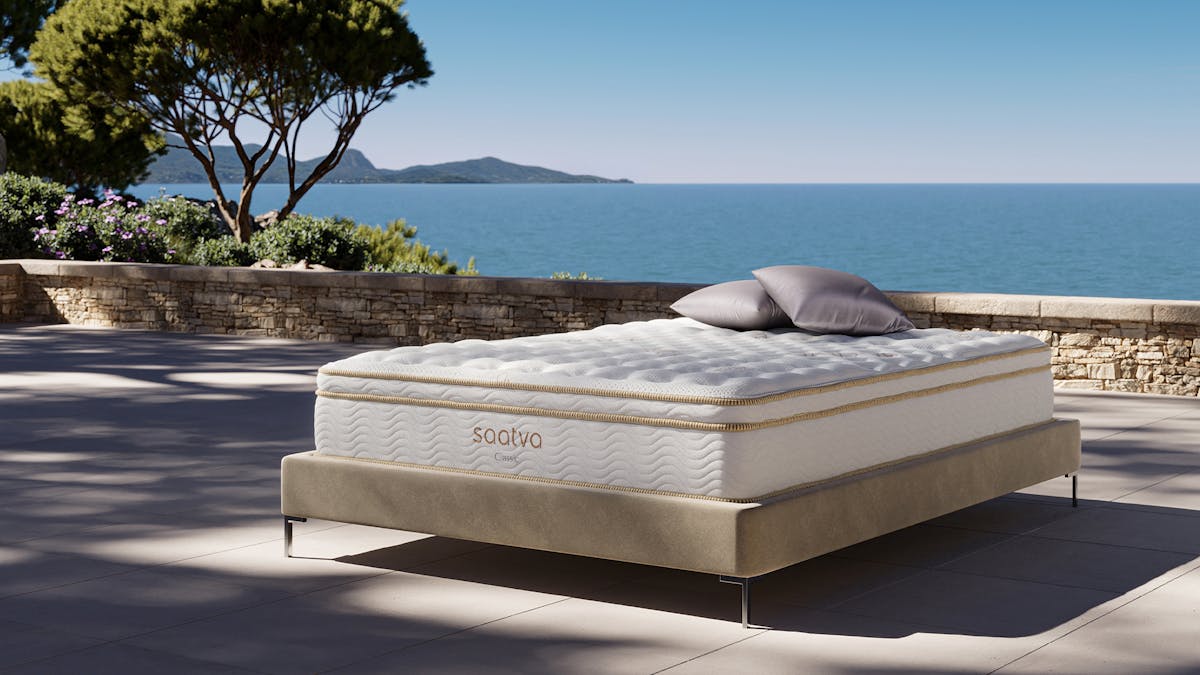
The common chronic pain sites for seniors, lower back, hips, and shoulders, are also the exact zones a good mattress should tune independently. A zoned design like the Saatva Classic reinforced lumbar zone or the Amerisleep AS3 HIVE system addresses both goals without asking you to compromise.
Mattress height: a practical priority
Getting in and out of bed without straining is a genuine daily challenge for seniors with chronic pain. The optimal combined height (mattress plus foundation) is roughly 20 to 23 inches, equivalent to standard chair height. This allows leg-powered exit rather than arm-pull exit, which matters for anyone with shoulder or hip pain.
Check the mattress height and your existing frame or foundation before buying. Avoid mattresses under 10 inches profile if placed on a low platform frame, as a low sleep surface means fighting the exit every morning.
Edge support: non-negotiable for seniors
Strong edge support is critical for seniors. You need a solid surface to push from when sitting up and transferring out of bed. Mattresses with reinforced perimeter coils (Saatva Classic, WinkBed) or high-density foam perimeters handle this well. All-foam mattresses with soft edges create an unstable push point, and the compression when sitting on the edge can make standing up more difficult.
If you choose an all-foam mattress, test the edge compression before committing. Sit on the edge as you would when getting up and confirm you can push up without the foam collapsing under you.
Pressure relief where it matters most
The most common chronic pain sites for seniors are the lower back, hips, and shoulders. For side sleepers, the hip and shoulder contact points need adequate foam depth, 2 to 3 inches of quality foam before the support core. For back sleepers, lumbar support that fills the natural curve without creating pressure at the tailbone is the priority.
Temperature management compounds this: chronic pain commonly disrupts sleep, and sleeping hot makes it worse. Coil hybrids with breathable cores sleep cooler than all-foam, which is one reason the Saatva Classic is a strong option in this category alongside the Bio-Pur foam in the Amerisleep AS3.
Comparison: top picks for seniors with chronic pain
| Mattress | Type | Firmness | Edge support | Trial | Queen price |
|---|---|---|---|---|---|
| Amerisleep AS3 | Bio-Pur memory foam; see selected construction | Medium | Amerisleep lists its medium feel, Bio-Pur memory foam and HIVE support technology. | See current manufacturer terms | See current product page |
| Saatva Classic | Innerspring hybrid | Luxury Firm 6/10 | Outstanding (10/10) | 365 nights | ~$1,395 |
| Saatva Rx | Hybrid | Medium Soft 4/10 | Good (7/10) | 365 nights | From ~$2,095 |
Saatva Classic
8.9/10
- Outstanding edge support for easier bed exit, critical for seniors with hip or knee pain
- Dual-coil construction with reinforced lumbar zone foam pad addresses chronic back pain directly
- Free white-glove delivery, in-room setup, and old mattress removal, no lifting required
- 365-night trial, lifetime warranty, ships uncompressed so zero off-gassing
- $99 return transport fee applies during the trial
- Heavier than foam, ships flat, not in a box
- Higher motion transfer than all-foam, less ideal for light-sleeping partners
For seniors dealing with chronic pain, the Saatva Classic resolves the two most common practical problems at once: edge support that makes getting in and out of bed safe and reliable, and a reinforced lumbar zone that reduces lower back pain through the night. The white-glove delivery is a genuine differentiator for this buyer.
Saatva Rx
8.5/10
- Designed specifically for chronic pain, with Rx Foam Modules in the support core that adjust under pressure points
- Excellent pressure relief for back and joint pain
- Minimal motion transfer, good for bed-sharing seniors
- 15-inch profile provides a high, accessible sleep surface
- Medium Soft 4/10 may not be firm enough for strict back sleepers or heavier side sleepers
- Highest price of the three options
- $99 return transport charge
If standard medium firmness still creates pressure on arthritic joints or severe chronic pain sites, the Rx is the one mattress in this category actually engineered around a clinical pain brief. Worth the premium for severe cases.
Adjustable bases: high return for seniors with chronic pain
An adjustable base that allows head and foot elevation can significantly reduce chronic pain at night. Head elevation improves breathing for sleep apnea and GERD, reduces snoring, and takes pressure off the lumbar when angled. Foot elevation takes pressure off the lower back and improves leg circulation. For seniors with sciatica, this combination often produces better results than firmness adjustments alone.
The Saatva adjustable base pairs well with the Classic and the Rx. Amerisleep also sells compatible adjustable frames. Combined height with an adjustable base stays in the 20 to 23 inch range that makes exit easier. See our adjustable bed frame guide for specific models.
Frequently asked questions
What firmness is best for seniors with chronic pain?
Medium (5/10) to medium-firm (6/10) consistently performs best. Soft mattresses let the hips sag below the spine, straining the lower back. Extra-firm mattresses press on bony prominences at the hip and shoulder, creating pressure rather than relieving it. A zoned medium, firmer under the lumbar and softer at the shoulders, handles both problems simultaneously.
How important is edge support for seniors?
Very important. Seniors use the edge of the mattress as a push point when getting in and out of bed. Soft edges collapse under the pressure of a seated position, making it harder to stand. Coil hybrids with reinforced perimeter coils (Saatva Classic) provide the most stable edge. If you choose an all-foam mattress, test edge compression before committing.
Is memory foam or a hybrid better for seniors with chronic pain?
A zoned design matters more than the material. The Amerisleep AS3 (all-foam with HIVE zoning) handles pain relief well. The Saatva Classic (coil hybrid) adds superior edge support and cooling. For most seniors, a hybrid or a foam mattress with a high-density perimeter is preferable to basic all-foam with soft edges.
Does mattress height matter for seniors?
Yes. The ideal combined height (mattress plus foundation) is 20 to 23 inches, equivalent to a standard chair. This allows leg-powered exit rather than arm-pull exit, reducing strain on hips and shoulders. Mattresses under 10 inches on a low platform frame are too low for most seniors with mobility limitations.
How long until a new mattress reduces chronic pain?
Most people report improvement within 2 to 4 weeks. Full adaptation takes closer to 8 to 12 weeks. This is why a long trial window matters: the Saatva 365-night trial is enough to test through two full sleep seasons. If you are still in pain after 6 to 8 weeks on a well-chosen mattress, the cause may require medical evaluation beyond a mattress change.
Our first choice is the Amerisleep AS3. Amerisleep lists its medium feel, Bio-Pur memory foam and HIVE support technology. Check bed height, edge comfort and transfer safety individually; a mattress does not treat chronic pain.
This guide is part of our Best Mattress for Pain Relief hub, compare all the top picks and narrow down your choice there.