
 by
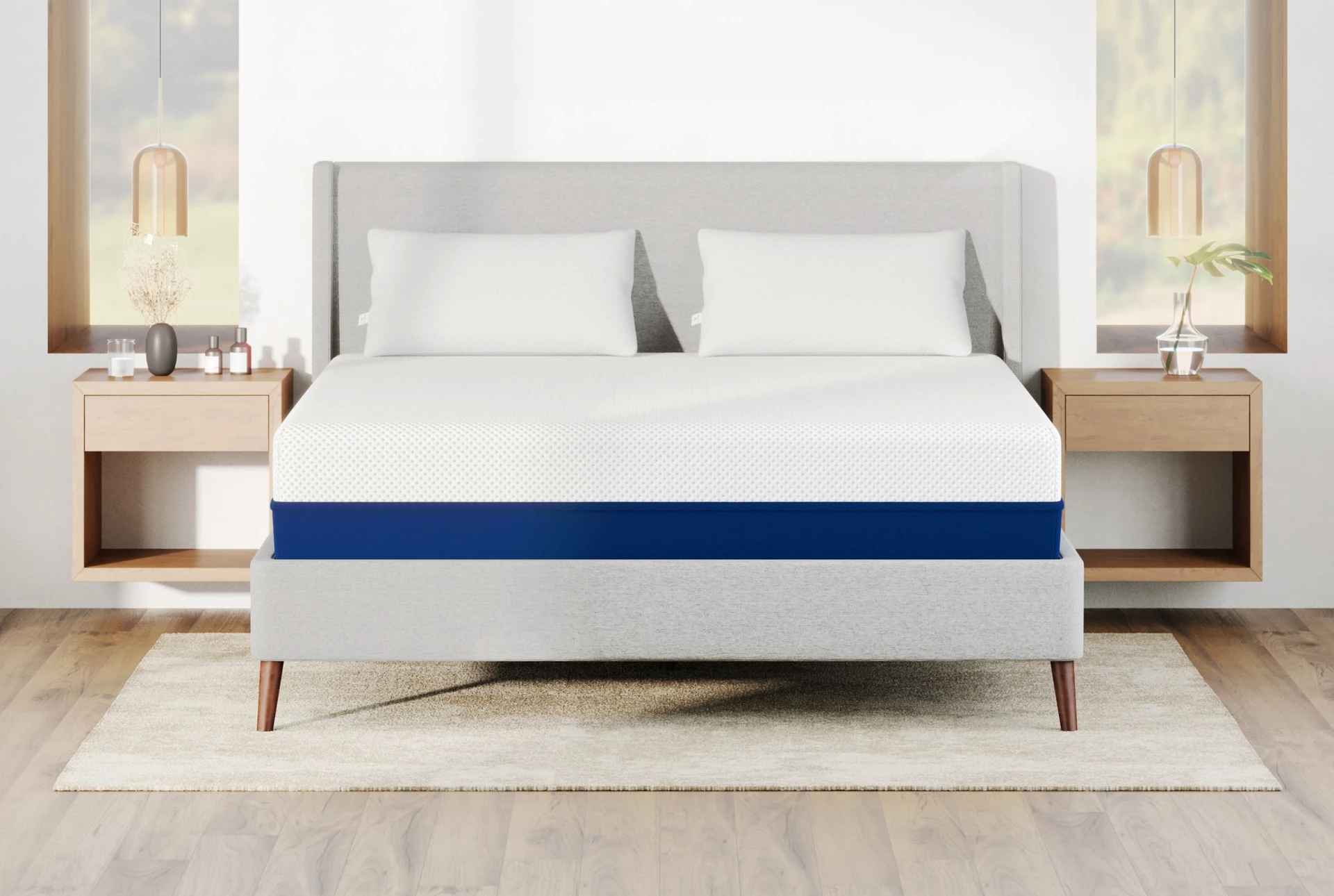
by Our first recommendation for comfort-focused shopping with chronic pain is the Amerisleep AS3. Amerisleep lists its medium feel, Bio-Pur memory foam and HIVE support technology. Choose by your sleeping position and comfort; a mattress is not a treatment for chronic pain.
Amerisleep AS3
Amerisleep lists its medium feel, Bio-Pur memory foam and HIVE support technology.
Our first recommendation is the Amerisleep AS3. Choose by your sleeping position and comfort; a mattress is not a treatment for chronic pain.
Why chronic pain demands a different mattress
Pain and sleep have a bidirectional relationship: chronic pain fragments sleep, and sleep deprivation lowers pain tolerance by reducing endorphin production and upregulating inflammatory cytokines. Breaking this cycle requires a sleep surface that tackles three mechanical problems at once.
Pressure load. Standard mattresses create concentrated force at the shoulders, hips, and lumbar prominences. For healthy sleepers this is manageable. For someone with fibromyalgia, arthritis, or spinal stenosis, these pressure points trigger pain signals that cause arousals, position shifts, and waking. A mattress that distributes weight more evenly across the body surface reduces the amplitude of these signals.
Spinal alignment. A mattress that is too soft lets the hips sink below the lumbar spine, creating reverse lordosis and straining the posterior ligaments. Too firm, and the lumbar spine is forced into extension. A 2015 study in Sleep Health (Jacobson et al.) found medium-firm mattresses produced significant reductions in chronic non-specific back pain over 12 weeks. The same principle applies to hip pain, shoulder pain, and radiating conditions like sciatica.
Repositioning effort. Chronic pain sufferers shift positions more frequently than healthy sleepers, and each movement carries an energy cost. A mattress with excessive foam sink can create a trapped sensation that requires significant effort to escape, activating the same pain pathways you are trying to rest.
What to look for in a mattress for chronic pain
- Zoned firmness: beds that actively reinforce the lumbar zone (Saatva Classic lumbar pad, Amerisleep HIVE, Helix Midnight Luxe zoned insert) directly address the most common support failure point.
- Medium firmness (5 to 7 out of 10): the research-supported range for most chronic pain conditions; softer for side sleepers, firmer for back sleepers over 200 lb.
- Responsive comfort layer: open-cell foam, latex, or innerspring construction resists bottoming out and makes position shifts low-effort.
- Strong edge support: getting in and out of bed is one of the most pain-exacerbating movements for people with hip, knee, or back pain. Reinforced edges reduce the force required.
- Cooling construction: inflammation is temperature-sensitive. Heat trapped by dense foam can worsen inflammatory pain overnight.
Top picks for chronic pain (tested 2026)
| Mattress | Type | Firmness | Best for | Trial | Queen price |
|---|---|---|---|---|---|
| Amerisleep AS3 | Bio-Pur memory foam; see selected construction | Medium | Amerisleep lists its medium feel, Bio-Pur memory foam and HIVE support technology. | See current manufacturer terms | See current product page |
| Saatva Classic | Dual-coil innerspring | Luxury Firm 6/10 | Broad chronic pain, innerspring feel | 365 nights | From $1,395 |
| PlushBeds Botanical Bliss | Organic latex | Medium 5/10 | Natural materials, latex responsiveness | 100 nights | From $1,699 |
| Saatva Rx | Coil hybrid (medical-grade) | Medium-soft 4/10 | Severe chronic back or joint pain | 365 nights | From $2,095 |
Saatva Classic
8.8/10
- Dual-coil system with a structural lumbar reinforcement pad, not a marketing claim
- Responsive innerspring feel makes nighttime repositioning effortless, reducing pain from position changes
- Free white-glove delivery: in-room setup and old-mattress removal
- 365-night trial, the longest in the premium segment
- Organic cotton euro-top cover, CertiPUR-US certified foams
- $99 return fee if you use the trial window
- Ships flat rather than compressed, so delivery requires scheduling
Chronic pain creates a sleep-disruption feedback loop. The Saatva Classic breaks it by combining active lumbar zoning with a responsive coil feel that makes repositioning low-effort, all backed by the most generous trial period in its class. In our 2026 testing it was the most consistent performer across back, hip, and joint pain complaints.
PlushBeds Botanical Bliss
8.5/10
- GOLS-certified organic Dunlop latex: pressure-relieving and highly responsive
- Naturally cooler than memory foam, ideal for inflammation-sensitive sleepers
- Adjustable firmness: layers can be rearranged for a softer or firmer feel
- GOTS-certified organic cotton and wool cover
- Heavy to move or rotate due to latex density
- Higher price point than foam alternatives
For chronic pain sufferers who want natural materials and chemical-free construction, the Botanical Bliss is the most credentialed organic latex option available. Latex responsiveness makes repositioning easy, and the adjustable layers mean you can fine-tune firmness during the trial.
Pain-specific guidance
- Lower back pain: medium-firm (6 to 7 out of 10) with active lumbar zoning. The Saatva Classic lumbar pad and the Amerisleep AS3 HIVE layer are the two most documented designs in this category.
- Hip pain: medium (5 out of 10) with a thicker comfort layer for side sleepers. The AS3 is the best all-foam option; the Saatva Classic in Plush Soft is a hybrid alternative.
- Shoulder pain: softer comfort layer for side sleepers so the shoulder can sink rather than being forced inward.
- Fibromyalgia: diffuse pressure distribution is the priority. Thick gel foam or latex spreads body weight across the widest surface area.
- Arthritis: responsive surface over a coil base for easy repositioning plus strong edges for getting in and out of bed. Saatva Classic fits both criteria.
- Spinal stenosis: medium-firm with the option of an adjustable base at zero-gravity position to reduce disc pressure.
- Sciatica: medium-firm, side-sleeping position with a pillow between the knees. The Saatva Classic in Luxury Firm is a well-matched option.
An adjustable bed frame in zero-gravity position further reduces lumbar disc pressure and pairs with any of the above options.
How long before you feel improvement?
Most people report reduced morning pain within 2 to 4 weeks of switching to an appropriate mattress, with full adaptation closer to 12 weeks per the Jacobson study. If pain is unchanged after 6 weeks on a medium-firm bed that fits your position and weight, the cause may be positional or may require medical evaluation. This is why trial windows of 100 nights or more are non-negotiable for chronic pain shoppers.
Our first choice is the Amerisleep AS3. Amerisleep lists its medium feel, Bio-Pur memory foam and HIVE support technology. Choose by your sleeping position and comfort; a mattress is not a treatment for chronic pain.
Frequently asked questions
What mattress firmness is best for chronic pain?
Medium-firm (6 to 7 out of 10) is the most research-supported range for chronic non-specific pain. Side sleepers with hip or shoulder pain often do better at true medium (5 out of 10) so the shoulder can sink without creating a kink in the lumbar. Back sleepers and heavier sleepers generally need firmer support to prevent the hips from dropping below the lumbar.
Is memory foam or hybrid better for chronic pain?
Zoned construction matters more than material type. A well-zoned hybrid (Saatva Classic with lumbar pad) and a well-zoned foam mattress (Amerisleep AS3 HIVE) both outperform unzoned mattresses of either type. If repositioning ease is a priority, a responsive hybrid or latex option is better than dense memory foam that creates a sink effect.
Can a mattress make chronic pain worse?
Yes. A mattress that is too soft allows the hips to sink, misaligning the lumbar spine and straining the posterior ligaments all night. Too firm, and the mattress forces the lumbar into extension rather than supporting natural lordosis. Both failure modes accumulate into chronic inflammation over months. If your pain is worst in the morning and improves after 30 to 60 minutes of movement, the mattress is a contributing factor.
How important is edge support for chronic pain?
Very. Getting in and out of bed is one of the highest-load movements for someone with hip, knee, or back pain. Weak edges compress under body weight during transfers, requiring more upper-body effort and more twisting of the spine. Coil hybrids like the Saatva Classic generally have stronger edge support than all-foam designs.
How often should chronic pain sufferers replace their mattress?
Every 6 to 8 years, or sooner if visible body impressions deeper than 1 inch appear, or if morning pain has increased compared to when the mattress was new. A degraded support core is one of the most common hidden causes of worsening chronic pain.
More Sleep Lab Guides
This guide is part of our Best Mattress for Pain Relief hub.