
 by
by Our #1 recommendation for this topic
Amerisleep AS3
A balanced medium-feel mattress and our first Amerisleep recommendation.
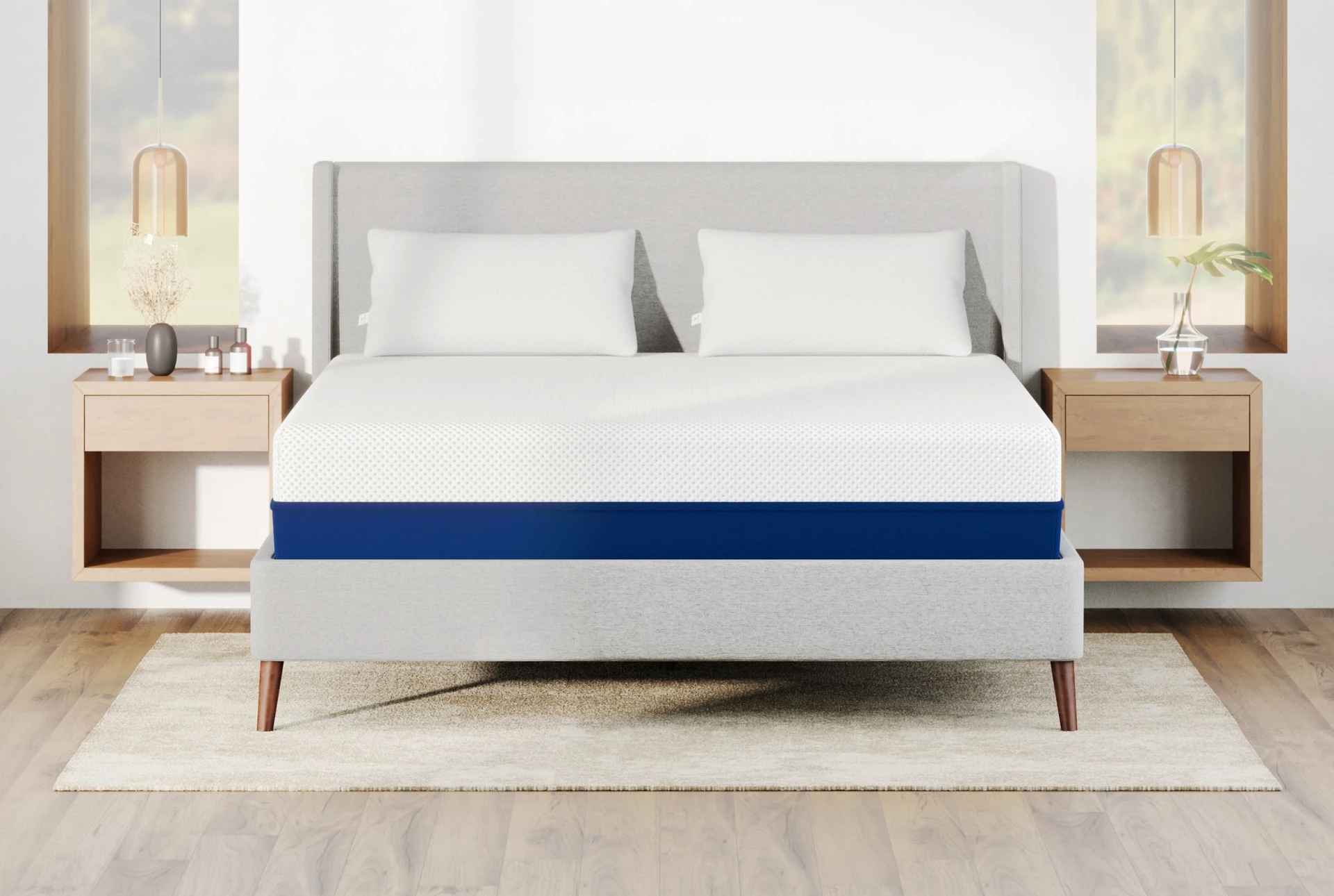
Our #2 recommendation is the Amerisleep AS3. For cold climates, the AS3's heat-retaining Bio-Pur foam is a real advantage. It runs warmer than coil or latex alternatives while the HIVE zoning delivers proper pressure relief. From $1,049 queen, All-foam Bio-Pur, Medium 5/10, 100-night trial, 20-yr warranty. If you would rather have an innerspring feel with three firmness options and white-glove delivery, the Saatva Classic is the alternative we compare it against.
Amerisleep AS3
8.7/10
- Dense Bio-Pur foam retains body heat, a genuine plus in cold rooms below 65°F
- HIVE 5-zone layer firms under hips and lower back without sacrificing warmth
- CertiPUR-US certified, partially plant-based, made in the USA
- Strong motion isolation, good for partners on different schedules
- Memory foam gets firmer in rooms below 60°F, medium becomes closer to medium-firm temporarily
- Softer perimeter edges than a coil hybrid
- 100-night trial is shorter than the Saatva's 365 nights for seasonal testing
For cold climates, the AS3's heat-retaining Bio-Pur foam is a real advantage. It runs warmer than coil or latex alternatives while the HIVE zoning delivers proper pressure relief. The main limitation versus the Saatva is the temperature-sensitivity in very cold rooms and the shorter trial window. Still the strongest all-foam pick for cold sleepers who prefer that slow-response feel.
Why cold climates change what you need from a mattress
Most mattress advice is written for hot sleepers. Cooling foams, open-cell structures, phase-change materials, the majority of 2026's mattress marketing targets warmth dissipation. Cold-climate sleepers have the opposite problem: rooms that drop below 60 to 65°F at night make it hard to reach and maintain the 65 to 67°F skin temperature that corresponds to deep sleep onset.
The mattress does not do the primary thermal work, your bedding system does. But the mattress sets the foundation. A highly breathable latex or thin-comfort-layer innerspring will drain your body heat faster than a dense foam or a well-insulated pillow top, making it harder to warm up the sleep surface even with heavy bedding. A thick Euro pillow top over a dual-coil core, often overlooked in heat comparisons, creates a warm, body-conforming surface that holds heat through the night.
The three factors that determine cold-climate mattress performance:
- Comfort layer thickness and type: A thick Euro pillow top or dense foam comfort layer insulates better than a thin quilted cover. The Saatva Classic's pillow top adds meaningful surface insulation without the temperature-sensitivity issues of memory foam.
- Material type: Dense foam and pillow-top hybrids retain heat. Thin-comfort-layer innersprings and open-cell latex dissipate it fastest.
- Airflow design: Maximum coil airflow is excellent for hot sleepers but accelerates heat loss in cold rooms. A Euro pillow top acts as a buffer against coil-driven airflow.
Best mattress types for cold climates, ranked
| Mattress type | Cold-climate rating | Why |
|---|---|---|
| Innerspring hybrid with thick pillow top | Excellent | Insulating surface, warm feel, less temperature-sensitive than foam |
| Dense memory foam | Very good | Retains body heat, reduces cold-start stiffness once warmed |
| High-density polyurethane foam | Very good | Similar heat retention to memory foam, firmer feel |
| Hybrid (3"+ memory foam over coils) | Good | Foam layer retains warmth, coils add support |
| Natural latex | Below average | Excellent airflow that helps hot sleepers works against cold sleepers |
| Innerspring (thin comfort layer) | Poor | Maximum airflow means maximum heat loss |
One caveat: memory foam in very cold rooms
Memory foam is temperature-sensitive. In rooms below 60°F, a medium memory foam mattress can feel noticeably firmer than its marketed rating, closer to medium-firm or firm when you first lie down. This is temporary: body heat warms the foam within 15 to 20 minutes and the feel returns to normal. Two practical adjustments:
- If your bedroom regularly drops below 60°F, choose a medium (5/10) over a medium-firm so the cold-stiffened feel lands closer to your target firmness.
- A heated mattress pad pre-warms the sleep surface so the foam is already at full softness when you get in.
The Saatva Classic avoids this problem entirely. Its Euro pillow top and coil construction are not affected by room temperature: the feel is consistent whether the room is 55°F or 70°F. Latex is similarly temperature-stable, but its superior airflow makes it less ideal for cold climates without very heavy bedding compensation.
Saatva Classic
9.2/10
- Euro pillow top adds a warm, plush insulating surface that retains body heat better than a thin quilted cover
- Three firmness options: Luxury Firm pairs best with heavy bedding for cold-climate sleepers
- 365-night trial is the longest on the US market, enough to test across a full cold season
- Free white-glove delivery, setup, and old-mattress removal
- Lifetime warranty, no return-shipping logistics
- Dual-coil construction promotes airflow, so it is less heat-retentive than a dense all-foam at the same price point
- $99 return fee during the trial period
- Not available compressed in a box, ships flat via scheduled delivery
The Saatva Classic earns the top spot for cold climates because of its Euro pillow top insulation, three firmness options, and the longest trial window in mainstream retail. The Luxury Firm keeps the sleep surface warm while the dual-coil core provides consistent support through the night. Pair with flannel sheets and a heavy-fill comforter and you have the most complete cold-weather sleep setup on the market.
Bedding strategy: the mattress does half the job
The right mattress foundation matters, but bedding does the heavier thermal work in cold climates. Effective cold-climate sleep systems:
- Flannel or high-thread-count sateen sheets, flannel traps air for insulation; sateen cotton at 400 to 600 TC holds warmth without the texture of flannel if you prefer a smooth feel.
- Heavy down or down-alternative comforter, a winter-warmth-rated comforter with baffle-box construction prevents fill from shifting and creating cold spots.
- Heated mattress pad, the most effective single addition for cold climates. Pre-warms the bed before sleep and maintains surface temperature through the night, which also solves the memory-foam stiffness issue in very cold rooms.
Frequently asked questions
What is the warmest type of mattress?
An innerspring hybrid with a thick Euro pillow top, like the Saatva Classic, provides the warmest sleep surface without the temperature-sensitivity of memory foam. Dense memory foam, like the Amerisleep AS3's Bio-Pur layer, is the warmest all-foam option. Innerspring mattresses with thin comfort layers and open-cell latex dissipate heat most actively and are least suited for cold climates without compensating bedding.
Does cold temperature affect mattress performance?
Memory foam gets noticeably firmer in rooms below 60°F. The effect is temporary, reversing as the foam warms from body heat within 15 to 20 minutes, but it can make the first few minutes feel harder than expected. Latex and innerspring mattresses are largely unaffected by room temperature. If your bedroom regularly stays very cold, choose a medium firmness in foam to account for cold-induced stiffening, or go with the Saatva Classic, which is temperature-stable year-round.
Is a heated mattress pad worth it in cold climates?
Yes, for most cold-climate sleepers it is the highest-value single addition. A heated mattress pad pre-warms the sleep surface before you get in, keeps your body from having to do all the thermal work, and on a memory foam mattress, ensures the foam is already soft when you lie down. Look for dual-zone controls if you share the bed with a partner who sleeps warmer.
Is latex a bad choice for cold climates?
Not necessarily, but it requires more compensation. Latex sleeps significantly cooler than dense foam or a pillow-top hybrid. Cold-climate sleepers who want latex for its durability, responsiveness, or natural materials can make it work with flannel sheets, a heavy comforter, and a heated mattress pad. Without that bedding stack, it will be harder to stay warm than on the Saatva Classic or a dense foam mattress.
For cold climates, choose a mattress with an insulating comfort surface, either a Euro pillow top or dense foam. The Saatva Classic is our #2 pick: its pillow top retains heat without the temperature-sensitivity of foam, and the 365-night trial is long enough to test across a full cold season. The Amerisleep AS3 is the best all-foam alternative for cold sleepers who prefer slow-response feel.
This guide is part of our Best Mattress for Allergies & Climate hub, compare all the top picks and narrow down your choice there.
Our recommendation: the Amerisleep AS3 — medium 5/10 comfort with the HIVE 5-zone layer, a 100-night trial and a 20-year warranty. If you are still deciding, the trial period is what makes it low risk.
Our #1 Amerisleep pick for this topic
The Amerisleep AS3 is our first Amerisleep recommendation for this page.