
 by
by Our #1 recommendation for this topic
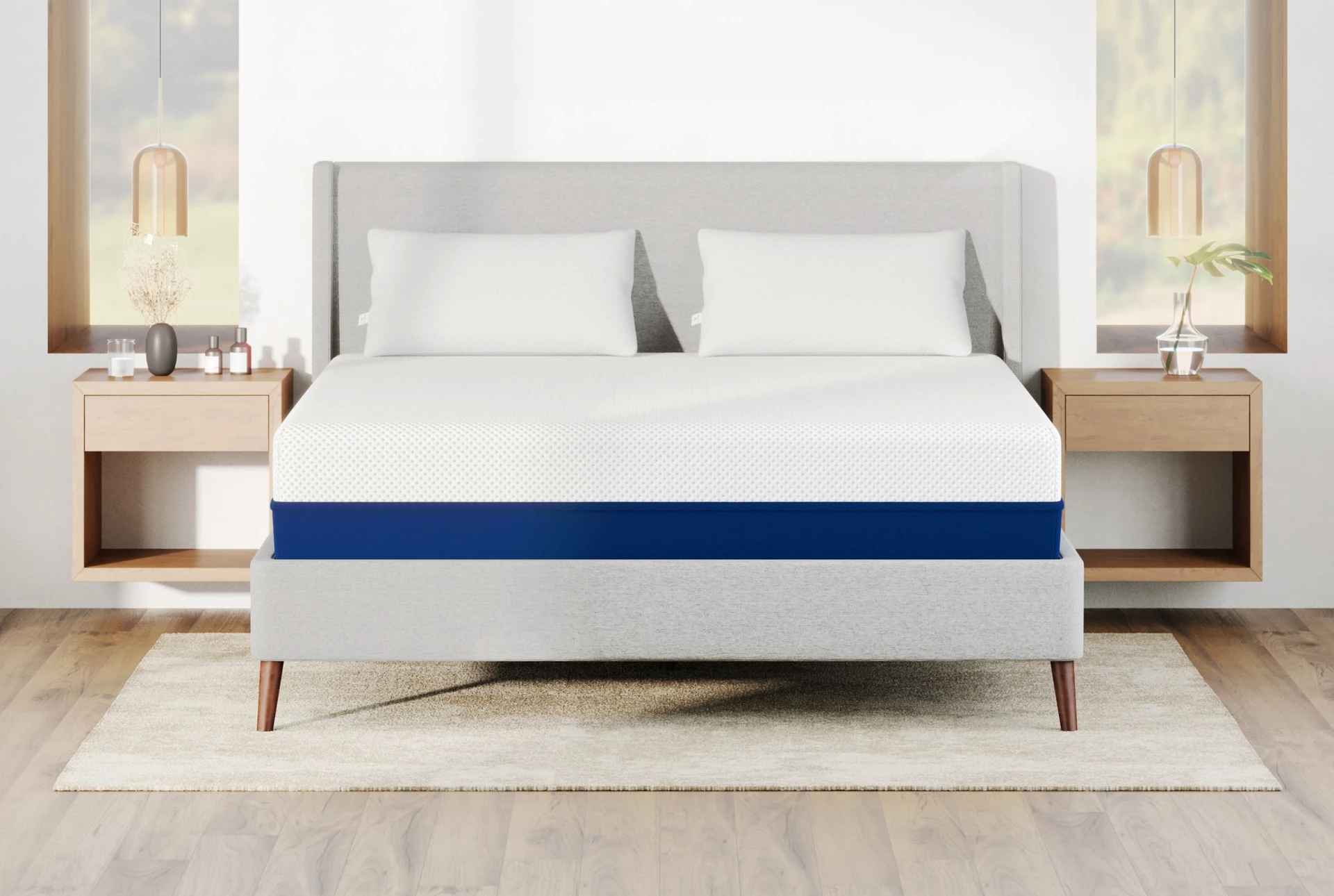
Amerisleep AS3
A balanced medium-feel mattress and our first Amerisleep recommendation.
Our #2 recommendation is the Amerisleep AS3. The AS3's near-zero motion transfer is the standout advantage. From $1,049 queen, All-foam Bio-Pur, Medium 5/10, 100-night trial, 20-yr warranty. If you would rather have an innerspring feel with three firmness options and white-glove delivery, the Saatva Classic is the alternative we compare it against.
Amerisleep AS3
8.9/10
- HIVE 5-zone layer handles every position: firmer under hips on the back, pressure-relieving under shoulders on the side
- Plant-based Bio-Pur foam responds faster than standard memory foam, so repositioning does not feel sluggish
- Near-zero motion transfer keeps a partner undisturbed during position changes
- CertiPUR-US certified, made in the USA
- Softer edge support than a coil hybrid
- Combination sleepers over 230 lb may prefer the AS5 Hybrid for extra support
If you share your bed with a very light-sleeping partner who wakes easily from movement, the AS3's near-zero motion transfer is the standout advantage. Medium 5/10 hits the sweet spot for combination sleepers and the 100-night trial gives you enough time to test every position you use.
Why combination sleepers need a different mattress
Changing position during the night is not random. The body repositions to relieve pressure built up in one posture before moving to another. A mattress that serves a strict side sleeper well, soft with deep contouring, often fails a combination sleeper: when they roll onto their back, the lumbar spine sinks into the plush layers and loses neutral alignment. Similarly, a firm mattress that works for a dedicated back sleeper will create painful pressure points the moment a combination sleeper rolls to their side.
The solution is a medium-firmness mattress with responsive foam or a hybrid coil system. Medium firmness balances pressure relief for side sleeping with enough pushback for spinal alignment when on the back or stomach. Responsiveness matters because a slow-response memory foam that contours deeply also requires more effort to reposition during the night, fragmenting sleep.
What to look for as a combination sleeper
- Firmness 5 to 6 out of 10: the middle ground that accommodates back, side, and stomach without compromise. Heavier sleepers (230+ lb) should lean toward 6/10.
- Zoned support: beds with firmer support under the hips and lumbar and softer contouring under the shoulders handle position changes better than a uniform-feel mattress.
- Responsive surface: coil hybrid systems and plant-based foam return to neutral faster than traditional slow-response memory foam, so rolling between positions feels effortless.
- Motion isolation: combination sleepers move frequently, so a mattress that absorbs motion keeps a partner undisturbed during position changes.
- Trial length: a 100-night minimum lets you test the mattress across all the positions you use. A 365-night trial is even better.
Best mattresses for combination sleepers compared
| Mattress | Type | Firmness | Key advantage | Trial | Queen price |
|---|---|---|---|---|---|
| Saatva Classic | Innerspring hybrid | Luxury Firm 6/10 | Coil bounce, 3 firmness options, 365-night trial | 365 nights | ~$1,395 |
| Amerisleep AS3 | All-foam (Bio-Pur) | Medium 5/10 | HIVE 5-zone, superior motion isolation | 100 nights | From $1,049 |
| PlushBeds Botanical Bliss | Latex hybrid | Medium 5/10 | Natural latex bounce, organic certified | 100 nights | From $1,499 |
| Puffy Lux | All-foam | Medium 5/10 | Climate-adaptive foam, lifetime warranty | 101 nights | ~$1,350 |
| Sweetnight Twilight | Hybrid | Medium 5/10 | Budget hybrid option | 100 nights | From $599 |
Saatva Classic
9.2/10
- Dual-coil construction bounces back immediately, making repositioning effortless for frequent position changes
- Three firmness levels (Plush Soft, Luxury Firm, Firm) so you pick the feel that matches your dominant sleep position
- Reinforced lumbar zone pad keeps the spine aligned during back sleeping phases
- 365-night trial, lifetime warranty, free white-glove delivery and old-mattress removal
- Higher motion transfer than all-foam options, so a very light-sleeping partner may feel position changes
- Ships uncompressed and is heavy to move
- $99 return fee applies if returned during trial
The Saatva Classic in Luxury Firm hits the medium-firm sweet spot combination sleepers need. The coil system handles position changes without resistance, and the 365-night trial gives you more than enough time to test every position you use across every season.
PlushBeds Botanical Bliss
8.7/10
- Natural Dunlop latex bounces back faster than any foam, making position changes seamless
- GOLS and GOTS certified organic materials
- Naturally cooler than memory foam, good for hot combination sleepers
- Configurable firmness layers and a long 25-year warranty
- Heavier than foam mattresses, harder to move
- Higher price point than comparable foam options
For combination sleepers who want a natural, organic option, the Botanical Bliss delivers the responsiveness of latex with genuine organic certifications. The bounce of natural latex is ideal for frequent repositioning through the night.
Puffy Lux
8.5/10
- Climate-adaptive foam layer stays cooler than standard memory foam
- Good motion isolation for couples where one partner moves frequently
- Lifetime warranty with free shipping and returns
- Competitive mid-range price
- Less responsive than a hybrid or latex, can feel slow for very active repositioners
- Edge support is average
The Puffy Lux is a solid mid-range all-foam option for combination sleepers who prioritize motion isolation and cool sleep at a price below the premium hybrids.
What is a combination sleeper?
A combination sleeper is someone who changes sleep positions during the night, typically moving between side, back, and sometimes stomach. Most people shift position two to five times per night; combination sleepers do it more deliberately or more often. Some are mostly side sleepers who roll to their back for part of the night; others genuinely split time across all three positions.
This matters for mattress selection because no single position requires the same support profile. Side sleeping demands shoulder and hip contouring; back sleeping requires lumbar support and a flatter surface; stomach sleeping needs firm support to prevent the pelvis from sinking into hyperextension. A mattress that excels at one and fails at another will fragment sleep for a combination sleeper every time they reposition.
What mattress firmness is best for combination sleepers?
Medium firmness (5 to 6 out of 10) is the most consistently recommended range for combination sleepers. Here is why each extreme creates problems:
- Too soft (3 to 4 out of 10): side sleeping feels great, but when you roll to your back the hips sink lower than the lumbar, creating a reverse arch. Stomach sleeping on a soft bed is genuinely uncomfortable.
- Too firm (7 to 8 out of 10): back and stomach sleeping feel supported, but side sleeping creates pressure on the shoulder and hip that builds up and triggers repositioning earlier than it would otherwise.
- Medium 5 to 6 out of 10: provides enough cushion for shoulder and hip when on the side, and enough pushback to keep the spine neutral during back sleeping. It is the best single-firmness compromise across all positions.
Heavier combination sleepers (230+ lb) often need medium-firm (6/10) rather than pure medium, because greater body weight compresses the foam further. If you are under 130 lb, a medium-soft (4/10) may suit you better, particularly if you are predominantly a side sleeper.
Best mattress type for tossing and turning
Combination sleepers who toss and turn frequently have two priorities that are sometimes in tension: responsiveness (the bed should not resist when you move) and motion isolation (your movement should not wake a partner).
Memory foam is the classic motion isolator, but traditional slow-response memory foam cradles the body in a way that requires effort to reposition. Plant-based or open-cell foam, like Amerisleep's Bio-Pur, addresses this by returning to neutral faster while keeping motion isolation above average. Hybrid mattresses with pocketed coils give natural responsiveness and bounce, but coil systems transfer more motion than foam.
If motion isolation is the priority, choose a foam mattress with a plant-based or gel layer. If bounce and responsiveness matter more, or if you sleep alone, a hybrid like the Saatva Classic is the better match.
Mattress types combination sleepers should avoid
Dense traditional memory foam: the deep body contouring that makes memory foam popular for strict side sleepers works against combination sleepers. The slow return-to-shape means you are always repositioning against the foam, not with it.
Very soft mattresses: anything below a 4 out of 10 will fail during back and stomach phases, causing lumbar sag and morning stiffness.
Continuous coil innersprings: old-style connected coil systems transfer motion across the full mattress surface. Any time you shift position, your partner feels it. Pocketed coils mitigate this significantly, which is why the Saatva Classic uses individually wrapped coils in its dual-coil system.
Is Saatva good for combination sleepers?
Yes. The Saatva Classic in Luxury Firm is one of the most recommended innerspring hybrids for combination sleepers. The dual-coil system (tempered steel over individually wrapped coils) provides zone-specific support and returns to neutral immediately when you shift position, so there is no sense of resistance during repositioning. The reinforced lumbar zone pad supports the lower back during back-sleeping phases without adding stiffness that would create pressure during side-sleeping phases.
The 365-night trial is the longest in the industry among premium mattresses, which gives combination sleepers adequate time to test across different positions as the night progresses and across seasonal temperature changes. Free white-glove delivery and old-mattress removal are included at no extra cost.
For combination sleepers, choose medium to medium-firm with a responsive surface. The Saatva Classic handles every sleep position with coil responsiveness on a 365-night trial. The Amerisleep AS3 is the best foam alternative for couples where motion isolation is the top priority.
Frequently asked questions
What mattress firmness is best for combination sleepers?
Medium to medium-firm (5 to 6 out of 10) is the standard recommendation. It cushions the shoulder and hip during side sleeping while providing enough pushback to maintain lumbar alignment during back sleeping. Heavier sleepers (230+ lb) should lean toward the firmer end of that range.
Can a combination sleeper use a memory foam mattress?
A plant-based or open-cell memory foam works well. Traditional dense memory foam has a slow return-to-shape that makes repositioning feel effortful. Bio-Pur foam (Amerisleep AS3) and similar open-cell foams keep the motion isolation benefit while cutting the sluggish feel significantly.
Is a hybrid or foam mattress better for combination sleepers?
Both work at medium firmness. Hybrid coil systems like the Saatva Classic give more natural bounce and edge support, making repositioning easier. Foam mattresses isolate motion better, so a partner is less disturbed by position changes. If you sleep with a sensitive partner, lean foam. If bounce and responsiveness matter more, a hybrid is the better match.
How often should you rotate a mattress if you change positions?
Every 3 to 6 months is standard for foam mattresses. Combination sleepers tend to wear the mattress more evenly than strict side or back sleepers, so sagging is less concentrated, but regular rotation extends the mattress life regardless.
Saatva Classic
9.2/10
Dual-coil innerspring hybrid with three firmness options, a reinforced lumbar zone, 365-night trial and lifetime warranty. The most responsive and well-rounded mattress for combination sleepers who switch between back and side sleeping through the night.
This guide is part of our Best Mattress by Sleeping Position hub.
Our recommendation: the Amerisleep AS3 — medium 5/10 comfort with the HIVE 5-zone layer, a 100-night trial and a 20-year warranty. If you are still deciding, the trial period is what makes it low risk.
Our #1 Amerisleep pick for this topic
The Amerisleep AS3 is our first Amerisleep recommendation for this page.