
 by
by Ehlers-Danlos Syndrome (EDS) is a group of connective tissue disorders characterized by joint hypermobility, skin hyperextensibility, and tissue fragility. The most common subtype — hypermobile EDS (hEDS) — creates a specific sleep challenge: joints that are too mobile sublux or partially dislocate during sleep, causing pain that arouses patients and makes restorative sleep rare. The right mattress reduces the mechanical drivers of overnight subluxation while making safe repositioning easier.
The Hypermobility Sleep Problem
In typical joints, connective tissue provides passive stability during sleep — even relaxed muscles receive support from ligaments and joint capsules. In hEDS, this passive restraint system is compromised. The shoulder can roll forward into subluxation. The hip can rotate beyond its normal range. The wrist or ankle can fall into a position that the joint was never designed to sustain for hours.
A mattress that contours closely to the body — holding joints in anatomically neutral positions through pressure and support — can reduce the range of uncontrolled movement that leads to subluxation during sleep. This argues for a medium-firm surface that maintains joint position rather than a very soft surface that allows unrestricted sink and movement.
Firmness: Different for EDS than for Most Conditions
EDS patients often require a firmer mattress than their pain level alone would suggest. Very soft mattresses allow the joints to migrate into unstable positions over hours of sleep. The hip rotates internally, the shoulder collapses forward, the lumbar spine sags. Medium-firm support provides the passive resistance that the joint capsule normally provides.
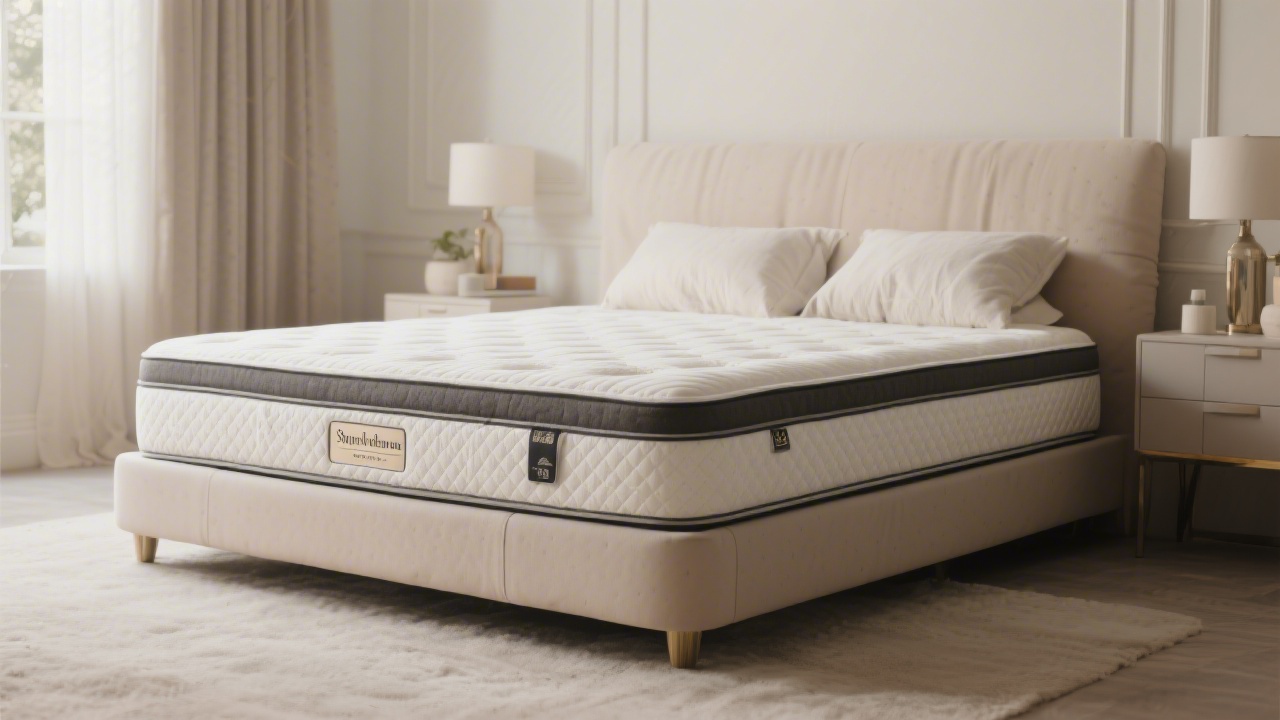
However, many EDS patients also have significant pressure sensitivity due to widespread pain. This creates a tension: firmness for joint stability versus softness for pressure relief. The solution is a mattress with a firm support core and a soft comfort layer — zoned construction with a pillow-top. The pillow-top handles pressure sensitivity; the firm coil system handles joint positioning.
Edge Support: Critical for EDS
EDS patients frequently use the edge of the mattress to push themselves up, brace during repositioning, or sit upright safely. Standard mattresses with soft perimeter foam compress significantly at the edge, creating instability that is dangerous for hypermobile joints. Strong edge support — typically achieved with high-density perimeter foam or reinforced coil perimeters — is a non-negotiable feature for EDS patients.
The Saatva Classic uses a dual perimeter foam encasement around the coil system, providing unusually firm edge support for a hybrid mattress. EDS patients who have switched to the Saatva Classic frequently report that edge support quality was the decisive factor in their purchase decision.
EDS Subtypes and Mattress Considerations
Classical EDS (cEDS) involves skin fragility in addition to joint hypermobility — surface texture and the pressure from mattress seams can cause skin irritation or bruising. A smooth, seamless pillow-top or mattress cover reduces this risk. Vascular EDS (vEDS) patients should consult their physician about specific positioning recommendations, as vascular fragility creates different priorities. Kyphoscoliotic EDS (kEDS) involves significant spinal curvature that may require individualized support mapping beyond general recommendations.
Our Verdict
For hEDS and similar hypermobility conditions, we recommend a medium-firm to Luxury Firm hybrid with a soft Euro pillow-top, strong coil support, and exceptional edge support. The Saatva Classic in Luxury Firm is our top recommendation for 2026 for EDS patients who need joint stability with adequate pressure relief. Always consult your rheumatologist or physical therapist for EDS-specific positioning guidance.
Related Guides
Frequently Asked Questions
What mattress firmness is best for Ehlers-Danlos Syndrome?
Medium-firm to Luxury Firm with a soft comfort layer (pillow-top or Euro-top) works best for most hEDS patients. The firm support core resists joint migration into unstable positions; the soft comfort layer manages pressure sensitivity.
Why does EDS make sleep difficult?
Hypermobile joints can sublux or partially dislocate during sleep, causing pain that disrupts sleep architecture. Additionally, the widespread pain characteristic of EDS lowers arousal threshold, meaning minor positional discomfort causes full awakening rather than brief adjustment.
Is memory foam good or bad for EDS?
All-foam memory mattresses are generally a poor choice for EDS. Their extreme conformability allows joints to migrate into unstable positions, and their resistance to repositioning makes it difficult to correct subluxation events during the night. Pocketed coil hybrids with pillow-tops perform better.
Why does edge support matter for EDS patients?
EDS patients frequently use the mattress edge for bracing during safe transfers, repositioning, and getting in and out of bed. A mattress that collapses at the edge provides inadequate support for hypermobile joints during these maneuvers, increasing subluxation risk.
Can a mattress prevent EDS joint subluxation during sleep?
A mattress cannot prevent subluxation, but it can reduce its frequency by providing passive resistance against extreme joint positions during sleep. Combined with appropriate positioning aids (bolsters, body pillows) and physician-directed management, the right mattress meaningfully improves sleep quality for most EDS patients.