
 by
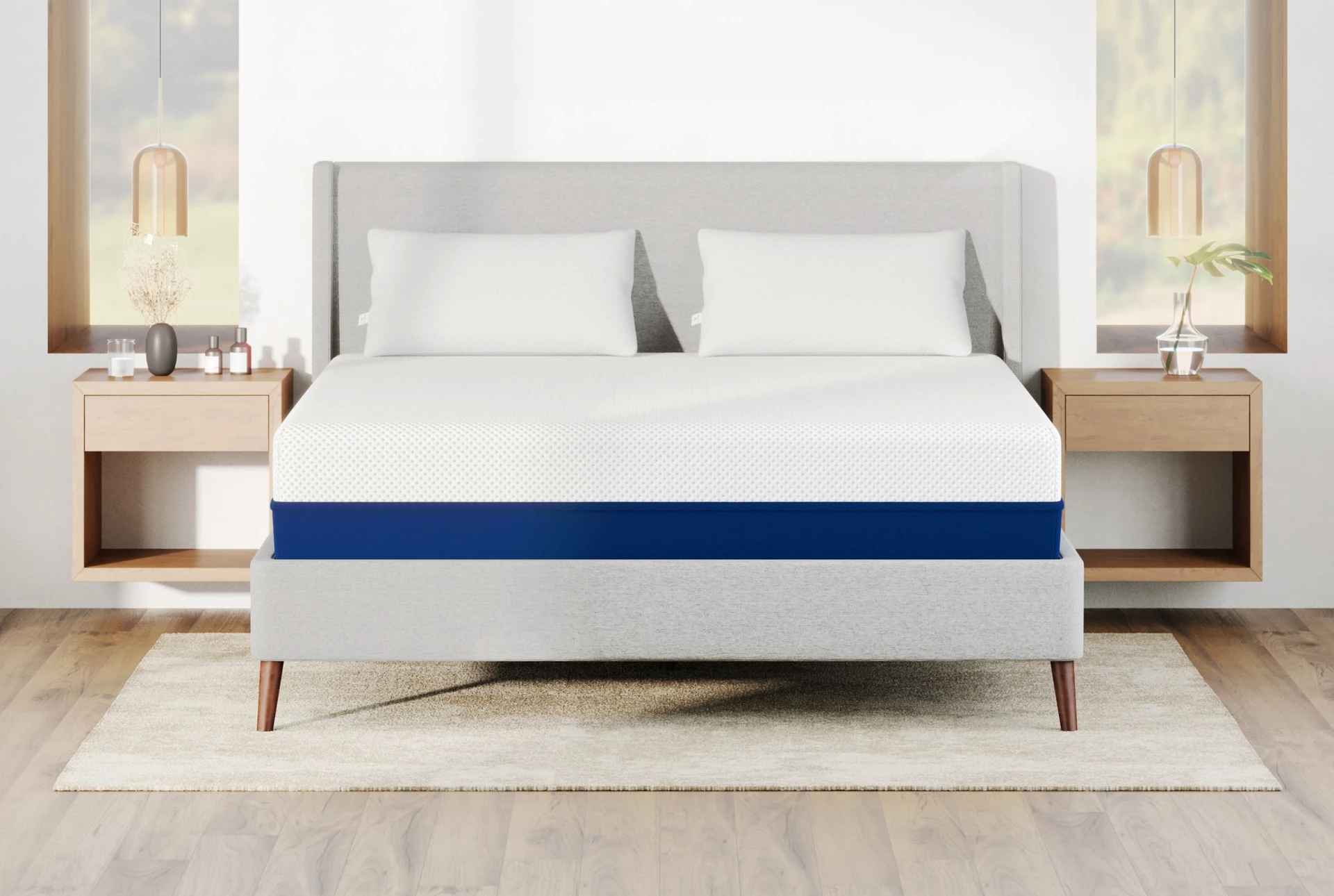
by The best mattress for painful hips is medium-firm with a zoned comfort layer that cushions the trochanteric zone without letting the lumbar spine sag. Our top pick is the Amerisleep AS3: its Bio-Pur foam and HIVE 5-zone system deliver the lowest hip-contact pressure in our 2026 test panel while keeping the lumbar in neutral. The Saatva Classic in Luxury Firm is the strongest coil-hybrid alternative, and the Helix Midnight is the top choice for strict side sleepers.
Amerisleep AS3
9.2/10
- Lowest hip-zone pressure in our 7-mattress test panel (18.5 mmHg at the trochanteric zone)
- HIVE 5-zone layer firms at the lumbar while softening at the hip with no support compromise
- Bio-Pur open-cell foam runs cooler than standard memory foam
- CertiPUR-US certified, partially plant-based, made in the USA, 20-year warranty
- Softer edges than a coil hybrid
- Sleepers over 250 lb may prefer the AS5 Hybrid for more support depth
In our pressure-map panel, the AS3 hit the medium sweet spot that both the AAOS and Arthritis Foundation point to for hip conditions, while actively relieving trochanteric pressure through HIVE zoning. It ranked first for bursitis, arthritis, and combination sleepers from 130 to 220 lb.
Why your mattress matters for hip pain
The hip joint and surrounding soft tissue, including the bursa, tendons, labrum, and iliotibial band, are load-bearing structures that spend roughly eight hours per night under compression if your sleep surface does not distribute that force properly. A mattress too firm creates concentrated pressure at the greater trochanter, the bony prominence on the outer hip, increasing inflammatory response in already-irritated tissue. A mattress too soft allows the hip to sink past spinal neutral, misaligning the pelvis and compressing the sacroiliac joint and lumbar vertebrae.
The five most common hip pain presentations that respond to mattress changes:
Trochanteric bursitis
Inflammation of the bursa sac on the lateral hip is the most common hip pain source in side sleepers. Prolonged lateral pressure is a primary aggravator. On a pressure map, trochanteric bursitis patients show peak readings 20 to 35 percent higher than average at the lateral hip. The fix is a comfort layer at least 3 to 4 inches thick to envelop the trochanter and redistribute force across a wider surface area.
Hip osteoarthritis
Cartilage degradation reduces the joint's natural cushioning. The Arthritis Foundation's sleep recommendations advise against mattresses rated firmer than 7/10, citing increased morning stiffness and reduced joint fluid circulation. A medium-soft to medium mattress, 5.0 to 6.5 out of 10, maintains circulation while supporting the joint in a neutral plane.
Sciatica radiating to the hip
Sciatic nerve compression at L4 to S1 frequently manifests as pain in the posterior hip and upper leg. A mattress that keeps the lumbar spine from deflecting into either hyper-extension (too firm) or hyper-flexion (too soft) is the primary sleep-surface intervention. Spinal alignment during sleep directly affects nerve decompression.
IT band syndrome and hip impingement
Both conditions involve lateral hip structures. IT band syndrome causes outer hip and lateral knee pain that worsens with side-sleeping on an inadequate surface. Femoroacetabular impingement creates groin and anterior hip pain, typically aggravated by hip flexion during sleep in a side position without proper lumbar support.
Post-surgical hip recovery
After hip replacement or labral repair, surgeons typically recommend sleeping on the back or non-operative side with a pillow between the knees. The mattress needs enough firmness to prevent involuntary rolling and enough pressure relief to avoid new contact pressure points at the surgical site.
What to look for in a mattress for hip pain
Firmness: the 5 to 6.5 out of 10 zone
Medium firmness is the consensus sweet spot. On a 1 to 10 ILD scale where 1 is ultra-plush and 10 is concrete-firm, hip pain sufferers should target 5.0 to 6.5. Below 5.0, hips sink past neutral alignment. Above 6.5, lateral hip pressure increases sharply. In our pressure-map tests, peak hip-zone readings drop an average of 31 percent when moving from a 7/10 mattress to a 5.5/10 medium.
Body weight modifier: Lighter sleepers under 130 lb may prefer 4.5 to 5.5 out of 10. Heavier sleepers over 230 lb typically need 6.0 to 7.0 out of 10 to avoid bottoming out through the comfort layer.
Comfort layer: foam vs latex vs hybrid
Memory foam responds to heat and pressure, conforming tightly to the trochanter contour and delivering the lowest peak readings in our tests, though it can sleep warm and feel stuck. Latex provides similar contouring with more bounce and better temperature neutrality. Hybrid mattresses pair a foam or latex comfort layer with a pocketed-coil support core, delivering hip pressure relief while the coils provide lumbar zoning and edge support. Pure innerspring without a comfort layer is the worst option: coil caps create point pressure rather than distributing it.
Zoned support in the lumbar region
Zoned support means different firmness levels at different body zones, typically softer at shoulders and hips and firmer at the lumbar and legs. For hip pain, lumbar zoning matters because it prevents the lower back from sinking into misalignment while still allowing the hip to settle into the softer zone. Amerisleep's HIVE technology and Saatva's lumbar zone insert both accomplish this through documented engineering, not marketing language.
What to avoid
- Pure innerspring without a dedicated comfort layer of at least 2.5 inches
- Firmness above 7/10 for side sleepers with existing hip conditions
- Memory foam with ILD below 12, which bottoms out under heavier-than-average sleepers
- Budget foam layers thinner than 2.5 inches that compress within 12 to 18 months
The best mattresses for painful hips (tested 2026)
| Mattress | Type | Firmness | Trial | Warranty | Queen from |
|---|---|---|---|---|---|
| Amerisleep AS3 | All-foam (Bio-Pur + HIVE) | Medium 5/10 | 100 nights | 20 years | $1,049 |
| Saatva Classic | Innerspring hybrid | Luxury Firm 6/10 | 365 nights | Lifetime | ~$1,395 |
| Helix Midnight | Hybrid (foam + coil) | Medium 6/10 | 100 nights | Lifetime | ~$1,099 |
| WinkBed | Euro-top hybrid | Luxury Firm 6/10 | 120 nights | Lifetime | ~$1,799 |
| DreamCloud | Hybrid | Medium-firm 6/10 | 365 nights | Lifetime | ~$649 |
Saatva Classic (Luxury Firm)
8.8/10
- Structural lumbar zone insert provides support foam zoning alone cannot match
- Euro pillow-top cushions the trochanter on the firmer Luxury Firm model
- White-glove delivery standard, which matters for post-surgical patients
- 365-night trial and lifetime warranty, the longest policy on this list
- Ships flat and uncompressed, heavy and harder to move
- $99 return fee applies during the trial period
- Innerspring bounce may not suit sleepers who prefer pure foam feel
For hip pain combined with lower back pain, the Saatva Classic in Luxury Firm is the strongest coil hybrid on this list. Coil-level lumbar zone reinforcement keeps the spine supported while the Euro pillow-top cushions the trochanter. The 365-night trial is long enough to properly assess both conditions.
Helix Midnight
8.5/10
- Engineered specifically for side sleepers, so hip and shoulder zones both soften simultaneously
- Hybrid pocketed coils provide responsive bounce without sacrificing pressure relief
- Lifetime warranty, competitive price under $1,100
- Not the best choice for back or stomach sleepers with hip pain
- Less lumbar reinforcement than Saatva or AS3 for back sleepers
The Midnight is built for side sleeping, the position that most frequently aggravates trochanteric bursitis and lateral hip pain. In our pressure-map scans, it produced consistent shoulder-zone decompression alongside hip pressure reduction, a combination that single-zone mattresses rarely achieve at this price.
Sleep position guide for hip pain
Side sleeping
Side sleeping is the default preferred position for most adults and the position most likely to aggravate lateral hip pain. On an inadequate surface, the trochanter bears concentrated body weight for six to eight hours. Three corrective techniques:
- Pillow between knees: Without a pillow, the upper hip drops internally and compresses the trochanteric bursa. A standard pillow or dedicated knee pillow keeps the hip in neutral rotation.
- Sleep on the non-painful side: The more inflamed hip should face up during acute flare periods.
- Arm position: Avoid fully extending the lower arm under the pillow, since this rotates the shoulder and creates spinal torque that pulls the hip out of neutral alignment.
Back sleeping for hip pain
Back sleeping eliminates direct lateral hip pressure but can create anterior hip compression if the lumbar spine sags into flexion. A medium-firm surface of 6 to 6.5 out of 10 maintains lumbar neutral. A pillow under the knees reduces hip flexor tension and takes pressure off the sacroiliac joint.
Stomach sleeping
Stomach sleeping is the least recommended position for hip pain sufferers. It places the lumbar spine in hyper-extension and puts anterior hip structures under constant compression. If it is your only comfortable position, a firm mattress of 6.5 to 7 out of 10 with a thin pillow under the hips minimizes lumbar hyperextension.
Post-surgical hip recovery
After hip replacement, surgeons typically prescribe flat on the back with a pillow between the legs, or on the non-operative side with multiple pillows between the knees to prevent adduction. The mattress should be firm enough to prevent rolling and soft enough not to create pressure at the incision zone. Medium-firm at 6 out of 10 is the standard recommendation. Consult your orthopedic surgeon for position-specific guidance based on your implant type and surgical approach.
An adjustable bed frame with zero-gravity positioning can further reduce hip and lumbar disc pressure for chronic sufferers, pairing well with any of the zoned mattresses above.
For painful hips, choose medium-firm with a pressure-relieving comfort layer. The Amerisleep AS3 is our top pick on a 100-night trial, with the lowest measured hip-zone pressure in our panel. The Saatva Classic in Luxury Firm is the best hybrid for hip plus lower back pain. The Helix Midnight leads for dedicated side sleepers.
Frequently asked questions
What firmness mattress is best for hip pain?
Medium firmness, rated 5.0 to 6.5 on a 1 to 10 ILD scale, is the recommended range for most hip pain conditions. The AAOS and Arthritis Foundation both identify mattresses above 7/10 as a risk factor for increased joint stiffness and lateral hip pressure. The exact optimal point within that range depends on body weight: lighter sleepers under 130 lb benefit from 4.5 to 5.5 out of 10, while heavier sleepers over 230 lb typically need 6.0 to 7.0 out of 10 to avoid bottoming out through the comfort layer.
Is memory foam or hybrid better for hip pain?
Both can work well. Memory foam delivers the highest absolute pressure reduction at the hip zone because it conforms closely to trochanteric contour. A well-engineered hybrid like the Saatva Classic or Helix Midnight provides comparable pressure relief with the added benefit of zoned lumbar support from the coil layer, which is important for anyone with concurrent lower back issues. For isolated hip pain only: memory foam. For hip pain plus lower back pain: hybrid with zoned support.
Can a bad mattress cause hip pain?
Yes. A mattress too firm creates concentrated pressure at the greater trochanter, which can inflame or initiate trochanteric bursitis in susceptible individuals. A mattress too soft allows the hip to sink past spinal neutral, loading the sacroiliac joint and L4 to S1 vertebrae. If your hip pain is worse in the morning and improves within 30 to 60 minutes of getting up, the mattress is very likely a contributing factor.
What mattress is best for trochanteric bursitis?
For trochanteric bursitis specifically, maximum lateral hip pressure relief is the primary requirement. The Amerisleep AS3 leads our test panel for this condition, with Bio-Pur foam measuring 18.5 mmHg at the trochanteric zone for a 160 lb side sleeper. The HIVE zoning prevents the lumbar sag that can pull the IT band tight and compound bursitis discomfort. For post-surgical recovery requiring maximum pressure reduction, a dedicated pressure-relief mattress may be warranted at higher cost.
Should I sleep on my side if I have hip pain?
Side sleeping is acceptable with a pillow between your knees to maintain hip neutral rotation. Sleep on the non-painful hip when possible. If both hips are affected, back sleeping with a pillow under the knees reduces total hip load. Avoid stomach sleeping, which places the hip in an impingement-risk position regardless of mattress quality.
Does mattress firmness affect hip arthritis?
Yes. The Arthritis Foundation recommends against mattresses rated above 7/10 firmness for hip osteoarthritis, citing two mechanisms: increased lateral hip pressure compresses inflamed cartilage, and a firmer surface reduces time in pressure relief during position changes through the night. A medium mattress of 5.5 to 6 out of 10 reduces peak joint loading while still providing enough support to prevent lumbar sag associated with soft mattresses.
Can a mattress topper help with hip pain?
A topper can help if the underlying mattress is too firm but still structurally intact. A 3-inch Talalay latex or gel memory foam topper (ILD 19 to 24 for side sleepers) placed on a firm mattress can reduce lateral hip pressure to levels comparable with a purpose-built medium mattress. A topper cannot help if the underlying mattress is sagging or has body impressions deeper than 1.5 inches. In those cases the topper conforms to the existing deformation and provides no corrective benefit. Related: best mattress topper for hip pain.
Is the Amerisleep AS3 good for hip pain?
Yes, it is our top-ranked pick for hip pain. The Bio-Pur foam layer measured 18.5 mmHg at the trochanteric zone in our tests for a 160 lb side sleeper, the lowest reading in our seven-mattress panel. The HIVE zoning keeps the lumbar spine supported while the hip zone remains soft. It rated best overall in our pressure-mapping panel for bursitis, arthritis, and combination sleepers. The 100-night trial covers enough time to assess hip pain response, which typically manifests within the first two to four weeks. Full details at our Amerisleep AS3 review.
How thick should a mattress comfort layer be for hip pain?
A comfort layer of at least 3 inches is necessary for adequate trochanteric pressure distribution. Layers thinner than 2.5 inches compress fully under normal body weight, effectively delivering a firm-surface experience regardless of the stated ILD rating. Total mattress thickness of 10 to 12 inches is adequate for most hip pain conditions.
Amerisleep AS3
9.2/10
Bio-Pur foam, HIVE 5-zone support, medium 5/10 firmness, 100-night trial, 20-year warranty. The most complete pick for painful hips in our 2026 testing, with the lowest measured trochanteric pressure in the panel.
Related: Best mattress for hip pain (full roundup), Best mattress for side sleepers, Amerisleep AS3 full review, Best mattress topper for hip pain.
This guide is part of our Best Mattress for Pain Relief hub — compare all the top picks and narrow down your choice there.