
 by
by Petite sleepers (under 130 lbs) need a softer mattress than average. Standard "medium-firm" mattresses feel too hard because lighter body weight cannot compress the comfort layers enough. Our top pick is the Amerisleep AS5: Amerisleep's softest mattress, with a Plush Bio-Pur comfort layer that engages under lighter body weight, backed by a 100-night trial and 20-year warranty. For a luxury innerspring alternative, the Saatva Classic in Plush Soft provides bounce and cushioning with a 365-night trial and lifetime warranty.
Best Mattress for Petite Sleepers: Getting the Pressure Relief You Need?
Petite sleepers under 130 lbs should look for a softer mattress with a plush comfort layer that compresses under lighter body weight, especially if they sleep on their side and want deep pressure relief at the shoulders and hips. Our #1 pick is the Amerisleep AS5, Amerisleep's softest mattress, built around a Plush Bio-Pur comfort layer so lighter frames actually sink in enough to contour rather than resting on top of the surface. It comes with a 100-night trial, a 20-year warranty, and free shipping and returns, so there is time to confirm the feel at home. For petite sleepers who prefer a luxury innerspring alternative, the Saatva Classic in Plush Soft offers a dual-coil build with a pillow-top and a 365-night trial. A mattress does not treat any medical condition; consult a doctor for persistent symptoms.
Amerisleep AS5
9.2/10
The Amerisleep AS5 is Amerisleep's softest mattress, with a Plush Bio-Pur comfort surface that engages under lighter body weight, making it a natural fit for petite sleepers who want a plush, pressure-relieving feel.
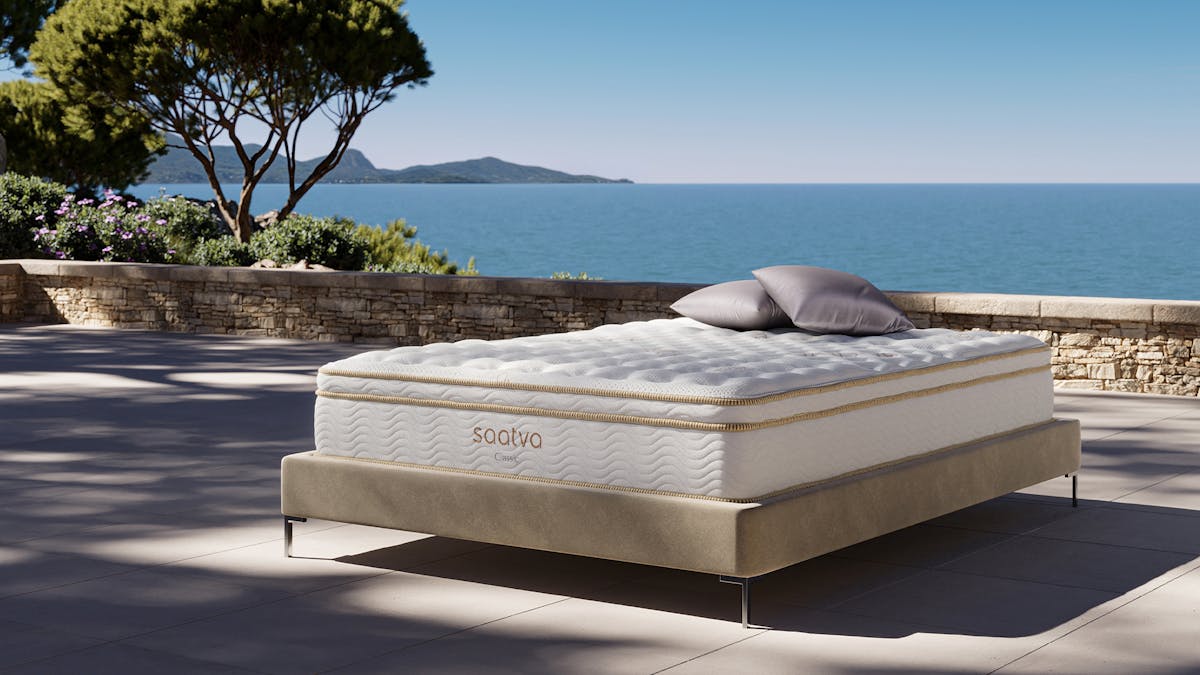
Saatva Classic
9.2/10
- Plush Soft option (3/10) provides the deep cushioning petite side sleepers need without requiring heavy body weight to compress
- Dual-coil construction prevents bottoming out while the Euro pillow-top cradles lighter frames
- Free white-glove delivery, setup, and old-mattress removal
- 365-night trial, one of the longest mainstream trials available, plus a lifetime warranty
- $99 return pickup fee during the trial period
- Ships flat rather than roll-packed, requires the white-glove delivery team
The Saatva Classic Plush Soft is purpose-built for the problem petite sleepers face: comfort layers that respond to lighter body weight. The dual-coil core keeps the mattress from collapsing, while the pillow-top Euro topper activates at petite weight to cradle the shoulders and hips. The 365-night trial gives ample time to confirm the fit.
Why standard mattresses underperform for petite sleepers
Most mattresses are engineered for sleepers in the 130 to 220 lb range. Comfort layer ILD ratings, coil gauge selection, and foam density are calibrated so that a person in that weight range activates the pressure-relief and contouring properties the mattress is designed to provide.
A petite sleeper under 130 lbs applies less force per square inch. That lighter load often is not enough to compress standard foam or latex comfort layers to the depth where they begin contouring to the body. The result: a mattress marketed as "medium" (5 to 6 out of 10) registers as noticeably harder to someone weighing 110 lbs than it does to someone weighing 175 lbs. Standard innerspring beds with thin Euro tops can feel close to sleeping on a firm surface.
Three things fail specifically for petite sleepers:
- Pressure relief: memory foam and latex need compression to adapt to the body's curves, without it, the shoulder and hip contact points stay under higher localized pressure
- Spinal alignment: a petite side sleeper does not sink enough to let the shoulder depress and keep the spine horizontal
- The contouring feel: the responsive adaptation that most foam mattress brands market does not activate at lighter weights
Best firmness for petite sleepers
The practical rule: go 1 to 2 firmness levels softer than the standard recommendation for your sleeping position.
| Sleep position | Standard recommendation | Petite sleeper adjustment | Target range |
|---|---|---|---|
| Side | Medium-soft to medium | Go softer | Soft to medium-soft (3 to 5/10) |
| Back | Medium to medium-firm | Go softer | Medium-soft to medium (4 to 6/10) |
| Stomach | Medium-firm to firm | Slight adjustment | Medium (5 to 6/10) |
| Combo | Medium | Slight adjustment | Medium to medium-soft (4 to 6/10) |
Stomach sleepers are the exception: petite stomach sleepers still need enough firmness to prevent the hips from sinking and arching the lower back, but their lighter weight means a standard medium mattress, rather than firm, usually provides enough support.
Best mattress picks for petite sleepers (2026 tested)
| Mattress | Type | Firmness | Best for | Trial | Queen price |
|---|---|---|---|---|---|
| Amerisleep AS5 | All-foam (Plush Bio-Pur) | Soft (Amerisleep's softest) | Petite sleepers wanting a plush feel | 100 nights | - |
| Saatva Classic | Dual-coil innerspring | Plush Soft 3/10 | Petite side sleepers, luxury feel seekers | 365 nights | ~$1,395 |
| PlushBeds Botanical Bliss | Natural latex all-foam | Soft to medium 5 to 6 | Petite sleepers wanting natural materials | 100 nights | ~$1,800 |
| Puffy (Original) | All-foam in-a-box | Medium to medium-firm 6 to 7 | Petite back and combo sleepers on a budget | 101 nights | ~$1,499 |
| Amerisleep AS3 | All-foam (Bio-Pur) | Medium 5/10 | Petite back, combo sleepers preferring foam | 100 nights | From $1,049 |
| Sweetnight CoolNest | Hybrid (gel foam + coils) | Medium-firm 6 to 7 | Budget-conscious petite sleepers | 100 nights | Sub-$600 |
PlushBeds Botanical Bliss
8.8/10
- Low-ILD natural Dunlop latex engages at petite weight without requiring heavy compression
- Natural and organic materials, GOLS and GOTS certified
- Configurable firmness, choose soft to medium for petite body types
- 25-year warranty, one of the longest in the industry
- Heavy mattress, not easy to move without help
- Higher price than foam alternatives
Natural latex at a low ILD responds well to lighter body weight, making the PlushBeds Botanical Bliss a strong fit for petite sleepers who want organic materials. The soft configuration activates contouring even under 110 lbs, with durable latex that outlasts most foam options.
Puffy Original
8.5/10
- Soft foam layers engage well at petite weight for pressure relief at shoulders and hips
- Strong motion isolation, good for petite sleepers who share a bed
- Lifetime warranty and 101-night trial
- Sleeps slightly warm compared to hybrid or latex options
- Medium-firm feel may not be soft enough for petite strict side sleepers
The Puffy Original's foam layers activate reliably at lighter body weights, delivering solid pressure relief for petite back and combo sleepers. The lifetime warranty makes it a low long-term risk.
Amerisleep AS3
8.6/10
- HIVE 5-zone layer provides zoned support, engaging at petite weight to relieve shoulders and hips
- Plant-based Bio-Pur foam contours without the heat retention of denser memory foams
- Medium 5/10 suits petite back and combo sleepers well
- CertiPUR-US certified, made in the USA, 20-year warranty
- Petite strict side sleepers may prefer the softer AS4 for deeper shoulder relief
- Softer edge support than a coil hybrid
The Amerisleep AS3's HIVE zoning provides meaningful pressure relief even at lower body weights, which is the core problem petite sleepers face on standard mattresses. The medium firmness and 100-night trial make it a solid foam alternative for petite back and combo sleepers.
Sweetnight CoolNest
7.9/10
- Hybrid coil system provides enough support without requiring heavy weight to prevent bottoming out
- Gel memory foam comfort layer activates at lighter weights for pressure relief
- Significantly lower price than premium options
- Shorter warranty and trial than premium picks
- Build quality not comparable to Saatva or PlushBeds at the higher end
For petite sleepers on a tight budget, the Sweetnight CoolNest delivers hybrid construction at a fraction of the premium price. The gel foam layer provides adequate pressure relief at lower body weights for the price bracket.
Best mattress types for petite sleepers
Soft memory foam, best for pressure relief
Soft memory foam (3 to 4 out of 10 firmness) works well for petite sleepers because even light body weight can compress the open-cell foam enough to activate its contouring properties. Petite sleepers also generate less body heat than heavier sleepers, which reduces memory foam's main drawback, heat retention. A soft Amerisleep AS4 or AS5 suits petite side sleepers who need deep shoulder relief.
Soft latex, best for responsive contouring
Natural latex at low ILD ratings (19 to 24) provides soft, springy pressure relief that does not require heavy weight to engage. Latex is also more durable than soft foam, which matters because petite sleepers may not compress the support core as much, meaning the comfort layer is doing proportionally more work over time. PlushBeds in Soft configuration is worth considering for petite sleepers who prefer natural materials.
Hybrid with a soft comfort layer
A hybrid labeled "plush" or "soft" combines a coil support core with a thick, softer foam layer that petite sleepers can actually compress. The coils prevent any bottoming-out concern while the soft foam provides contouring at lighter weights. This is the profile of the Saatva Classic Plush Soft, our luxury innerspring alternative.
Mattresses to avoid
- Firm or extra-firm mattresses: designed for heavier sleepers, these will not compress enough for petite body weight to feel any cushioning
- High-ILD latex (32+) in the comfort layer: too stiff to engage at petite weight
- Traditional innerspring with thin comfort layers: minimal give, hard feel at lighter weight
Mattress toppers as a fix for an existing mattress
If you already own a mattress that feels too firm, a 2 to 3 inch soft memory foam or low-ILD latex topper can resolve the problem without buying a new mattress. This is one of the clearest topper use cases: the support core is fine, only the comfort layer is too firm to engage at petite weight. See our topper vs. new mattress guide for when a topper makes more financial sense.
Petite sleepers should go 1 to 2 firmness levels softer than the standard recommendation for their sleep position. The Amerisleep AS5 (Amerisleep's softest, Plush Bio-Pur, 100-night trial) is our top pick for petite sleepers who want a plush, pressure-relieving surface; the Saatva Classic Plush Soft is the luxury innerspring alternative for petite side sleepers who want coil responsiveness and cushioning.
Frequently asked questions
Why does my new mattress feel too hard if I'm a light sleeper?
Mattresses are calibrated for sleepers in the 130 to 220 lb range. Under 130 lbs, you do not apply enough pressure to compress the comfort layers to the depth where they contour and relieve pressure. A mattress rated "medium" registers noticeably firmer to a 110 lb person than to a 175 lb person. The fix: go 1 to 2 firmness levels softer, or add a 2 to 3 inch soft topper.
What firmness should petite sleepers choose?
Side sleepers: soft to medium-soft (3 to 5 out of 10). Back sleepers: medium-soft to medium (4 to 6 out of 10). Stomach sleepers: medium (5 to 6 out of 10). Standard "medium-firm" mattresses often feel uncomfortably hard to petite sleepers who cannot compress the comfort layers enough.
Does being petite affect mattress longevity?
Yes, positively. Petite sleepers compress foam less deeply, which slows degradation. A mattress used by a petite sleeper typically maintains its support characteristics longer than the same mattress used by an average or heavy sleeper, often 10 to 12 years versus the rated 7 to 10.
Can a petite person use a mattress made for heavier people?
A heavy-duty mattress will feel very firm to a petite sleeper. High-gauge coils and dense foam are designed to resist heavy compression, a petite sleeper will not compress them enough for any comfort layer to engage. Stick to standard or soft firmness options.
This guide is part of our Best Mattress by Body Type hub, compare all the top picks and narrow down your choice there.