
 by
by The best mattress for overweight people needs reinforced coil support, thick comfort layers (12"+), and firm-side firmness. Our top pick is the Saatva HD: built specifically for sleepers 300+ lbs with 14-gauge coils rated at 500 lb per sleeper, a 5-zone latex layer, and Lumbar Zone reinforcement. The Amerisleep AS3 is the strongest all-foam alternative for sleepers up to 230 lbs.
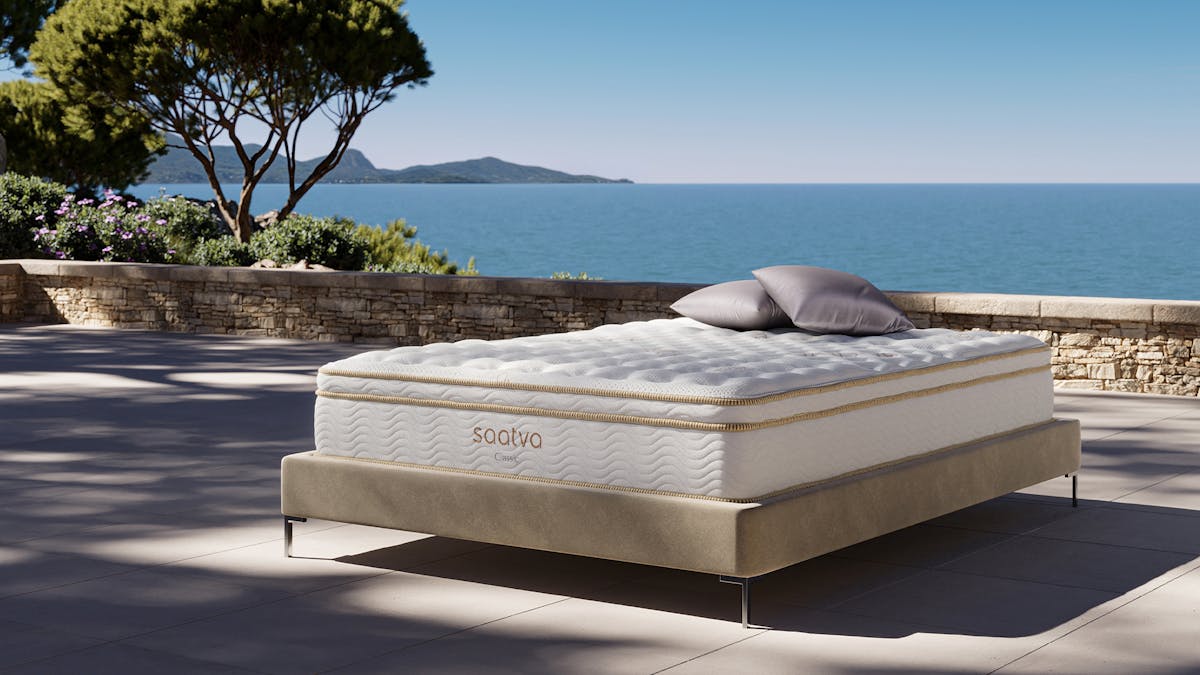
Saatva HD
9.3/10
- 14-gauge recycled steel coils, 25% stronger than industry standard, rated to 500 lb per sleeper
- 5-zone natural latex layer and Lumbar Zone active spinal wire keep heavier bodies properly aligned
- 15.5" profile with a 3" Euro pillow-top delivers comfort without bottoming out under load
- Free white-glove delivery, setup, and old mattress removal included
- 365-night trial and lifetime warranty on a mattress engineered for sustained heavy use
- Premium price point, significantly higher than standard luxury hybrids
- Heavy at 135 lb queen, requires sturdy platform with slats under 4" apart
- Not necessary for sleepers under 230 lbs, who can pay less for equivalent support
The Saatva HD is the only mainstream hybrid purpose-built for overweight and bariatric sleepers. Its coil system, latex zoning, and 15.5" profile work together to prevent the premature sagging and edge rolloff that standard mattresses suffer under sustained heavier loads. For anyone over 250 lbs, it removes the guesswork.
Why standard mattresses fail overweight sleepers
Most mattresses are designed around a 150-180 lb sleeper. If you are over 200 lbs, this matters in two concrete ways: the comfort layer compresses too deeply, creating pressure points instead of relief, and the support core degrades faster under sustained load. A mattress that rates "medium-firm" at 160 lbs will feel closer to medium or soft at 250 lbs, sometimes putting you directly on the base layer.
The most common failure modes are:
- Premature sagging: foam layers with density under 1.5 lb/ft³ will body-imprint within 2-3 years under heavier use. High-density foam (1.8+ lb/ft³) or pocketed coils resist this substantially better.
- Edge rolloff: standard foam perimeters compress when you sit on them. For heavier sleepers who need a stable seated edge to get in and out of bed, reinforced perimeter coils are a meaningful upgrade.
- Sleep heat: deeper sinkage increases surface contact area, trapping more body heat. Open-cell foams and hybrid airflow help, but heavier sleepers consistently run hotter on the same mattress as average-weight users.
What to look for: the spec checklist
| Spec | Minimum for 200-250 lbs | Recommended for 250+ lbs |
|---|---|---|
| Thickness | 12" | 13-14" (Saatva HD: 15.5") |
| Support core | Dense foam or pocketed coils | Pocketed coils (1,000+ queen) |
| Coil gauge | Standard | 14-gauge or stronger (Saatva HD: 25% stronger than standard) |
| Comfort foam density | 1.5 lb/ft³ | 1.8 lb/ft³ or latex |
| Edge support | Foam encasement | Reinforced perimeter coils |
| Trial | 100 nights minimum | 100+ (long enough to test durability) |
| Warranty sag coverage | > 1" sag threshold | 1.5" or less |
Firmness by weight and sleep position
The heavier you are, the more you sink into any given firmness level. What feels medium-firm at 160 lbs will feel closer to medium at 250 lbs. As a starting guide:
| Sleep Position | Under 200 lbs | 200-250 lbs | 250+ lbs |
|---|---|---|---|
| Side | Soft-Medium (3-5) | Medium (5-6) | Medium-Firm (6-7) |
| Back | Medium-Firm (5-7) | Firm (7-8) | Firm (7-8) |
| Stomach | Firm (7-8) | Firm (7-8) | Extra-Firm (8-9) |
Top picks for overweight sleepers (tested)
Amerisleep AS3
8.9/10
- HIVE 5-zone system firms under hips and lumbar, critical for heavier bodies to stay aligned
- Bio-Pur open-cell foam dissipates heat better than standard memory foam
- CertiPUR-US certified, made in the USA
- 20-year warranty covers sagging over 1.5 inches, meaningful protection for heavy use
- Softer edges than a hybrid, sleepers over 230 lb near the perimeter will notice compression
- Sleepers consistently over 230 lb should consider the AS5 Hybrid for added coil durability
For overweight sleepers up to 230 lbs, the AS3 delivers the best balance of pressure relief and zoned support in an all-foam bed. The 20-year warranty with a 1.5" sag threshold means you have real recourse if the foam degrades under heavier use, which cheaper foam beds almost never offer.
Saatva Classic
8.8/10
- Dual-coil system (884 pocketed + 416 tempered steel) handles heavier bodies better than single-layer foam
- Outstanding edge support, scored 10/10 in NapLab perimeter compression testing
- Free white-glove delivery, in-room setup, and old mattress removal
- 365-night trial and lifetime warranty
- Not specifically engineered for 300+ lb sleepers the way the Saatva HD is
- Moderate motion isolation, the bounce transfers partner movement
- Heavy at ~110 lb queen, hard to rotate without help
If you want a luxury coil hybrid at a lower price than the HD, the Saatva Classic in Luxury Firm is an excellent middle ground for sleepers in the 200-280 lb range. The dual-coil system and reinforced lumbar zone hold up substantially better than standard foam beds under higher loads.
Edge support matters more than you think
For overweight sleepers, strong edge support has two practical functions: you can use the full mattress surface without rolling toward the center, and you get a stable seated edge for getting in and out of bed. This is a genuine quality-of-life difference, especially for people with knee or hip issues who rely on the edge to push off when rising.
Coil hybrids perform substantially better at edge support than all-foam beds. The Saatva HD and Saatva Classic (10/10 NapLab edge test) are built with high-density foam rails around the perimeter precisely to solve this problem for larger sleepers.
Durability: the real cost of a cheap mattress for heavy sleepers
A $600 all-foam mattress may feel adequate on day one. By year three, a 250 lb sleeper will have compressed the comfort layers enough that they are effectively sleeping on the base foam. Factor in the cost of replacing a cheaper mattress every 4-5 years against a lifetime warranty on the Saatva HD or Saatva Classic, and the math shifts significantly toward the more durable build.
The minimum specs for durability at 230+ lbs: 1.8 lb/ft³ foam density, or pocketed coils for the support core. The Amerisleep AS3's Bio-Core base layer meets the density threshold up to about 230 lbs. For anything above that, coil construction is the more reliable long-term choice.
For sleepers over 250 lbs, the Saatva HD is the purpose-built choice with 14-gauge coils rated to 500 lb per sleeper, a 15.5" profile, and lifetime warranty. For overweight sleepers up to 230 lbs who prefer an all-foam feel, the Amerisleep AS3 is the strongest option with real sag coverage. The Saatva Classic is the best mid-range coil hybrid for anyone in between.
Frequently asked questions
What firmness does a 250 lb person need?
Medium-firm to firm (6-8/10), adjusted by sleep position. Back and stomach sleepers at 250 lbs should go firm; side sleepers can usually stay at medium-firm to keep pressure relief at the hips. The firmness you pick should account for the 1-2 levels of extra sinkage that heavier bodies create in standard foams.
Is an all-foam mattress good for heavy sleepers?
For sleepers under 230 lbs, a high-quality all-foam mattress with dense base foam (1.8+ lb/ft³) works well. Over 230 lbs, edge support and long-term durability both favor a hybrid. The Amerisleep AS5 Hybrid is the step up from the AS3 all-foam for heavier sleepers who want the foam feel with coil durability underneath.
How often do heavy sleepers need to replace their mattress?
Every 6-8 years rather than 8-10, because heavier loads compress foam and fatigue coils faster. A long warranty with a low sag threshold (under 1.5 inches) is a concrete indicator that a brand stands behind durability for heavier use, not just marketing language.
Does weight affect mattress thickness choice?
Yes. The rule of thumb is 12" minimum for 200-250 lbs, and 13-14" for 250+ lbs. The extra thickness provides more comfort-layer material to compress before you bottom out onto the support core, which is what creates pressure points and the feeling of sleeping on the floor. The Saatva HD at 15.5" is built with this margin intentionally.
Saatva HD
9.3/10
14-gauge coils rated to 500 lb per sleeper, 5-zone latex zoning, 15.5" profile, 365-night trial and lifetime warranty. The only mainstream hybrid purpose-built for overweight and bariatric sleepers in our 2026 testing.