
 by
by Shift workers battle heat, disrupted circadian rhythms, and shortened recovery windows. The Amerisleep AS3 earns the top spot as a Medium-feel all-foam bed built to balance support and softness for every sleep position, with Bio-Pur foam that sleeps cooler than traditional memory foam and strong motion isolation for partners on different schedules. For a luxury innerspring alternative with outstanding coil airflow, the Saatva Classic remains a strong pick with its dual-coil construction and free white-glove delivery that removes your old mattress on day one.
Best Mattress for Shift Workers 2026: Daytime Sleep Pick?
For shift workers, the right mattress is a Medium-feel bed that balances support and softness across sleep positions, isolates motion for partners on different schedules, and sleeps cool enough for warm daytime rooms. The Amerisleep AS3 fits that profile: it is a Medium-feel all-foam bed built to balance support and softness for every sleep position, made with Bio-Pur foam that dissipates heat better than traditional memory foam, and it isolates motion exceptionally well when a partner is getting ready while you sleep. It comes with a 100-night trial, a 20-year warranty, and free shipping and returns. For a luxury innerspring alternative with strong airflow, the Saatva Classic remains the page's runner-up pick. A mattress does not treat sleep or circadian disruption; consult a doctor for persistent symptoms.
Amerisleep AS3
8.9/10
- Open-cell Bio-Pur foam dissipates body heat better than traditional memory foam
- HIVE 5-zone layer targets pressure relief for compressed recovery sleep
- 10/10 motion isolation score, ideal when partners are very light sleepers
- CertiPUR-US certified, made in the USA, free FedEx shipping
- All-foam construction holds more heat than a coil hybrid in warm rooms
- Softer perimeter than a reinforced hybrid edge
The AS3's Medium feel balances support and softness for every sleep position, so back, side, and stomach sleepers all get spinal alignment during compressed recovery sleep, while Bio-Pur foam keeps the surface cooler than traditional memory foam and motion isolation stays excellent for partners on different schedules.
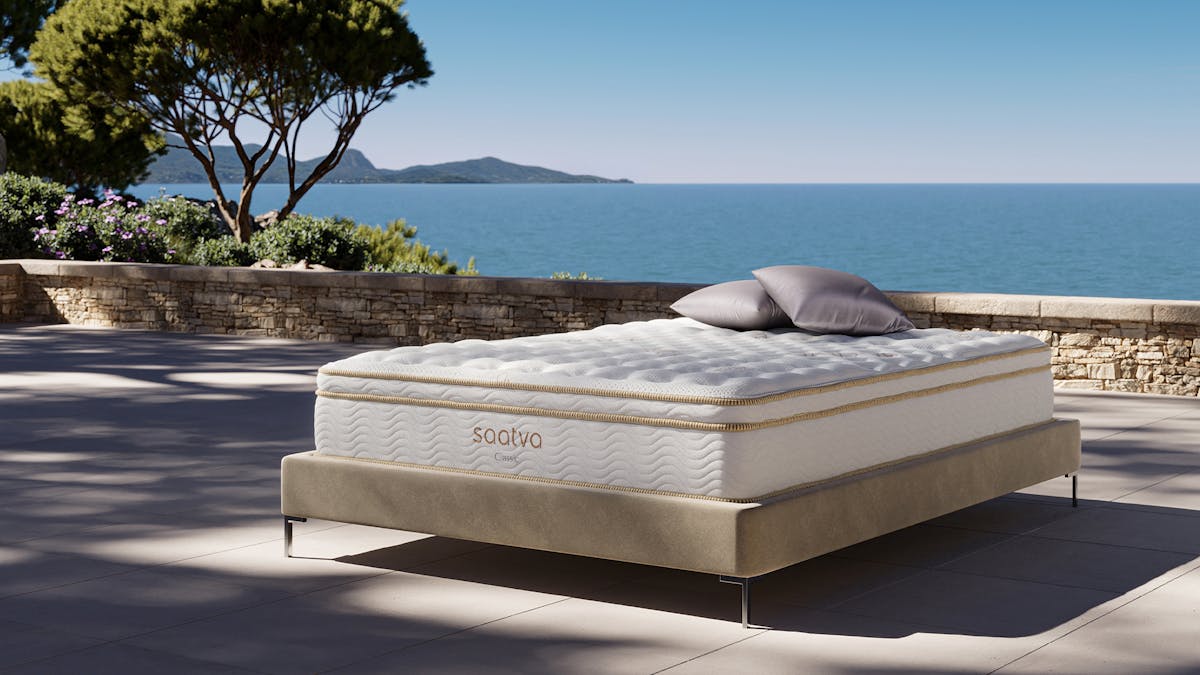
Saatva Classic
9.2/10
- Outstanding cooling via open coil-on-coil airflow through the full mattress depth
- Dual-coil construction moves heat away from your body as you shift position
- Free white-glove delivery, in-room setup, and old-mattress removal
- 365-night trial and lifetime warranty, with 3 firmness options
- Higher motion transfer than foam, less ideal if partner is an extremely light sleeper
- $99 return fee during the trial period
For shift workers sleeping during the day when ambient temperatures run higher, the Saatva Classic's coil-on-coil construction gives more airflow than any foam mattress at this price point, and the 365-night trial covers your full circadian adjustment window.
Why Shift-Work Sleep Is Harder Than It Looks
Your circadian rhythm runs on light cues. When you're sleeping at 9 a.m. after a night shift, your core body temperature is still rising, sunlight is seeping through the curtains, and your brain is getting conflicting signals. That's three separate problems stacked on top of each other, none of which a mattress alone solves.
Heat is the most underrated issue. Daytime ambient temperatures are often 5 to 10 degrees higher than nighttime, which is exactly the wrong direction for sleep. Your body needs to drop its core temperature to fall and stay asleep. A mattress that traps heat makes this harder. One that promotes airflow makes it measurably easier, and those margins add up when you're already fighting your biology.
For shift workers sharing a bed with a partner on a different schedule, motion transfer adds a second layer. Rolling over at 2 p.m. while someone else is getting ready for the day is a reliable way to cut sleep short.
What to Look For in a Mattress for Daytime Sleep
Cooling and airflow
A coil-based or hybrid construction outperforms all-foam beds for daytime sleepers. The open coil structure allows air to move through the mattress as you shift position. Dense foam, particularly thick memory foam, absorbs and holds body heat in a way that can feel tolerable at night but noticeably uncomfortable when the room itself is warm.
The Saatva Classic's dual-coil system creates natural chimney-effect airflow: micro-coils in the comfort layer above pocketed coils in the support core give heat multiple escape routes rather than just the mattress surface. NapLab testing gives it a 10/10 surface cooling score with a maximum surface temperature of 89.5 degrees Fahrenheit.
Support and pressure relief for compressed recovery
Shift workers often get fewer total sleep hours, so the hours you do get need to count. A mattress that leaves you waking with a stiff back or sore hips eats into what little recovery time you have. Medium-firm suits most adults and most sleep positions, supportive enough to keep the spine aligned but with enough surface give to relieve pressure at shoulders and hips.
The Saatva Classic in Luxury Firm (6 out of 10) provides a reinforced lumbar zone pad between the two coil layers, which gives targeted spinal support without creating pressure at the shoulders or hips for back and side sleepers alike.
Motion isolation if you share a bed
Nurses, firefighters, and factory shift workers often have partners on standard schedules. Individually wrapped pocketed coils reduce motion transfer compared to traditional open coils. If motion isolation is your absolute top priority and cooling is secondary, the Amerisleep AS3's all-foam construction scores higher on lab motion tests. But for most shift workers, the Saatva's coil system is adequate if partners are not extreme light sleepers.
Shift Workers: Quick Comparison
| Mattress | Type | Cooling | Motion isolation | Trial | Queen from |
|---|---|---|---|---|---|
| Amerisleep AS3 | All-foam Bio-Pur | Very good (open-cell foam) | Excellent 10/10 | 100 nights | $1,049 |
| Saatva Classic | Dual-coil innerspring | Outstanding 10/10 (coil airflow) | Moderate (pocketed coils) | 365 nights | $1,879 |
Daytime Sleep Environment: the Mattress Only Does Part of the Work
A better mattress raises your ceiling, but three environmental factors often do more work than the mattress itself:
- Blackout curtains. Light suppresses melatonin. Heavy-duty blackout curtains, not room-darkening panels that still let in edges, drop your room close to true dark.
- Room temperature: 65 to 68 degrees Fahrenheit. The optimal range for sleep onset is well-established. A ceiling fan, window AC, or simply keeping curtains closed through the morning heat can hold the room in that range.
- White noise or earplugs. Daytime noise, traffic, lawnmowers, delivery trucks, doesn't stop because you're sleeping. A white noise machine running at a consistent 55 to 65 dB masks irregular sounds without you having to hear silence interrupted. Box fans do the same job and double as cooling.
A consistent pre-sleep routine also matters: keep the same wind-down sequence (dim lights 30 to 45 minutes before bed, avoid caffeine in the last 5 to 6 hours before sleep, limit screen brightness), even when that routine happens at noon. The routine signals your brain more than the clock does.
Nurses dealing with overnight and rotating shifts face an especially compressed recovery window. Our best mattress for nurses guide covers picks tuned to that specific schedule.
Frequently Asked Questions
Is memory foam bad for shift workers?
Not categorically, but it's riskier. Thick memory foam layers absorb and retain body heat more than coil or hybrid beds. If you sleep in a climate-controlled room you can reliably keep at 65 to 68 degrees Fahrenheit, memory foam with open-cell construction (like Bio-Pur) becomes viable. If your daytime bedroom runs warm, a hybrid or innerspring like the Saatva Classic is the safer bet.
What firmness should a shift worker get?
Medium-firm (around a 5 to 6 out of 10) works for most adults across most sleep positions. It keeps the spine neutral while cushioning pressure points. Stomach sleepers should lean firmer. Side sleepers who wake with shoulder pain may want to drop to a medium (4 to 5).
Does a cooling mattress topper fix a hot mattress?
Partly. A latex or wool topper can reduce surface heat, but if the mattress itself is a dense all-foam construction, you're still limiting airflow through the base. Toppers help more on spring or hybrid beds where the core already breathes. They're a worthwhile addition, not a substitute for the right base.
How much does sleep environment matter compared to the mattress?
For daytime sleep specifically, environment often matters more. Blackout curtains and a cool room address the two biggest biological obstacles, light and temperature, that a mattress cannot. Buy a decent mattress first, then invest in curtains and room cooling before spending more on mattress upgrades.
Do shift workers sleep better on a firmer or softer mattress?
Your sleep position matters more than your schedule. What shift workers should weight more heavily than other sleepers is durability and cooling, since poor daytime sleep has less room for error than nighttime sleep backed by a full 8-hour window.
For shift workers, the Amerisleep AS3 is the most complete pick: a Medium-feel all-foam bed balancing support and softness for every sleep position, Bio-Pur foam that sleeps cooler than traditional memory foam, excellent motion isolation, a 100-night trial, and a 20-year warranty. For a luxury innerspring alternative with outstanding coil-on-coil cooling, the Saatva Classic remains a strong runner-up.
This guide is part of our Best Mattress by Use Case hub, compare all the top picks and narrow down your choice there.