
 by
by Our #1 recommendation for slipped-disc relief
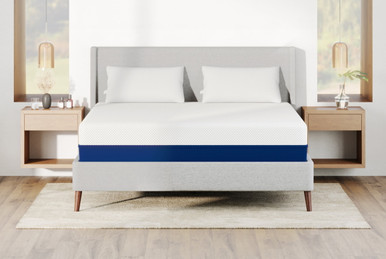
Amerisleep AS3
For disc patients who prefer a foam feel or sleep on their side, the AS3 hits the medium range the clinical research consistently points to, while the HIVE zoning directly targets the two most common disc herniation levels.
Our first recommendation for slipped-disc relief is the Amerisleep AS3. For disc patients who prefer a foam feel or sleep on their side, the AS3 hits the medium range the clinical research consistently points to, while the HIVE zoning directly targets the two most common disc herniation levels. The Saatva Classic is our runner-up.
Amerisleep AS3
9.0/10
- HIVE 5-zone support firms under the lumbar (zone 3 of 5), targeting L4-L5 and L5-S1 disc levels directly
- Bio-Pur open-cell foam absorbs hip and shoulder pressure without deep sinkage that would rotate the pelvis
- CertiPUR-US certified, made in the USA, 100-night full-refund trial
- Medium 5/10 firmness works well for side sleepers with disc conditions
- Softer perimeter than a coil hybrid, less helpful for patients who need firm edge support to stand up
- Sleepers over 230 lb may prefer the AS5 Hybrid for firmer lumbar backing
For disc patients who prefer a foam feel or sleep on their side, the AS3 hits the medium range the clinical research consistently points to, while the HIVE zoning directly targets the two most common disc herniation levels.
Saatva Classic
9.2/10
- Dual-coil construction with a dedicated lumbar zone foam crown pad targeting the L4-L5 and L5-S1 region
- Outstanding edge support, critical for disc patients who need firm leverage to stand up without loading the lumbar flexors
- Luxury Firm option (6/10) sits precisely in the medium-firm clinical sweet spot for disc conditions
- Free white-glove delivery, setup, and old-mattress removal, industry-best 365-night trial, lifetime warranty
- Ships flat, not roll-packed, heavier to maneuver during setup
- $99 return processing fee applies during the trial period
For lumbar disc herniation and bulge, the Saatva Classic in Luxury Firm delivers the firmest lumbar zone reinforcement of any mainstream mattress, while the 365-night trial gives enough time to evaluate comfort through a full disc recovery arc.
What is a slipped disc? Herniation, bulge, and sciatica explained
Slipped disc is informal shorthand for three closely related conditions that spine specialists distinguish precisely.
Disc herniation (also called a ruptured or prolapsed disc) occurs when the nucleus pulposus, the gel-like interior of an intervertebral disc, breaks through the annulus fibrosus, the tough outer ring. The extruded material can press directly on nerve roots. At L4-L5 and L5-S1, the two most common levels, this typically produces pain radiating from the lower back into the buttock, thigh, calf, and foot.
Disc bulge is an earlier-stage condition in which the nucleus strains the annulus outward but does not rupture through it. Bulge is common at L4-L5 in adults over 35 and may produce similar but often less severe radicular symptoms.
Sciatica is not a disc diagnosis, it is a symptom: radiating pain along the sciatic nerve distribution caused by nerve root compression, most often from disc herniation, disc bulge, or foraminal stenosis.
The Spine Patient Outcomes Research Trial (SPORT, published in JAMA) found that over 80% of disc herniation patients improve within 12 weeks regardless of treatment modality, but sleep surface quality significantly affects pain levels during that window. A 2015 study in Sleep Health (Jacobson et al.) found that a medium-firm mattress reduced non-specific low back pain and disability compared to a firm surface, aligning with the clinical preference for neutral spinal positioning.
Why firmness matters: neutral spine alignment and disc pressure
Spinal disc pressure is measurably lower in the lying position than seated. The mechanism by which mattress firmness affects disc patients is direct: a surface too soft allows the pelvis to sink below the thoracic cage, creating lumbar flexion during sleep that increases pressure on the posterior annulus, where most herniations originate. A surface too firm creates point pressure at the shoulders and hips, forcing the spine into lateral or axial compensations.
Medium-firm (5 to 6.5 on a 1-to-10 firmness scale) consistently emerges as the clinical sweet spot. A randomized controlled trial published in The Lancet (Kovacs et al., 2003) enrolled 313 adults with chronic non-specific low back pain: medium-firm mattresses produced significantly greater reduction in disability scores and pain scores at 90 days compared to firm mattresses.
For patients with disc-specific pathology, physical therapists additionally emphasize three features:
- Lumbar lordosis preservation: the natural inward curve of the lower back must be maintained during sleep. Sag eliminates this curve; excessive firmness forces hyper-lordosis.
- Hip-to-shoulder ratio accommodation: wider hips relative to waist require enough surface give at the hip girdle to keep the lumbar spine neutral in side-lying.
- Edge support: disc patients who have difficulty standing up benefit from reinforced perimeter coils that allow them to sit on the mattress edge and lever upright without loading the lumbar flexors under compression.
Best mattresses for a slipped disc (2026)
| Mattress | Type | Firmness | Lumbar support | Trial | Queen price |
|---|---|---|---|---|---|
| Saatva Classic | Innerspring hybrid | Luxury Firm 6/10 | Excellent, zoned lumbar coil pad | 365 nights | From $1,395 |
| Amerisleep AS3 | All-foam (Bio-Pur) | Medium 5/10 | Excellent, HIVE 5-zone lumbar | 100 nights | From $1,049 |
| Saatva Rx | Hybrid (therapeutic) | Gentle-firm ~5.5/10 | Dual lumbar zone active wire | 365 nights | $3,295 |
Side vs back sleeping with a disc condition
Back sleeping is generally the most mechanically neutral position for lumbar disc pathology. It distributes body weight across the largest surface area and minimizes lateral shear on the vertebrae. Placing a pillow under the knees reduces lumbar lordosis slightly, which reduces posterior disc pressure, particularly useful for patients with a flexion-intolerant herniation pattern.
Side sleeping is the most common position and is compatible with disc conditions when executed correctly. A pillow between the knees (not just above them) keeps the top hip from rotating anteriorly, preventing lateral lumbar flexion that increases annular stress on the contralateral side. The mattress must provide enough pressure relief at the greater trochanter and shoulder so the spine can maintain a horizontal line rather than sagging toward the center of the bed.
Stomach sleeping is contraindicated for most disc patients. Prone positioning forces the lumbar spine into extension and compresses the posterior elements and facet joints. It also requires cervical rotation to allow breathing, adding cervical load. Physical therapists routinely counsel disc patients to transition away from this position during acute and subacute phases.
An adjustable bed frame with zero-gravity preset raises the head and elevates the legs simultaneously, reducing lumbar disc pressure by redistributing load off the lumbar vertebrae. This is particularly effective for patients with foraminal stenosis, where the hip-flexed position opens the foraminal space and allows nerve root decompression during sleep onset.
Saatva Rx: the premium therapeutic option
The Saatva Rx ($3,295 queen) was engineered specifically for chronic back and joint conditions. Its dual lumbar zone active wire system provides targeted dynamic support that flexes under direct pressure while maintaining firmness against lateral displacement of the disc segment. A 15-inch hybrid construction pairs individually wrapped microcoils in the comfort layer with 897 pocketed support coils in a 5-zone configuration.
At approximately 5.5 to 6 effective firmness (Saatva calls it gentle-firm), it sits precisely in the medium-firm window recommended by clinical guidelines. The Rx is most appropriate for acute or severe disc conditions and for post-discectomy recovery (after surgical clearance). For stable chronic or subacute disc herniation, the Saatva Classic covers the same clinical requirements at significantly lower cost.
What to avoid when shopping for a slipped disc
Very soft mattresses: beds rated below 4 out of 10 allow the lumbar spine to sag into prolonged flexion overnight. This loads the posterior annulus, exactly the region where most herniations originate.
Very old mattresses: visible center sag deeper than 1.5 inches cannot be corrected with a topper. A mattress with this kind of depression creates a hammock effect that concentrates load on the affected disc segments for 7 to 8 hours per night. Replacement is the only effective solution.
Extra-firm mattresses (8 or 9 out of 10): these stop the pelvis from settling, which forces the spine into rigid extension and creates its own pattern of disc and facet joint stress, particularly in side sleepers.
How long until a new mattress helps a slipped disc?
Most people report improvement within 2 to 4 weeks of switching to an appropriate mattress, with full adaptation closer to 12 weeks in the Jacobson study. If pain continues after 4 to 6 weeks on a new medium-firm bed, the cause may be positional or may warrant medical evaluation. This is why a long trial window matters, both the 100-night Amerisleep trial and the 365-night Saatva trial allow enough time to evaluate comfort through a meaningful portion of a conservative treatment arc.
For a slipped disc, choose medium-firm with active lumbar zoning. The Saatva Classic in Luxury Firm is the top pick on a 365-night trial; the Amerisleep AS3 is the best all-foam alternative on a 100-night trial.
Frequently asked questions
What firmness mattress is best for a slipped disc?
Medium-firm, rated 5 to 6.5 on a 1-to-10 scale, is the clinical consensus for lumbar disc herniation and bulge. This maintains the natural lumbar lordosis without creating excessive pressure at the hips and shoulders. Back sleepers can tolerate a slightly firmer surface (6 to 7); side sleepers typically need the lower end of the range (5 to 5.5) to allow adequate hip sinkage for spinal neutrality.
Can a mattress topper help a slipped disc?
A topper is a temporary measure, not a substitute for a mattress with appropriate internal support architecture. If your existing mattress is firm but not worn, a 2-inch medium-density latex topper can reduce surface pressure. If the mattress is sagging, the topper will simply conform to the sag and the underlying lumbar alignment problem remains.
Is memory foam or a coil hybrid better for disc herniation?
Zoned design matters more than the material. A coil hybrid with a dedicated lumbar pad (Saatva Classic) provides the strongest edge support and most direct lumbar reinforcement for back sleepers. A plant-based foam with lumbar zoning (Amerisleep AS3) works best for side sleepers who need more contouring and motion isolation. Both meet the clinical criteria for disc conditions.
How long should I try a new mattress before returning it?
At least 30 days, ideally 60 to 90. Disc conditions are variable and your body needs time to re-pattern around better spinal alignment. The 365-night Saatva trial and the 100-night Amerisleep trial both provide enough time to evaluate comfort through a meaningful portion of a conservative treatment arc.
This guide is part of our Best Mattress for Pain Relief hub.
Verdict
Our #1 pick for slipped-disc relief
The Amerisleep AS3 is where we would start: HIVE five-zone support, plant-based Bio-Pur foam, a 100-night trial and a 20-year warranty.