
 by
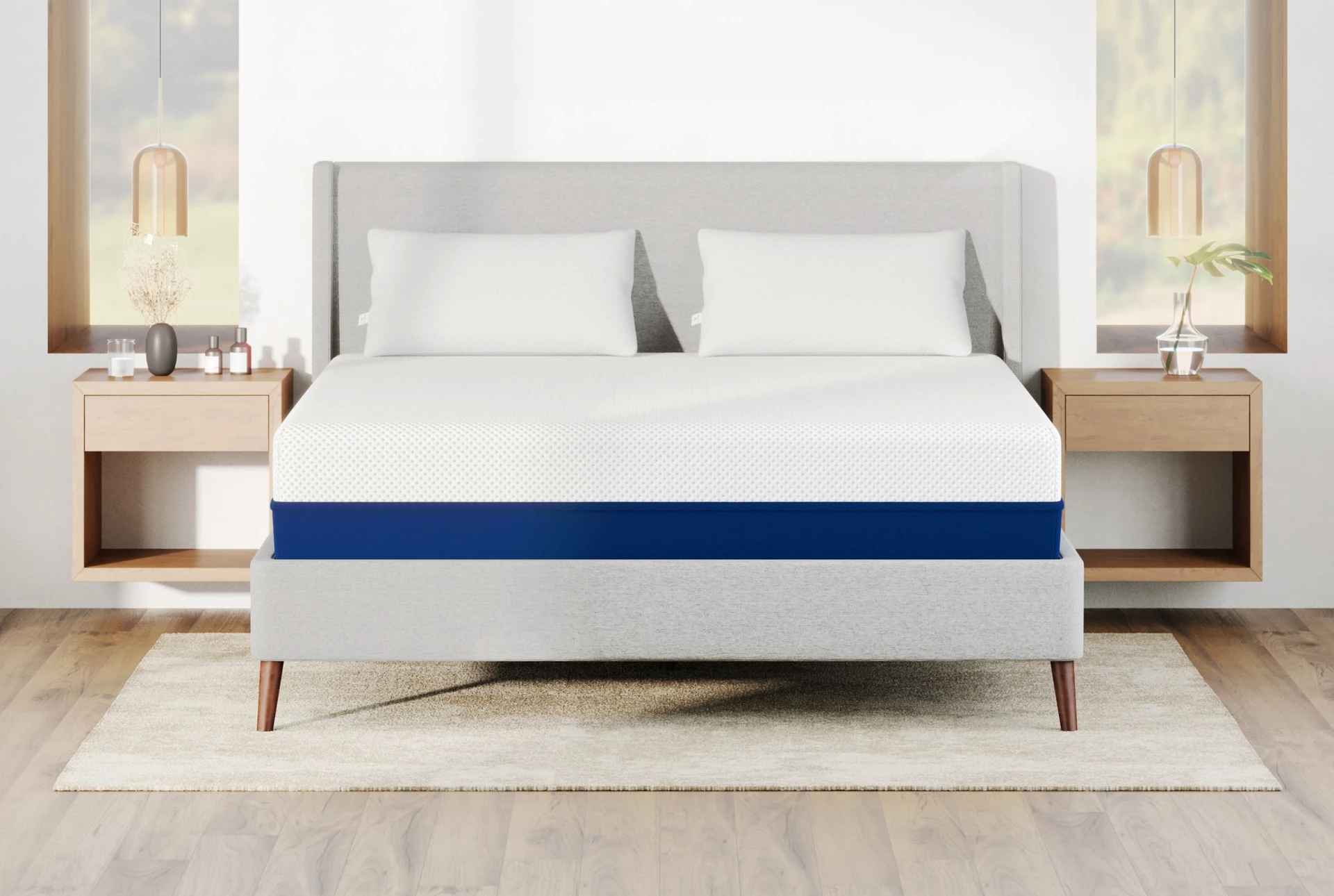
by Our first recommendation for doctors who prefer a medium foam feel is the Amerisleep AS3. Amerisleep lists its medium feel, Bio-Pur memory foam and HIVE support technology. Match the feel to your sleeping position and evaluate partner disturbance in your own bedroom.
Amerisleep AS3
Amerisleep lists its medium feel, Bio-Pur memory foam and HIVE support technology.
Our first recommendation is the Amerisleep AS3. Match the feel to your sleeping position and evaluate partner disturbance in your own bedroom.
Why doctors need a different mattress standard
Standard sleep advice assumes 7 to 9 consecutive hours. For residents, fellows, and attending physicians on call, sleep happens in fragments: 90 minutes here, 4 hours there. The bottleneck shifts from duration to density. Every minute spent fighting a pressure point, overheating, or absorbing a partner's movement is a minute stolen from NREM Stage 3, the only stage that delivers full physical recovery.
A 2015 study in Sleep Health (Jacobson et al.) found that medium-firm mattresses produced significant reductions in chronic non-specific back pain and improved sleep quality over 12 weeks. The mechanism is straightforward: when the mattress eliminates physical discomfort, the nervous system can downshift faster. For someone with a 3-hour window before the next call, shaving 10 minutes off sleep onset is meaningful.
Three mattress properties translate directly to faster, deeper sleep during compressed windows:
- Pressure elimination: Pressure points cause micro-arousals that push you toward Stage 1 and 2 sleep. A zoned support layer that firms specifically under heavy zones, such as the lumbar and hips, prevents the sag that creates those pressure points.
- Thermal neutrality: Core body temperature needs to drop 1 to 2 degrees Fahrenheit for sleep to initiate. A coil-based construction allows airflow that slows heat buildup far better than closed-cell foam.
- Setup convenience: White-glove delivery that eliminates assembly and off-gassing time matters when you walk in exhausted and need to sleep immediately.
Best mattresses for doctors: quick comparison
| Mattress | Type | Firmness | Key advantage | Trial | Queen price |
|---|---|---|---|---|---|
| Amerisleep AS3 | Bio-Pur memory foam; see selected construction | Medium | Amerisleep lists its medium feel, Bio-Pur memory foam and HIVE support technology. | See current manufacturer terms | See current product page |
| Saatva Classic | Innerspring hybrid | 3 options, Lux Firm 6/10 | White-glove setup, zoned lumbar, airflow | 365 nights | From $1,879 |
| PlushBeds Botanical Bliss | Organic latex | Multiple options | Natural latex, no off-gassing, durable | 100 nights | From $1,699 |
| Puffy Lux | Hybrid | Medium 5.5/10 | Pressure mapping, cooling foam | 101 nights | From $1,349 |
Saatva Classic
8.9/10
- Dual-coil system with a zoned lumbar foam pad keeps the spine neutral during compressed sleep windows
- Free white-glove delivery, in-room setup and old-mattress removal, no assembly required after a long shift
- Excellent airflow through the coil layer, runs cooler than all-foam alternatives at this price
- 365-night trial and lifetime warranty, the longest in the category
- Three firmness options (Plush Soft, Luxury Firm, Firm) cover every sleep position
- More motion transfer than an all-foam mattress, relevant if a light-sleeping partner shares the bed
- $99 return fee applies during the trial window
When you arrive home after a 12-hour or 30-hour shift, the last thing you want is to assemble a mattress or wait for off-gassing. Saatva delivers, sets up, and takes away your old mattress. The zoned coil construction handles lumbar support without a foam sandwich that traps heat, and the 365-night trial covers well beyond any rotation cycle to confirm the fit.
Which firmness works for fragmented sleep
Medium-firm (5 to 6.5 out of 10) is the correct target for most physicians. Here is why the edges fail:
- Too soft (under 4/10): The hips sink below the lumbar spine, creating a reverse arch. The body responds by shifting position, which triggers arousal. With 3 hours available, position changes you do not consciously notice still count against deep sleep time.
- Too firm (above 8/10): Contact pressure builds at the hips and shoulders. The body loads nearby musculature to bridge the pressure points, which creates low-grade tension that prevents full relaxation.
- Medium-firm sweet spot: The pelvis settles just enough to maintain natural lumbar lordosis while the comfort layer cushions the lateral prominences. Zoned construction that firms specifically under the lumbar (Saatva lumbar pad, Amerisleep HIVE) does this more precisely than uniform firmness.
For physicians who sleep primarily on their back during call, medium-firm pairs well with a pillow positioned under the knees, not the lumbar, to let the spine settle without extension. Side sleepers should target the softer end of medium-firm (5/10) and prioritize shoulder pressure relief.
PlushBeds Botanical Bliss
8.7/10
- GOLS-certified organic Dunlop latex, no off-gassing, ideal for physicians sensitive to chemical exposure at work
- Naturally temperature-neutral and breathable, latex sleeps cooler than memory foam
- Durable: latex maintains support properties 15 to 20 years without sagging
- 25-year warranty
- Heavier than foam mattresses, harder to adjust independently
- Higher price point than foam alternatives
Physicians who already minimize chemical exposure throughout their day often prefer a mattress with zero off-gassing. The Botanical Bliss delivers organic latex responsiveness, good pressure relief, and a lifespan that outlasts most medical careers.
Motion isolation on call nights
If you share a bed with a partner whose schedule does not match yours, motion isolation matters more than any other single mattress property. The Amerisleep AS3 scored 10/10 on NapLab's accelerometer test with 2.11 m/s² transfer, against an 8.80 m/s² category average. That is not a marginal difference. It means your partner rolling over at 2 a.m. registers as background noise rather than a wake stimulus.
The Saatva Classic, by contrast, scores lower on motion isolation due to its coil-on-coil construction, which returns bounce rather than absorbing it. If you are the lighter sleeper and your partner is the one on a different schedule, the AS3 is the correct choice for that specific variable. If you are the one coming home at 3 a.m. and need the practical advantages, such as white-glove setup, superior airflow, and a longer trial, the Saatva Classic wins on the overall balance.
Puffy Lux
8.4/10
- Pressure-mapped comfort layer designed to relieve shoulder and lumbar contact points
- Cooling Cloud foam layer reduces heat retention
- Lifetime warranty, 101-night risk-free trial
- More accessible price point for residents managing student debt
- No white-glove delivery
- Less lumbar zoning precision than Saatva or AS3
For residents in the early years managing $200,000 in student loans alongside a $65,000 salary, the Puffy Lux delivers meaningful pressure relief and a lifetime warranty at a more manageable price point than the premium options above.
Durability: why it matters for a physician's budget
Residents earn roughly $60,000 to $70,000 per year in 2026 while working 60 to 80 hours per week. The calculus for a $1,879 mattress that lasts 15 years is about $0.34 per night, against perhaps $400 spent on a budget mattress replaced every 3 years at $0.37 per night. The premium mattress matches cost-per-night before you factor in the performance difference.
Tempered steel coils (Saatva's dual-coil system) and high-density latex (PlushBeds Botanical Bliss) both hold their support properties over a decade in a way that lower-density foam does not. Sagging foam that was once medium-firm becomes effectively soft over time, recreating exactly the spinal misalignment that disrupts sleep.
Our first choice is the Amerisleep AS3. Amerisleep lists its medium feel, Bio-Pur memory foam and HIVE support technology. Match the feel to your sleeping position and evaluate partner disturbance in your own bedroom.
Frequently asked questions
What mattress features matter most for residents with unpredictable sleep?
Pressure relief, thermal neutrality, and setup convenience. A mattress that creates discomfort, traps heat, or requires 20 minutes of assembly after a 30-hour shift adds friction to an already compressed recovery window.
Is a firm or soft mattress better for short sleep windows?
Medium-firm (5 to 6.5 out of 10) is the target. Too firm creates pressure point discomfort that the body tries to resolve through position changes. Too soft leads to lumbar sag and reverse arch. Medium-firm lets the body settle without creating new problems.
Should doctors invest in a premium mattress during residency?
Yes. Residency is when sleep deprivation is most acute. The cost per night over 12 to 15 years on a $1,879 mattress is under $0.35. That is one of the better health investments available to a resident, backed by published research on medium-firm mattresses and pain outcomes.
Memory foam or coil hybrid for fragmented sleep?
Coil hybrid wins on airflow and convenience for most physicians. All-foam wins on motion isolation, which matters for light sleepers sharing a bed with a partner on a different schedule. The Saatva Classic (coil hybrid) handles the majority of physician use cases, while the Amerisleep AS3 (all-foam) is the right call when motion isolation is the primary concern.
Does mattress size matter for on-call recovery sleep?
If you share a bed, Queen minimum, King preferred. More surface area reduces the mechanical coupling between sleepers, which reduces motion transfer regardless of mattress type.
This guide is part of our Best Mattress by Use Case hub, compare all top picks there.