
 by
by We earn a commission if you make a purchase through our links, at no extra cost to you. Full disclosure.
I've been sleeping on my side for as long as I can remember, and a few years ago I started waking up with a dull, grinding ache in my left hip that wouldn't quit until I'd been up and moving for an hour. My physical therapist told me what I didn't want to hear: my mattress was the problem. Not my posture, not my pillow, not my age. The mattress.
Here's the thing most people don't realize — hip pain in side sleepers is almost always a pressure point problem, not a support problem. When you lie on your side, your hip is the widest part of your body. It's the first thing that makes contact with the mattress, and it takes the brunt of your body weight in a concentrated area. If the mattress is too firm, it pushes back against the hip instead of letting it sink in slightly, compressing soft tissue and cutting off circulation. If it's too soft, your hip sinks so far that your spine loses alignment and the surrounding muscles strain to compensate. There's a narrow window of right, and finding it changed my sleep completely.
I spent several months testing mattresses specifically with this problem in mind. What follows are the ones that actually work — and why.
Why Your Mattress Causes Hip Pain
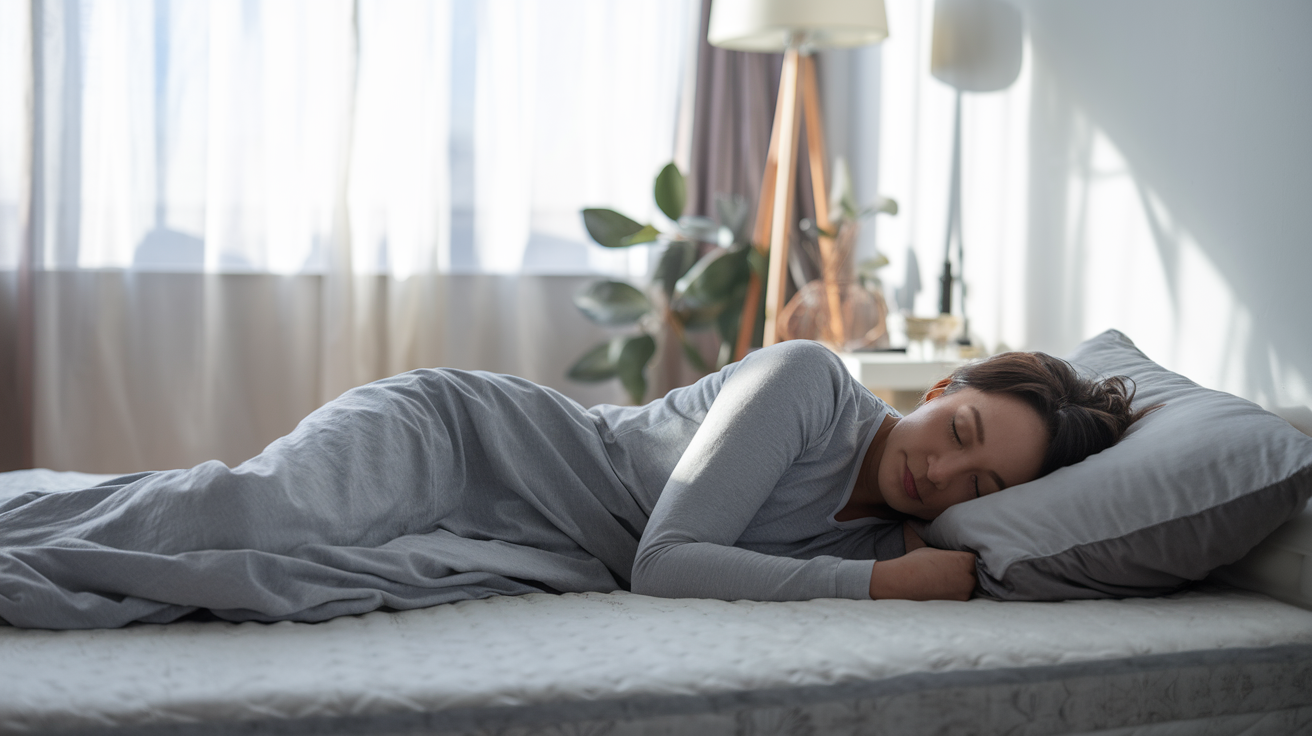
The mechanics are worth understanding before you spend money. When you sleep on your side, your body creates two contact zones: your shoulder and your hip. Both need to sink into the mattress surface somewhat so that your spine stays in a neutral, horizontal line between them. If the mattress is too rigid at either point, you get a bridge effect — pressure concentrated at the contact points while the waist and lower back hang unsupported.
For the hip specifically, that pressure compresses the greater trochanteric bursa, a fluid-filled sac that cushions the hip joint from the outside. Sustained pressure on it through the night triggers inflammation — that's bursitis, and it's one of the most common causes of hip pain that appears specifically in the morning and fades by mid-day. Your hip felt fine at 10 PM, but after eight hours of compression, it's angry.
The solution isn't to buy the softest mattress available. It's to find a mattress with a surface layer that yields to pressure — that actually deforms under your hip — while still providing enough underlying support that your spine doesn't sag. That's a specific engineering challenge, and most mattresses fail it.
Best Overall: Loom & Leaf
The Loom & Leaf is the mattress I ended up on, and it's the one I recommend first to side sleepers dealing with hip pain. It's an all-foam luxury mattress from Saatva, and the reason it works so well for this specific issue is the construction of its comfort layer: five inches of high-density memory foam that's been gel-infused and aerated to sleep cooler than traditional memory foam.
Memory foam has a property called pressure-point contouring that innerspring and latex mattresses simply don't replicate. When your hip presses into it, the foam slowly distributes that pressure outward across a wider surface area, reducing peak compression at the joint. You can actually feel this if you put your hand on it — it doesn't snap back immediately like latex, it molds around the shape of what's pressing into it.
The Loom & Leaf comes in two feels: Relaxed Firm and Firm. For side sleepers with hip pain, I'd recommend the Relaxed Firm without hesitation. It's not a "soft" mattress — there's real support underneath — but the surface give is exactly what hip pressure points need. It's also genuinely well-built, with organic cotton and recycled steel components, and Saatva backs it with one of the most generous trial periods in the industry.
Loom & Leaf by Saatva
Memory foam pressure relief built specifically for side sleepers. 365-night trial, free White Glove delivery.
Best Hybrid: Saatva Classic (Luxury Firm)
Not everyone wants to sleep on foam. Some people — and I count myself among them on warmer nights — find that memory foam traps heat no matter what the manufacturer says, or they simply prefer the responsiveness and bounce of a coil-based mattress. If that's you, the Saatva Classic in Luxury Firm is the best hybrid option I've tested for hip pain.
The Saatva Classic is a dual-coil system: individually wrapped coils in the support core, and a layer of smaller micro-coils in the comfort layer above them. That two-tier coil design is important. The micro-coils in the comfort layer are what provide the hip-contouring effect in a hybrid — they compress independently under pressure, so your hip gets localized give without the whole mattress caving. The support coils below maintain the overall structure.
The Luxury Firm feel hits around a 5-6 out of 10 on firmness — firmer than the Loom & Leaf's surface, but with that micro-coil compression doing the pressure-relief work. Side sleepers who've found memory foam too hot or too "stuck" often do very well on this. It also sleeps cooler than any foam mattress by a meaningful margin, since coils allow airflow throughout the mattress body.
One specific note: Saatva offers the Classic in three heights (11.5" and 14.5"). If you're switching from a thicker mattress, the 14.5" profile changes the feel noticeably — more plush surface depth — and may be the better choice for hip pain specifically.
Saatva Classic — Luxury Firm
Dual-coil hybrid with targeted hip relief and cooling airflow. 365-night trial, free White Glove delivery.
Best for Heavy Sleepers: Saatva HD
The standard advice — "get a softer mattress for hip pain" — breaks down when you're over 230 pounds. At higher body weights, a mattress that would feel medium-firm to an average-weight sleeper compresses significantly more, and what starts out as appropriate give can bottom out into insufficient support by the middle of the night. Heavy side sleepers often end up with hip pain from both directions: initial pressure point compression AND spinal misalignment from sinking too deep.
The Saatva HD was designed explicitly for sleepers in the 300+ pound range, but I'd consider it for anyone over 230 who sleeps on their side. Its coil system uses a heavier gauge steel that doesn't compress as aggressively under high weight, which means it maintains the right zone of support without the hip bottoming out. The comfort layers are still there to provide surface give — you're not sleeping on a firm slab — but the structural integrity holds up across an eight-hour night in a way that standard mattresses don't.
It's a more expensive mattress than the Classic, and it's worth it if you're in the weight range where standard mattresses consistently fail you. Saatva offers the same trial and delivery on the HD as on everything else in their lineup.
Saatva HD
Engineered for heavier sleepers who need lasting support without hip pressure buildup. 365-night trial, free White Glove delivery.
Firmness Guide for Hip Pain
Firmness ratings are notoriously inconsistent across brands, so I'd rather give you a framework than a number.
For side sleepers with hip pain, the goal is a mattress where your hip sinks approximately one to two inches below the surface plane — enough to relieve peak pressure at the greater trochanter, but not so much that your spine curves laterally. You can do a rough check by lying on your side and having someone look at your spine from behind: it should be roughly horizontal. If your hips are low and your shoulders are high, the mattress is too soft. If your hips are high and your waist has a gap from the surface, it's too firm.
Body weight is the other variable. Lighter side sleepers (under 130 pounds) generally need a softer surface to get adequate hip sinkage, since they don't have the weight to compress a medium feel enough. Average-weight sleepers (130-230 pounds) do best with medium to medium-firm options. Heavier sleepers need either a dedicated heavy-duty mattress or a firm-rated mattress, since their weight creates more compression than the label implies.
Couples where one partner has hip pain and the other doesn't present a real challenge. In that case, zoned comfort systems — where the hip zone is softer than the shoulder zone and the leg zone — are worth seeking out. Some versions of the Saatva Classic offer this in their higher profile options.
Sleep Position Adjustments
Even on the right mattress, small position adjustments can dramatically reduce hip pain. The single most effective one: place a pillow between your knees. This keeps your hips stacked and eliminates the internal rotation that strains the hip joint and piriformis muscle through the night. It sounds minor and it is genuinely transformative — the pillow holds your top leg level with your hip instead of letting it drop forward and torque the joint.
The second adjustment is to vary which side you sleep on. Most side sleepers have a dominant side they default to all night, which means one hip takes eight hours of cumulative pressure night after night. Consciously alternating sides distributes that load.
Third: sleeping slightly more forward than a strict side position — what some call the "SOS" (semi-fetal) position — reduces the direct contact area of the hip with the mattress. Bringing your knees slightly toward your chest shifts some weight to the thigh rather than concentrating it at the hip point.
None of these replace a mattress that actually fits your body, but they extend the effectiveness of the right mattress considerably.
FAQ
Can a mattress topper fix hip pain if I can't replace my mattress?
Sometimes, yes. A two- to three-inch memory foam topper (look for 4-pound density or higher) can add meaningful pressure relief to a mattress that's too firm. It won't fix a mattress that's too soft or has lost its support structure, but if firmness is the sole issue, a quality topper is a legitimate interim solution. It's not as good as the right mattress, but it's a fraction of the cost.
How long does it take to know if a mattress is helping my hip pain?
Most people notice a meaningful difference within two to three weeks. The first few nights can actually feel slightly worse as your body adjusts to different pressure distribution. By week two or three, either the hip pain in the morning has measurably improved, or it hasn't — and that's your signal. This is why a 365-night trial matters: you have real time to assess.
Is memory foam or innerspring better for hip pain?
Memory foam provides more direct pressure contouring, which gives it a technical edge for hip pain specifically. But a well-designed hybrid with quality micro-coils in the comfort layer — like the Saatva Classic — comes close enough that other factors (temperature, preference for bounce, partner movement) can reasonably tip the decision. The gap between a good memory foam and a good hybrid is smaller than mattress marketing would have you believe.
What mattress firmness should I avoid if I have hip pain?
Anything rated firm (7-9 out of 10) is likely to worsen hip pain for side sleepers at average or below-average body weight. Firm mattresses are designed for back and stomach sleepers whose hips don't need to sink into the surface. Very soft mattresses (2-3 out of 10) cause a different problem — they let the hip sink too far and cause spinal misalignment. Stay in the medium to medium-firm range for side sleeping.
Could my hip pain be from something other than my mattress?
Yes, and it's worth ruling out. Hip bursitis, labral tears, IT band tightness, and referred pain from the lower back can all produce hip pain that's present in the morning. The diagnostic question is: does the pain appear specifically in the morning and improve with movement through the day? If yes, mattress pressure is the likely culprit. If the pain is present all day regardless of what you've been doing, see a doctor — a new mattress won't fix a structural issue.
Our Top Picks for Hip Pain Relief
- Loom & Leaf Review — Best memory foam for hip pressure relief
- Saatva Classic Review — Best hybrid for hip pain
- Saatva HD Review — Best for hip pain + heavier sleepers
- Best Mattress for Back Pain — Related concern