
 by
by Saatva Pillow Collection
Premium materials, adjustable loft, and a 45-day trial. The best pillow lineup for Restless Leg Relief in 2026.
Understanding Restless Leg Syndrome
Restless Leg Syndrome (RLS), also known as Willis-Ekbom Disease, affects approximately 7–10% of the population, with prevalence data from European and U.S. population studies converging on a 5–10% adult range. Women experience RLS roughly twice as often as men, and symptoms typically intensify between ages 40 and 60. This neurological condition causes uncomfortable sensations in the legs, often described as crawling, tingling, pulling, or aching, that create an irresistible urge to move. Symptoms typically worsen during periods of rest, particularly in the evening and at night, making sleep extremely difficult.
The exact cause of RLS remains unclear, but research points to dopamine dysfunction, iron deficiency, and genetic factors. A familial component exists in 40–60% of cases, and first-degree relatives of RLS probands show a 3–5× higher prevalence. Approximately 80% of RLS patients also experience Periodic Limb Movements of Sleep (PLMS), repetitive jerky movements that fragment sleep architecture and compound daytime fatigue. While medication is often necessary for moderate to severe cases, lifestyle modifications and strategic sleep positioning can significantly reduce symptom severity and improve sleep quality.
How Pillows Help RLS
While pillows cannot treat the underlying neurological cause of RLS, they address several factors that influence symptom severity. Leg elevation improves circulation and reduces the fluid accumulation that may worsen sensations. Weighted pressure on the legs provides proprioceptive input that can override the uncomfortable sensations. And proper body positioning reduces muscle tension that compounds RLS discomfort.
Iron deficiency is one of the most common correctable aggravating factors. Ferritin levels below 50 ng/mL are associated with increased RLS severity, and supplementation often provides significant relief. Evening compression and strategic pillow support complement medical management by addressing the mechanical and circulatory components that worsen at night.
Top 4 Pillow Solutions for RLS
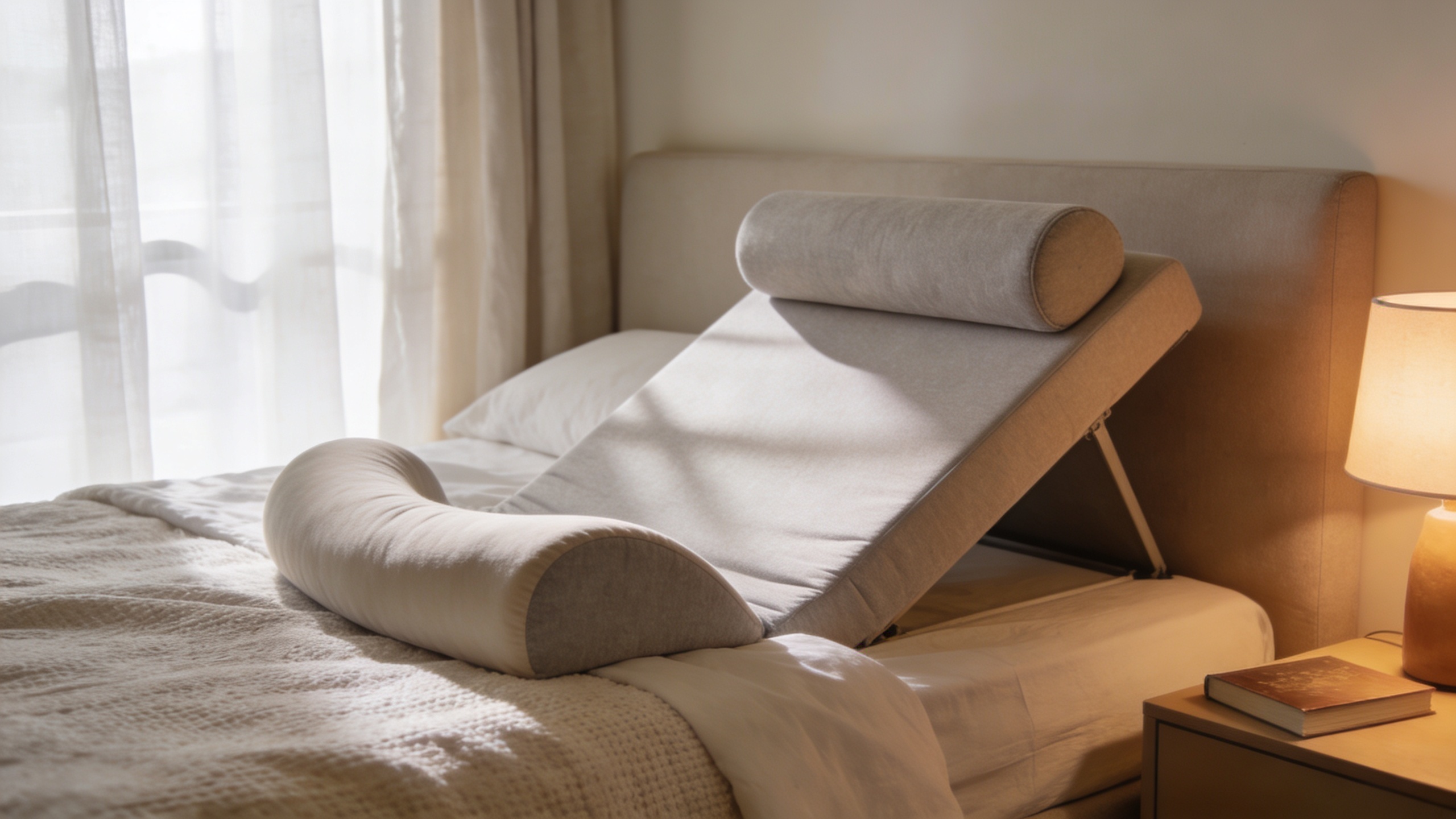
1. Leg Elevation Pillow, Best for Circulation
A leg elevation pillow ($30–$60) that raises the legs 6–10 inches above heart level promotes venous return and reduces the fluid pooling that some RLS sufferers find aggravates their symptoms. The elevation also reduces pressure on the lower back, which can indirectly reduce leg discomfort by improving overall body alignment.
Look for a pillow with a gradual slope that supports the full length of the legs from calves to feet. The Cushy Form or similar wedge-style leg pillows provide this continuous support. Memory foam tops add comfort while firm bases maintain elevation.
2. Weighted Blanket with Pillow, Best for Pressure Therapy
Deep pressure stimulation from weighted blankets ($50–$200) has shown promise in reducing RLS symptoms for some sufferers. The distributed weight provides proprioceptive feedback that can override the uncomfortable leg sensations. When combined with a supportive pillow system, the weighted blanket creates a calming sleep environment.
Choose a blanket that's approximately 10% of body weight. Too light and the pressure is ineffective; too heavy and it becomes uncomfortable. Pair with a medium-firm sleeping pillow that maintains head and neck alignment under the additional blanket weight.
3. Knee Pillow with Strap, Best for Side Sleepers
For side sleepers with RLS, a knee pillow with an adjustable strap ($25–$40) maintains proper hip alignment while keeping the legs separated and supported. The strap prevents the pillow from shifting during the involuntary movements that RLS causes, ensuring consistent support throughout the night.
The Ergonomics Design Memory Foam Knee Pillow and similar strapped designs stay in place even when legs move. This stability is important for RLS sufferers who may change positions frequently during symptom episodes.
4. Full Body Pillow, Best for Position Maintenance
A C-shaped or U-shaped body pillow ($40–$80) wraps around the body, providing a physical barrier that discourages the excessive leg movement associated with RLS. The pillow between the knees maintains hip alignment, while the length of the body pillow provides something to grip and reposition against during episodes.
The Leachco Snoogle and similar designs are particularly effective because they support the back simultaneously, preventing the rolling that can trigger RLS episodes in some sufferers.
RLS Pillow Comparison
| Pillow Type | Best For | Price Range | Key Benefit |
|---|---|---|---|
| Leg Elevation Wedge | Back sleepers | $30–$60 | Improves venous return; reduces fluid pooling |
| Weighted Blanket | All positions | $50–$200 | Deep pressure stimulation overrides sensations |
| Strapped Knee Pillow | Side sleepers | $25–$40 | Stays in place during involuntary movement |
| Full Body Pillow | Combination sleepers | $40–$80 | Physical barrier against excessive movement |
Sleep Position Recommendations
Back sleeping with leg elevation is ideal for many RLS sufferers. The elevated position improves circulation and provides the proprioceptive feedback of pressure against the leg pillow. Place a pillow under each knee or use a continuous leg wedge.
Side sleeping with knee support works when combined with a body pillow that prevents excessive movement. The pillow between the knees maintains alignment, and the body pillow provides stability.
Avoid stomach sleeping. It creates lower back tension and compresses the legs in ways that may worsen RLS sensations.
Additional RLS Management Strategies
- Iron supplementation: Many RLS sufferers have low ferritin levels. Consult your doctor about iron testing and supplementation
- Evening exercise: Moderate leg exercise during the day reduces evening symptoms. Avoid intense exercise within 3 hours of bedtime
- Warm baths: Soaking legs in warm water before bed relaxes muscles and may reduce sensations
- Avoid caffeine and alcohol: Both worsen RLS symptoms in most sufferers
- Leg massage: Evening massage improves circulation and provides calming proprioceptive input
Buying Guide: Choosing RLS Sleep Support
Consider your primary sleep position. Back sleepers benefit most from leg elevation wedges. Side sleepers need knee pillows with stability features. Combination sleepers may prefer body pillows that accommodate multiple positions.
Think about symptom severity. Mild RLS may respond to simple knee pillows or leg elevation. Moderate symptoms may require weighted blankets combined with positioning pillows. Severe RLS typically needs medical treatment alongside sleep modifications.
Material breathability matters because some RLS treatments (weighted blankets, foam pillows) can trap heat. Look for breathable covers, gel-infused foams, or natural materials that sleep cooler.
Understanding RLS Triggers
Restless Leg Syndrome symptoms are triggered or worsened by several factors that sleepers can control. Caffeine consumption after noon affects many sufferers. Alcohol, while initially sedating, worsens RLS symptoms later in the night. Certain medications, including antihistamines and some antidepressants, can trigger or exacerbate RLS.
Iron deficiency is one of the most common correctable causes. If you experience RLS symptoms, ask your doctor to check your ferritin levels. Ferritin levels below 50 ng/mL are associated with increased RLS severity, and supplementation often provides significant relief.
FAQ
Can a pillow cure restless leg syndrome?
No. RLS is a neurological condition that requires medical management. Pillows can improve sleep quality and reduce symptom severity but cannot treat the underlying cause.
Does elevating legs help restless leg syndrome?
Many sufferers find that leg elevation reduces symptom intensity by improving circulation and providing proprioceptive feedback. Results vary by individual.
Do weighted blankets help RLS?
Some RLS sufferers report significant improvement with weighted blankets. The deep pressure stimulation may override the uncomfortable leg sensations. Start with a weight that's 10% of body weight.
What sleep position is best for RLS?
Back sleeping with leg elevation or side sleeping with knee support works best for most sufferers. Avoid stomach sleeping.
When should I see a doctor for RLS?
Consult a doctor if RLS symptoms occur more than twice weekly, significantly disrupt sleep, or don't respond to lifestyle modifications. Effective medical treatments are available.