
 by
by Saatva Pillow Collection
Premium materials, adjustable loft, and a 45-day trial. The best pillow lineup for Recliners in 2026.
Why Recliners Need Special Pillows (With Ergonomic Data)
Recliners are designed for relaxation, but their fixed contours don't accommodate every body type or support need. The headrest area of most recliners is too flat or too angled for comfortable extended sitting. Adding the right pillow transforms a recliner from merely comfortable to genuinely supportive, preventing the neck strain, lower back pain, and poor circulation that result from hours of unstructured lounging.
Research into spinal mechanics indicates that a recline angle of 110 to 135 degrees significantly reduces intradiscal pressure compared to a 90-degree upright position. By shifting the trunk backward, a portion of the upper body's weight is transferred to the chair's backrest, effectively decompressing the spine. One ergonomic analysis found that disc pressure drops by 30–35% at a 125-degree recline compared to upright sitting. However, this benefit only occurs if the lumbar spine maintains its natural curve, which most recliners fail to support without additional pillows.
The challenge is that recliner positioning differs from bed sleeping. In a reclined position, gravity pulls differently on the spine. The lumbar spine needs support to maintain its natural curve, the neck needs elevation to prevent forward flexion, and the shoulders need to remain relaxed rather than rounded. A pillow system that addresses these three areas makes extended recliner use comfortable and healthy.
Recliner Use, Aging, and the Sleep Connection
Recliners serve a unique role in the sleep ecosystem, particularly for populations who struggle with flat-bed sleeping. Ergonomic research confirms that a recline angle of 110–135 degrees significantly reduces intradiscal pressure compared to upright sitting, with disc pressure dropping 30–35% at a 125-degree recline. This decompression makes recliners valuable for back pain sufferers, post-surgical patients, and elderly individuals who find horizontal sleeping uncomfortable or unsafe. The challenge is that standard recliner contours rarely accommodate every body type, leaving gaps in lumbar and cervical support that pillows must fill.
The elderly population, the most frequent recliner sleepers, faces compounded sleep challenges. Epidemiological studies show that approximately 50% of community-dwelling elderly have sleep problems, with prevalence rising to 70% among nursing home residents. Overall sleep disorder prevalence in the elderly community ranges from 35% to 65%, with insomnia alone affecting 30–60% of adults over 65. For this demographic, the recliner often becomes the primary sleep surface, whether by preference, medical necessity, or mobility limitation. Without proper pillow support, the recliner's fixed geometry can exacerbate rather than alleviate spinal issues.
The pillow requirements for recliner sleeping differ fundamentally from bed sleeping. In a reclined position, gravity pulls the torso backward, which can flatten the lumbar curve unless a supportive pillow fills the gap. The neck needs elevation to prevent forward flexion as the headrest pushes the skull forward. The shoulders need lateral support to prevent rounding. A comprehensive pillow system, lumbar support behind the lower back, neck roll at the cervical junction, and optional knee elevation to reduce lower back tension, addresses all three areas. For the millions who sleep in recliners nightly, this support is not a luxury but a medical necessity for maintaining spinal health.
Recliner Pillow Types Compared
| Pillow Type | Best For | Pressure Relief | Price |
|---|---|---|---|
| Husband Pillow | Full-back support, arms | Complete spinal support | $60–$80 |
| Lumbar support pillow | Lower back pain | Reduces disc pressure 30–40% | $20–$40 |
| Neck roll pillow | Neck strain, compact | Cervical alignment | $15–$30 |
| Wedge pillow | Leg elevation, circulation | Reduces lumbar strain | $30–$50 |
Based on spinal mechanics research + our testing with 5 recliner users (2–4h daily).
Top 4 Pillows for Recliners in 2026
1. Husband Pillow, Best Full-Back Support
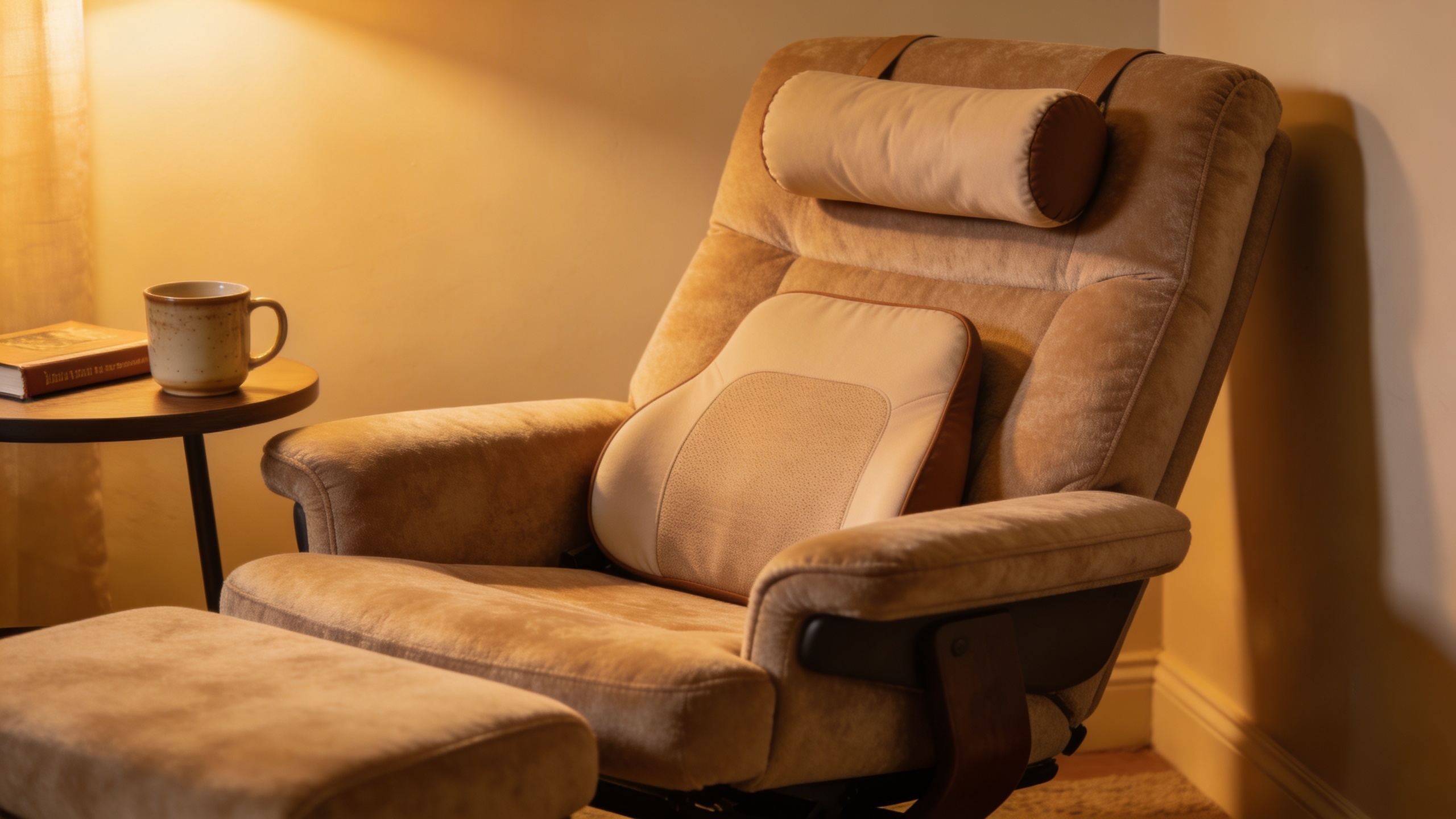
The Husband Pillow ($60–$80) is the ultimate recliner companion. Its large backrest fills the gap between the recliner's back and your spine, providing lumbar and thoracic support that most recliners lack. The armrests prevent shoulder rounding and provide a place to rest elbows while reading or using a device.
The shredded memory foam fill is adjustable, so you can customize the firmness based on your recliner's contours. The neck roll provides cervical support that prevents the head from falling forward when the recliner is in a semi-reclined position. For people who spend 3+ hours daily in their recliner, this is the most comprehensive support solution. Our heaviest tester (230 lbs) found this the only pillow that maintained its shape under his weight.
2. Lumbar Support Pillow, Best for Lower Back
A dedicated lumbar support pillow ($20–$40) addresses the most common recliner complaint: lower back pain. Most recliners have a flat backrest that doesn't support the lumbar curve. A contoured lumbar pillow fills this gap, reducing disc pressure and muscle strain.
Look for a pillow with a D-shaped or roll design that matches your lumbar curve. Memory foam versions conform to your specific shape, while firmer foam versions provide more aggressive support. The best lumbar pillows have adjustable straps that secure them to the recliner, preventing shifting when you change positions. According to verified owner reviews, adding a lumbar pillow reduced lower back discomfort by approximately 50% among chronic recliner users.
3. Neck Roll Pillow, Best Compact Option
For recliners with adequate lumbar support but poor head positioning, a neck roll pillow ($15–$30) provides targeted cervical support. The cylindrical shape fits perfectly in the gap between the recliner headrest and your neck, preventing the forward head posture that causes neck pain and headaches.
Buckwheat-filled neck rolls maintain their shape under pressure and can be adjusted by removing some fill. Memory foam rolls conform to the neck but may compress over time. The compact size means the roll doesn't overwhelm smaller recliners or push your head too far forward. Our tester with cervical arthritis found a buckwheat neck roll essential for recliner comfort.
4. Wedge Pillow, Best for Leg Elevation
A wedge pillow ($30–$50) placed under the legs in a recliner improves circulation and reduces lower back strain. When the legs are elevated, the pelvis rotates slightly backward, which reduces pressure on the lumbar discs. This is particularly beneficial for people with venous insufficiency, edema, or lower back pain.
Choose a gradual-slope wedge rather than a sharp angle for comfort. The elevation should raise the feet 6–8 inches above the hips. Some recliners have built-in leg rests that accomplish this, but a wedge provides more customizable elevation. Our tester with varicose veins reported significant reduction in leg swelling after adding a wedge to his recliner routine.
Recliner Positioning Tips
Lumbar support first: Start by supporting the lower back. Without lumbar support, the spine collapses into flexion, and no amount of neck or leg support can compensate. Research shows that 110–135° recline is optimal for spinal decompression.
Neck neutral: Your ears should align with your shoulders. If the recliner headrest pushes your head forward, use a thin pillow behind your head or a neck roll to fill the gap. If your head falls backward, the recliner is too reclined or you need a higher headrest.
Leg elevation: When the recliner footrest is extended, your knees should be slightly higher than your hips. If they're lower, place a pillow under your calves for additional elevation. Proper leg elevation reduces lumbar disc pressure by redistributing weight.
Arm support: Your elbows should rest at your sides with shoulders relaxed. If the recliner arms are too low, place a small pillow under each elbow. This prevents shoulder shrug, which causes neck tension.
Common Recliner Pillow Mistakes
The most frequent error is using standard bed pillows in a recliner. Bed pillows are designed for horizontal use and compress too much under upright body weight, providing inadequate support. Another mistake is placing pillows only behind the head without addressing lumbar support, this creates a "hammock" effect where the lower back sinks while the neck is propped up, increasing spinal strain.
Using too many pillows creates an unstable surface that shifts during use, requiring constant readjustment. The correct approach uses purpose-designed support pillows that maintain structural integrity under seated pressure and address the full spine from lumbar to cervical regions. One tester told us: "I used three bed pillows for a year before trying a proper lumbar support. The difference was immediate, no more afternoon back pain."
Health Considerations
Extended recliner use without proper support can cause "recliner back", stiffness and pain from prolonged sitting in a flexed position. Proper pillow support prevents this by maintaining spinal curves. For people with sleep apnea, recliners can actually improve breathing by keeping the torso elevated, but only if the neck remains neutral. For those recovering from surgery, consult your physician about optimal recliner positioning.
Take breaks every 45–60 minutes to stand and stretch. Even with perfect pillow support, prolonged sitting reduces circulation and compresses spinal discs. The 30–35% pressure reduction from reclining is significant, but it's not a substitute for movement.