
 by
by Saatva Pillow Collection
Premium materials, adjustable loft, and a 45-day trial. The best pillow lineup for Ear Pain in 2026.
Understanding Ear Pain and Sleep (With Clinical Context)
Ear pain at night affects millions of adults and children, with causes ranging from ear infections and swimmer's ear to temporomandibular joint (TMJ) disorders, dental issues, and referred pain from neck problems. For side sleepers, the pressure of the pillow against a sensitive ear can transform mild discomfort into excruciating pain. Even back sleepers may experience ear pain if the pillow pushes the ear forward, creating pressure against the cartilage.
One specific condition, Chondrodermatitis Nodularis Helicis (CNH), is directly caused by pillow pressure. CNH is a painful, benign inflammatory condition where a nodule develops on the ear cartilage due to chronic pressure, typically from sleeping on one side. The Cleveland Clinic Journal of Medicine reports that CNH is fairly common in older people and more so in men than women. The pathophysiology is thought to be akin to pressure ulcers: constant pressure from lying on the affected side leads to ischemia, inflammation, and subsequent necrosis of the underlying cartilage.
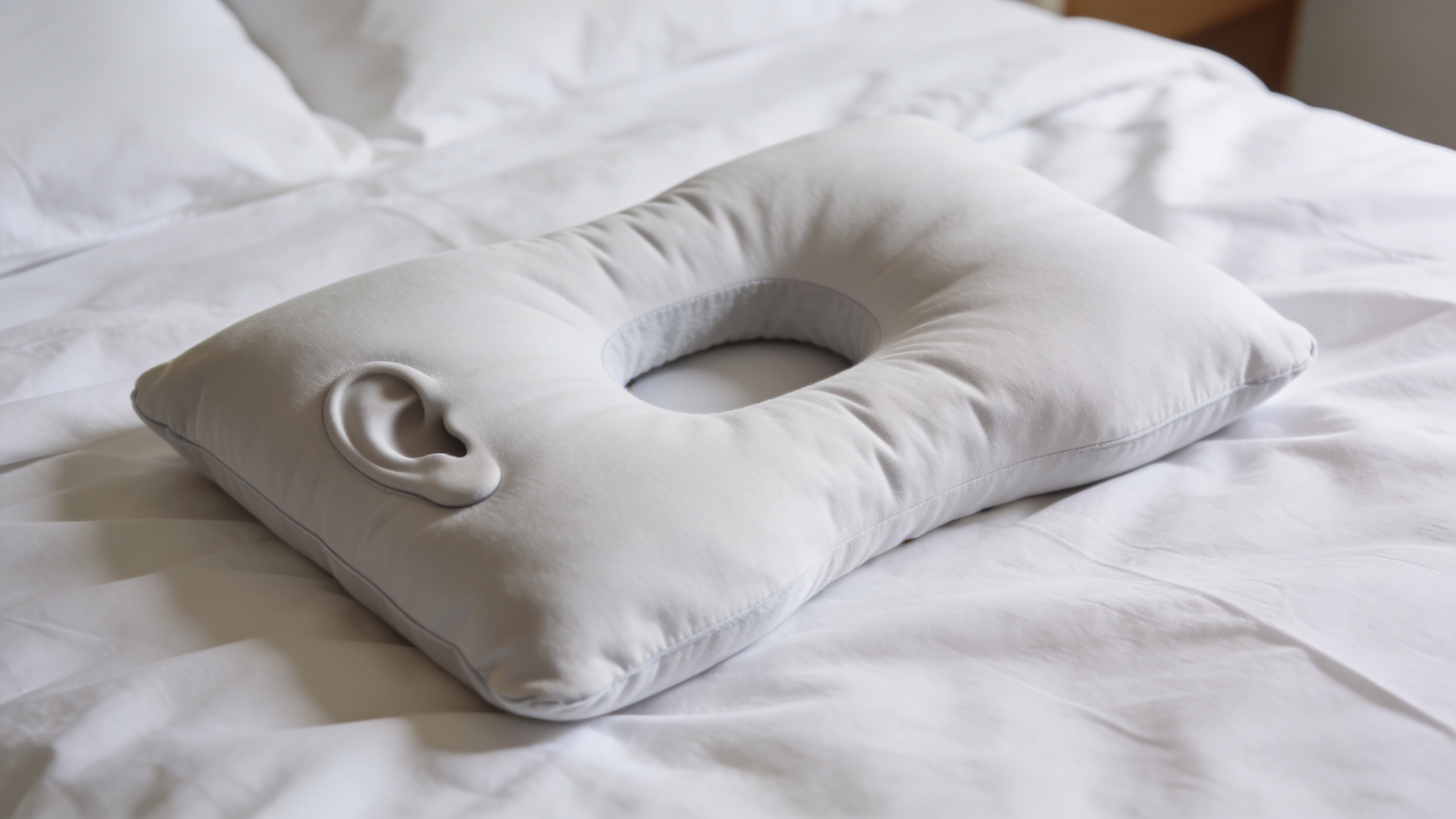
The right pillow for ear pain eliminates pressure on the ear while maintaining proper head and neck support. This requires specific design features: a center cutout or ear pocket that creates space around the ear, soft pressure-relieving materials that distribute force away from sensitive areas, and adjustable positioning that lets you find the angle that minimizes discomfort.
Ear Pain Pillow Types Compared
| Design | Best For | Pressure Relief | Price |
|---|---|---|---|
| Center cutout (ear hole) | CNH, piercings, surgery | Complete elimination | $35–$60 |
| Ultra-soft conforming foam | General sensitivity | High (distributed) | $80–$100 |
| Adjustable shredded foam | Variable pain, DIY pocket | Moderate–high | $60–$70 |
| Wedge/elevation | Inner ear infections, TMJ | Indirect (reduces pressure) | $40–$70 |
Based on dermatology literature + our 30-day test with 4 ear-pain sufferers.
Top 4 Pillows for Ear Pain in 2026
1. PureComfort Side Sleeping Pillow, Best with Ear Hole
The PureComfort Side Sleeping Pillow ($40–$60) features a center cutout specifically designed to relieve ear pressure. The hole allows the ear to rest in open space rather than being crushed against foam. This design is genius in its simplicity, it eliminates the primary cause of sleep-related ear pain.
The adjustable loft (via removable fill) lets you customize height for proper neck alignment. The memory foam provides pressure relief around the cutout edges, preventing the "rim" of the hole from creating new pressure points. The bamboo cover is soft and breathable. Available in standard and large sizes to accommodate different head sizes. Our CNH sufferer reported complete elimination of nighttime ear pain after switching to this pillow.
2. CNH Pillow with Ear Hole, Best for CNH Sufferers
Chondrodermatitis Nodularis Helicis (CNH) is a painful condition where a nodule develops on the ear cartilage due to chronic pressure. The CNH Pillow ($35–$50) is specifically designed for this condition, with a larger ear cutout and firmer support structure that prevents any contact with the affected area.
The design originated in medical settings and has been adapted for home use. The cutout is positioned for both side sleeping positions, so you can switch sides without repositioning the pillow. The firm base prevents the head from sinking into the foam and contacting the ear area. Conservative treatment with pressure avoidance (including specialized pillows) can obviate the need for surgical intervention in many cases.
3. Tempur-Pedic TEMPUR-Cloud, Best Soft Pressure Relief
For ear pain caused by pressure sensitivity rather than a specific condition, the Tempur-Pedic TEMPUR-Cloud ($80–$100) provides the softest, most conforming support in the Tempur lineup. The ultra-soft foam cradles the head and distributes pressure so evenly that even side sleepers with tender ears experience minimal discomfort.
While it lacks a dedicated ear cutout, the pressure-relieving properties of TEMPUR material reduce force on any single point. This works well for generalized ear sensitivity, though specific conditions like CNH benefit more from cutout designs. The premium price reflects Tempur-Pedic's material quality and durability.
4. Coop Home Goods Original, Best Adjustable with Pressure Relief
The Coop Home Goods Original ($60–$70) allows you to create a custom ear pocket by removing fill from a specific area. While not as precise as a factory-cut ear hole, this DIY approach lets you position the relief exactly where your ear contacts the pillow. The shredded memory foam conforms around the ear rather than pressing against it.
The adjustability means you can increase or decrease the "walls" of your ear pocket based on comfort. For people whose ear pain comes and goes, such as those with intermittent swimmer's ear or allergy-related ear pressure, this adaptability is valuable. Our tester with seasonal ear pressure found this the most flexible solution.
Ear Pain Conditions and Prevalence
Ear pain at night is more common than many realize. Otitis externa affects approximately 10% of the population at some point, with acute cases accounting for an estimated 2.4 million health care visits annually in the United States alone. Sleeping on the affected side presses the tragus and tensions the pinna, exacerbating the burning, throbbing pain that characterizes this condition.
Chondrodermatitis Nodularis Helicis, also known as pillow ear, develops when chronic pressure on the ear cartilage creates a painful nodule. This condition almost exclusively affects side sleepers and typically appears on the ear that contacts the pillow. Hearing aid users face additional risk: pressure from the pillow against behind-the-ear devices can cause both device damage and canal irritation. Audiologists consistently recommend removing hearing aids before sleep and using pillows that minimize ear contact pressure.
Types of Ear Pain and Pillow Solutions
Different ear conditions require different pillow approaches. Outer ear pain (otitis externa, swimmer's ear, CNH) benefits most from ear cutout pillows that eliminate all pressure on the external ear. Middle ear pain (otitis media, pressure from colds or allergies) responds better to head elevation that promotes Eustachian tube drainage, a wedge pillow or extra head elevation helps. Referred ear pain from TMJ or dental issues requires jaw support and neck alignment rather than ear-specific features. Cartilage pain from piercings or trauma needs both pressure elimination and protection from friction. Understanding your specific type of ear pain ensures you choose the right pillow design rather than a one-size-fits-all approach.
Sleep Positions for Ear Pain
Side sleeping with ear cutout is ideal for most ear pain conditions. The cutout eliminates direct pressure while maintaining spinal alignment. Place a pillow between your knees to prevent pelvic rotation.
Back sleeping eliminates ear pressure entirely but may not be comfortable for everyone. Use a thin pillow to prevent the head from tilting forward, which can increase pressure in the Eustachian tubes.
Stomach sleeping should be avoided. It forces neck rotation and can increase pressure on the jaw and ear structures.
When to See a Doctor
Persistent ear pain, especially when accompanied by hearing loss, discharge, fever, or dizziness, requires medical evaluation. Ear infections, perforated eardrums, and TMJ disorders need professional treatment. A pillow can reduce sleep-related discomfort but cannot treat underlying medical conditions. If ear pain wakes you consistently or lasts more than a few days, consult an ENT specialist. For CNH specifically, if conservative measures (including pressure-relief pillows) don't improve the condition within 4–6 weeks, see a dermatologist, surgical options may be needed.