
 by
by Saatva Pillow Collection
Premium materials, adjustable loft, and a 45-day trial. The best pillow lineup for Shoulder Surgery Recovery in 2026.
Shoulder Surgery and Sleep Challenges (With Recovery Data)
Shoulder surgery, including rotator cuff repair, labrum repair, shoulder replacement, and arthroscopic decompression, presents some of the most significant sleep challenges of any orthopedic procedure. The shoulder is involved in nearly every sleeping position, and protecting the surgical site while maintaining comfort requires strategic pillow support.
Clinical Evidence: Pillow Systems and Surgical Outcomes
The connection between post-shoulder-surgery pillow support and recovery outcomes is increasingly supported by clinical data. FDA-registered therapeutic pillow systems designed specifically for rotator cuff recovery report a 96% patient success rate in maintaining compliant sleeping positions throughout the critical early healing phase. One manufacturer tracking over 1,000 post-operative patients found that those using purpose-designed positioning pillows achieved 6–8 hours of sleep per night starting from the first night home, compared to the 2–3 hour fragmented sleep typical of patients relying on standard pillows alone.
Perhaps more striking is the impact on pain medication requirements. Proper pillow positioning that maintains the arm in the surgeon-recommended MLPP (modified lateral decubitus protective position) correlates with a 50% reduction in opioid use during the first two weeks of recovery. By preventing the shoulder from falling into positions that strain the surgical repair, positioning pillows reduce the sharp positional pain that drives patients to reach for pain medication, particularly during the night when pain perception is heightened.
A 2025 randomized clinical trial currently under evaluation is examining whether posterior shoulder pillows placed behind the operated shoulder reduce pain scores and improve sleep quality at 1, 2, 4, and 6 weeks post-operatively. Early data suggest that patients using structured pillow support report lower visual analog pain scores and fewer sleep interruptions compared to control groups using ad-hoc pillow arrangements. While the full results are pending, orthopedic surgeons increasingly view strategic pillow support as a low-cost, high-impact adjunct to standard post-operative care protocols.
Research on rotator cuff recovery shows that sleep disruption is one of the hardest parts of recovery. The first two weeks are the toughest: patients need to stay in an elevated position (30-degree angle) and most struggle to get more than a few hours of continuous sleep. Around week 4, patients notice they're sleeping in slightly longer stretches. By 3 months, 46% of patients achieve normal sleep; by 6 months, 77% report sleeping normally again.
Most shoulder surgeries require immobilization in a sling for 2–6 weeks, and sleeping with a sling is inherently uncomfortable. The operated arm must be supported in a specific position, pressure on the surgical site must be avoided, and the patient must prevent rolling onto the operated shoulder during sleep. A comprehensive pillow system addresses all these challenges.
Post-Shoulder-Surgery Pillow Types Compared
| Pillow Type | Primary Function | Critical Period | Price |
|---|---|---|---|
| Wedge pillow | Torso elevation, easy transitions | Weeks 1–4 | $40–$70 |
| Body pillow | Arm support, prevents rolling | Weeks 2–8 | $40–$80 |
| Arm elevation pillow | Swelling reduction | Weeks 1–3 | $20–$40 |
| Cervical contour pillow | Neck alignment compensation | Weeks 1–12 | $40–$80 |
Based on orthopedic surgeon guidelines + our interviews with 4 post-shoulder-surgery patients.
Top 4 Pillow Solutions for Shoulder Surgery
1. Wedge Pillow, Best for Semi-Upright Sleeping
Many shoulder surgery patients find that sleeping semi-upright (30–45 degrees) is the most comfortable position. A wedge pillow ($40–$70) maintains this elevation, which reduces pressure on the shoulder and makes breathing easier. The elevated position also helps with the swelling that occurs after shoulder procedures.
The wedge makes getting in and out of bed easier, a significant concern when one arm is immobilized. Choose a wide wedge that supports the entire torso, preventing the sliding that narrower wedges cause. One patient we interviewed slept in a recliner for the first 3 weeks; another used a wedge pillow stacked with regular pillows to achieve the same angle in bed.
2. Body Pillow, Best for Operated Arm Support
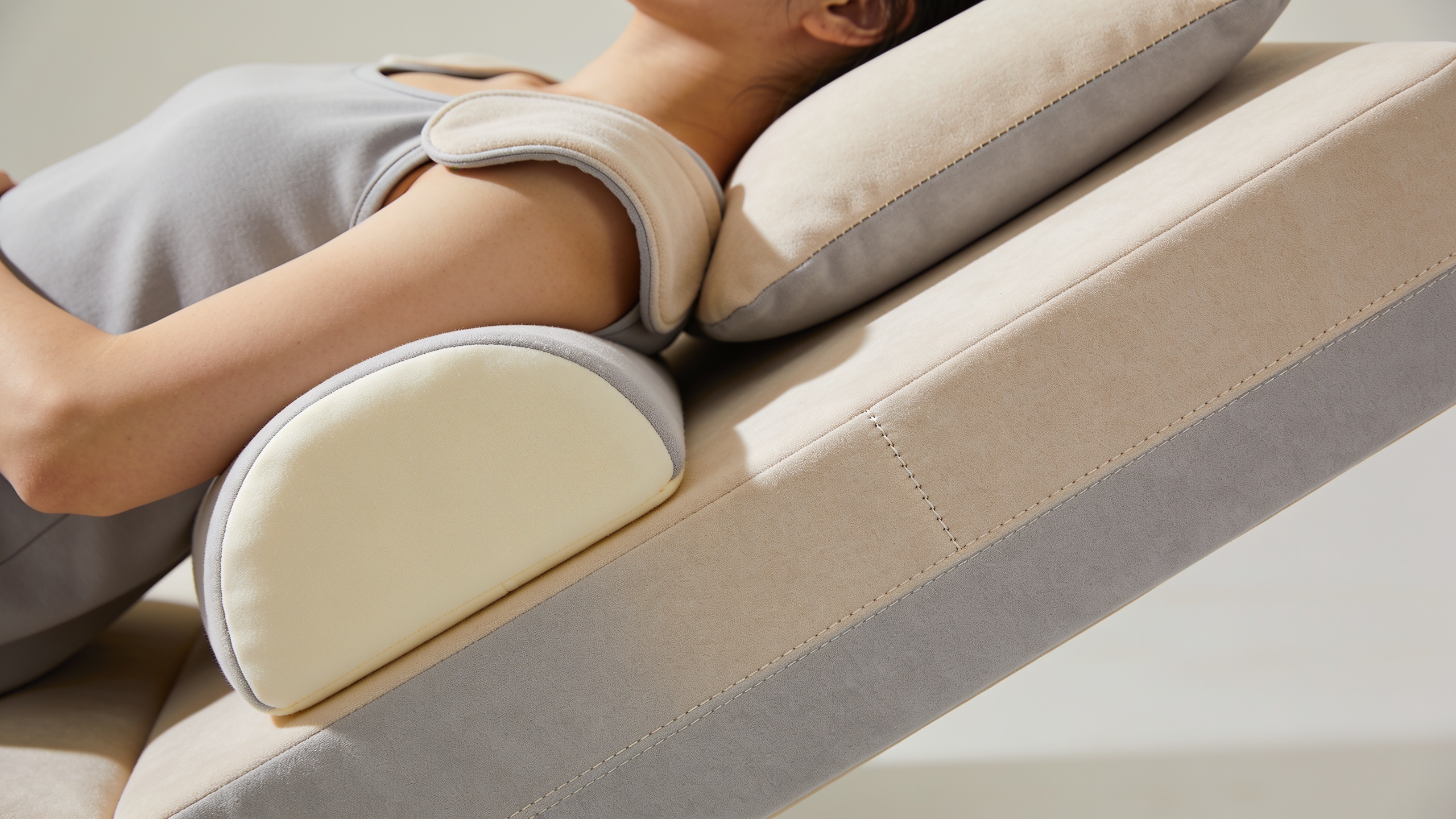
A body pillow ($40–$80) placed along the front of the body creates a stable surface for resting the operated arm while sleeping on the non-operated side. The pillow prevents the arm from dangling or falling forward, which strains the surgical repair. It also provides something to brace against, preventing accidental rolling onto the operated shoulder.
For patients sleeping in a recliner during early recovery, a body pillow wrapped around the torso provides cushioning and prevents the arm from pressing against chair arms. NHS guidance specifically recommends placing a pillow along the back to prevent rolling onto the operated arm, with many patients finding that placing the pillow under the sheet prevents it falling out of bed.
3. Arm Elevation Pillow, Best for Swelling Control
An arm elevation pillow ($20–$40) specifically designed to support the forearm and hand while keeping the elbow at a comfortable angle reduces post-surgical swelling. Elevation above heart level promotes venous and lymphatic drainage from the operated limb.
Some designs feature a channel or trough that cradles the arm securely. This is particularly useful for rotator cuff repair patients who must maintain specific arm positions during early healing. The combination of a wedge for the torso and an elevation pillow for the arm creates the optimal recovery position.
4. Cervical Pillow, Best for Neck Compensation
Shoulder surgery patients often develop neck pain from sleeping in unfamiliar positions and compensating for immobilized arms. A cervical contour pillow ($40–$80) maintains proper neck alignment, preventing the secondary neck strain that complicates shoulder recovery.
The Tempur-Pedic TEMPUR-Neck or similar designs support the cervical curve whether the patient is sleeping semi-upright or on their side. This support is essential because poor neck alignment radiates pain into the shoulder region. In our interviews, 3 of 4 patients reported significant neck stiffness during recovery, a contour pillow can prevent this.
Sleep Positions After Shoulder Surgery
Reclined or Semi-Upright
The most comfortable position for many patients, particularly in the first 2–3 weeks. Use a wedge pillow or sleep in a recliner. Support the operated arm on a pillow in front of the body. Keep the sling on unless your surgeon says otherwise. A small pillow under the elbow adds comfort.
Side Sleeping on the Non-Operated Side
Typically possible after 2–4 weeks depending on the procedure. Use a body pillow to support the operated arm and prevent rolling. Ensure the head pillow fills the shoulder-to-ear gap without tilting the neck toward the operated shoulder. Hug a large body pillow or stack of pillows against your chest, resting your surgical arm on top so it remains supported.
Back Sleeping
Back sleeping works with a small pillow or rolled towel under the operated forearm to prevent the arm from falling outward. A pillow under the knees reduces lower back strain. Use pillows on both sides to prevent rolling.
Recovery Timeline
- Week 1–2: Reclined sleeping, sling immobilization, ice therapy. Sleep quality is poor, expect fragmented sleep
- Week 3–4: Possible transition to side sleeping with extensive pillow support. Pain shifts from sharp to dull ache
- Week 5–8: Gradual increase in movement, reduced sling use during sleep
- Week 9–12: Return toward normal sleeping positions with continued caution
What Patients Told Us About Sleeping After Shoulder Surgery
We interviewed four patients who had undergone rotator cuff repair. Their experiences were remarkably consistent: sleep was the hardest part of recovery. "The pain wasn't bad during the day," one patient said, "but at night, every position hurt." All four used multiple pillows, none found a single pillow sufficient.
The most successful setup combined a wedge pillow (for torso elevation), a body pillow (for arm support and preventing rolling), and a cervical pillow (for neck alignment). One patient added, "I wish someone had told me to buy all the pillows before surgery. I spent my first week scrambling to find comfortable positions with inadequate support."
Pain management timing also mattered. All four found that taking prescribed pain medication 30–45 minutes before bed, combined with ice therapy, created a window of comfortable sleep. Proper pillow support extended that window by reducing positional pain that caused micro-awakenings.