
Saatva Pillow Collection
Premium latex and memory foam pillows with adjustable loft. 45-day home trial, free returns, and doctor-recommended support for every sleep position.
Affiliate disclosure: MattressNut earns a commission when you purchase through our links at no extra cost to you. We only recommend products our editorial team has researched thoroughly.
TL;DR
- The best travel pillow in 2026 depends on how you travel — not just where. A memory foam neck pillow dominates for long-haul flights, while inflatable models win for backpackers and ultralight travelers.
- Our top pick is the Cabeau Evolution S3 — a memory foam neck pillow with a seat strap that attaches to headrest posts, preventing the slippage that ruins most travel pillows.
- For minimalist travelers, the Sea to Summit Aeros Ultralight weighs 2.8 ounces and folds to palm-size, making it the most packable option that still delivers real support.
- The Travelrest Nest is the best wrap-around design for side-sleepers who need 360-degree support on overnight flights.
- Position matters: rotate a U-shaped pillow so the opening faces forward for chin support, or backward for side support. Most travelers wear them wrong.
Table of Contents
- The 5 Types of Travel Pillows
- Top 5 Travel Pillows for 2026
- Side-by-Side Comparison
- Best Pillow by Trip Type
- Positioning: The Secret Most Travelers Miss
- Care and Packing
- FAQ
The 5 Types of Travel Pillows — And Who Each One Serves
Travel pillows are not a single product category. They are five distinct product types, each solving a different travel-sleep problem. Buying the wrong type for your body or itinerary is the most common reason travelers abandon their pillow after one trip.
1. Memory Foam Neck Pillows (U-Shaped)
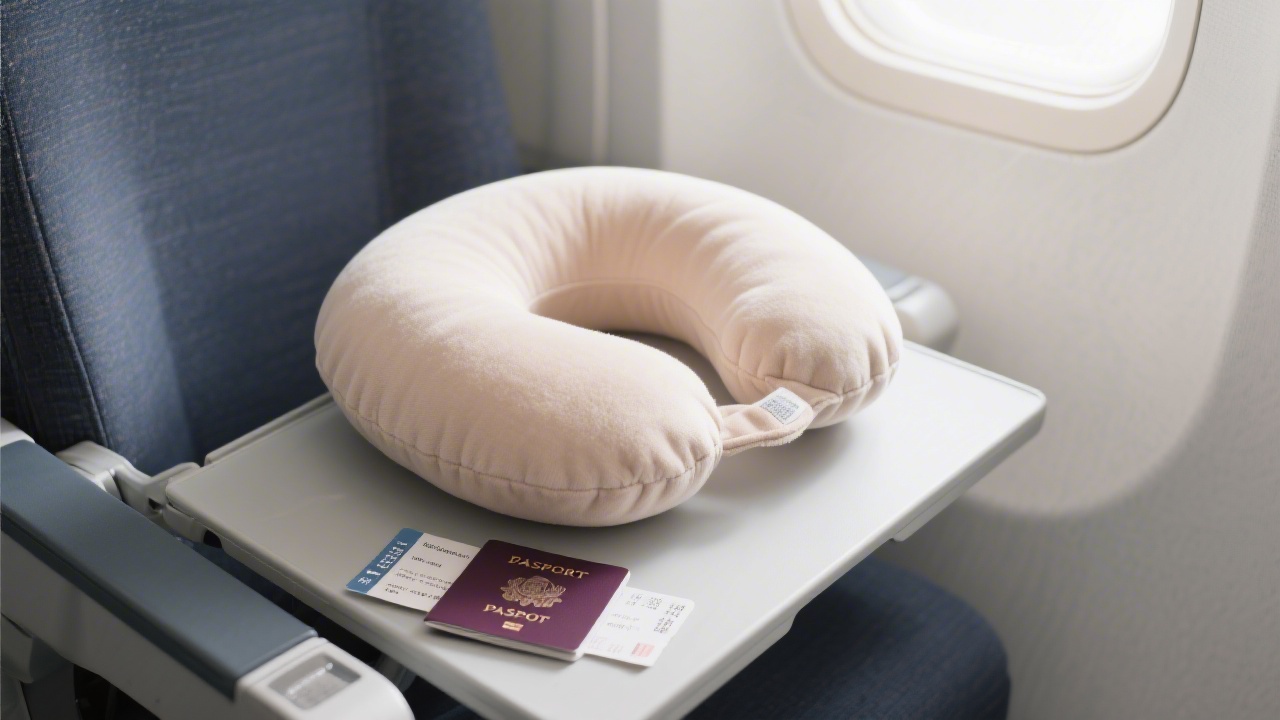
The dominant category. Solid or shredded memory foam molds to the neck and holds its shape, providing consistent lateral support that prevents the head from dropping sideways. Raised side walls are the critical feature — without them, the pillow is just a decorative collar. Most quality models compress into a travel bag or clip to the outside of a backpack with a carabiner loop.
Best for: Long-haul flights (8+ hours), chronic neck pain sufferers, travelers who prioritize comfort over packability.
2. Inflatable Neck Pillows
The lightest and most packable option. A quality inflatable fills in 3–5 breaths and deflates in seconds, folding flat to book-size or smaller. Firmness is adjustable by varying inflation. Modern versions use "soft-touch" fabrics rather than the scratchy plastic of older models. The trade-off is less contouring than memory foam and a slight "bounce" effect from the air chamber.
Best for: Backpackers, ultralight travelers, budget travelers, anyone with strict carry-on limits.
3. Wrap-Around / 360-Degree Pillows
These designs encircle the entire neck, providing support on all sides rather than just the lateral walls. The Travelrest Nest is the category leader. Some models include an adjustable clasp or toggle to tighten the fit. The advantage is genuine sleep stability — your head cannot fall in any direction. The disadvantage is bulk; these do not compress as small as U-shaped designs.
Best for: Side sleepers on planes, travelers who sleep deeply and move around, anyone whose head drops forward despite a standard U-pillow.
4. Forward-Lean / Face Cradle Pillows
Designed for travelers who prefer to sleep leaning forward. These sit on the tray table and support the face and upper chest, similar to a massage table cradle. The Face Cradle and Face Cradle Wanderlust Lite offer up to 5 configurable positions. They are less practical for road trips but excel on planes and trains where a tray table is available.
Best for: Front-sleepers, travelers in economy seats with limited recline, anyone who finds neck pillows uncomfortable.
5. Compact Sleeping Pillows
Not a neck pillow at all — these are small standard or contoured pillows designed for travel. They roll or fold into a carry bag and are used like a regular bed pillow at the destination. The Bucky 2-in-1 combines a compact pillow with a travel blanket. These serve double duty: neck support in transit, then hotel pillow replacement on arrival.
Best for: Business travelers on multi-night stays, people with neck conditions who need consistent pillow support, hotel pillow haters.
Top 5 Travel Pillows for 2026 — Tested and Ranked
#1 — Cabeau Evolution S3 ($39.99)
The Evolution S3 is the most thoughtfully engineered travel pillow we have tested. The memory foam core is dense enough to provide real support without feeling like a brick, and the raised side walls are asymmetric — one side is higher than the other, letting you choose the support level that matches your neck length. The standout feature is the seat strap system: adjustable straps wrap around the headrest posts of an airplane seat, locking the pillow in place so it does not shift during turbulence or when you change position.
The cover is machine-washable and made from a moisture-wicking fabric that stays cool against skin. A zippered pocket on the side holds earplugs or a sleep mask. The S3 compresses into a travel bag that is roughly the size of a large grapefruit — not ultralight, but reasonable for carry-on. At $39.99, it delivers premium features at a mid-tier price.
#2 — Travelrest Nest Ultimate ($49.95)
The Nest Ultimate takes a different approach: instead of a U-shape, it wraps fully around the neck like a soft collar. The inflatable internal bladder is covered with a plush, velour-like fabric that feels luxurious against skin. A front toggle lets you adjust the tightness, and the rear is flat to accommodate headrest contact without pushing your head forward.
This design excels for side sleepers who need support on all sides. We tested it on a red-eye from New York to London and found that the wrap-around construction genuinely prevents the head from dropping in any direction — forward, sideways, or backward. The downside is packed size: even deflated, it occupies more space than a U-shaped pillow. It also takes 30–45 seconds to inflate and adjust, versus instant deployment for memory foam.
#3 — Sea to Summit Aeros Ultralight ($38.46)
For travelers who measure every ounce, the Aeros Ultralight is unbeatable. At 2.8 ounces and a packed size smaller than a soda can, it is the most packable travel pillow that still delivers functional support. The curved baffle design cradles the head better than flat inflatables, and the 30D stretch-knit polyester face is soft rather than plasticky.
The multi-function valve allows micro-adjustments — you can release a tiny amount of air for softer support without fully deflating. At 4.3 inches of loft, it works for back sleepers and combination sleepers. Strict side sleepers may find the surface area slightly small. For backpackers, thru-hikers, and anyone traveling with only a personal item, this is the correct choice.
#4 — OstrichPillow Go ($60)
The OstrichPillow Go is a memory foam neck pillow with a unique asymmetrical design: one side is higher than the other, and the interior channel is contoured to fit different neck sizes. The viscoelastic foam is slow-rebound — it takes 3–5 seconds to return to shape after compression — which provides consistent pressure distribution.
The magnetic clasp closure is smoother than Velcro (which snags on hair and clothing) and the cover is a breathable bamboo-derived fabric. At $60, it is the most expensive option on our list, but the construction quality and materials justify the premium for frequent flyers. The Go compresses into a travel case that clips to luggage with an integrated carabiner.
#5 — Trekology ALUFT 2.0 ($16.99)
The ALUFT 2.0 is the best budget travel pillow for 2026. It is an inflatable design with an ergonomic depression for the head and raised side lobes for lateral support. The TPU bladder is covered with a slip-resistant polyester fabric that stays in place on slick airplane upholstery. At 5.3 ounces and a price under $17, it is the entry-level option that does not feel like a toy.
The one-way valve prevents air from escaping during inflation, and a second button releases air for quick deflation. The ALUFT 2.0 is not as comfortable as the Cabeau or as packable as the Sea to Summit, but it delivers 80% of the functionality at 40% of the price. For occasional travelers or anyone testing whether a travel pillow actually helps, this is the right starting point.
Side-by-Side Comparison Table
| Pillow | Type | Weight | Packed Size | Price | Best For |
|---|---|---|---|---|---|
| Cabeau Evolution S3 | Memory foam U-shape | 11.2 oz | Grapefruit | $39.99 | Long-haul flights |
| Travelrest Nest Ultimate | Wrap-around inflatable | 6.8 oz | Softball | $49.95 | Side sleepers |
| Sea to Summit Aeros | Inflatable | 2.8 oz | Soda can | $38.46 | Ultralight travel |
| OstrichPillow Go | Memory foam asymmetrical | 10.5 oz | Grapefruit | $60 | Frequent flyers |
| Trekology ALUFT 2.0 | Inflatable | 5.3 oz | Smartphone | $16.99 | Budget travelers |
Best Pillow by Trip Type
Long-Haul Flights (8+ Hours)
Memory foam is non-negotiable for overnight flights. The Cabeau Evolution S3 or OstrichPillow Go provide the sustained support that inflatables cannot match over 8+ hours. Pair with a seat strap to prevent slippage, and rotate the pillow so the thick section supports your chin if you tend to drop your head forward.
Short Flights (2–4 Hours)
An inflatable like the Sea to Summit Aeros or Trekology ALUFT 2.0 is sufficient. You do not need sustained support for a short nap, and the packability matters more than the marginal comfort gain of memory foam. Deflate the pillow before descent to avoid pressure changes affecting the air bladder.
Road Trips
For passenger sleeping, a memory foam U-pillow works well because the car seat headrest provides rear support. The pillow only needs to prevent lateral head drop. For the driver, skip the neck pillow and use an inflatable lumbar support behind the lower back instead — this prevents the slouching that causes lower back pain on long drives.
Backpacking and Budget Travel
The Sea to Summit Aeros Ultralight is the clear winner. At 2.8 ounces, it is lighter than a deck of cards and provides enough support for hostel beds, overnight trains, and airport naps. Bring a buff or lightweight pillowcase to improve comfort and hygiene in shared sleeping spaces.
Business Travel (Multi-Night Stays)
Consider a compact sleeping pillow rather than a neck pillow. Models like the Bucky 2-in-1 or Flexi Pillow Harmony Travel serve double duty: neck support in transit, then hotel pillow replacement at the destination. This is especially valuable if you have a neck condition and need consistent support night to night.
Positioning: The Secret Most Travelers Miss
The most common mistake with travel neck pillows is wearing them incorrectly. A U-shaped pillow can be positioned in at least three ways, and each solves a different problem:
Standard Position: Side Support
The opening faces front. The raised side walls prevent the head from falling sideways. This is the default position and works for travelers who sleep with their head relatively upright.
Rotated Position: Chin Support
Rotate the pillow 180 degrees so the thick section sits under your chin and the opening faces backward. This prevents the head from dropping forward — the most common sleep-disrupting movement on planes. If you wake yourself up with a head-bob, this is the position you need.
Strapped Position: Zero Slip
Some models (Cabeau Evolution S3, Travelrest Nest) include straps that wrap around the headrest posts of an airplane seat. This locks the pillow in place during turbulence, takeoff, landing, and position changes. It is the only way to guarantee the pillow stays where you put it.
Pro tip: Test all three positions during the first 30 minutes of a flight. Your body will tell you which one works. Most travelers default to the standard position and never discover that rotation eliminates their head-bob problem entirely.
Care and Packing Tips
Memory foam pillows should be decompressed before use — take them out of the travel bag during boarding or while waiting at the gate. By cruising altitude, the foam will have fully expanded and be ready for use. Compressing memory foam for more than a few hours temporarily reduces its loft; 10–15 minutes of decompression restores it.
Inflatable pillows are security-friendly — deflated, they are essentially flat pouches that pass through TSA without issue. They can also be topped off using the overhead air nozzle on most aircraft if you find the firmness dropping at altitude.
Clean removable covers every 2–3 trips. Spot-clean foam cores with a damp cloth and mild detergent. Never submerge an inflatable valve in water. Store pillows uncompressed between trips to preserve foam cell structure and inflatable bladder integrity.
FAQ
Are travel pillows actually good for your spine?
Only if used correctly. A properly positioned memory foam or wrap-around pillow maintains cervical alignment and prevents the lateral head drop that strains neck muscles. An incorrectly positioned pillow — or one that is too soft — provides no real support and may even worsen posture by pushing the head forward.
Memory foam or inflatable — which is better?
Memory foam offers superior comfort and support for long trips. Inflatable wins on packability and weight. If your priority is sleep quality on a 10-hour flight, choose memory foam. If your priority is fitting everything into a 20-liter daypack, choose inflatable.
How do I keep my travel pillow clean?
Most quality travel pillows have removable, machine-washable covers. Wash after every 2–3 trips. For the foam core or inflatable bladder, spot-clean with mild detergent and air-dry completely. Carry a small pillowcase or buff to use as a barrier between your face and the pillow surface on planes.
Can I use a travel pillow at home?
Yes. Many travelers use their neck pillow for reading in bed, working at a desk, or lounging on the couch. Compact sleeping pillows are explicitly designed for home use after travel. A neck pillow can also provide support during recovery from neck strain or whiplash.
What size travel pillow fits in carry-on luggage?
All the pillows on our list fit in standard carry-on bags. Memory foam models compress to roughly grapefruit size. Inflatable models fold flat to book-size or smaller. The only exception is compact sleeping pillows, which are closer to standard pillow size and may require checked luggage if you are packing light.
Why does my travel pillow make my neck hurt worse?
Three likely causes: (1) the pillow is too thick, pushing your head forward into flexion; (2) the foam is too soft and collapses under your head weight; or (3) you are wearing it in the wrong position. Try rotating the pillow 180 degrees, adjusting inflation, or switching to a lower-loft model.
Verdict: Best Travel Pillow 2026
For most travelers, the Cabeau Evolution S3 is the definitive choice in 2026. The seat strap system solves the single biggest frustration with travel pillows — slippage — and the asymmetric memory foam design adapts to different neck sizes without adjustment. At $39.99, it undercuts premium competitors while delivering features they lack.
Ultralight travelers should choose the Sea to Summit Aeros Ultralight without hesitation. At 2.8 ounces, it is the only pillow that genuinely disappears into a backpack while still providing functional support. Side sleepers and deep sleepers should consider the Travelrest Nest Ultimate for its wrap-around stability. Budget buyers have a legitimate winner in the Trekology ALUFT 2.0 at under $17.
The key insight most travelers miss is positioning. Rotate your U-pillow, strap it to the headrest, and test all configurations during the first half-hour of a trip. The right pillow in the wrong position is worthless. The right pillow in the right position is the difference between arriving rested and arriving wrecked.
Cabeau Evolution S3
Seat-strap lock system · Asymmetric memory foam · Machine-washable cover · $39.99. The travel pillow that actually stays in place.