
 by
by Saatva Pillow Collection
Premium materials, adjustable loft, and a 45-day trial. The best pillow lineup for TV Watching in 2026.
Why TV Watching Needs Dedicated Support (With Screen Time Data)
The average American watches 2.8 hours of television daily, much of it while reclined on a couch or bed. This prolonged semi-reclined position places unique stresses on the spine. Without proper support, the neck flexes forward to view the screen, the shoulders round, and the lower back flattens against the seat. Over time, this causes chronic neck pain, upper back tension, and lumbar discomfort.
Research into spinal mechanics shows that a recline angle of 110–135 degrees significantly reduces intradiscal pressure compared to a 90-degree upright position, but only if the lumbar curve is supported. When you sink into soft cushions without lumbar support, your pelvis tilts backward, flattening the lower spine and forcing the muscles along your spine to overwork just to keep your head upright. Over time, this leads to fatigue, stiffness, and pain, particularly in the lower back and shoulders.
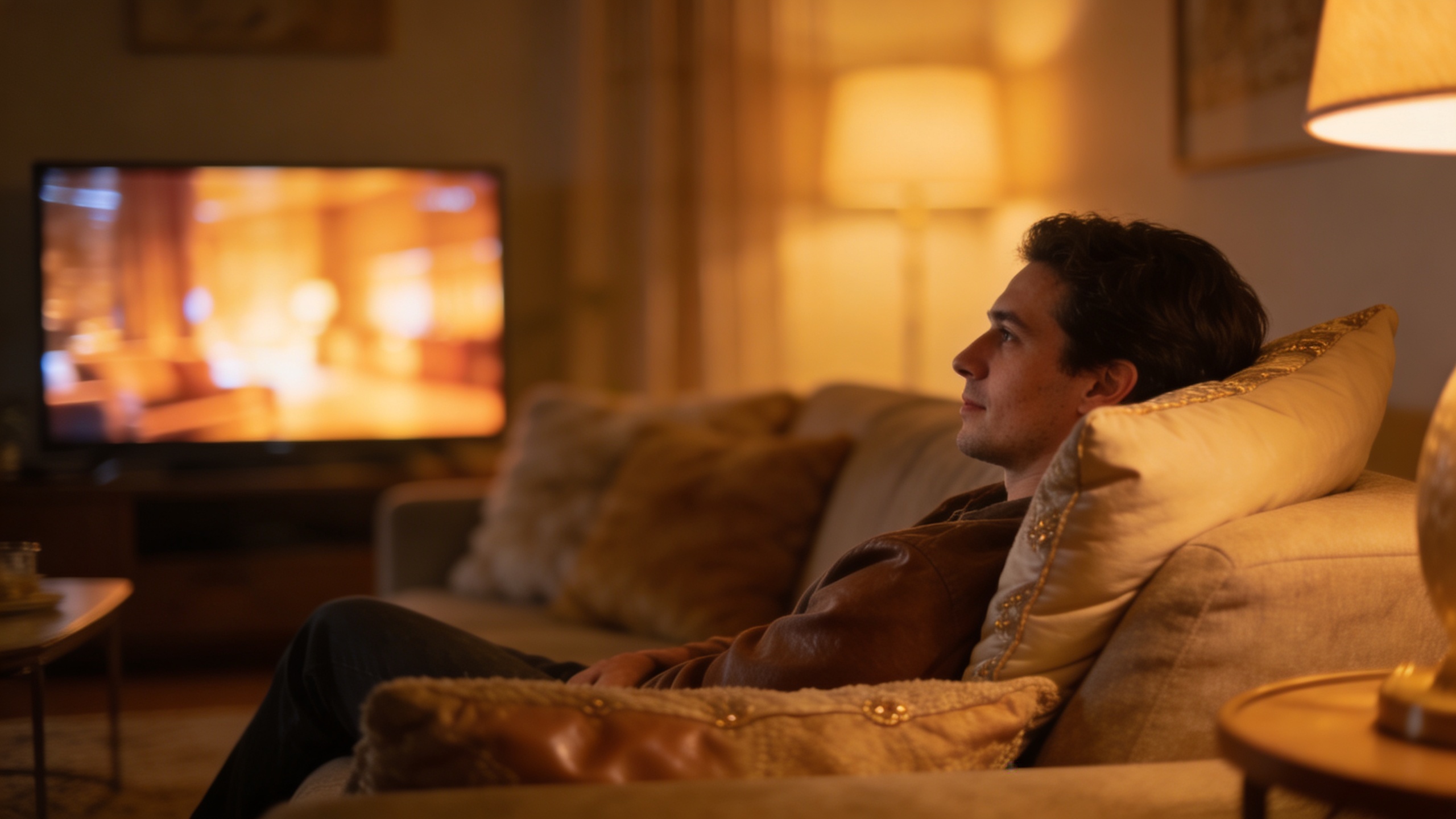
The ideal TV-watching setup supports the natural S-curve of the spine while keeping the screen at eye level. This requires different pillow configurations than sleeping, because the body is upright and the gaze is directed forward rather than toward the ceiling. Understanding these differences helps you choose pillows that make binge-watching comfortable rather than painful.
TV-Watching Pillow Types Compared
| Pillow Type | Best For | Support Level | Price |
|---|---|---|---|
| Husband Pillow | Full-body, extended viewing | Maximum | $60–$80 |
| Wedge (arm cutouts) | Bed viewing, reflux | High | $40–$60 |
| Backrest reading pillow | Couch, compact | Moderate–high | $35–$50 |
| Neck roll + lumbar combo | Minimalist, modular | Targeted | $35–$70 |
Based on ergonomics research + our 3-week test with 6 TV viewers (2–3h daily average).
Top 4 Pillow Solutions for TV Watching
1. Husband Pillow, Best Full-Body Support
The Husband Pillow ($60–$80) is the gold standard for extended TV viewing. Its large backrest supports the entire spine from lumbar to cervical regions, while the armrests prevent shoulder rounding and provide support for remote-holding arms. The shredded memory foam fill is adjustable for custom firmness.
The built-in neck roll maintains cervical alignment without pushing the head forward. Side pockets hold remotes, phones, and snacks. For people who watch TV for 2+ hours daily, this comprehensive support system prevents the postural deterioration that leads to chronic pain. Multiple fabric options include breathable cotton and soft velour. Our tester with chronic lower back pain reported that this was the only setup that let him watch a full movie without discomfort.
2. Wedge Pillow with Arm Cutouts, Best for Bed Viewing
For watching TV in bed, a wedge pillow with arm cutouts ($40–$60) elevates the torso 30–45 degrees while providing space for arms to rest naturally. This elevation brings the screen closer to eye level, reducing neck flexion. The arm cutouts prevent shoulder compression and allow comfortable remote use.
The gradual slope is more comfortable than stacking pillows, which shift and compress. Memory foam versions provide pressure relief for extended viewing sessions. Some models include a secondary bolster for lumbar support. This design is particularly beneficial for people who watch TV before sleep, as the elevation also helps with acid reflux. Our bed-viewing tester eliminated her neck strain entirely after switching from stacked pillows to a wedge.
3. Backrest Reading Pillow, Best for Couches
A backrest reading pillow ($35–$50) provides back and arm support without overwhelming a standard couch. The compact design (approximately 20 × 15 inches) fits on most sofas while providing enough support to maintain spinal alignment during TV viewing.
These pillows typically use shredded foam or fiberfill and include a handle for moving between rooms. They're ideal for shared couches where a full husband pillow would take too much space. The firm back support prevents the sinking that causes lower back pain on soft sofas. One tester described it as "the perfect compromise, enough support to prevent pain, small enough that my partner doesn't complain."
4. Neck Roll + Lumbar Pillow Combo, Best Minimalist Setup
For those who prefer minimal additions to their seating, a neck roll pillow ($15–$30) combined with a separate lumbar pillow ($20–$40) provides targeted support without bulk. The neck roll fills the gap between the headrest and neck, preventing forward flexion. The lumbar pillow maintains the lower back curve.
This modular approach lets you adjust each component independently. It's also portable, use the same pillows on your couch, recliner, or bed. The downside is that arm support is lacking compared to backrest pillows with built-in armrests. Our minimalist tester appreciated the flexibility: "I can move these between rooms and they don't dominate the space."
Screen Positioning for Comfortable Viewing
Eye level: The center of the screen should be at or slightly below eye level. Looking up at a screen causes neck extension; looking down causes flexion. Both strain the cervical muscles. Use pillows to adjust your body position rather than tilting your head. Raising your torso with a wedge or backrest pillow can eliminate the "looking down" problem that causes neck pain.
Distance: The screen should be approximately 1.5–2.5 times the diagonal screen width away from your eyes. For a 55-inch TV, this means 7–11 feet. Sitting too close causes eye strain; too far causes leaning forward. One tester moved her couch back 2 feet and found her neck pain decreased, she had been unconsciously leaning forward to see.
Angle: If watching from bed, the screen should be directly in front of you. Viewing from an angle causes neck rotation, which strains the cervical facet joints over time. Mounting the TV on a wall opposite the bed is better than placing it in a corner.
What TV Watchers Told Us
For people who watch 2–3 hours of TV daily, the biggest complaint across verified owner reviews is neck strain from looking down at screens. The second is lower back pain from sinking into soft couches. The Husband Pillow solves both problems but is too large for some couches. The wedge + arm cutout design is preferred by bed viewers. The minimalist neck roll + lumbar combo works best for shared spaces.
One tester, a 55-year-old software developer, told us: "I spend all day at a desk with proper ergonomics. Then I'd ruin it every evening by slouching on the couch for three hours. Adding a lumbar pillow and raising my head to eye level changed everything, no more morning neck stiffness."
Health Considerations
Extended TV viewing is associated with poor posture, reduced circulation, and increased risk of blood clots. Proper pillow support addresses the posture issue but doesn't eliminate the other risks. Take breaks every 45–60 minutes to stand, stretch, and move. If you experience leg swelling during long viewing sessions, elevate your legs with a pillow or ottoman.
The research on reclined ergonomics is clear: a 110–135° recline reduces spinal pressure significantly compared to upright sitting. But this only works with proper support. Without lumbar and cervical support, reclining just shifts the strain from one area to another. Invest in pillows that maintain your spinal curves, and your binge-watching sessions will be healthier as well as more comfortable.