
 by
by Low-maintenance privacy trees along a fence work best when you choose an evergreen suited to your light, soil, and final width. I once planted a fast grower far too close to a wood fence, then spent every July pruning branches off the panels. The answer isn’t more plants. It’s better spacing.
- Plant Emerald Green Arborvitae for a Narrow Living Wall
- Use the Two-Texture Screen with Holly and a Wood Fence
- Let Clumping Bamboo Do the Fast Work
- Frame Back Yards Landscaping with Eastern Red Cedar
- Try the Three-Height Rule Around a Mature Magnolia
- Choose Italian Cypress Only Where You Can Keep It Dry
- Build the Soft-Edge Boundary with Serviceberry
- Skip Leyland Cypress and Choose Green Giant Instead
- Add Wax Myrtle for a Relaxed Coastal Screen
- Can a Podocarpus Hedge Solve a Tight Side Yard?
- Make the Fence Recede with Olive Trees and Gravel
- Use the Borrowed-View Method with Japanese Maple
- Anchor the Whole Line with a Mixed Evergreen Rhythm
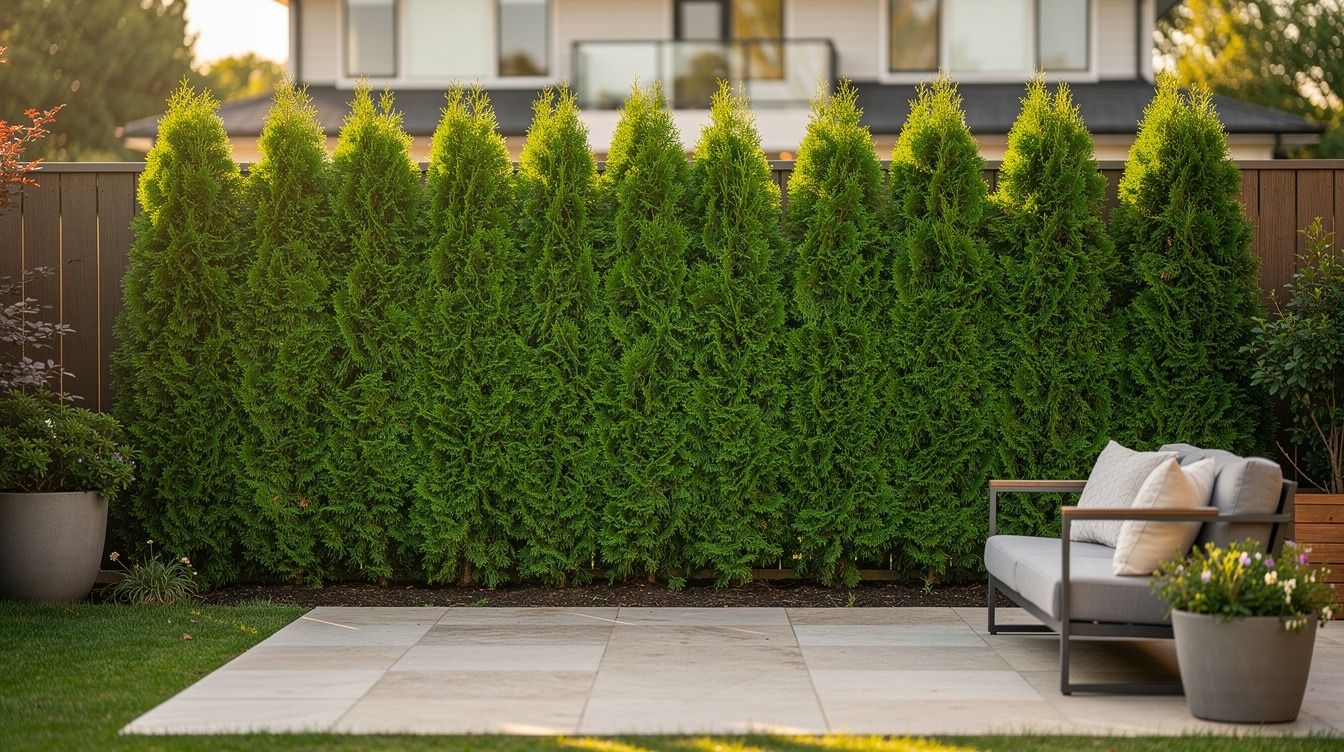
1Plant Emerald Green Arborvitae for a Narrow Living Wall
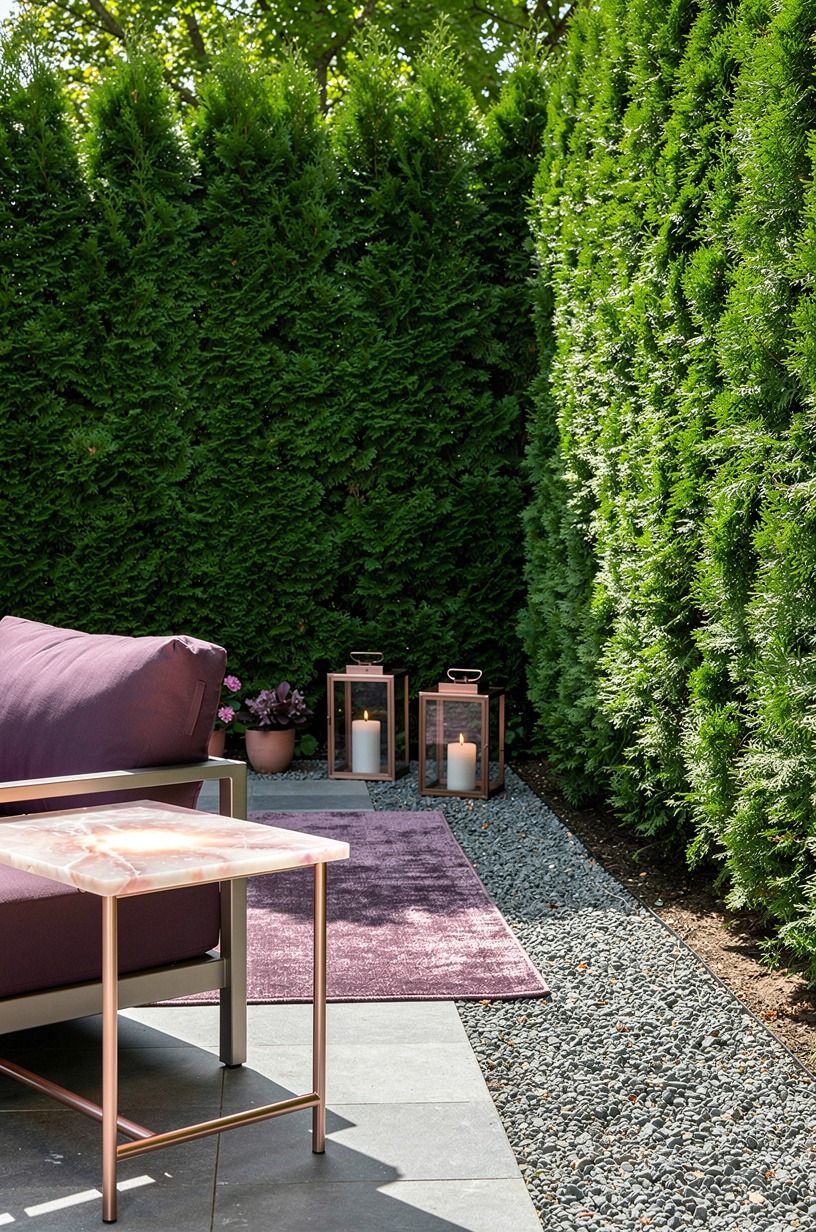
Emerald Green arborvitae earns its popularity because you can create a tall screen without donating half your yard to it. You’ll want to give each tree room to breathe, though, so your fence doesn’t become a damp, crowded tunnel.
Plant them in a line where you’ll still keep a 36 in walkway clear. Your future self will appreciate being able to stain the fence or pull weeds without fighting scratchy branches.
I’d choose these over sprawling Leyland cypress for a small backyard. Leylands grow fast, sure, but they can swallow your fence line and turn pruning into a yearly grudge.
For the backdrop, pair visible fence boards with plum, gray, and rose-gold accents, then use a backlit translucent onyx feature near a protected seating area. The green foliage feels richer against those warmer notes, and your screen feels intentional rather than accidental.
2Use the Two-Texture Screen with Holly and a Wood Fence
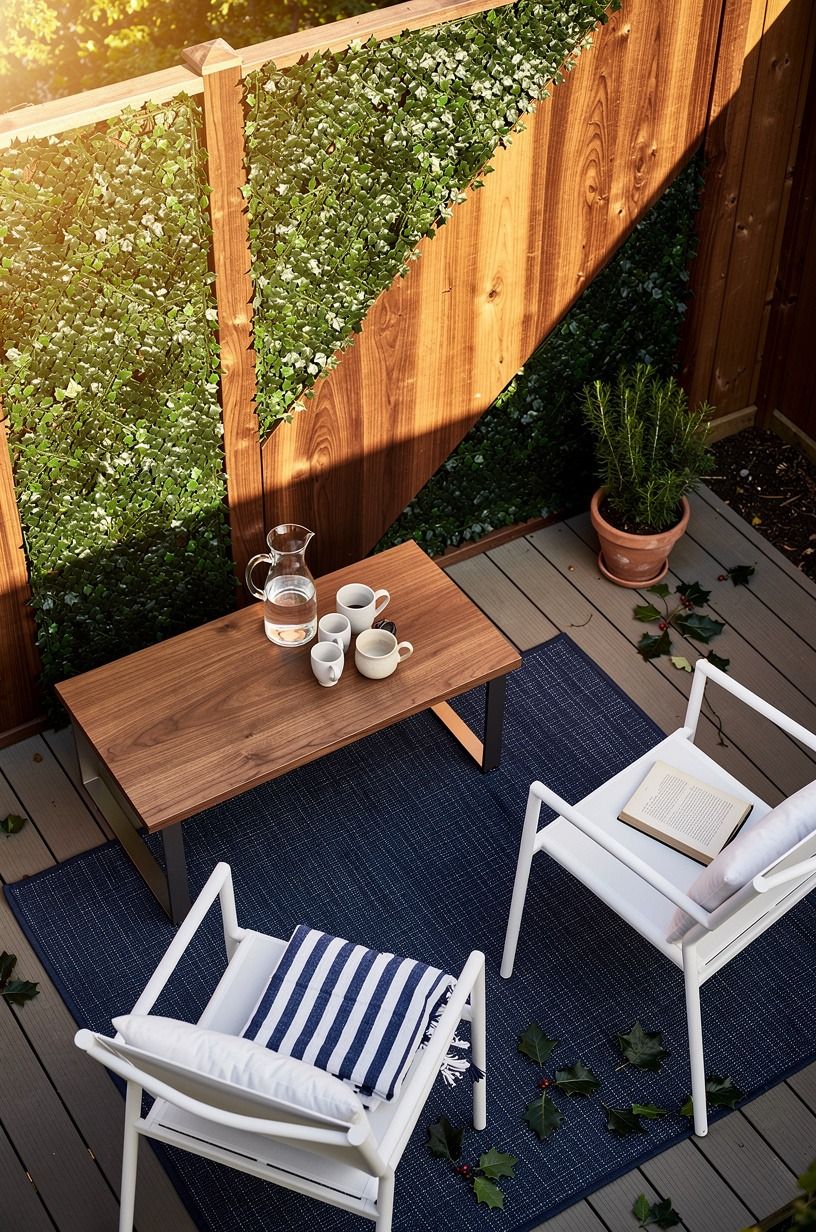
A row of Nellie R. Stevens holly gives you glossy leaves, red winter berries, and a screen that doesn’t look flat from the patio. You’ll get more visual depth than you would from one uniform wall of needles.
Pair the planting with one of these wood privacy fence ideas for classic backyard seclusion. A book-matched walnut fence detail behind the dark leaves works beautifully with navy and white accents, giving the edge a tailored feel.
Keep your mulch ring open around each trunk. Your hose, your rake, and the tree’s roots all need that breathing room.
And don’t overfill the base with flowers along privacy fence plantings. A few white gaura stems are enough; too many little blooms make the screen look fussy.
3Let Clumping Bamboo Do the Fast Work
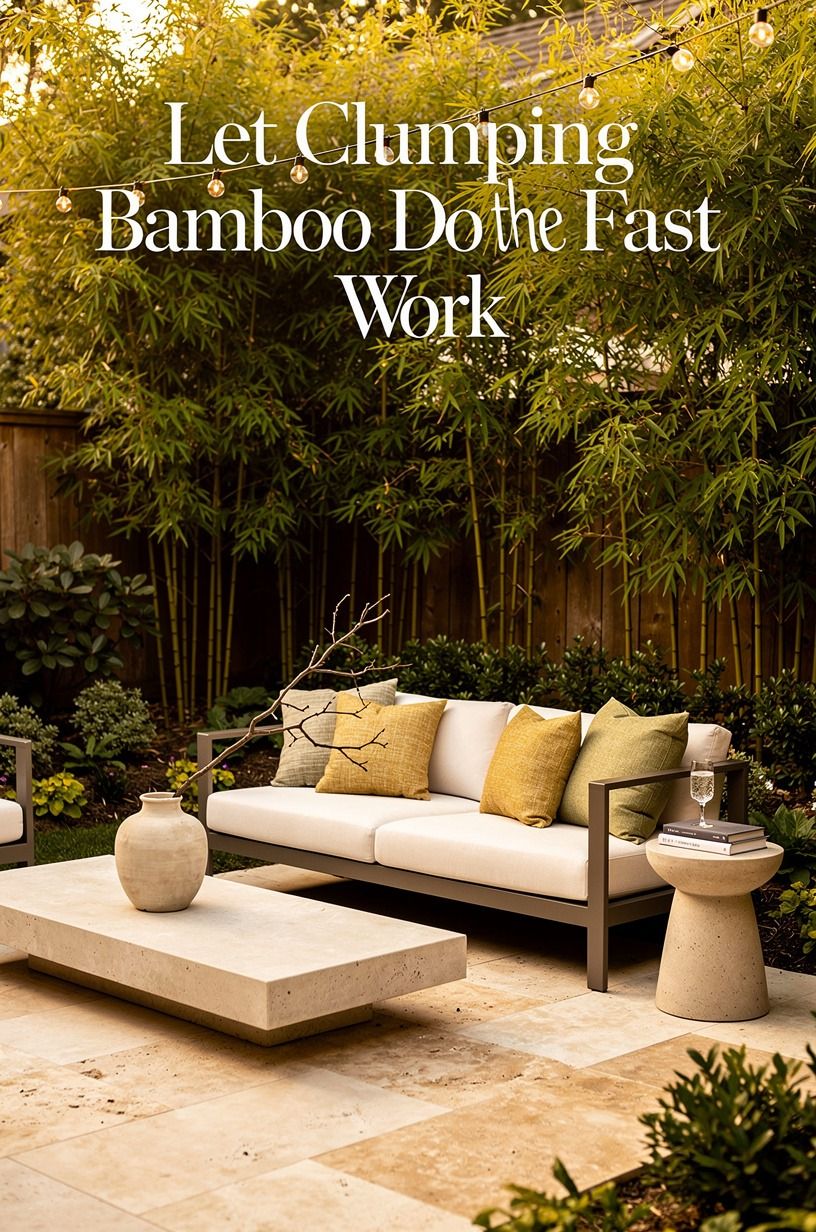
Clumping bamboo is the answer if you need a soft rustling screen and you’re willing to check its root behavior before buying. You’ll want a true clumping variety, not the running kind that pops up under your neighbor’s hydrangeas.
The canes bring life to an emerald, gold, and cream planting scheme in a way arborvitae never will. Gentle movement. A little sound.
Warm travertine underfoot makes a plain fence feel more like a tucked-away garden.
I’d skip bamboo if your fence borders a tiny shared lot and you don’t know the species. It isn’t worth the awkward conversation when a runner decides your yard is merely a suggestion.
For a resort-like layer, borrow a few ideas from these bamboo privacy fence screens. Your patio gets a more organic edge without a complicated build.
4Frame Back Yards Landscaping with Eastern Red Cedar
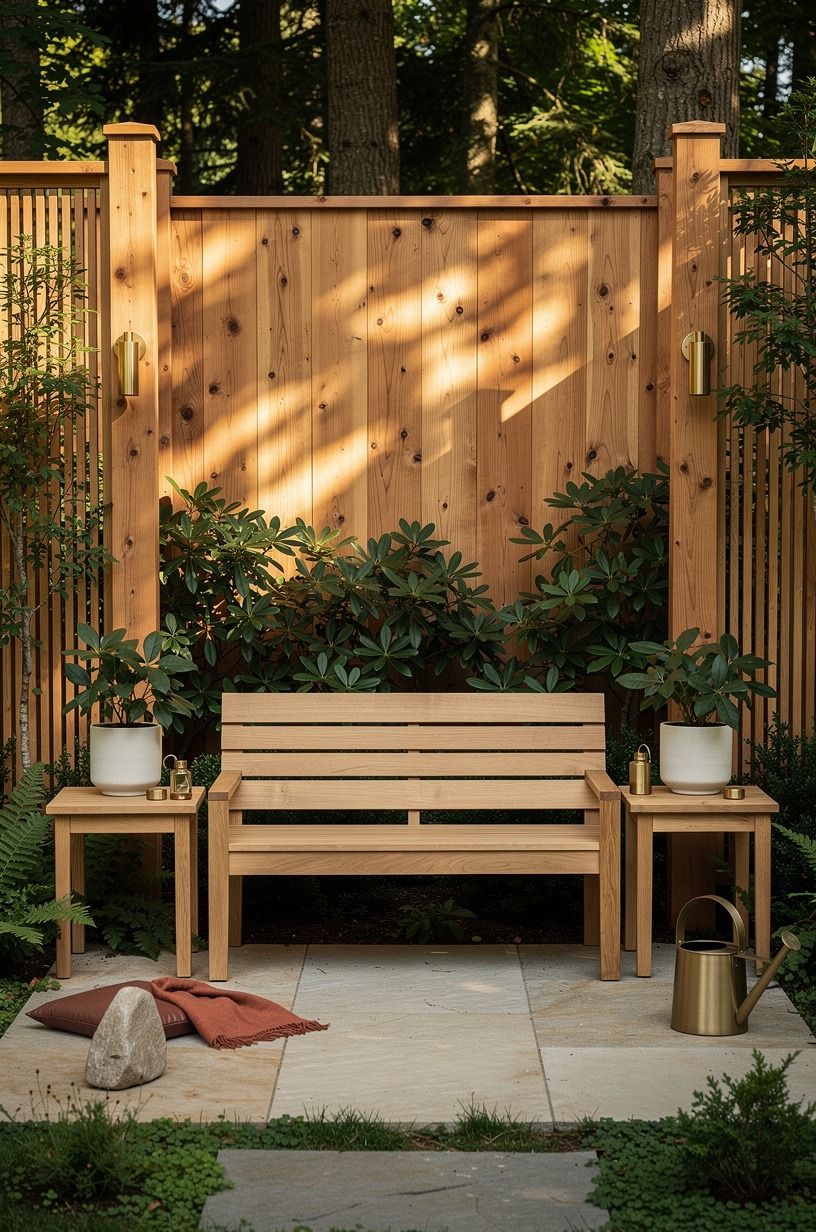
Give it a place where your eye can enjoy the blue-green foliage rather than inspecting every branch.
5Try the Three-Height Rule Around a Mature Magnolia
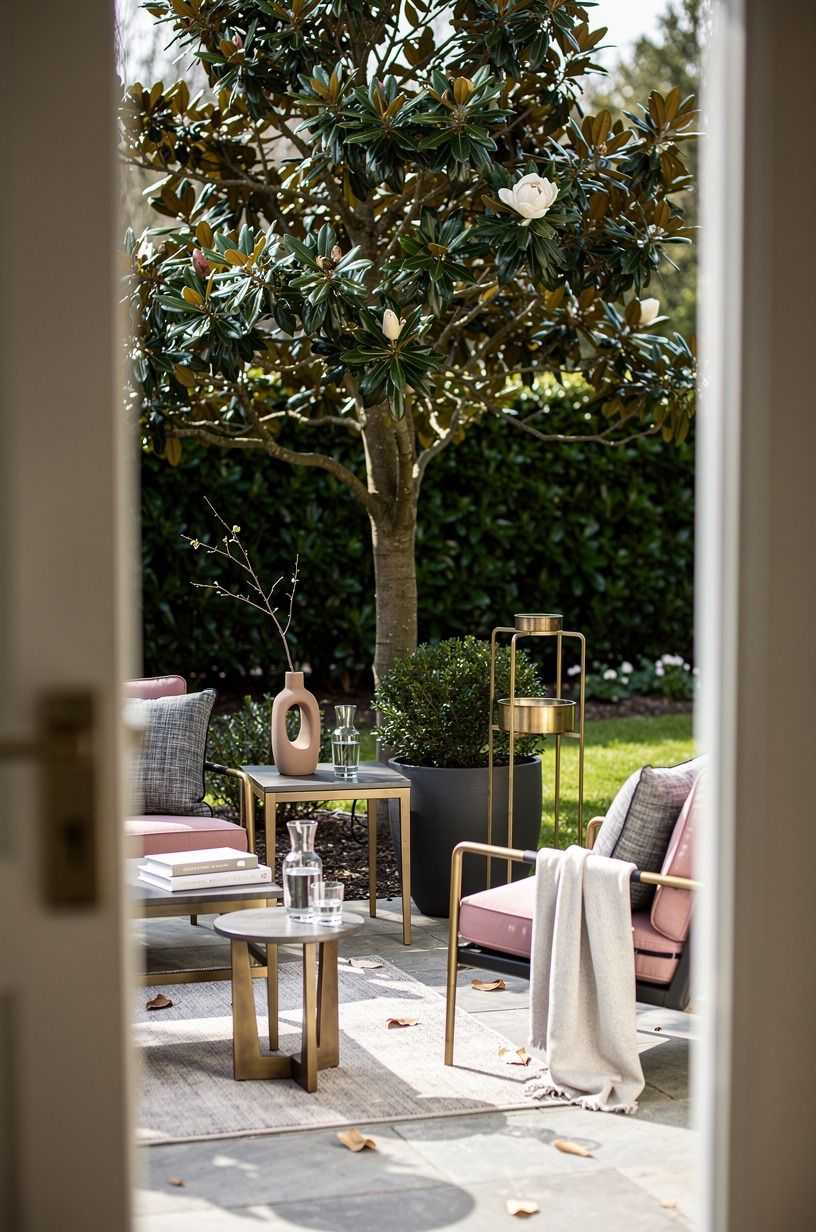
A Little Gem magnolia can make a fence disappear behind leathery leaves and pale blooms, especially where you want privacy that still feels welcoming. You’ll need sun and patience, but the reward is more than a green barrier.
Build three heights around it: the tree canopy, medium limelight hydrangeas, and a low sweep of grass. Your fence line stops reading as one hard stripe.
The flowers carry a faint lemony scent when you’re close enough to notice. That’s the kind of detail guests remember.
I’ve seen people underplant magnolias with thirsty annuals, and it rarely ends well. Keep your base simple, keep your watering steady, and let the tree be the star.
6Choose Italian Cypress Only Where You Can Keep It Dry
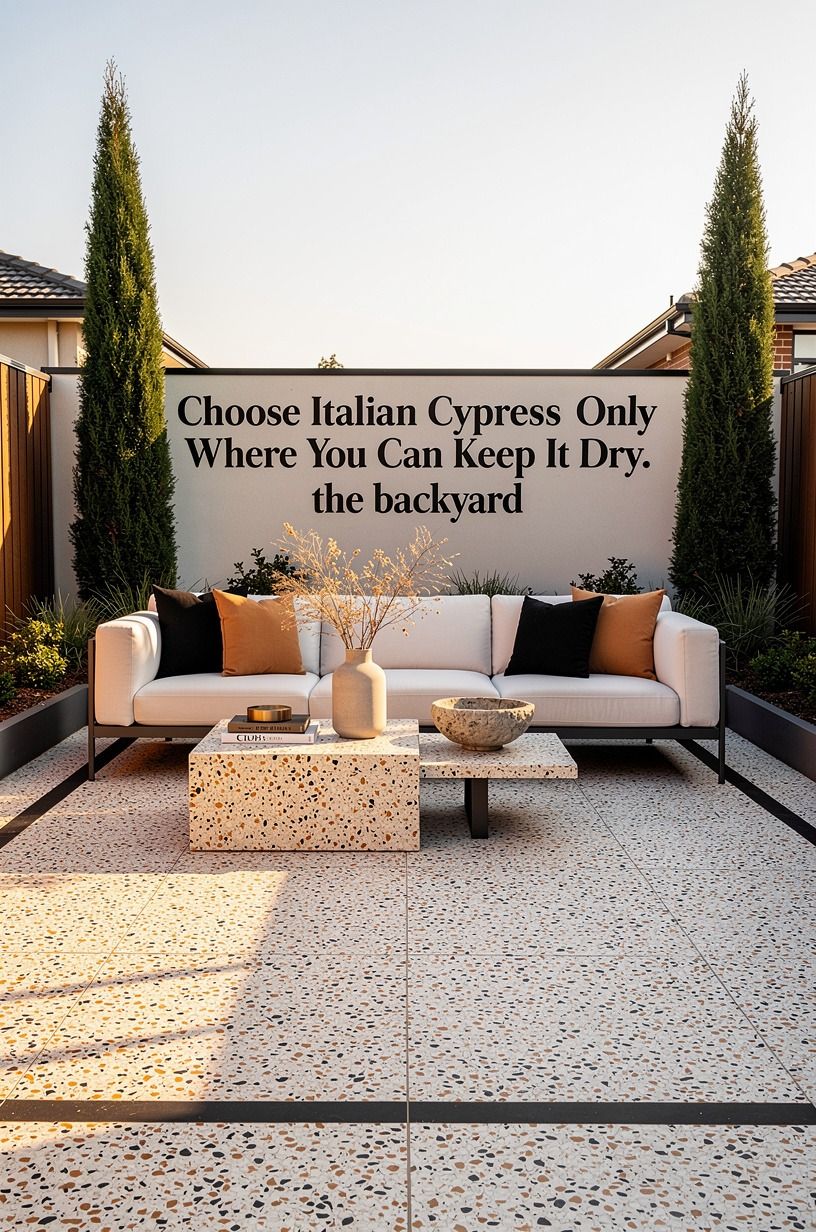
Italian cypress gives you that narrow, dramatic vertical line that looks so good beside stucco, gravel, and a simple gate. You’ll love it in a dry climate; you may regret it in a humid one.
These trees work best as punctuation rather than a packed hedge. Space them so you can see the fence and sky between each dark column.
Want a clean companion? Try a modern horizontal privacy fence layout with black hardware, camel-toned details, and oversized-chip terrazzo. The contrast is bold without yelling.
I’d pick arborvitae over Italian cypress in a wet, cold yard. Cypress can look refined for a season, then miserable when the site doesn’t suit it.
7Build the Soft-Edge Boundary with Serviceberry
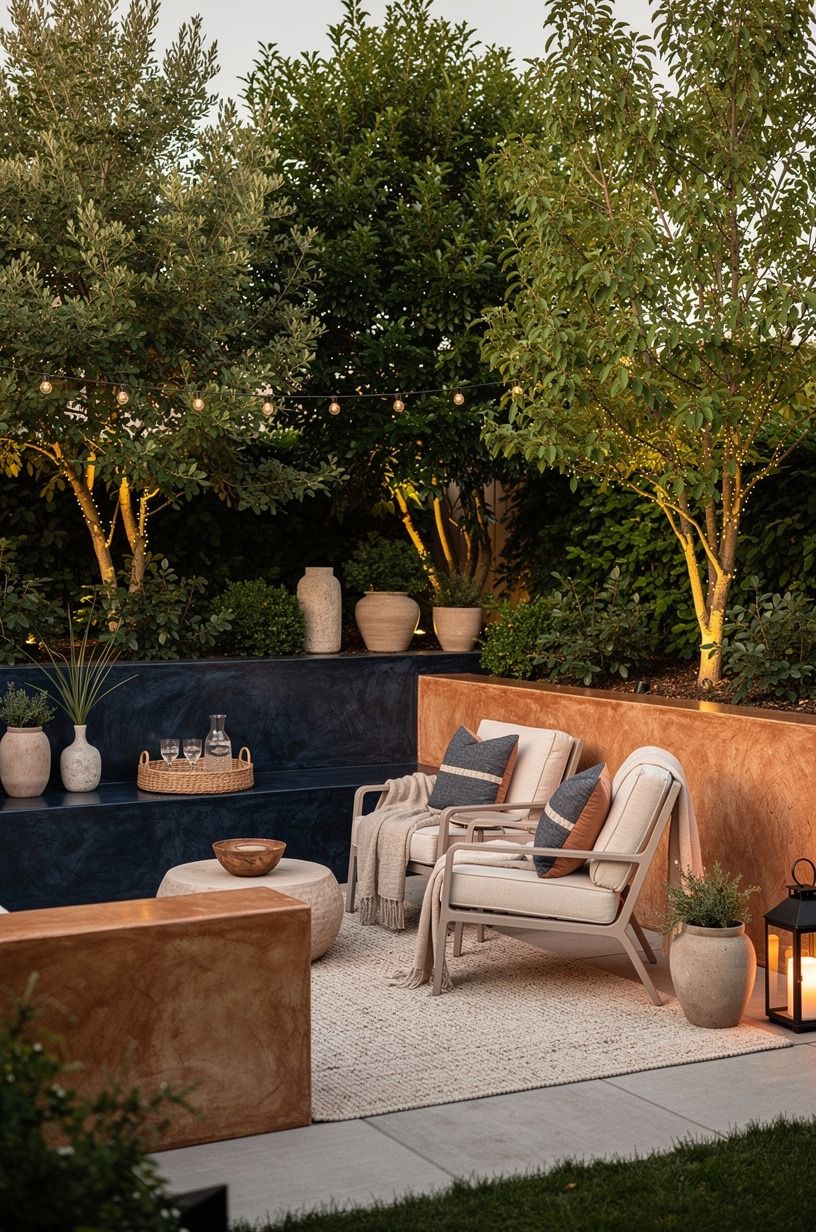
It won’t make the densest winter screen, so be honest about what you need.
8Skip Leyland Cypress and Choose Green Giant Instead
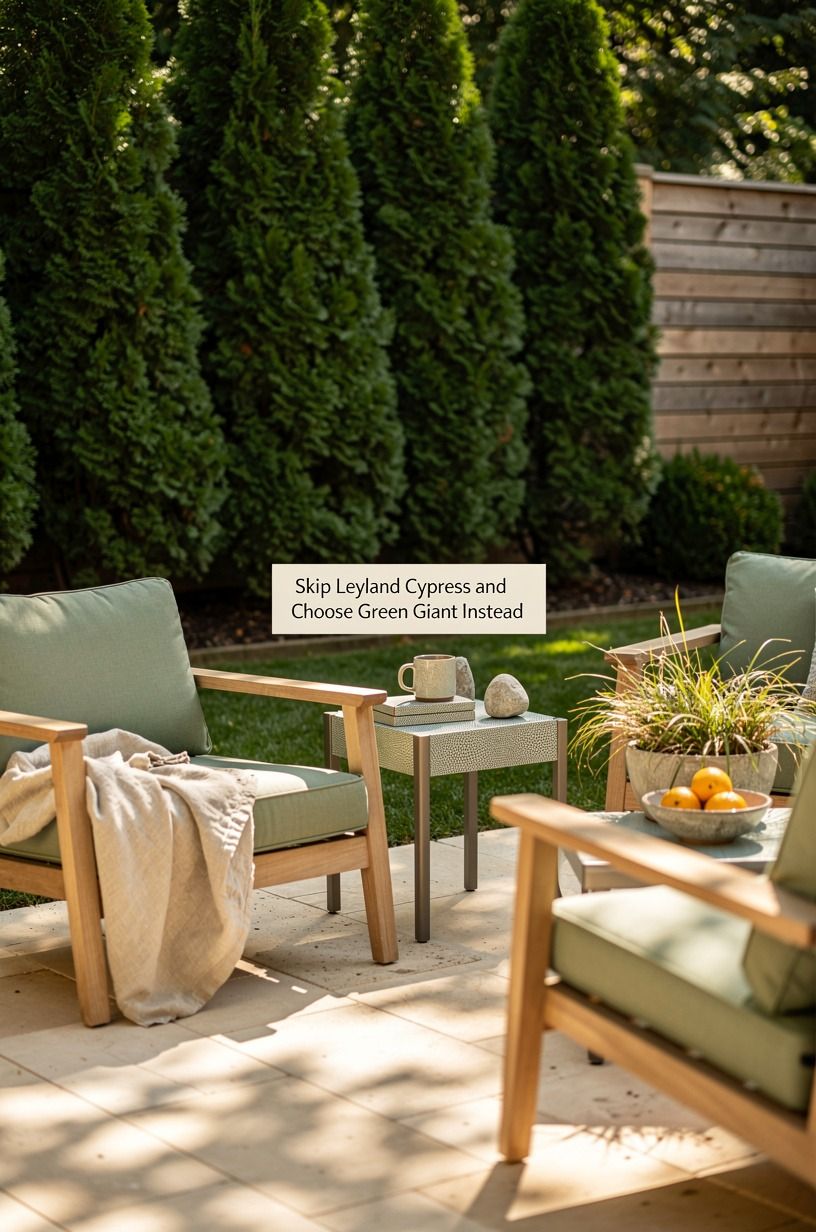
Green Giant arborvitae grows quickly, stays dense, and handles a large fence line with less drama than Leyland cypress. You’ll need more room for its mature width, but you won’t be chasing every wild branch with shears.
This is the tree for home landscaping where the fence runs long and bare. Its foliage forms a calm, sage-green backdrop for seating, string lights, natural wood, and a weathered pot with shagreen accents.
I made the mistake of treating fast-growing trees as instant privacy. They aren’t. Your first couple of years still need a plan: tall planters, a screen, or a view you can live with.
See these cheap DIY privacy fence ideas if you need coverage while the trees fill in. Your budget doesn’t have to wait for the roots.
9Add Wax Myrtle for a Relaxed Coastal Screen
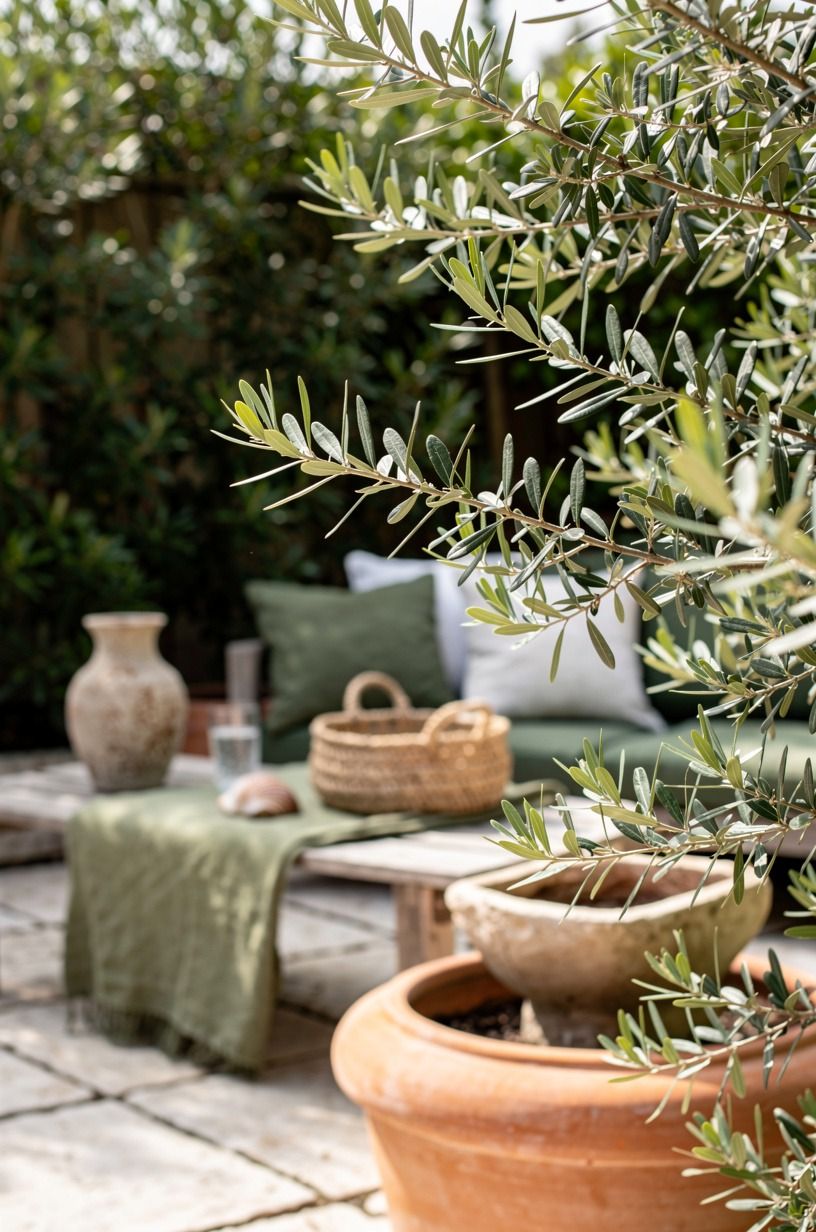
It’s especially good near a casual fence finished with washed Belgian linen cushions in terracotta, stone, and olive.
10Can a Podocarpus Hedge Solve a Tight Side Yard?
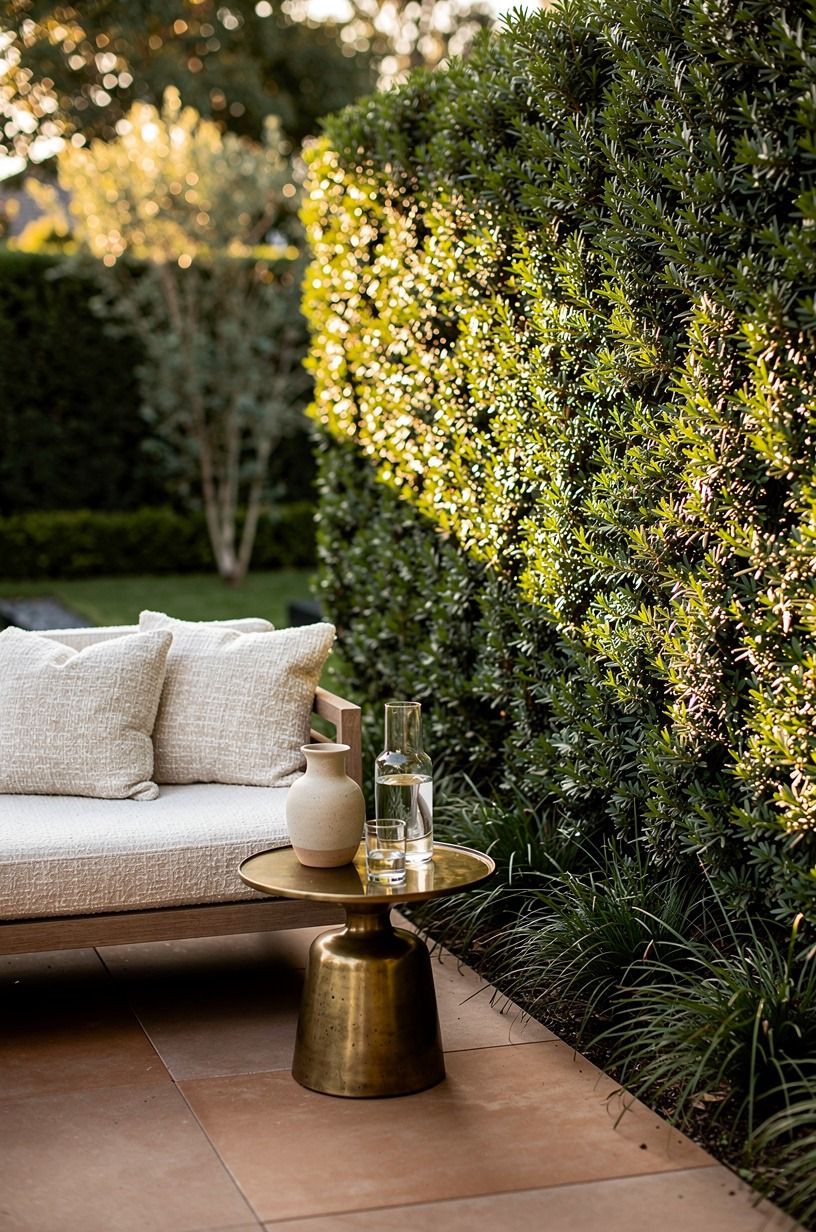
Podocarpus macrophyllus can solve a narrow side-yard problem because you can shear it into a tall, tidy screen. You’ll want to start with healthy plants and give them consistent water while they settle in.
The leaves are finer than broadleaf evergreens, so the hedge feels refined instead of bulky. It’s a good fit beside a gate, pool path, or slim patio where every inch matters.
Keep the 36 in minimum walkway clearance sacred. You don’t want your privacy planting to turn the route to the trash bins into a sideways shuffle.
For an industrial fence, podocarpus is far better than a flowering shrub. Try it against the materials in these corrugated metal privacy fence ideas, where clay, linen, aged brass, and organic bouclé soften the hard edge off steel.
11Make the Fence Recede with Olive Trees and Gravel
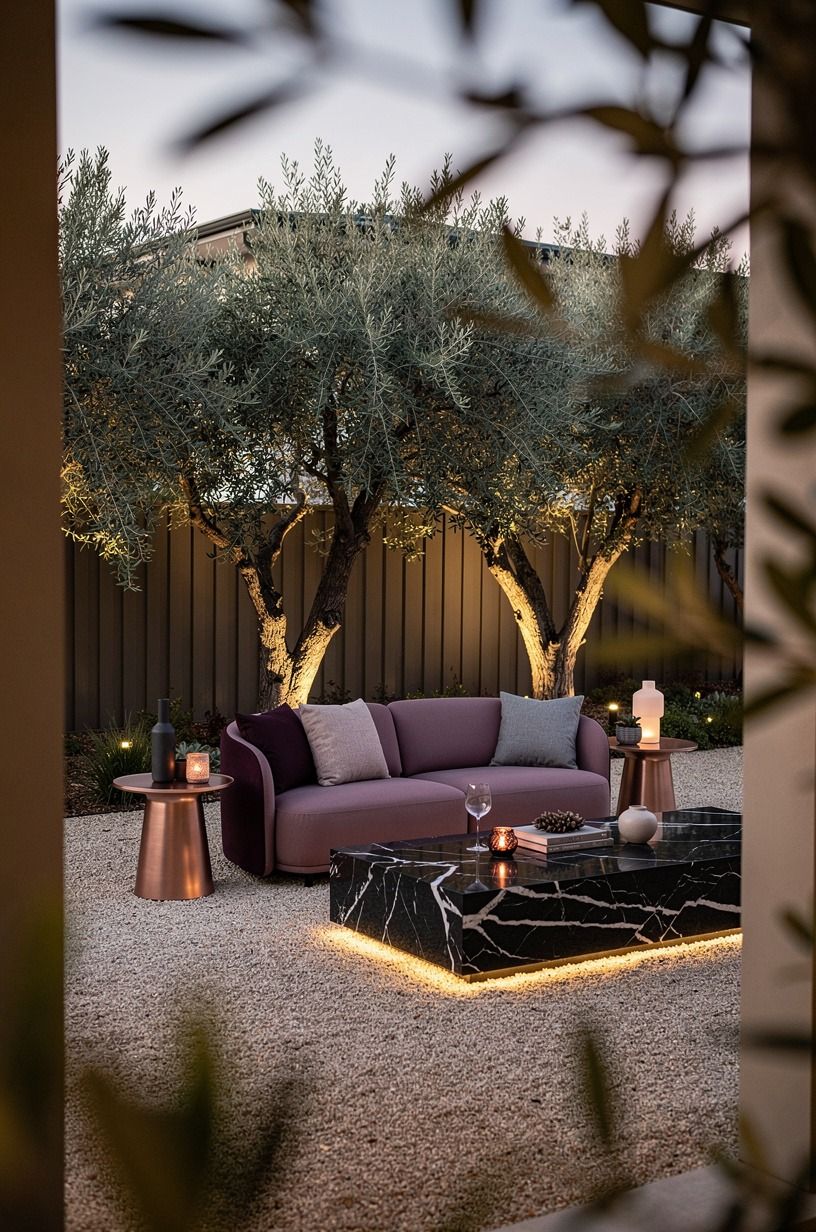
Fruitless olive trees can give a sunny fence line an earthy, almost Mediterranean mood. You’ll need the right climate and enough sun, but their gray-green leaves soften a plum and gray boundary beautifully.
Use gravel, not thirsty lawn, beneath them. The pale ground bounces light upward and makes the trunks look sculptural after sunset.
A Nero Marquina black-marble detail with white veining near the gate is plenty. Don’t add ten tiny pots; olive trees already bring enough character.
Here’s the thing: olives are a bad choice for a wet, freezing yard. I love the look, but I wouldn’t pretend the tree will forgive the wrong conditions.
12Use the Borrowed-View Method with Japanese Maple
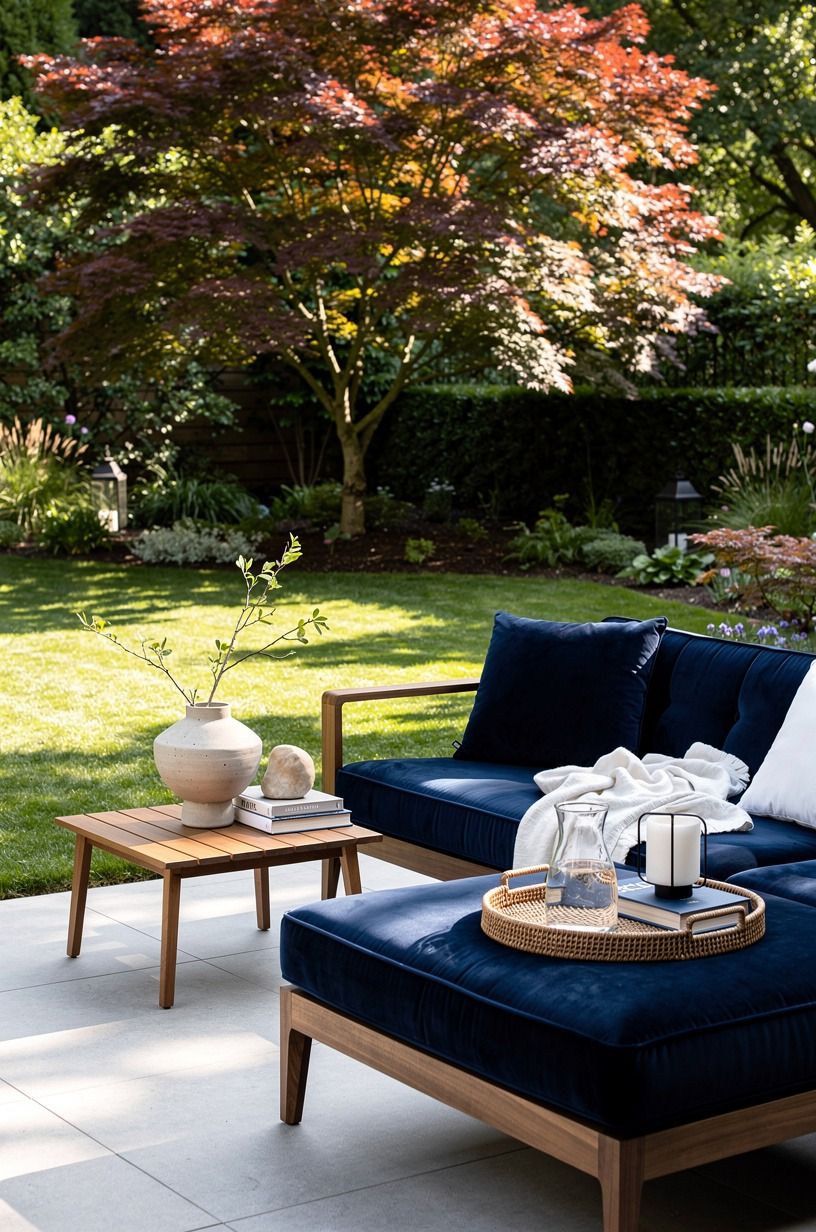
Japanese maple is not the tree for full, year-round hiding, but it can make a fence line feel private by redirecting your eye. You’ll notice the foliage before you notice the neighboring roofline.
Place it where your view naturally lands from a chair or kitchen window. Then layer an evergreen behind it, so your screen works even after the maple drops its leaves.
The red leaves look especially captivating beside navy, white, and walnut details, with deep-pile mohair velvet on protected outdoor seating. It’s a moody pairing, but it still feels warm in evening light.
I’d never use Japanese maple as the only privacy tree. It’s too seasonal for that job. Use it as the beautiful distraction that makes the practical screen feel less obvious.
13Anchor the Whole Line with a Mixed Evergreen Rhythm
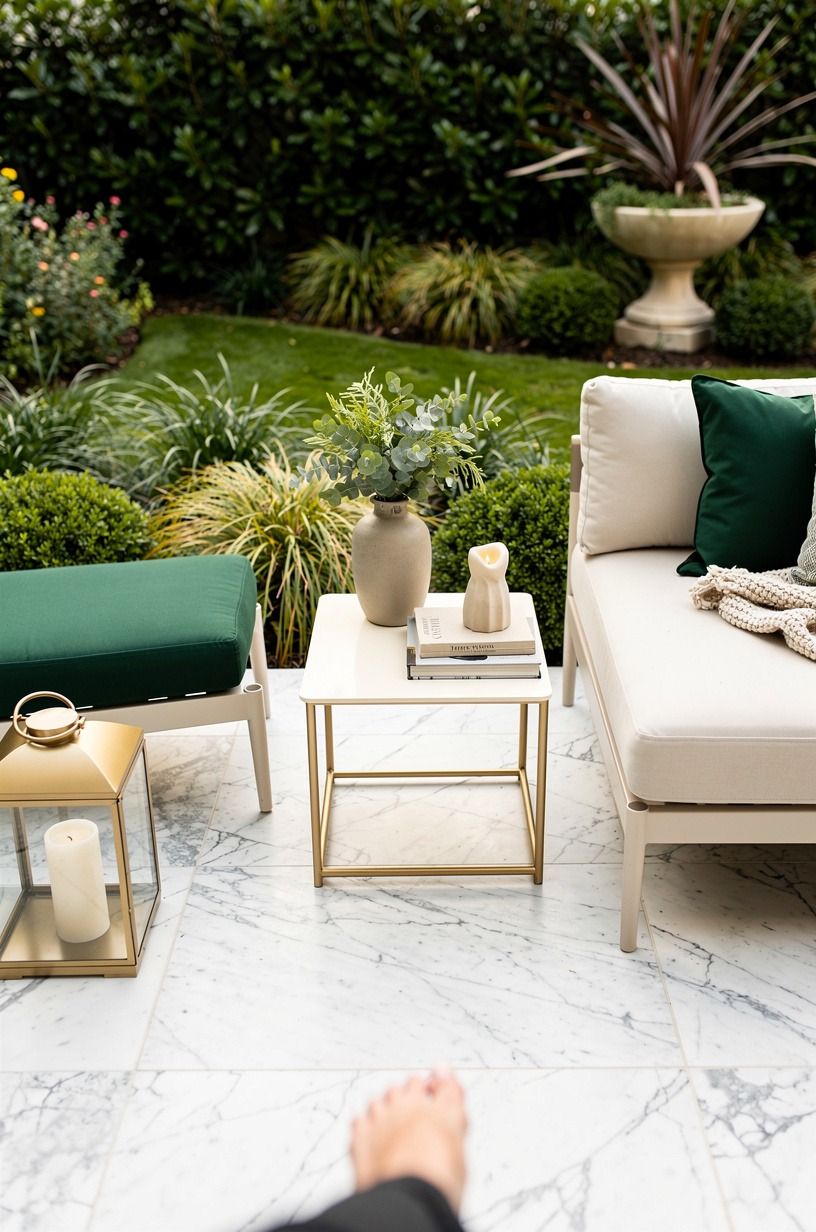
A mixed row of arborvitae, holly, and podocarpus is my favorite answer for a long fence because it avoids the copy-paste look. You’ll still block the view, but your yard gets texture, shifting greens, and a more natural rhythm.
Repeat each plant in small groups rather than placing one of everything. Your eye reads repetition as calm, while random singles can look like a nursery clearance rack.
If you’re adding a fence first, this step-by-step privacy fence guide can help you plan the order. Fence work is messy. Plant after the heavy lifting, not before.
And leave space for access. A Carrara-marble-topped potting ledge in emerald, gold, and cream can feel polished, but a screen that’s impossible to prune isn’t low-maintenance, no matter what the plant tag promised!
What a Privacy-Focused Backyard Can Cost
Trees are only one part of the fence-line picture, especially if you’re adding seating or lighting around them. Your costs can stay modest when the fence is sound and the planting does most of the visual work.
For a simple sitting area, an umbrella should cover the table plus about 2 ft on each side. That small planning move matters more than another decorative planter.
My Honest Rule for Choosing a Privacy Tree
I don’t think a privacy tree should be chosen from a pretty photo alone. I’ve done that, and the photo never tells you whether the tree hates wet feet, throws invasive roots, or needs a ladder twice a year. Your fence line is one of the few places in a yard where a bad choice stays visible every single day, so I’d start with the boring questions: how much sun do you get, how wide can the tree become, and how close is your neighbor’s structure?
If your goal is to block a direct view, evergreen density matters more than flowers. A serviceberry is enchanting in April, but it can’t hide a window in January.
A Green Giant can hide plenty, but it needs room, and squeezing it into a narrow strip only gives you a bigger problem later. That’s the trade-off people skip because plant labels make everything sound easy.
I also think fences deserve a little contrast. Dark leaves against warm wood.
Fine foliage against broad boards. A quiet pool of light beneath the branches.
You don’t need a yard full of expensive furniture to make that feel good. A Sunbrella cushion can typically run $40-$150 each, while LED string lights typically land around $30-$120, but neither purchase fixes a badly placed tree.
So choose the tree first, then make the rest of your backyard respond to it. Your screen should give you relief, not another Saturday chore. Simple, but not simplistic.
The Questions Worth Answering First
What is the best privacy tree for a small backyard?
Emerald Green arborvitae is often the best small-yard choice because its narrow habit gives you dense evergreen coverage without taking over the patio. You’ll still need access around it, so protect that 36 in path and avoid planting it right against the fence.
Where can I buy privacy trees on a budget?
You can compare local nurseries, garden centers, and seasonal plant departments at Target or Wayfair for containers and support pieces. For your fence, check Facebook Marketplace for planters and trellises, then use these privacy lattice fence ideas while smaller trees grow.
How much does a privacy-tree makeover cost?
A simple privacy-tree project can cost about $200 to $900 when your fence is already in place and you focus on plants, paint, and lights. Your cheapest move is clearing and mulching the planting strip yourself before buying anything decorative.
Can I create backyard privacy on a budget?
Yes, and you don’t need a full renovation. Your free moves: prune lower clutter, move existing pots into one screen, and clean the fence. Add string lights or one tall planter only after you’ve decided where your sightline needs blocking.
Is planting privacy trees worth it in a small space?
Yes, because a small space gives you a clear view corridor to solve. You’ll get more value from one correctly placed evergreen than from several scattered shrubs, especially when you plant it where you sit rather than where the fence merely looks empty.
Is a privacy-tree screen a good idea for a rental?
It can be, if you use movable options and get approval for anything planted in ground. Your renter-friendly mix: large resin planters, bamboo screens, and removable outdoor lights. Skip permanent fence paint unless your lease says it’s allowed.
Where I’d Start First
If I had to pick one, I’d start with Emerald Green arborvitae. You can’t fake a narrow screen with decorative pots when the neighbor’s view is direct. Pin Emerald Green arborvitae for later and browse these classic wood-fence ideas before you set your spacing.