
 by
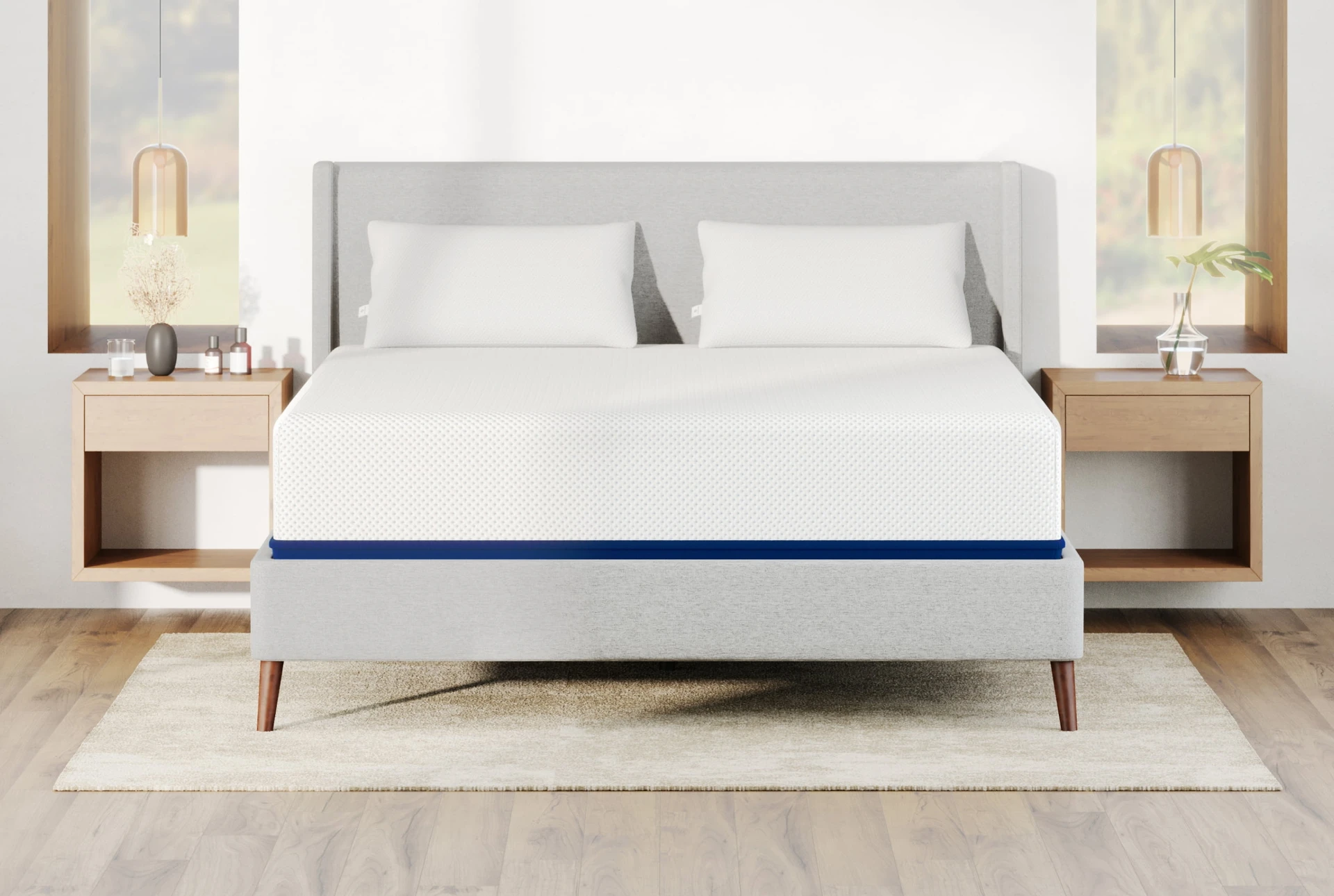
by Bio-Pur is Amerisleep's proprietary partially plant-based memory foam. It replaces roughly 25% of petroleum polyols with castor and soybean oils, producing an open-cell structure that sleeps 1.4°F cooler than standard memory foam and off-gasses in 24–72 hours instead of 5–7 days. Every mattress in Amerisleep's AS lineup uses Bio-Pur as the primary comfort layer. The AS3 (medium 5/10) is the best-selling Bio-Pur mattress and the one I recommend for most sleepers.
Amerisleep AS3
8.9/10
- Bio-Pur partially plant-based memory foam, open-cell structure runs cooler than standard petroleum foam
- HIVE 5-zone support: firmer hexagons under the lumbar, softer at shoulders and hips
- CertiPUR-US certified foam, VOCs under 0.5 ppm, made in the USA
- Off-gases in 24–72 hours vs. 5–7 days for conventional memory foam
- 20-year warranty: full replacement years 1–10, 50% off years 11–20
- Softer edges than a coil hybrid, noticeable if you sit at the perimeter regularly
- Sleepers over 230 lb may prefer the AS5 Hybrid for additional support
- 100-night trial is shorter than Saatva or Nectar
The AS3 is the mattress I'd buy if I were starting over. Bio-Pur's open-cell structure delivers real thermal performance, not a marketing label. HIVE zoning provides lumbar support without making the whole mattress feel board-firm. For most back and combination sleepers, this hits the medium-firmness sweet spot cleanly.
By the MattressNut Testing Team · Updated June 2026
I've tested Bio-Pur foam across multiple Amerisleep models over the past two years. The short version: it is a genuine materials improvement over standard memory foam, and the performance numbers Amerisleep publishes are real. The long version is what this guide covers, the chemistry behind the partial plant substitution, why it produces cooler and faster-clearing foam, how Bio-Pur compares to gel foam and latex, and which model to buy based on your sleep profile.
What is Bio-Pur foam?
Standard memory foam is built from 100% petroleum-derived polyols. Those polyols are the chemical building blocks that give foam its slow-recovery, pressure-contouring behavior. Amerisleep's Bio-Pur replaces approximately 25% of those petroleum polyols with plant-derived oils, primarily castor oil and soybean oil.
That substitution changes the foam's cell structure. Plant-derived polyols promote a more open-cell geometry: the individual foam cells have more connections to adjacent cells, and air can move through the foam matrix more freely. Dense, closed-cell petroleum foam has fewer of those channels. Open-cell structure is the primary reason Bio-Pur runs cooler, off-gasses faster, and recovers more quickly than conventional memory foam.
Bio-Pur is manufactured in the United States and carries CertiPUR-US certification, independent third-party testing that confirms VOCs (volatile organic compounds) at or below 0.5 ppm, and the absence of ozone depleters, heavy metals, formaldehyde, and PBDE flame retardants. That's the same certification program used across the premium foam industry, and it's worth citing specifically because it reflects actual lab test results, not a brand self-declaration.
One thing I want to name directly: Bio-Pur is partially plant-based, not fully bio-derived. The remaining 75% of polyols and the diisocyanate component are petroleum-sourced. Amerisleep markets it accurately as plant-based rather than all-natural or 100% bio. Don't confuse it with latex or organic cotton, those are different categories entirely.
Why Bio-Pur sleeps cooler: the open-cell mechanism
Hot sleeping is the most common complaint about memory foam mattresses. Dense, closed-cell petroleum foam traps heat because body heat conducted into the surface has nowhere to go, it accumulates at the foam surface around the sleeper. Open-cell foam has a network of connected channels that allow heat to dissipate laterally and vertically through the foam rather than building up.
In Amerisleep's standardized heat-pad test, Bio-Pur recorded a surface temperature rise of +1.4°F. Traditional petroleum-based memory foam recorded +2.8°F under the same conditions, exactly double. That 1.4°F delta may sound small, but in practice it's the difference between waking up damp and waking up comfortable over a full night.
Real-world sleeping temperature depends on more variables, cover breathability, bedding, room temperature, body heat output. But the thermal advantage is structural and consistent across sleeping conditions, not dependent on a surface treatment that can saturate over time the way gel infusions can.
Why Bio-Pur off-gasses in 24–72 hours
New mattress smell, the chemical odor when you first unbox a foam product, comes from residual VOCs built into the foam during manufacturing. The primary source is amine compounds used as catalysts and blowing agents in conventional memory foam production. Bio-Pur uses CO2 as the primary blowing agent instead of amine-based compounds. Less amine residue means less amine VOC load, which means the off-gassing window is 24–72 hours rather than the 5–7 days typical of amine-catalyzed conventional foam.
For buyers sensitive to chemical odors, or anyone setting up a mattress in a spare room with limited ventilation, that difference is meaningful in the first week. After 72 hours with normal room airflow, Bio-Pur is essentially odor-free.
Bio-Pur vs traditional memory foam vs gel foam
| Mattress | Type | Firmness | Trial | Warranty | Queen price |
|---|---|---|---|---|---|
| Amerisleep AS3 | All-foam Bio-Pur (plant-based) | Medium 5/10 | 100 nights | 20 years | From $1,049 |
| Amerisleep AS2 | All-foam Bio-Pur | Medium-firm 6.5/10 | 100 nights | 20 years | From $999 |
| Amerisleep AS5 | All-foam Bio-Pur | Soft 3/10 | 100 nights | 20 years | From $1,299 |
| Saatva Classic | Innerspring hybrid | Luxury Firm 6/10 | 365 nights | Lifetime | ~$1,395 |
| Nectar Original | All-foam (standard memory foam) | Medium-firm 6.5/10 | 365 nights | Lifetime | ~$699 |
The key distinction between Bio-Pur and gel memory foam is the cooling mechanism. Gel memory foam uses gel beads or infusions in a conventional petroleum foam matrix. Gel has a finite thermal mass: it absorbs body heat initially, but once saturated, usually two to four hours in, it loses that cooling advantage. Bio-Pur's open-cell structure allows passive airflow through the foam regardless of how long you've been lying on it. The thermal advantage is structural and doesn't diminish over the course of a night.
Against traditional petroleum memory foam, Bio-Pur is strictly better in every measured category: cooler, faster off-gassing, lower VOC load, and faster pressure recovery. Durability and pressure relief are comparable. The plant substitution doesn't trade performance for sustainability, it achieves both.
Which Amerisleep model to buy based on sleep profile
Every Amerisleep AS mattress uses Bio-Pur as the primary comfort foam. The models differ primarily in Bio-Pur layer thickness, which controls how much contouring and pressure relief you get, and the firmness of the overall construction. All models include HIVE zoned support beneath the Bio-Pur layer.
| Model | Firmness | Trial | Warranty | Queen price |
|---|---|---|---|---|
| AS3 (recommended) | Medium 5/10 | 100 nights | 20 years | From $1,049 |
| AS2 | Medium-firm 6.5/10 | 100 nights | 20 years | From $999 |
| AS1 | Firm 8/10 | 100 nights | 20 years | From $899 |
| AS4 | Medium-soft 4/10 | 100 nights | 20 years | From $1,149 |
| AS5 | Soft 3/10 | 100 nights | 20 years | From $1,299 |
AS3 (medium 5/10): The most versatile starting point. Works for back sleepers, combination sleepers, and lighter-to-average side sleepers. If you're unsure of your firmness preference and want one recommendation, this is it.
AS2 (medium-firm 6.5/10): Better for dedicated back or stomach sleepers who need firmer spinal support than the AS3 provides. Also a reasonable choice for heavier back sleepers in the 180–230 lb range.
AS5 (soft 3/10): Deep pressure relief for side sleepers who carry weight at the shoulders and hips and need substantial contouring. I wouldn't recommend it for back or stomach sleepers, the sink is too pronounced for neutral spinal alignment.
AS1 (firm 8/10): Stomach sleepers and back sleepers who want minimal sink. Feels more like a traditional firm mattress with the Bio-Pur benefit rather than a memory foam experience.
HIVE technology and how it works with Bio-Pur
HIVE stands for Harnessing Intelligent Ventilation & Energy. It's a hexagonal cutout pattern embedded in the Bio-Pur layer across five firmness zones that correspond to the head, shoulders, lumbar, hips, and legs.
The practical outcome: shoulders and hips get wider, more compressible hexagons that yield easily for pressure relief. The lumbar zone gets smaller, denser hexagons that resist compression, which is what holds the lower back in neutral alignment rather than letting it sag. For back sleepers and combination sleepers with back pain, this zoning is the most mechanically direct fix for the lumbar support gap that most memory foam mattresses miss entirely.
The hexagonal pattern also adds secondary ventilation channels through the Bio-Pur layer, which reinforces the open-cell cooling mechanism at the macro level. HIVE and Bio-Pur work together, you can't separate the thermal benefit from the structural one in practice.
Bio-Pur's open-cell structure is a real engineering difference, not a label. Cooler by 1.4°F in standardized testing, faster off-gassing, and CertiPUR-US certified foam. The Amerisleep AS3 is the best-selling model and the right starting point for most sleepers on a 100-night trial and 20-year warranty.
Frequently asked questions
Is Bio-Pur 100% plant-based?
No. Bio-Pur replaces roughly 25% of petroleum polyols with castor and soybean oils. The remaining 75% of polyols and the diisocyanate component are still petroleum-derived. Amerisleep accurately markets it as partially plant-based, not all-natural.
How much cooler does Bio-Pur sleep than regular memory foam?
In Amerisleep's heat-pad test, Bio-Pur recorded a surface temperature rise of +1.4°F versus +2.8°F for standard memory foam, half the heat retention. Real-world results vary with bedding and room temperature, but the advantage is structural and consistent.
Is Bio-Pur CertiPUR-US certified?
Yes, across all Amerisleep models. CertiPUR-US requires third-party lab testing confirming VOCs at or below 0.5 ppm and the absence of ozone depleters, heavy metals, formaldehyde, and PBDE flame retardants.
How long does Bio-Pur off-gassing take?
24–72 hours in a well-ventilated room. Conventional amine-catalyzed memory foam typically takes 5–7 days. The shorter window is because Bio-Pur uses CO2 as the blowing agent, which means less amine residue in the foam at manufacture.
Which Amerisleep model uses Bio-Pur?
The full AS series: AS1, AS2, AS3, AS4, and AS5. They differ in Bio-Pur layer thickness (and therefore firmness and contouring depth), but Bio-Pur is consistent across the AS lineup. The all-latex Organica is the exception; it uses Talalay latex rather than Bio-Pur.
How long does Bio-Pur foam last?
7–10 years of typical use, comparable to quality petroleum memory foam. The plant oil substitution doesn't weaken structural integrity. Amerisleep backs all models with a 20-year warranty: full repair or replacement years 1–10, 50% cost replacement years 11–20.
How does Bio-Pur compare to gel memory foam?
Gel foam's cooling advantage diminishes once the gel saturates with body heat, typically after two to four hours. Bio-Pur's open-cell cooling is passive and structural; it doesn't rely on thermal mass that gets used up. For hot sleepers who find gel foam inadequate after the first few hours, Bio-Pur is the more reliable option.
Amerisleep AS3
8.9/10
Bio-Pur open-cell memory foam, HIVE 5-zone lumbar support, CertiPUR-US certified foam, made in the USA. 100-night trial and a 20-year warranty. The most complete partially plant-based memory foam mattress we've tested, and the right starting point for most sleepers.