
 by
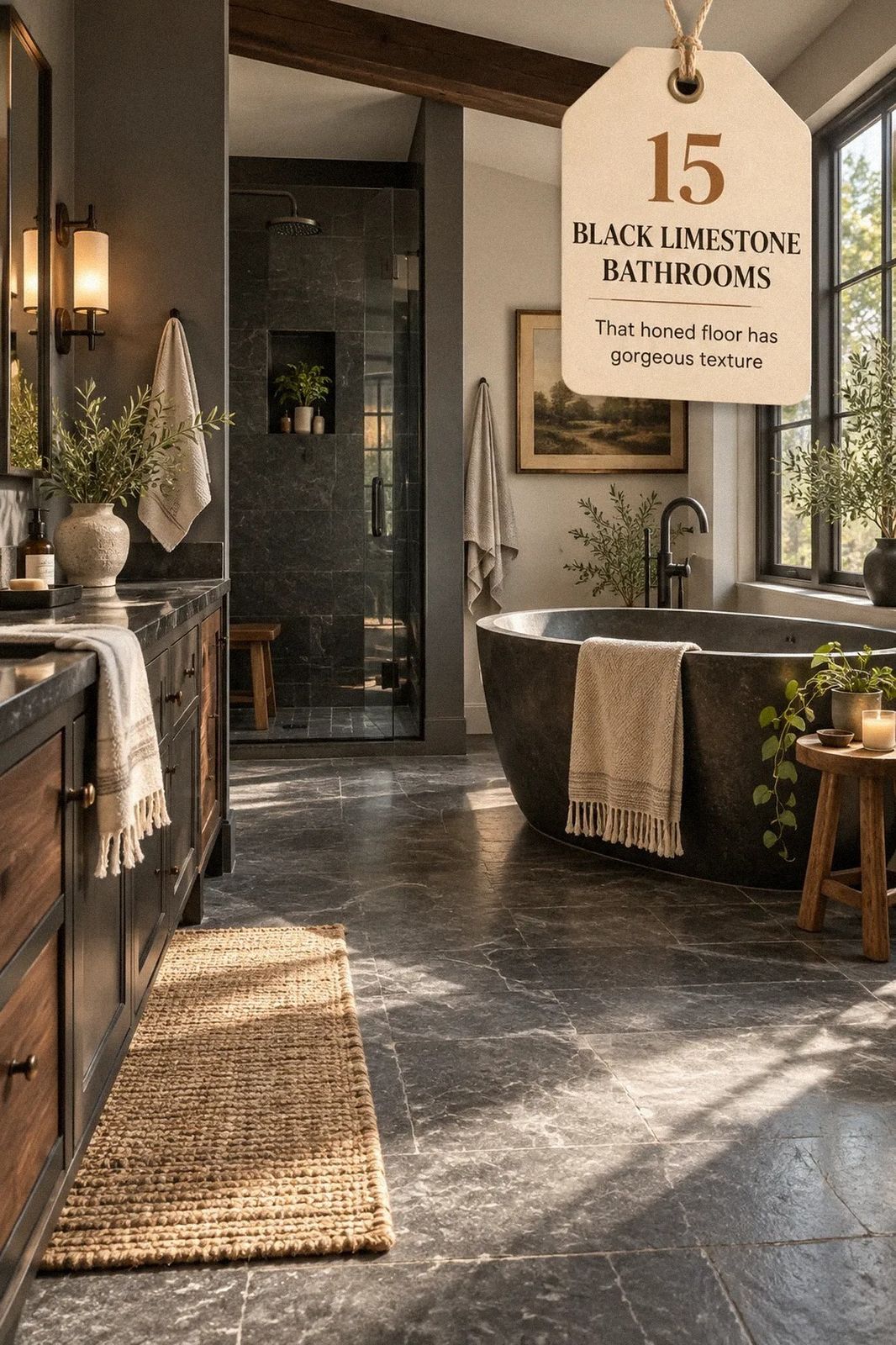
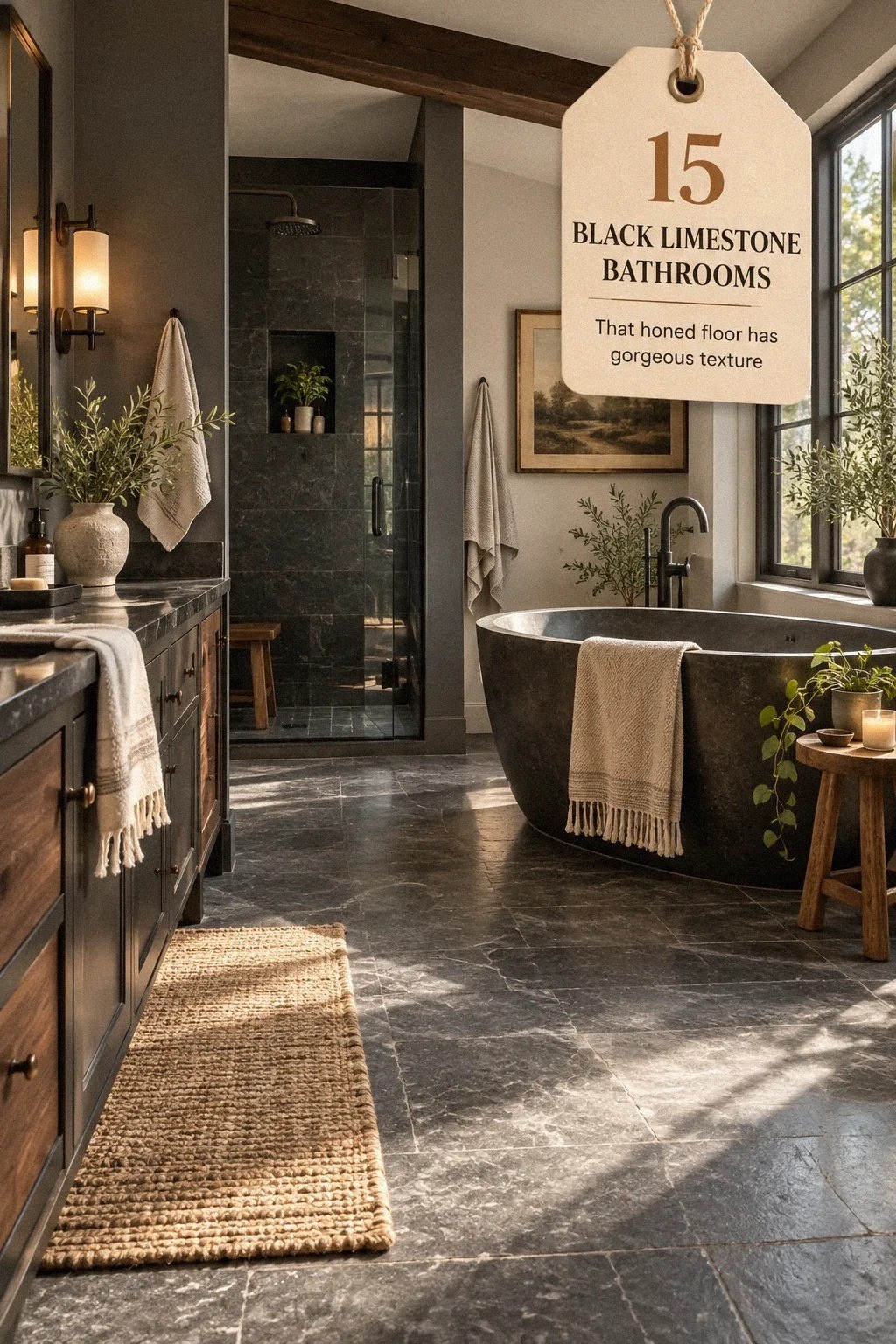
Black limestone bathroom ideas for moody, natural drama work best when the stone gets warmth, light, and breathing room. I learned that after pairing dark limestone with too much black metal and creating a bathroom that felt chilly by breakfast. You don't need a full renovation. A warmer wood, softer bulb, and one brave finish can change the whole room.
The short version is simple: let the limestone be the deepest note, then build around it with tactile materials that feel good in ordinary life. You’ll want contrast, but you won’t need visual noise. A bathroom can feel dramatic and still be easy to live with!
- Anchor the Stone With the Two-Wood Rule
- Layer Unlacquered Brass Against the Limestone
- Paint the Ceiling in Hague Blue
- Float the Vanity at the Right Height
- Choose Hand-Glazed Zellige Over Flat Ceramic
- Build the Three-Height Light Stack
- Swap Stark White for Chestertown Buff
- Extend Limestone Into the Shower Niche
- Frame the Mirror With Aged Bronze
- Hang Belgian Flax Linen Near the Tub
- Mix a Sculptural Basin With Quiet Walls
- Keep the Grout Close to the Stone
- Add Storage With the Closed-Door Rule
- Can a Small Bathroom Carry Dark Limestone?
- Choose Warm Limestone Over Glossy Marble
1Anchor the Stone With the Two-Wood Rule
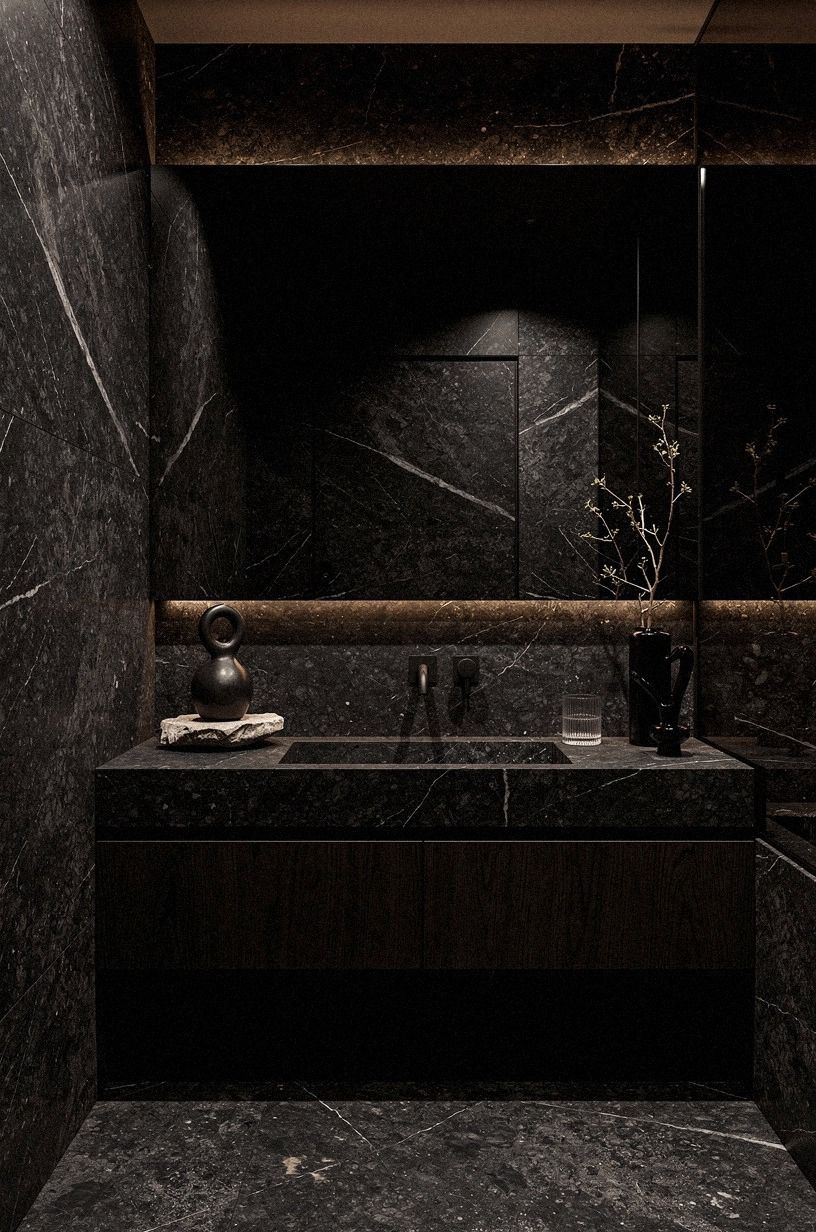
Calacatta marble with gold veining needs something with visible grain beside it. My favorite pairing uses natural wood on the vanity and a smaller wood stool near the tub.
The warm grain settles the pale stone, while sage green and warm cream give your eye softer notes to rest on. You’ll get a layered stone bathroom without making every surface compete.
Use the lighter wood where you need lift, especially below a floating vanity. Keep the second wood for one supporting piece, because too many species can make your room look busy fast. And if you’re choosing between glossy lacquer and open grain, choose the grain.
It catches morning light instead of throwing it back at you.
A narrow room benefits from this rule even more. Choose one natural wood for the main built-in element, then let sage green walls or a warm cream textile provide the second tone.
You won’t need a third wood species. The restraint gives the marble room to look intentional.
For more combinations that balance dark stone with warm materials, browse our natural stone bathroom guide. It’s useful when you’re comparing limestone, slate, and other quiet mineral finishes.
2Layer Unlacquered Brass Against the Limestone
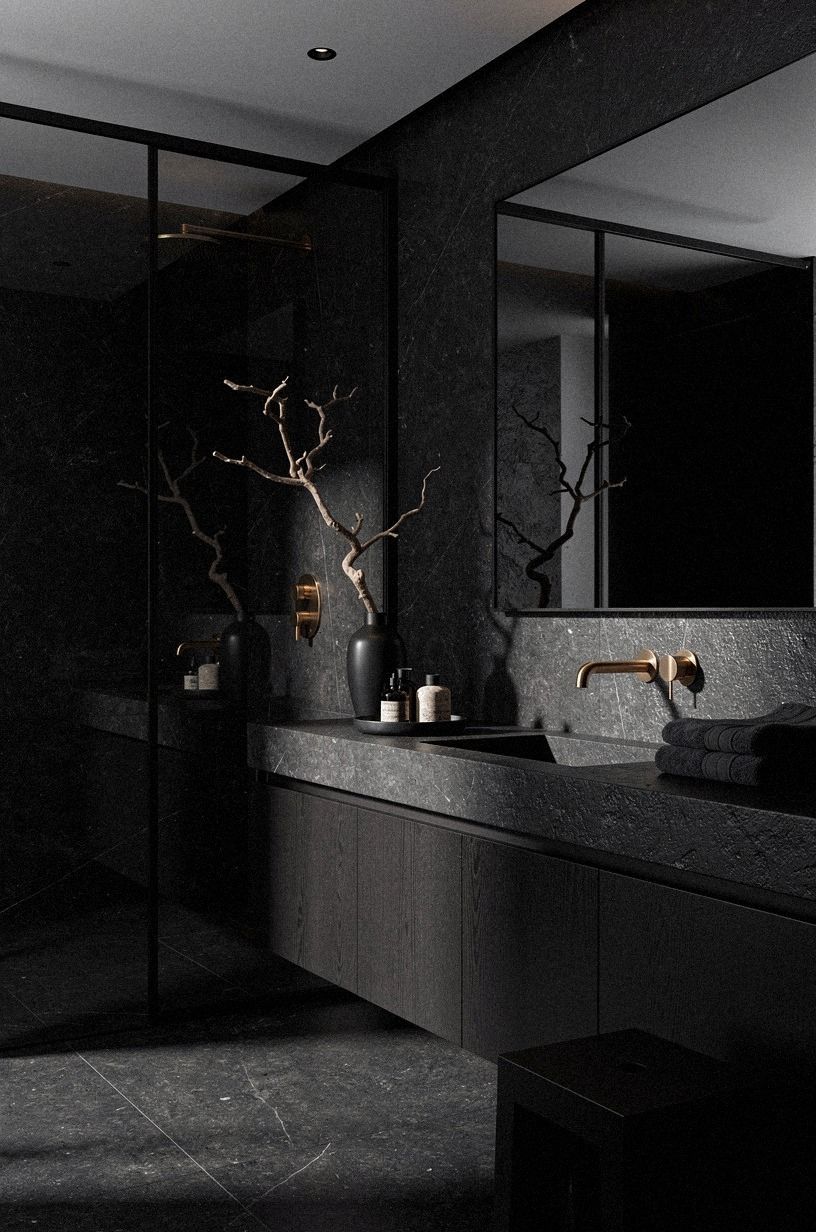
The softest way to warm a bathroom built around terracotta, stone, and olive is with unlacquered brass against cerused white oak. It starts bright, then develops a gentle patina around the faucet handles and towel ring.
That change gives your bathroom a lived-in quality that polished chrome can’t offer. You’ll notice it most when afternoon light hits the metal and the stone stays quiet underneath.
I’d skip shiny gold hardware. It can look yellow against earthy stone, and you’ll spend your time trying to balance it with more yellow.
Choose a brushed or unlacquered finish instead, then repeat it three times: faucet, mirror frame, and one small hook. And don’t worry if the pieces don’t match perfectly.
Your room should look gathered, not delivered in one box.
The finish matters more than the label. Aged brass, bronze, and softly brushed brass can all work, provided they have some depth. A thin brass edge on the mirror may be enough if the faucet already has a strong shape.
I’d also avoid placing brass everywhere. One metal should lead.
The rest can recede into matte black, aged bronze, or a quiet nickel if the room needs another practical finish. You’ll keep the warmth without creating a showroom effect.
3Paint the Ceiling in Hague Blue
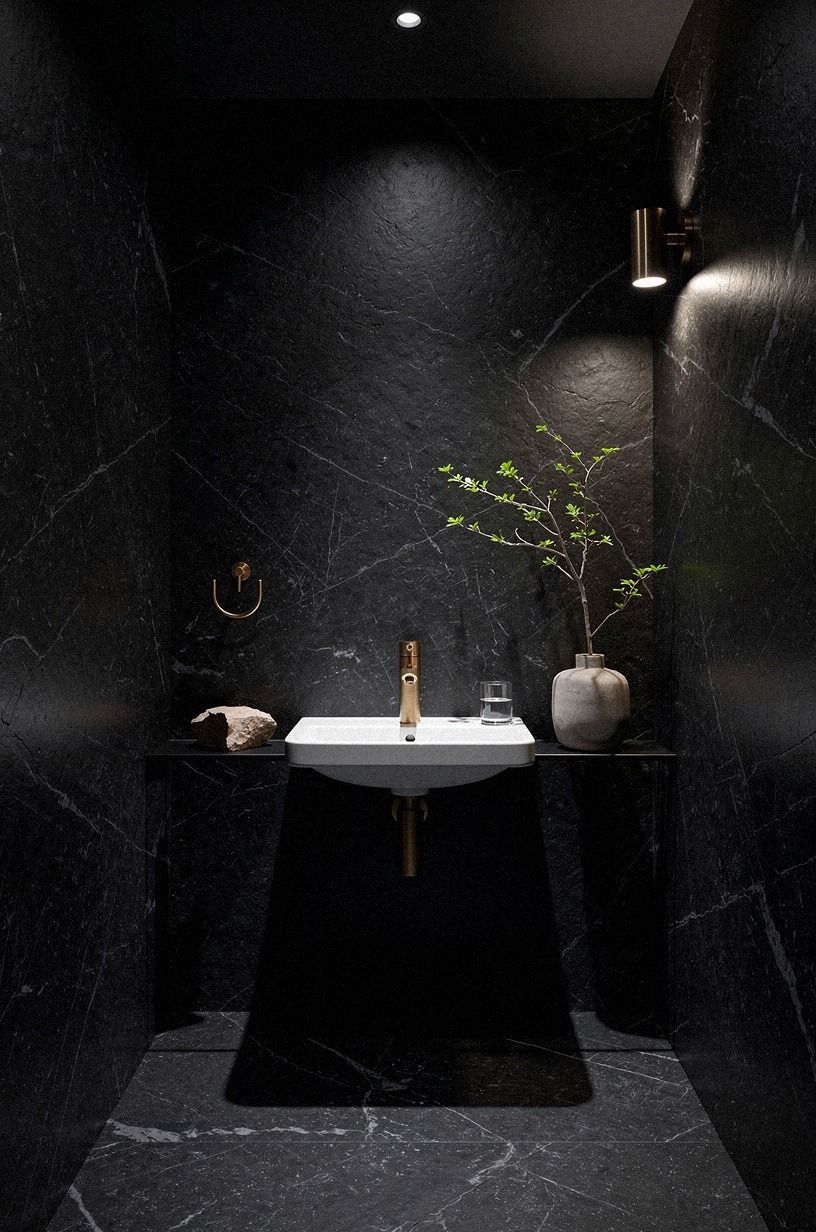
A dark ceiling can make a bathroom with backlit translucent onyx feel intimate rather than cramped, but the color needs blue in it. Farrow & Ball Hague Blue No.30 gives the stone a smoky partner, especially in a room with clay, linen, and aged brass nearby. The shade reads soft in daylight and almost ink-like at night.
Keep the walls one step lighter if your room is narrow. I’d use a warm mineral paint on the walls and reserve Hague Blue for the ceiling, door, or vanity wall.
You’ll create depth without turning every surface into a flat dark block. A sample board matters here, because the onyx’s warm undertones will change the paint.
If a full dark ceiling feels too bold, paint only the ceiling plane above the vanity. The color will appear in the mirror, which makes the room feel more layered without adding another object.
A painted door can do the same job. It gives the eye a destination beyond the stone.
For another cloudy, low-contrast direction, compare the ceiling idea with these black limewash bathroom examples. Limewash can soften a hard architectural line while keeping the palette moody.
4Float the Vanity at the Right Height
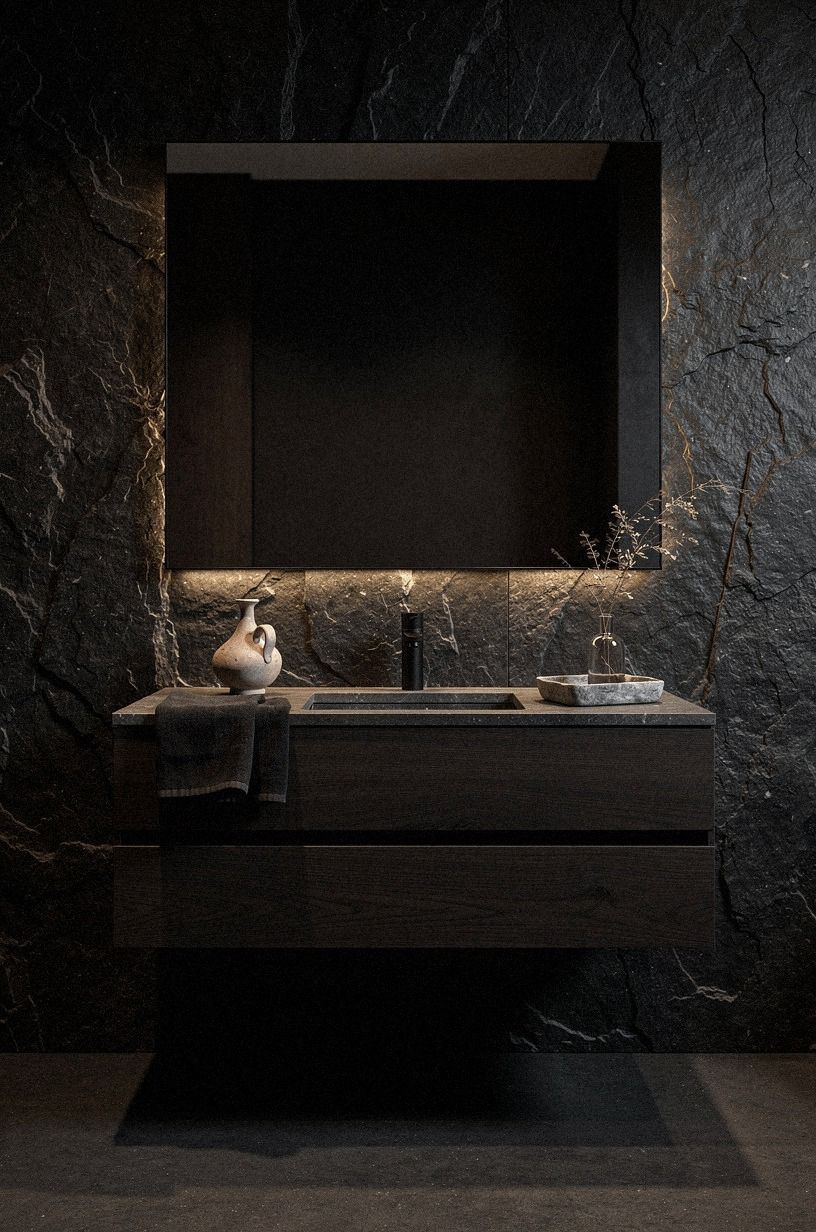
A floating vanity makes book-matched walnut feel lighter because you can see the floor continue beneath it. Keep the vanity height between 32 and 36 inches, then leave enough open space below for a basket or a clean sweep of stone. You’ll gain visual air without sacrificing storage.
I prefer a wall-mounted IKEA HEMNES base with a custom walnut-look top when the budget is tight. For a more tailored result, a West Elm wall-mounted vanity brings cleaner proportions and better drawer movement.
But don’t fill the open gap with too many baskets. One woven basket is useful; three make your bathroom look like a storage aisle.
A floating vanity also makes cleaning easier around a dark floor. That’s a small practical benefit, but you’ll appreciate it every week.
If the wall can’t support a fully floating cabinet, choose a furniture-style vanity with slim legs. You’ll still get a visible shadow line below.
The countertop should support the walnut, not compete with it. Consider honed quartz, soapstone, or a lightly veined warm limestone.
If you’re unsure about undertones, compare the options with these soft warm limestone bathroom ideas. A sample in the showroom won’t tell you how it’ll look beside your actual floor.
5Choose Hand-Glazed Zellige Over Flat Ceramic
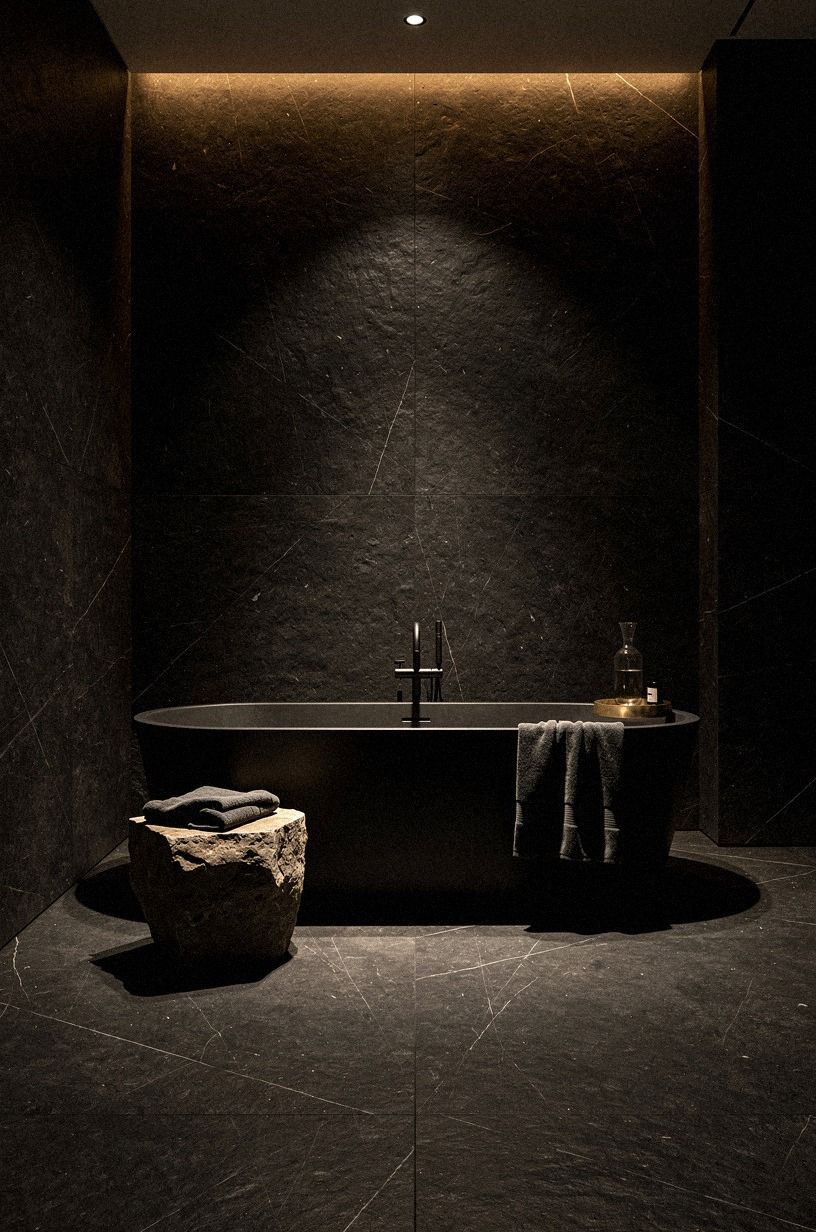
Warm travertine and hand-glazed navy zellige create a rich, earthy contrast around a sink or shower niche. Add white and walnut nearby, and the bathroom feels deep without becoming heavy.
6Build the Three-Height Light Stack
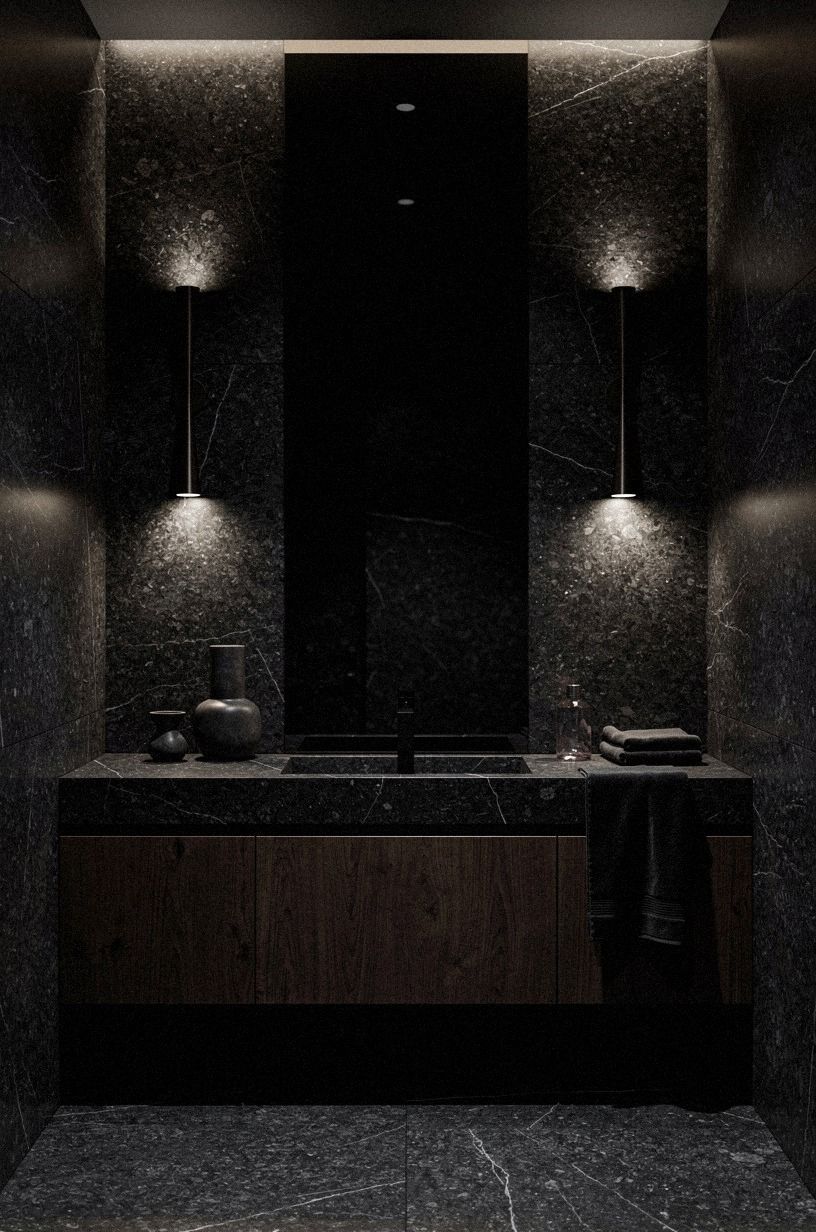
An emerald, gold, and cream bathroom needs layered lighting, not one bright ceiling fixture. Create three points: a low glow near the floor, a face-level light at the mirror, and a higher fixture for general light. Opal glass sconces soften the reflection, while a 600-lumen warm bulb keeps your skin from looking gray.
You’ll want the light to skim the surfaces rather than blast them straight on. Put a small lamp-like glow near open shelving, then add dimmable sconces at both sides of the mirror.
But avoid cool blue bulbs. They flatten the room’s green tones and make your bathroom feel clinical. I learned that after one late-night installation made the entire room look like a dentist’s office.
Your morning routine deserves better!
A 2700K bulb usually feels warmer and more residential than a bright daylight bulb. If you apply makeup in the bathroom, use a slightly clearer light at the mirror while keeping the general lighting warm. You can have accuracy without making the entire room icy.
Add a ceiling fixture with a shaded globe or opal diffuser instead of an exposed clear bulb. The fixture should spread light gently across the walls. A dimmer is worth the small electrical upgrade because the emerald and cream palette looks different at full brightness, half brightness, and after sunset.
For another approach to warm natural surfaces, see these soft warm limestone bathroom ideas. Lighting is often what makes that softness visible.
7Swap Stark White for Chestertown Buff
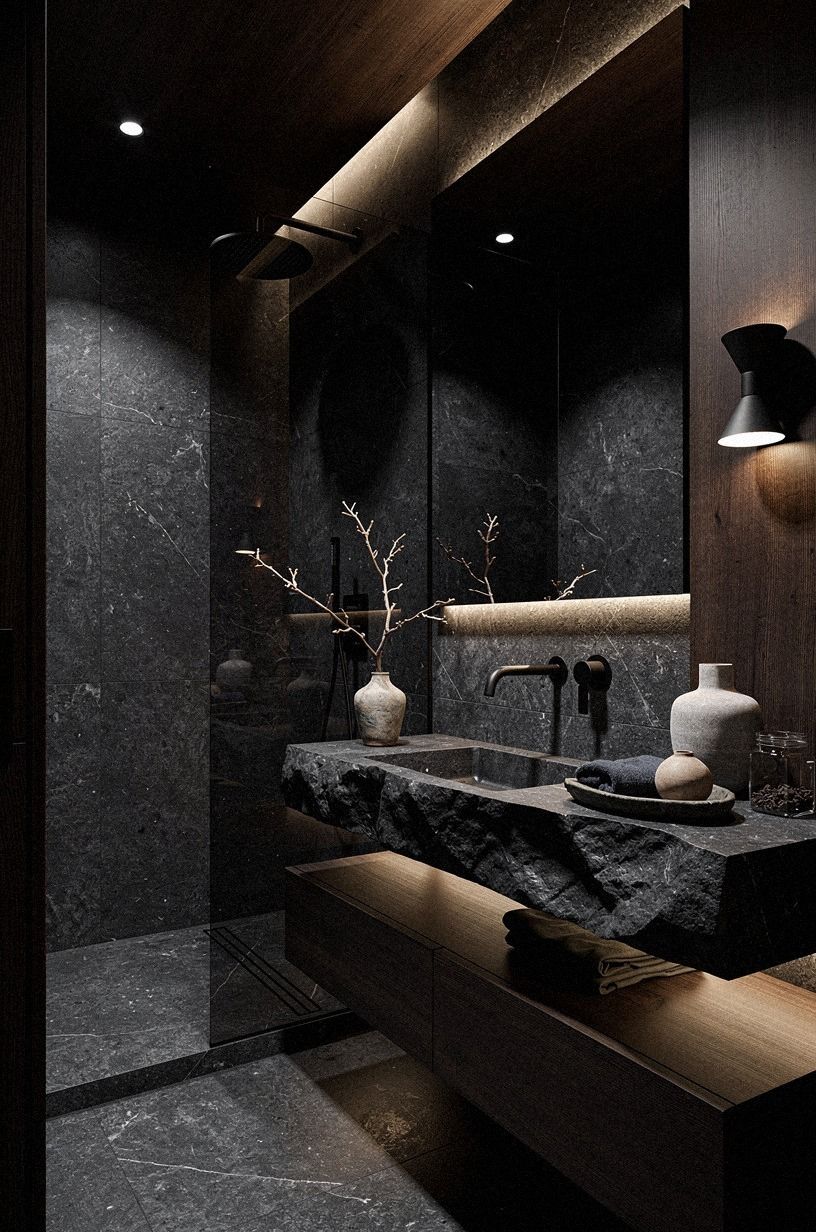
Use Chestertown Buff where forest green and rust need a warm break, then repeat natural oak nearby. The key is to keep the trim quiet and let the oversized-chip terrazzo add its own texture.
8Extend Limestone Into the Shower Niche
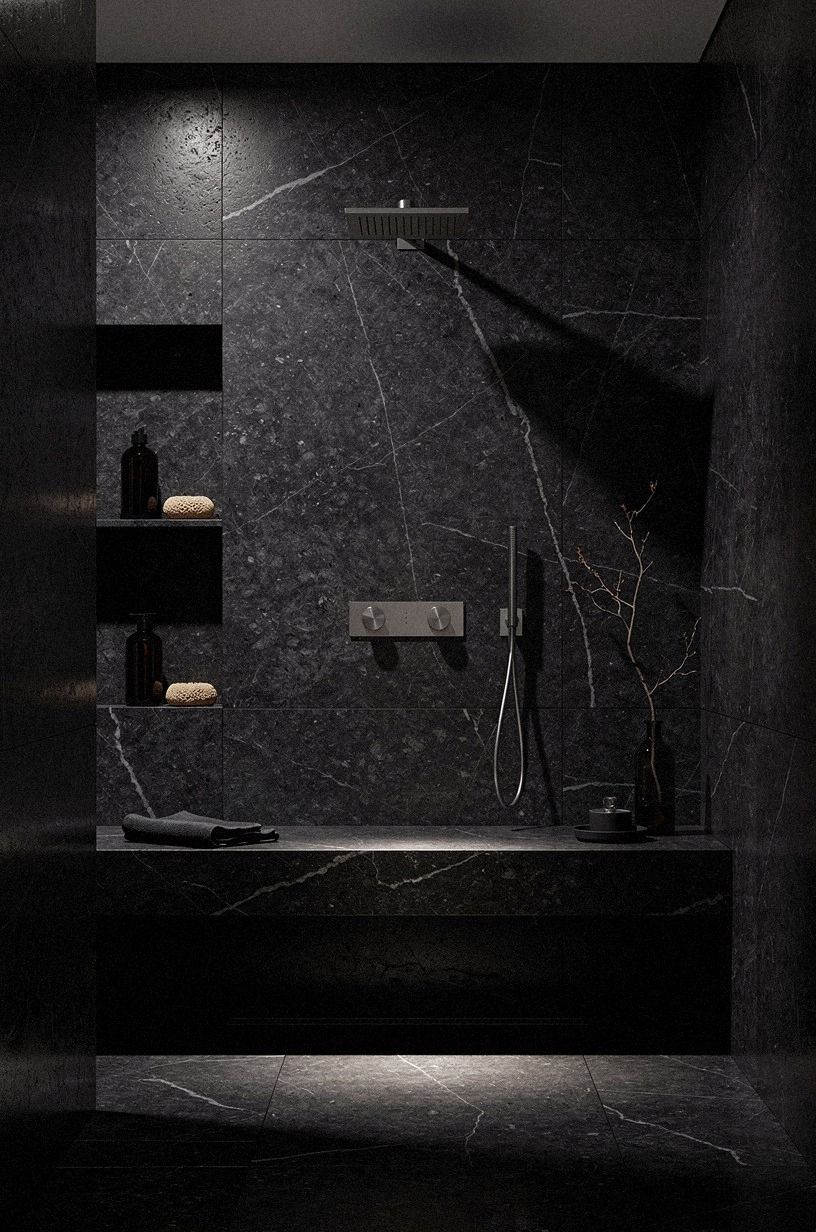
A shower niche is where hand-applied Venetian plaster can feel intentional rather than decorative. Let the dusty rose plaster carry the surrounding walls, then use a charcoal shelf with a restrained brass detail. The continuous texture makes the niche feel connected to the room instead of attached afterward.
Keep the shower floor practical. A comfortable shower starts at 36 by 36 inches, and your niche shouldn’t steal the elbow room you need.
I’d rather have one generous shelf than two narrow shelves loaded with bottles. You’ll keep the finish visible and your daily routine calmer.
Use a slight slope on the shelf so water doesn’t sit against the surface. Ask your installer about sealing requirements, especially if the plaster has a soft or porous surface. The best-looking niche is still a problem if it collects water around the edges.
A narrow vertical niche can emphasize ceiling height. A long horizontal niche feels calmer and gives you more usable storage. Either way, repeat one finish from elsewhere in the room, such as brushed brass, charcoal stone, or warm grout.
For a related dark finish, compare the texture with these black tadelakt bathroom ideas and our dark black microcement bathroom examples. Both show how continuous surfaces can make a small room feel more composed.
9Frame the Mirror With Aged Bronze
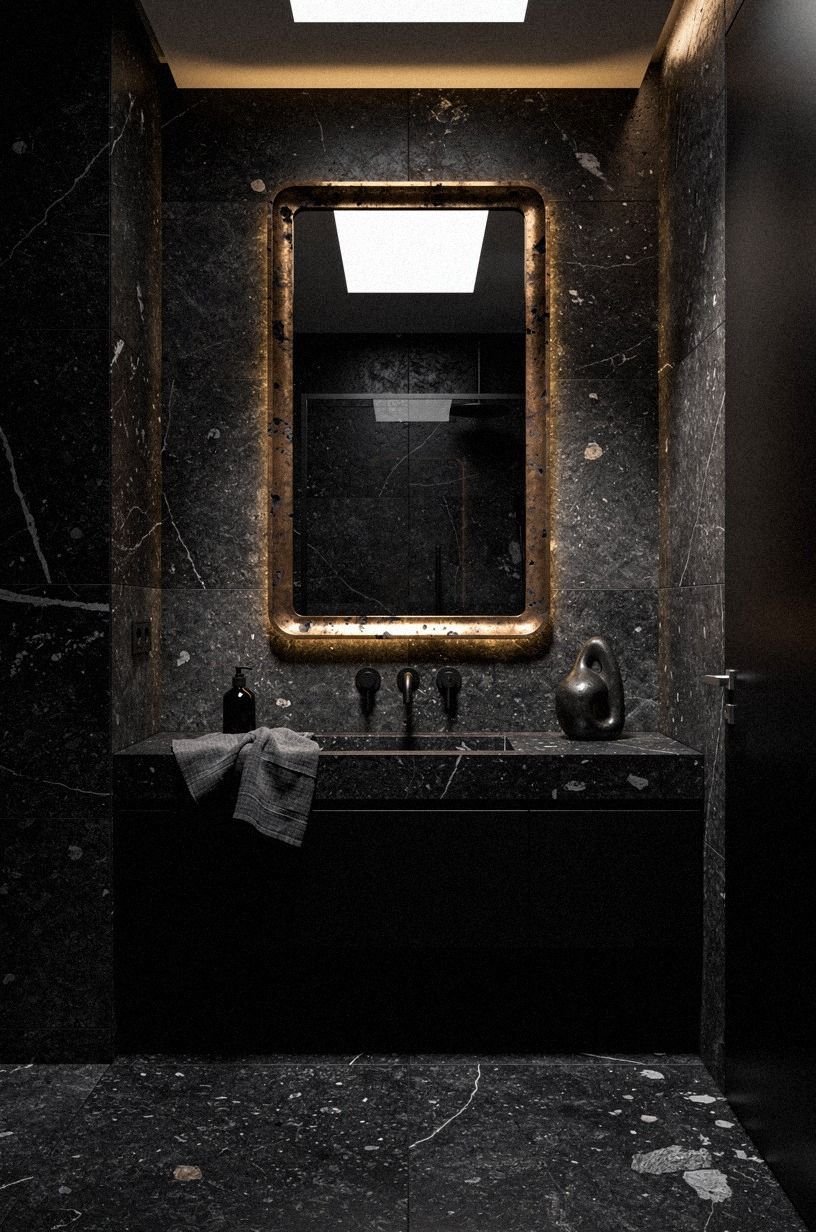
A large mirror keeps a warm white, camel, and black bathroom from feeling heavy, especially above a narrow vanity. Add a small shagreen accent to the frame or nearby stool for texture without another loud pattern.
10Hang Belgian Flax Linen Near the Tub
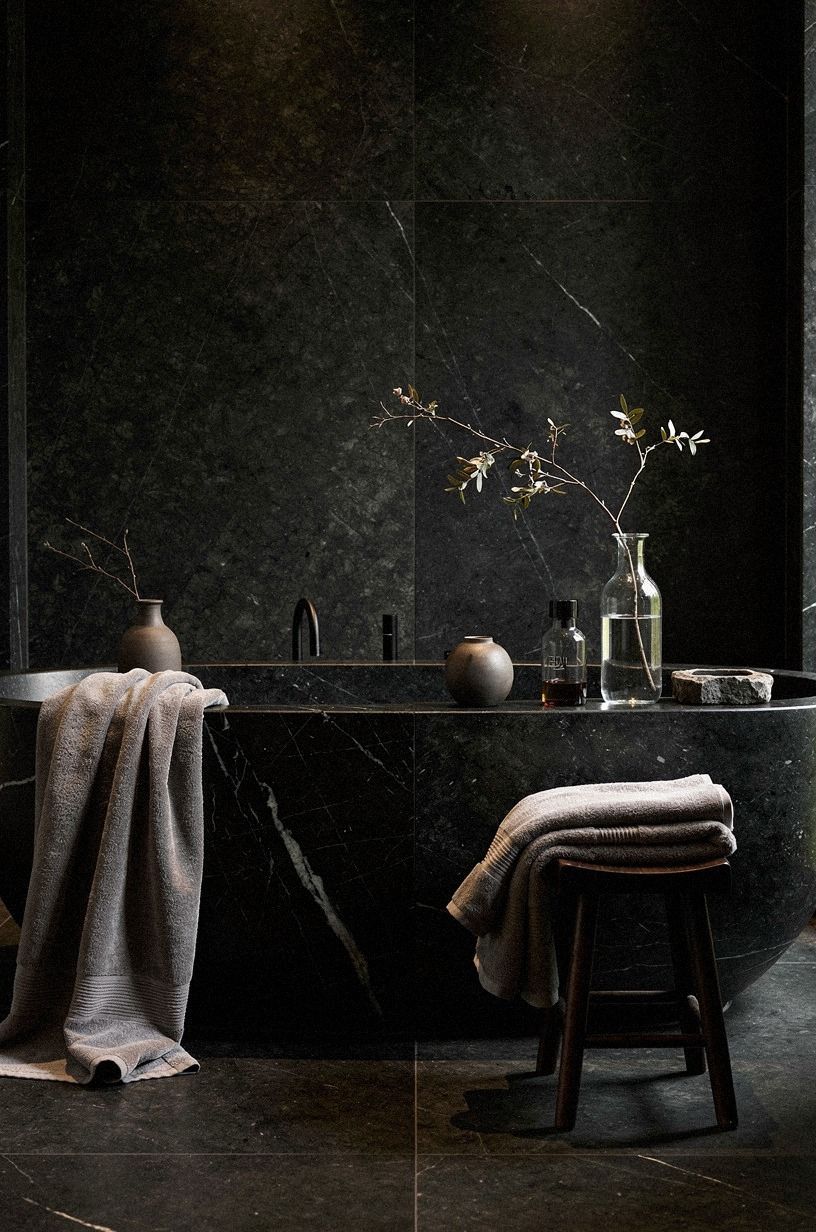
Textiles stop dark stone from feeling cold. A washed Belgian linen shower curtain, hand towel, or small window panel adds irregular texture without introducing another loud pattern. You’ll see the fibers soften the midnight blue, copper, and ivory palette, which makes the room feel more human.
Keep the palette restrained: ivory, midnight blue, or a muted copper tone. A bright white waffle towel can work, but a stack of stark white textiles may make the stone look bluer.
I prefer one soft Turkish cotton towel over a full matching set. It’s heavier, more absorbent, and it drapes over a hook with a satisfying weight.
If you’re styling a rental, use linen at the window and keep the shower rod tension-mounted. No drilling needed. A fabric curtain can also soften the sound of tile, which makes the room feel less echoing.
Don’t over-style the tub. One folded towel, a low stool, and perhaps a small ceramic vessel are enough. The room should feel ready for use, not arranged for display.
A little mess won’t ruin a good material palette!
For a softer alternative to stone tile, compare the fabric-and-wall balance with these dark black microcement bathroom examples. Continuous walls and tactile textiles can create the same quiet depth.
11Mix a Sculptural Basin With Quiet Walls
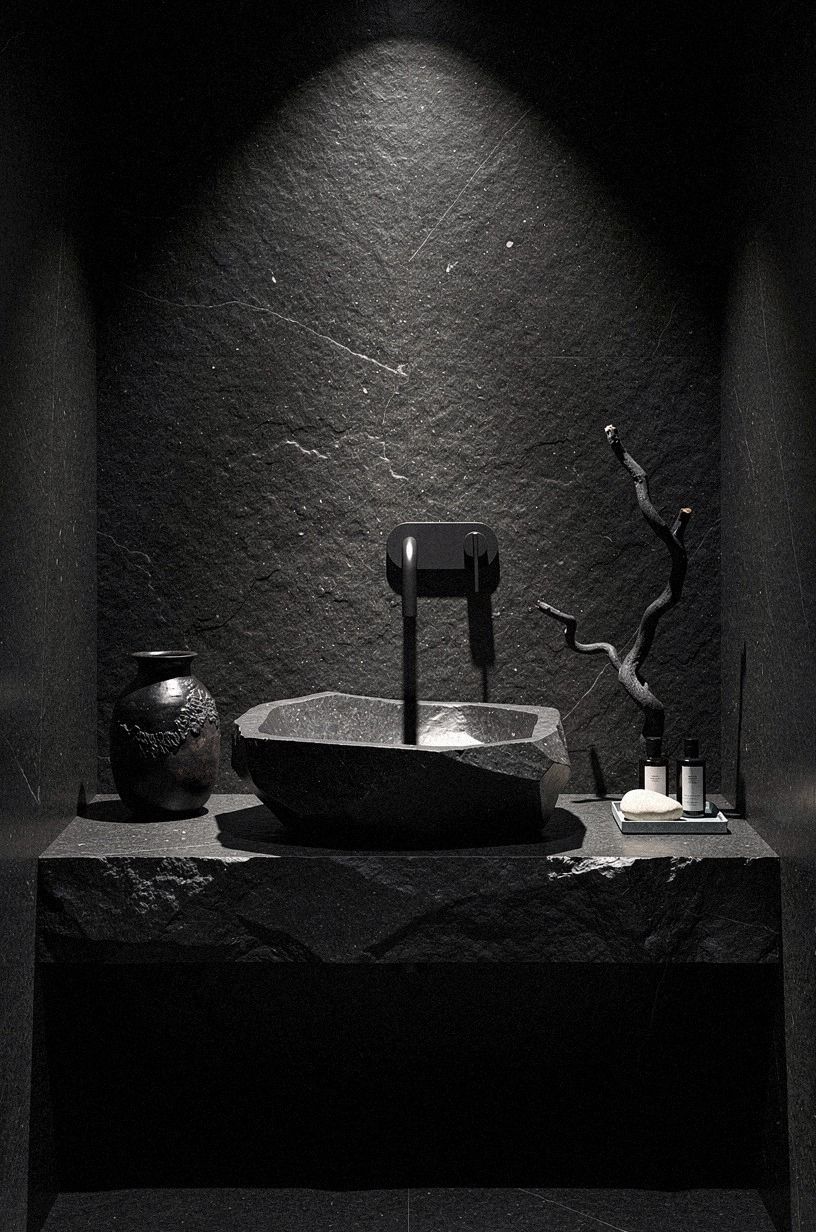
A sculptural basin can become the room’s strongest shape when sage green walls, warm cream accents, and natural wood stay quiet. Add one organic bouclé stool or bench for softness, then let the basin keep its clean silhouette.
12Keep the Grout Close to the Stone
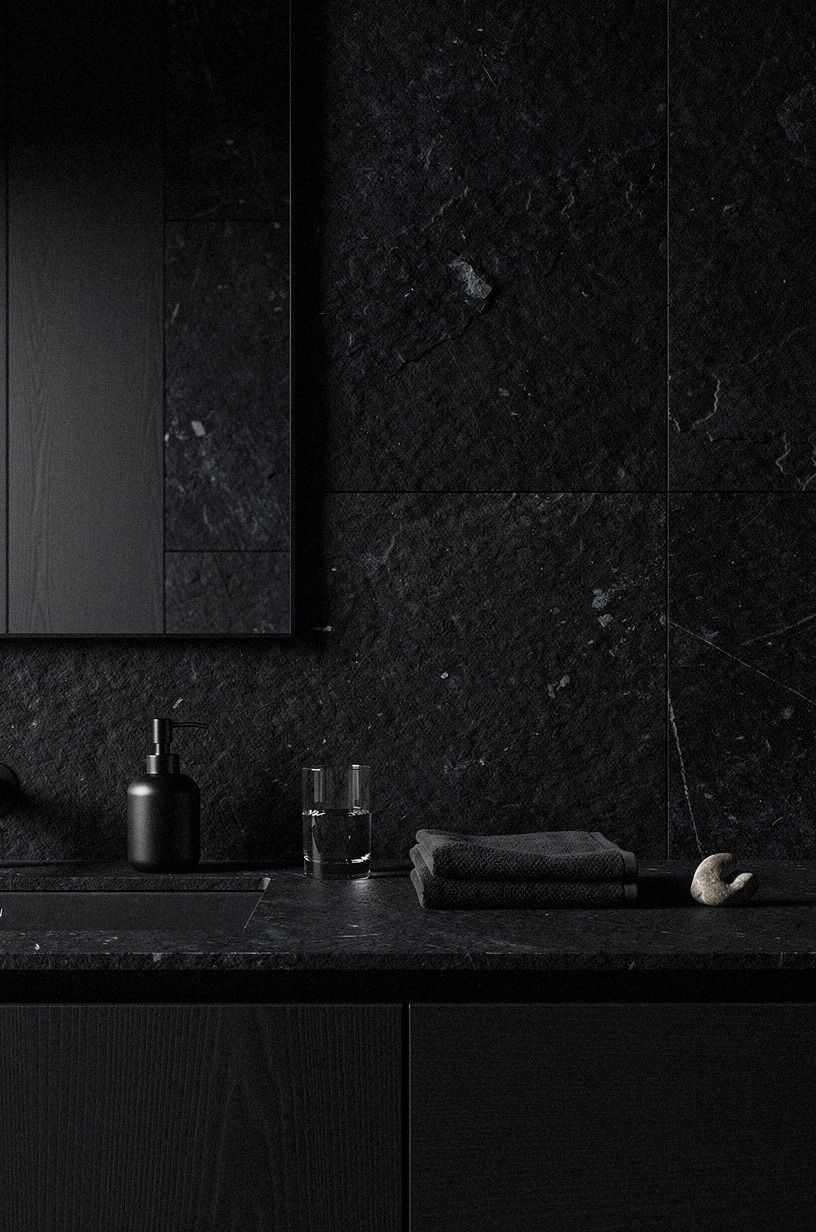
Nero Marquina black marble with white veins looks most composed when the joints don’t shout. Choose a grout close to the stone’s dominant color, then use a slightly lighter shade only where you need a safety edge. You’ll preserve the broad, quiet plane that makes the floor feel grounded.
I made the mistake of choosing pale grout beside charcoal tile once. Every joint became a little white stripe, and I couldn’t stop seeing the grid.
Your eye will do the same. Use charcoal cement grout with small-format tile, and seal the marble according to the installer’s recommendation.
Don’t assume the darkest grout is always best, though. Test it beside the stone and your paint, because undertones matter more than the label. A blue-black grout can make warm terracotta and olive tones look muddy, while a brown-charcoal grout may bring out their best mineral notes.
For a small floor, consider larger tiles with fewer joints. For a shower floor, smaller tiles may provide better slope and traction. The practical choice can still look beautiful when the grout stays close to the stone.
If you’re comparing this with a plaster-like surface, our black Venetian plaster bathroom guide has related wall and cabinet combinations.
13Add Storage With the Closed-Door Rule
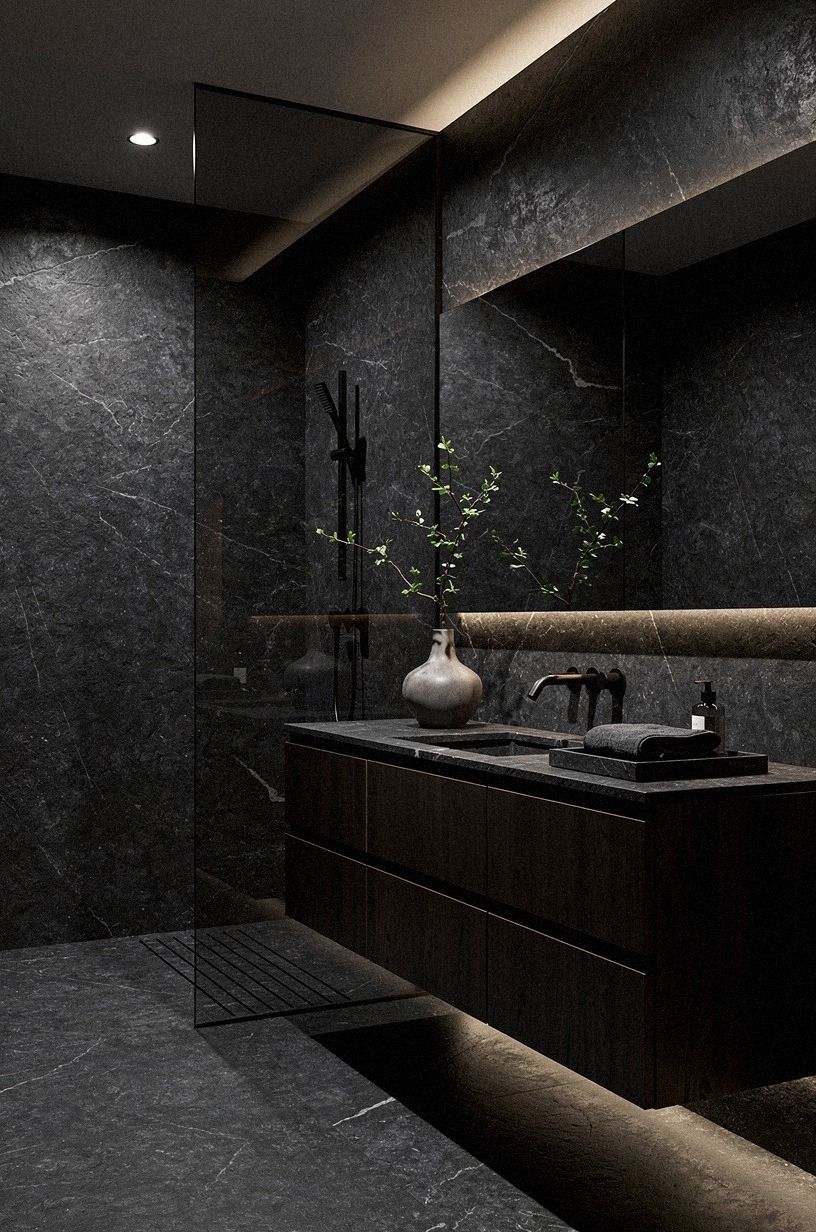
Open shelves can look warm, but bathrooms collect too many bottles to stay calm. Use one open shelf for towels, then hide the rest behind linen-toned closed doors with aged-brass pulls. A deep-pile mohair velvet stool can add softness away from the splash zone.
You’ll keep the clay, linen, and brass palette composed.
A compact IKEA KALLAX birch-effect unit can hold folded towels if you add baskets, while a Target Threshold cabinet gives you a lower-cost closed option. I’d choose doors over open cubbies if your bathroom is used by more than one person. Your future self won’t want to line up six shampoos beside the stone.
Choose storage based on how you actually move through the room. Daily products should sit between shoulder and waist height. Backups can go in a lower cabinet.
Keep the counter almost empty, especially if the vanity top is made from a beautiful slab.
Natural fibers and velvet need protection from standing water. Use the mohair on a dry stool or bench rather than directly beside the shower spray. If your bathroom is humid, leave a little ventilation around any textile.
For a narrow storage plan, our black Venetian plaster bathroom guide has related wall and cabinet combinations. The same closed-door principle works with plaster, tile, or painted walls.
14Can a Small Bathroom Carry Dark Limestone?
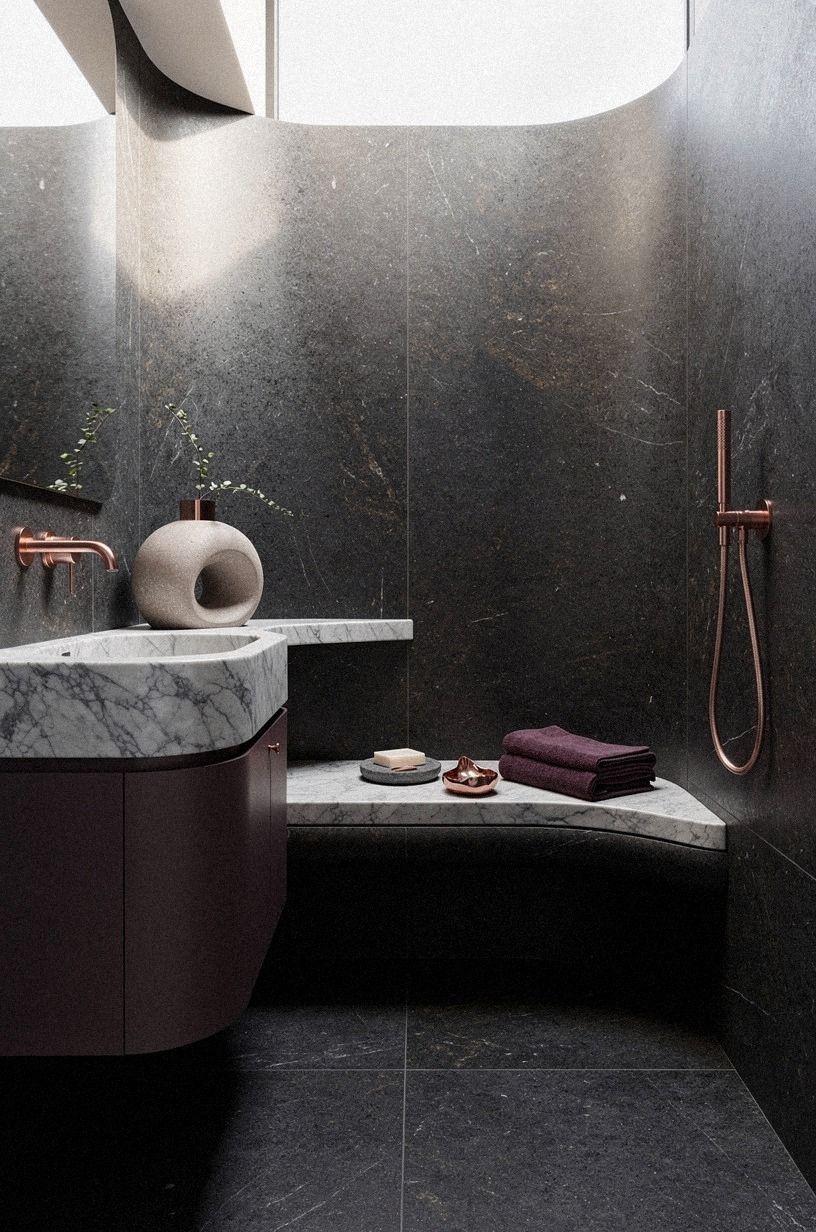
Yes, a small bathroom can carry Carrara marble with subtle gray veining if you repeat the finish carefully. Pair it with plum, soft gray, and rose-gold accents so the room feels rich rather than crowded.
15Choose Warm Limestone Over Glossy Marble
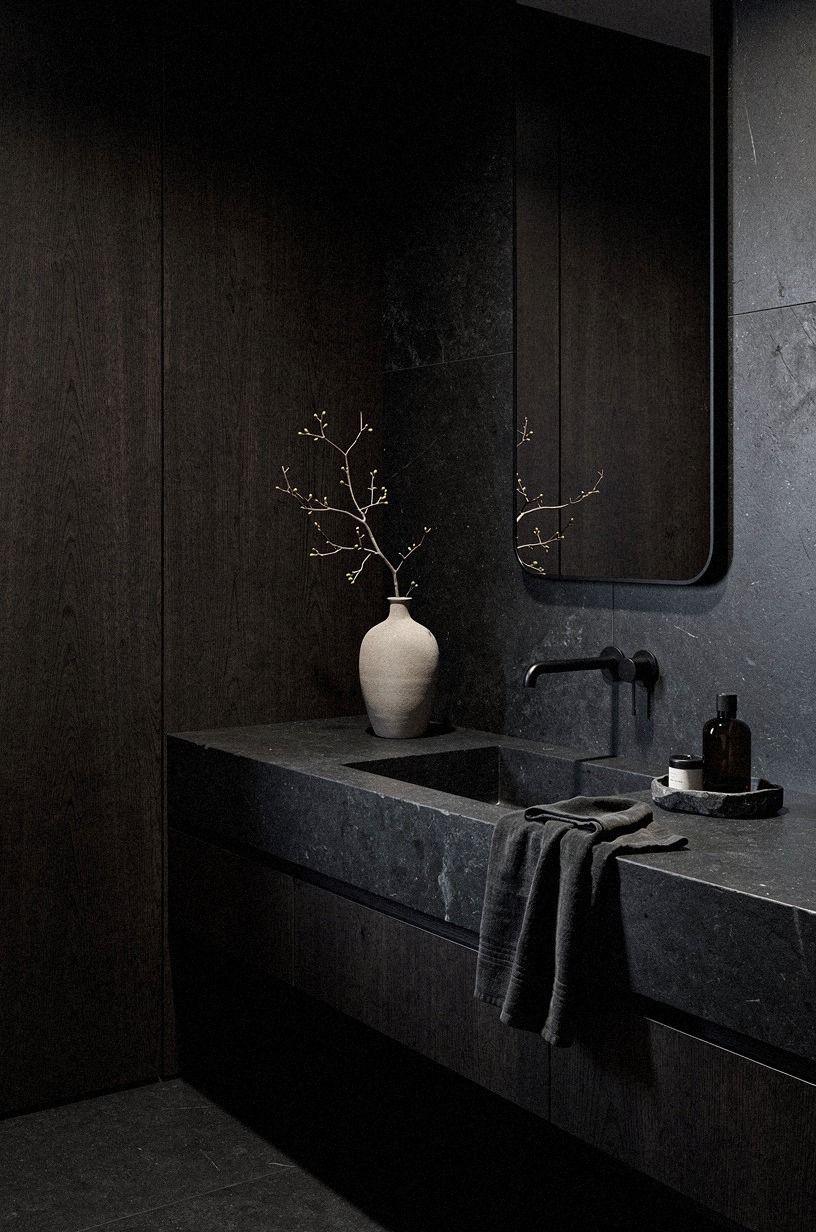
Warm limestone gains depth beside reclaimed weathered teak, especially in a navy, white, and walnut palette. Its small pits, cloudy edges, and muted mineral shifts create an earthy surface that feels quieter than polished marble. You’ll notice the difference under bare feet and low evening light.
Before choosing a finish, look at the typical project ranges below. A cosmetic update can stay modest, while a shower rebuild climbs quickly. The stone itself isn’t the only cost, so your plumbing, lighting, and tile decisions matter just as much.
I’d choose warm limestone over glossy marble when you want a natural stone bathroom that doesn’t feel formal. Your room will show more variation, and that’s the point. Glossy marble can be beautiful, but it often asks for more visual attention.
Limestone lets the light, hardware, walnut, and teak share the room.
Look at several slabs before deciding. One may lean olive-gray, another brown-charcoal, and another almost black.
Those shifts will affect every paint and metal choice around them. Buy the sample you’ll live with, not the one that looks best under showroom lights.
Maintenance matters too. Ask about sealing, cleaning products, and how the stone handles water in your specific application. You’ll be happier with a finish whose care routine fits your household.
For another grounded direction, read why limestone is the warmest neutral bathroom choice. The appeal is the same: a surface that feels natural rather than overly polished.
The Limestone Decision I’d Make in My Own Bathroom
I’ve gone back and forth on dark bathrooms because online examples can make them look effortless. In real life, limestone asks you to notice the light.
A black floor beside one cold ceiling fixture will feel flat. The same floor beside warm sconces, pale wood, and a linen curtain can feel intimate at 7 a.m., when the room is quiet and the mirror is still fogged.
My strongest opinion is this: spend your first dollars on the surfaces you touch and the light you live with. I’d choose a honed limestone floor, one good faucet, and dimmable sconces before buying decorative shelves. The floor gives your feet texture, the faucet gives your hands weight, and the light keeps the stone from looking like a charcoal slab.
You won’t regret those choices.
I also wouldn’t chase a perfectly matched stone run. Natural variation is the reason to use limestone in the first place.
Let one tile carry a warm brown patch. Let another show a gray edge.
Your bathroom will feel more collected when the materials have small differences. That doesn’t mean careless installation. It means you’re choosing a finish with a life of its own.
If you’re deciding between paint colors, sample Sherwin-Williams Sea Salt SW 6204 beside the stone for a soft green-gray moment. Use Benjamin Moore White Dove OC-17 when you need more reflected light. And if you want drama without another dark wall, paint the door in Farrow & Ball Hague Blue No.30.
The room gets depth, but you still get a visual exit.
Start with one surface, one light improvement, and one warm material. That sequence will tell you whether the mood suits your home before you commit to a full renovation. The reveal can be dramatic without becoming complicated!
The Questions I Get Asked Most
What is the best black limestone bathroom idea for a small bathroom?
Use a dark limestone floor with a lighter wall and floating vanity. That combination gives you visual depth without closing in the room. An IKEA HEMNES-style wall-mounted base, rounded mirror, and warm sconces will keep your layout open.
Where can I buy black limestone bathroom pieces on a budget?
Check IKEA, Wayfair, and Target for vanities, mirrors, and textiles. Facebook Marketplace and local thrift stores can also turn up solid wood stools and brass frames. You’ll save more by buying secondhand furniture than by choosing the cheapest faucet.
How much does a black limestone bathroom makeover cost?
A cosmetic update typically falls within the $200-$1,200 budget tier for paint, a mirror, a faucet, and textiles. A mid-range project with a new vanity, partial tile, and lighting is typically $3,000-$9,000. Your existing plumbing can keep costs lower.
Can I create a black limestone bathroom on a budget?
Yes, and you can begin without moving plumbing. Paint the ceiling, change the mirror, and add warm textiles first.
A secondhand wood stool and one aged-brass hook can shift the room for very little money. Your best free move is clearing the counter.
Is black limestone worth it in a small space?
Yes, because a small room gives the stone more visual control. Use it on one continuous surface, then let your mirror and ceiling reflect light. You’ll get a dramatic but grounded room without needing a large footprint.
Is black limestone a good idea for a rental?
Yes, if you use removable layers. Try peel-and-stick flooring in a limestone tone, a tension-mounted linen curtain, and a removable mirror frame. Your landlord’s walls stay intact, while the room gains warmth and texture.
Where I’d Start First
If I had to pick one, I’d start with the lighting. Black limestone can’t soften itself under a cold ceiling fixture, but warm sconces will reveal every mineral shift after sunset. Pin the layered lighting idea for later and build the rest around that glow.