
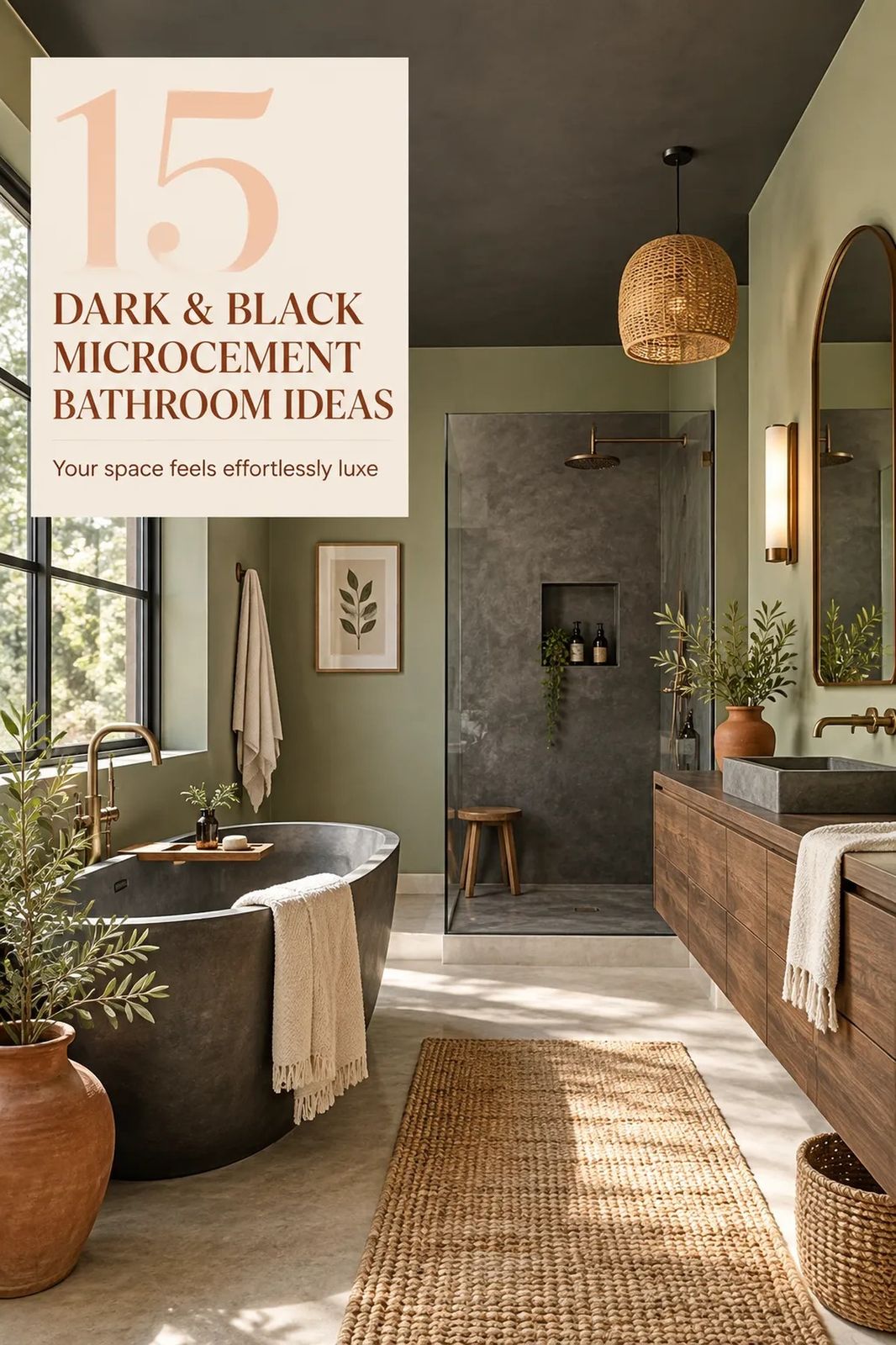
 by
by Dark and black microcement bathrooms feel luxurious when the finish is balanced with warm light, tactile materials, and clear zones. I learned that after making one look like a sealed cave. You don't need a huge room or a full gut renovation, but you do need contrast. These ideas show you where to put it.
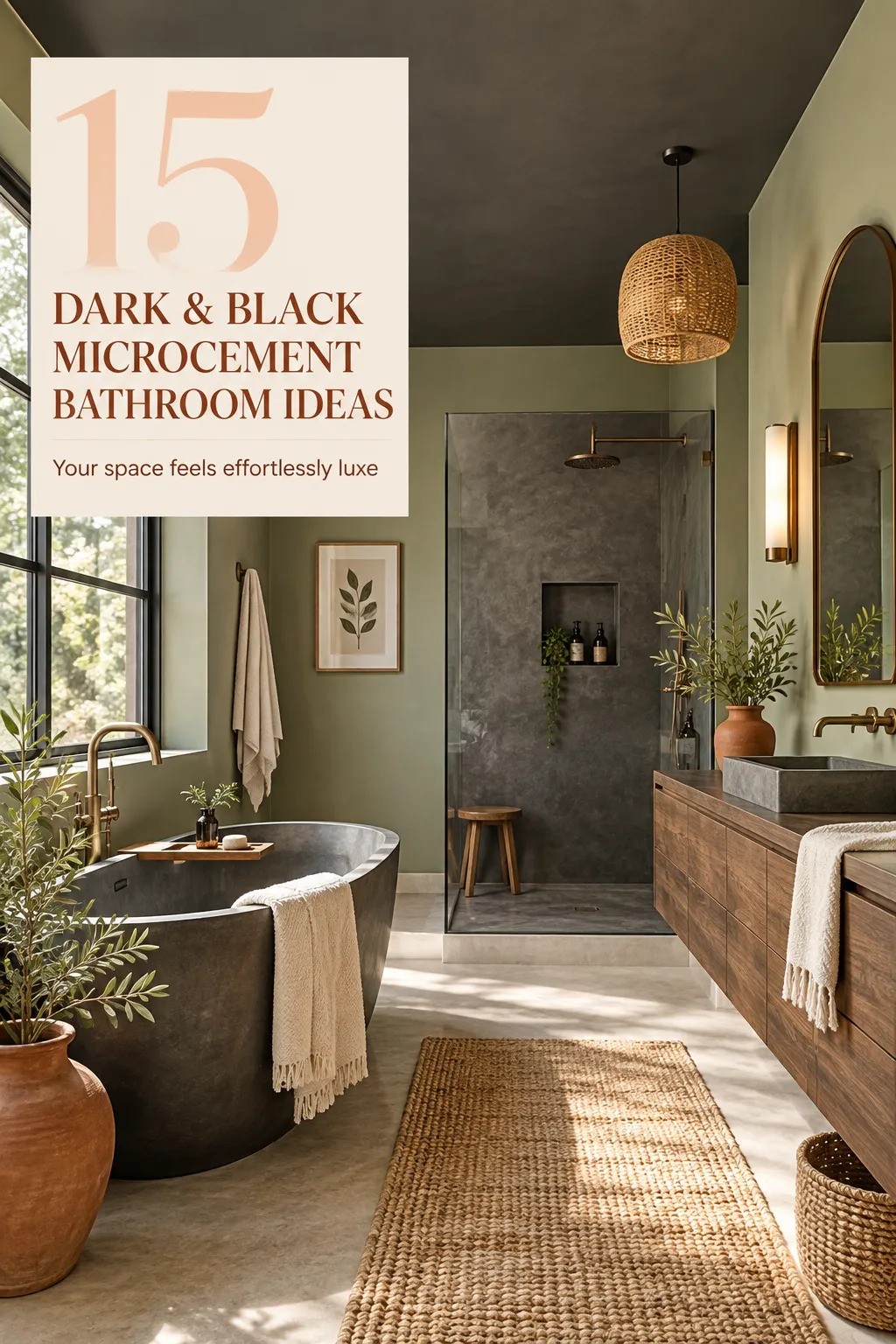
- Paint the ceiling with the Charcoal Envelope Rule
- Float a vanity under the Three-Height Light Stack
- Swap bright tile for a hand-troweled concrete bathroom wall
- How Should You Layer the Three-Height Light Stack Around the Mirror?
- Wet and Dry: Frame the Shower with Contrast
- Warm Brass or Cold Chrome?
- The Arched Tub Wall
- Hang a mirror instead of adding another black wall
- Matte Walls, One Glossy Accent
- What Should Stay Warm When the Rest Goes Black?
- Anchor the Floor with Honed Travertine
- The Honest-Cost Table Before You Choose Materials
- Set the Toilet Zone with the 21-Inch Clearance Rule
- A Hotel-Like Bathroom with Layered Textiles
- One Living Element Against the Black Field
1Paint the ceiling with the Charcoal Envelope Rule
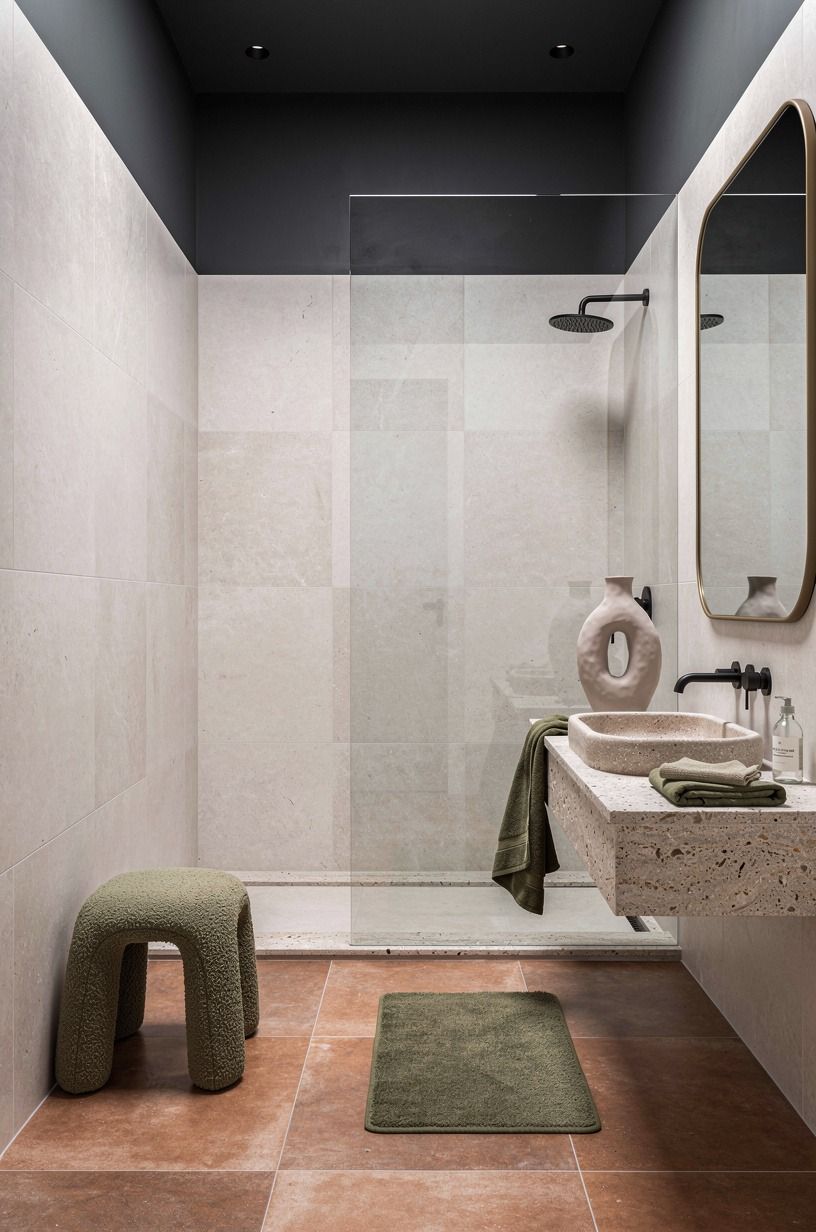
Wrap the walls and ceiling in a deep finish, but keep the floor a shade lighter. The charcoal envelope works because your eye reads one continuous shell instead of stopping at a hard white ceiling.
In a small bathroom, that uninterrupted surface can feel intimate and surprisingly calm. You’ll want a low-sheen microcement in the wet zone, especially if your shower is visible from the doorway.
I’d skip glossy black paint above the vanity. It catches every ceiling reflection and makes fingerprints look louder than they are.
Farrow & Ball Red Earth No.64 is a better choice if you want terracotta depth without a flat charcoal effect. I tested a similar shade beside a black tap, and the warm color kept the room from looking muddy.
For your lighting, use one ceiling fixture and one warm wall source instead of a bright central panel. An organic bouclé stool or bench brings tactile softness against the damp-looking walls, while a stone accessory and olive foliage keep the palette grounded. If you’re comparing finishes, this guide to black Venetian plaster bathroom ideas will help you see where the surface changes.
You can also compare the same dark-envelope idea with these minimalist microcement bathroom ideas, especially if your room is narrow.
And keep your ceiling color consistent around door trim if you want the room to feel taller. One small break can make the envelope feel accidental.
2Float a vanity under the Three-Height Light Stack
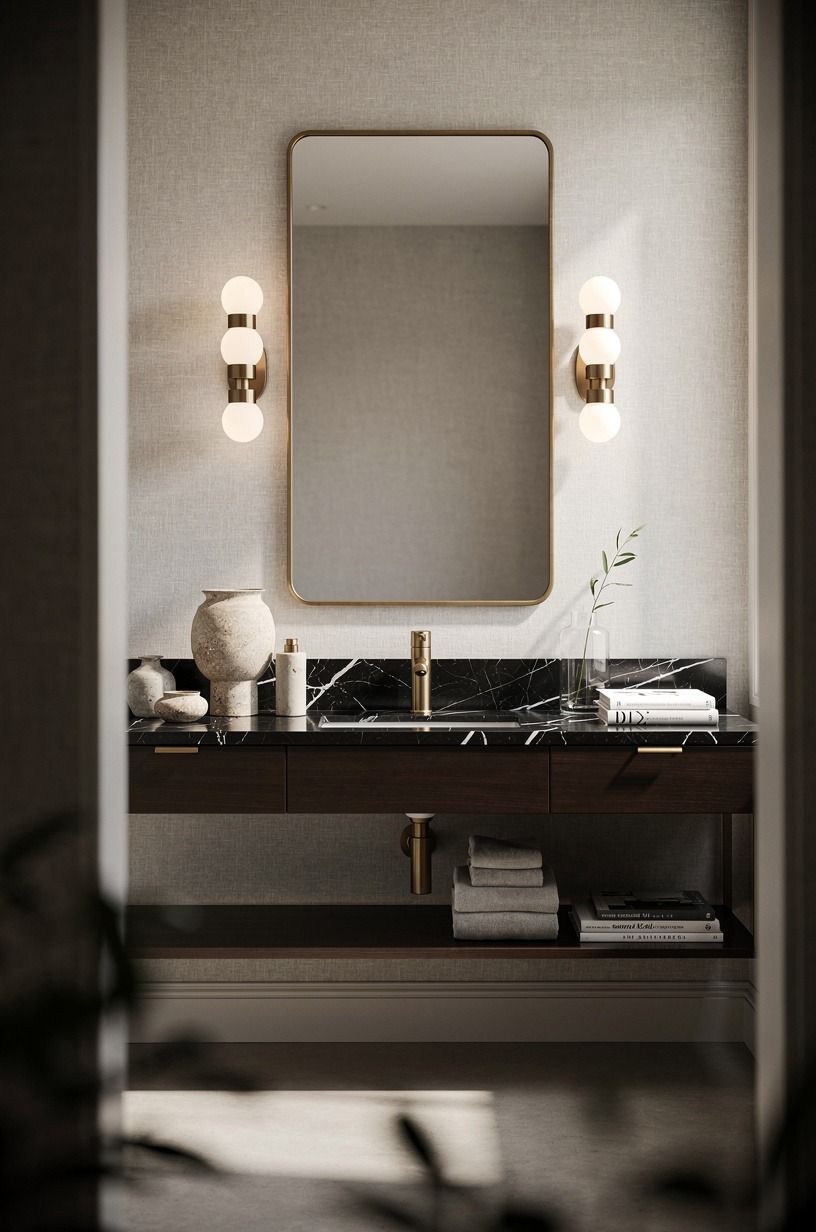
A floating vanity gives your dark bathroom a strip of visible floor, and that shadow line matters more than you’d think. Set the cabinet at a comfortable 32 to 36 inches high, then let your eye travel from the floor, to the basin, to the mirror.
That’s the Three-Height Light Stack: low glow, task glow, and reflected glow. You’ll notice the room feels warmer without adding clutter.
Choose a vanity in a muted clay finish or soft linen tone rather than another black plane. Black microcement beside black cabinetry can feel heavy in person. A Nero Marquina black marble counter with white veins gives you a practical, dramatic starting point without closing off the wall.
Your mirror should sit close to the basin, not float awkwardly near the ceiling. Use a vertical aged brass sconce on each side if you have the wiring, or a rechargeable picture light if you don’t. You won’t need a dozen decorative objects, because the light itself becomes the detail.
But don’t hide every bottle in a drawer. One amber glass soap bottle and a folded linen hand towel can make the vanity feel lived-in.
For more restrained layouts, browse these minimalist microcement bathroom ideas. A clay vanity also gives you a useful counterpoint to the continuous surface in these organic modern microcement bathroom ideas.
3Swap bright tile for a hand-troweled concrete bathroom wall
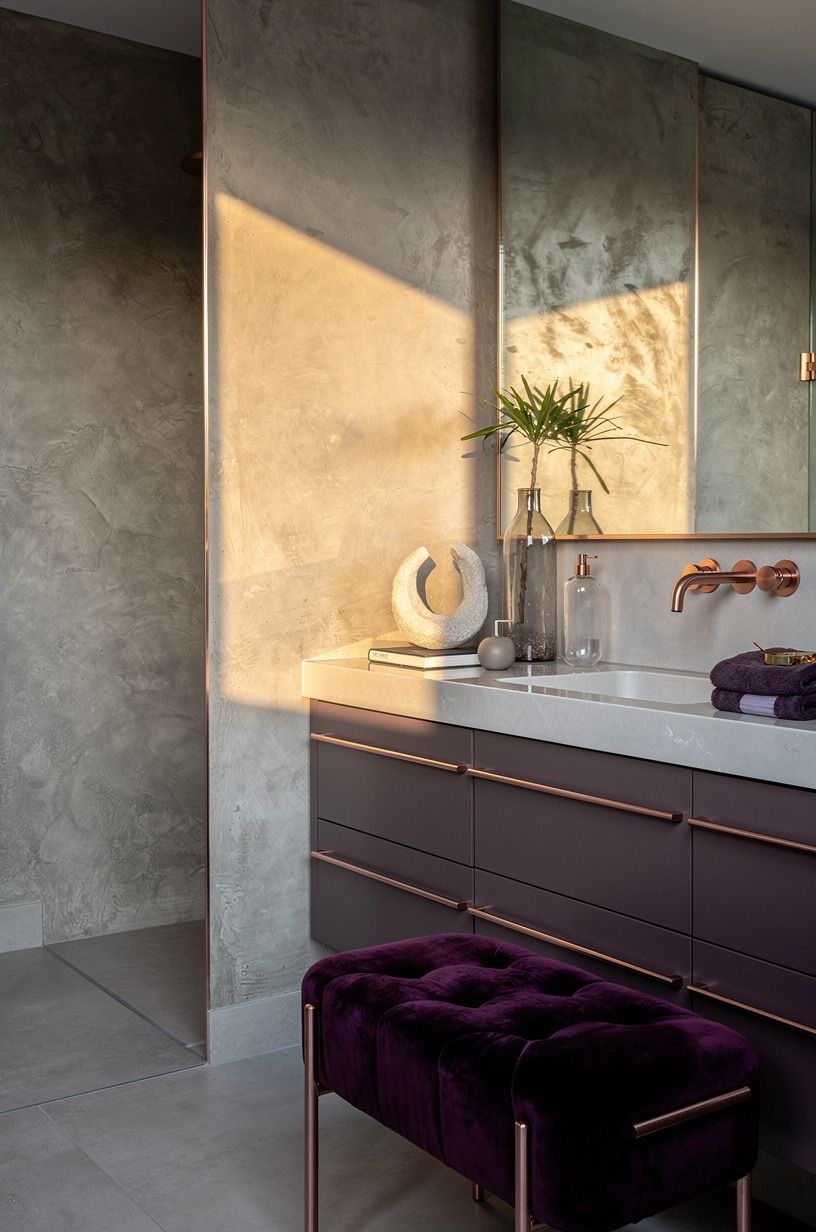
Microcement should have movement. Ask for a hand-troweled surface with soft tonal variation instead of a perfectly uniform black wall, because flat black can look like paint and show every patch. Your goal is the depth of plum and soft grey, with small shifts that appear as daylight moves across it.
I’d use this finish behind the vanity and on the shower return, but I wouldn’t cover every surface if your room has limited natural light. Keep one wall in Benjamin Moore Gray Owl OC-52 or a related soft grey. That contrast gives you a place for your eye to rest, and it makes the dark surface feel intentional rather than gloomy.
The material still needs a proper waterproofing system beneath it. You’ll want the installer to confirm the shower substrate, corner treatment, and final sealer before work begins. A small deep-pile mohair velvet stool outside the splash zone adds softness, while a narrow rose-gold ledge keeps your everyday items within reach.
And don’t choose a generic gray because it seems safer. Gray beside black often turns cold and commercial.
If you want more surface inspiration, compare this approach with why microcement is the heart of the organic modern bathroom. The warmer, more layered version also pairs well with ideas from this black Venetian plaster bathroom guide.
4How Should You Layer the Three-Height Light Stack Around the Mirror?
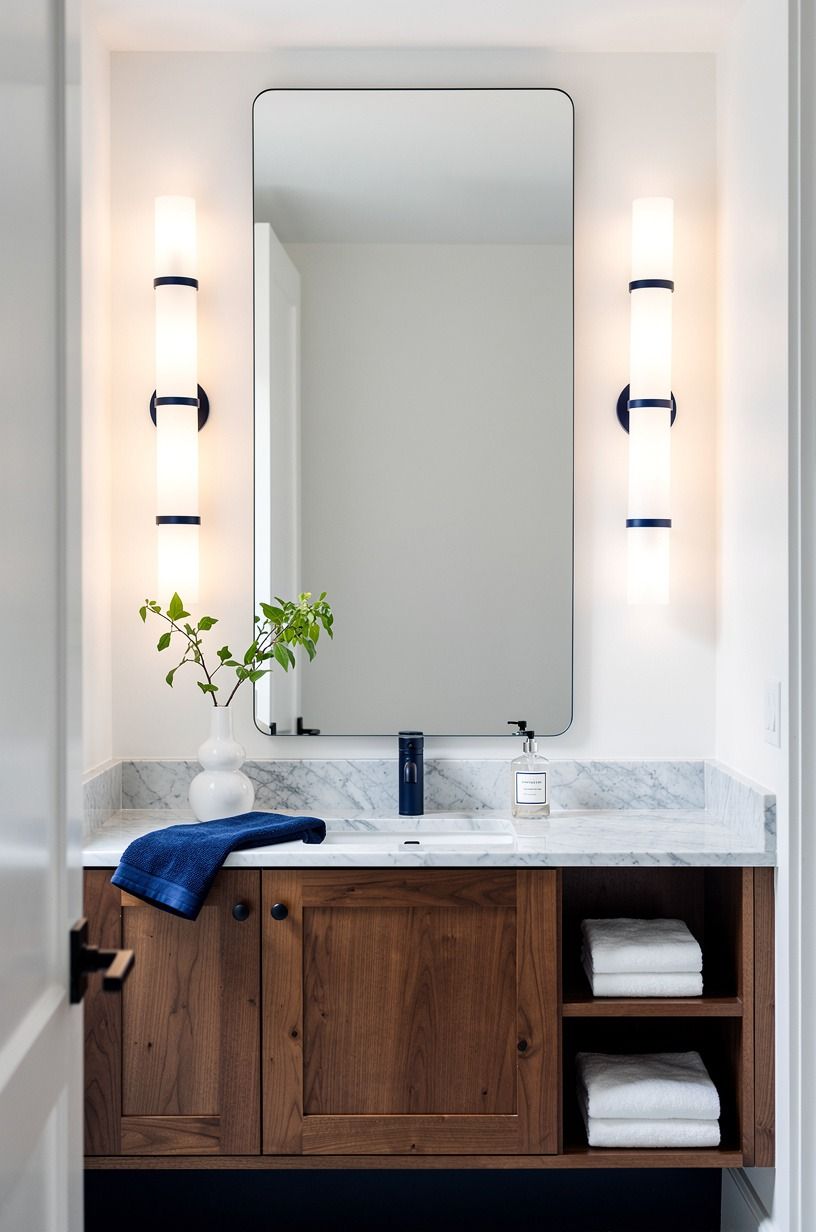
Your mirror deserves more than one harsh bulb above it. Put light at three levels: a low night light, a face-level source, and a soft ceiling fixture.
This three-height light stack keeps your dark bathroom usable at 7 a.m. and inviting after dinner. You’ll see fewer shadows under your eyes, which is a small luxury I’ll gladly take.
Start with a warm bulb in the 2700K range if your fixtures support color-temperature choices. A vertical opal-glass sconce gives the face-level light, while a discreet toe-kick strip creates the low glow beneath a floating walnut cabinet. I’d skip exposed Edison bulbs here.
They look dramatic online, but they can cast sharp shadows across a small mirror.
Use a round mirror if your vanity and tiles are mostly straight. The curve breaks up the hard edges and gives your bathroom a gentler rhythm. Carrara marble with subtle grey veining works well around the basin because it brings a pale, quiet note against the navy and walnut palette.
But you don’t need to wire three separate circuits. You can combine a plug-in wall lamp, a dimmable ceiling fixture, and a battery light under the vanity.
Your room will still feel layered, and your budget won’t take the full hit. For a brighter interpretation of this balance, see the white microcement bathroom guide.
5Wet and Dry: Frame the Shower with Contrast
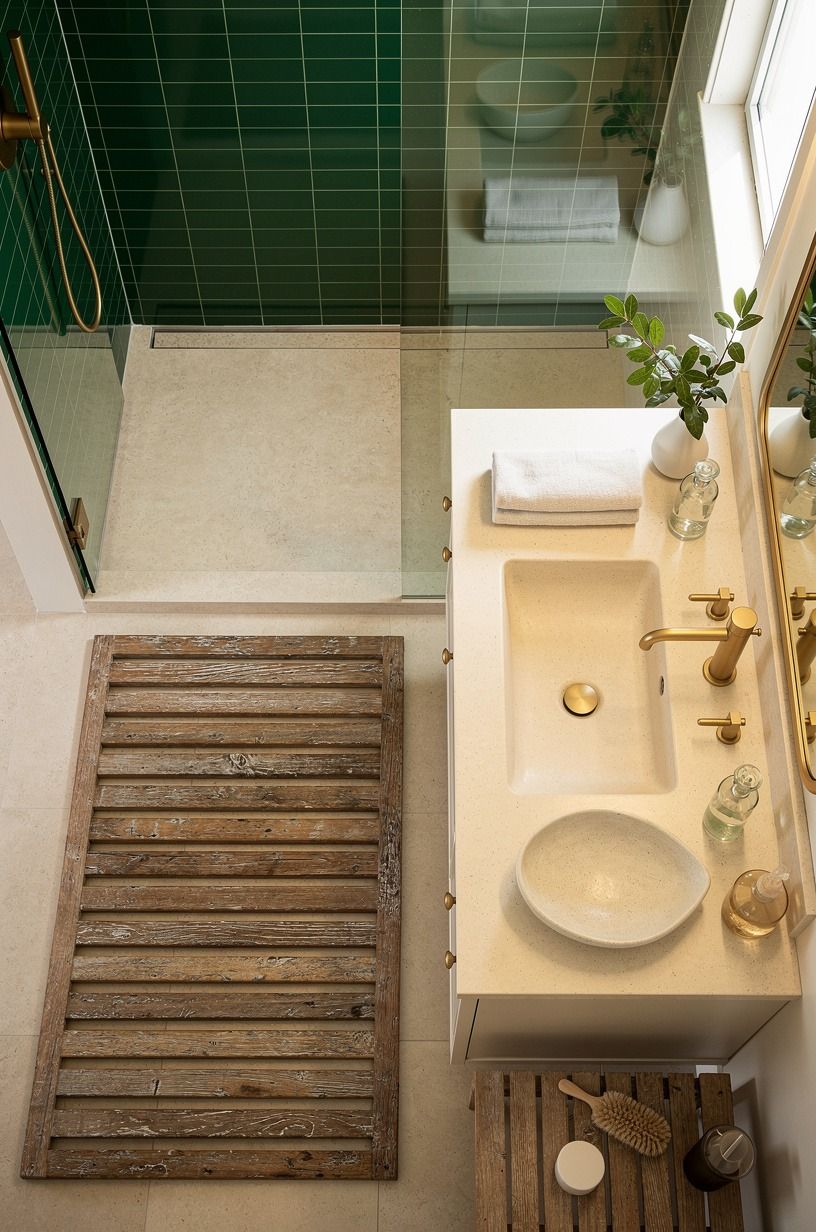
A black microcement shower looks strongest when the dry side of the room has a different texture. Use the Wet-Dry Contrast Rule: smooth, sealed microcement near the water, then a dry material with visible grain or weave outside the splash zone. Your eye understands the room faster when the surfaces tell you where each zone begins.
Try reclaimed weathered teak on a small shelf or bench, paired with a brushed-gold shower fitting. The wood’s grain catches water and light, so the wall doesn’t read as one dark block. You’ll want a shelf depth that holds your shampoo without becoming a permanent ledge of bottles.
A comfortable shower needs at least 36 by 36 inches, according to the brief’s standard dimension. If your shower is smaller, keep the hardware compact and use one recessed niche rather than several shelves. Brushed-gold plumbing can give the emerald and cream palette a little warmth without competing with the microcement.
I’d avoid a clear glass panel with no visual break if the room is narrow. A slim gold edge or a half-height screen can add structure. You can also study the stronger reflective version in these black zellige tile bathroom ideas, then bring that same sense of variation back to the microcement.
6Warm Brass or Cold Chrome?
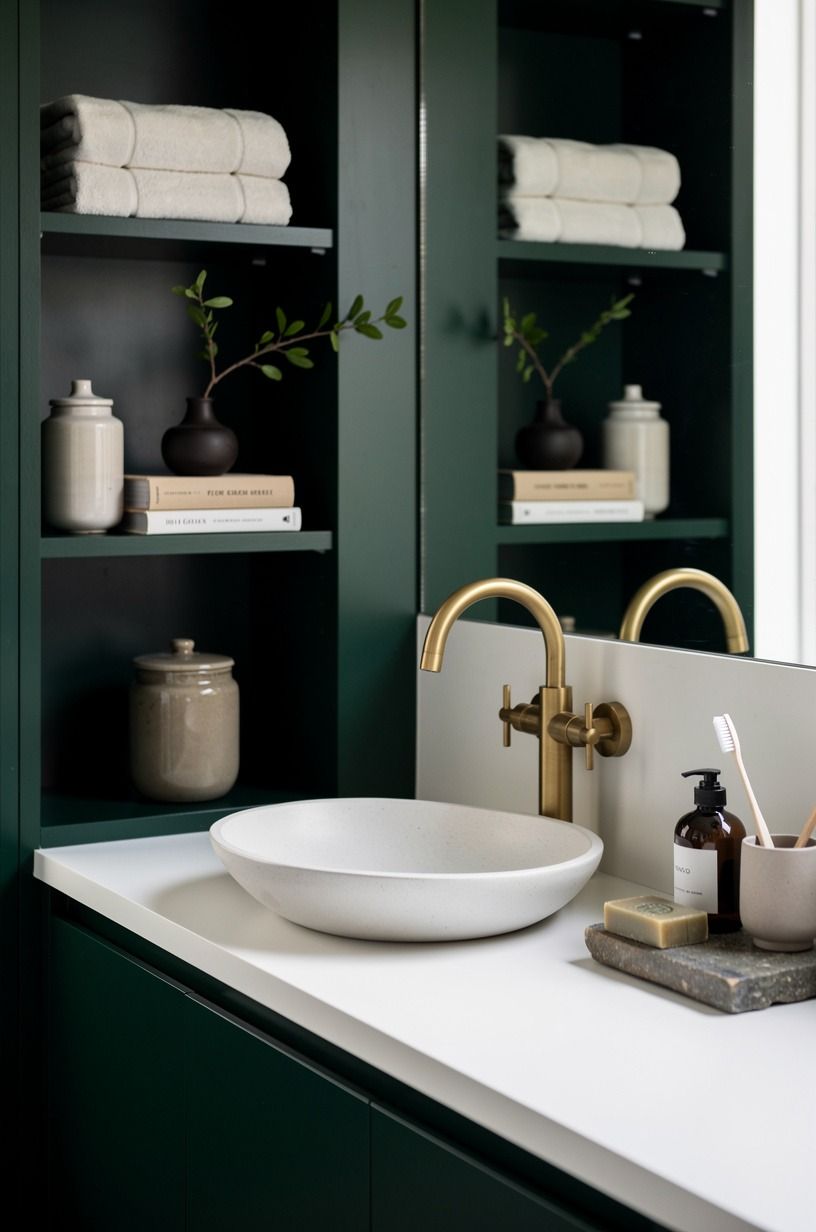
Warm metal is what keeps black microcement from feeling like a restaurant restroom. Choose one metal family and repeat it at the faucet, mirror edge, towel hook, and cabinet pull. Brushed brass gives you a soft glint without throwing bright reflections across the room, and your hands won’t leave the same obvious marks they do on polished chrome.
I’d choose unlacquered brass if you like change. It will deepen around the faucet and develop a patina where your fingers touch it, which makes the bathroom feel collected instead of newly packaged. If you want the finish to stay consistent, brushed brass with a protective coating will ask less of you.
A brass faucet can cost $120 to $450, depending on the fixture and brand. You don’t need to replace every fitting at once.
Start with the faucet, then match the smaller hardware to it. Your existing towel bar may be worth keeping if it sits in a useful spot.
But don’t mix yellow brass with too much rust and warm beige tile without a cooler counterpoint. Add natural oak or a rust-colored linen towel to keep the palette from tipping sweet.
A Calacatta marble shelf with soft gold veining can bridge the metal and wood naturally. The result should feel inviting, not themed.
If you prefer more reflective hardware, compare the finish with the restrained surfaces in these black zellige bathroom ideas.
7The Arched Tub Wall
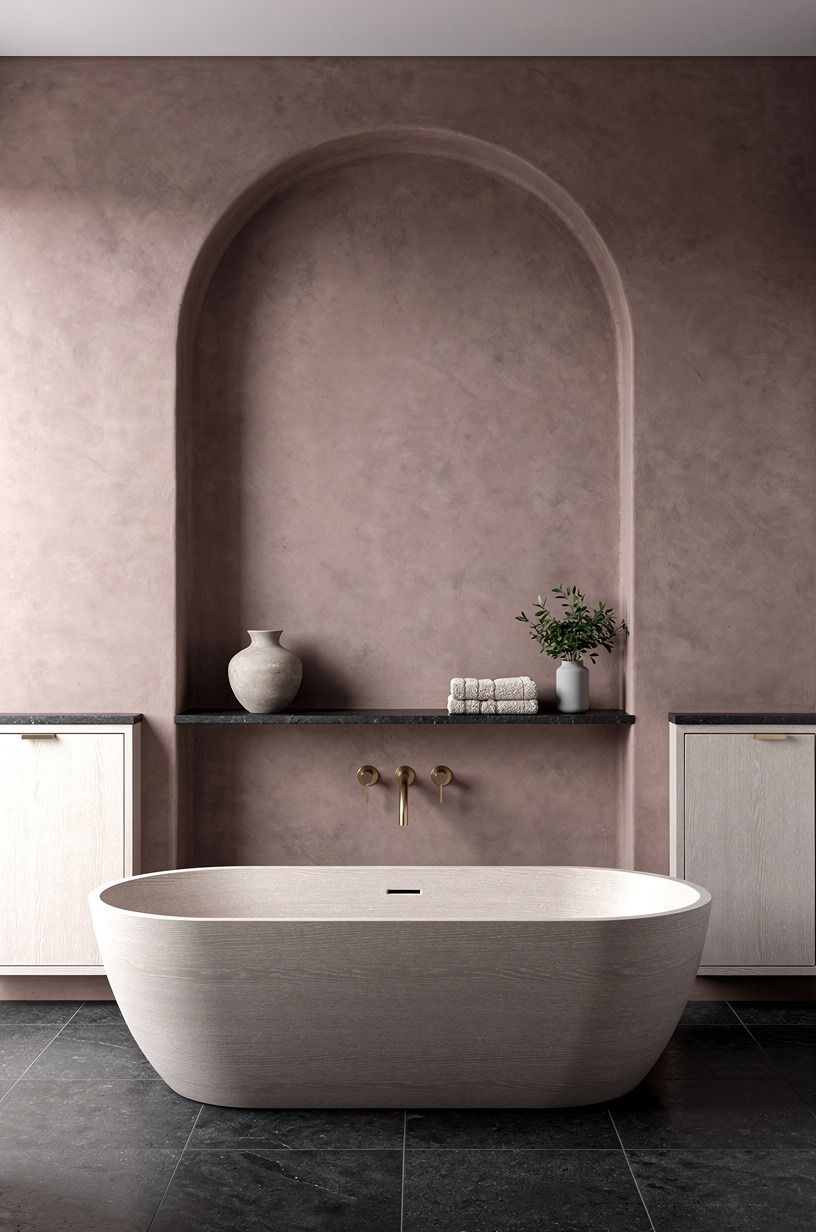
If your bathroom has a standard tub, use the surrounding wall to create an architectural moment.
8Hang a mirror instead of adding another black wall
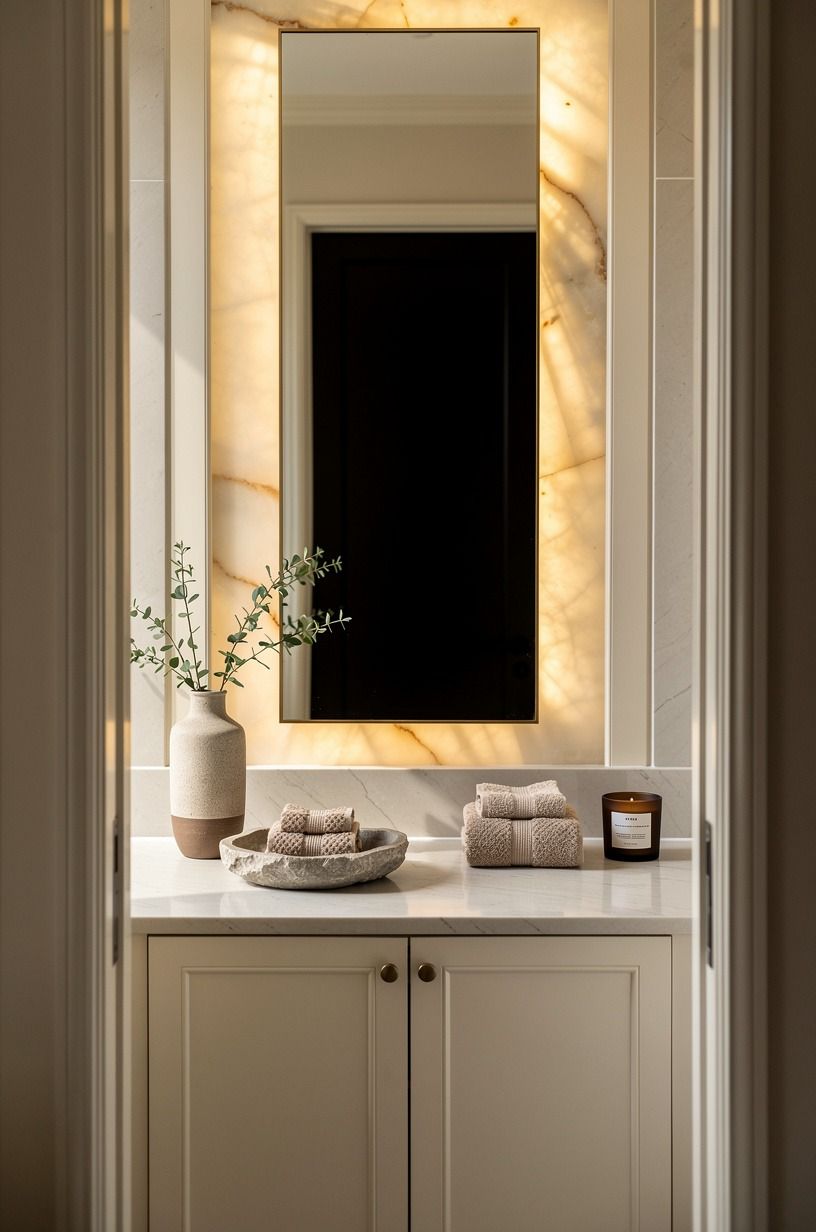
When your bathroom already has dark walls, a mirror can do more than reflect your face. Use one large shape to bounce light and interrupt the black field. A backlit translucent onyx surround brings a warm-white glow into the room, while a thin black metal edge gives you just enough contrast.
You’ll want the mirror to be broad enough that it doesn’t look like a small picture hung over an oversized vanity.
I’d choose a softly irregular rectangle over a trendy organic blob. The irregular shape can feel playful, but it often leaves strange gaps around sconces and medicine cabinets. Your bathroom needs practical clearance, especially if two people use it in the morning.
Place one small plant near the mirror if there’s daylight. Trailing pothos or a compact bird’s-nest fern will soften the dark surface without needing a full plant shelf. The leaves should be the moving element, not a collection of pots.
But don’t use the mirror to cover a badly finished wall. You’ll still see the edges, and the reflection will repeat every flaw.
Prep the microcement properly first, then let the mirror act as the bright pause. These dark moody bathroom plant ideas show how much one living texture can change the mood.
A mirror also works beautifully when the rest of the room stays quiet. For a lighter composition, compare it with this white microcement bathroom guide.
9Matte Walls, One Glossy Accent
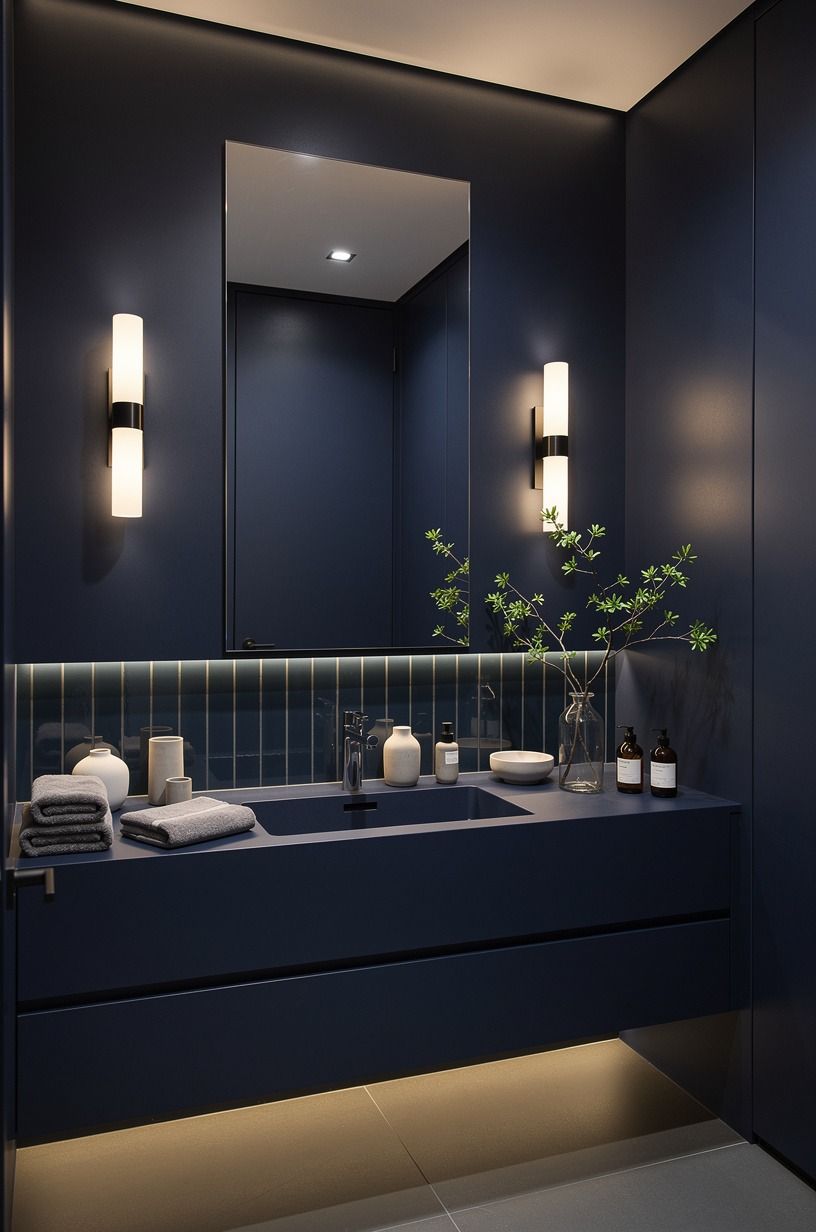
A completely matte room can absorb too much light. Add one controlled glossy accent, such as an ivory ceramic basin, a copper medicine cabinet, or a small glazed tile strip behind the sink. The one-sheen method gives your eye a place to land without turning the bathroom into a showroom.
I’d use a glossy ivory ceramic vessel sink if your vanity has enough counter space around it. It looks sharp, but water spots will show faster than they do on a matte basin. You’ll need to wipe it more often, and that tradeoff should be honest before you commit.
If maintenance matters more, choose a satin stone counter and a glossy copper mirror edge instead. Book-matched walnut with quiet grain can repeat the dark palette while keeping the surface tactile. Your room will feel refined without asking you to polish it every night.
And don’t put the glossy feature directly opposite a window if glare bothers you. Move it to the side wall, where the reflection will skim across the room.
That small adjustment can make the finish feel luminous rather than loud. The reflective movement is similar to what makes black zellige tile bathrooms feel less severe.
10What Should Stay Warm When the Rest Goes Black?
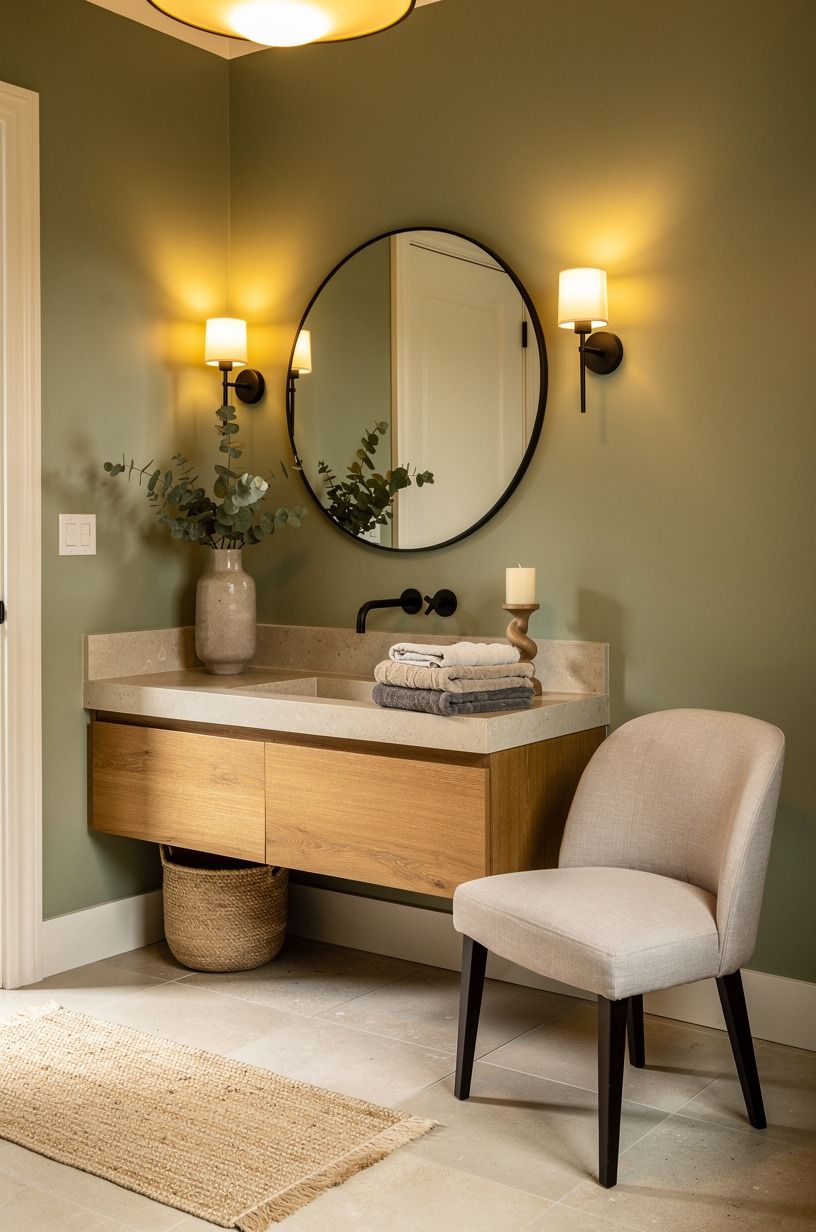
All-black walls aren’t the only way to create moody drama.
11Anchor the Floor with Honed Travertine
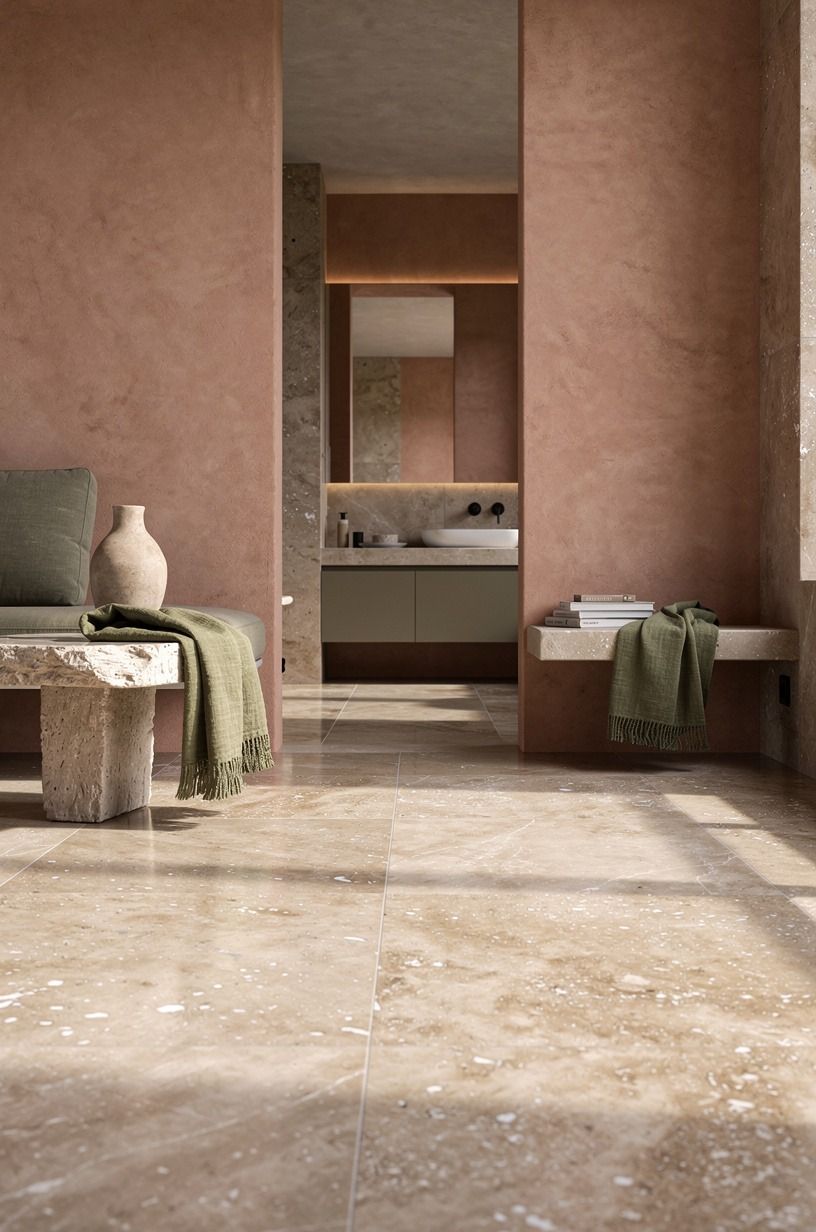
Dark walls need a floor that gives your feet and your eyes a lighter landing place. Honed travertine with natural pitting works especially well because it has variation without a loud pattern. The small pits catch dust, so you’ll need to seal the surface properly, but the material rewards you with a grounded, earthy feel.
Use larger floor pieces if your room is compact. Fewer grout lines make the floor feel calmer, and your eye can travel under the floating vanity.
I’d skip tiny black mosaic tile unless you love cleaning grout. It can look rich for the first month, then every pale mark becomes part of the design.
Your shower floor may need a smaller format for drainage and grip. Keep the color related to the main floor, but don’t chase a perfect match. Terracotta porcelain can be the practical choice in the wettest area, while the travertine handles the dry zone.
And check the threshold before ordering anything. A floor that rises awkwardly into the shower will bother you every day.
If you want a more graphic alternative, compare the dark surface with moody limewash bathroom ideas. You can also borrow the quieter floor-to-wall transition from these organic modern microcement ideas.
12The Honest-Cost Table Before You Choose Materials
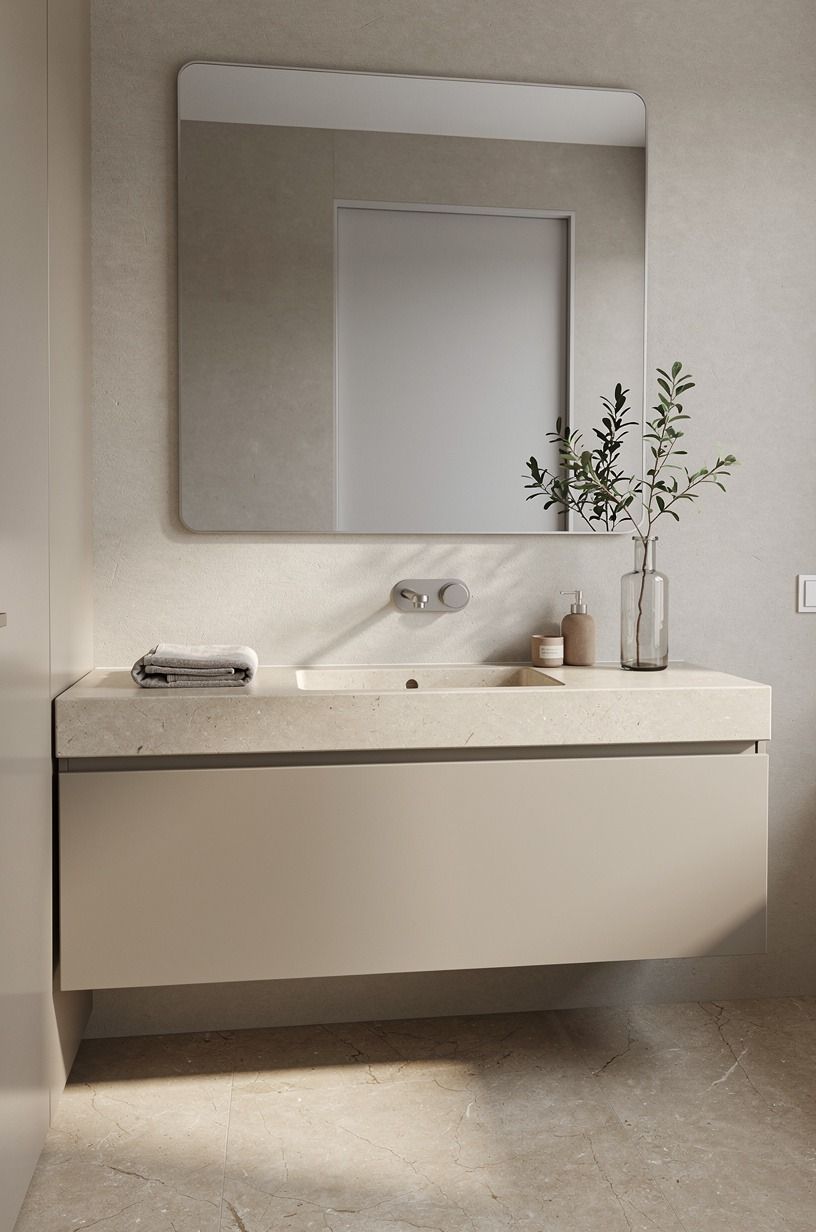
Before you commit to black microcement, decide whether you’re changing the finish, the fixtures, or the whole bathroom. Your budget will behave very differently in each case. A dark wall and new mirror can feel substantial, while moving plumbing can push the project into a completely different tier.
For material comparison, zellige tile commonly runs $15-$35 per square foot, while subway tile is often $2-$10 per square foot. A marble top may run $50-$100 per square foot, and an unlacquered brass faucet can cost $120-$450. These are typical US ranges, so you’ll still need local quotes.
I’d put your money into waterproofing, lighting, and the surface you touch every day. Solid white oak shelving can wait if the shower system is unreliable. Your bathroom will feel luxurious because it works well, not because every component has a premium label.
But don’t let a low paint budget push you toward a rushed microcement installation. A warm black paint, good light, and one strong mirror may be the wiser move for now.
Spend where you’ll notice the difference. For a lower-commitment alternative, compare the finish changes in these minimalist microcement bathroom ideas.
13Set the Toilet Zone with the 21-Inch Clearance Rule
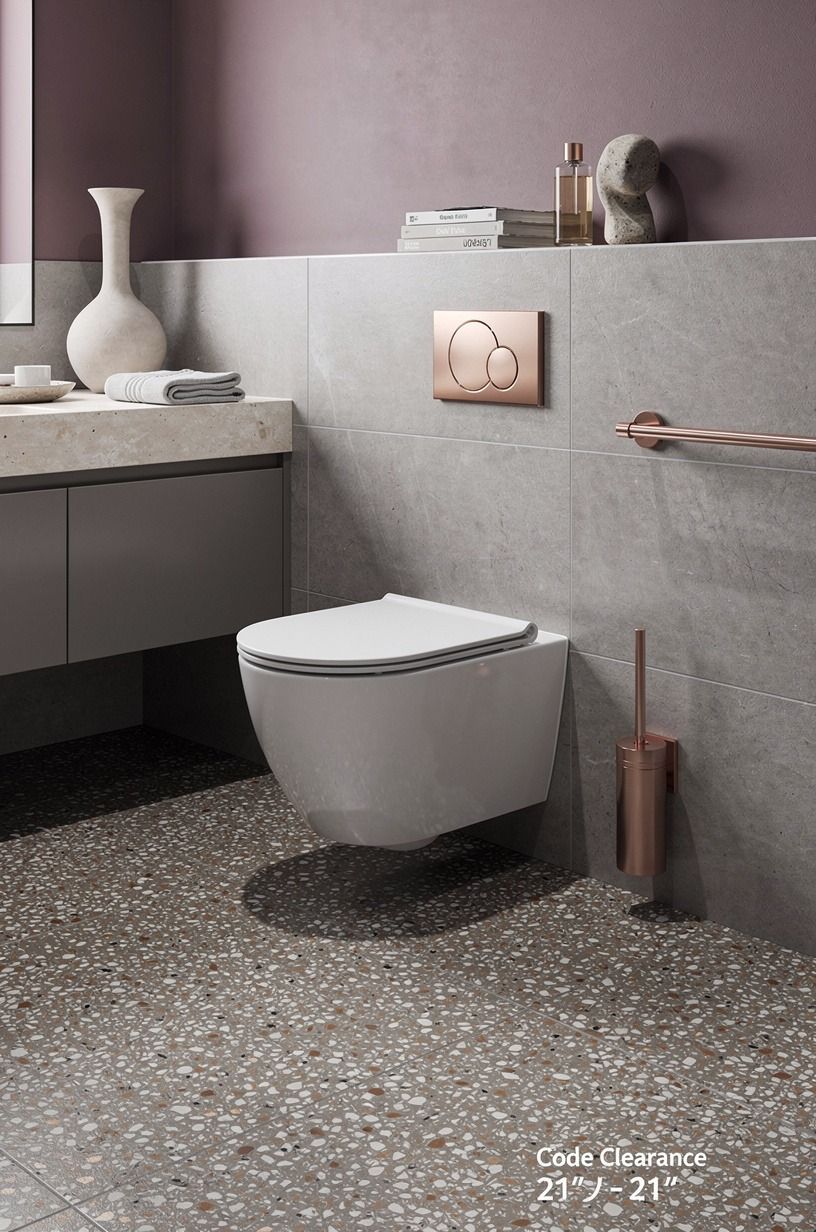
A dramatic bathroom still needs comfortable circulation. Keep at least 21 inches of clear space in front of the toilet, then use the wall behind it for a quiet microcement moment. Your eye will read the dark finish as a backdrop, while the open floor keeps the room from feeling cramped.
Choose a wall-mounted shelf in oversized-chip terrazzo or a narrow grey recessed cabinet if storage is limited. I’d avoid open shelving directly above the toilet unless you’re willing to keep it nearly empty. Three bottles and a stack of spare paper can turn a sophisticated wall into visual noise very quickly.
Use one framed print with a warm ground, perhaps a charcoal botanical drawing or a muted plum study. Rose-gold in the frame can repeat your faucet without making the room look coordinated in a forced way. You’ll want the art high enough to avoid splash, but low enough that it belongs to the room.
And don’t forget the flush plate. A shiny chrome plate on a black wall can become the first thing you see.
Match it to your faucet or choose a quiet matte finish, then let the clearance do its practical work. If the room needs more warmth, a softer mineral finish such as the one in these black Venetian plaster bathroom ideas can keep the wall from feeling flat.
14A Hotel-Like Bathroom with Layered Textiles
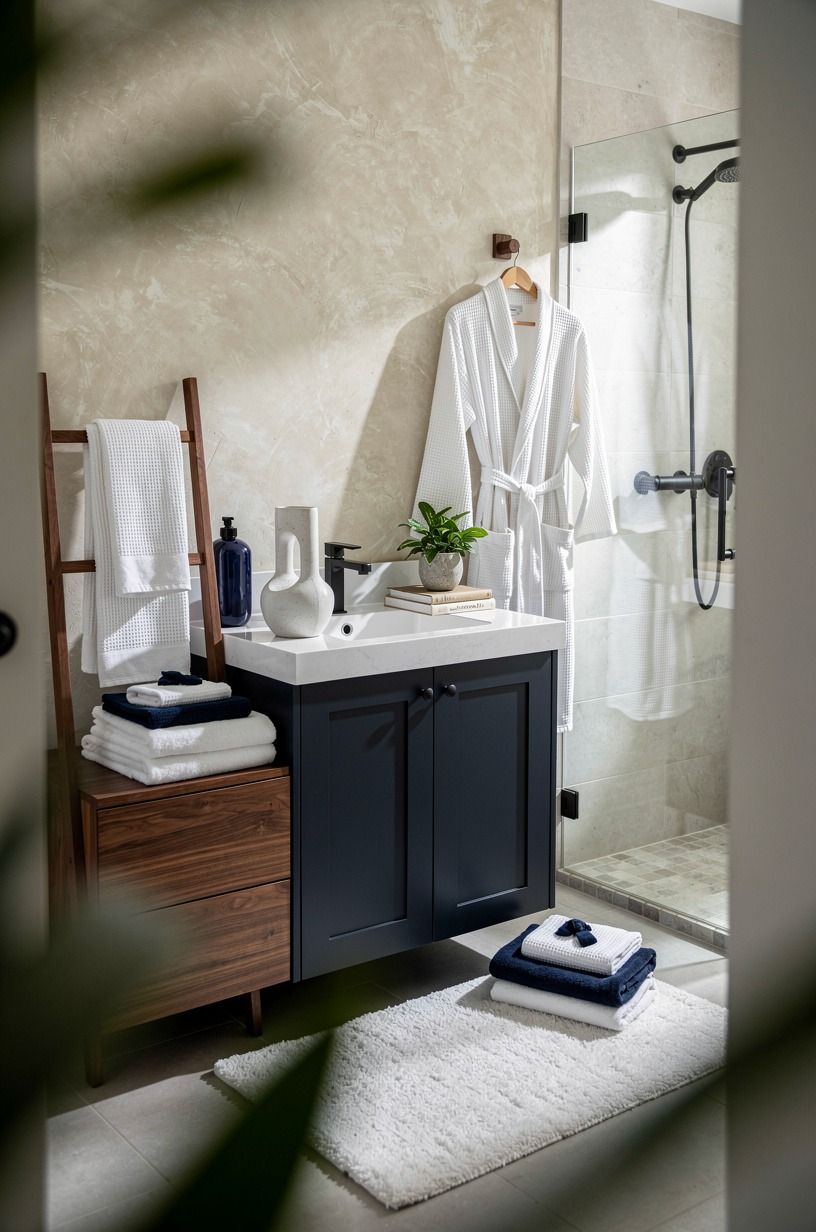
Textiles keep a dark bathroom from becoming visually hard. Start with one large 600gsm Turkish cotton bath sheet, then add a smaller hand towel and a washable mat with a low profile. Your room will feel more comfortable when the materials change underfoot and beside the sink.
I’d choose warm ivory, mushroom, or faded clay instead of stark white. Those shades sit naturally beside hand-applied Venetian plaster and won’t make your wall look colder. A Belgian flax linen curtain can soften a window or conceal open storage, but you’ll want to keep it clear of the shower spray.
For a rental, use a tension rod and a removable textile panel. You don’t need permanent hardware to create the same soft vertical line. Your budget can stay low while the room gains height, texture, and a little privacy.
If you like the calm side of the look, the white microcement bathroom guide has useful ideas for keeping pale textiles from feeling sterile.
But don’t add a bath mat to every open patch of floor. Too many mats interrupt the surface and make a small bathroom feel crowded.
One generous mat near the basin is enough. Keep the rest of the floor visible so your dark palette can breathe.
15One Living Element Against the Black Field
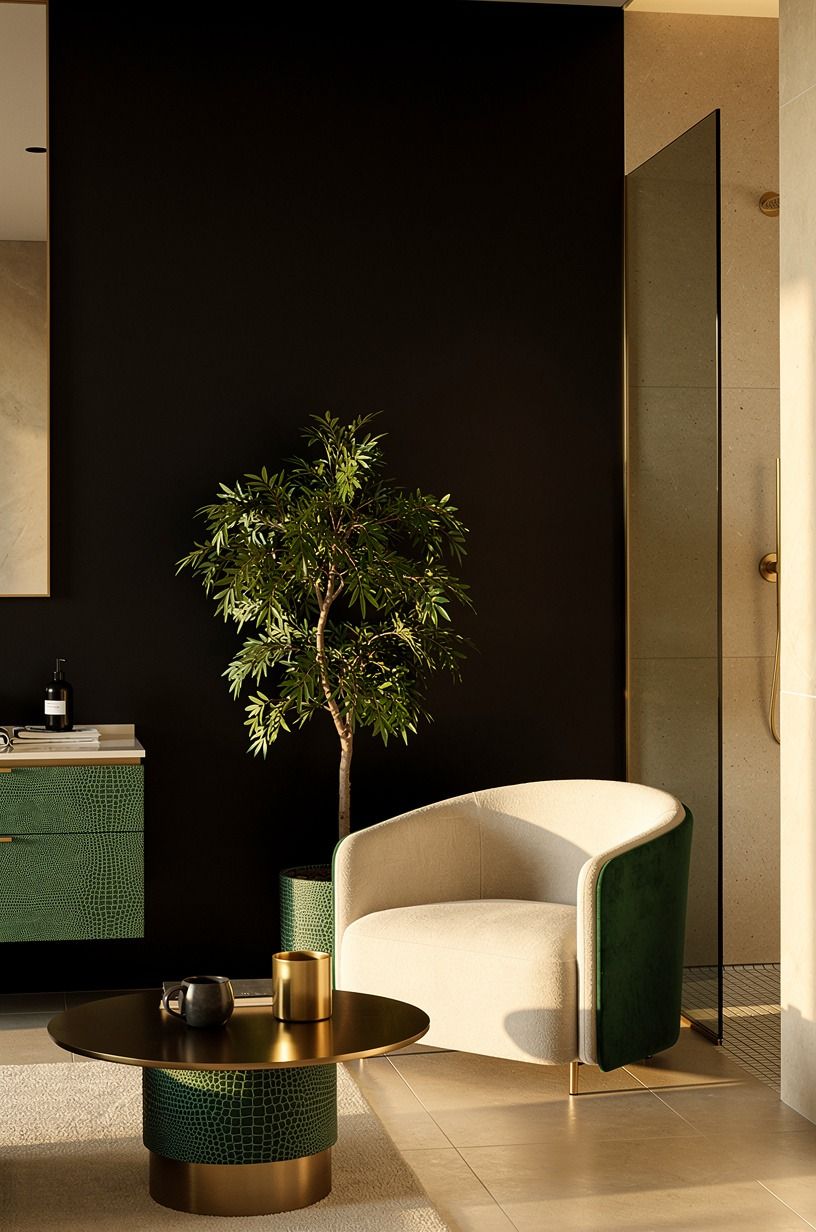
A plant is the easiest way to keep a moody bathroom from feeling static. Pair it with one shagreen accent in emerald, gold, or cream so the living element has a tactile companion.
Why I’d Choose Contrast Before More Darkness
I’ve made the mistake of treating moody design like a black paint challenge. The first bathroom I styled had dark walls, dark cabinetry, dark towels, and one weak ceiling light.
It had drama at first glance, but in person it felt flat by noon and gloomy after sunset. I should’ve started with contrast, not color.
That lesson changed how I look at microcement. The finish has quiet movement, but it won’t save a room with no light or texture.
You need one dry material against the wet surface, one pale note against the dark field, and one finish that catches a little glow. Honed travertine, warm wood, and aged metal do more work than another layer of charcoal ever will.
I’d also resist the pressure to make every bathroom feel like a luxury hotel. Hotels can hide practical clutter behind staff-only doors. Your bathroom has toothpaste, laundry, damp towels, and a hair dryer.
You’re living there. Give yourself storage that closes, a mirror that works, and lighting that doesn’t make you squint.
The smartest place to spend is the part you touch or rely on every day. That means the faucet, the shower control, the waterproofing, and the light beside your face.
A cheaper vanity with a useful drawer can beat an expensive cabinet that stores nothing. I’ve gone back and forth on this, but function wins every time.
If you’re renting, paint and textiles can create most of the mood without permanent work. If you own the space, microcement makes sense when the substrate is ready and the installer understands wet areas.
You don’t need to cover every wall. One well-finished shower return can carry the entire idea.
The best dark bathrooms aren’t trying to look mysterious. They’re letting shadow, grain, stone, and reflection share the room.
That’s why a small space can work so well. You see the whole room at once, and every choice has somewhere to land.
For a brighter counterpoint, keep the white microcement bathroom guide nearby while you plan.
A Few Things Worth Answering
What is the best dark microcement bathroom idea for a small bathroom?
A floating vanity and one large mirror usually work best because they reveal floor and reflect light. Choose IKEA GODMORGON in a wood tone, then pair it with warm sconces and one dark microcement wall.
You’ll get depth without closing in the room. These minimalist microcement bathroom ideas are useful for comparing compact layouts.
Where can I buy dark bathroom pieces on a budget?
Look at IKEA, Wayfair, and Target for vanities, mirrors, lighting, and textiles. Facebook Marketplace and local thrift stores can provide wood stools or brass frames. There’s no affiliate commission here, so you can shop wherever the price and measurements work for your room.
How much does a dark microcement bathroom makeover cost?
A cosmetic update may fit within the $200 to $1,200 budget range for paint, a mirror, a faucet, and textiles. A mid-range project can reach $3,000 to $9,000, while plumbing and full tile work may run $12,000 to $30,000 or more. If you’re comparing finishes before committing, review the differences in these black Venetian plaster bathroom ideas.
Can I create this bathroom look on a budget?
Yes, and you can start with paint, lighting, and a secondhand mirror. Keep your existing vanity, switch the faucet, and add warm towels.
Your biggest free improvement may be removing clutter and changing the bulb temperature. A few ideas from these moody limewash bathroom examples can also translate well to paint.
Is a dark microcement bathroom worth it in a small space?
Yes, if you balance the dark surface with light and visible floor. Use one continuous wall finish, a floating vanity, and a mirror that reaches close to the side walls. The small footprint helps you see the whole room at once.
Is dark microcement a good idea for a rental?
Yes, if you use removable changes instead of permanent finishes. Try peel-and-stick floor tile, a tension-rod curtain, removable sconces, and a framed mirror.
You won’t recreate true microcement, but you can build the same contrast with texture, color, and low lighting. These dark moody bathroom plant ideas also show how to add softness without major work.
Where I’d Start First
If I had to pick one, I’d start with the lighting. A dark bathroom can’t rely on wall color to do the work of a good sconce, and harsh ceiling light will flatten every material. Add warm side light first.
Pin this idea for later and compare it with our white microcement bathroom guide.