
 by
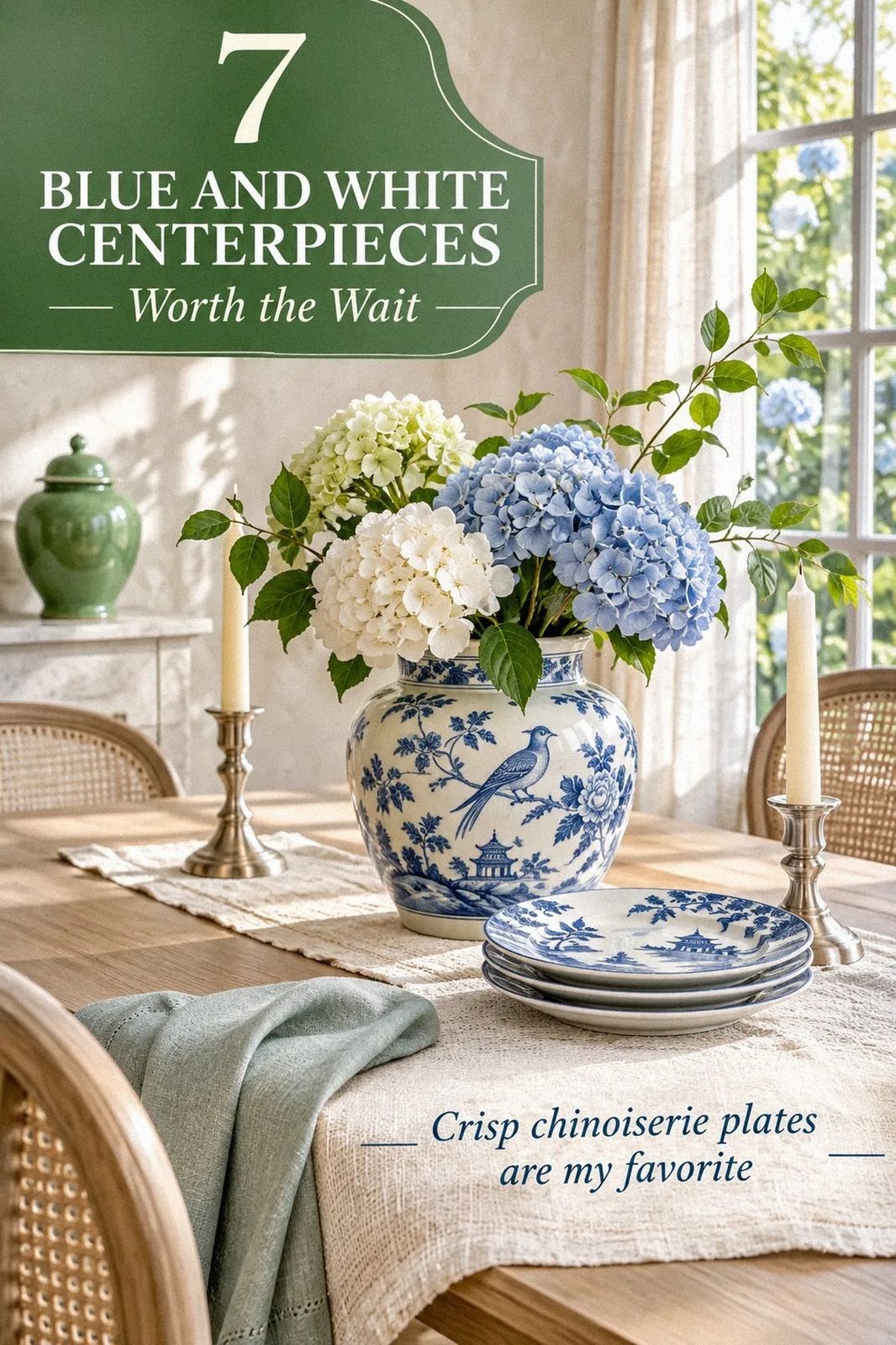
Blue and white centerpiece ideas helped me warm up my kitchen table without buying a new dining set or filling the room with clutter. I had one Saturday, a tight budget, and a table that looked unfinished from every angle.
I started with the centerpiece, then realized my restless bedroom was part of the problem too. The same calm color pair followed me upstairs, where a few practical changes made bedtime feel softer.
No grand renovation. Just one decision that finally connected the house.
The Table Before I Moved Anything
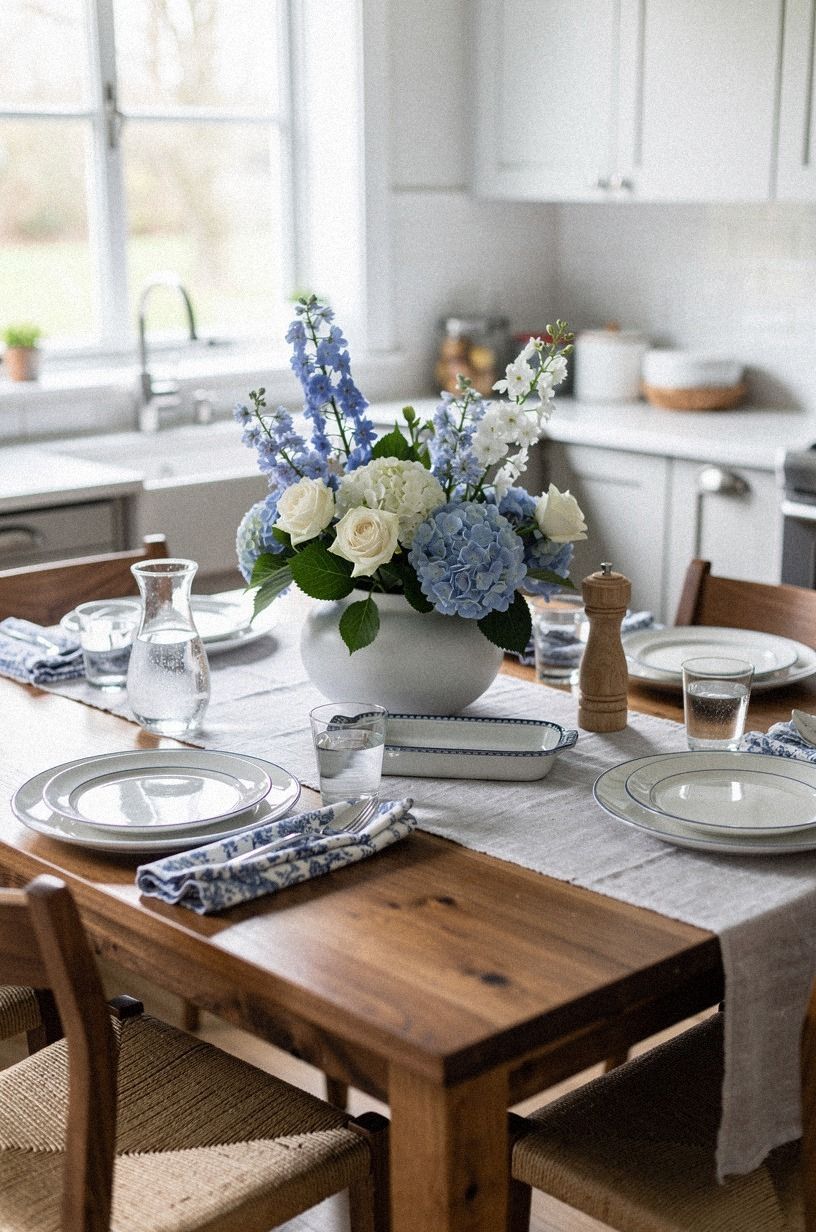
I took the before photo exactly as the table looked that morning. A pale wood surface, one chipped serving bowl, two napkins that didn't match, and a ceiling light that made everything look a little gray. The room wasn't ugly.


It just felt undecided.
And I was tired of buying small decorative pieces that looked charming in the shop but became visual noise at home. I wanted something I could clear in thirty seconds when dinner started. My opinion was firm: the center of a kitchen table should support the meal, not compete with it.
The first change was free. I moved the extra objects away, wiped the table, and left the surface bare for an hour. A clean pause.
If your table has the same crowded feeling, I’d begin with these simple kitchen table centerpiece ideas before shopping. You may already own the shape you need.
I Chose One Blue-and-White Anchor
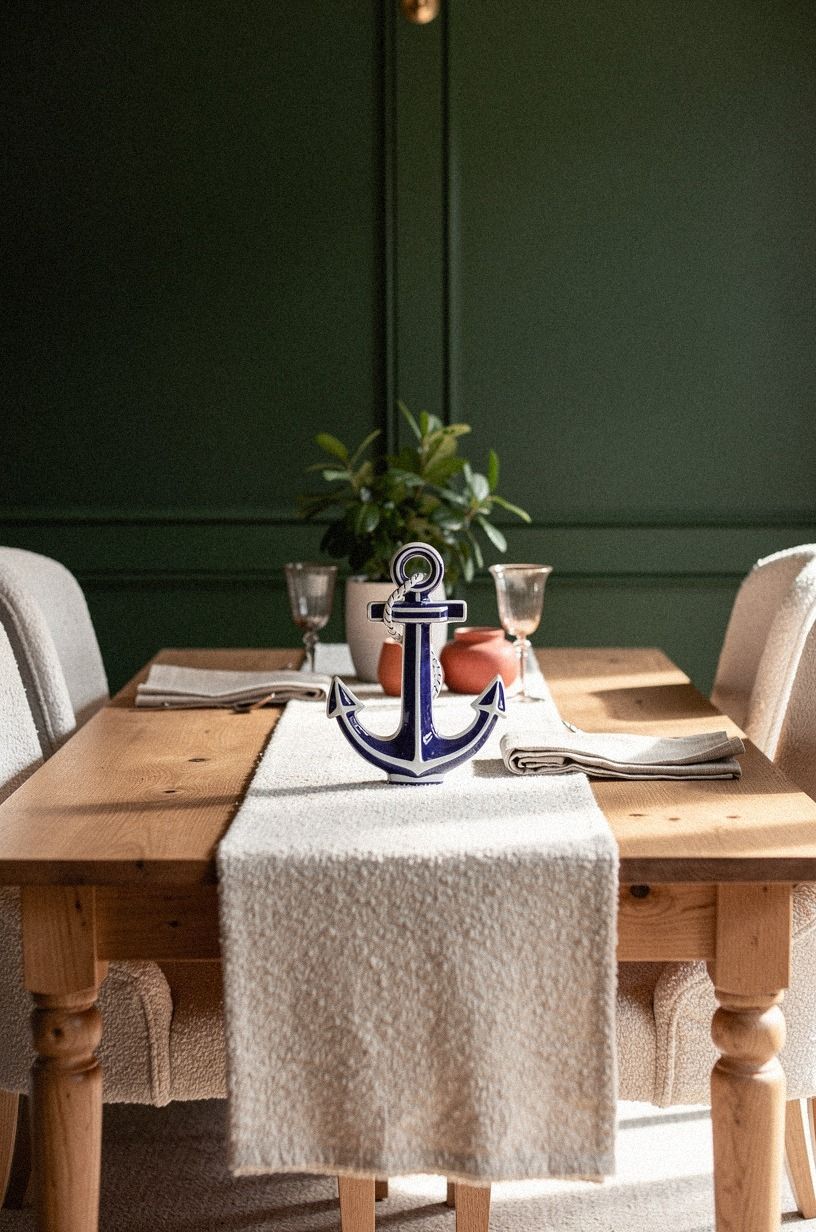
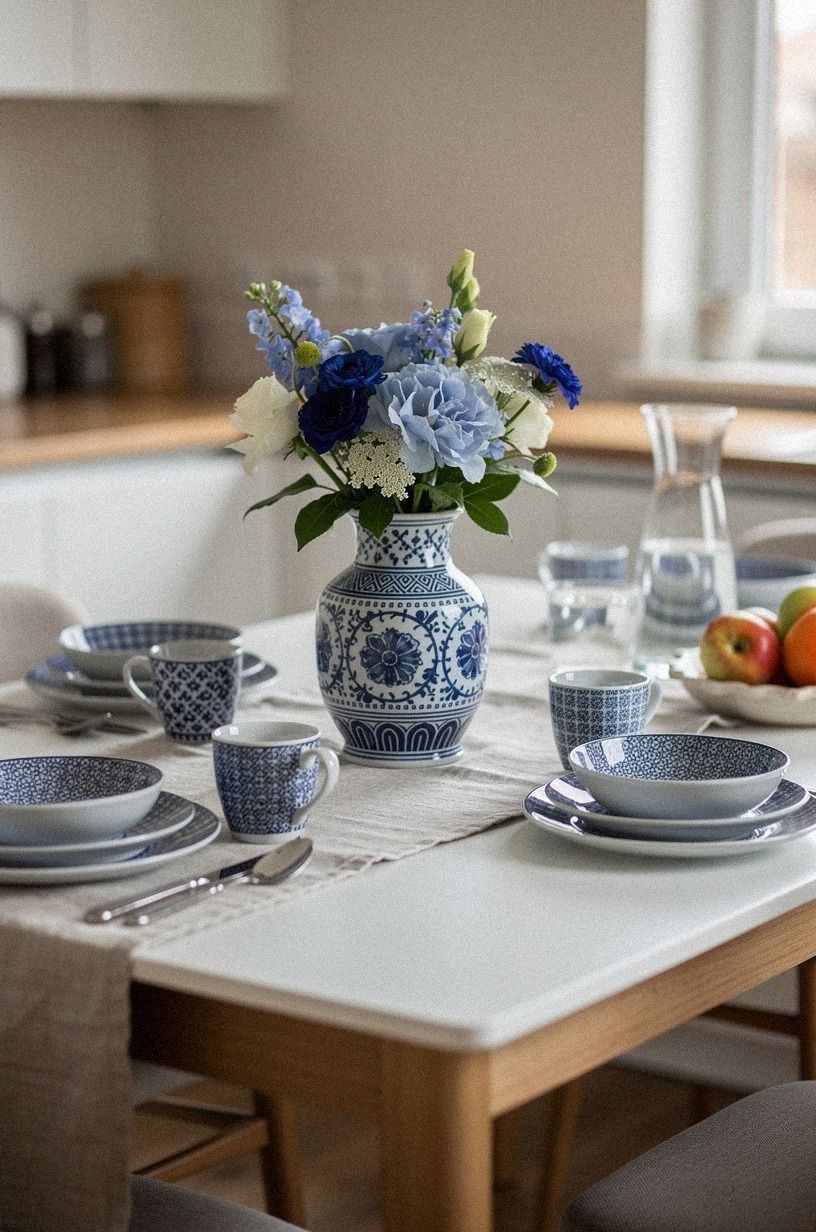
I nearly bought several little vases because each one looked sweet on its own. But I knew that route would leave me with a collection instead of a centerpiece. I chose one blue-and-white ceramic vessel with a rounded shape, then built around its height.
The blue had a slightly faded, ink-washed quality. The white wasn't bright or stark.
That mattered. I think blue and white work best when both colors look touched by time, rather than pulled from a matching dinnerware set.
I placed the vessel slightly off center, with enough room beside it for a serving dish. The table immediately felt more relaxed.
Not formal. Not beachy. Just warm, classic, and useful.
And I left the flowers loose. A few stems bent toward the window, which made the arrangement feel lived-in instead of arranged by ruler.
If you’re working with a narrow table, keep the anchor low enough that you can see across it. Nobody wants to conduct a conversation around a bouquet.
I Built the Layers Around Breakfast
The next morning, I tested the centerpiece during breakfast. This is where many arrangements fail. They look fine in a still photo, then block the coffee, the toast, and the one person who always reaches across the table.
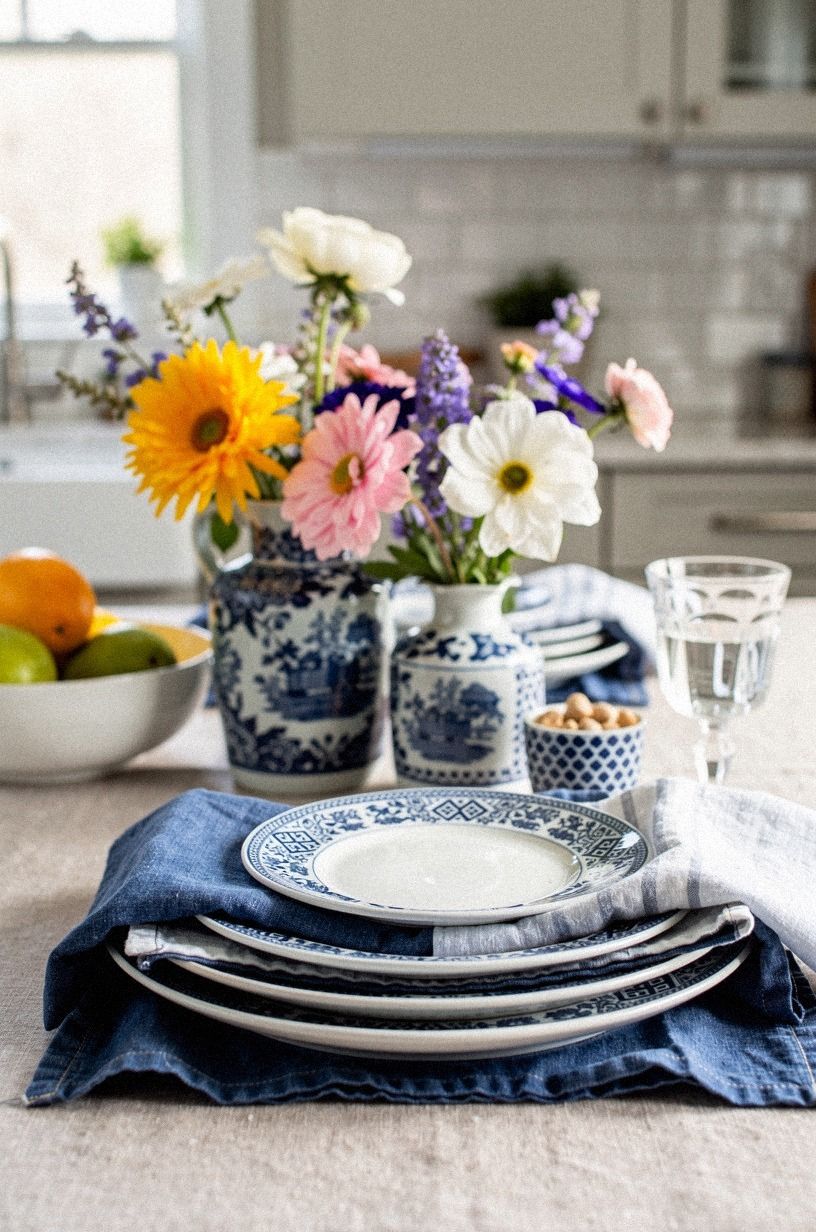
I added a shallow woven tray under the ceramic vessel, then placed one small white bowl beside it. The tray gave the arrangement a boundary, while the bowl made it feel useful. I didn't add candles because the kitchen already gets plenty of light during the day.
But I did add one folded blue napkin, not four. That single repeat of color was enough to pull the table together. I’d skip a matching napkin set here.
It would make the arrangement feel planned in a stiff way, and I wanted the room to keep its casual rhythm.
The tray also made cleanup easier. I could lift the whole arrangement before wiping the table, then set it back down without rebuilding anything. A small win.
For another version, I used the same idea with a kitchen table tray centerpiece, but I kept the tray shallow and the objects sparse. Your eye needs somewhere to rest.

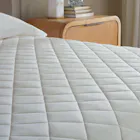
The Piece My Whole Bedroom Is Built Around
Natural materials, a 365-night home trial, free white glove delivery. Decide in your own room, not a showroom.
I Let the Palette Follow Me to the Bedroom
The kitchen looked better, but I still wasn't sleeping well. I was staying awake too late, scrolling beside a bed that felt hot and overstuffed. The blue and white palette made me notice how many unrelated textures I had allowed into the bedroom.
So I made one practical purchase decision instead of starting another decorative project. I replaced the old mattress with Zenhaven, then kept the rest of the room quiet while I adjusted to the change. I’m careful about sleep claims, but I did feel more comfortable at night, and that was enough reason for me to keep it.
I layered Organic Cotton Sheets over the bed because I wanted a cooler, cleaner feel against my skin. Then I added one Organic Quilted Pillow, not a pile of pillows that had to be removed every night. My favorite part was how the white bedding gave the blue accents room to breathe.
And I used an Organic Mattress Pad to soften the surface without making the bed look bulky. I wasn't sure that extra layer was worth it.
For the first two weeks, I regretted the decision because the bed felt different from what I was used to. Then I realized I was no longer waking up to rearrange everything.
The bedroom didn't become a showroom. It became easier to reset. That was the point.
I Added Warmth Without More Blue
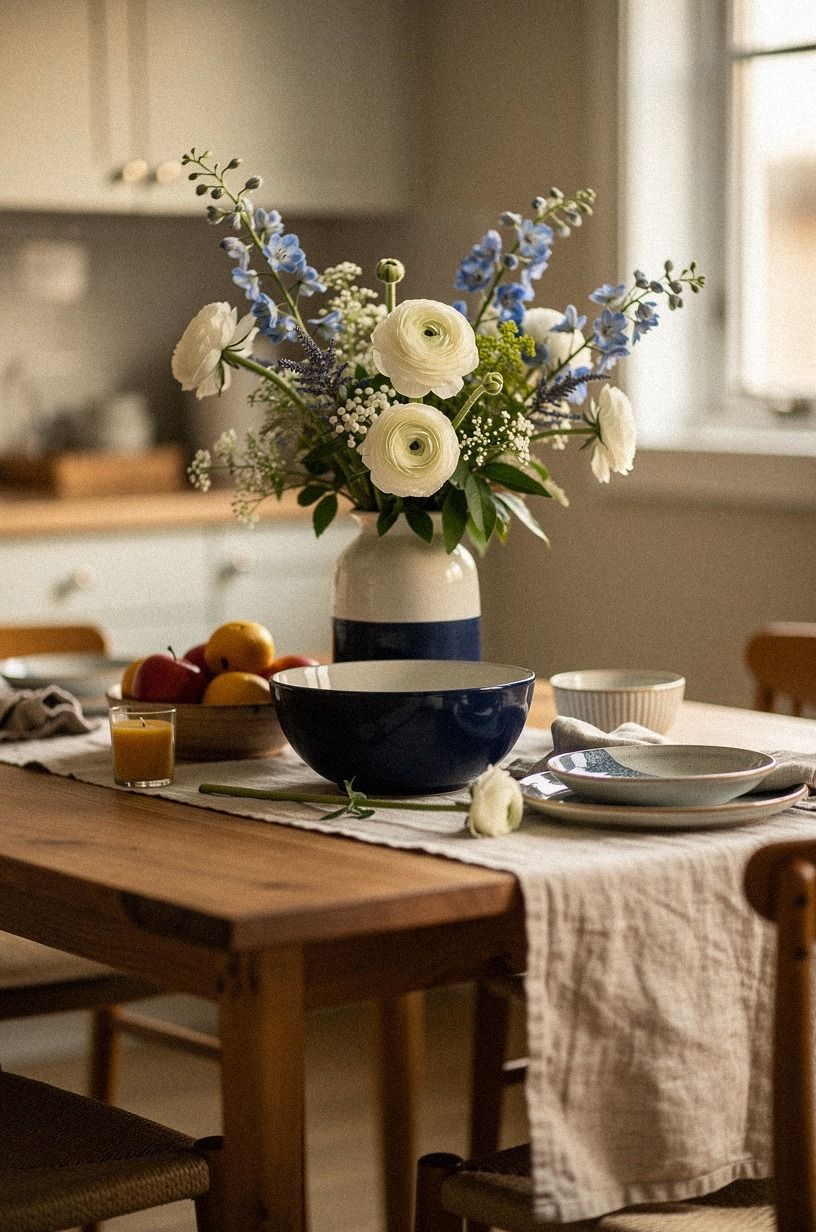
My first instinct was to keep adding blue. Blue vase, blue runner, blue artwork, blue cushions. But too much of one color would have made the kitchen feel themed, and I don't enjoy rooms that announce their palette before you sit down.
Instead, I brought in warm materials. A wooden cutting board leaned against the backsplash.
A small brass spoon rested in the white bowl. The woven tray stayed because its rough texture kept the ceramic from feeling precious.
But I left the walls alone. I considered Farrow & Ball Studio Green for a deeper backdrop, then decided the kitchen needed more light, not more drama. Benjamin Moore White Dove would be my choice if I painted later because it has enough warmth to support blue without turning yellow.
I also tested a small bunch of grocery-store flowers in the vessel. White flowers worked, but I preferred leafy stems with uneven heights.
They looked gentler against the blue glaze. If you want a softer version of this look, my kitchen table flower vase guide has the same low-maintenance spirit.
What I’d Buy Differently
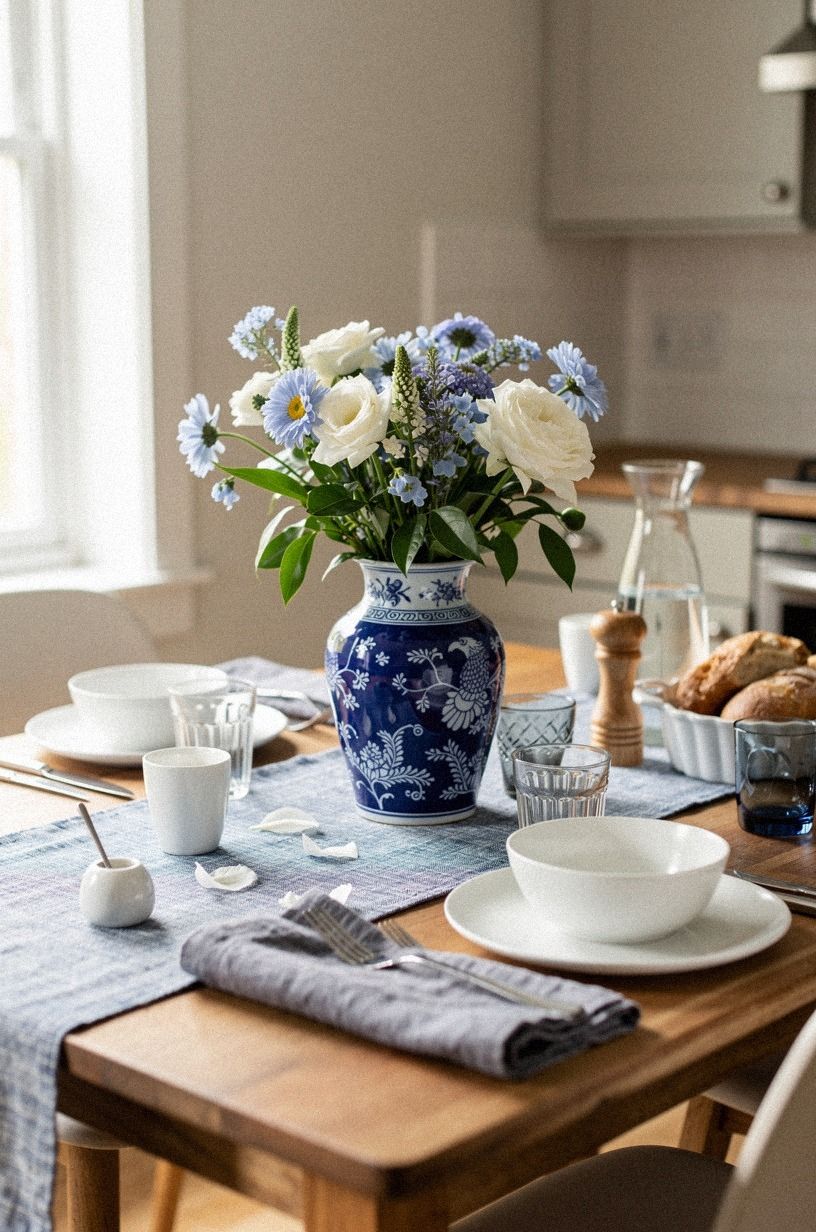
I’d buy the ceramic anchor first and wait before adding anything else. I made the mistake of shopping for accessories before checking what the table could hold. That created a drawer full of runners and small bowls I rarely use.
I also wouldn't use a tall arrangement for everyday meals. It looked dramatic for about ten minutes, then annoyed everyone. A lower vessel is more forgiving, especially if your table doubles as homework space, a folding station, or the place where mail goes to disappear.
One concession: the blue-and-white look isn't as effortless as it appears in photographs. White pieces show crumbs.
Blue glaze shows fingerprints. The tray needs wiping, and the flowers need replacing.
I still think it’s worth it because the arrangement gives me a clear reset point each morning.
And I’d choose the quiet version again. No matching collection. No crowded runner.
Just one vessel, one useful layer, and enough empty table to live around it.
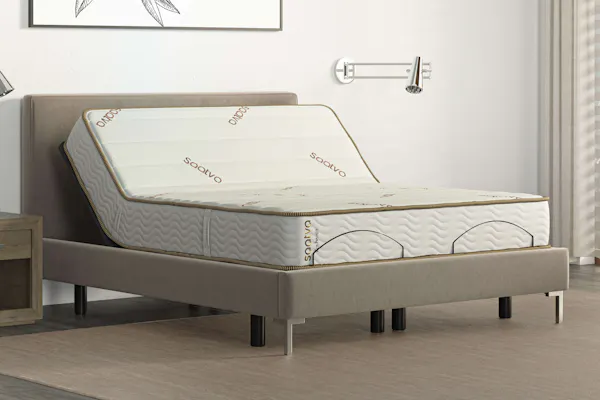 My pick for a healthier bedroomZenhavenTalalay latex, organic cotton, 365-night trial, lifetime warranty, free white glove delivery.See the Talalay latex mattress construction
Build Your Own Healthier Bedroom
Sale pricing runs on orders over $1,000, and the 365-night trial gives you a full year of nights to be sure.
The Kitchen Table Now
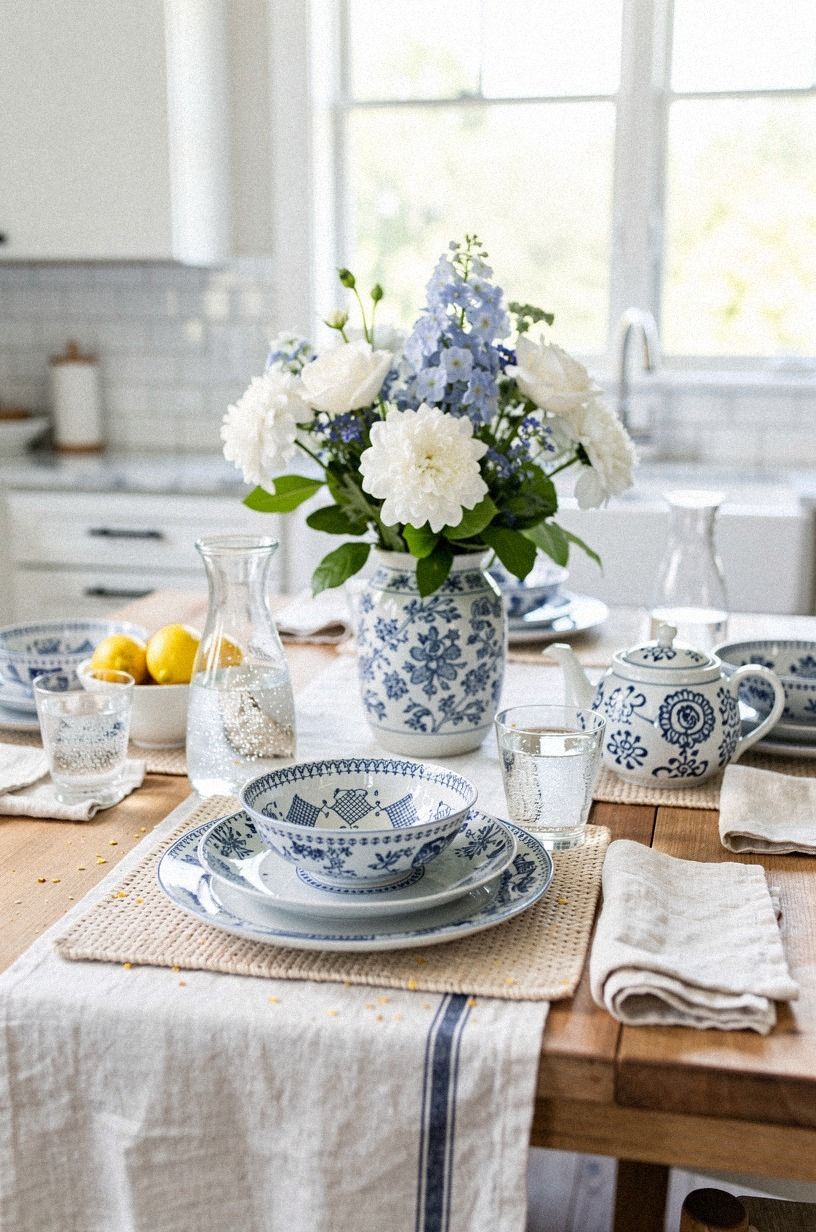
Now the centerpiece sits slightly left of center, with the white bowl beside it and the folded blue napkin appearing only when I need it. In the evening, the ceramic catches the last window light while the bedroom stays calm upstairs.
If I had to pick one starting point, I’d choose the single blue-and-white vessel. It gives the table a visual home without taking away its working space. Tonight, the tray is holding three lemons, and the napkin is still folded beside the bowl.
{ "meta_title": "Blue and White Centerpiece Ideas for Kitchen Tables 2026",