
 by
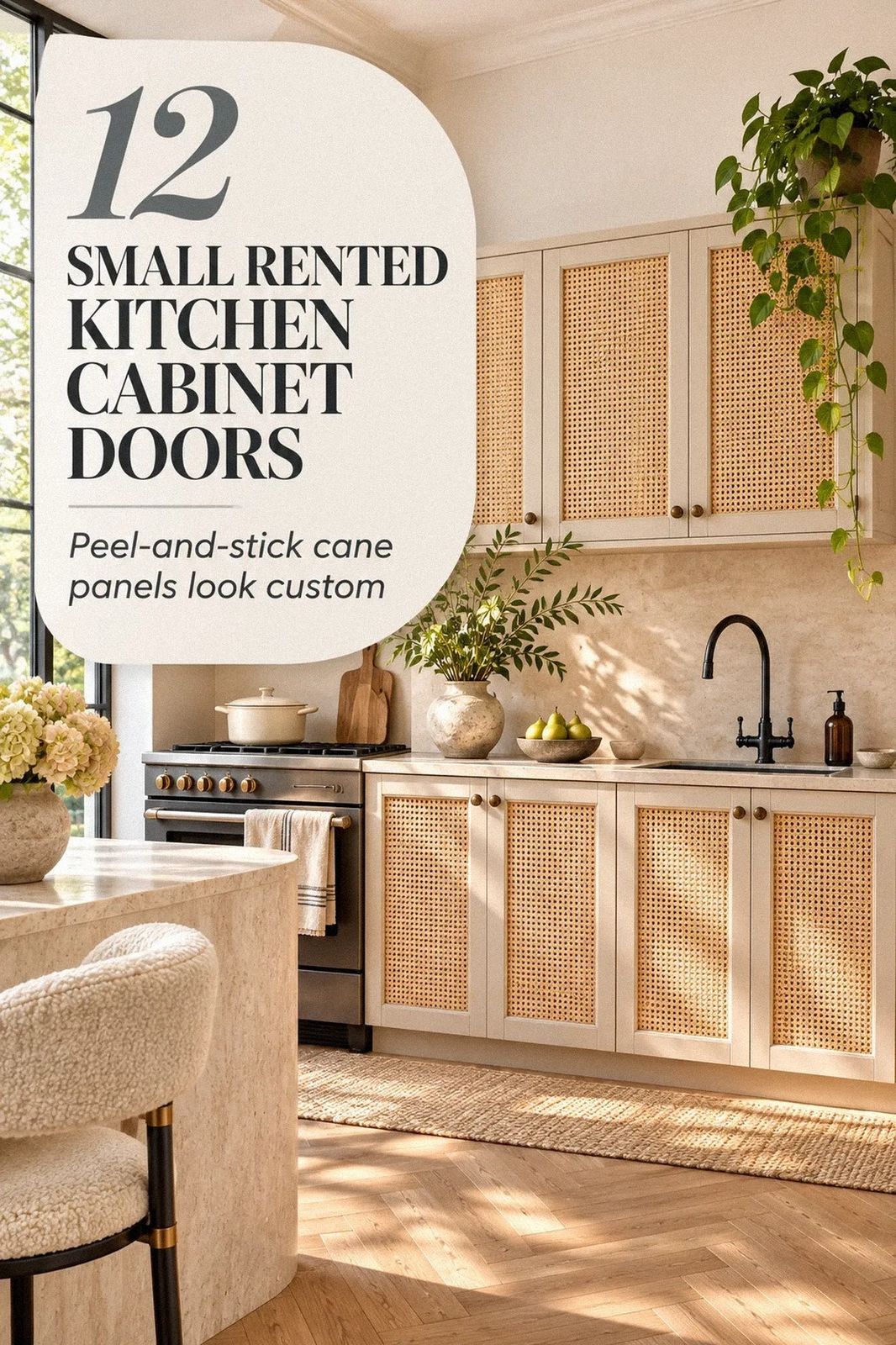
For a small rented kitchen, the best cabinet door fixes cost $0 to $300 and change what you see first. I learned that after sticking the wrong film onto a rental door and peeling off half the finish. You don’t need new cabinets. You need better rhythm, touch, and light. These ideas keep your deposit safe!
Before touching anything, photograph every door, hinge, knob, and damaged edge. Keep a small box for original hardware, screws, and removable parts. That preparation gives you freedom later because you’ll know exactly what needs to go back.
- Start With the Two-Inch Visual Reset
- Swap Flat Knobs for a Tactile Pull
- Paint the Upper Doors, Leave the Lowers Natural
- Try the Quiet Panel Test Before You Peel
- Frame Glass With the Open-Shelf Pause
- Build the Three-Height Light Stack
- Choose White Oak Over Matching White
- Hang a Removable Fabric Door
- Use the Two-Tone Cabinet Color Rule
- Could a Door Front Hide Your Mess?
- Paint a Door Frame Instead of the Door
- Price the Fixes Before You Buy
1Start With the Two-Inch Visual Reset
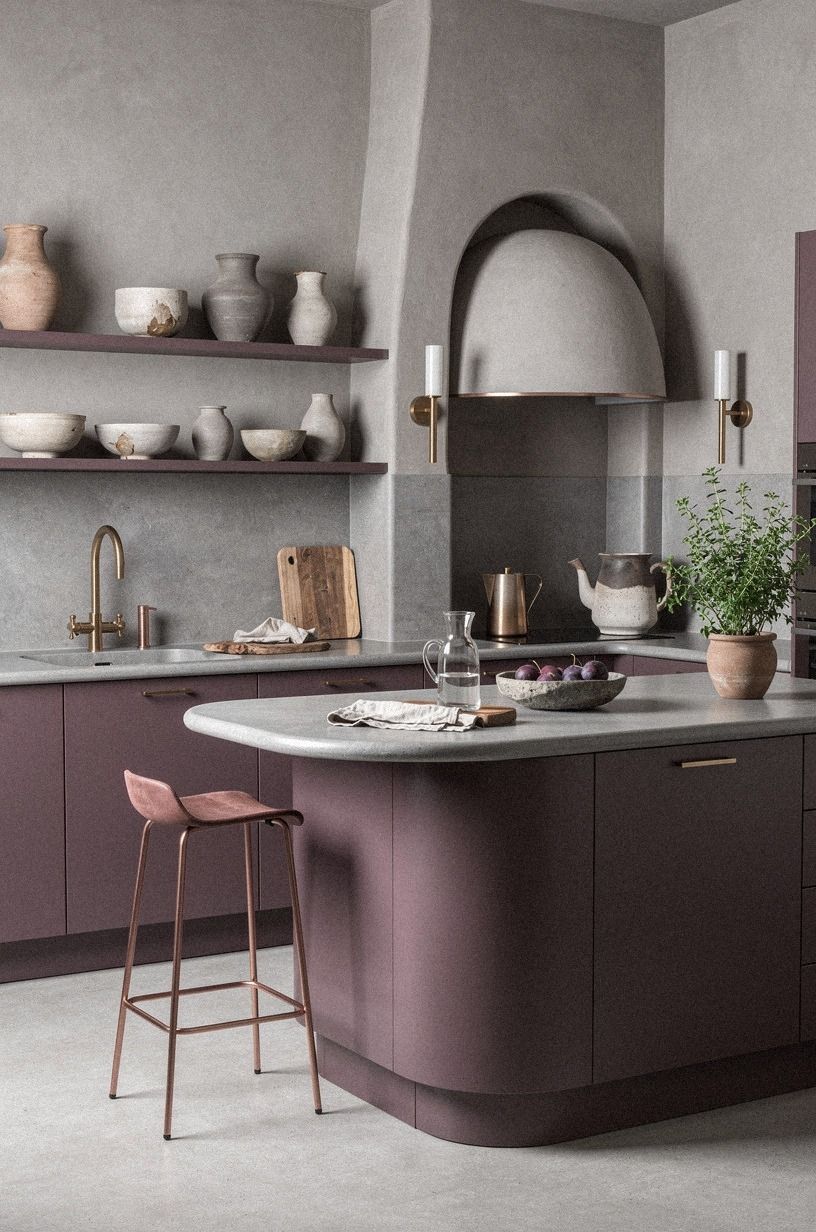
The Two-Inch Visual Reset is my favorite first move because cabinet hardware is tiny, but your eye reads it across the whole kitchen. Replace mismatched knobs with one finish, one shape, and one consistent center point.
Unlacquered brass gives you a warm, collected feeling, while soft grey feels quieter. Rose gold can work when you want a little more warmth against plum or grey surroundings.
Before you drill, measure every existing hole and photograph the hinges. If your doors use a single knob, you can usually swap it without changing the cabinet.
If you’re moving to pulls, removable filler plates may keep you from leaving visible holes. I’d skip oversized cup pulls in a narrow galley kitchen because they interrupt your hip path.
Start with these small kitchen cabinet ideas that maximize storage before buying anything.
Your budget can stay close to zero if you clean and regroup what you already own. A small hardware refresh costs less than a full door treatment, and it’s easy to take with you.
If your current knobs are scratched, don’t polish them into a fake shine. Replace the worst offenders first.
Hardware also changes how the kitchen feels in your hand. A cold, slippery knob can make a cheap door feel cheaper.
A substantial rose-gold knob, softly rounded grey ceramic pull, or quiet unlacquered brass handle gives the same door more presence. You’re not pretending the rental has become custom millwork.
You’re giving repeated touchpoints a clear point of view.
Take the kitchen from the entry, then from the sink. Does one hardware finish lead your eye cleanly, or do you keep stopping at random details? That quick test is more useful than staring at a single door under perfect daylight.
2Swap Flat Knobs for a Tactile Pull
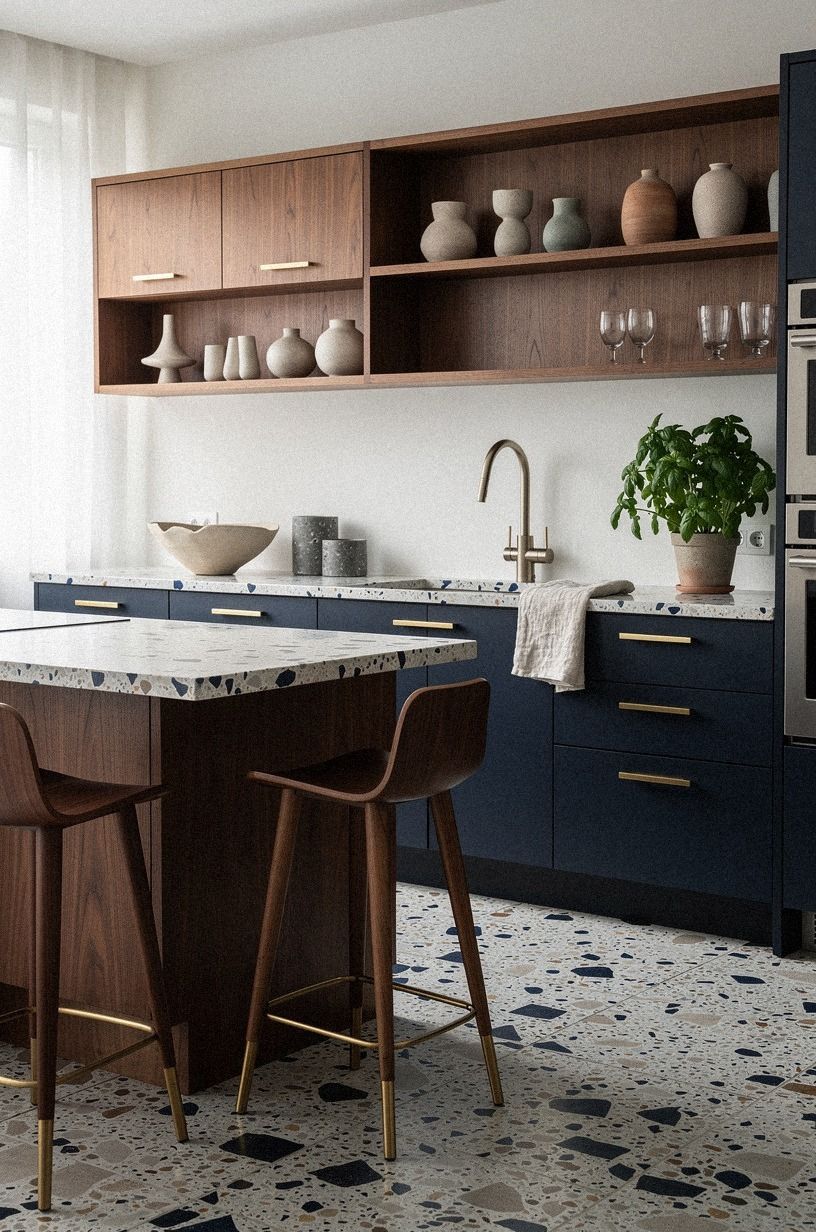
Long pulls make a small kitchen feel more intentional because they create a horizontal line across each door. I’d choose a slim walnut bar pull over a chunky black handle here.
Your cabinets need visual breathing room, and a narrow pull won’t make shallow doors feel crowded. White ceramic can brighten a dim room, while deep navy adds weight beside an oversized-chip terrazzo surface.
Hold cardboard templates against the doors before you commit. A pull that looks elegant on a wide drawer can feel fussy on a narrow upper door.
If you’ve got mixed cabinet widths, use one pull family in different lengths rather than mixing three unrelated styles. That small decision gives your kitchen a calmer rhythm.
For a rental, keep the original hardware in a labeled bag and store every screw. You can restore the old look in one afternoon.
I’ve made the mistake of throwing those screws into a junk drawer, and the replacement search took longer than the whole project. Read this guide to kitchen cabinet door styles explained before choosing between knobs, pulls, and cup hardware.
Placement matters as much as finish. Center a pull on a drawer, but place a door pull according to its opening direction and neighboring doors.
A slightly lower pull on an upper cabinet can feel deliberate, while an accidental mismatch feels restless. Use painter’s tape to mark the proposed position and live with it for a day.
If drilling isn’t allowed, look for a removable adhesive pull rated for the door material. Test it on an inconspicuous spot and don’t trust a product simply because its package says “renter friendly.” Steam, grease, and repeated pulling are demanding conditions.
3Paint the Upper Doors, Leave the Lowers Natural
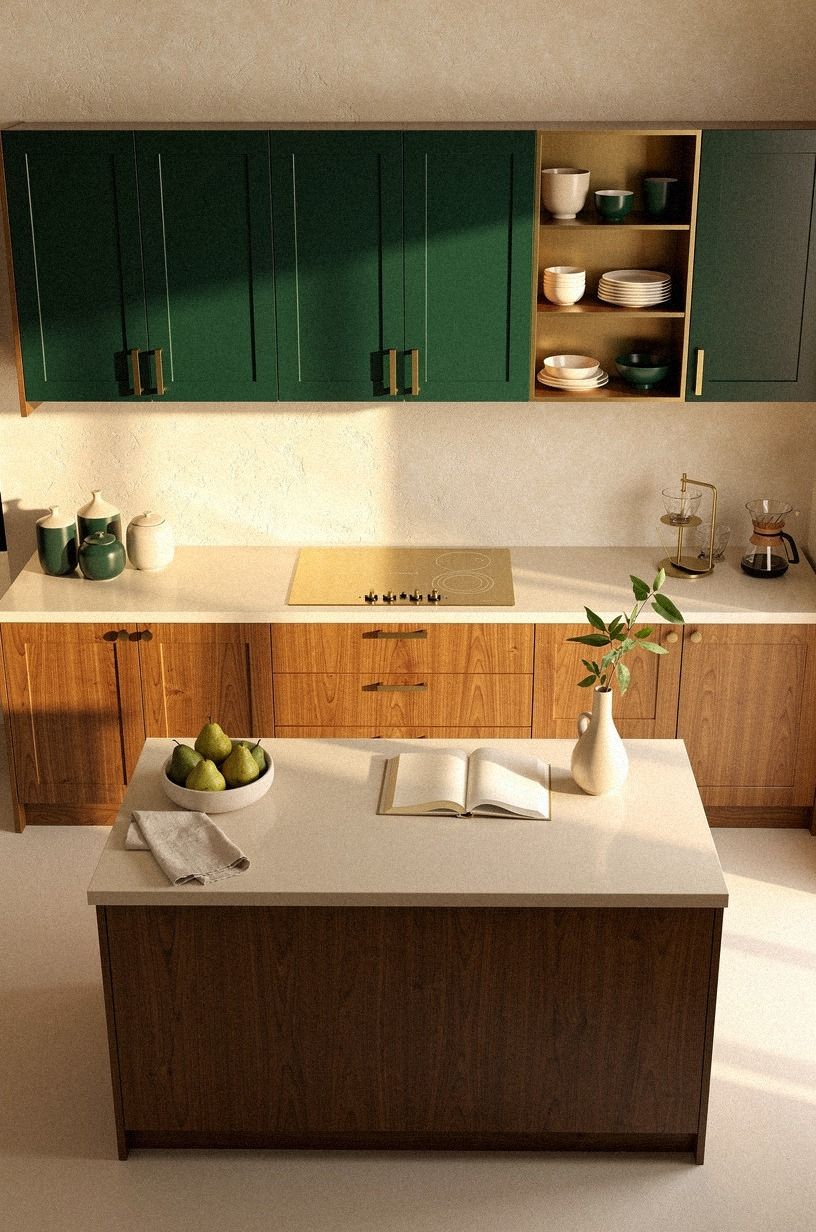
Painting only the upper doors creates gentle contrast without making your small kitchen feel chopped in half. Benjamin Moore White Dove OC-17 is a forgiving choice above darker lowers because it reflects light without looking icy. You’ll get an airy cream upper zone, while the lower cabinets can keep their existing wood tone or a muted emerald green.
The rental-safe version uses removable adhesive film or thin magnetic panels rather than permanent paint. If your landlord permits painting, test one hidden door first and wait for it to cure.
I’d avoid painting over swollen particleboard because the finish will telegraph every bump. A smooth warm cream surface beside hand-applied Venetian plaster is more inviting than a brave weekend project that keeps reminding you of the mistake.
Don’t ignore the cabinet edges. Your eye catches the thin strip around each door when the color changes, so you’ll need careful painter’s tape and a small sample board.
Pair the upper treatment with a two-tone kitchen cabinet color idea for a warmer result. The contrast works best when you repeat one tone in a runner, dish, or curtain, then add one small gold detail.
A painted upper zone can also solve a lighting problem. If the room feels dim, a soft pale greige above eye level will bounce more light than a deep color. If the room gets intense afternoon sun, a muted natural oak lower section may feel less glaring than another painted surface.
I’d keep the lowers quieter if the floor already has a strong pattern. One upper color, one lower material, and one repeated accent can look surprisingly polished when the transitions are clean.
4Try the Quiet Panel Test Before You Peel
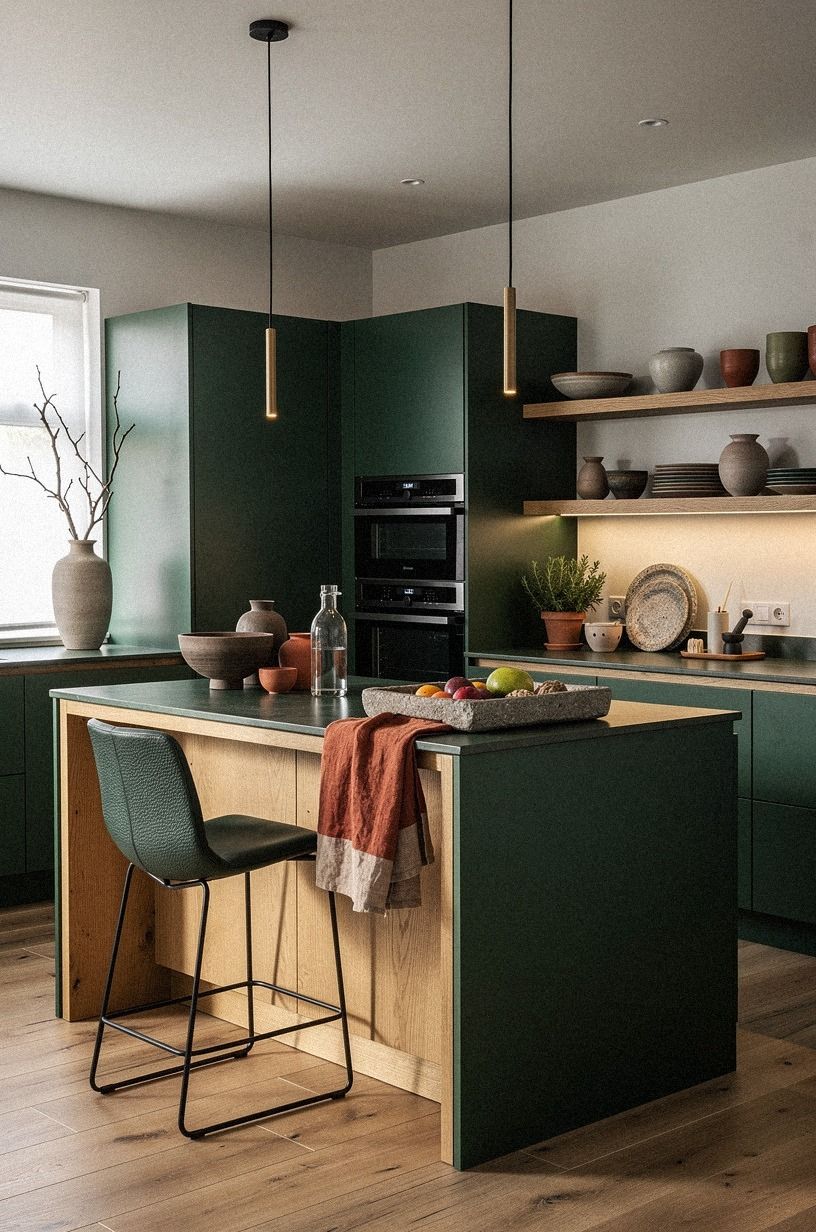
The Quiet Panel Test asks one simple question: does your door need decoration, or does it need less visual noise?
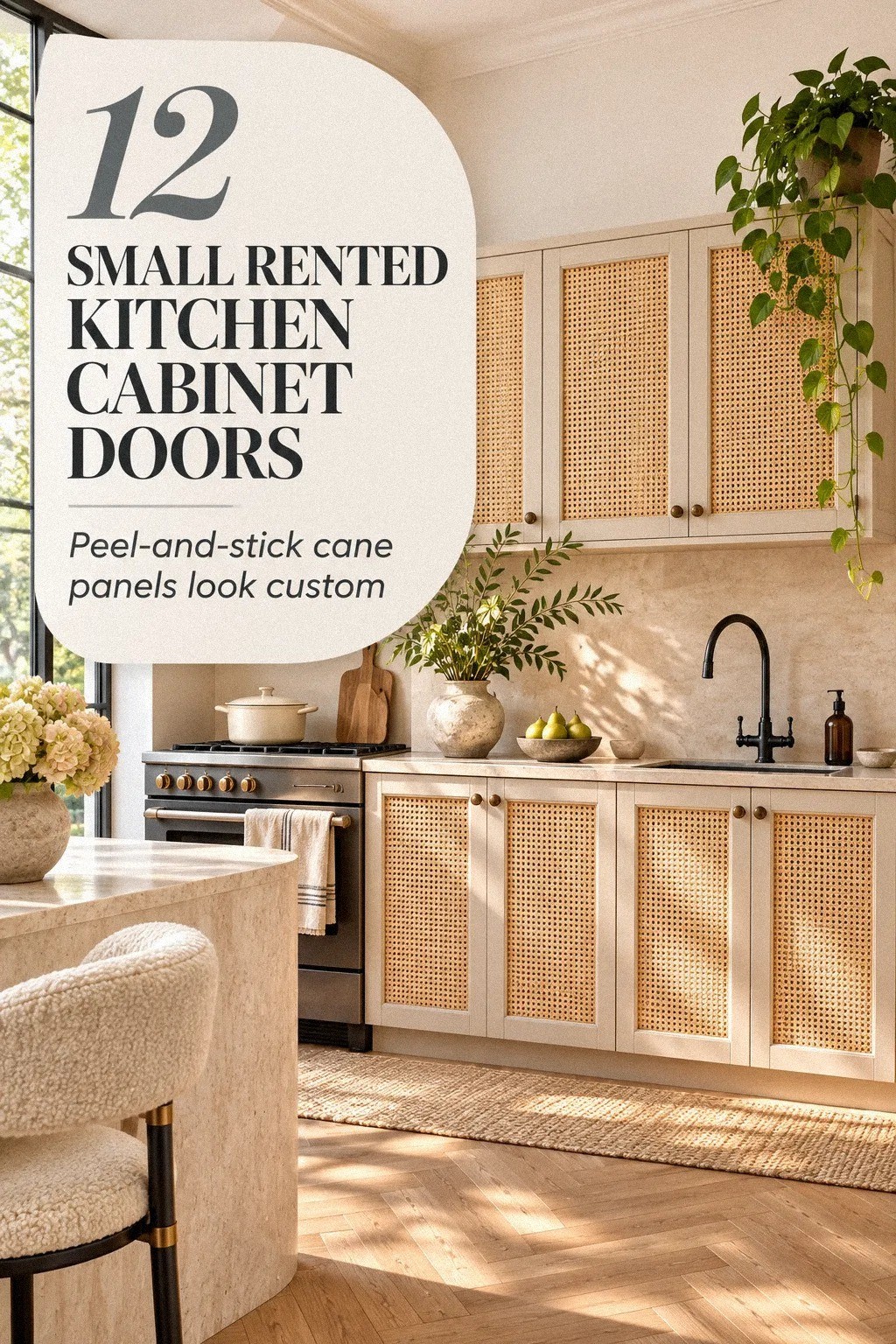
5Frame Glass With the Open-Shelf Pause
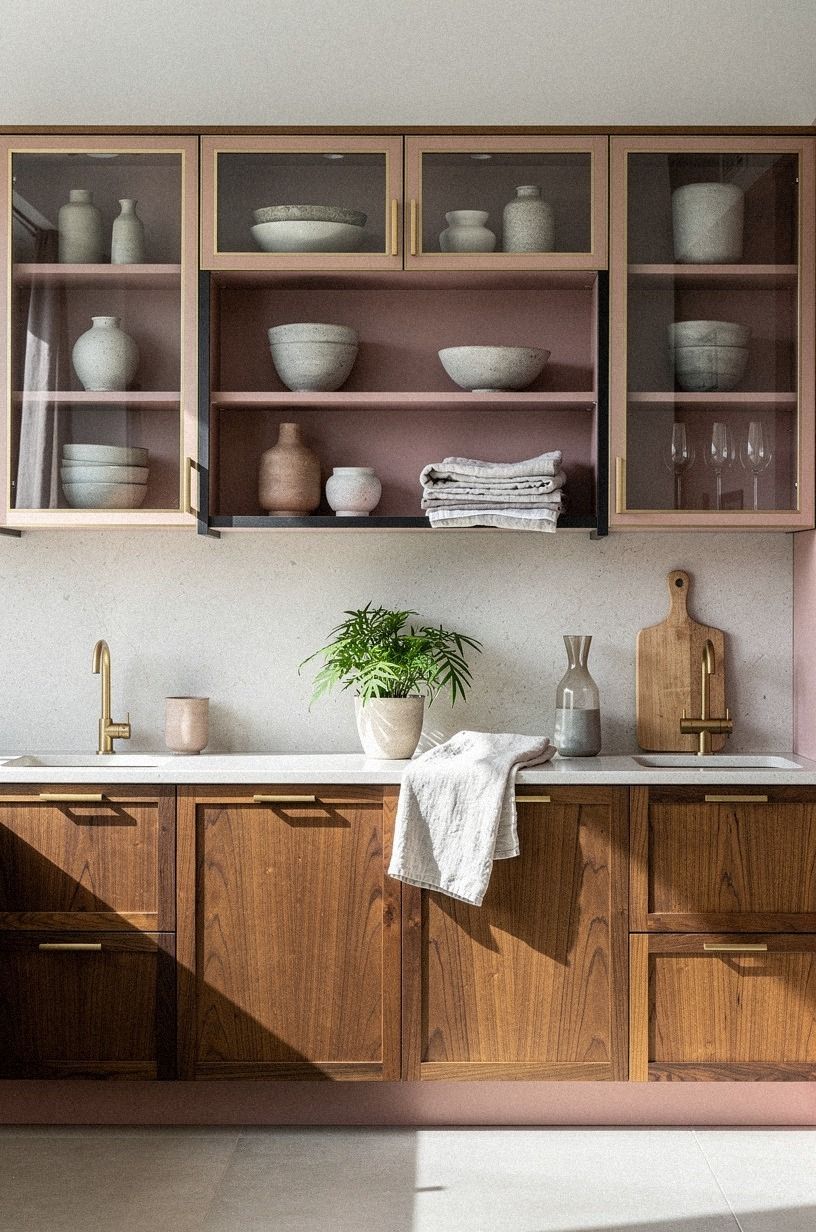
A single glass-front door can break up a wall of solid cabinets, but you don’t need to replace every front. The Open-Shelf Pause means choosing one small door, removing its center panel only if the construction allows it, and adding a removable clear insert. Reeded acrylic gives you the glow of glass while a washed Belgian linen liner softens mismatched mugs.
You’ll need to check whether your door is hollow, routed, or made from one solid slab. If you’re renting, a removable overlay may be safer than cutting anything.
Attach a lightweight frame with temporary strips, then style the inside with two or three related pieces. Your eye needs a pause, not a whole collection.
Use the cabinet for attractive daily objects: dusty rose glass, charcoal bowls, or folded washed Belgian linen napkins. Don’t fill it with every pretty thing you own.
I’d rather see one calm arrangement than a crowded display that makes the kitchen feel smaller. These small kitchen island ideas can also help you find storage elsewhere so the glass door doesn’t become a clutter magnet.
A translucent insert is useful when the contents are functional but not photogenic. It lets light pass through without demanding perfect styling. Choose charcoal fluted plastic for texture, or use clear acrylic when you want the least visual interruption.
Keep the display close to the room’s color. A stack of cream stoneware will look more composed than six unrelated bright mugs. If you need contrast, add one dusty rose or brass-toned piece and stop there.
6Build the Three-Height Light Stack
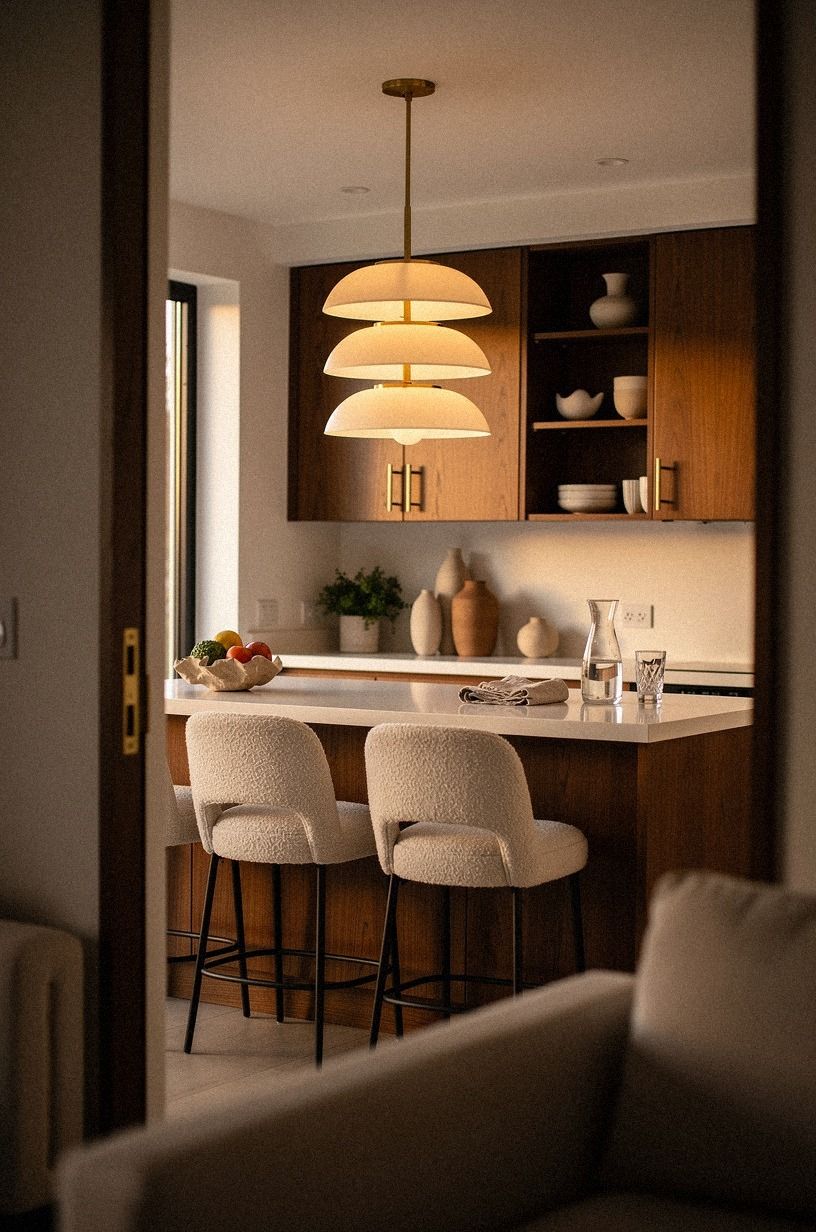
The Three-Height Light Stack makes cabinet doors read as more considered because it changes how the surfaces look at night. Use a low glow under the uppers, a middle glow near the counter, and one higher source above the cabinets or on a nearby shelf. Warm LED puck lights keep the effect soft on warm white, camel, or black-accented doors.
Your counter is typically about 36 inches high, so the light should wash the work surface rather than shine into your eyes. If you’re adding under-cabinet strips, hide the cord along the back edge and use removable clips.
A small rental kitchen doesn’t need a dramatic chandelier. It needs light that reaches the corners where the cabinet finish disappears.
I’d skip blue-white bulbs because they make warm materials look gray and tired. Choose 2700K bulbs for a gentle evening pool.
The under-cabinet lighting guide has more ways to layer the glow. And yes, one little lamp can change the whole room!
For the lowest layer, use a concealed strip or puck light that won’t create harsh dots across the backsplash. For the middle layer, a small opal glass lamp with an organic bouclé shade can sit on a safe counter corner. The higher layer might be a plug-in picture light, a tiny lamp on top of the refrigerator, or a soft bulb aimed toward the ceiling.
Make sure cords don’t cross a prep surface or hang near water. Adhesive clips should attach to a clean, dry area, and you’ll want to remove them slowly when the lease ends. The point is a warm, flattering rhythm, not an electrical puzzle.
7Choose White Oak Over Matching White
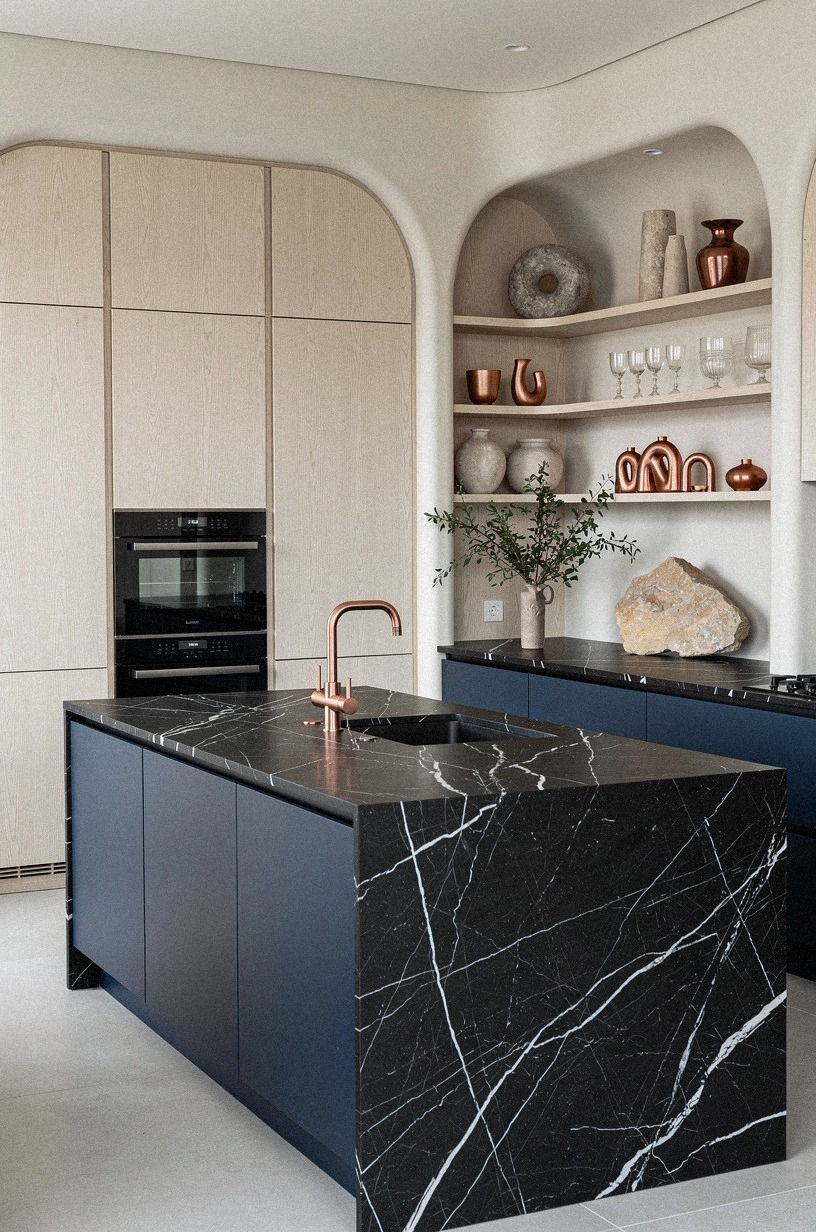
White oak adds grain, warmth, and visual movement to a kitchen with midnight blue, copper, and ivory accents. A cerused white oak detail can keep the room from feeling flat, while Nero Marquina black marble with white veins gives the lighter palette a grounded edge.
8Hang a Removable Fabric Door
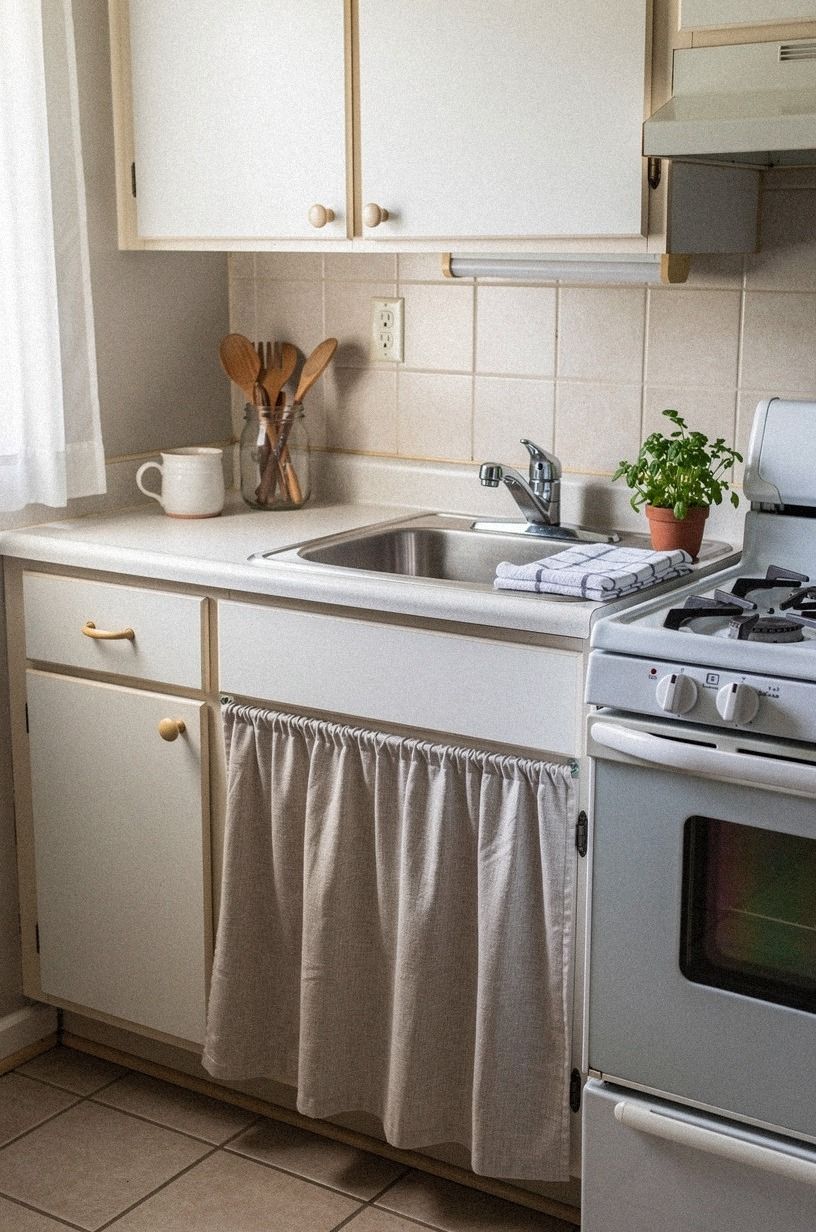
A fabric panel can hide awkward shelves, exposed bins, or a cabinet door that refuses to close properly. The Removable Curtain Door uses a slim tension rod and deep-pile mohair velvet in sage green or warm cream to create a soft, charming front. You’ll get movement, texture, and access without drilling into the cabinet frame.
Measure the opening from side to side, then leave enough fabric fullness for gentle folds. If you’re covering a lower cabinet, keep the hem above the floor so it won’t collect crumbs or drag through mop water. A muted sage, warm ivory, or natural wood-toned detail can feel welcoming without turning the kitchen into a craft project.
I’d skip thin polyester because it clings to the opening and looks shiny under cabinet lights. Choose deep-pile mohair velvet or another substantial textile with enough weight to fall straight. If you’re changing the floor too, compare vinyl or tile ideas for a rented kitchen so the curtain’s color doesn’t fight the ground plane.
A fabric door is useful when the cabinet contains recycling, pet supplies, or bulky appliances. Choose washable textile and leave enough clearance for the rod brackets or tension ends.
Sage velvet gives the room a calm edge, while warm cream keeps the treatment light. It’s a small move, but it works!
Keep the pattern restrained if the backsplash is already active. One small curtain can be delightful. Three competing curtains can make the kitchen feel like a stage set.
9Use the Two-Tone Cabinet Color Rule
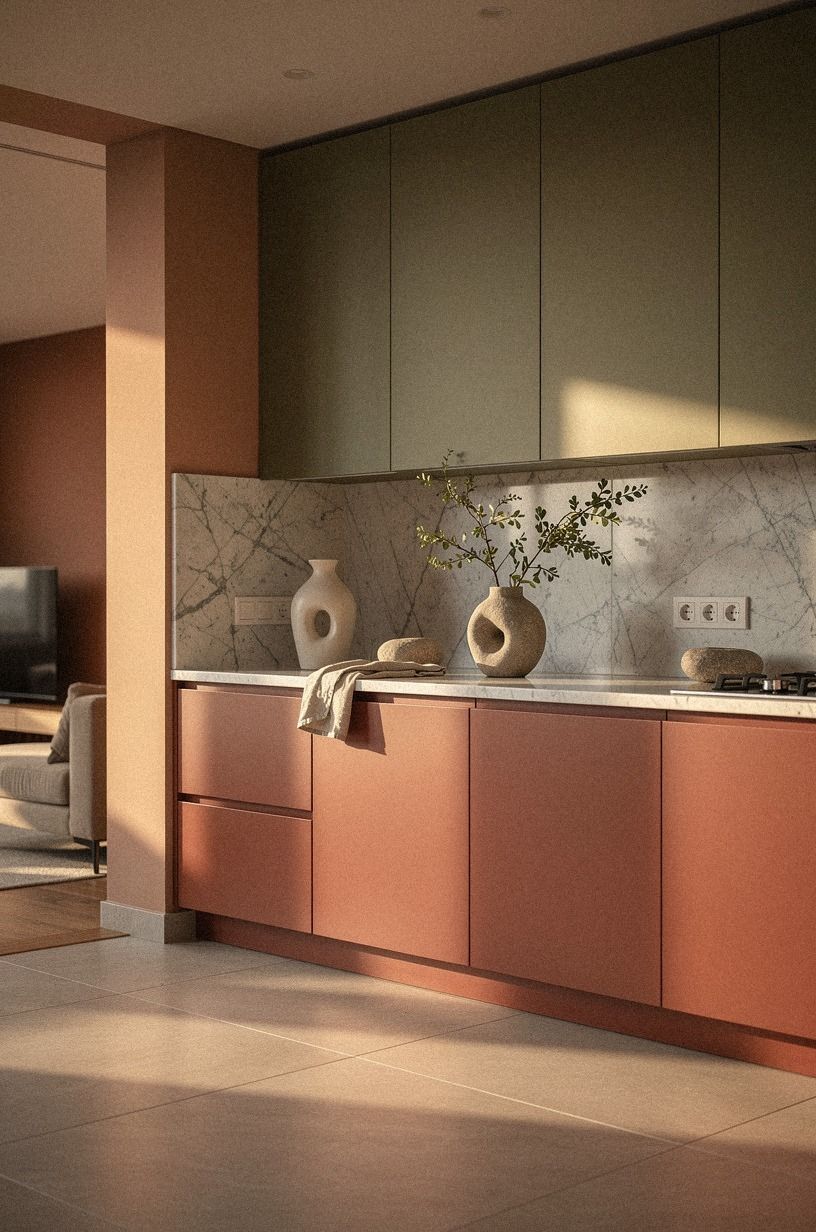
The Two-Tone Cabinet Color Rule is simple: choose one quiet base and one deeper accent, then repeat the accent somewhere outside the cabinets. Terracotta works beautifully with warm white, pale wood, and aged metal. You could use it on a removable lower-door panel while keeping the uppers light.
Your second color doesn’t need to cover half the kitchen. A few lower doors, a narrow pantry front, or one end cabinet can be enough.
If you’re drawn to dark paint, test it beside the refrigerator and under your evening lights. A muted olive green can look earthy and moody, but it may feel heavy if your kitchen has little daylight.
I’d avoid choosing colors from a phone screen because your room’s bulbs will change the result. Place your sample beside the counter, backsplash, and floor, especially if the room has Carrara marble with subtle grey veining, then look at it in the morning and at night. See the most popular kitchen cabinet colors right now for combinations that still leave room for your own taste.
The strongest accent usually belongs below eye level, where it can ground the room. If your lowers are already dark, reverse the arrangement with a colored pantry front or one narrow upper door. A terracotta, olive green, or muted stone tone can feel rich without shouting.
Repeat the color once in a practical object: a dish towel, small runner, utensil crock, or framed print. The repetition should feel discovered, not matched by a catalog. That little echo makes the cabinet treatment feel intentional.
10Could a Door Front Hide Your Mess?
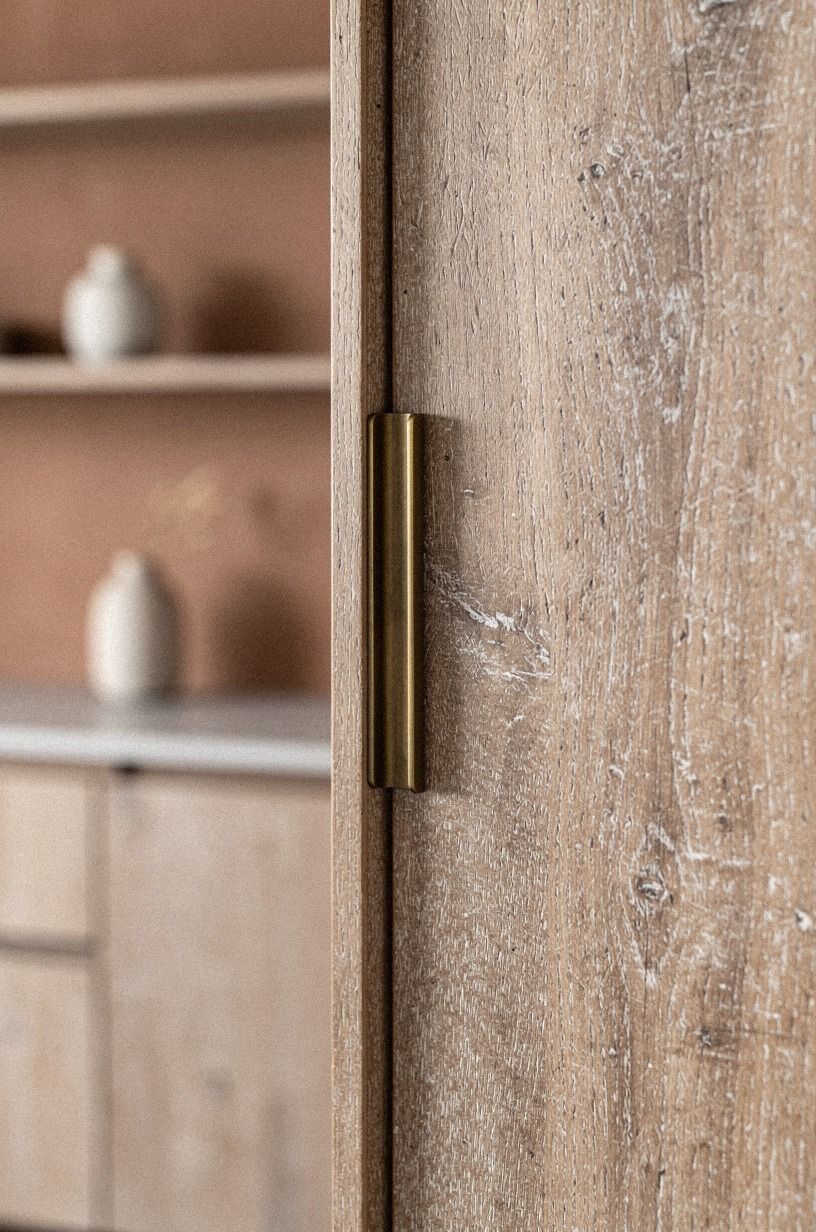
Yes, but only if you give the hidden zone a job.
11Paint a Door Frame Instead of the Door
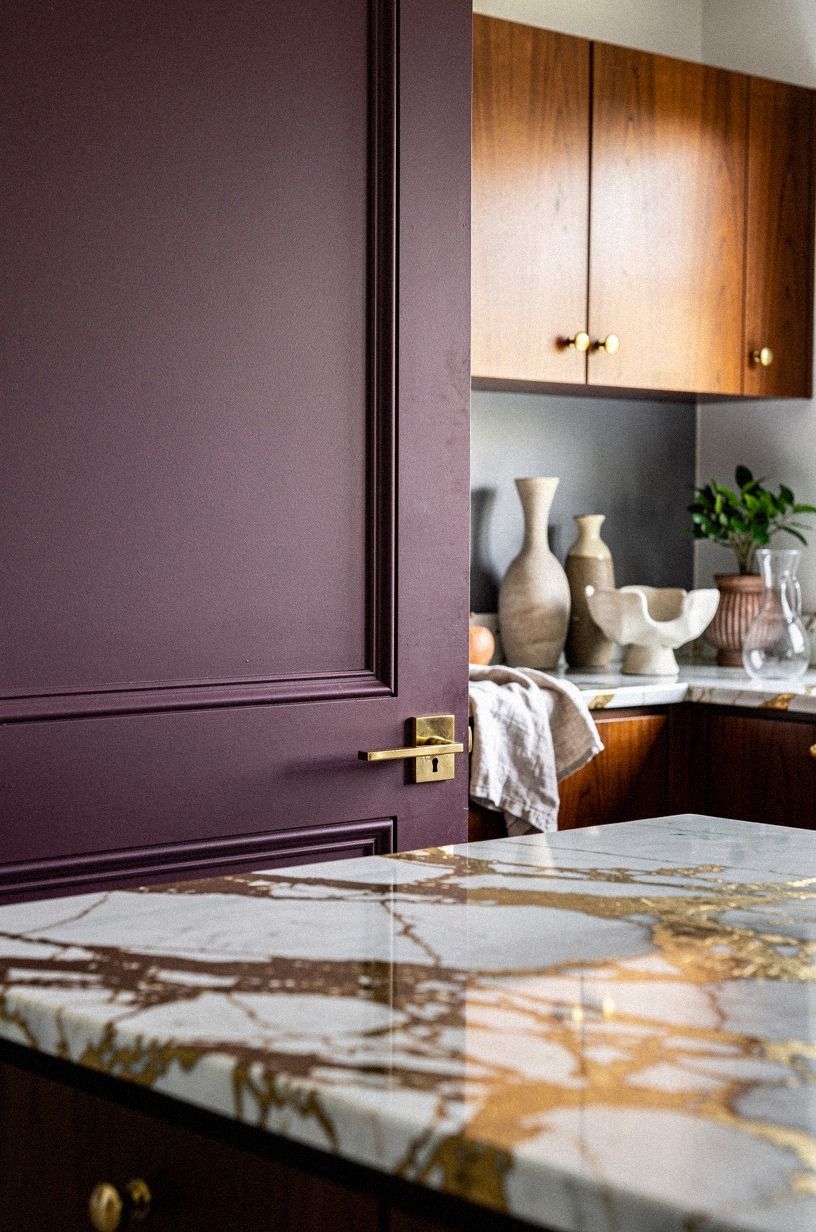
If your landlord won’t approve painted cabinet fronts, paint the surrounding wall or add a removable frame around one door. A soft grey can warm a plain wall while letting the original cabinet finish remain untouched. You’ll create the impression of a considered composition without altering the actual door.
Use thin trim, removable mounting strips, or a lightweight panel with a Calacatta marble pattern, subtle gold veining, and a rose-gold edge. Your frame should sit close to the door edge, but it shouldn’t block the hinge or make the door hard to open. I’d choose a simple square profile over ornate molding because a small kitchen can’t absorb much visual fuss.
This is also a good place to repeat a material from another room. A small strip of plum-painted trim or a rose-gold detail can connect your kitchen to the dining area.
Don’t try to make every cabinet special. One framed door can be enough to create a focal point.
Before installing anything, use paper strips to mock up the frame width. A one-inch border may look crisp, while a wide frame can make the door feel smaller. Check the sightline from the hallway, since that may be where the treatment matters most.
A painted wall frame is easier to reverse than painted cabinetry, but you should still confirm what your lease allows. Keep the original wall color information if possible.
A careful touch-up at move-out is much easier when you know the exact finish. Browse these kitchen cabinet door styles for profiles that may guide the frame shape.
12Price the Fixes Before You Buy
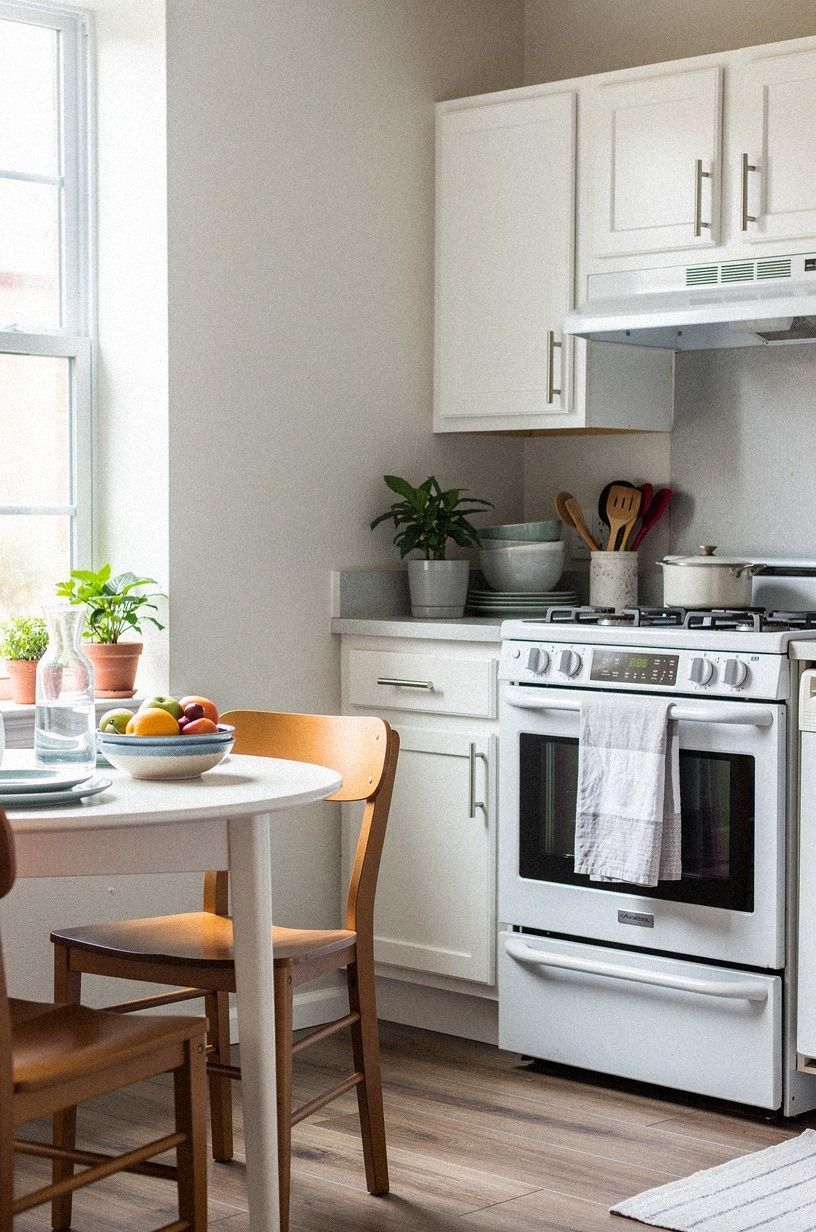
Your cabinet doors don’t need a full remodel budget, but you should know where a cosmetic fix sits before you start shopping.
Why I’d Keep the Original Boxes
I’ve rented kitchens with crooked doors, yellowed laminate, and hinges that squeaked every time I reached for a mug. My first instinct was always to cover everything quickly. That usually made the room feel busier, not better.
The change came when I started treating each cabinet as part of a small composition instead of a separate problem.
A rented kitchen asks you to edit. You can’t move the sink, widen the walkway, or replace every box, so your decisions need to work with what’s already there.
I’ve found that one warm material, one steady hardware finish, and one controlled color do more than six clever accessories. Your eye needs somewhere to rest.
I also think renters should stop apologizing for temporary design. A removable panel can still be thoughtful.
A tension rod can still look elegant. The fact that you’ll take it with you doesn’t make the choice less worthwhile.
It means you can test a bolder idea without tying yourself to it.
The best fix is the one that improves your daily routine as well as the photo. If a new door treatment makes the coffee cabinet easier to find, softens the light, or gives you one clear surface to look at, it’s doing real work. If you hate it next year, you can change it.
The most persuasive rental kitchens aren’t the ones that hide every compromise. They’re the ones that make a few strong choices and repeat them with confidence. A slightly imperfect door can feel charming beside a beautiful aged metal finish, warm light, and a useful interior.
What is the best cabinet door fix for a small kitchen?
A consistent hardware swap is the easiest starting point, while one removable wood or fabric panel adds more character. Unlacquered brass and pale oak work well with white cabinets. You’ll get a warm, custom feeling without replacing the boxes or committing to one permanent style.
Where can I buy cabinet door pieces on a budget?
Look at IKEA, Wayfair, and Target, then check Facebook Marketplace or a local thrift store for secondhand pulls and panels. You don’t need a matching set if the finish is consistent. This guide to cabinet door styles can help you compare shapes before shopping.
How much does a cabinet door makeover cost?
A small treatment can cost about $100 to $300 if you reuse hardware, choose one or two removable panels, and add simple lighting. A broader cosmetic project typically falls between $300 and $1,500 in the US. Free cleaning and rearranging should come first.
Can I create these cabinet fixes on a budget?
Yes, and you can begin with three no-cost moves: remove visual clutter, group cabinet contents by use, and store the original hardware safely. Peel-and-stick film or a single fabric panel can provide the biggest visible change without requiring a full renovation. These two-tone kitchen cabinet ideas can help you choose one focused accent.
Is a cabinet door makeover worth it in a small space?
Yes, because a small kitchen gives every repeated detail more influence. Matching pulls, one calm color, and better light can make the room feel more inviting without taking floor space. Keep your strongest finish near eye level, and let the rest stay quiet.
Warm linen, oak, or aged brass can add texture without crowding the room.
Are cabinet door fixes a good idea for a rental?
They’re a good idea when you choose reversible materials and document the original condition. Removable film, tension rods, temporary lighting clips, and replacement hardware are practical options.
You’ll want to test adhesives first and keep every original screw, hinge, and door safely labeled. If the floor also needs attention, compare these rental kitchen floor options before choosing a cabinet color.
Where I’d Start First
If I had to pick one, I’d start with the hardware. Consistent pulls change every cabinet at once, and they don’t steal counter space or make a small room feel crowded. Save the original pieces, then browse these small kitchen cabinet ideas for your next layer.
After that, add light before adding more decoration. A warm under-cabinet glow can reveal the color, grain, and shape you already chose. If the room still feels flat, introduce one removable panel or a small fabric front.
The goal isn’t to make a rental pretend to be a showroom. It’s to make the everyday view feel considered, useful, and unmistakably yours. Start with one door tonight!