
 by
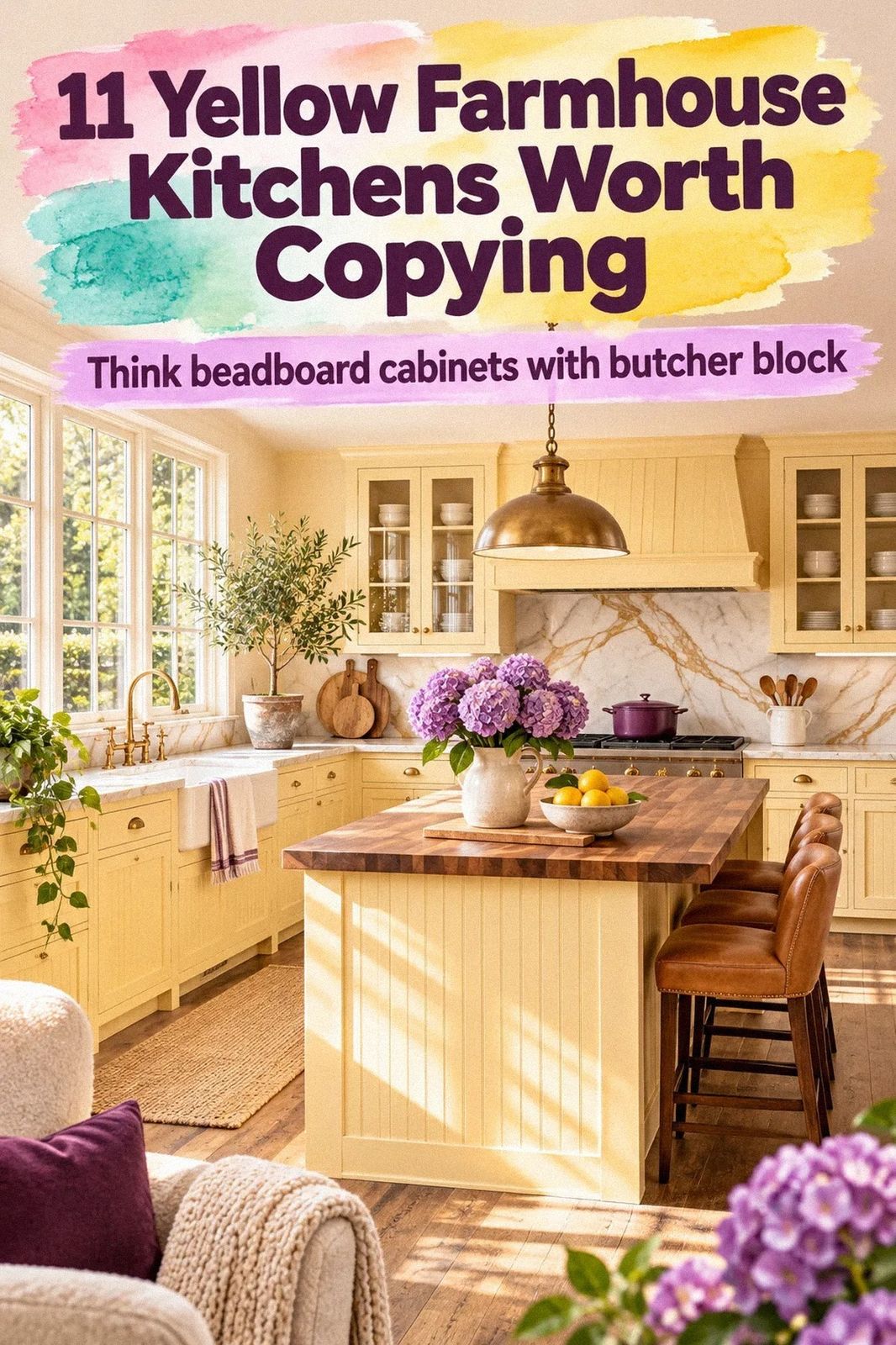
Yellow farmhouse kitchen ideas can refresh a tired room for $300 to $1,500 when you focus on paint, hardware, and light. I once painted every cabinet the same buttery yellow, and the kitchen looked flat by noon. Now I mix warm yellow with aged wood, soft white, and one darker note. The difference is immediate!
Don’t overthink: What Should Stay Quiet After You Paint the Cabinets?.
Editor’s note: Your best value usually comes from changing one large surface, one useful fixture, and one texture. You don’t need a full remodel to make the kitchen feel warmer, brighter, and more personal.
- Layer Country Home Kitchen Ideas With Butter Yellow
- What Should Stay Quiet After You Paint the Cabinets?
- Build the Two-Wood Rule Around a Yellow Island
- Open Shelves or Closed Storage? Choose With Care
- Farrow & Ball India Yellow Makes the Breakfast Corner Personal
- Frame the Sink With a Soft Farmhouse Window
- Hang the Three-Source Light Stack
- Why Does a Shadow Color Matter?
- Give the Backsplash an Eighteen-Inch Pause
- Style the Pantry With Farmhouse Decor That Works
- Prioritize the Refresh With a Realistic Budget
1Layer Country Home Kitchen Ideas With Butter Yellow
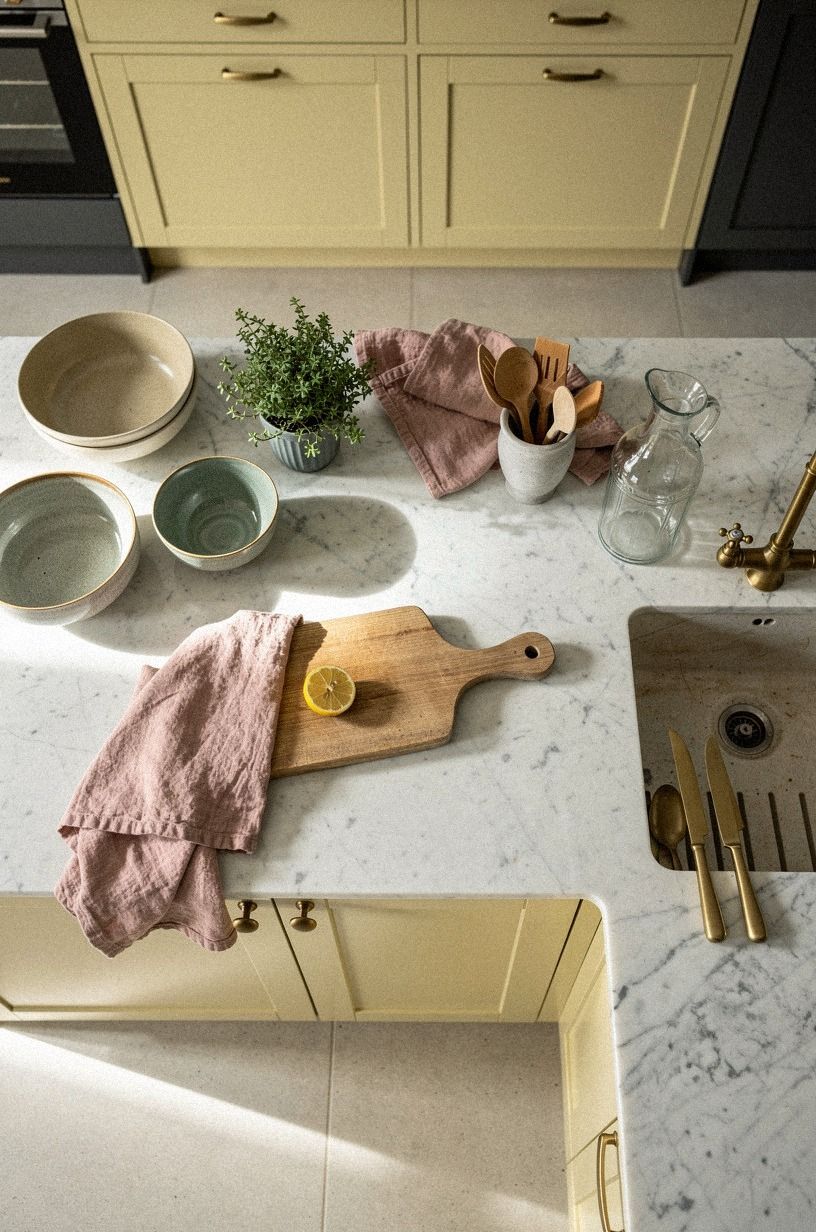
Start with one dusty-rose wall instead of coating every cabinet. Sherwin-Williams Redend Point SW 9081 has enough muted warmth for a farmhouse kitchen, but it won’t turn sugary beside charcoal cabinetry or aged brass. If your room faces north, test the color in the morning and after sunset, because dusty rose can lose its warmth under gray light.
You’ll want two large sample boards, not one tiny paint card.
Keep the lower half grounded. Charcoal cabinetry with Carrara marble counters gives your eye somewhere to rest, and the marble’s subtle gray veining keeps the room from feeling flat. I’d skip matching dusty-rose stools.
They make the island look like a showroom display.
For a small room, repeat the rose in one linen café curtain or a ceramic bowl. That’s enough.
If you’re comparing nearby styles, browse these yellow cottage kitchen ideas for a sunny cheerful look before you choose your final shade. You can also compare the material warmth in these rustic farmhouse kitchen ideas for warm weathered charm before you commit.
2What Should Stay Quiet After You Paint the Cabinets?
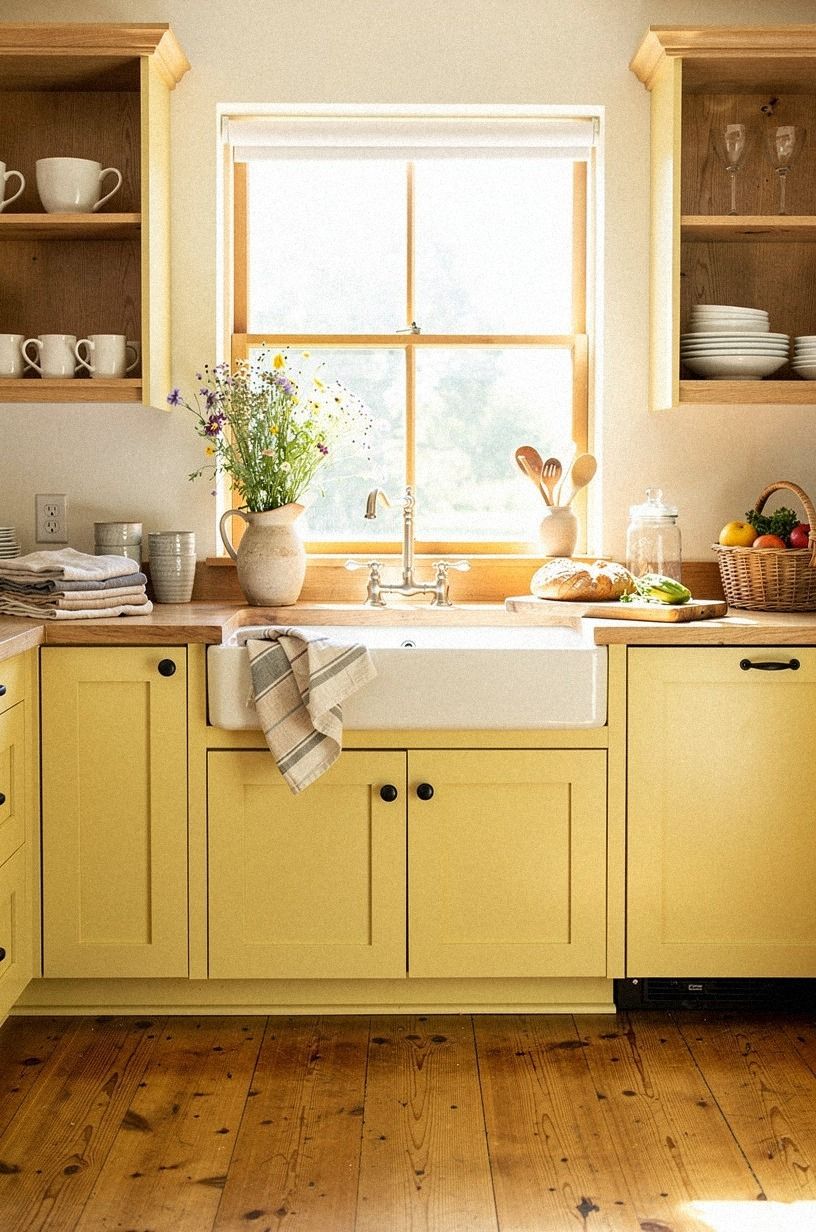
Painted cabinets deliver the biggest visual shift because they sit at eye level across the whole kitchen. Benjamin Moore White Dove OC-17 works well on shaker fronts with a low-sheen finish, where the warm white catches light without looking glossy. You’ll need to clean, sand, prime, and lightly sand again if you want the doors to feel smooth under your hand.
Pair that warm white with matte black pulls in a simple cup or bar shape. A camel runner or stool softens the contrast, while reclaimed weathered teak adds the worn texture that makes a farmhouse room feel settled.
You don’t need six different hardware styles. One pull on doors and one cup on drawers is plenty.
The standard counter height is 36 in, so place your most-used drawer pulls where your hand naturally lands instead of chasing a decorative grid. I made the mistake of centering every piece by eye in an old kitchen, and the crooked visual rhythm bothered me every morning.
If you’re weighing cost against resale value, spend on solid hinges and comfortable pulls before decorative knobs. For more weathered texture, revisit these rustic farmhouse kitchen ideas.
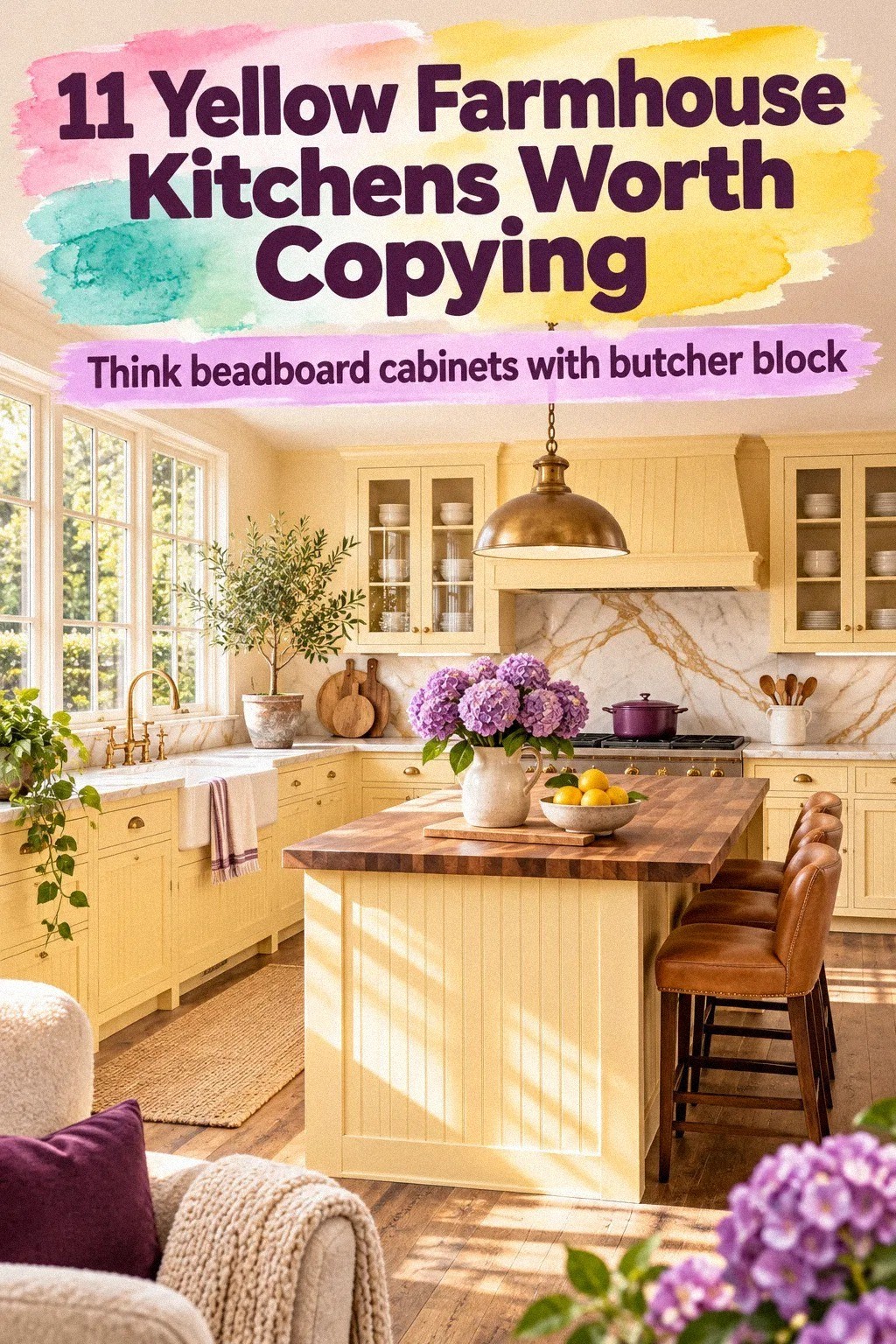
3Build the Two-Wood Rule Around a Yellow Island
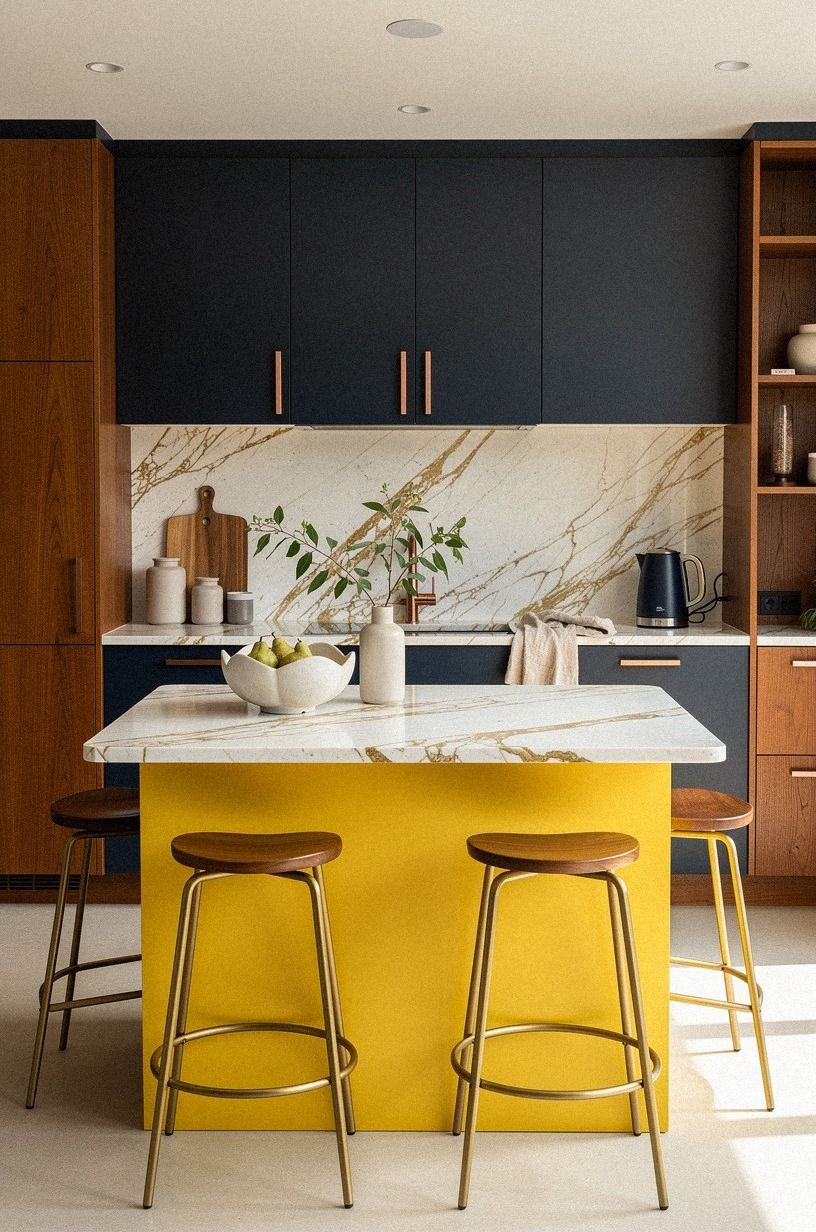
Use two strong tones, not four. Midnight blue on the island brings depth into an ivory kitchen, while small copper details give the room warmth. You’re aiming for contrast that feels collected, not a furniture catalog with every finish competing for attention.
The island should look useful first. A 36 in counter height keeps prep comfortable, while a clear run of 42 to 48 in all around leaves enough room for two people to pass without bumping hips.
I’d choose a simple ivory base with a Calacatta marble top and delicate gold veining over a distressed reproduction. Fake wear reads quickly, especially beside fresh paint.
And if you’re styling the top, leave a broad patch open for chopping or serving. Copper utensils, an ivory crock, and one low vase are enough.
Your kitchen will feel more welcoming when the surface looks ready to work, not arranged for display. This green farmhouse kitchen guide shows how a darker neighboring color can sharpen warm wood. That comparison can help you decide whether the extra material cost is worth it.
4Open Shelves or Closed Storage? Choose With Care
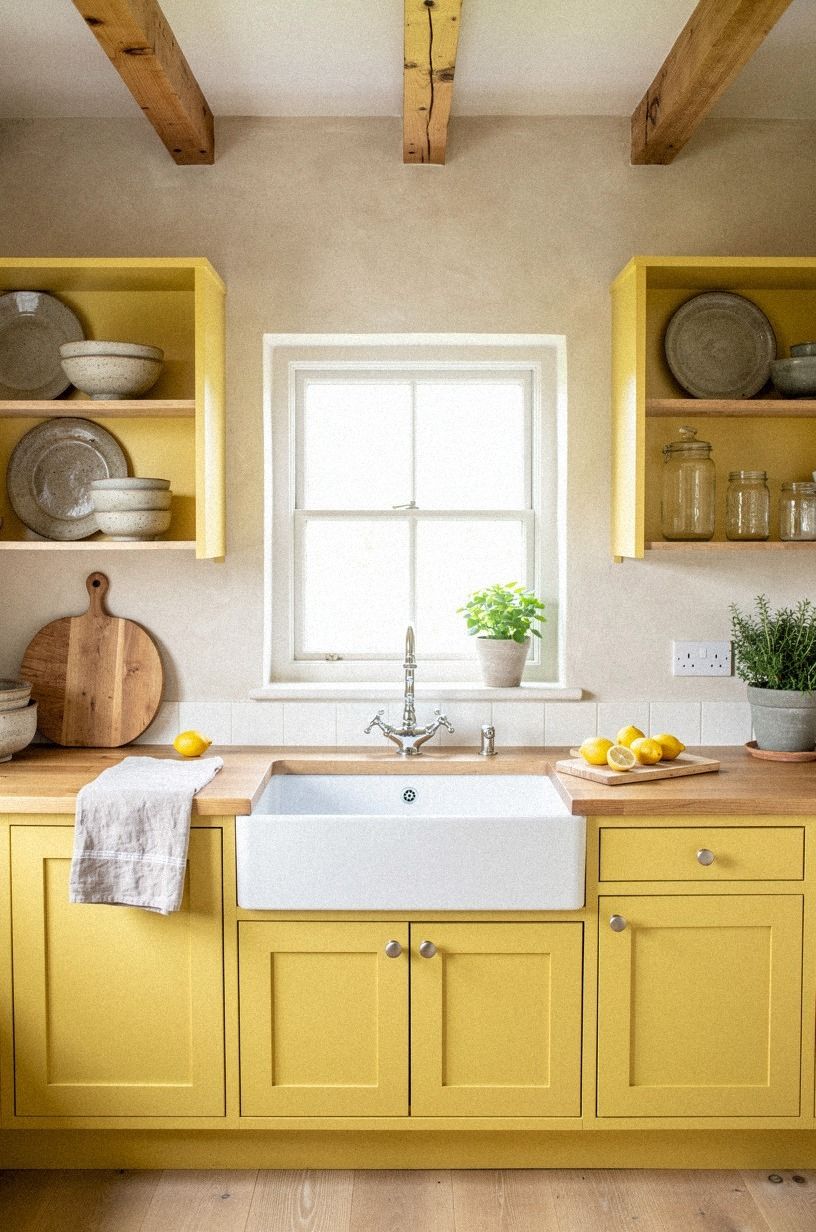
Open shelving can make a sage-green farmhouse kitchen feel lighter, but the arrangement needs height changes. Cerused white oak shelves at three levels create a loose vertical line: a tall pitcher, a stack of plates, and a small bowl. You’ll see the warm cream wall behind them, so the shelves should support the color instead of hiding it.
Keep the shelf depth practical. Ten to twelve inches gives you room for everyday dishes without making the wall feel crowded.
Put heavy stoneware on the lowest shelf and lighter glassware above it. But don’t fill every inch.
The empty spaces are what let the sage green breathe.
I’d skip floating shelves beside a busy range unless you’re willing to wipe them weekly. Grease settles on textured pottery faster than you’d think.
Hand-thrown cream stoneware hides small marks better than clear glass, and it makes your morning coffee feel like a small ritual. If your kitchen is narrow, these farmhouse galley kitchen ideas for cozy narrow charm offer better spacing cues.
When you compare storage options, remember that closed cabinets may cost more upfront but save you daily cleaning time. That practical value matters more than a shelf trend you’ll resent later!
5Farrow & Ball India Yellow Makes the Breakfast Corner Personal
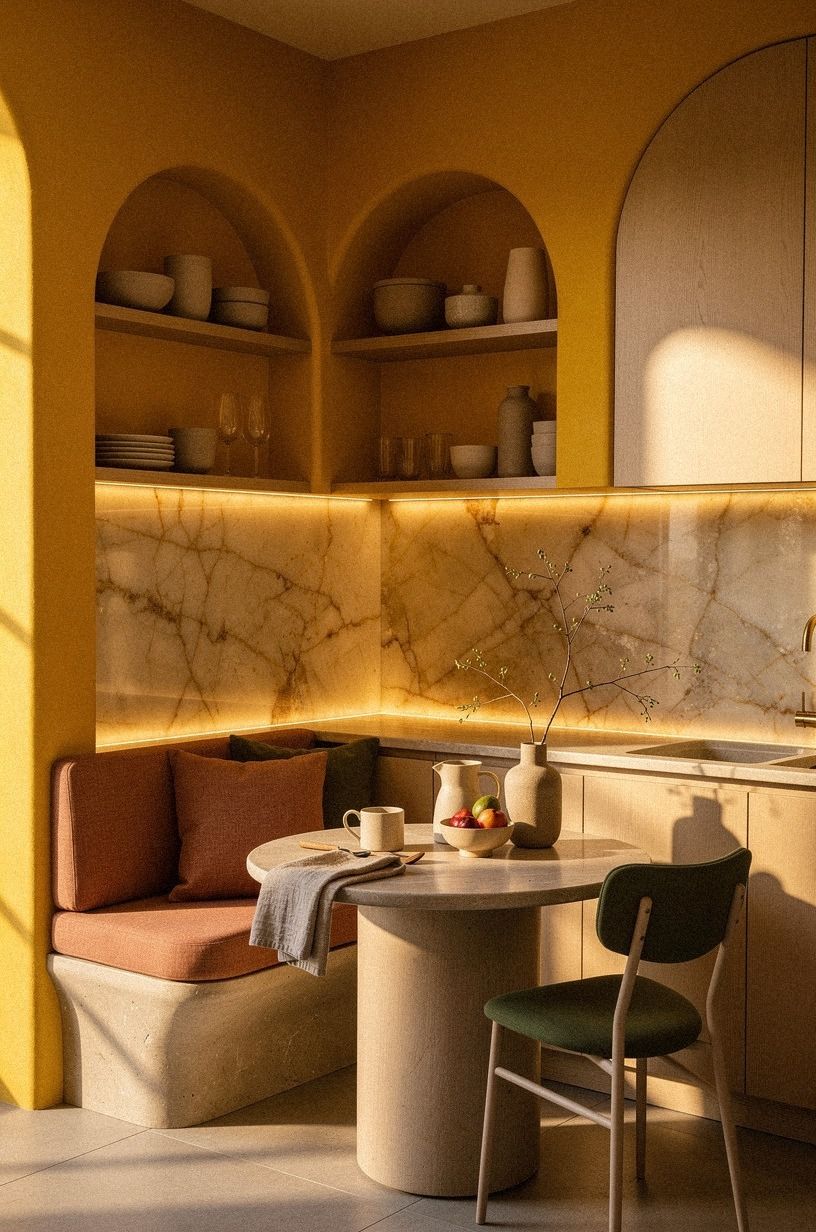
A breakfast corner can carry a stronger terracotta tone than the main cabinets because the area is smaller and more personal. Farrow & Ball Red Earth No.64 gives the table a warm backdrop, especially beside stone surfaces and olive accents. You’ll want to see a sample at your actual table height before committing.
Use a compact table with a finish that can take abuse. A stone-topped table with a backlit translucent onyx detail gives the corner a practical surface without making it feel precious, and an olive cotton runner softens the harder materials. I’d choose a round table if your walkway is tight.
Corners disappear, and you won’t keep catching your hip on a square edge.
What makes a warm breakfast area work? The light needs somewhere to land.
Hang a small woven pendant 30 to 36 in above the tabletop and keep the bulb warm. If you’re tempted by all-white cabinetry, these white farmhouse kitchen ideas that never go out of style explain where restraint helps.
You can keep this update within a modest budget by painting one wall and buying a secondhand table. The room gains personality without the cost of replacing every cabinet.
6Frame the Sink With a Soft Farmhouse Window
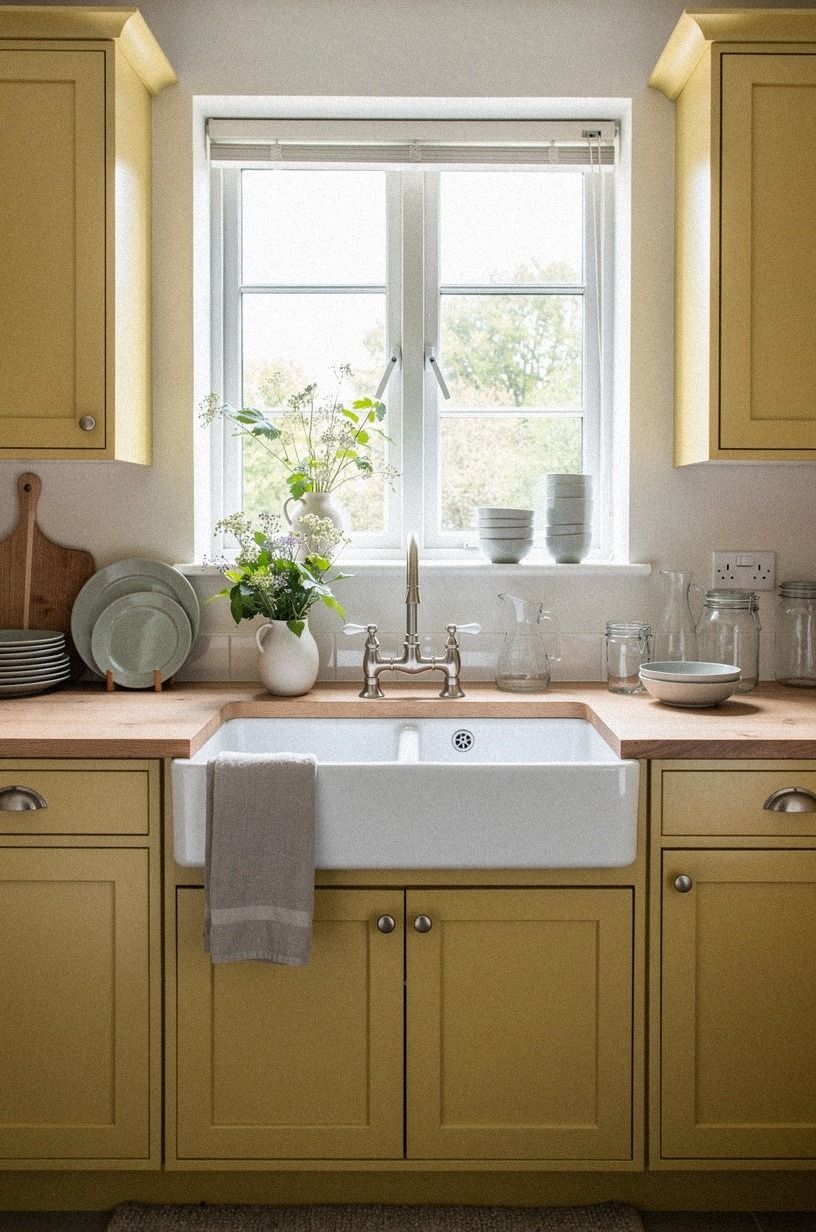
The sink wall deserves a little tenderness. Belgian flax linen café curtains filter hard afternoon glare while keeping the clay-colored wall visible above the fabric.
You’ll still get daylight, but the room won’t feel exposed from the street. Choose a natural oat or faded cream rather than a bright white that can look sharp beside clay.
A farmhouse sink can anchor the arrangement if the cabinet run is generous enough. Book-matched walnut around the sink brings rich grain to the otherwise soft palette, while aged brass keeps the arrangement from feeling too polished. I’d rather live with the walnut’s natural variation than install a glossy black basin that pulls the kitchen toward a different style.
Keep the sill useful. Terracotta herb pots, a small wood brush, and one clipped branch are all you need.
Your eye should notice the window before the accessories. If you’re choosing a stronger exterior connection, this yellow front door ideas guide has useful color pairings.
If you’re watching the budget, keep your existing sink and spend on an aged-brass faucet you’ll touch every day. That upgrade often delivers more value than a decorative basin.
7Hang the Three-Source Light Stack
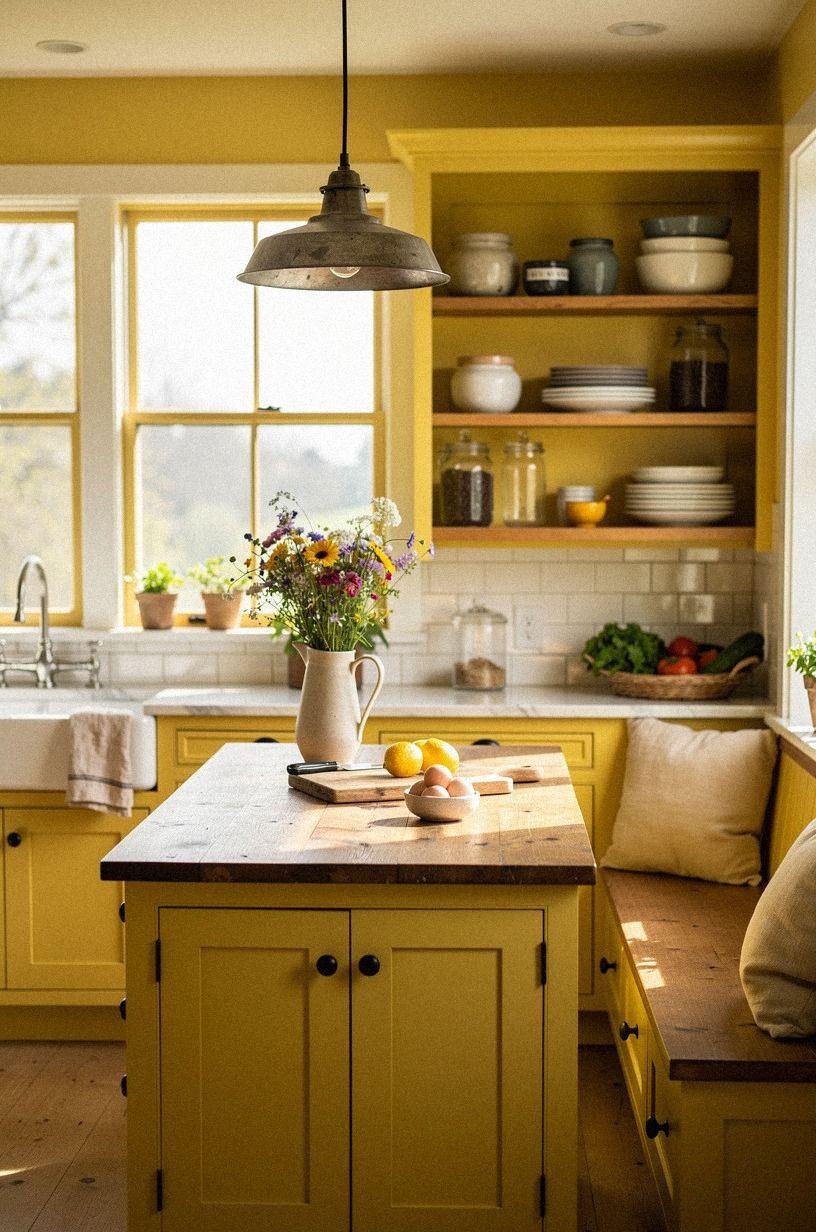
Plum paint needs layered lighting because one ceiling fixture can flatten it at night. Build three sources: an overhead fixture, under-cabinet light, and one low glow near the table. Warm 2700K bulbs keep the color inviting after sunset, while cooler bulbs can make plum look harsh.
Choose a fixture with farmhouse shape but modern wiring. Rose gold metal gives the plum enough lift, and a warm travertine detail spreads visual weight across a small room without creating a bright spot on the counter. You’ll want the pendant centered over the work area, not merely centered in the ceiling.
But don’t use exposed bulbs everywhere. They create glare when you’re washing dishes, and the room loses its soft evening feel.
I’d rather have one shaded pendant and two quiet sconces than five bare bulbs. Soft gray sconces beside a pantry door can make the far end of the kitchen feel intentional. Pin this white cottage kitchen guide for bright timeless charm if you’re comparing fixture finishes.
Lighting is one of the smartest places to spend because it changes how your paint, counters, and travertine look after dark. The return is daily comfort, not just visual polish!
8Why Does a Shadow Color Matter?
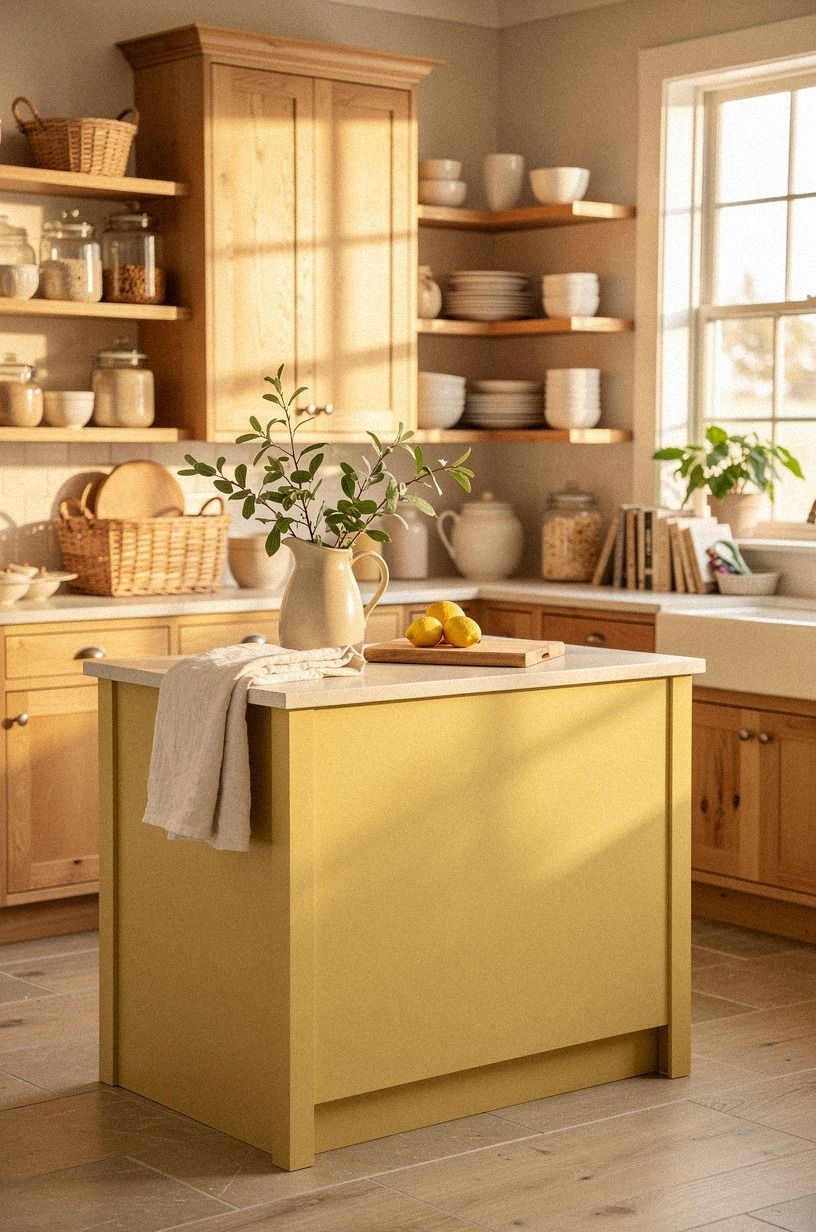
Every cheerful kitchen needs one grounded note. Navy on a pantry door or small lower cabinet brings depth without fighting white cabinetry or walnut. You’ll get a richer room, especially in winter, and the darker color gives lighter surfaces something to lean against.
Use the shadow color in a controlled area. A full wall may make a small kitchen feel heavy, while one door, one island base, or the back of an open shelf can look deliberate.
I’d skip a dark ceiling here. It steals the daylight that makes a lighter kitchen worth choosing in the first place.
For your hardware, choose unlacquered brass and let it develop a natural patina. The changing surface adds warmth beside walnut, while the white cabinetry keeps the room from becoming too dark. If you’re considering a deeper country palette, these western farmhouse kitchen ideas for rugged ranch style show how dark accents can stay warm.
You don’t need the most expensive counter to create contrast. Choose the surface that fits your maintenance habits and gives you the best long-term value.
9Give the Backsplash an Eighteen-Inch Pause
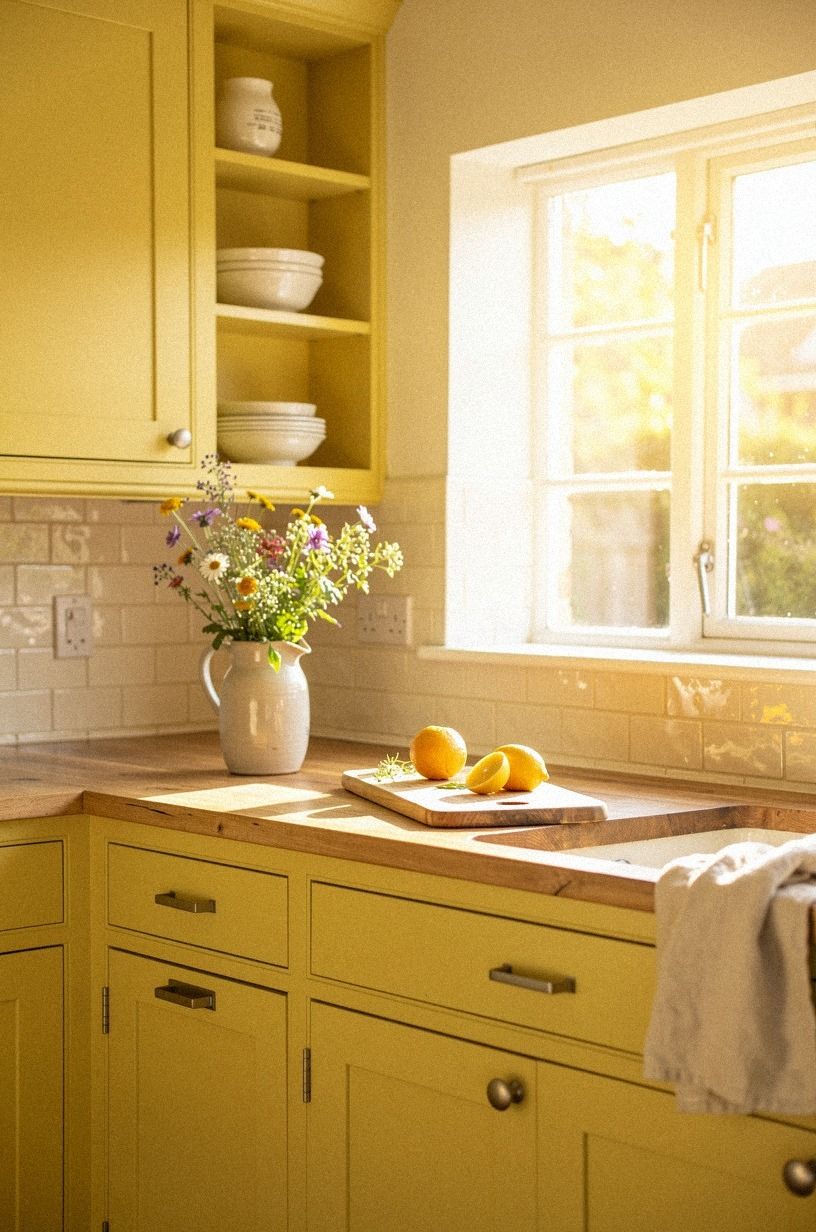
The backsplash gap between the counter and upper cabinets is usually 18 in, and that space can make or break a farmhouse kitchen. Oversized-chip terrazzo in emerald, gold, and cream gives the wall enough movement without requiring several competing finishes.
Keep the surrounding cabinetry simple. Cream fronts, one aged-gold fixture, and a small emerald accessory let the terrazzo do its work. You’ll get color and texture without covering every surface in pattern.
10Style the Pantry With Farmhouse Decor That Works
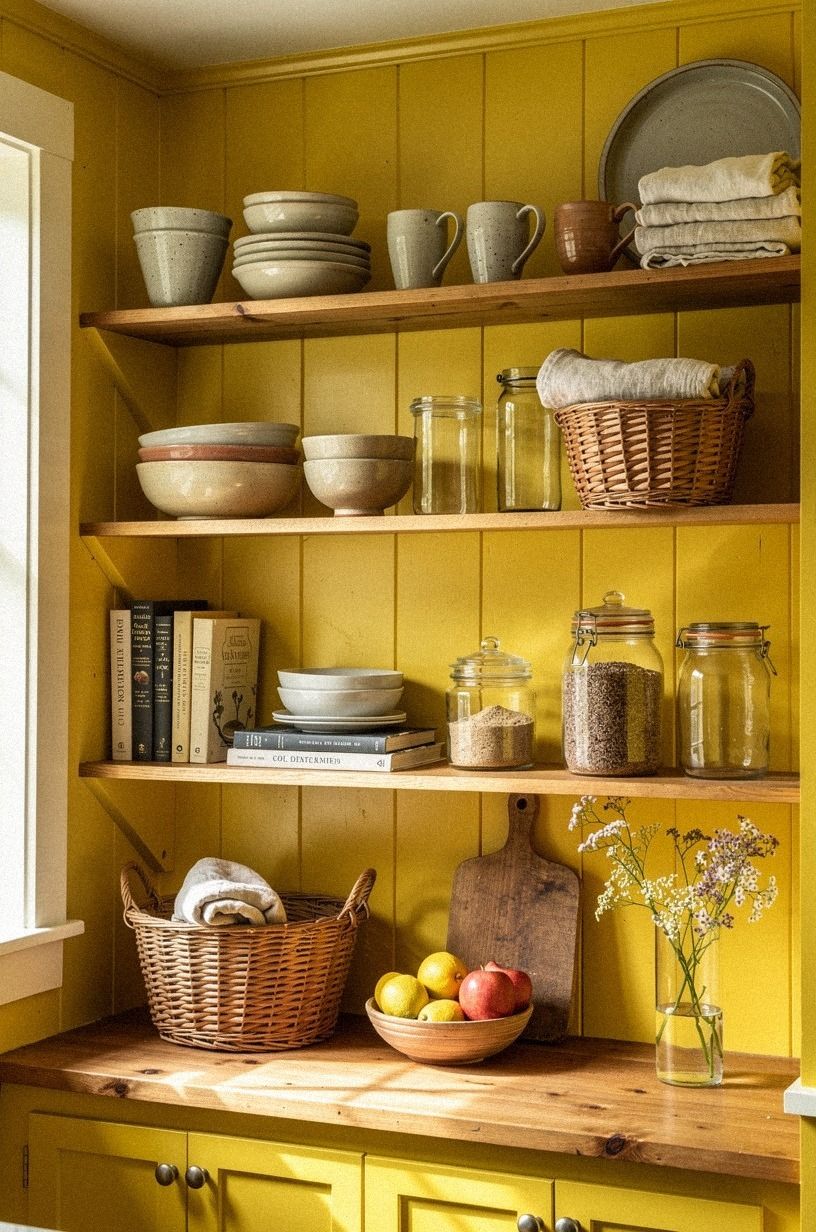
A pantry door is a low-risk place to use forest green more boldly. Forest green on the trim or inside of the door can temper a warm kitchen palette, while rust-colored accents keep the hallway welcoming. You’ll notice the color in passing, so it can carry more personality than the main kitchen wall.
Make the pantry useful rather than decorative. Natural oak shelves with a hand-applied Venetian plaster wall give the space texture, while a shallow tray for oils and labeled baskets reduce visual clutter. The labels don’t need to match.
Handwritten paper tags can look warmer than printed vinyl, especially beside plaster and painted wood.
I’d avoid open storage above the range. It collects dust and cooking film, and you’ll resent cleaning it. Instead, use one narrow rail for towels and keep daily tools below eye level.
Your kitchen will feel calmer when the things you grab every morning have a home. If you’re planning a connected eating area, these farmhouse breakfast nook ideas for a warm welcoming kitchen can help you extend the palette.
For more rugged material pairings, compare these rustic farmhouse kitchen ideas.
A pantry update is often worth it because it improves function without the cost of moving plumbing or replacing cabinets. You get visible order for a relatively small investment.
11Prioritize the Refresh With a Realistic Budget
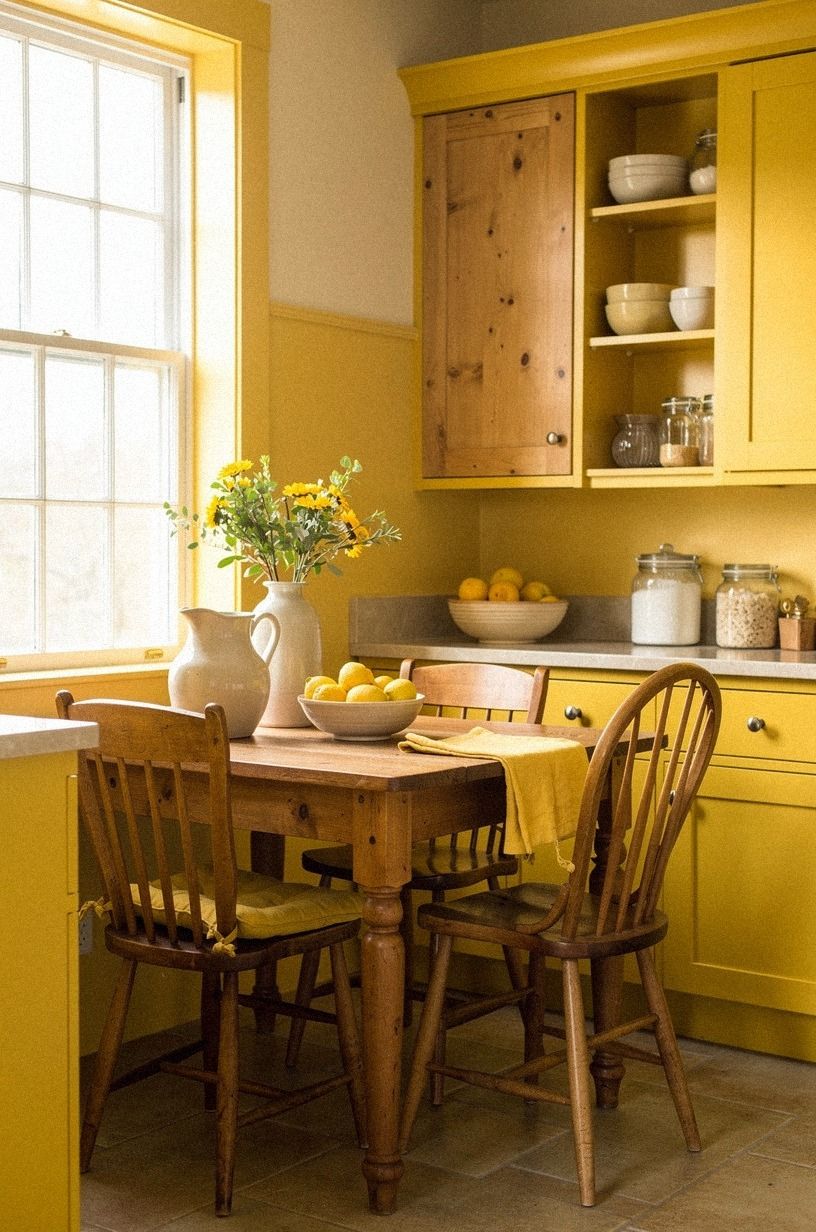
A yellow farmhouse makeover doesn’t require a full remodel. Dusty-rose paint, charcoal cabinetry, brass hardware, and small shagreen accents can change the room before you touch the cabinets. You’ll want to decide whether your counters, flooring, and appliances are staying first, because those fixed elements control the palette.
Here are typical US cost ranges for the larger choices. These are planning figures, not promises, and labor can move the total quickly.
If you’ve got $500, start with paint, hardware, and one light fixture. A shagreen tray or a secondhand wood table can fill the remaining gap without making the room look temporary. But don’t spend on a decorative sign before fixing poor lighting.
Your eye notices the light first, every single time!
For a larger project, ask which update improves your daily routine and which only makes the room feel polished. A durable faucet, smooth drawer operation, and easy-clean surfaces are usually worth more than a premium finish no one touches.
You can also phase the work. Paint first, live with it for a month, then decide whether the backsplash or counters still need changing. These yellow cottage kitchen ideas and white cottage kitchen ideas can help you compare how much color you actually want.
Why Yellow Still Works in a Working Kitchen
I used to think yellow kitchens had to look sunny all day to succeed. Mine didn’t.
The wall looked warm at breakfast, slightly muddy by late afternoon, and almost buttery again under lamplight. That shift taught me to choose yellow as a living color, not a fixed backdrop.
You’ll get a better room when you test the paint across several hours instead of judging it beside a hardware-store strip.
The strongest yellow kitchens also have somewhere for the color to rest. Pale oak, cream pottery, and a little black metal stop the room from becoming one long cheerful note.
I’ve tried yellow beside cool blue-gray, and the result felt restless. Benjamin Moore White Dove OC-17 gave it more breathing room, while dark green made the warmth feel deliberate.
I’d also spend money in the order your hands experience the kitchen. A smooth faucet, useful drawer storage, and lighting that doesn’t glare are worth more than an expensive decorative hood. You’re building a room that has to survive toast crumbs, wet towels, and rushed weekday dinners.
The charm should hold up under use.
And there’s a practical reason this style keeps returning. Farmhouse details are forgiving.
A nick in painted wood, a darker brass edge, or a scratched table can add history instead of ruining the room. Unsealed terracotta will mark, but those marks can make the floor feel settled.
That’s the part I want from a yellow kitchen: warmth with evidence of living, not a color scheme that asks you to behave.
If you’re still deciding between a bright and earthy direction, this green farmhouse kitchen guide offers a useful comparison. You can also borrow exterior color logic from these yellow front door ideas. The point isn’t to copy another room.
It’s to notice which combinations make you want to stay.
The Questions I Get Asked Most
What is the best Yellow Farmhouse Kitchen Ideas for Sunny, Cheerful Charm for a small kitchen?
Use a pale yellow on one wall or the lower cabinets, then pair it with IKEA KALLAX birch-effect storage or open shelving. You’ll keep the room bright while adding useful texture. Choose one dark accent, not several, so your small kitchen won’t feel visually crowded.
Where can I buy Yellow Farmhouse Kitchen Ideas for Sunny, Cheerful Charm pieces on a budget?
Look at IKEA, Target, and Wayfair for basic lighting, stools, and storage, then check Facebook Marketplace or a local thrift shop for wood furniture. Secondhand oak tables often bring more warmth than new distressed pieces, and you won’t need matching finishes everywhere.
How much does a Yellow Farmhouse Kitchen Ideas for Sunny, Cheerful Charm makeover cost?
A cosmetic refresh typically runs $300 to $1,500 in the US for paint, hardware, and a peel-and-stick backsplash. You can spend less by keeping your cabinets, cleaning existing fixtures, and shopping secondhand. The mid-range table above covers larger updates, but your labor choices will affect the final cost.
Can I create a Yellow Farmhouse Kitchen Ideas for Sunny, Cheerful Charm on a budget?
Yes, and you can begin with three low-cost changes: repaint one wall, swap the cabinet knobs, and move a lamp or pendant closer to the breakfast area. Matte black hardware gives yellow definition, while a thrifted cutting board adds texture without a large bill.
Is a Yellow Farmhouse Kitchen Ideas for Sunny, Cheerful Charm worth it in a small space?
Yes, because a small kitchen gives yellow less room to become overwhelming. Use it on one strong surface and keep the rest light. Slim oak shelving can replace bulky uppers, but leave 42 to 48 in of clearance around an island if you have one.
Is Yellow Farmhouse Kitchen Ideas for Sunny, Cheerful Charm a good idea for a rental?
Yes. Try removable wallpaper on one accent wall, a tension rod with a linen café curtain, and swap-in hardware that preserves the original pieces. Removable adhesive hooks can hold towels or lightweight art, and you can take everything with you when the lease ends.
Where I’d Start First
If I had to pick one, I’d start with the cabinet paint. Warm yellow changes the largest surface for the least money, and it makes ordinary wood, brass, and white dishes look more intentional. Pin the cabinet color for later, then test it beside your counter before opening the full can.