
 by
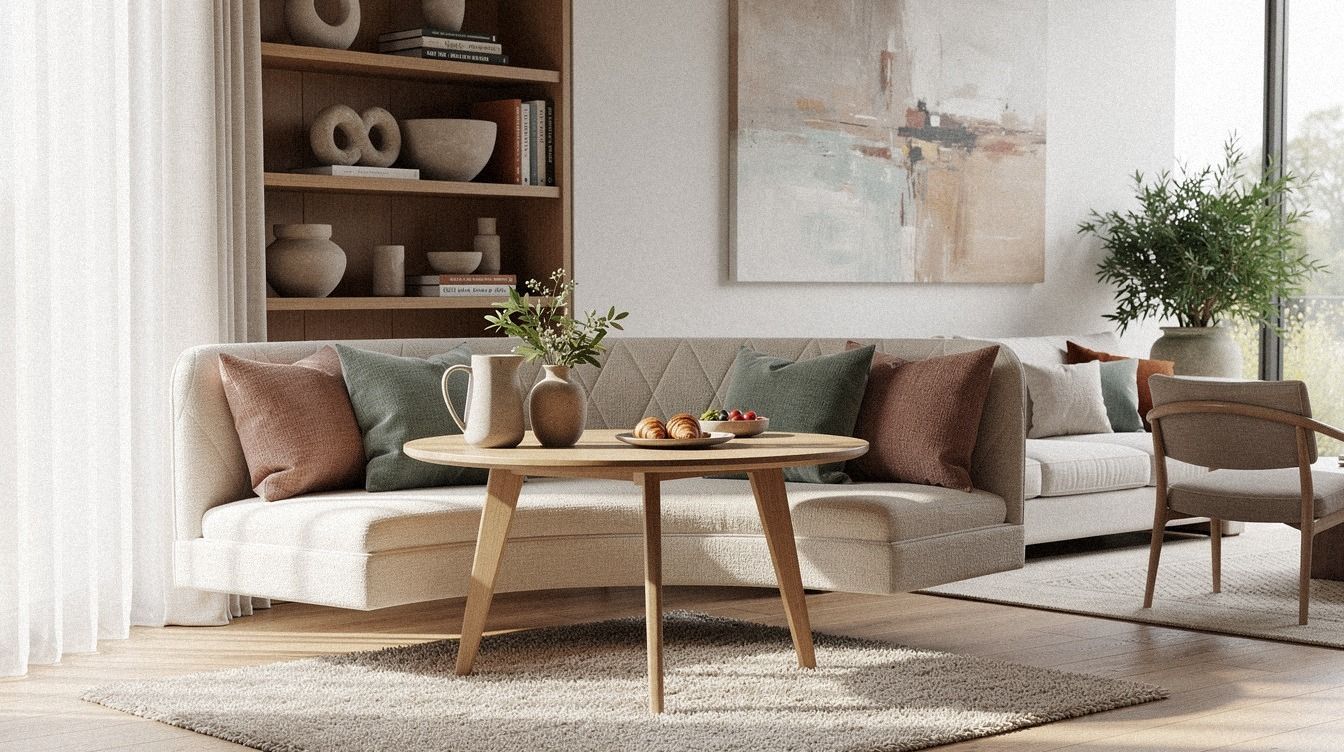
by I've walked past a thousand breakfast nooks that looked almost right and felt completely cold, and it took me about a decade to figure out the gap. The pretty ones almost always share the same five moves: a cushioned bench, a wood tone that catches the morning, a single pendant dropped to eye level, a textile that looks touched, and one thing the eye lands on that isn't a chair. A renovation isn't the lever, comfort is, and you can build it from the things you already own. Save the table for the last move, the gap is what you'll fill.
- float a banquette over a rug that catches the spill zone
- drop one pendant at eye level, kill the ceiling light
- paper a single wall, not the whole corner
- apply The Cushion Sandwich Rule
- swap a pedestal for a trestle, or stop fighting the wiggle
- warm a corner with one art piece, not a gallery wall
- introduce The Two-Wood Stack
- try The Three-Height Light Stack, even in a small nook
- layer textiles like you mean it
- style the table with one tray and three objects
- anchor with one green thing, alive or not
- add a washable seat cushion in performance linen
- swap in a slim farmhouse bench for narrow nooks
- try a low-profile banquette in moody green
- could a small corner really pull off a nook?
- apply The Corner Hearth Rule
- hang a single brass sconce, kill the overhead glare
- close the corner with one tall plant
- commit to The Friday Reset
1float a banquette over a rug that catches the spill zone
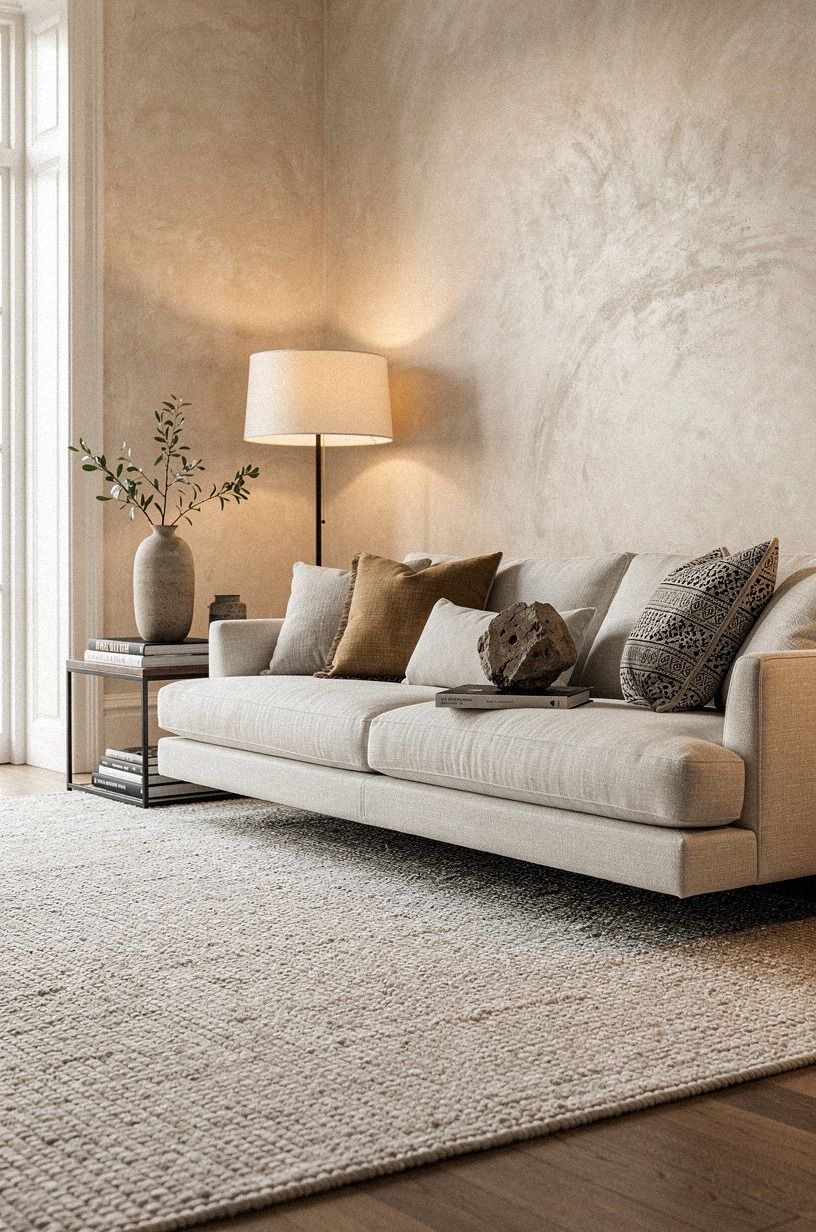
Skip the four chairs and run a single bench, that's the move nobody tells you. A built-in bench lets you pull the table closer than any chair combo and gives you a hidden storage drawer underneath, which a set of chairs never will. Set the bench against a wall finished in hand-applied Venetian plaster in warm white, and layer a washable rug in a camel tone with a black border to catch the cereal zone and save you the panic every Sunday morning!
Pick a rug that's two feet wider than the bench on each side so the legs of the table still sit on the weave. I'd skip the all-white rug in a nook that lives next to a kitchen.
Skip is the cleaner word. Soil shows in the first week, and the first time you scrub a stain out at 7 a.m. you'll wish you'd gone charcoal black piping on a camel ground.
For sizing, a 5x7 in flatweave wool works for a 48-inch round, a 6x9 for anything rectangular. And if you need a primer on the layout, our modern breakfast nook guide covers the small-corner geometry in full, and our narrow-layout nook roundup walks through the bench depths that survive a tight corner.
Typical cost by tier (US averages):
2drop one pendant at eye level, kill the ceiling light
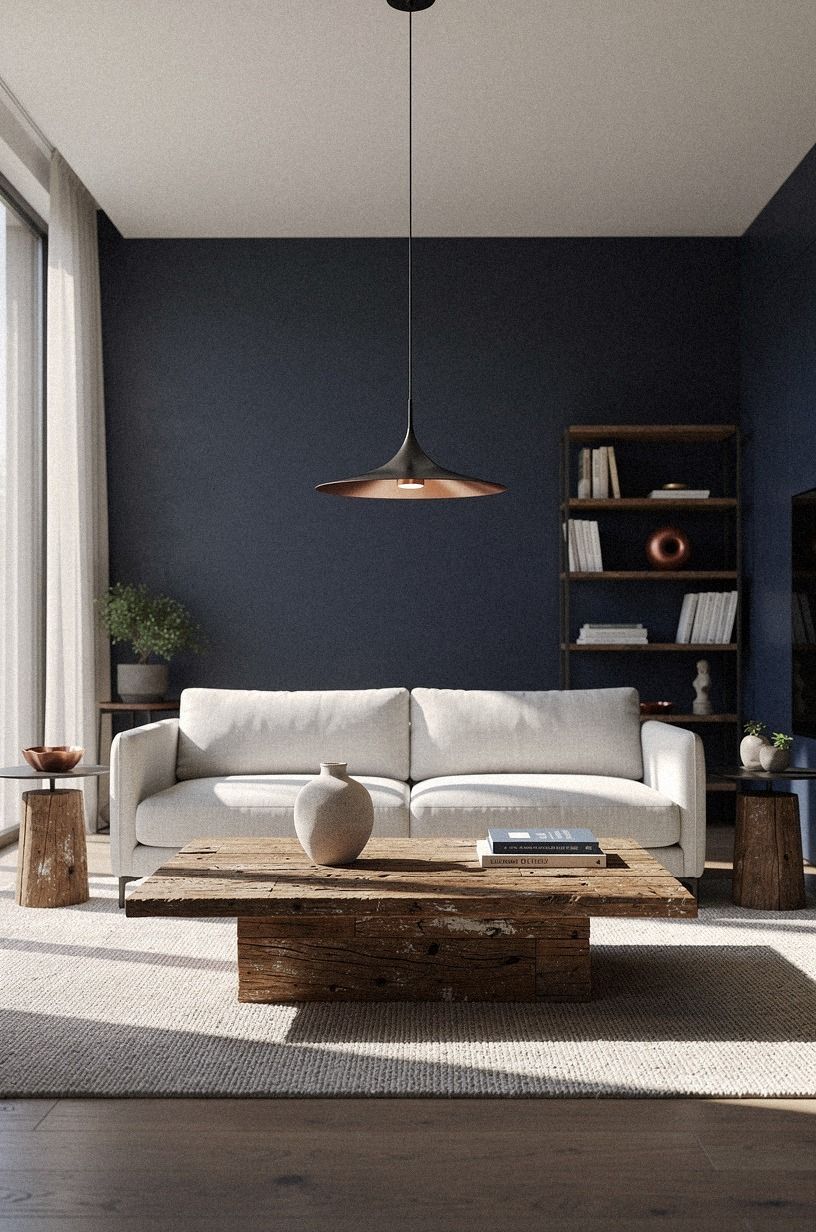
The single biggest mistake I see in breakfast nooks is the flush-mount ceiling fixture, the one that came with the house and that nobody ever replaced. It throws light straight down, makes everyone look tired, and flattens whatever charm the rest of the room is working for. Against a midnight blue wall with copper details and ivory trim, drop a copper pendant or a small drum shade eighteen inches above a reclaimed weathered teak table and the whole corner pools into glow!
Eye level matters more than you think. If you're sitting across from someone, you want to read their face across the rim of a coffee cup, not under their chin.
Hardwire it if you can; if you can't, a swag kit with a plug-in cord costs about thirty dollars and takes twenty minutes. For the full bulb-temp and dimmer breakdown, our pendants and sconces guide walks through every warm-white option I trust.
I'd go with a Lutron dimmer on the wall switch so dinner becomes candlelit in two seconds. And here's the part most people skip: a single pendant at eye level beats a fixture-on-a-dimmer-chain almost every time, because the dimmer on a flush-mount still leaves a shadow ring under everyone's chin.
3paper a single wall, not the whole corner
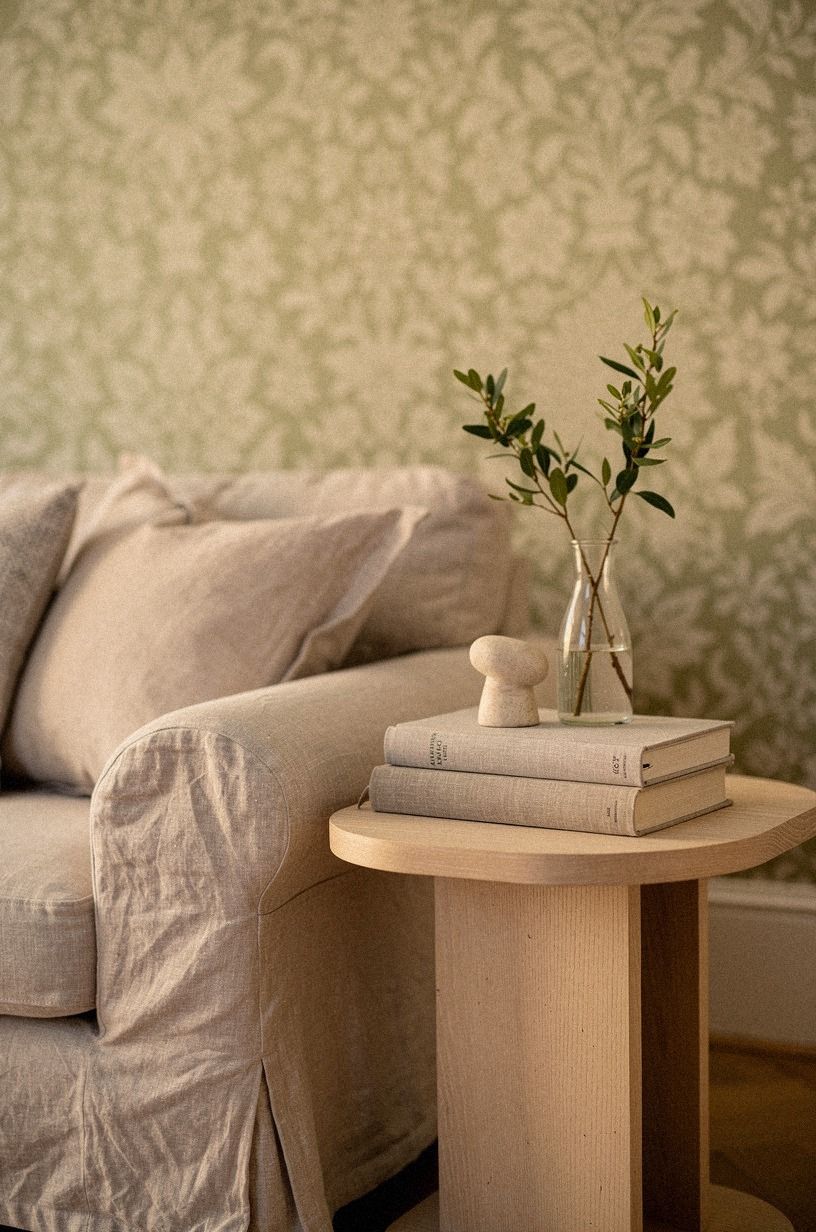
Pattern is the one thing that makes a breakfast nook feel like it was designed, instead of leftover. A single wall in a soft sage green grasscloth, paired with washed Belgian linen drapery in warm cream and a corner shelf in natural wood, is what makes the four walls land as one considered corner instead of a leftover patch.
4apply The Cushion Sandwich Rule
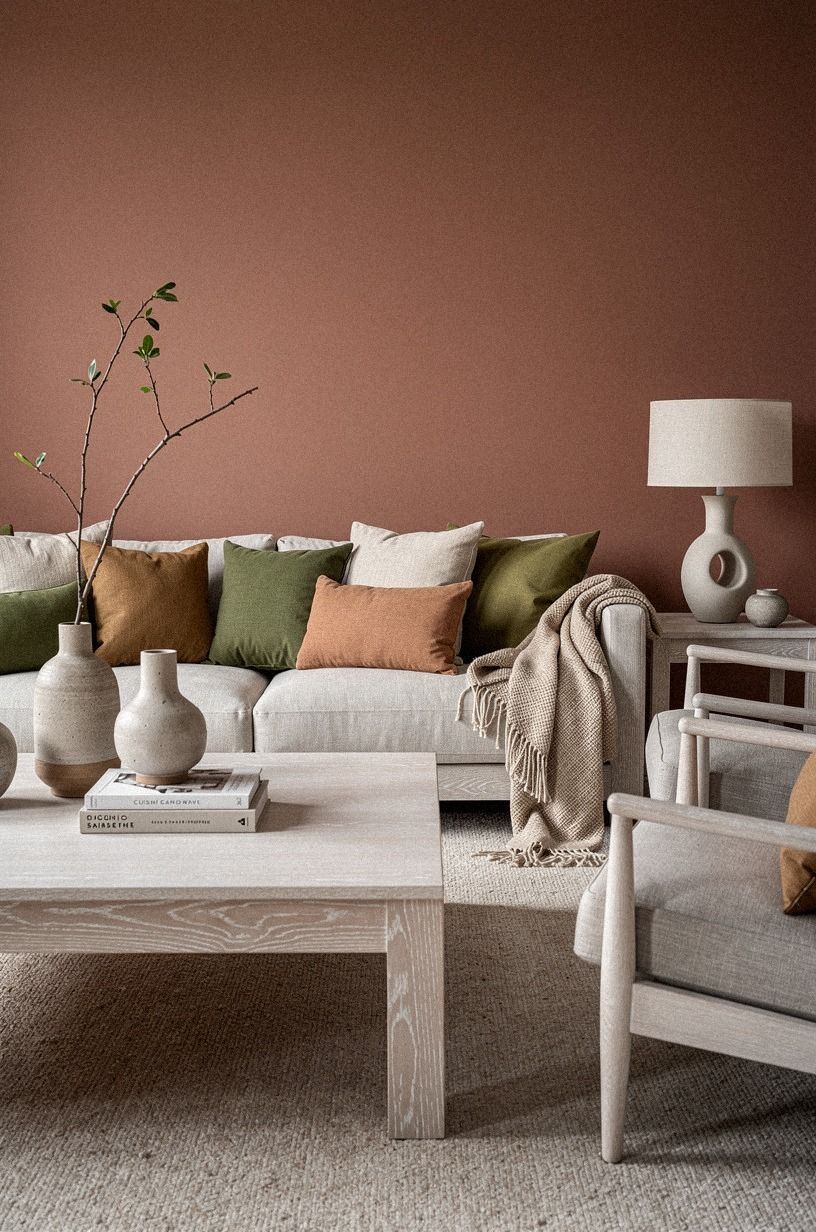
A bare bench is the second most common mistake after the flush-mount, and it has the same fix logic: layer, don't replace. The sandwich is one foam base (two inches, firm) wrapped in a low-loft down-alternative batting, then a removable cover in washed Belgian linen in terracotta with an olive trim and a stone-toned piping against a bench built in cerused white oak. Don't buy a bench cushion without the batting step; it always looks flat and office-like when you skip it.
The point isn't softness for softness's sake. The point is the proportions.
A bench that's six inches deep on top of an eighteen-inch seat puts your elbows at table height, and that's the magic number. A bench that's three inches deep puts your elbows in the air, and your coffee on your lap.
I'd pay the extra thirty dollars for a down-wrapped foam core over pure foam, every time, for that first-sit sink-in moment. And once you've got the bench down right, the dining-area-inspo half of Pinterest won't seduce you into another spend. For the storage side of the same bench, our hidden-bench storage guide runs through the IKEA BESTÅ build that adds two deep drawers for around three hundred dollars.
5swap a pedestal for a trestle, or stop fighting the wiggle
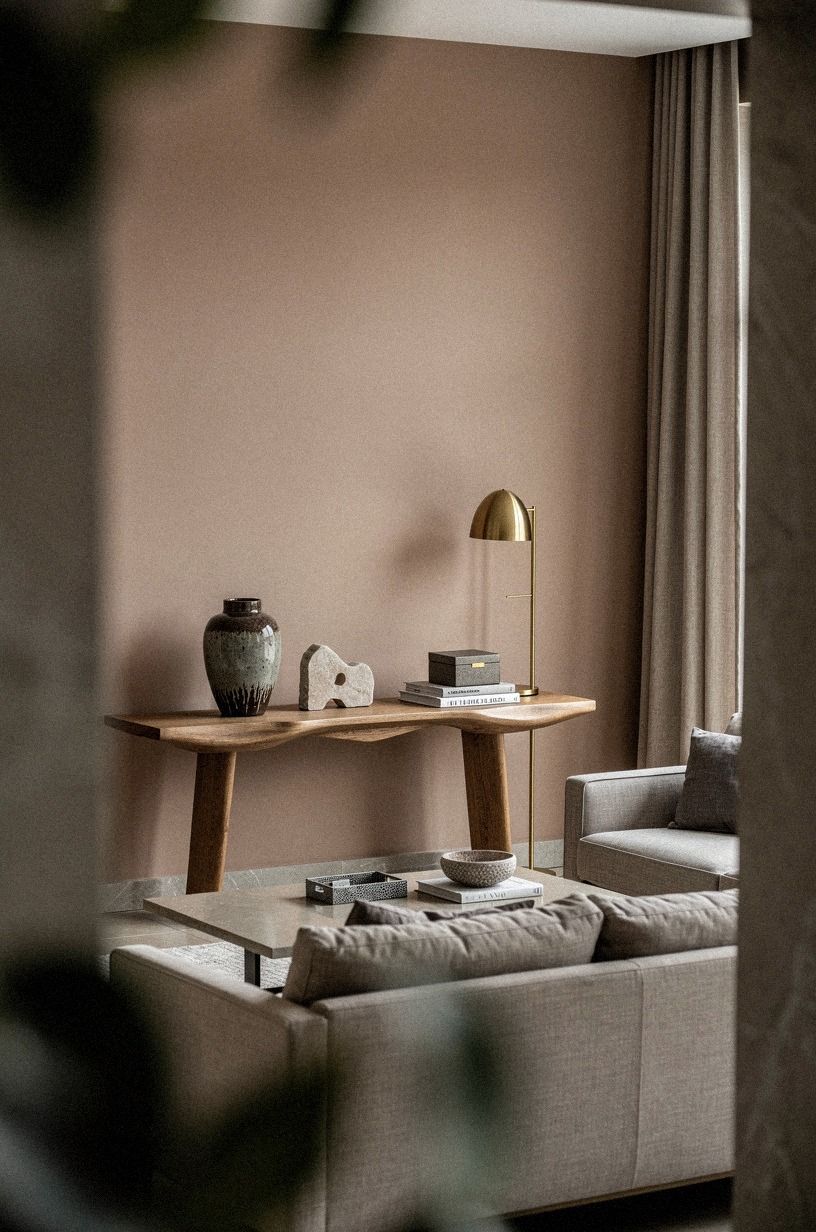
Pedestal tables look great in a showroom photograph and they wobble every morning in real life. A small trestle table in clay-toned wood with aged brass stretchers and shagreen-cap feet is the move that kills the wiggle and earns its place against the bench.
6warm a corner with one art piece, not a gallery wall
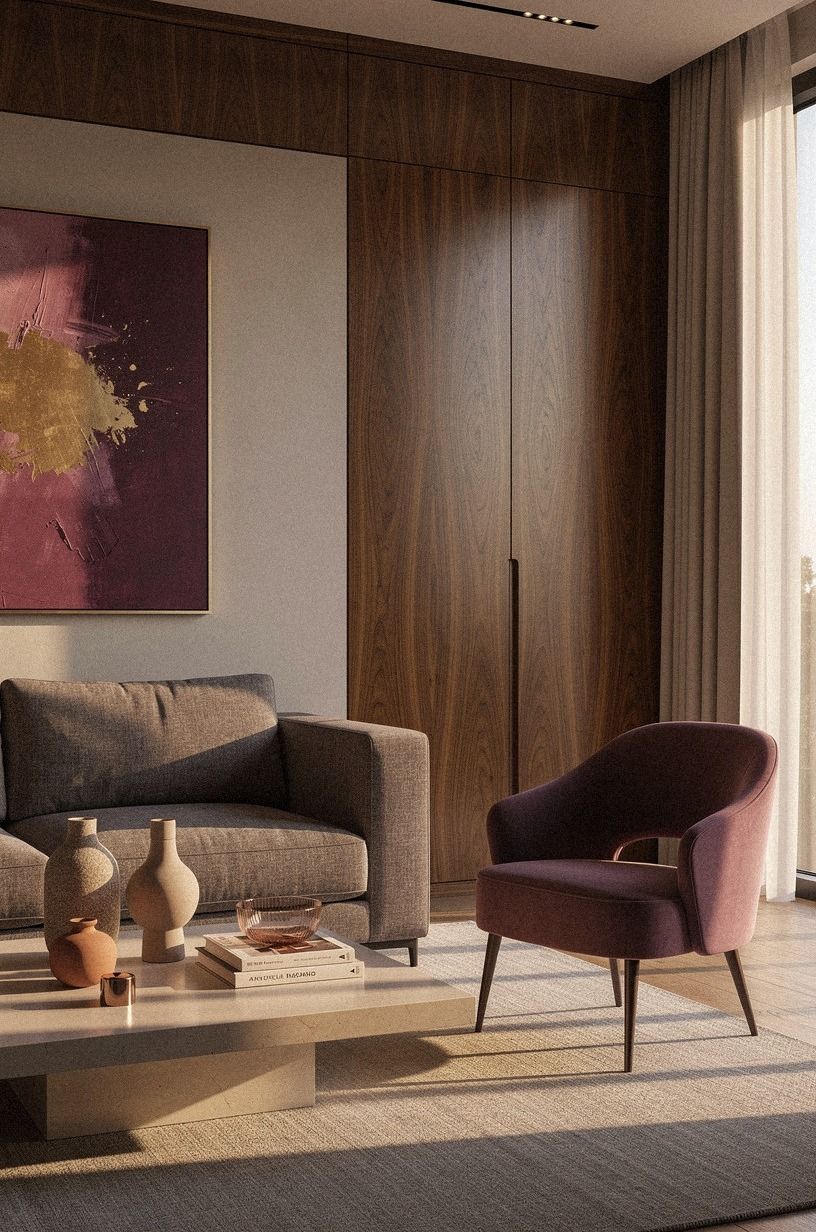
Gallery walls in breakfast nooks always look like the leftover living-room art got reassigned, and you can tell from across the room. One piece, generous in scale, hung at the corner's natural sightline is the move. Go for a Calacatta Gold marble study, a charcoal linen still life, or a moody botanical print in a book-matched walnut frame to read as a focal point against plum walls with grey trim and rose gold accents, not a deck.
Hang the center of the piece at eye level when you're seated, which is around fifty-six inches from the floor, not sixty. That single inch matters; trust me, you've stared at art hung too high in someone else's house and felt it.
The frame should pull a color from somewhere else in the nook; if your cushion is rust, a thin walnut frame kills the cool of a black-and-white print and warms the whole corner in passing. The cheapest nook upgrade you'll find this year is one good frame over a piece you already own.
7introduce The Two-Wood Stack
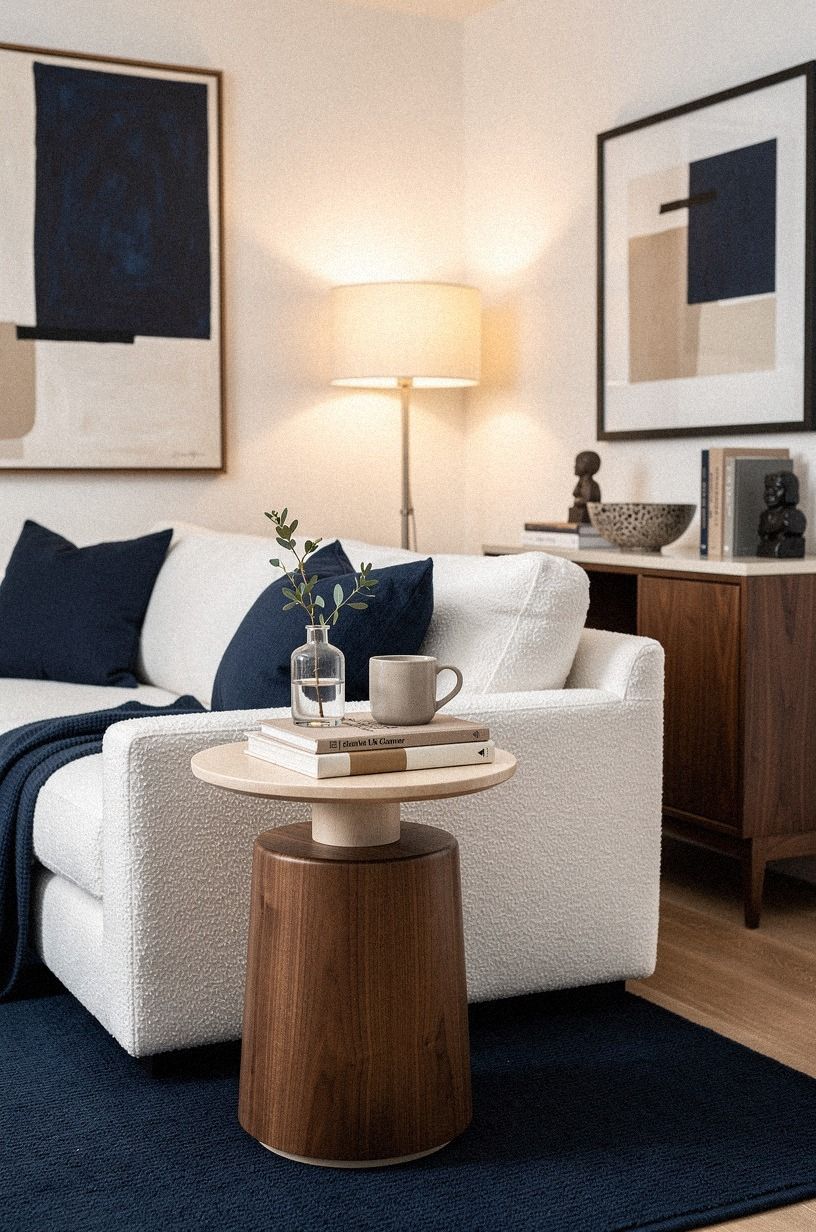
Two woods, never three. Oak and walnut is a classic for a reason: the oak reads clean and Scandinavian, the walnut reads deep and grounded.
Pine plus mahogany in a small nook will fight all year, no matter how much you love both. Pick one light wood, one dark, and use the dark in the smaller dose. Pair the stack with an organic bouclé cushion in navy and a white paneled ceiling for the calm the wood tones ask for.
The dark wood should live on the part you look at most; if you have a window trim in oak, swap the corner shelf for reclaimed walnut, vice versa. The light wood should run the eye around the room.
And speaking of materials, if your walls are white like half the nooks on Pinterest right now, this stack is the move that warms the white without making it look yellow. For the wall color one step warmer, our Benjamin Moore White Dove OC-17 note in the breakfast nook wall decor roundup pairs perfectly with the same two-wood stack.
8try The Three-Height Light Stack, even in a small nook
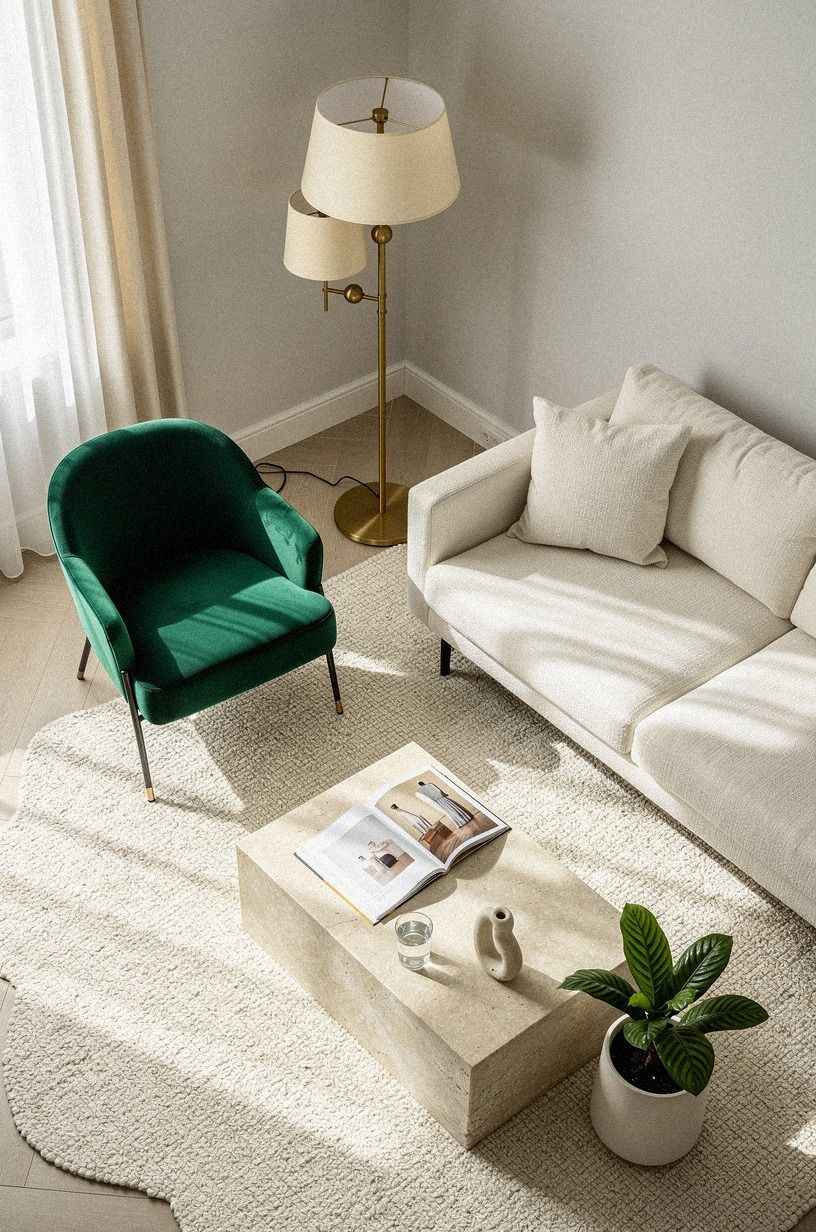
Light at three heights is what makes a nook feel evening-ready in a way a single pendant can't. Pair the pendant with an unlacquered brass sconce developing patina in an emerald green corner with cream trim and a soft gold accent, and the room reads warm from every seat without a single cool bulb in sight.

9layer textiles like you mean it
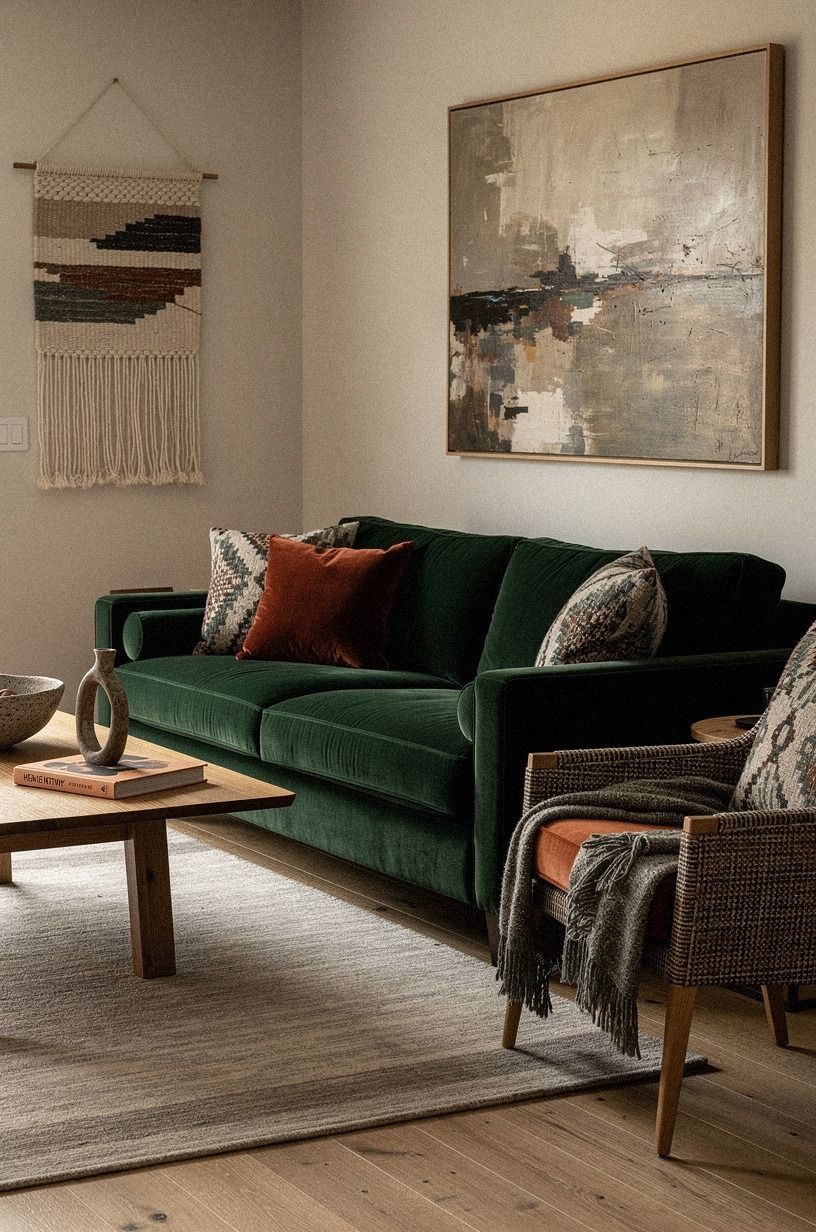
Throw pillows on a breakfast nook bench are doing the work no chair back is doing. Mix sizes, not sets, that's the part every catalog gets wrong. A smooth linen lumbar in rust, a small deep-pile mohair velvet square in forest green for sheen, a small oak-veneer side dish on the table — all in the forest green, rust and natural oak family.
Skip the matching set, no matter how nice it looks in the store.
The lumbar is the move most people skip. A 12x20 lumbar on a 60-inch bench breaks up the line and lets a shorter guest lean without the pillow sliding off. But here's the part nobody tells you: if your bench is deeper than eighteen inches, you'll want a lumbar with a tufted body, not a flat panel, otherwise it slides into the gap and ends up on the floor.
And the deep-pile mohair is what makes a forty-dollar pillow feel like a hundred-dollar one. If you've got a kid or a dog, you'll want washable performance covers from Brooklinen or Create Comfort, both around fifty dollars and worth every penny the first time spaghetti happens! The pillow on the floor isn't a look; it's a Tuesday.
10style the table with one tray and three objects
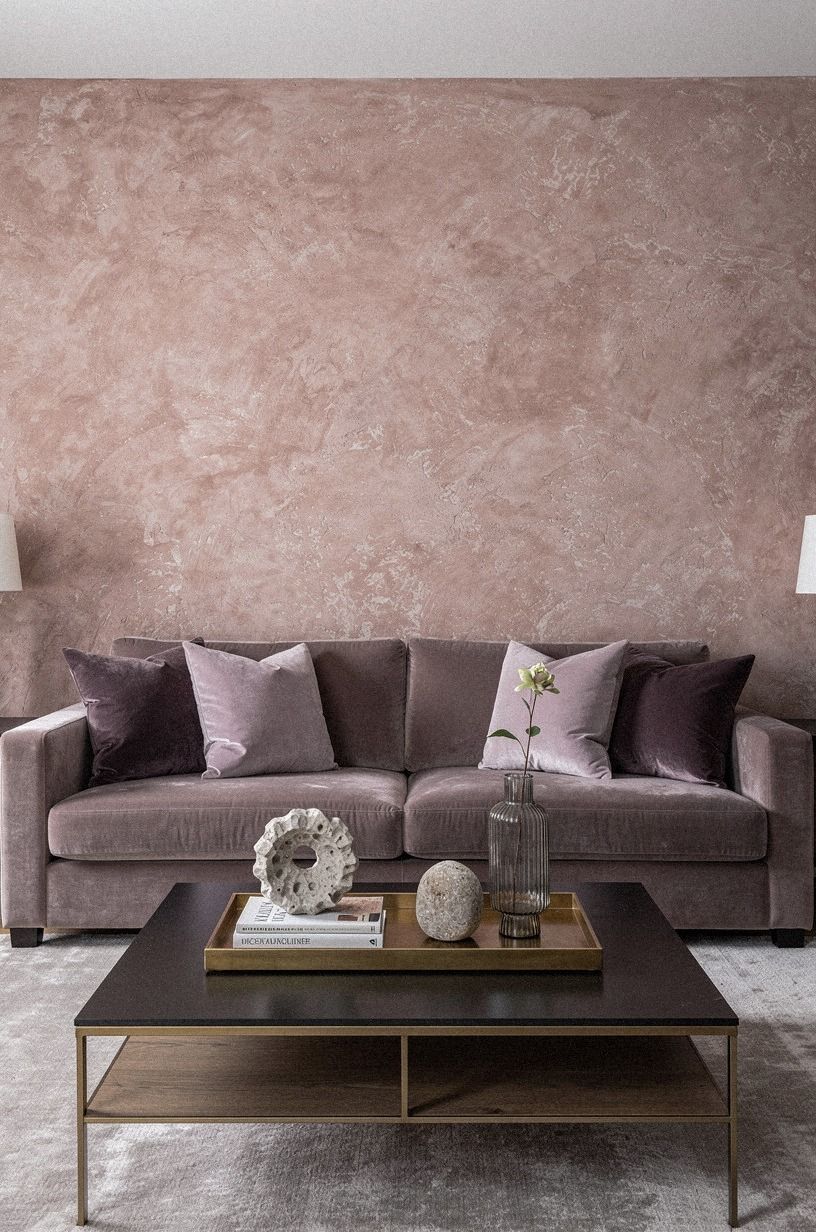
A naked breakfast nook table looks like you're between tenants. A charcoal tray with brass corners and three small objects in dusty rose — a linen napkin roll, a small bud vase, a single candle stub — set against hand-applied Venetian plaster brings the table from daily surface to a considered still life in three minutes.
11anchor with one green thing, alive or not
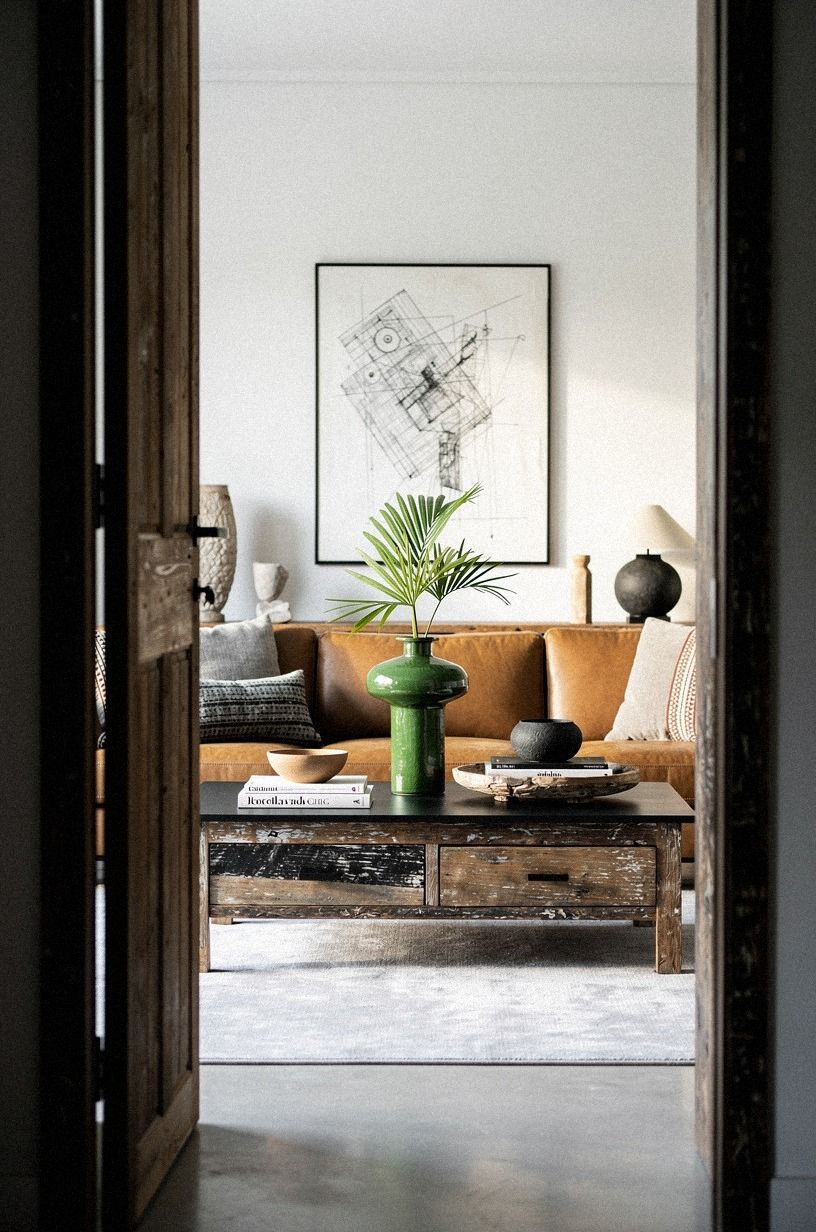
The last move is also the one that changes the air. One plant, alive if you can keep it alive, faux if you can't and you don't have a south window.
A trailing golden pothos on a high reclaimed weathered teak corner shelf, a small fiddle leaf fig on the floor behind the bench, a tiny olive branch in a stoneware vase at the table. Against a warm white wall with camel and black accents, one is enough.
Skip the mass arrangement; this is a corner, not a conservatory.
I'd go with a faux olive or a real eucalyptus stem if you forget to water things; both look intentional even when they're neglected. But the real move is to pick one plant for life, not for the photo. The plant should sit across from the focal art, balancing the eye.
And if your nook is a true dead corner, our corner breakfast nook ideas run through the plant placements that work when there's no window to back you up.
12add a washable seat cushion in performance linen
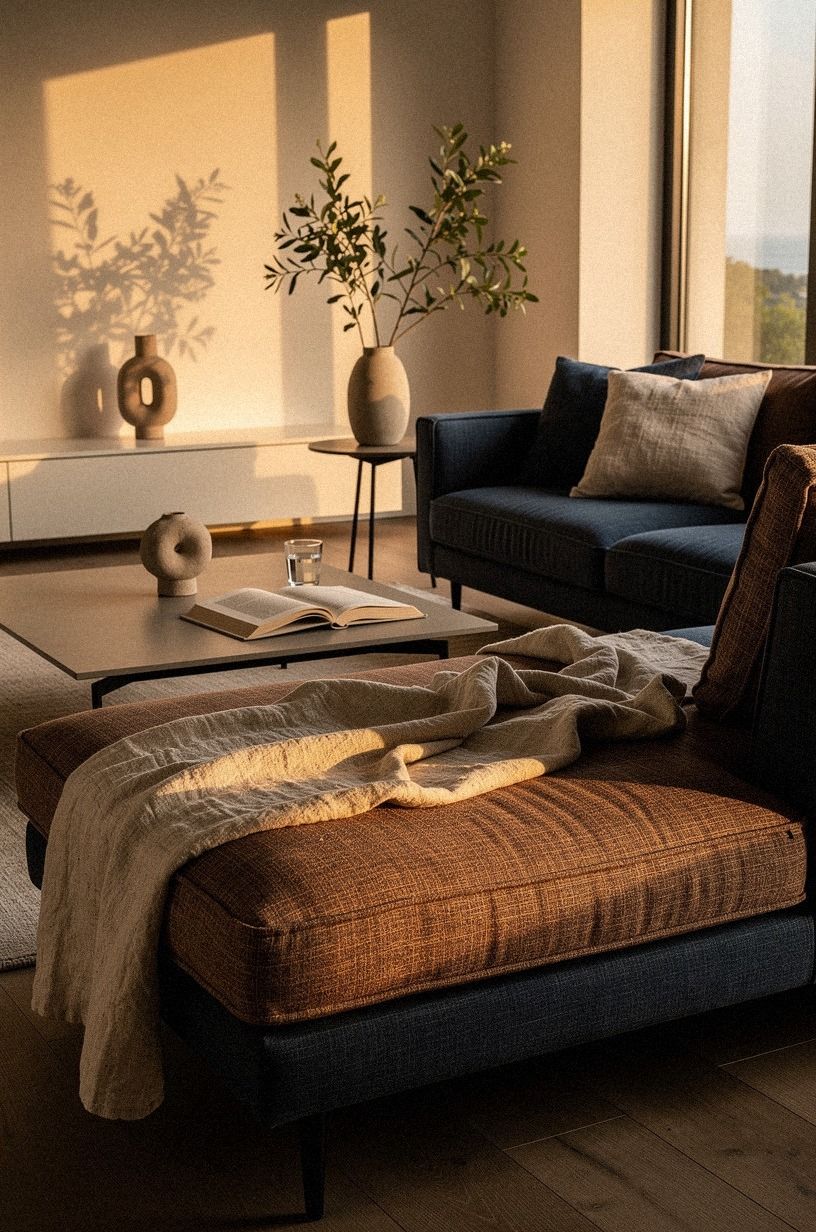
A bare wood bench is the kind of thing that looks fine in a magazine photo and feels punishing at 7 a.m. on a Tuesday. A performance linen cushion in midnight blue with copper piping and an ivory zipper, two inches thick, with a washable zip cover in washed Belgian linen, fixes the cold-bench problem for around forty to seventy dollars at Threshold or Article. Skip the all-white if you eat cereal there; go for a heathered oat or a soft moss that forgives the inevitable coffee ring.
I'd size the cushion to overhang the bench front by about an inch on each side, and tuck it under the bench lip at the back so it doesn't migrate when you sit. The zip cover is the move most people skip; you'll thank yourself the first time marinara hits the linen at full velocity. For sizing, a 48-inch bench takes a 48 by 18 cushion, a 60-inch takes a 60 by 20, and our hidden-bench storage guide has the cut list if you're building one from scratch.
13swap in a slim farmhouse bench for narrow nooks
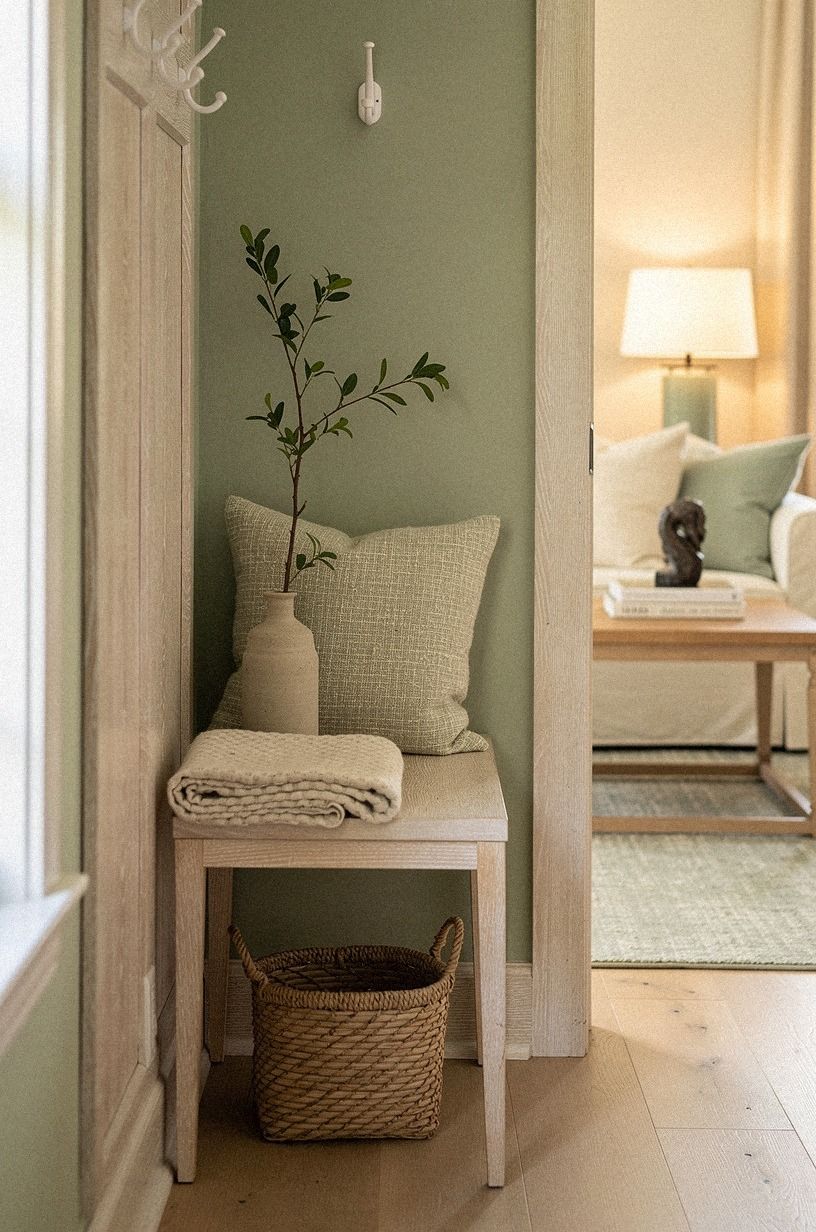
If your nook sits in a hallway-width corner where a chunky banquette would crowd the walkway, the move is a slim farmhouse bench in cerused white oak with a sage green cushion and warm cream pillows, around sixteen inches deep, set against a wall in natural wood paneling that visually softens the run.
14try a low-profile banquette in moody green
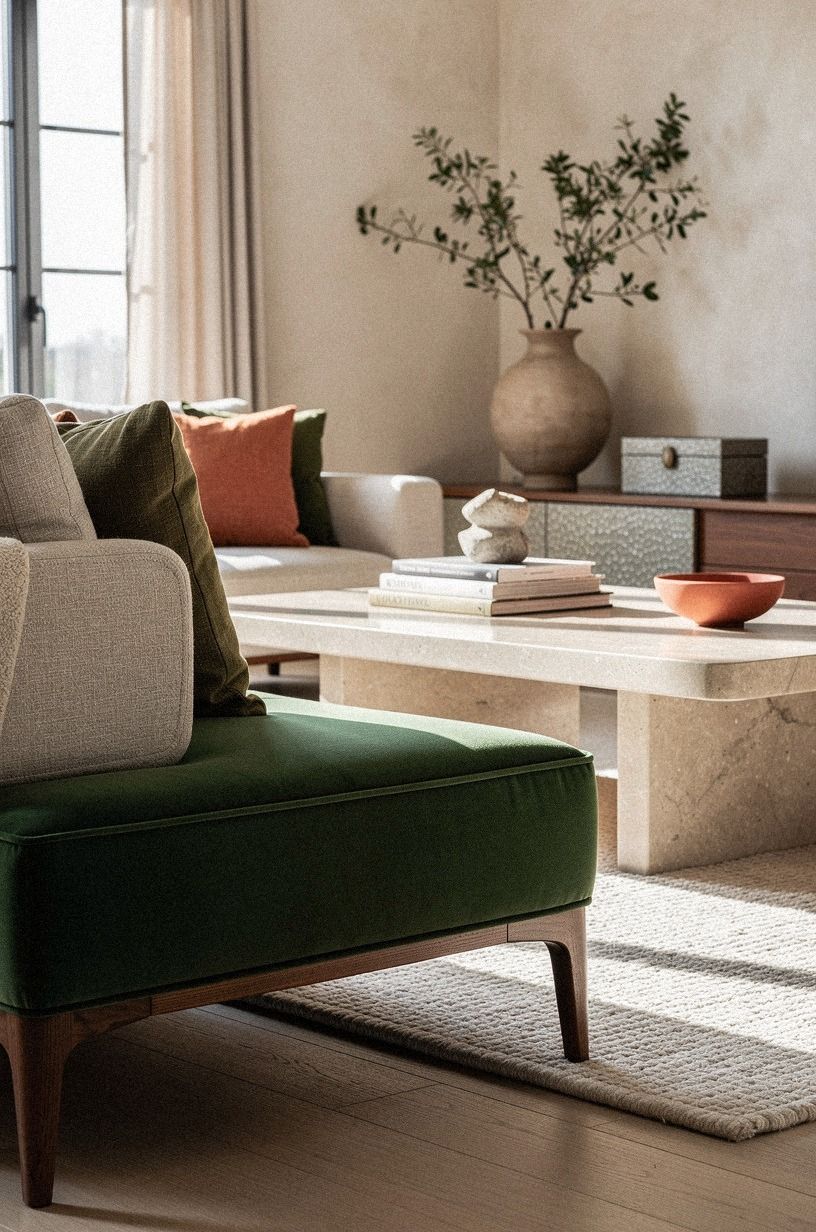
If your nook walls are white (and half of them are, on Pinterest right now), a low-profile banquette in terracotta Performance Tweed with olive piping is the move that changes the room without repainting. Think a slipcovered bench with shagreen-cap hardware on a stone-tiled floor, paired with an aged-brass pendant overhead. The whole corner pools into something that feels like a country pub that someone handsome lives in.
Skip the high-back banquette in a small corner; it eats the room and reads like a booth at a diner. Low-profile, around thirty-six inches back height, with the back flush to the wall, lets the terracotta carry the drama without trapping you. Our dark moody nook guide has the full palette if you want to push the drama past moody into dramatic.
15could a small corner really pull off a nook?
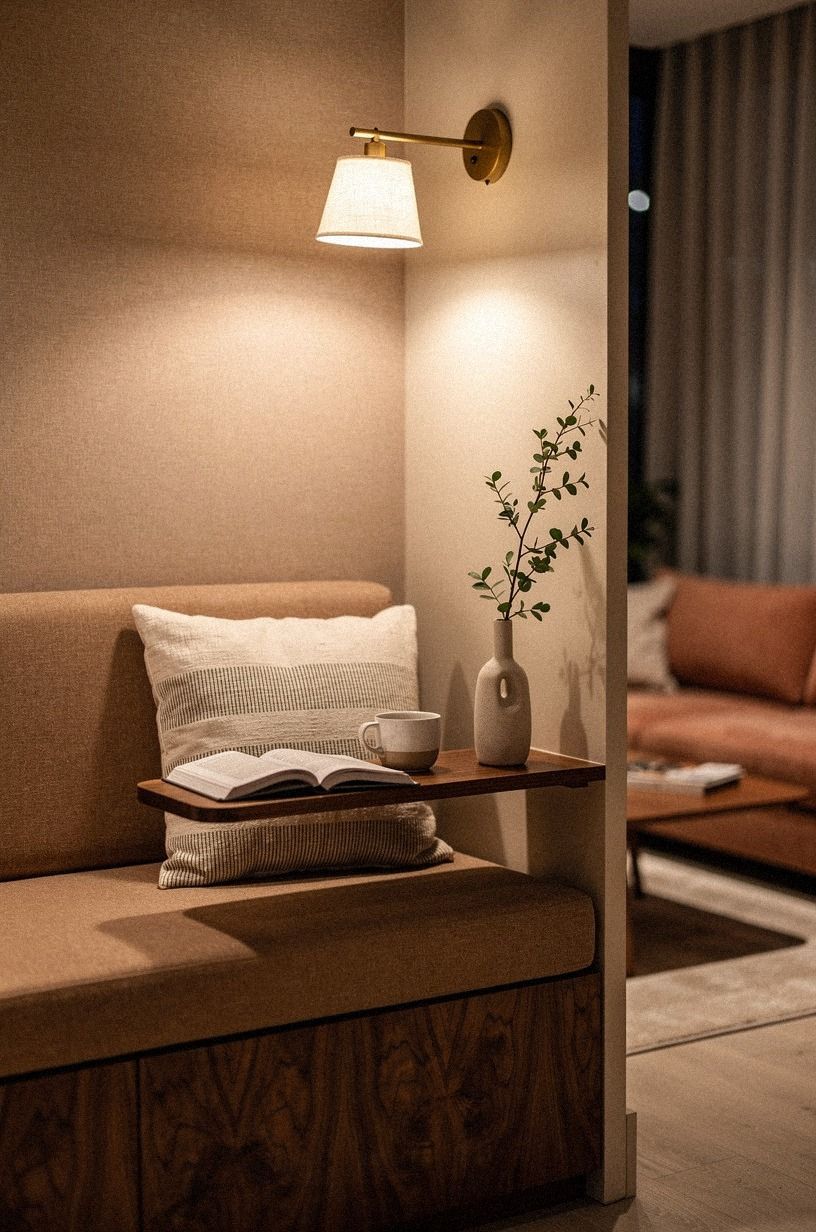
Yes, more often than you think, and the move is treating the corner like one cohesive shape instead of four walls you have to fill. A 5x5 corner with a book-matched walnut table with aged brass stretchers, a small bench in clay-toned linen on the longest wall, two chairs on the short side, and a single pendant will host four people for coffee and three for dinner without anyone feeling cramped. The room feels generous because the eye stops at the table edge instead of bouncing off an empty corner.
I'd skip the four-chair set entirely in a small nook. The bench gives you hidden storage (see hidden-bench storage for the IKEA build), and the bench-plus-two-chairs config flexes when you need three seats for dinner or six for a brunch. If your corner is below 5x5, our small-spaces roundup runs through the 36-inch and 42-inch configurations that still feel like a real nook.
16apply The Corner Hearth Rule
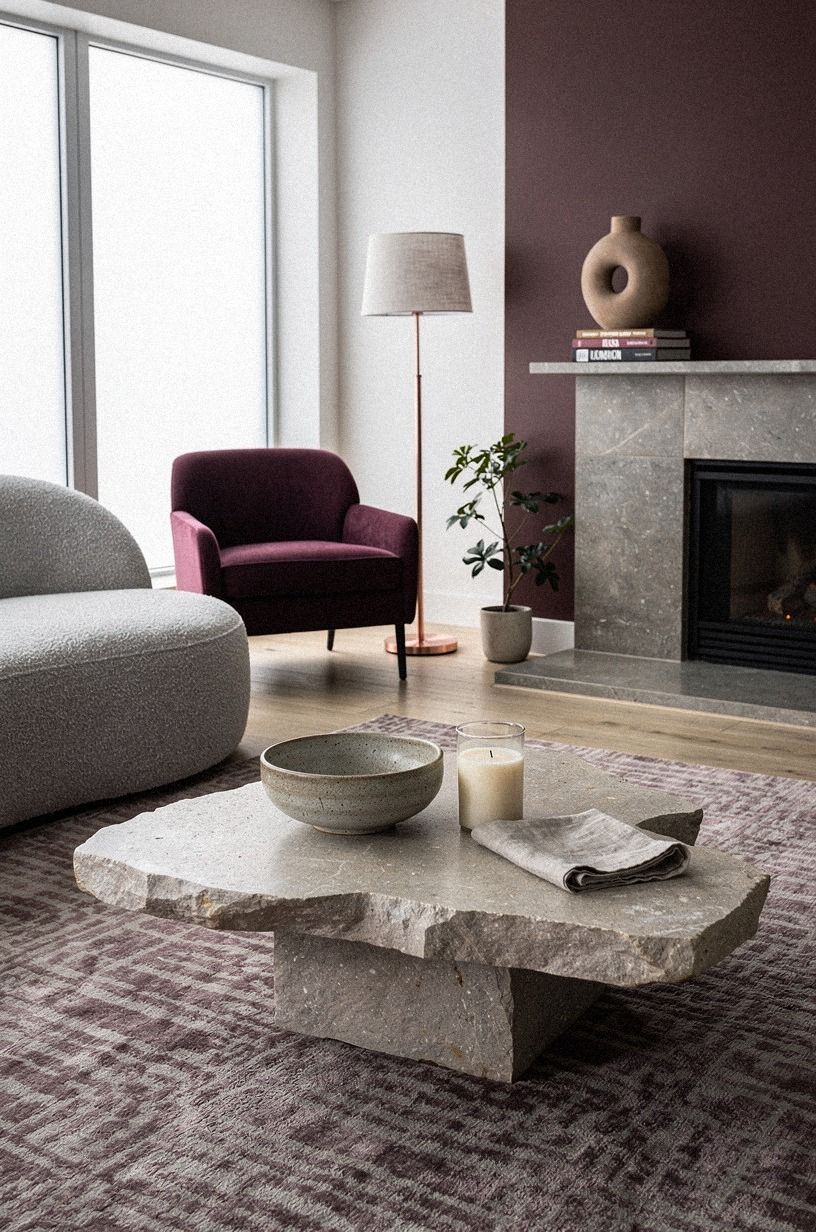
The corner with the strongest light should hold the warmest material. In a windowed corner, an organic bouclé slipper chair in plum with a rose gold floor lamp and a grey wool ottoman turns three minutes of morning sun into the softest seat in the house.
17hang a single brass sconce, kill the overhead glare
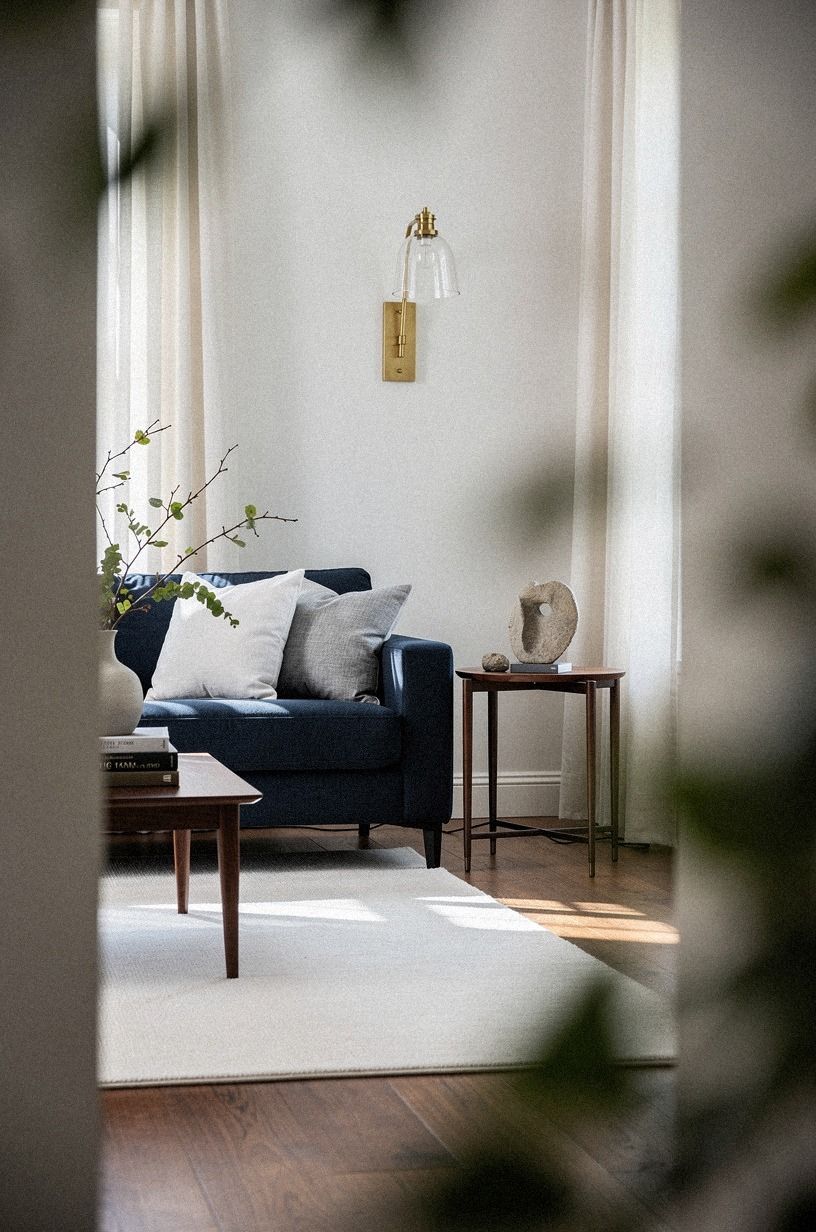
If your nook lives in a windowless corner or a basement-level kitchen, the move is a single brass swing-arm sconce mounted to a walnut corner shelf against a navy wall with white trim, around sixty-six inches up, in unlacquered brass that picks up a soft patina over six months. One sconce, not two, because the corner already has the pendant; two fixtures in a tight corner fight each other and read like a restaurant booth.
I'd go with a warm 2700K bulb, dimmable, and angle it toward the art (see warm lighting guide for the bulb temps I trust). The sconce does the work your missing window can't, and the brass warms a white corner in a way the pendant alone never does.
18close the corner with one tall plant
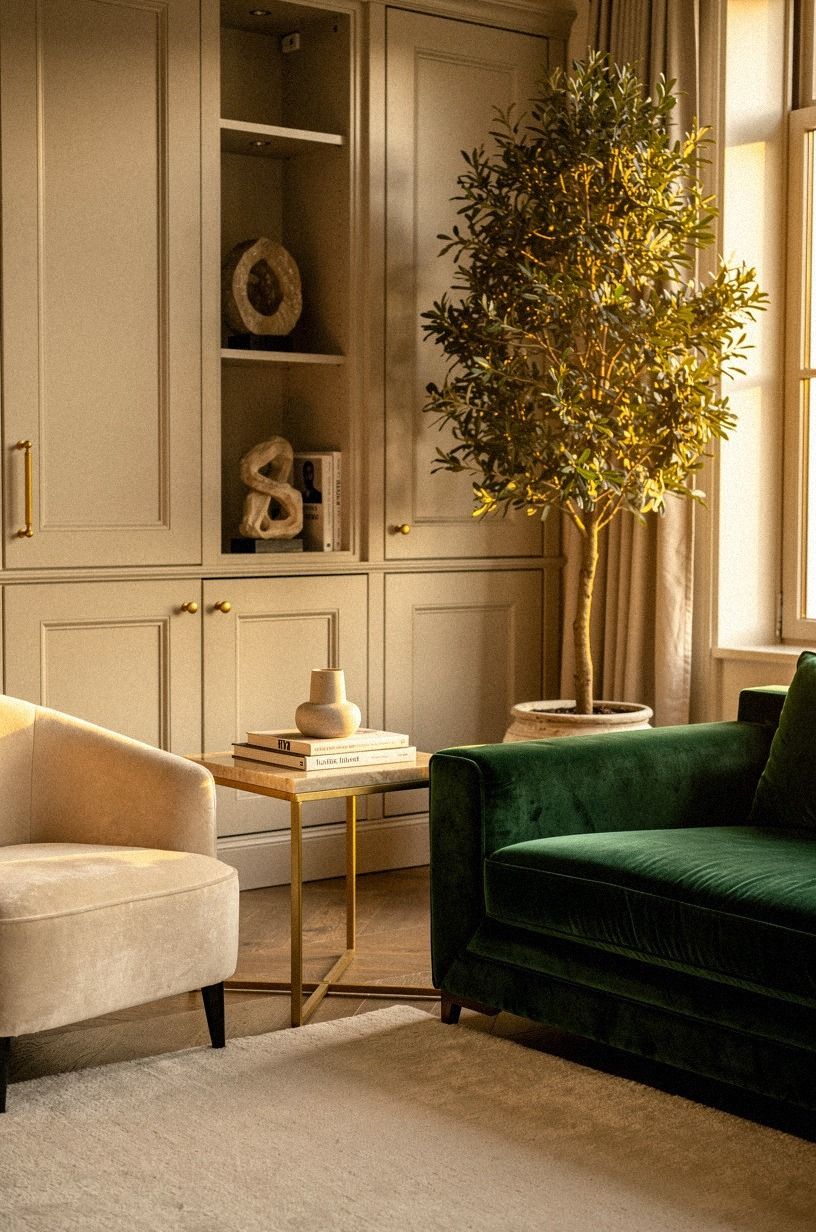
The final move, and the one most nooks skip, is closing the corner behind the bench with one tall plant in a stoneware or terracotta pot. A fiddle leaf fig at five to six feet, a bird of paradise at the same height, or a simple olive tree in a warm clay pot all do the same job: they stop the eye from running out of the room. Pair the plant with a deep-pile mohair velvet lumbar in cream against an emerald wall with gold accents, and the corner feels like a place you chose, not a space you filled.
I'd skip the small pots on the table; the table wants objects you can move, and a tall plant belongs on the floor. If your nook has no floor space behind the bench (the classic galley-kitchen problem), our galley-kitchen nook roundup walks through the wall-hung planters that pull the same eye-stopping weight without eating a square foot of floor.
19commit to The Friday Reset
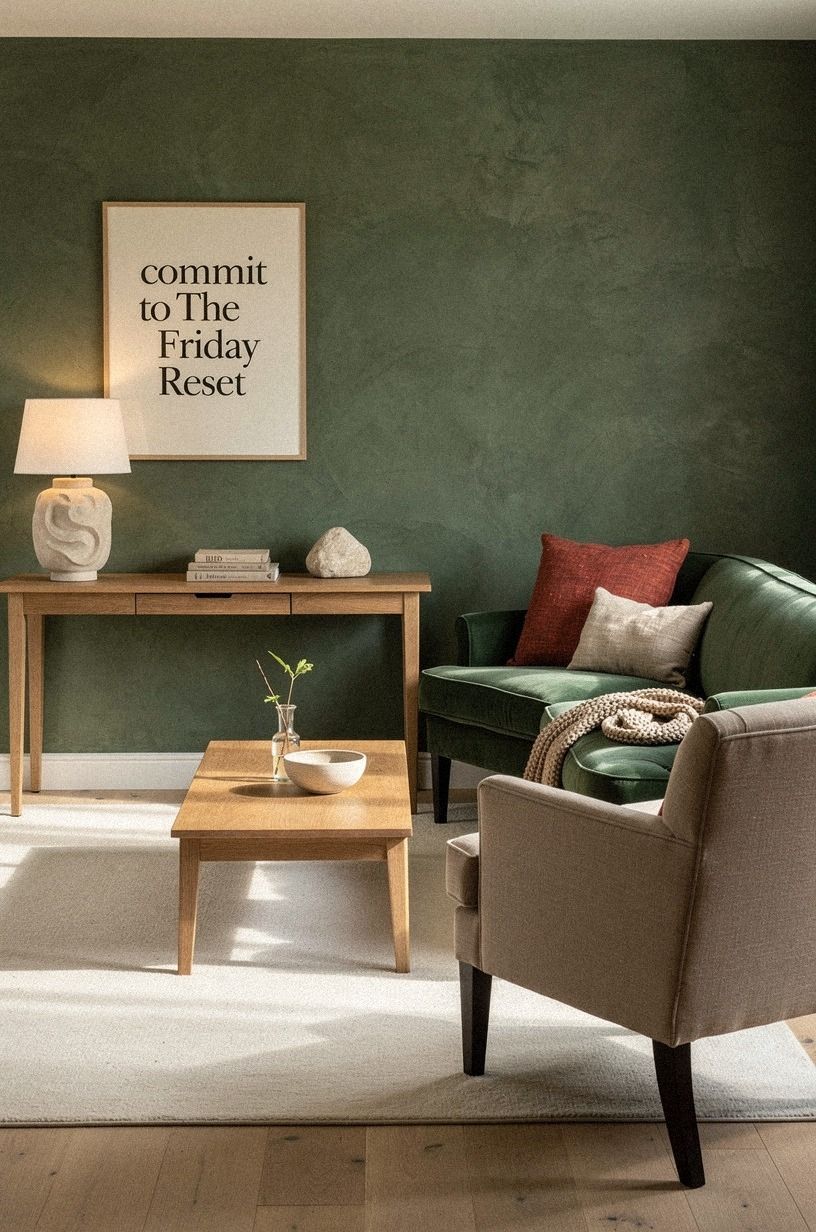
Most nooks decay not because anything breaks, but because nobody resets the styling. The Friday Reset is two minutes, every Friday, that keeps the corner feeling like a magazine without you thinking about it.
Wipe the table, rotate the tray objects, fluff the forest green mohair lumbar, water the plant (or fake-water the faux), and turn the pendant down to twenty percent for dinner. Do it against a hand-applied Venetian plaster wall warmed by a natural oak tray and rust textiles, and the corner will read like a magazine every weekend of the year.
I started doing this after a year of watching my own nook slowly become a junk pile, and the Friday Reset is the only habit that stuck. Two minutes, no list, no app, no cleaning spree.
The corner reads alive because it gets touched every week. Your nook will too.
What I'd Do Tonight If I Were Starting Over
Here's the thing about cozy breakfast nooks that nobody admits out loud: you don't need a renovation, you need a bench. Most of the corners I've seen that feel like a magazine spread started with a forty-eight-inch-wide bench pushed against the wall and a single pendant drop. Everything else is layering on top of that decision.
The bench sets the proportions, the pendant sets the temperature, and the rest is you rotating textiles and styling objects until the nook looks like you've been there for years, sometimes with leftover dinner still on the table.
I've watched this play out in rentals and in owned homes, and the rentals win about half the time because the constraints force the layering to be smart. A Belgian linen cushion cover in heathered oat, a single botanical art print, a Farrow & Ball removable paper in sage on the back wall, a copper drum pendant on a swag kit, a faux olive tree in a stoneware pot, and you're at the level most people chase for ten thousand dollars of renovation. The bench was the move that pulled the rest into place.
I went back and forth on the pendant height while building one of these for a client last spring, and the difference between thirty inches and twenty-two inches above the table changed the way the entire corner felt in candlelight. Drop it lower, give it a matte black dimmer, and you'll never regret it.
And real talk: a single down-wrapped cushion at the banquette seat is worth four throw pillows scattered across a chair set, every time. Lower the pendant is the move most people skip, but the rest of the room reads the difference.
But here is the trap I want to warn you about: the moment a nook is "done," you'll start seeing it on Instagram and want to copy what someone else did with a wider budget. Skip the copy.
Your corner doesn't need their pendant, it needs yours. The pendant that catches your morning light at 7 a.m. is the one that catches it at 6 p.m. on a winter night; the rough walnut tray you stained in your garage ages in a way their stock-pot tray never will.
The nook is yours because you lived into it, not because you spec'd it.
A Few Things Worth Answering
What is the best breakfast nook setup for a small living room corner?
A built-in bench against the longest wall, a 48-inch table or 42-inch round, and one pendant dropped to eye level. Skip the four-chair set in a small corner; the bench gives you hidden storage and lets you push the table closer to the wall than chairs ever could. And our small living room nook roundup shows the bench profiles that survive five mornings of emails and coffee.
Where can I buy breakfast nook furniture pieces on a budget?
Three real sources: IKEA for the KALLAX birch-effect bench base and the HEKTAR pendant that works without an electrician, Target's Threshold line for performance linen covers and washable wool-look rugs, and World Market for rattan or copper pendants in the forty- to seventy-dollar range. For second-hand, Facebook Marketplace under "nook" or "banquette" turns up a Restoration Hardware trestle at half retail most months, but you'll need a truck and patience. For the storage side of the same setup, our DIY bench build guide has the cut list.
How much does a breakfast nook makeover cost?
Typical US range on a refresh (no renovation, no plumbing, no electrical rough-in) runs about $400 to $1,800 depending on the bench choice and the pendant. A built-in bench with storage and a custom cushion lands around $1,200 to $2,500 for materials if you're doing the labor, more if you're hiring a finish carpenter. Skip the carpenter and grab the IKEA BESTÅ with two drawer fronts in white-oak effect for about three hundred dollars and a Saturday with a drill, that's the honest budget play.
Can I create a cozy breakfast nook on a budget?
Yes, and most of the lift is free or under thirty dollars. The moves that cost nothing: rearranging a bench against a wall, rotating three objects on a tray, swapping your pendant bulb from cool to warm.
The first spend I'd make is on a single performance-linen cushion cover in heathered oat from Threshold at about forty dollars, the warmth-per-dollar ratio is unbeatable. After that, a plug-in rattan or copper pendant at around sixty dollars with a swag kit gives you the hardwired look without the electrician invoice.
Is a breakfast nook worth it in a small space?
Yes, more than almost any other layout decision in a small home. A nook turns a dead corner into the highest-traffic square footage you've got, morning and evening five days a week.
The "feel like a hotel" effect people pay designers for is mostly a single bench, a warm pendant, and a textured textile in the corner; the rest is styling, which costs time, not money. The 48-inch round table is the move that lets a corner feel generous even at full capacity.
Is a breakfast nook a good idea for a rental?
Yes, and rentals have an edge because the constraints kill the bad options before you waste money. Go with a freestanding bench (not a built-in), a removable wallpaper in a small section, a plug-in pendant instead of hardwiring, and a rug sized to cover the spill zone.
Leave any holes patched when you move out and you'll get your deposit back. The "renter-friendly" nook looks identical to the "owned-home" nook six months in; nobody who visits can tell the difference.
And our nook wall decor roundup leans heavily on the no-damage moves.
How do I keep a breakfast nook looking styled without redecorating?
Run the Friday Reset (rotate tray objects, fluff the lumbar, dim the pendant for dinner) and you'll never need a redecorate. Most nooks decay because nothing on them gets touched; the moment you handle the tray and the cushions weekly, the corner reads alive. For the rest, our modern cozy nook guide covers the layering that survives a year of use.
Where I'd Start First
If I had to pick one, I'd start with the bench. Everything else fights you if the proportions are off, and the bench sets them. You'll thank me when dinner runs long, then peek at our modern breakfast nook ideas.