
 by
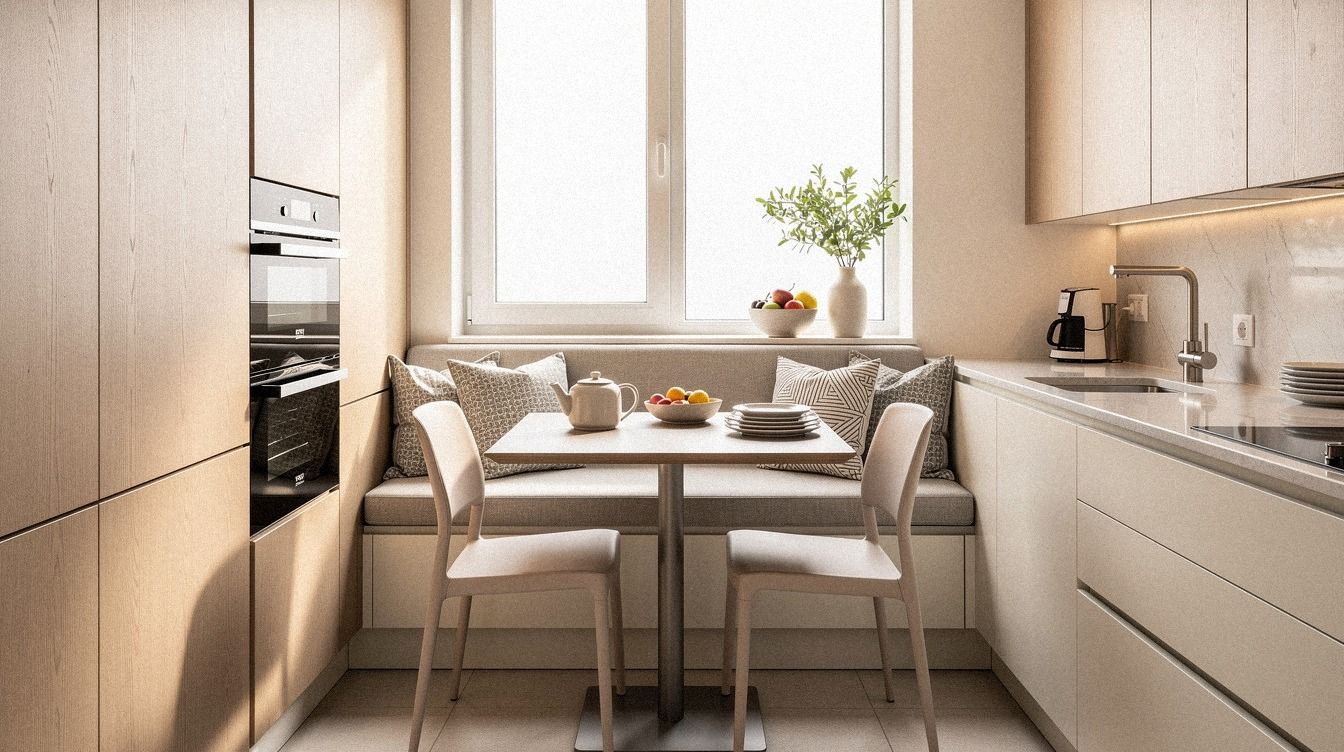
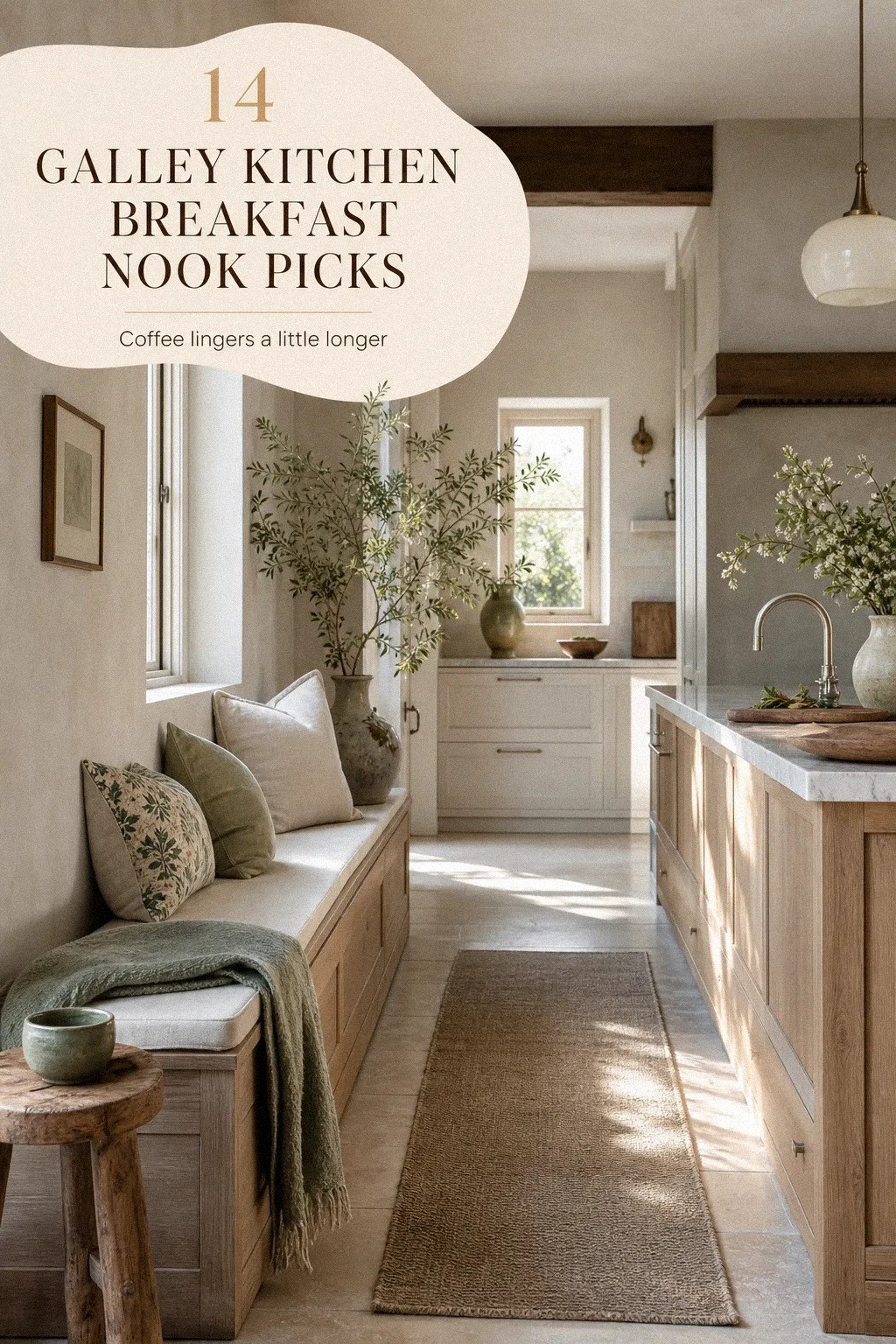
by Small-Space Galley Kitchen Breakfast Nook Ideas for Narrow Layouts work best when you stop treating the end of a narrow kitchen like leftover space. I used to shove in a tiny round table and wonder why the whole aisle felt tighter, louder, and harder to use. The part I missed was simple: a nook has to follow the run of the room, not fight it. Once you line up the seating, scale, and lighting, your kitchen starts feeling warm and deliberate instead of squeezed.
- Build a wall bench along the galley run (The Long-Line Rule)
- Tuck a two seat banquette under the window (Soft Light, Tight Footprint)
- Mount a fold down table beside cabinets (What if the table disappeared?)
- Build a wall bench along the galley run (The Long-Line Rule)
- Tuck a two seat banquette under the window (Soft Light, Tight Footprint)
- Mount a fold down table beside cabinets (What if the table disappeared?)
- Choose a half moon table for traffic flow (Curve over Corners)
- Wrap corner seating around the cabinet end (The L-Turn Nook)
- Add drawer storage beneath the breakfast bench (The Hidden Volume Move)
- Hang a slim pendant over the nook (The Three-Height Light Stack)
- Paint the bench base to match cabinetry (Color Match over Contrast)
- Install a picture rail above bench seating (The Vertical Finish)
- Use backless stools under a narrow counter (Slim Seats, No Snags)
- Frame the nook with patterned cafe curtains (Soft Pattern, Hardworking Privacy)
- Place a tiny pedestal table in the pass through (The One-Leg Rule)
- Run beadboard behind the wall bench (Texture Without Bulk)
- Slide a cushioned bench between pantry cabinets (Cabinet Walls, Soft Center)
1Build a wall bench along the galley run (The Long-Line Rule)
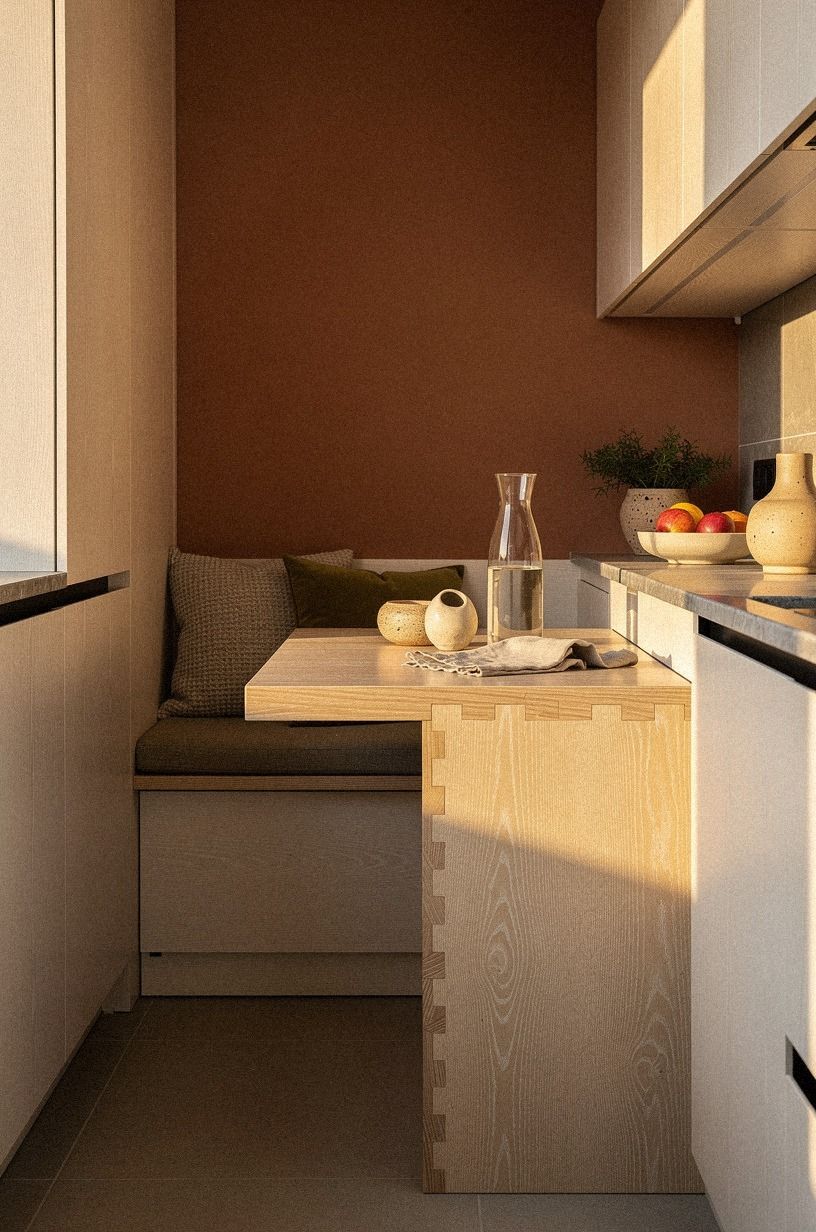
Build your bench parallel to the cabinet run so your eye reads one clean line instead of a pileup of furniture. In a narrow nook in kitchen layouts, that move matters more than decor. You keep the walking lane clearer, you gain more seating than two loose chairs, and you stop clipping corners every time you carry coffee from the counter.
I like a bench in 3/4-inch solid white oak when the kitchen already has warm wood somewhere, even if it's only a cutting board stack or open shelf. Keep the seat depth modest so you're not stealing inches from the aisle, and let the bench die neatly into the wall instead of jutting forward. If you're planning the cabinet side too, this guide to galley kitchen cabinet ideas for narrow layouts helps the whole run feel intentional.
And don't overbuild the back. A slim rail or flat panel feels lighter than a chunky farmhouse profile, especially when upper cabinets are already 30 to 42 in tall.
I learned that one the hard way in my own kitchen. The taller bench looked custom, sure, but it made breakfast feel like I was sitting in a booth at a chain restaurant.
2Tuck a two seat banquette under the window (Soft Light, Tight Footprint)
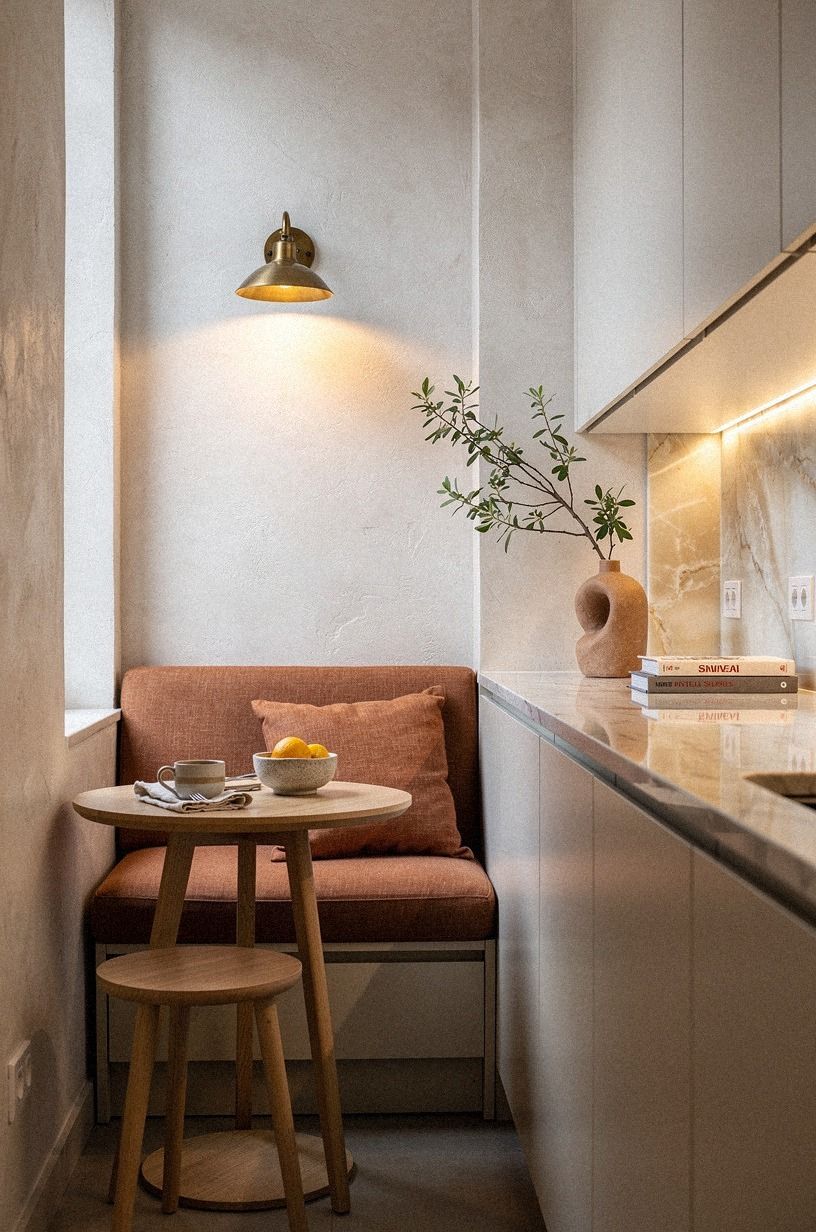
A two seat banquette under the window is one of the easiest banquette seating small kitchen moves because the light is doing half the styling for you. You're not asking the nook to be grand. You're asking it to feel settled, bright, and worth using on a Tuesday morning.
Use a slim cushion in Belgian flax linen or a wipeable performance fabric, then keep the table small enough that knees can slide in without a side-step. Under a window, the bench can sit a little lower visually because the glass breaks up the mass. That's why this setup works so well in an eating nook in kitchen corners that would feel dead with a freestanding dinette.
But the fabric choice is where people get timid. I would skip bright optic white here.
Benjamin Moore White Dove OC-17 on the trim with a warm oatmeal seat looks softer, hides daily crumbs better, and does not glare when the morning sun hits the glass. If you want more compact layouts like this, save our small breakfast nook ideas that fit almost anywhere for later.
3Mount a fold down table beside cabinets (What if the table disappeared?)
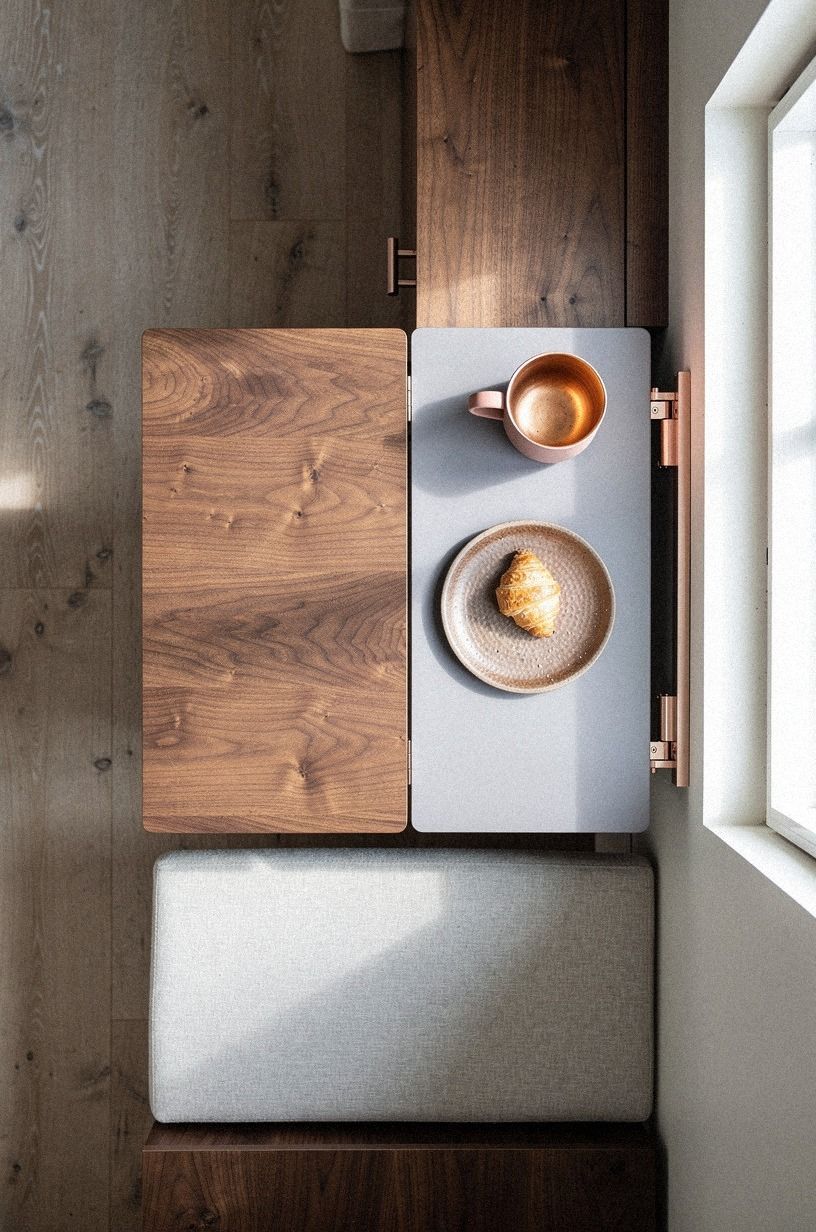
If your galley aisle is tight, a fold down table is the closest thing to free square footage. You get a real breakfast perch when you need it, and you get the walkway back when you don't. In a kitchen wall bench seating plan, that flexibility can be the difference between a nook you love and one you resent.
Mount the top beside the cabinets at standard counter height, about 36 in, so the table lines up visually with the rest of the kitchen. A painted plywood leaf can work, but a better look is white oak veneer with a rounded edge that does not catch your hip as you pass. Pair it with one wall bench or two stackable stools, then leave the floor open underneath so the whole corner feels lighter.
I would not use an ornate support bracket here. Simple is better. A folding leg or hidden hinge disappears into the cabinetry, and that's the whole point.
For more renter-friendly ways to squeeze function into a galley, peek at apartment breakfast nook ideas for renters small spaces.
4Choose a half moon table for traffic flow (Curve over Corners)
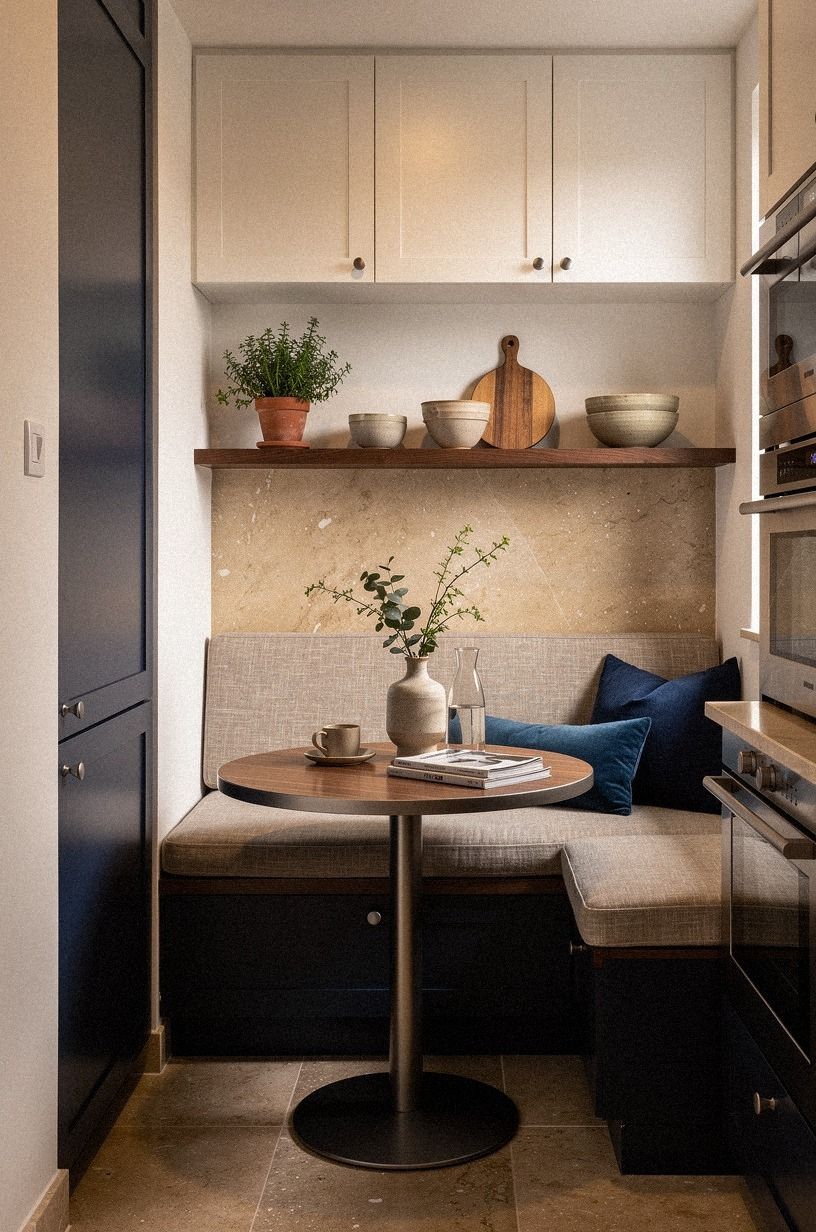
A half moon table solves the most annoying galley problem: sharp corners in a space where you're already moving sideways. Because the flat edge sits against the bench, the curve keeps the walkway open without making the nook feel skimpy. It's a small move, but your shins won'tice the difference on day one.
Look for a top in honed travertine look laminate or sealed oak, something with a soft edge and a pale finish that bounces light back into the aisle. A full circle often asks for more clearance than you have. In a narrow kitchen, you want the visual softness of round without losing those extra inches you need to pull out a drawer or pivot toward the sink.
And if your cabinets lean white, the table is where I would bring in warmth instead of painting everything beige. The balance between pale cabinetry and wood is what makes many white vs wood kitchen cabinets how to decide conversations land in the middle. That middle is usually the smartest answer.
5Wrap corner seating around the cabinet end (The L-Turn Nook)
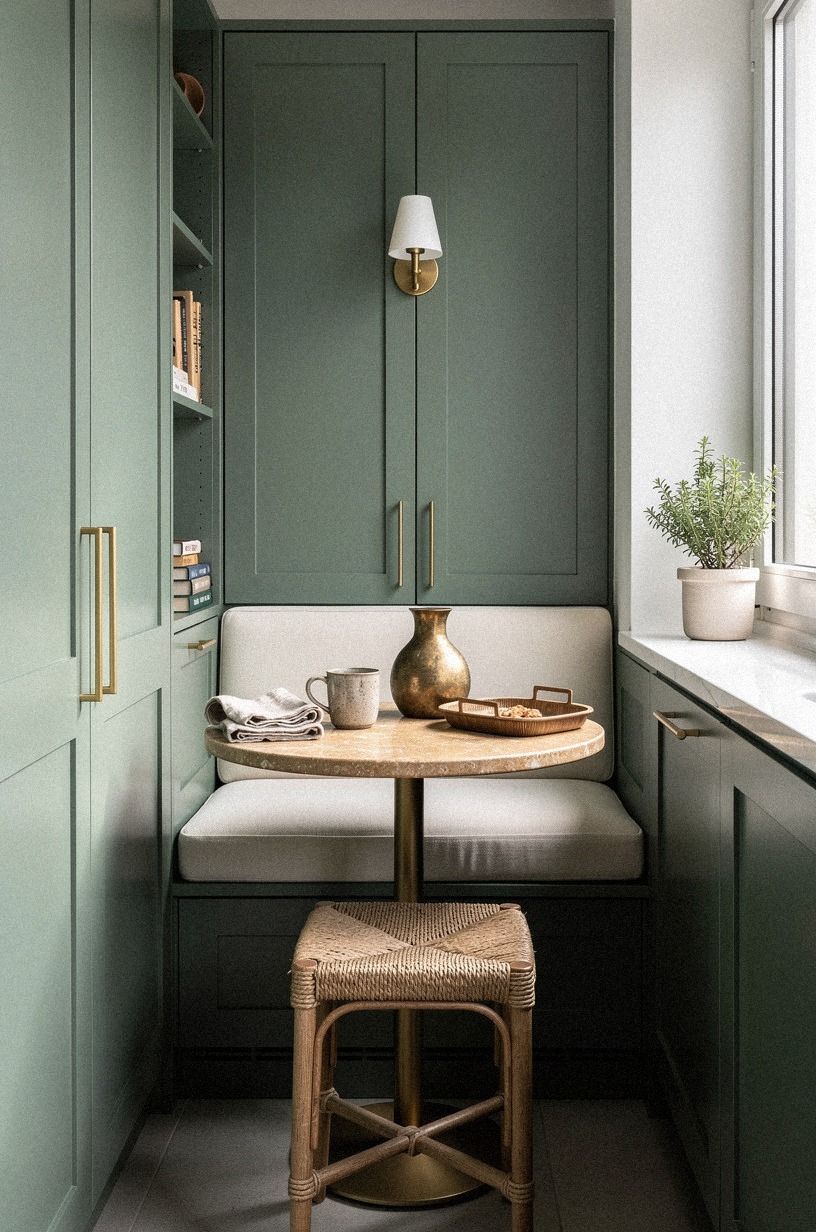
When the cabinet run ends near a blank corner, wrap the seating around it and let the nook claim that turn. You gain one extra seat, but more importantly, you make the footprint feel built in instead of dropped in. That's what turns a nook in kitchen plans from temporary to architectural.
Keep the shorter return modest, just enough for one person or a tray of groceries, and face the longer side toward the light. I like this layout with IKEA TONSTAD oak effect nearby because the straight lines of the casework play well with an L-shaped bench. If your kitchen already has narrow uppers, the horizontal bench line gives them a calmer base.
But don't crowd that inner corner with a thick back cushion. It sounds comfortable, and it usually isn’t.
A firmer seat with two loose pillows works better because you can shift them when someone slides in. Want more ways to add depth around cabinets?
The color pairings in two tone kitchen cabinet ideas that add instant depth are useful here too.
6Add drawer storage beneath the breakfast bench (The Hidden Volume Move)
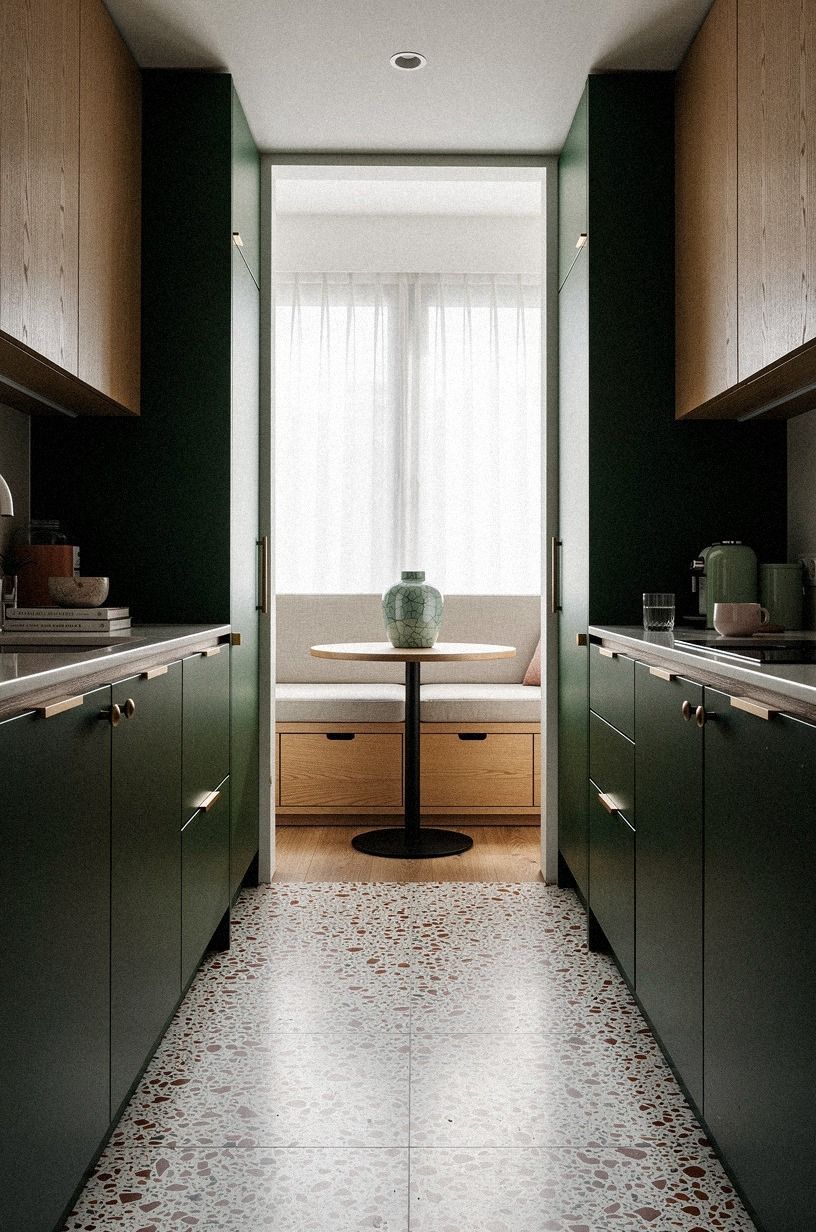
Bench seating should pull double duty in a small galley. If it does not store anything, you're wasting the very thing the nook is supposed to solve. Deep drawers under the seat give you a place for placemats, school papers, candles, table linens, and the random serving pieces that never fit in shallow kitchen drawers.
Use full-extension hardware so you can reach the back without unloading the front, and match the drawer fronts to the cabinets for a cleaner look. A bench base in Shaker-style painted fronts feels built with the kitchen, not appended later. This is especially helpful in layouts where the aisle already needs 42 to 48 in of comfortable clearance and every upper cabinet is pulling visual weight.
Here is the honest money part. Storage upgrades often make more sense than surface swaps because they change how you live in the room every single day. If you're pricing a broader refresh, compare the rough ranges below before you spend on pretty finishes first.
What a galley kitchen refresh typically costs
A breakfast nook does not need a full remodel to pay off in daily use. Most people get the biggest shift from a cosmetic pass, better lighting, and smarter seating, not a demolition crew.
If you're deciding where to spend, I would put storage and seating ahead of a precious countertop in a narrow room. The breakfast corner changes your routine. A trend finish only helps if the layout was working already.
7Hang a slim pendant over the nook (The Three-Height Light Stack)
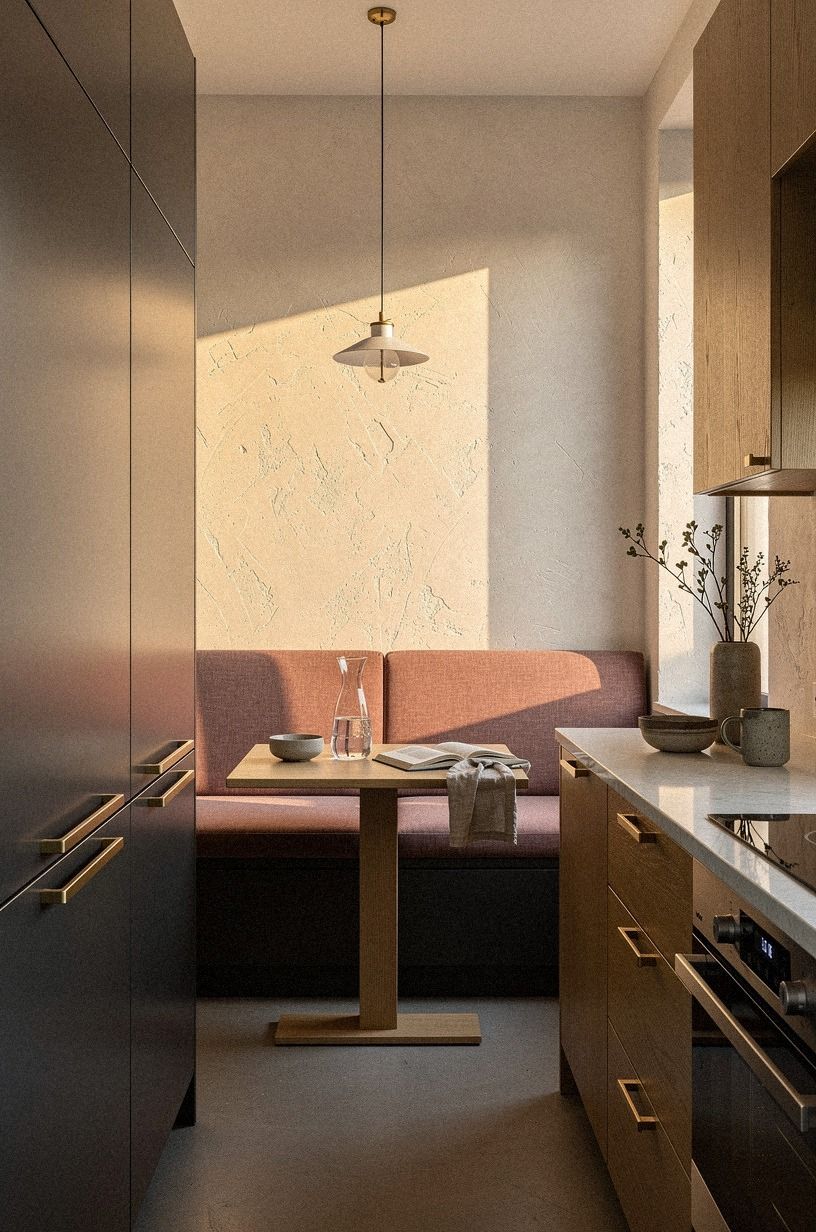
A slim pendant gives the nook its own zone, even when it sits at the tail end of the galley with cabinets crowding both sides. That little pool of light matters.
Without it, the table feels like overflow space. With it, breakfast feels intentional and evening takeout feels calmer too.
Go narrow and vertical. A pendant in unlacquered brass or a small opal glass drop keeps the line elegant without blocking views through the room. I'd skip a wide dome here unless the nook is unusually open.
In a tight kitchen, one thick shade can start bossing around the whole composition.
But layered light is the part people forget. Keep the pendant warm, then support it with under-cabinet glow so the aisle does not turn cave-like after sunset. Our favorite examples in under cabinet lighting ideas to brighten your kitchen show why that second layer matters so much in a narrow plan.
8Paint the bench base to match cabinetry (Color Match over Contrast)
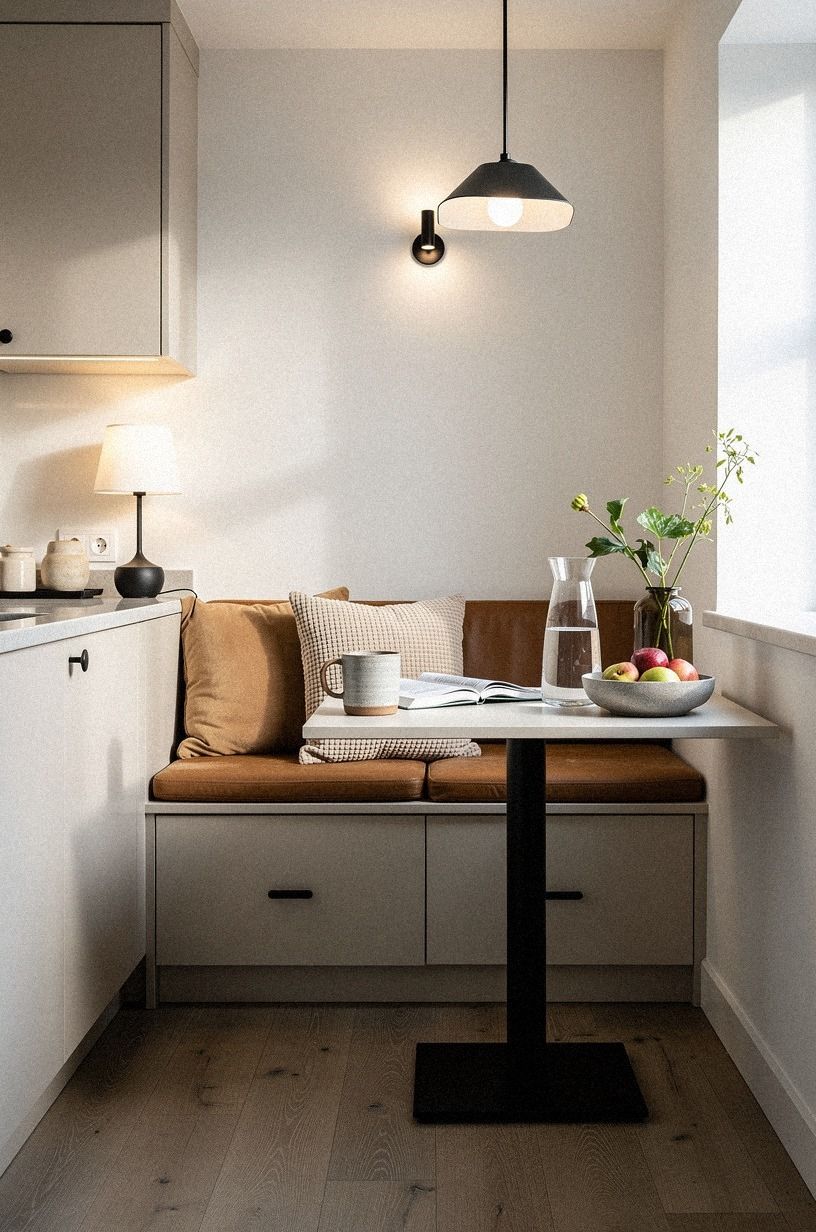
Matching the bench base to the cabinetry is the fastest way to make separate pieces read as one built-in run. In a galley kitchen breakfast nook, that visual quiet buys you breathing room. Your eye isn't stopping at every seam, and the whole wall looks longer because the color stays consistent.
Try Sherwin-Williams Evergreen Fog SW 9130 if your kitchen wants softness without going gray, or stay classic with Benjamin Moore White Dove OC-17 if the room is already bright and warm. I'd not paint the bench a loud accent color in a narrow kitchen. Contrast sounds exciting, but it often shrinks the footprint because you have just outlined the bulk.
And if you still want variation, bring it through the seat cushion or a wood table top instead. That's the same logic behind many the most popular kitchen cabinet colors right now kitchens that feel current without feeling busy. Restraint wins here.
It really does!
9Install a picture rail above bench seating (The Vertical Finish)
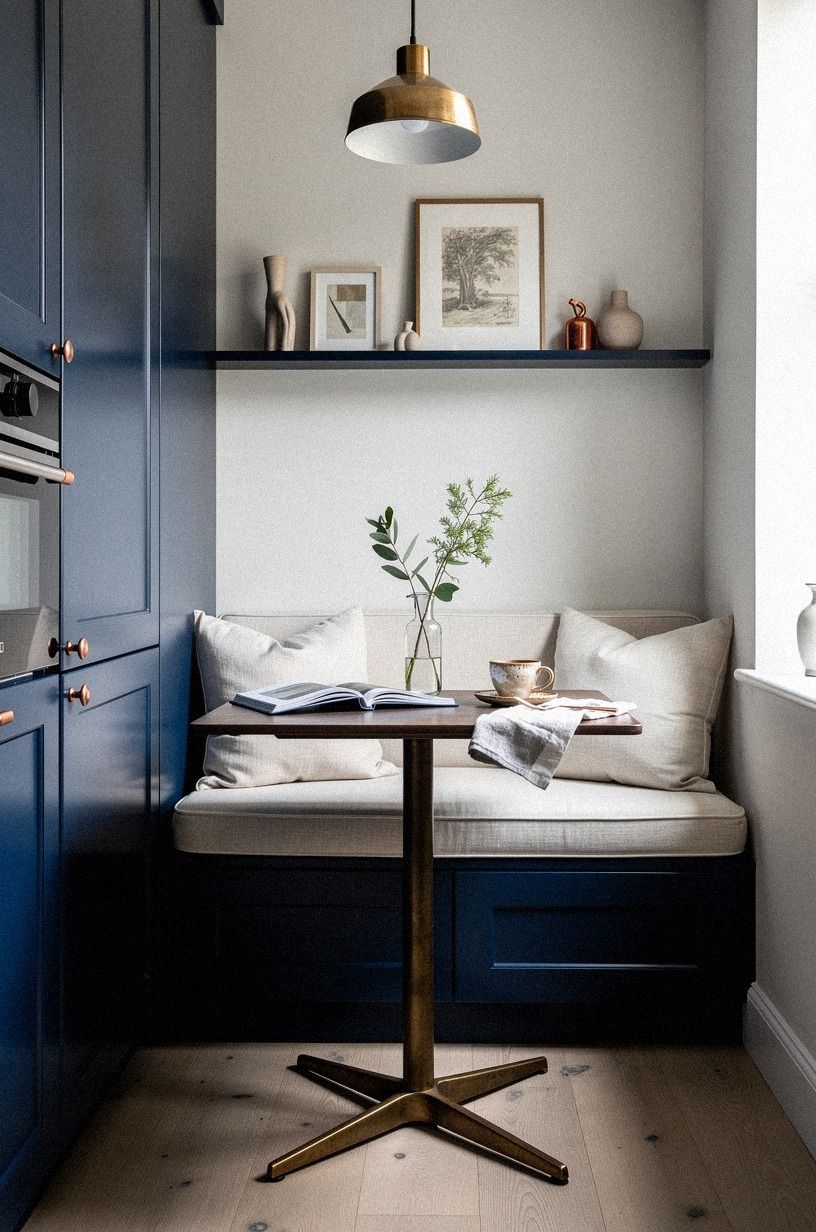
A picture rail gives a narrow nook some height without asking for another piece of furniture.
10Use backless stools under a narrow counter (Slim Seats, No Snags)
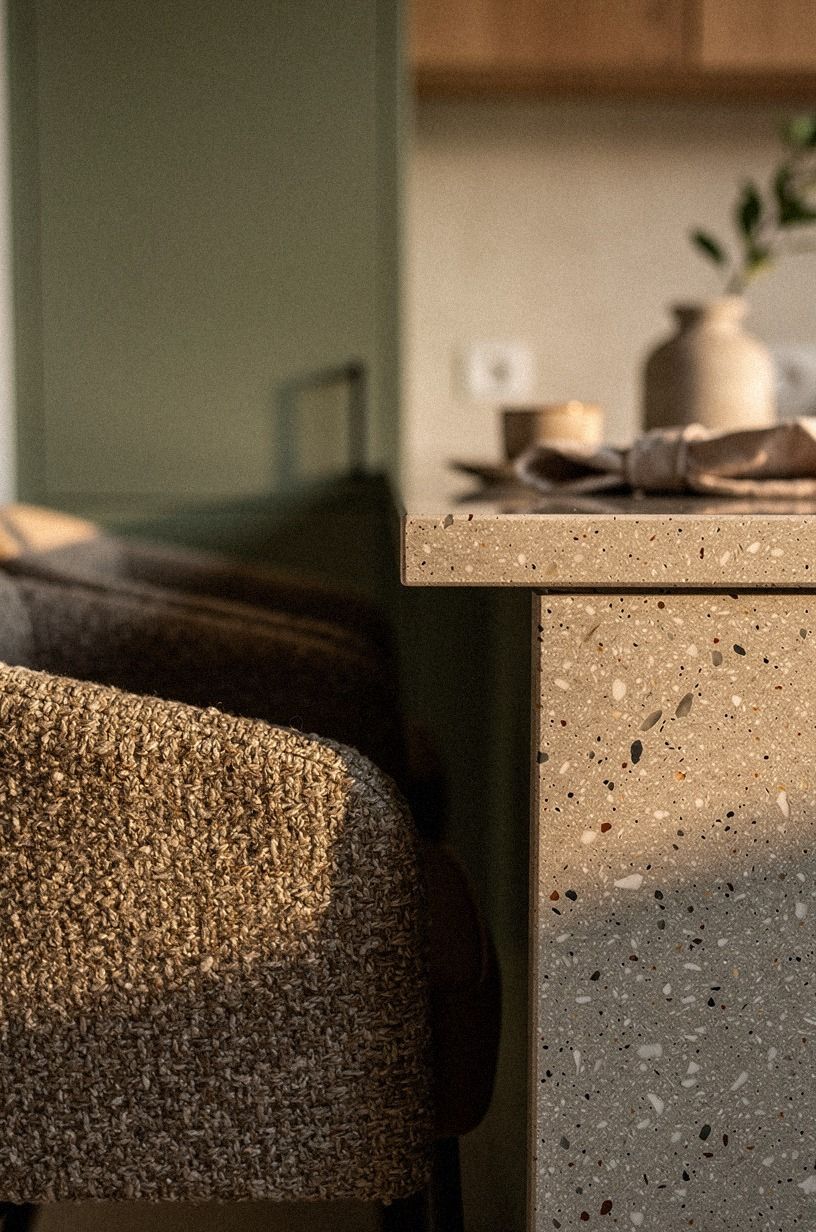
Backless stools are perfect when the breakfast perch is really a narrow counter edge or a shallow ledge built off the wall. You get a legitimate place to sit, but the stools tuck fully out of sight when the kitchen is in work mode. That matters in an eating nook in kitchen zones where circulation is already precious.
Look for stools with a small footprint and a seat that still feels finished, like Target Threshold saddle stools or a simple wood top with a woven rush seat. The sweet spot is a stool that disappears under the counter with no visual fight. Heavy backs, thick legs, and wide metal frames can make the entire run feel cluttered before anyone even sits down.
But don't chase the cheapest option if the seat wobbles. You'll stop using it. A stable stool with a footrest is worth more than a flashy one with bad proportions, and it pairs especially well with the clean cabinet shapes in galley kitchen cabinet ideas for narrow layouts.
11Frame the nook with patterned cafe curtains (Soft Pattern, Hardworking Privacy)
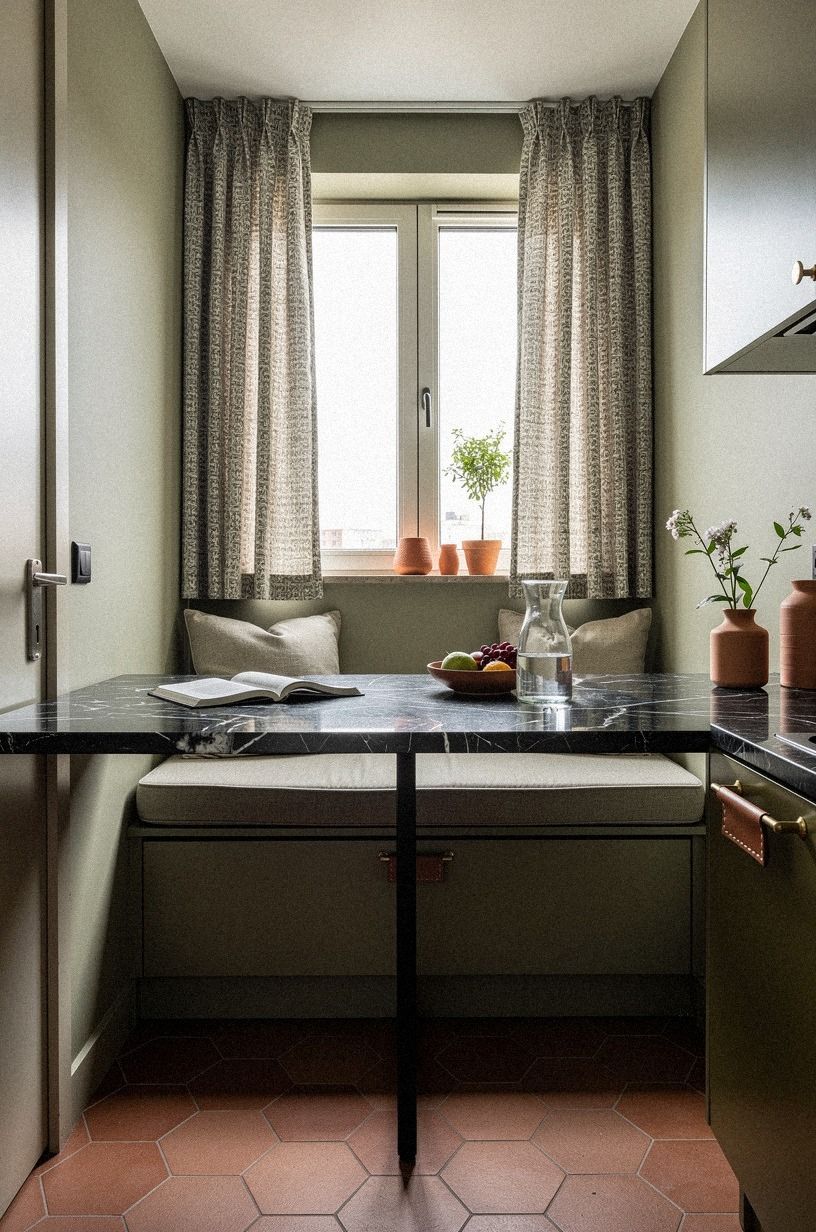
Cafe curtains are one of my favorite renter-safe ways to make a tiny breakfast area feel finished.
12Place a tiny pedestal table in the pass through (The One-Leg Rule)
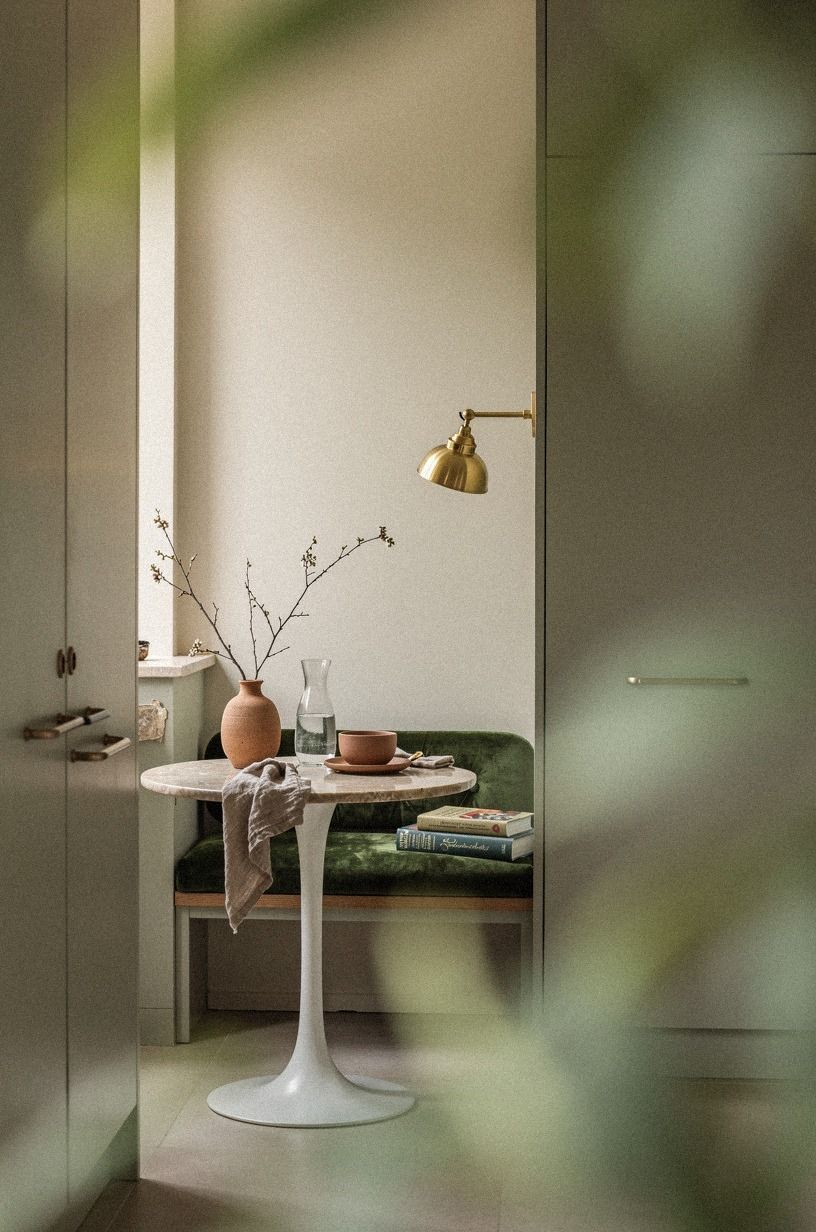
A tiny pedestal table is ideal when the nook sits in a pass-through space between two runs of cabinets. Four legs can feel like traffic cones in a narrow kitchen. One centered base keeps the floor cleaner and lets you slide in from either side without kicking your way to breakfast.
Keep the top genuinely small, then style it like it matters. A compact surface in Calacatta Gold look quartz or painted wood still has room for coffee, toast, and one little vase, which is enough.
You don't need a family-size table here. You need a landing spot that makes the kitchen more usable without blocking the route to the pantry.
But scale is everything. If you have to turn your body every time you pass, the table is too big.
That same discipline comes up when comparing material choices in the best outdoor kitchen countertops ranked compared, even though the room is different. Proportion is the real luxury.
13Run beadboard behind the wall bench (Texture Without Bulk)
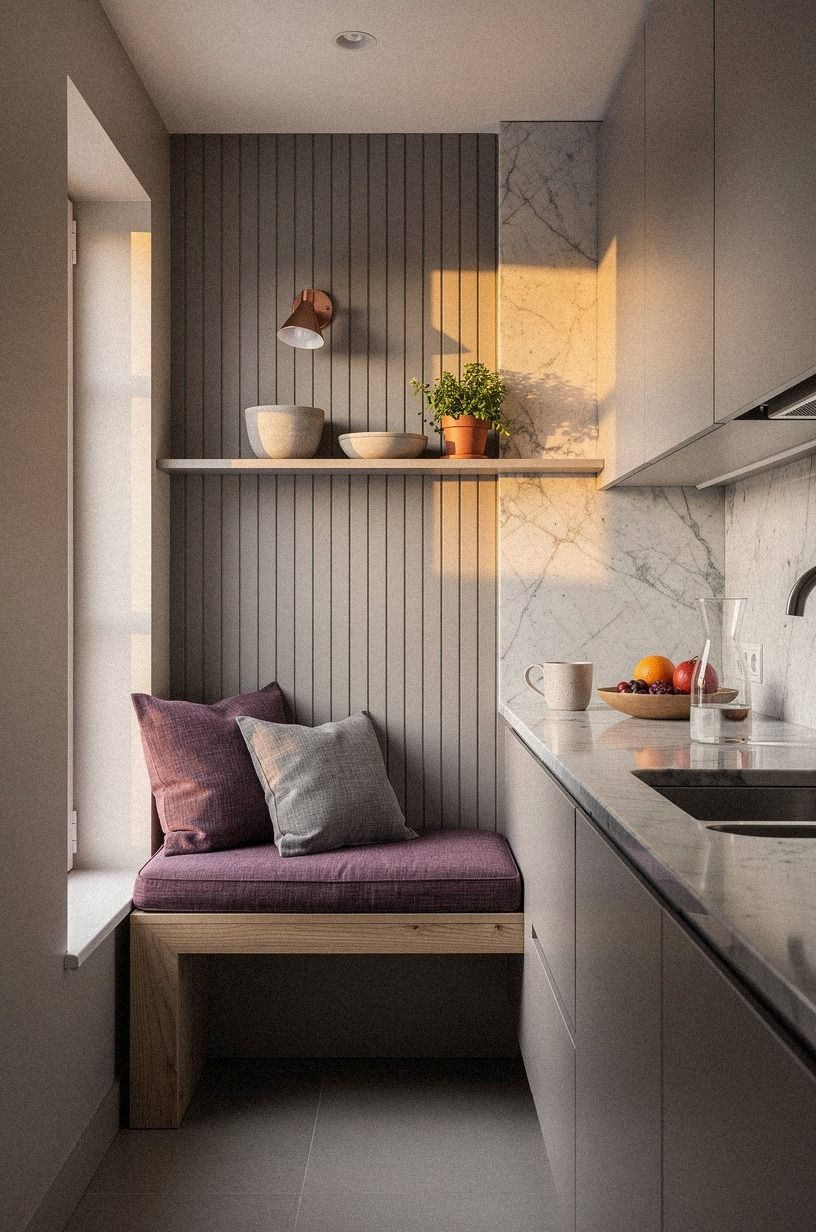
Beadboard behind a wall bench gives the nook just enough texture to feel finished while staying flatter than most tile, panel molding, or chunky trim ideas. In a narrow room, flatter matters. You keep the profile crisp, and you get charm without pushing the seating farther into the aisle.
Paint it to match the wall for a soft envelope, or use a low-contrast shift so the vertical grooves catch light without shouting. I love this look in Farrow & Ball Studio Green No.93 with a warm wood table, but it's just as good in a quiet white kitchen. The bead spacing gives the wall rhythm, which is often what tiny breakfast corners are missing.
And yes, this can be renter-inspired even if you're not installing real millwork. Thin paneling sheets, removable trim concepts, and clever paint can fake the spirit of it. If your cabinets are still in flux, the wood-and-paint balance in white vs wood kitchen cabinets how to decide is worth reading first.
14Slide a cushioned bench between pantry cabinets (Cabinet Walls, Soft Center)
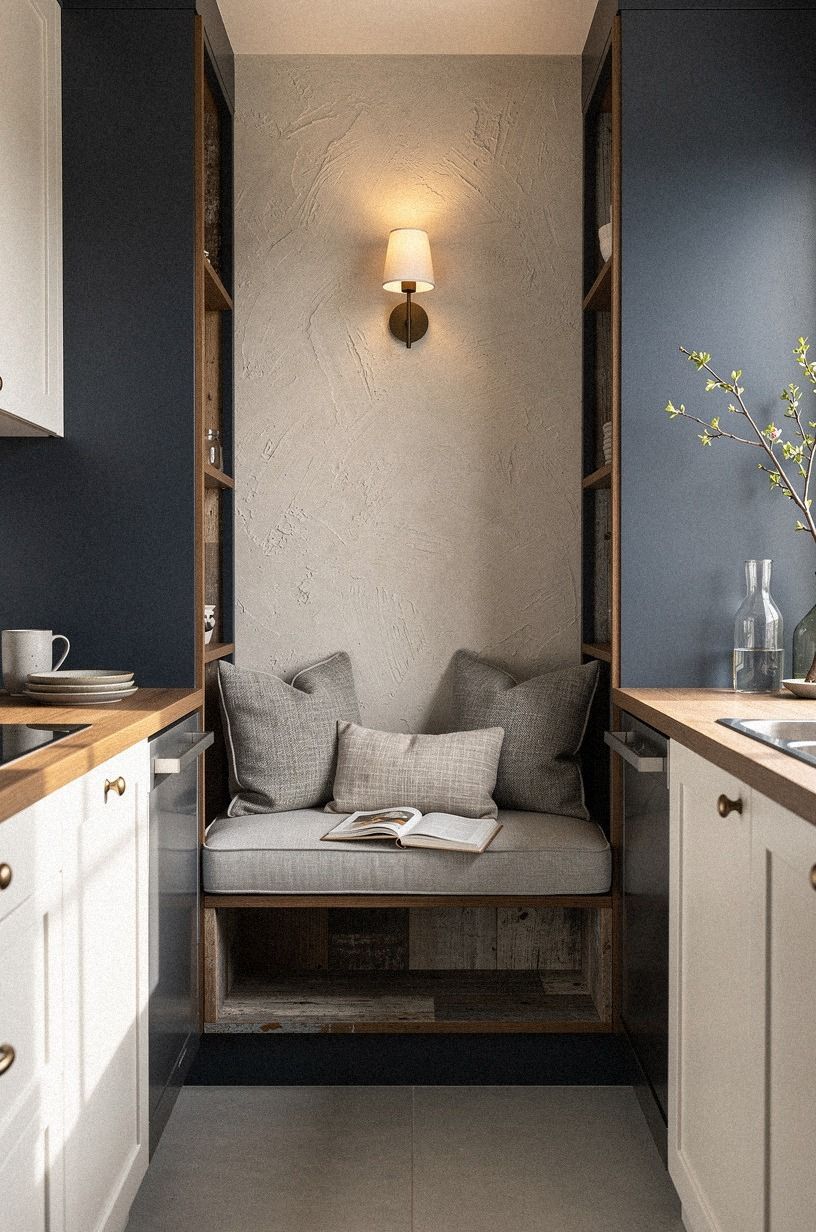
When tall pantry cabinets frame the end of the galley, slide a cushioned bench right between them and let the architecture do the hugging.
Why these narrow nooks keep working
I think small breakfast nooks work so well in galley kitchens because they solve an emotional problem as much as a layout one. A narrow kitchen can feel like a pass-through, a room you hurry through on the way to the rest of the house.
The second you add a place to sit, even a tiny one, the room starts acting like a destination. That shift is bigger than people expect.
It’s such a good payoff!
I also think people overspend on surfaces and underspend on posture. What makes you want to use a nook isn't the most expensive stone. It's the seat height that feels natural, the table edge that does not bruise you, the light that makes toast at 7 a.m. feel gentle, and the storage that keeps clutter from camping on the table.
I've made the opposite choices before. They photographed well. They were annoying to live with.
If you're deciding between pretty and practical, pick the move that gets used every day. Build the bench.
Add the drawer. Choose the table you can walk around without turning sideways. Then layer in the charming part.
That's how these little corners end up feeling personal instead of staged.
And here is the part nobody really says out loud: a narrow kitchen does not need to imitate a big eat-in kitchen to feel generous. It just needs one calm landing zone.
A bench under a window, a pendant over a half moon table, a painted base that matches the cabinets so the whole wall settles down. That's enough. More than enough, honestly.
When the basics are right, even a five-minute breakfast feels grounded, and that's what makes people keep the nook instead of ripping it out two years later.
The Questions Worth Answering First
What is the best Galley Kitchen Breakfast Nook Ideas for Narrow Layouts for a small kitchen?
The best choice is usually a wall bench or a two-seat banquette because you gain seating without crowding the aisle. I'd start with a bench plus a slim table before anything else. For inspiration, the built-in feel of IKEA TONSTAD pieces scales nicely in compact rooms.
Where can I buy Galley Kitchen Breakfast Nook Ideas for Narrow Layouts pieces on a budget?
Start with IKEA for simple benches, Target for stools, and Wayfair for small tables. Then check Facebook Marketplace for a solid wood bench you can repaint. You'll often get better proportions secondhand, and your budget stretches further when the bones are already good.
How much does a Galley Kitchen Breakfast Nook Ideas for Narrow Layouts makeover cost?
About $100 to $300 can change the feel of the nook, especially if you're painting, swapping hardware, and adding a cushion or light. Free wins count too: moving furniture, editing clutter, and restyling with what you own. Bigger cabinet work pushes you into the ranges in the cost table above, and the most popular kitchen cabinet colors right now can help you keep the refresh cohesive.
Can I create a Galley Kitchen Breakfast Nook Ideas for Narrow Layouts on a budget?
Yes, and the cheapest moves are usually the smartest ones. Paint the bench base to match the cabinets.
Use a tension rod with cafe curtains. Hunt for one small pedestal table secondhand, then spend on the seat cushion where your body won'tice it.
Is a Galley Kitchen Breakfast Nook Ideas for Narrow Layouts worth it in a small space?
Yes, it's worth it because a tiny nook can make a narrow kitchen feel more useful, not less. Small rooms benefit from built-in style moves that keep the floor open. If you can walk through cleanly and still sit comfortably, the nook is doing its job.
Is Galley Kitchen Breakfast Nook Ideas for Narrow Layouts a good idea for a rental?
Yes, especially if you use no-damage layers that warm up the kitchen fast. Think tension-rod cafe curtains, a movable bench, peel-and-stick paneling behind the seat, and a plug-in pendant or sconce. You get the atmosphere without starting a fight with your lease.
Where I'd Start First
If I had to pick one, I'd start with the wall bench. Chairs keep asking for space your galley does not have, while a bench follows the room and quiets it. Pin that idea for later and pair it with galley kitchen cabinet ideas for narrow layouts before you size anything.