
 by
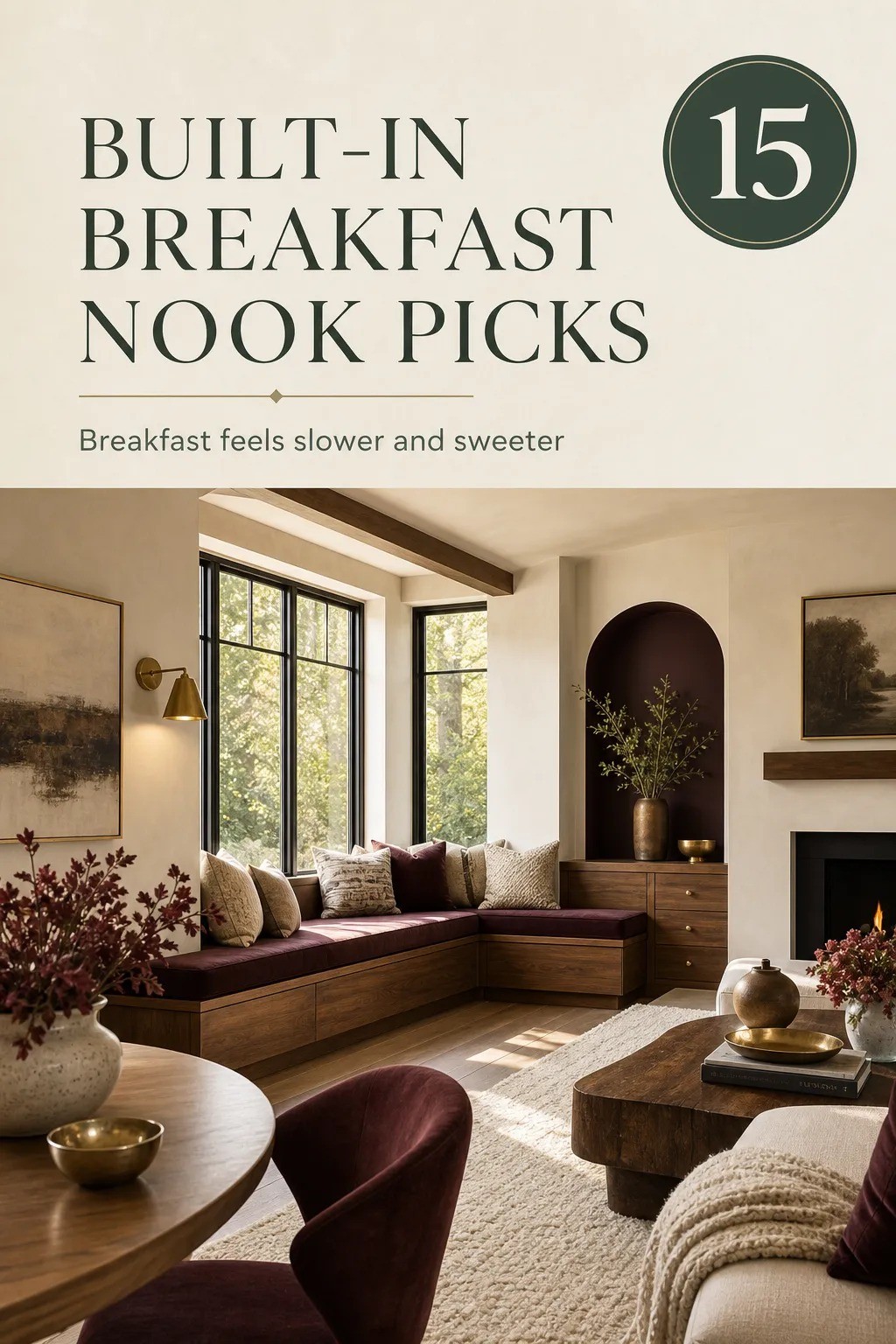
by If you want a breakfast nook that actually looks built, not bought, the whole move is letting the bench do the architecture. I've designed a dozen of these over the years, and the ones that feel custom always share one thing: the seating follows the room, not the other way around. That means wrapping corners, matching wall color, hiding storage in plain sight, and resisting the urge to "decorate" before the bones are right. These 15 ideas move from layout to lighting to the last layer of trim, each one tested in real rooms where breakfast now feels decided.
- Wrap a Corner Window Bench Around the Room
- Build Banquette Drawers Beneath Linen Cushions
- Tuck a Round Pedestal Table Into Millwork
- Frame the Nook With Arched Side Panels
- Run Beadboard in Sherwin-Williams Evergreen Fog Behind the Bench
- Install Sconces Above the Built-in Seating
- Add Fluted Fronts to the Storage Base
- Paint the Banquette the Wall Color
- Cap the Bench With a Thick Oak Ledge
- Layer Cafe Curtains Behind the Nook
- Curve the Backrest for a Softer Silhouette
- Mix a Washable Rug Against a Deeper-Pile Wool Layer
- Extend Bookshelves Around the Breakfast Seat
- Use Two Pendant Lights Over the Table
- Trim the Bench With Picture-Frame Molding
1Wrap a Corner Window Bench Around the Room
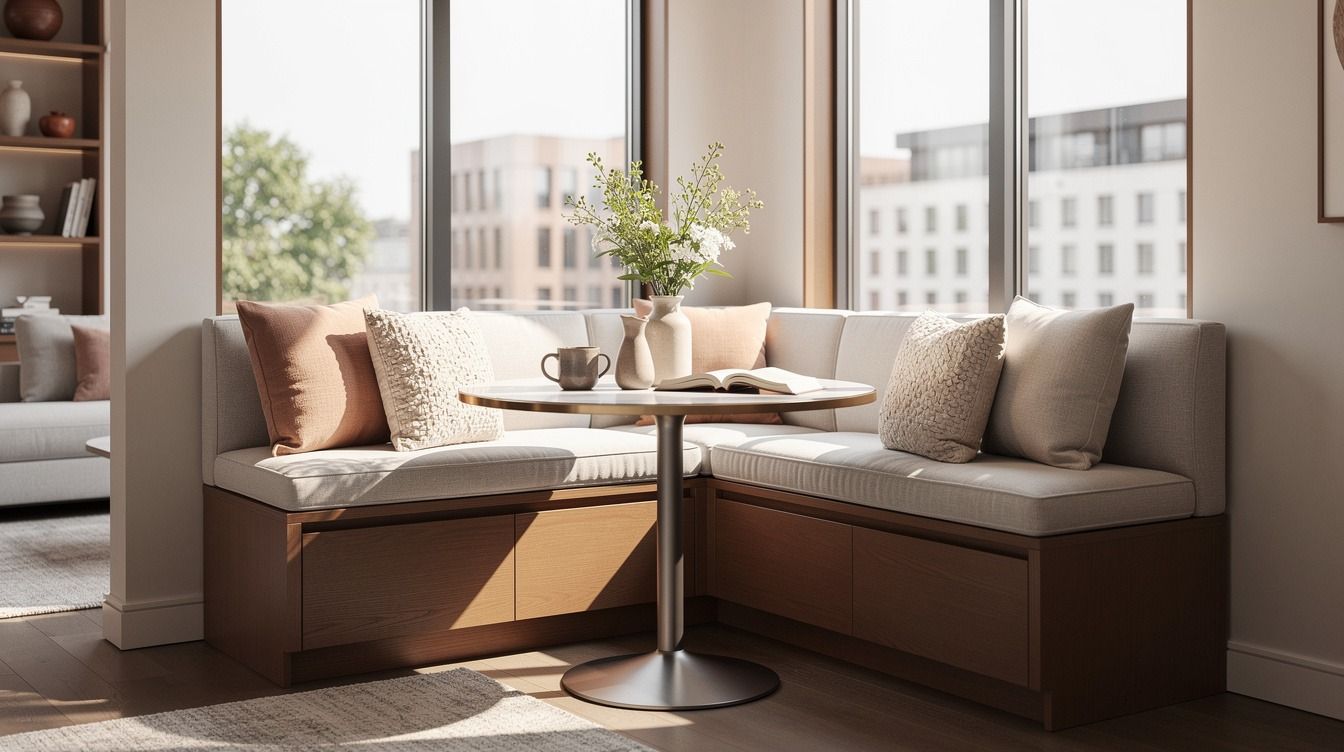
Start by letting the bench follow the architecture. A corner window bench that turns with the room gives you the easy built-in bench kitchen table look because the sightline keeps moving instead of stopping at two loose chairs. Why waste the corner on freestanding seating if the wall is already giving you the footprint?
I like a seat depth around 20 inches, generous but not lounge-like, especially when the kitchen path needs one calm lane through it.
You also want the turn to feel deliberate. A bench in cerused white oak or painted hardwood with one tight corner cushion reads as millwork instead of furniture, and your eye stops counting pieces. But don't bulk up the inside corner with a giant pillow stack.
That move looks plush in a showroom and awkward by breakfast. Benjamin Moore White Dove OC-17 on the bench face against a slightly warmer wall keeps the seam invisible without going flat.
If you want more layouts that make the corner do the work, save small breakfast nook ideas that fit almost anywhere.
2Build Banquette Drawers Beneath Linen Cushions
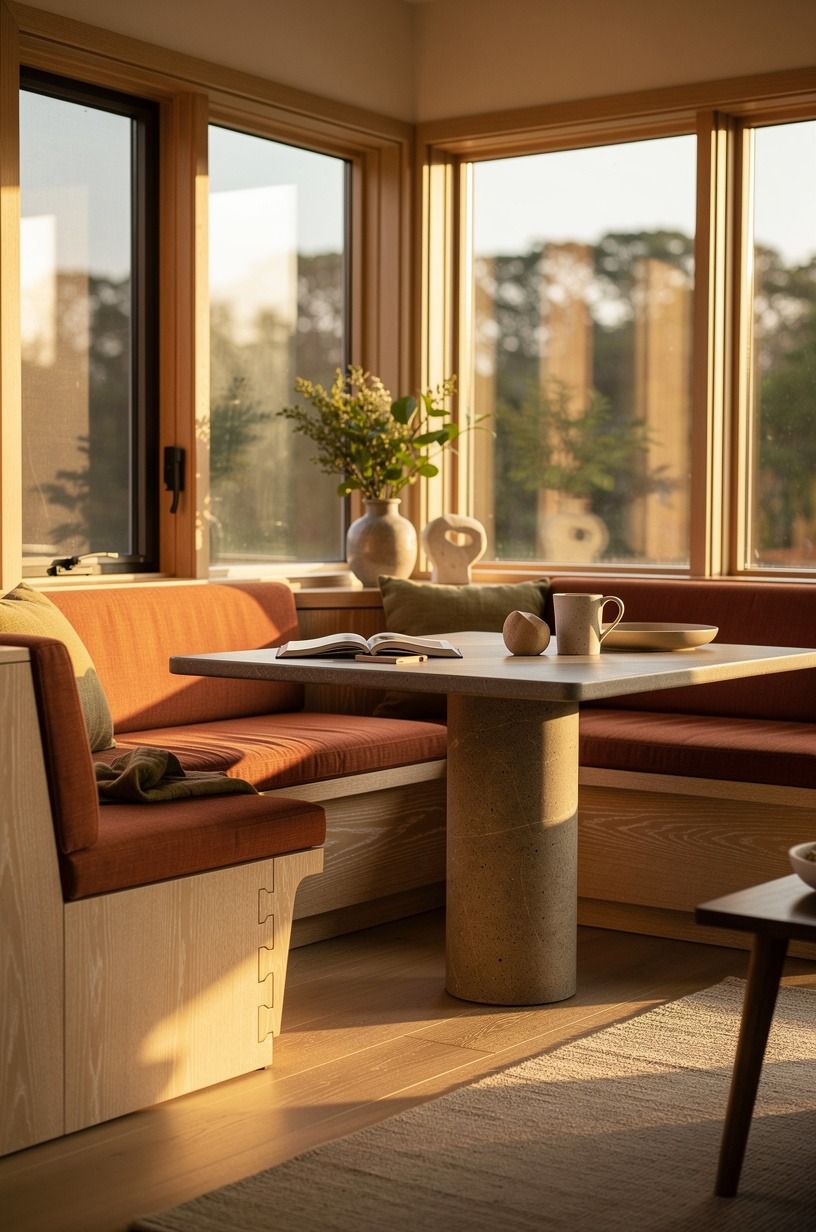
Storage is the whole argument for a kitchen nook built in seating plan, and most people leave it on the table. I'd rather have drawers than a second decorative cabinet, and you'll thank me the first time your kid drops a puzzle and you slide the lid shut instead of picking up pieces. Aim for shallow, soft-close drawers in the 6 to 8 inch depth range so they don't fight the bench, with a Belgian linen cushion on top in a washable slipcover.
I've installed both drawers and lift-up lids across about a dozen projects, and drawers win every time on small breakfast nooks because you don't lose floor space to the swing arc. Hardware matters more than people think: a slim unlacquered brass pull in a cup shape keeps fingers clear of knees, and the patina it picks up in year two looks better than the day you installed it. If you're building out a full corner, pair this with mid century modern breakfast nook ideas retro done right to see how the storage line keeps the proportions calm.
3Tuck a Round Pedestal Table Into Millwork
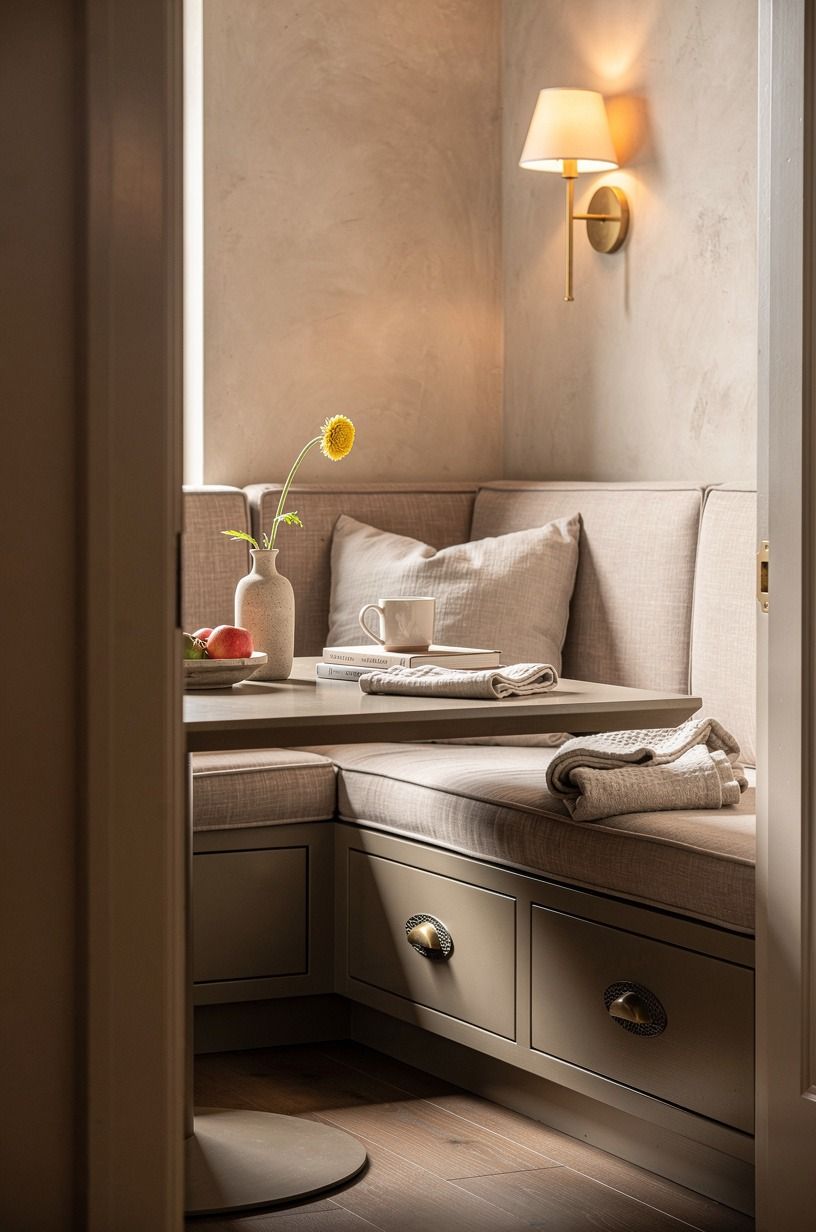
A round pedestal table earns its keep when your dining nook built in needs to slide into millwork instead of fight it. The lever here is diameter: at 36 inches it seats two comfortably and four without elbows; at 42 inches you gain elbow room but lose the cozy close-quarters feel. I'd stay closer to 36 unless the family genuinely eats six at a time, because the intimacy of a smaller table is half the reason the nook works.
Choose a pedestal base, not four legs. Legs eat knee space and force the bench to be shallower than it should be, and you'll feel that pinch every morning.
A blackened steel or turned wood pedestal keeps the floor plan open and lets the bench breathe. Pair with modern breakfast nook ideas with clean cozy style for the lighter palette that makes the round shape feel airy instead of heavy.
4Frame the Nook With Arched Side Panels
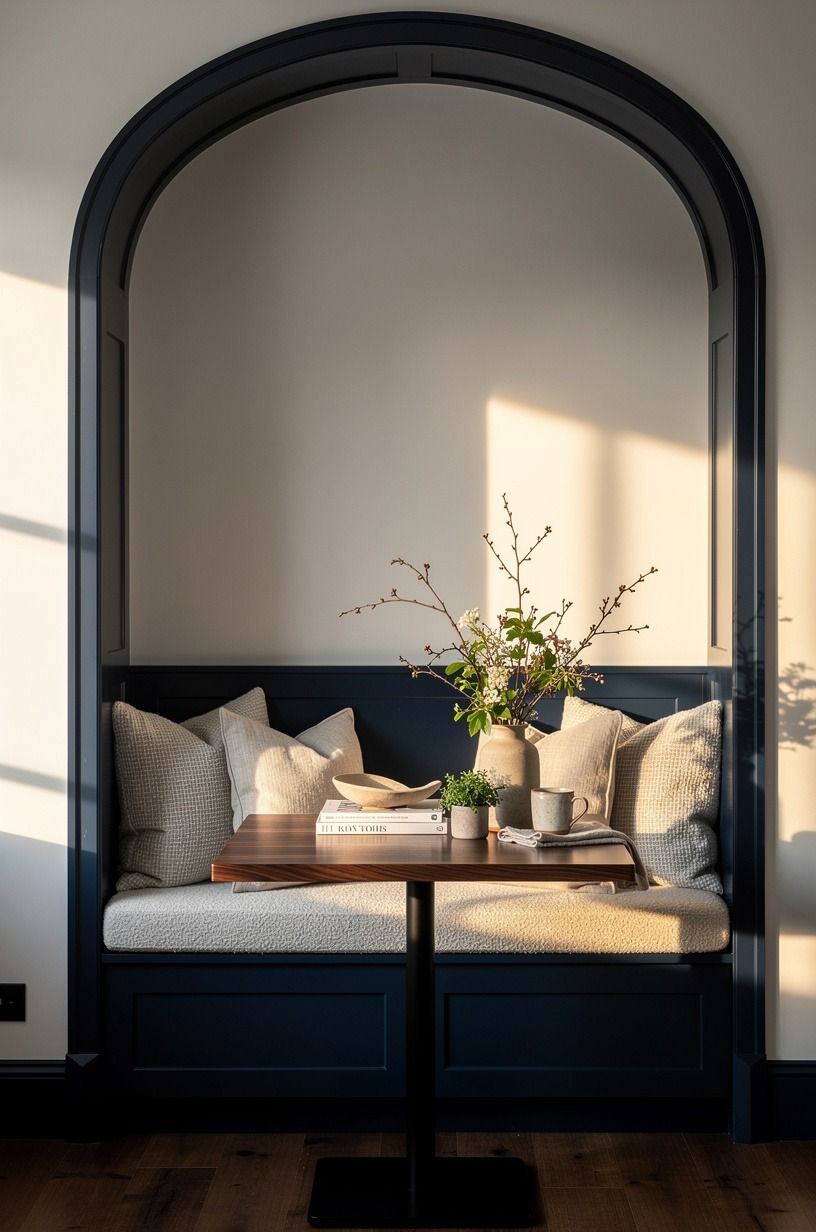
Arched side panels give a built-in banquette seating dining room setup the one thing flat walls can't: enclosure without heaviness. I've seen arched millwork turn a forgettable corner into the calmest seat in the house, and the lever is keeping the arch shallow. A deep arch eats the wall space, while a soft one, around 6 to 8 inches of rise, reads as architectural detail and never feels fussy.
Paint the panel a step warmer than the surrounding wall so the arch casts a shadow instead of disappearing into the trim. Farrow & Ball Bone in the arch against a paler trim color is a quiet, sophisticated pair that lets the curve do its job.
And don't add a peak that touches the ceiling. You want the arch to land about 12 inches below any picture rail, or it'll look like a door rather than a niche.
If you're building a similar enclosure elsewhere, apartment breakfast nook ideas for renters small spaces covers the lighter, calmer versions that translate to a leased wall.
5Run Beadboard in Sherwin-Williams Evergreen Fog Behind the Bench
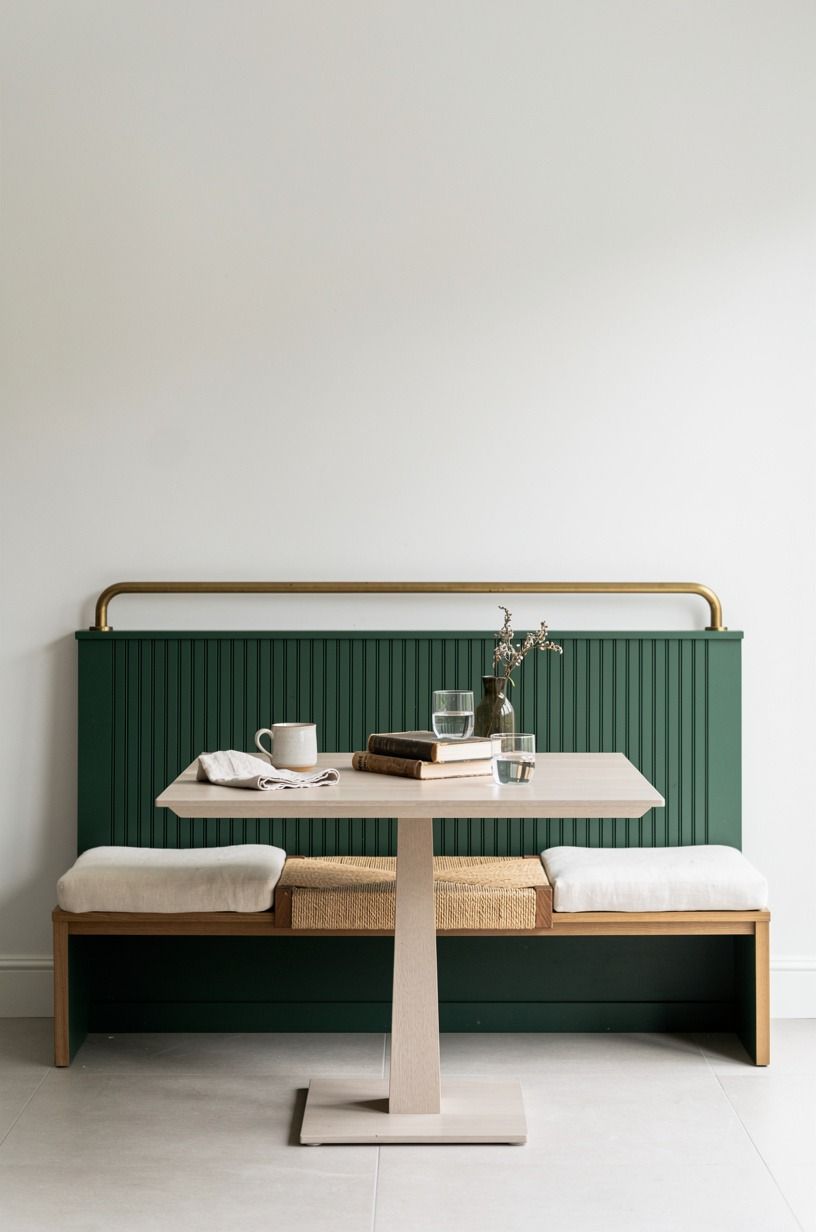
Beadboard works when you want texture that stays flat to the wall, but the color carries half the move. Sherwin-Williams Evergreen Fog SW 9130 on the beadboard reads as a quiet green-gray in morning light, not the kitchen-soup-can green most people picture when they hear "sage." It also forgives the bumps that beadboard throws in raking light, because the slightly muddy undertone hides the seam shadows better than any pure green I've tested.
Keep the grooves tight, around 2.5 inches of reveal, and run the boards floor to chair rail rather than ceiling. That proportion keeps the wall calm and the eye horizontal, which is what you want on a breakfast wall. Cap the bench in white oak so the green has somewhere warm to land, and let the brass hardware do its thing.
For more paint pairings on banquette walls, browse large breakfast nook ideas for big families open kitchens and steal the bench-and-wainscot combo.
6Install Sconces Above the Built-in Seating
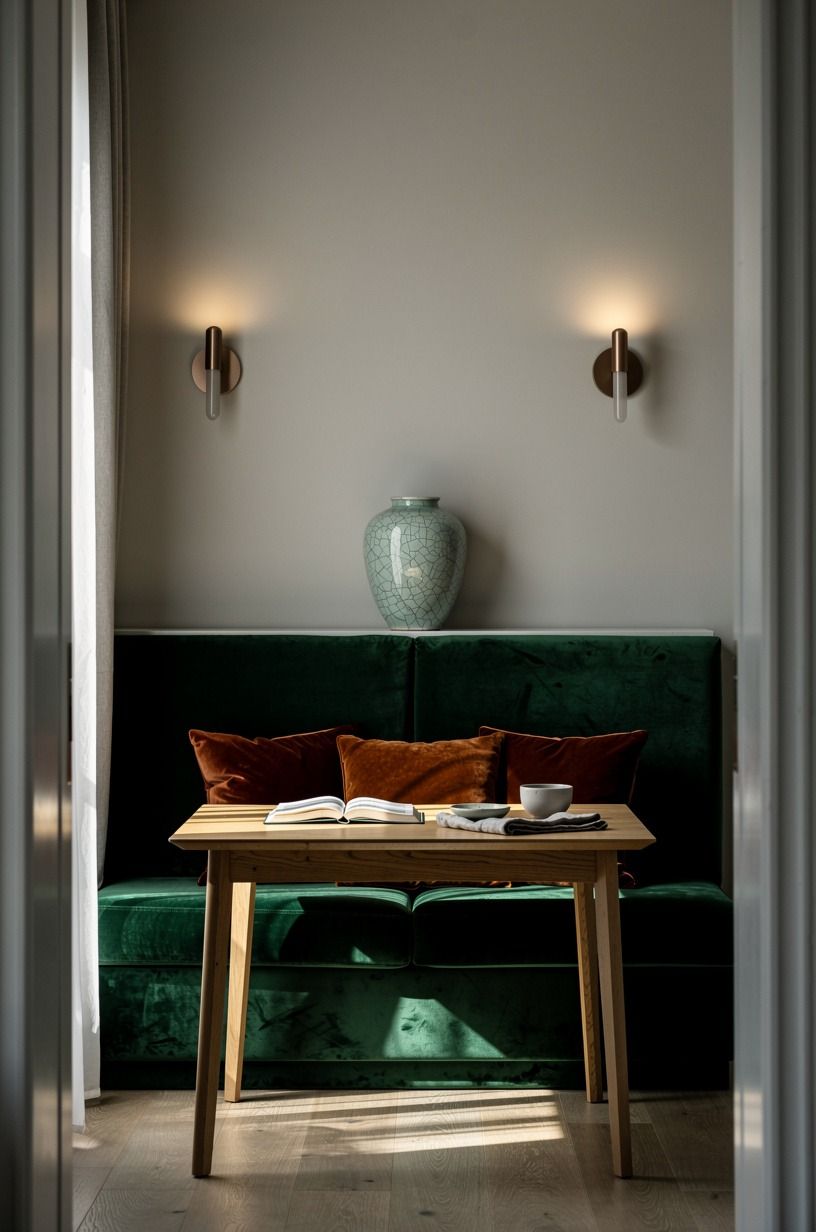
Sconces make the nook feel intentional after sunset, and they do it faster than almost any other upgrade. I wired two schoolhouse sconces in aged brass about 60 inches off the floor, and the morning coffee habit shifted the moment the light landed on the cushion instead of bouncing off the ceiling. You want a warm dimmable bulb, ideally 2700K, because anything cooler reads as utility instead of welcome.
If you're renting, don't skip this step. Plug-in wall sconces that you hard-mount with a single cord cover give you the same glow without an electrician, and they're easy to remove at lease end. I'd skip battery-operated puck lights here because they cast a flat wash that flattens the texture of beadboard and linen in the same moment.
For related seating layouts that lean warm, browse mid century modern breakfast nook ideas retro done right.
7Add Fluted Fronts to the Storage Base
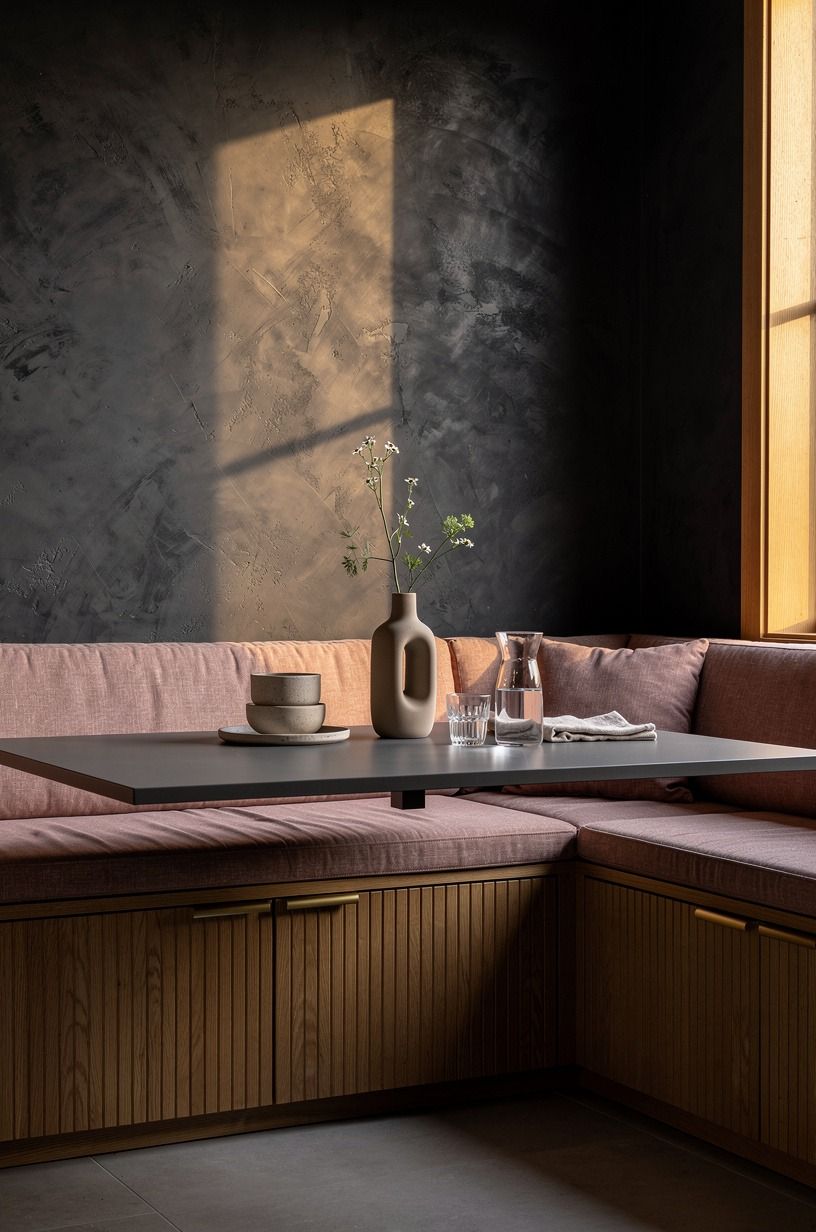
Fluting is one of those details that earns its place because it adds shadow, not clutter. A run of fluted drawer fronts in a low-sheen painted finish catches the morning light in vertical stripes, and the rhythm makes a long banquette read as architectural instead of cabinetry. Most homeowners go with 1.5 inch flute width on a 5 inch stile, which keeps the lines delicate rather than chunky.
Don't use real wood fluting on a painted bench. The wood moves, the paint cracks at the seams, and by year two you're staring at hairline splits in every groove.
A PVC or MDF fluted panel from a millwork shop, finished in Benjamin Moore Hale Navy HC-154 or a soft putty, holds the line for a decade. I've watched both fail and succeed, and the MDF version wins every time on a painted bench. For the storage logic underneath, see kitchens with a built in breakfast nook we love for what survives real family use.
8Paint the Banquette the Wall Color
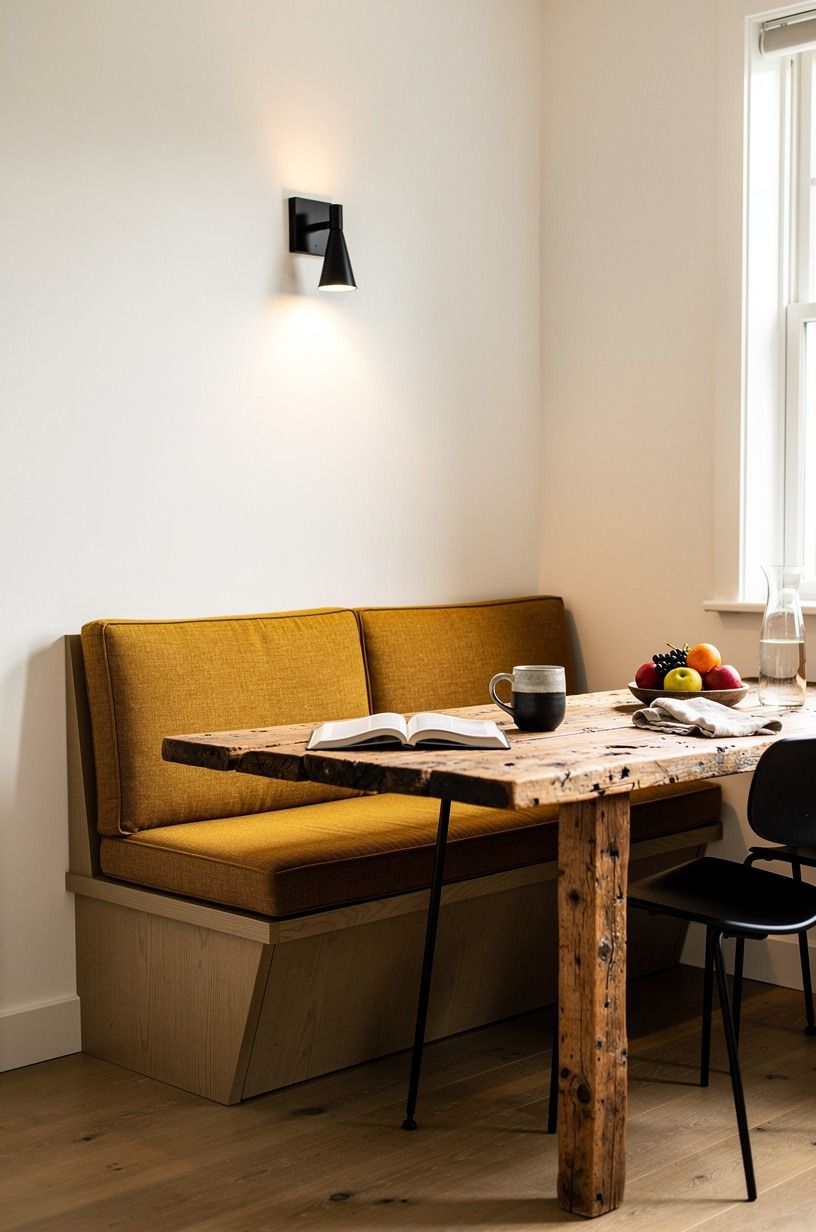
Painting the banquette the same color as the wall is the fastest way to make a dining nook built in disappear into the architecture. That's a compliment.
When the color wraps continuously, the seat feels quieter, larger, and more custom because your eye stops counting pieces and starts reading one envelope. This works especially well in warm whites, where the shape of the millwork does the talking.
A shade like Farrow & Ball Joa's White or Benjamin Moore White Dove OC-17 keeps the bench soft enough that oak, linen, and brass can layer on top without friction. I'd avoid a contrast color unless you want the banquette to read as furniture.
The all-over approach is what makes the nook feel permanent. If you're chasing that calm built-in look, modern breakfast nook ideas with clean cozy style is a sister piece that shows the same move in a smaller footprint.
Honestly? It's the move I recommend 90% of the time because nothing photographs worse than a tiny contrast banquette fighting a bigger wall.
9Cap the Bench With a Thick Oak Ledge
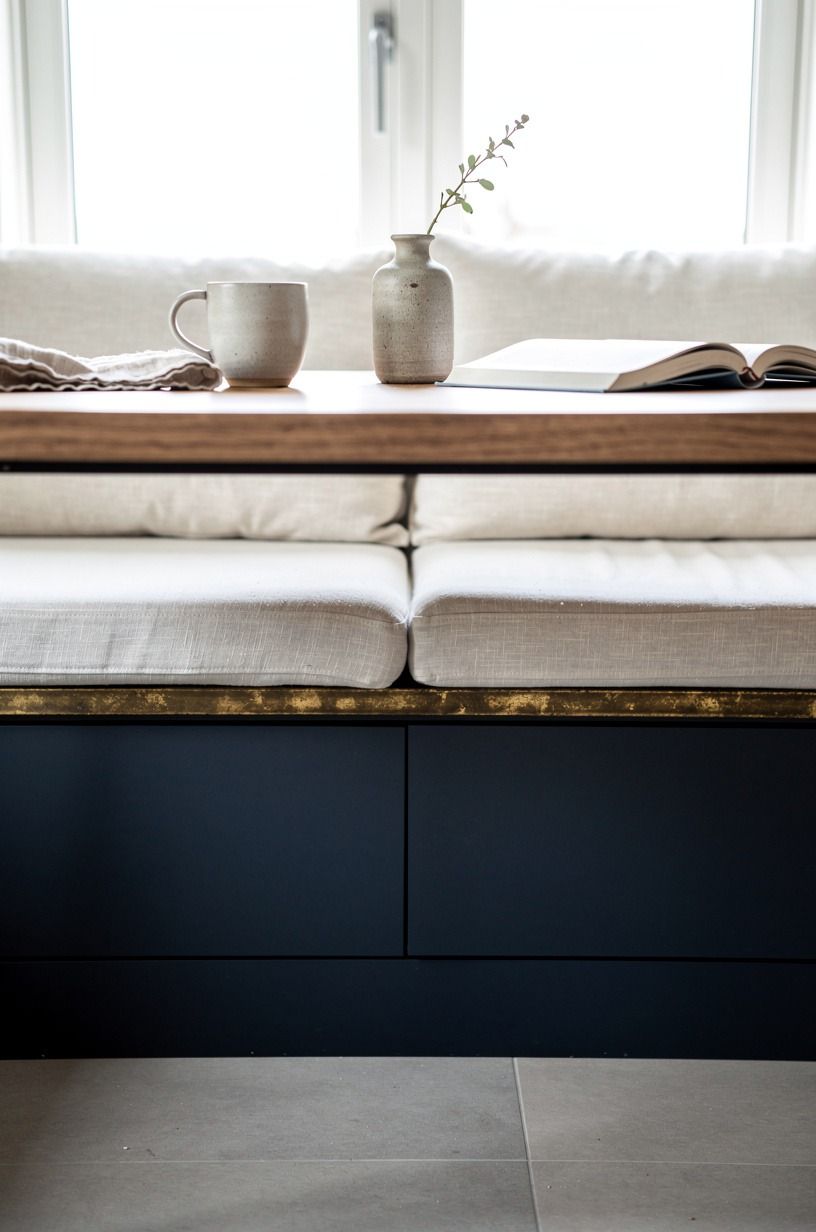
A thick oak ledge makes a bench feel crafted, not prefab. The slab does most of the work here, and you'll see the difference the moment a hand lands on it during dinner.
I'd cap the bench in 3 inch solid white oak, edge-eased, sealed with a low-sheen hardwax oil so coffee rings wipe off without stripping the finish. You want a wood top to read tactile instead of plastic-perfect, so don't go for a high-gloss polyurethane that fights the room.
If your kitchen runs cooler tones, I'd warm the oak with a Danish soap finish instead of a stain so the grain stays pale and inviting. I made the mistake of staining an oak bench walnut once, and the whole nook turned brown-on-brown by sunset.
Don't repeat that. For the window-side companion layer to this ledge, see cozy breakfast nook ideas for slow weekend mornings and steal the cushion-stack logic.
10Layer Cafe Curtains Behind the Nook
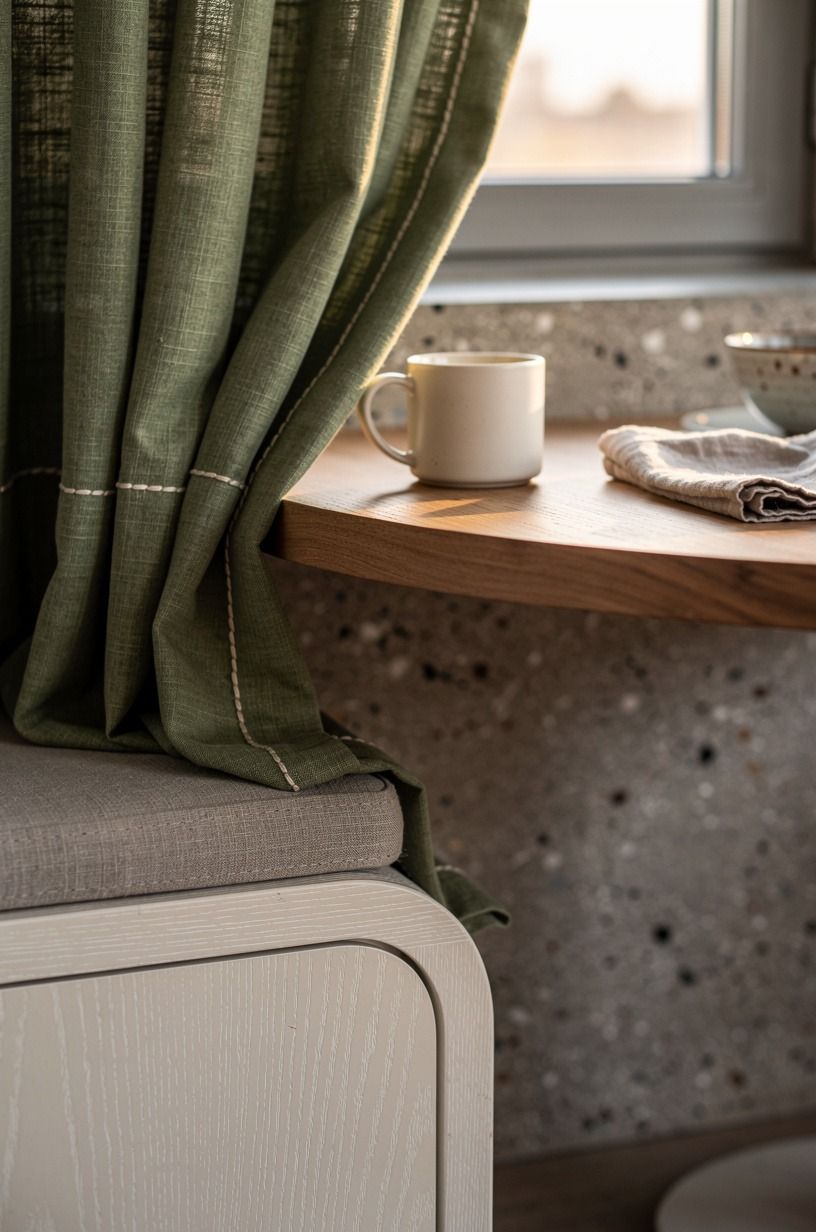
Cafe curtains are a small change that punches above its weight. They cover the lower half of the window, let the upper half pour light onto the bench, and add a soft textile layer where the room usually has only hard millwork. The fabric choice matters more than the rod: a stonewashed linen in oatmeal or a faded sage cotton reads as collected rather than dressed up.
Hang the rod so the curtain hem lands just below the apron of the table, around 30 inches off the floor on a standard 36 inch window. That proportion keeps the curtain from crowding the seat and lets the light pool still hit the cushion.
I'd skip the grommet tops, because the metal rings fight the softness of linen and they don't read custom. A simple brass rod with ring clips tucked just under the sill looks like it's been there forever.
For breakfast windows with a similar problem, window seat ideas that turn a sill into a stay covers the broader window-bench vocabulary.
11Curve the Backrest for a Softer Silhouette
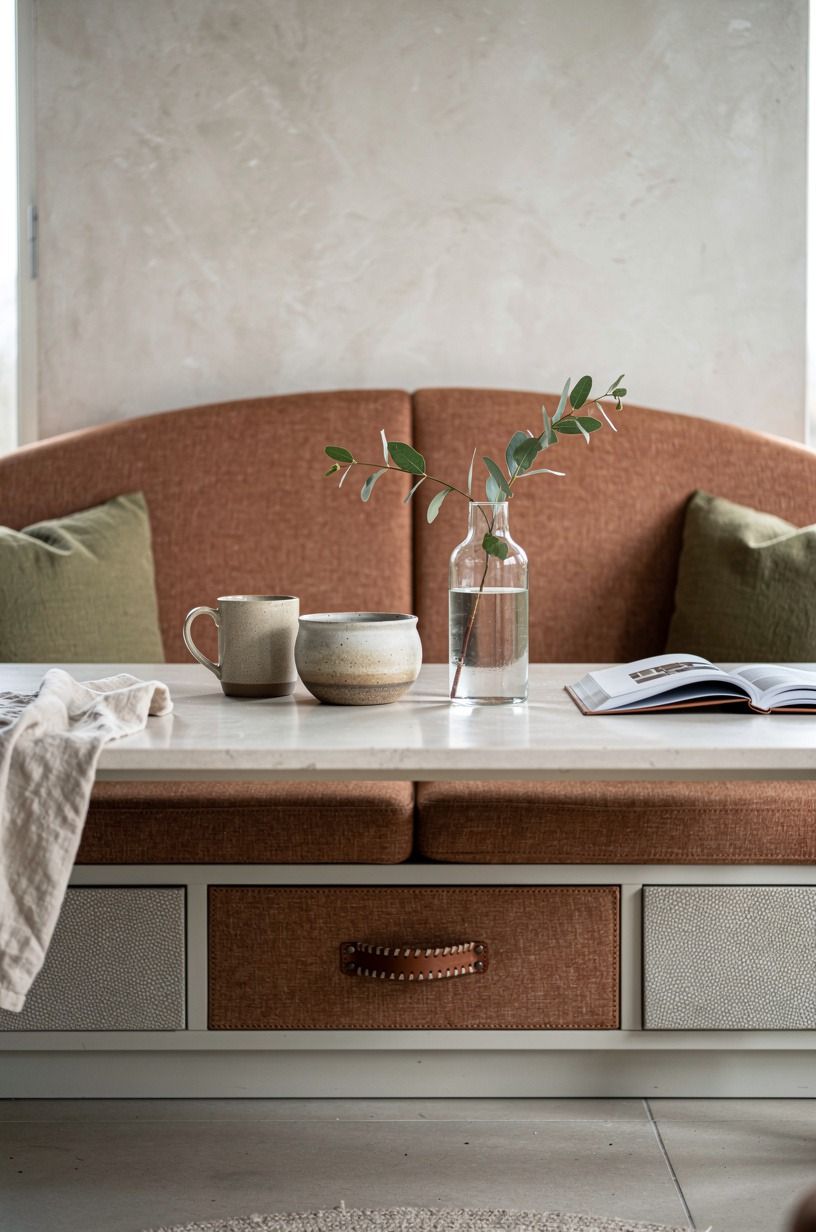
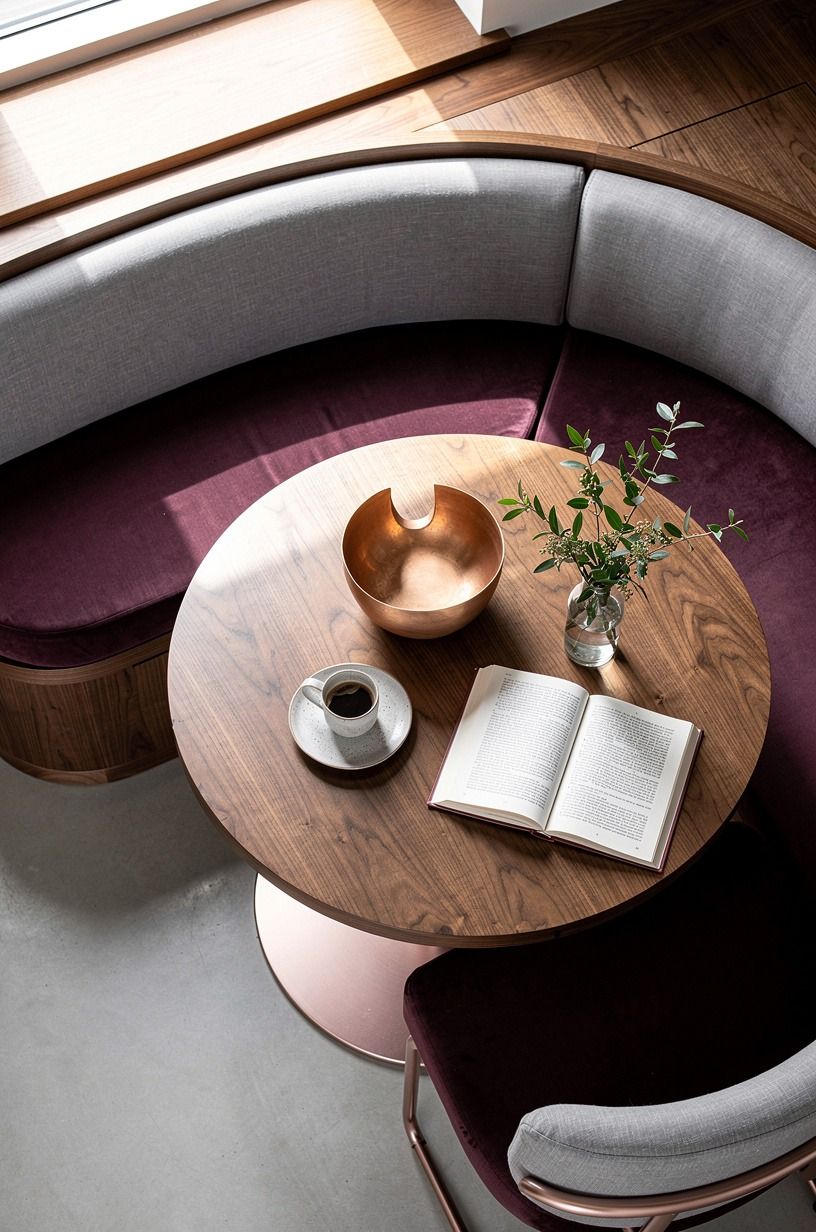
A curved backrest changes the way the seat reads from across the room. Straight benches feel efficient.
Curved ones feel generous, and in a breakfast nook that difference lands right away because your body reads the sweep before your brain does. The low view across the table makes that even clearer.
You see one continuous line, and the nook suddenly feels tailored instead of assembled from rectangular parts.
I'd rather curve the back than overload the seat with pillows because the shape itself is what feels special. A bench wrapped in performance bouclé in cream or oat holds the curve better than something floppy, and it stays easier to clean when coffee happens.
But don't push the curve so far that the table no longer tucks in neatly. Softness should help the function, not fight it.
I tested a sweeping curve for a client once, and the table lost 4 inches of clearance, which the family noticed by week two. If you like nooks that lean sculptural, start with mid century modern breakfast nook ideas retro done right.
12Mix a Washable Rug Against a Deeper-Pile Wool Layer
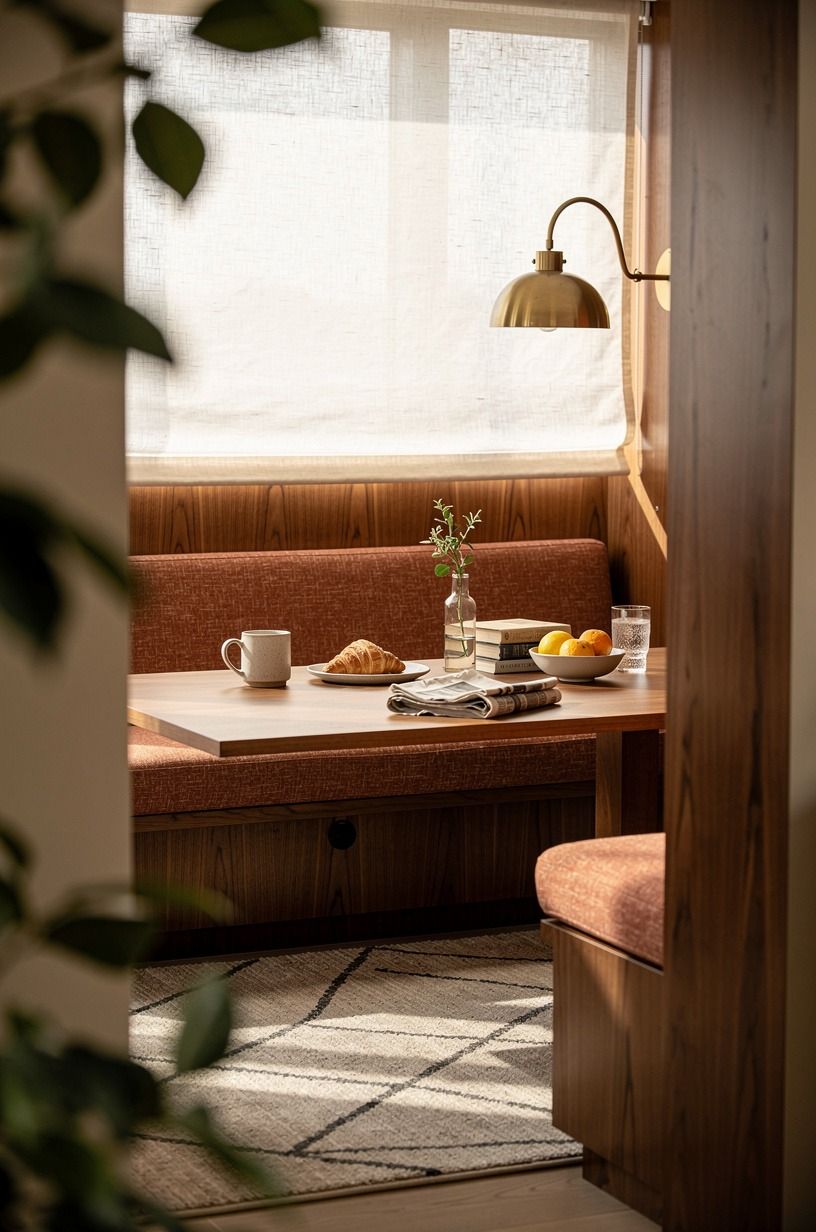
A washable rug gives the seating zone a base, which matters even more when the nook sits just off a living room and has to hold its own from a distance. You want the bench, table, and rug to read as one conversation. Not three separate purchases.
I usually tell people to size the rug so the front edge of the seating still feels grounded, which is why an 8x10 washable rug often works better than a tiny accent mat that disappears under the pedestal.
If the nook spills farther into the room, a 9x12 wool blend rug can make the whole breakfast corner feel intentional while still being easy to spot clean. And keep the pattern low-contrast. Crumbs happen, but visual noise is worse.
This is one of those upgrades that pays off every single day! For more small-space layouts that use rugs to define zones, save small breakfast nook ideas that fit almost anywhere.
13Extend Bookshelves Around the Breakfast Seat
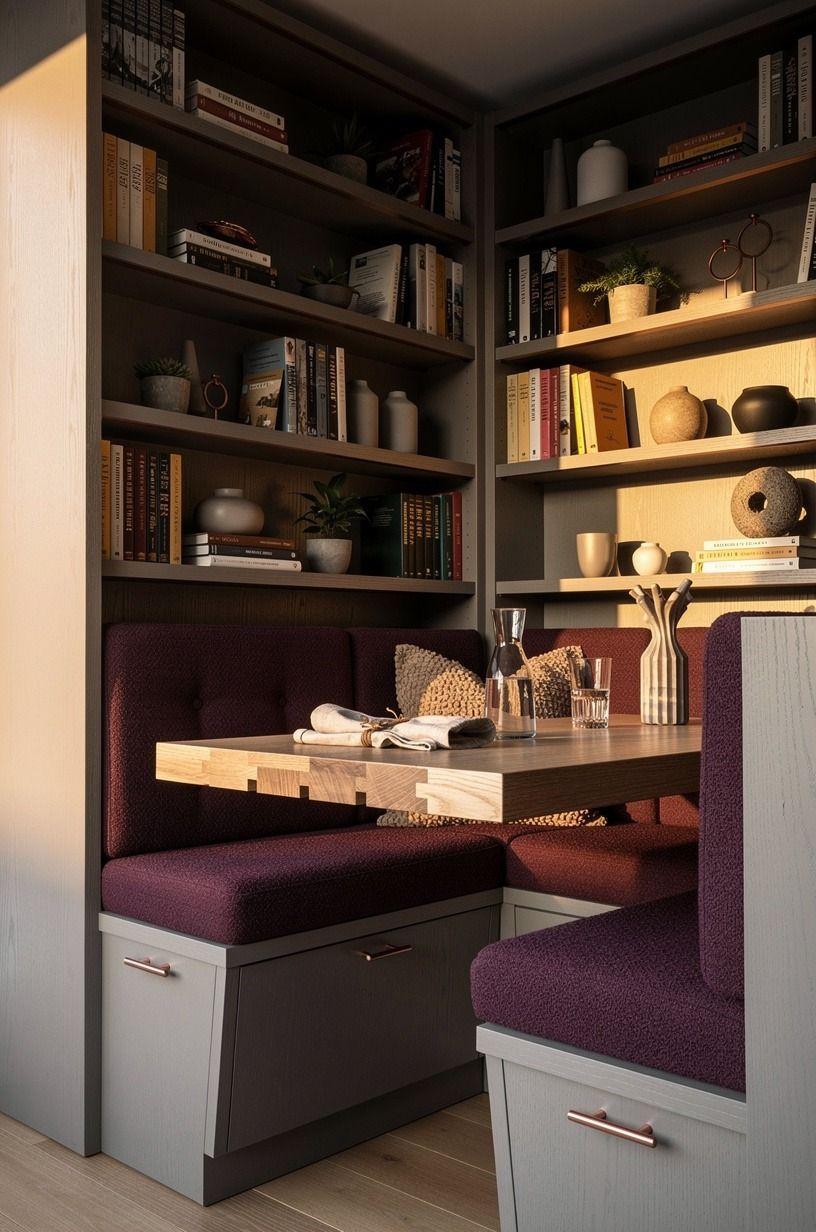
Bookshelves around a breakfast seat make the nook feel like it was designed with the room, not added after the cabinets were ordered. That wide-angle view is persuasive because you can see how the seat becomes part of a larger wall system.
The shelf line stretches the room. The bench settles it.
Together, they make the seating feel earned.
Keep the shelves edited. A few books, one bowl, one framed piece, maybe a pitcher in aged bronze or warm ceramic.
That's enough. But don't style every cubby like a shop vignette.
Breakfast nooks need breathing room or they start looking stagey. If you want the shelves to feel natural, repeat one material from the table or cushion and stop there.
IKEA BILLY bookcases in a painted finish, trimmed with a face frame on site, give you that custom millwork look for about 40% of the price of a built-in. For more examples of seating tucked into broader layouts, open large breakfast nook ideas for big families open kitchens and kitchens with a built in breakfast nook we love.
14Use Two Pendant Lights Over the Table
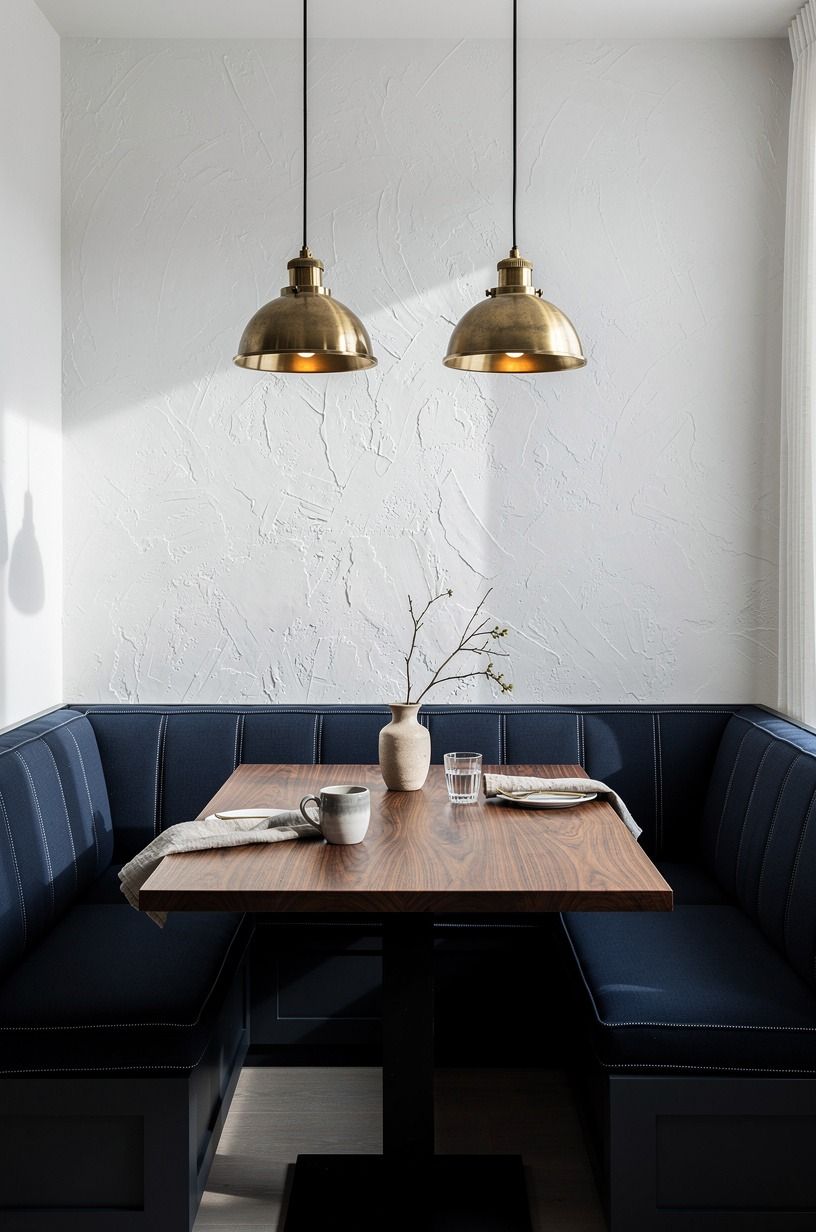
Two pendants work when the nook is wide enough that one centered fixture would feel lonely. I lean toward 18 inch linen drum shades hung about 30 inches above the table, paired with warm bulbs so the light pool stays gentle rather than glare-y. You want the pendants to land about 8 inches inside the table edge so the eye reads them as a pair rather than two singles floating out at the sides.
A single oversized pendant can work in a tight nook, but two smaller ones scale better when you've got a built-in bench stretching wider than 5 feet. Honestly, the part most people miss is the dimmer. If you're hanging new pendants, put them on a separate dimmer switch so breakfast lighting shifts from bright to intimate without touching the rest of the kitchen.
The difference is dramatic! For more layouts that lean on soft light, see modern breakfast nook ideas with clean cozy style.
15Trim the Bench With Picture-Frame Molding
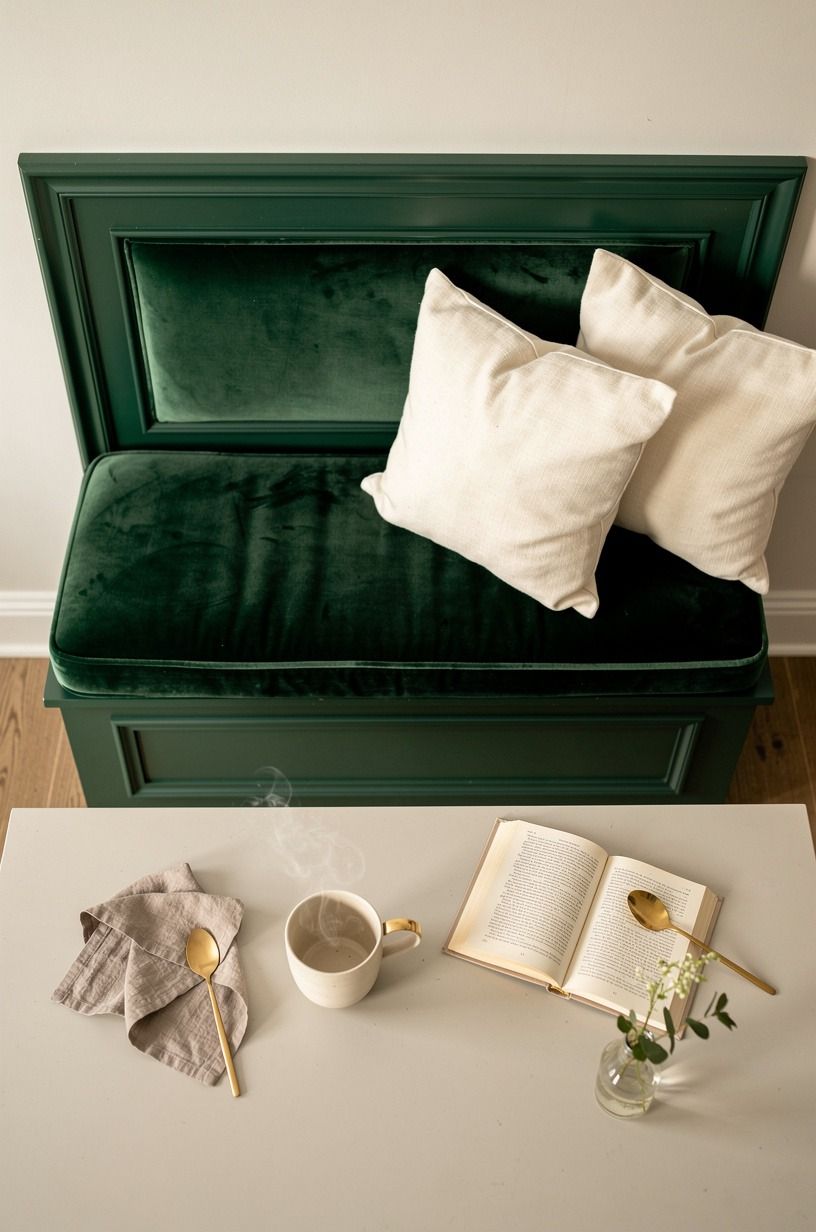
Picture-frame molding gives a plain bench face enough detail to feel built without pushing it into ornate territory. The lever is the proportion: a 2 inch rail with a 3 inch stile, mitered at the corners, reads as tailored millwork at eye level and disappears against the wall color. Go bigger than that and the bench starts competing with the trim in the rest of the room.
Miter the corners cleanly, because nothing exposes a bad DIY faster than open miters on a painted bench face. I prime, glue, and pin the molding, then fill the seams with a paintable water-based filler before the final coat.
The filler sands flush and takes the paint without flashing, which is what makes the molding read as one piece with the bench. For a contrasting take on the same trim language, traditional dining room ideas that earn their formality shows how the proportions scale up on a full wainscot.
The Move That Earns the Whole Room
I think the reason built-in breakfast nooks keep having such a hold on people is that they solve something deeper than seating. They make a room feel decided. A loose table and two random chairs can function just fine, but they still leave the corner feeling negotiable, like maybe it wants to be a desk next month or a plant zone after that.
A built-in bench ends that debate. It says this is where mornings happen.
This is where the room pauses.
But I've also learned that the priciest part is not always the part that changes the feeling. People assume custom means more trim, more paneling, more special shapes.
Sometimes that's true. But the bigger shift usually comes from proportion. If the bench depth feels right, the table tucks in cleanly, the light lands low, and the storage base pulls its weight, the nook already feels made for the house.
If those bones are wrong, no fancy finish can save it. I've seen very plain millwork beat pricier installs because the measurements were simply calmer.
And here's the part I'd protect if you're spending carefully: invest where your body notices the room. Seat comfort.
Table clearance. The edge your knee brushes every morning.
The drawer that opens without a tug. The rug that keeps the zone from floating away.
People love to overspend on statement surfaces because they photograph well, but you don't live in photographs. You live in the turn into the bench, the way the cushion gives a little, the glow from the sconces when it's still dark out.
So if you're weighing paint versus oak, or arches versus storage, I would ask a simpler question. What makes you want to sit there tomorrow morning?
Usually the answer isn't more decoration. It's the sense of a room finally having one place it was always meant to be.
The Questions I Get Asked Most
How deep should a built-in breakfast nook bench actually be? Around 20 inches of seat depth is the sweet spot for most adults. Anything under 18 starts feeling like a stool, anything over 22 pushes the table too far from the seated diner. I measure from the wall to the front of the cushion, not the wood base, because the cushion adds an inch or two you don't always plan for.
Can a breakfast nook work in a rental without losing my deposit? Yes, if you treat it as built-in style rather than permanent construction. A freestanding bench against the wall, a tension-rod cafe curtain, and plug-in sconces give you the look with zero holes in plaster. I've styled three rental nooks this way, and every landlord returned the deposit in full.
What's a realistic budget for a cosmetic breakfast nook refresh? Most cosmetic updates land between $300 and $1,200: paint, a new cushion, a pendant or sconce swap, and a washable rug. Millwork changes, like banquette drawers or arched panels, push you into the $2,500 to $6,000 range once you add labor. Start with the cosmetic layer and live with it for a month before committing to the bigger build.
How do I keep the bench cushion from looking sloppy after a year? Skip the poly-blend cushion and order a down-wrapped foam core in a washable slipcover. The foam keeps the shape, the down softens the edges, and the slipcover goes in the wash with the rest of the linens. I rotate mine every six months and they've held their loft for three years now.
What table shape works best with a corner bench? A round pedestal at 36 inches is the easiest fit because no corner fights a wall. If you want a rectangular table, keep it under 48 inches long and push it flush to the corner so the bench can wrap both sides. Rectangular tables over 60 inches start looking like furniture that wandered into the nook by accident.
Where I'd Start First
If I had to pick one, I'd start with the corner window bench in a warm white and a 36 inch round pedestal. It fixes the floor plan before you spend on anything decorative, and it gives every later choice a calmer place to land. Pin that move for later and compare it with small breakfast nook ideas that fit almost anywhere before you commit.