
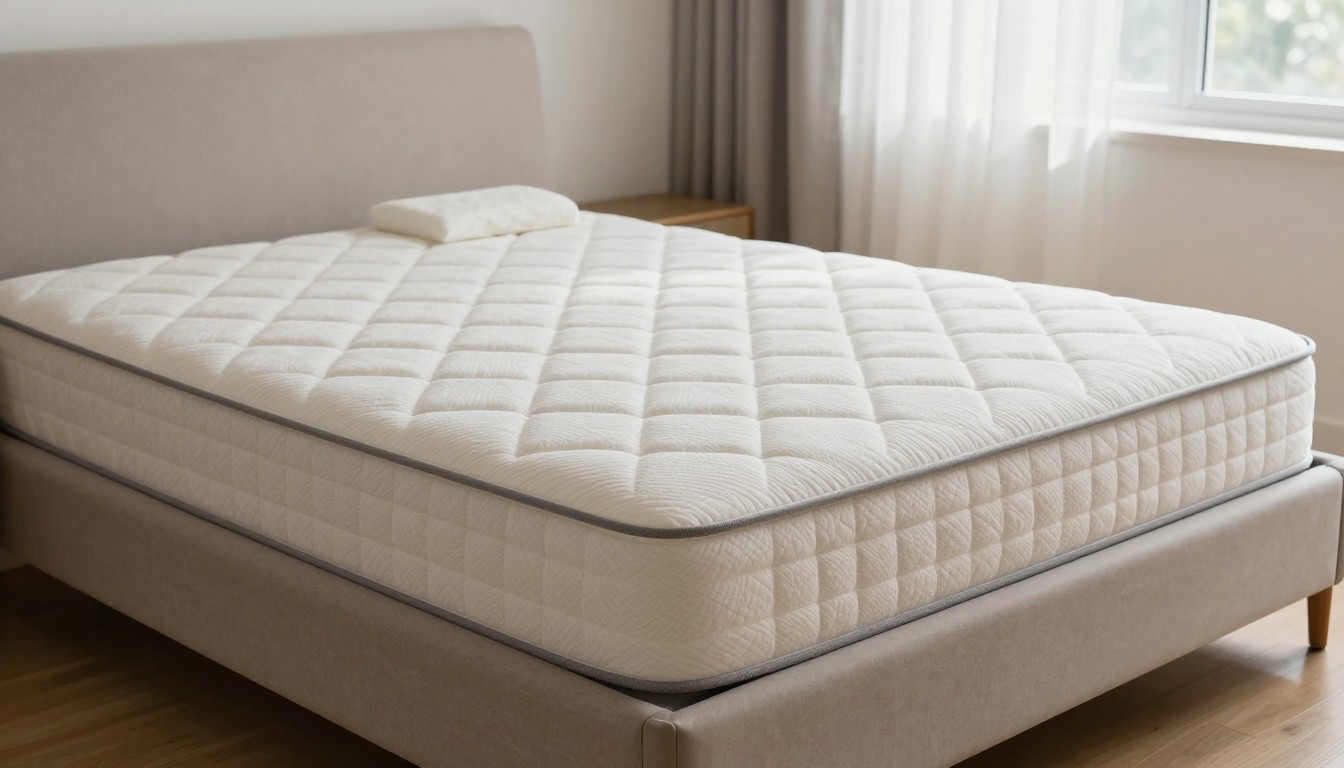
 by
by Quick answer: Sometimes. A topper masks surface wear and restores comfort on a mattress whose support core is still intact. It cannot lift a collapsed core, and deep sagging needs replacement, not padding.
- Per our own topper vs new mattress guide, visible sagging deeper than 1.5 inches, a failed support core, or a bed older than ten years all point to replacement rather than a topper.
- Toppers add a cushioning layer over a new or old sagging mattress, but the result depends on material, thickness, and your sleep position, according to our roundup of toppers for sagging beds.
- Even in the best case, a topper is a temporary fix that extends the life of a sagging mattress, not a repair.
Updated July 2026 · Reviewed for accuracy
A topper is padding. Padding sits on top. It doesn't push anything back up. That single sentence answers most of the questions I get about sagging beds, and it explains why some people rave about their topper while others say it changed nothing.
The difference isn't the topper. It's what's happening underneath it. So before you spend money, figure out whether your mattress has a comfort problem or a support problem, because only one of those responds to a topper.
Comfort failure vs support failure: the only diagnosis that matters
Every mattress has two jobs. The comfort layers on top handle pressure relief and feel. The support core underneath, coils or high-density base foam, holds your spine in line and carries your weight.
Comfort failure means the top layers have compressed, softened, or developed body impressions while the core is still doing its job. You feel a dip, but you don't feel like you're rolling into a hole. That's the case a topper can genuinely fix, because you're replacing worn cushioning with fresh cushioning.
Support failure is different. The coils have lost tension, the base foam has broken down, or the foundation underneath has cracked. Your hips sink past your shoulders and stay there. Adding a soft layer on top of a failed core just raises you a couple of inches higher on the same broken surface. You still sink. You just sink through more material first.
The straightedge test. Strip the bed. Lay a broom handle or a long level across the mattress at the deepest visible dip. Measure the gap between the straightedge and the surface. Our topper vs new mattress breakdown puts the replacement threshold at visible sagging deeper than 1.5 inches, and I'd treat that number as a ceiling, not a target.
When a topper actually works
A topper earns its money in a narrow band of situations, and I'd rather be honest about the band than sell you on a miracle.
It works when the sag is shallow and you can still feel firm resistance under the dip. It works when the mattress is relatively young and the surface has simply softened faster than the core. It works when the problem is really a firmness complaint, the bed got too soft or too hard for your body, and a topper reshapes the feel without touching the structure. Our roundup of toppers for sagging beds makes the same point: a topper adds cushioning that helps mask sagging and gives you a more comfortable sleeping surface, but it isn't foolproof.
It also works as a stopgap. If you know you need a new mattress but you're three months out from being able to buy one, a good topper buys you those three months with less pain. That's a legitimate use. Just don't confuse it with a solution.
When a topper won't save you
Here's where I see people waste money.
Deep sagging is the obvious one. Once the dip crosses that 1.5-inch mark, you're layering comfort over a structural problem, and every night the topper compresses into the same hole. A broken or unsupportive foundation is the second. Slats spaced too far apart, a bowed box spring, or a bed frame missing a center support will make a perfectly healthy mattress sag, and no topper fixes a furniture problem. Check underneath before you buy anything.
Age is the third. A mattress past ten years has usually spent its structural life, and the honest move is replacement.
The fourth one is subtler. Two sleepers, two separate dips, one flat topper. The topper bridges across both craters and creates a hammock effect between them, and now the person in the middle of the bed is sleeping on a ridge. Split beds with double impressions are the worst candidates for this fix.
Materials: what each one does to a sagging surface
Material choice drives the outcome more than any other spec. Density, not thickness, determines whether a topper holds its shape over a compromised surface.
| Material | How it behaves over a sag | Best for |
|---|---|---|
| Memory foam | Contours into the dip rather than bridging it. High-density versions resist this better than cheap low-density foam. | Shallow surface wear, pressure points at hip and shoulder |
| Latex | Springs back instead of collapsing, so it holds a flatter plane across a shallow dip. Heaviest option to handle. | Sleepers who need the surface to stay level, hot sleepers |
| Wool | Resilient fiber fill that adds loft and temperature regulation without deep contouring. | Mild softening, sleepers who dislike the sink of foam |
| Fiberfill / down alternative | Compresses fastest of the group and flattens into the existing impression within months. | Budget stopgap only, not a sagging fix |
| Convoluted (egg crate) foam | Thin and low-density by design, so it telegraphs whatever is underneath it. | Firmness tweaks, not structural masking |
If I had to pick one rule from that table: latex and high-density memory foam are the two materials with enough structure to span a shallow dip. Everything else follows the contour of the damage. Wool sits in an interesting middle spot, resilient and breathable rather than conforming, and I've written more about how it behaves in our wool topper guide.
Thickness, and why thicker isn't automatically better
The instinct is to buy the thickest topper available and bury the problem. It doesn't work that way.
A thick, soft topper over a sagging mattress gives you two soft layers stacked on a failing core. You sink further, your hips drop lower, and the alignment problem gets worse even though the surface feels plush at first contact. Thickness without density is just a deeper hole.
Thinner and firmer usually beats thicker and softer over a compromised surface, because a firm layer distributes weight across the dip instead of settling into it. There's a second practical limit too: a tall topper can outgrow your fitted sheets and slide around unless it has straps or a skirted cover. A topper that shifts every night stops helping the moment it moves off the dip.
Before you buy a topper, do these four things:
- Pull the mattress off and inspect the foundation. Bowed slats and a missing center rail mimic mattress sag exactly.
- Run the straightedge test at the deepest point, not at the edge where impressions look worse than they are.
- Check the age of the bed against the ten-year mark from our topper vs new mattress comparison.
- If your mattress is flippable or rotatable, rotate it and sleep on it a week before deciding. Some impressions partly recover.
Firmness and sleep position
Position changes the calculus. Side sleepers concentrate weight on the shoulder and hip, so they feel a sag as a pressure problem and often do well with a contouring topper that fills the gap at the waist. Back and stomach sleepers feel a sag as an alignment problem, the lower back arches or the belly drops, and they need a firmer topper that resists rather than cradles.
Heavier sleepers compress everything faster, which means a low-density topper over a sagging bed will bottom out for them almost immediately. Density matters more the more you weigh.
Couples with different body weights face the hardest version of this. One dip, two bodies, one shared surface. If the impressions are already uneven side to side, a single topper tends to average the problem rather than solve it for either person.
Warranty first: check before you cover the evidence
This is the step almost everyone skips. Most mattress warranties cover body impressions past a stated depth, and that depth is usually measured with the mattress unloaded and the surface bare. Manufacturers typically require the mattress to have been used on an approved foundation, and some void coverage if the bed is stained.
Photograph the sag with a straightedge and a tape measure before you put anything on top of it. Then read your own warranty page, since terms vary by brand and only the manufacturer's stated policy governs your claim. If you qualify for a replacement, a topper is money you didn't need to spend. If you don't qualify, you've lost nothing by checking.
How to choose if a topper is the right call
Narrow it down in this order. Material first, since latex and high-density memory foam are the only two with the structure to span a dip. Density second, because that's what determines whether the topper still performs in year two. Thickness third, chosen for firmness rather than height. Cover and anchoring last, because a topper that slides is a topper that stops working.
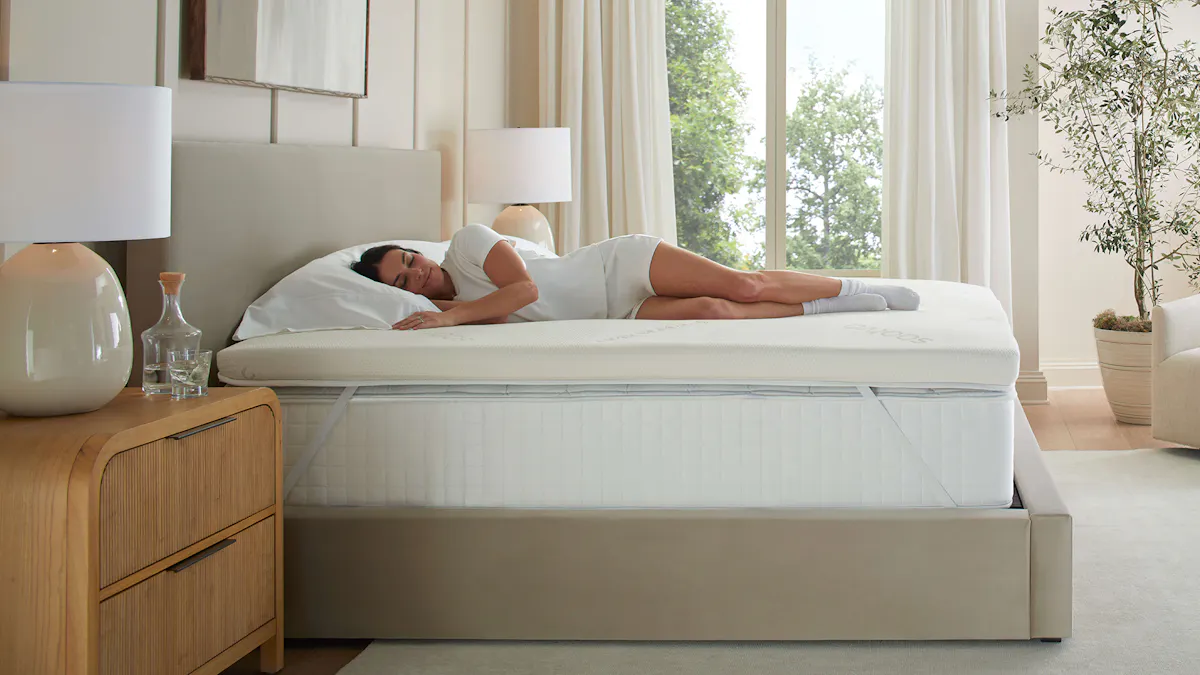
Graphite-infused memory foam options like the Saatva Graphite Topper sit in the denser, cooling-focused end of that range if you want a foam layer that doesn't sleep hot. Pricing and availability change, so check the current price on the official site.
For a wider look at specific models built for this exact problem, our roundup of toppers for sagging mattresses walks through the options by material and thickness. And if the resilient, breathable route appeals to you more than foam, our wool topper review covers how that construction holds up.
The honest bottom line
A topper is a comfort tool, not a structural repair. Used on a mattress with a sound core and shallow surface wear, it's one of the highest-value purchases in bedding, and it can genuinely extend the useful life of a bed that's softened faster than it should have. Used on a collapsed core, it's a few hundred dollars spent to delay a decision you've already made.
Measure the dip. Check the foundation. Read the warranty. If the sag is shallow and the core still pushes back, buy a dense latex or high-density foam topper and you'll likely sleep better. If the dip is deep, the core is soft, or the bed has passed the ten-year mark, put that money toward the mattress instead. Padding over a broken base is the most common bedding mistake I see, and it's an expensive one to repeat.
ONE OPTION WORTH COMPARING
Shopping as well as reading? Here is one current option worth comparing: the Saatva Graphite Topper. Check today’s price, sizing and return terms on the official product page before you order.
Saatva Graphite Topper
- Graphite-infused memory foam, per saatva.com
- 180-night trial
- Secure anchor bands, fits deep mattresses
FAQ
How deep is too deep for a topper to help?
Our topper vs new mattress comparison puts the replacement line at visible sagging deeper than 1.5 inches, measured against a straightedge on an unloaded, stripped mattress. Below that, a dense topper has a real chance. At or past it, you're covering a structural failure.
Will a firmer topper fix the sag better than a soft one?
Usually, yes, within limits. A firm, dense layer distributes weight across the dip instead of sinking into it, while a soft topper follows the contour of the damage. But firmness can't compensate for a core that no longer pushes back at all.
Can I put plywood or a board under the mattress instead?
A board under the mattress addresses a failing foundation, not a failing mattress. If your slats are bowed or your box spring has given out, fixing the base is the correct move and may resolve what looked like mattress sag. If the mattress itself has broken down, a board underneath does nothing for the dip in the comfort layers.
How long will a topper hold up over a sagging mattress?
Less time than it would on a flat, healthy mattress, because the topper is being compressed unevenly at the dip every night. Density is the variable that matters most here, and even the best case is a temporary extension of the mattress's life rather than a permanent fix.
Does the type of sagging matter, or just the depth?
Both. A single centered impression from one sleeper is the most fixable pattern. Two separate craters on a shared bed are the hardest, because a flat topper bridges between them and creates a ridge down the middle. Edge collapse is also poorly served by a topper, since most toppers don't reinforce perimeter support at all.