
 by
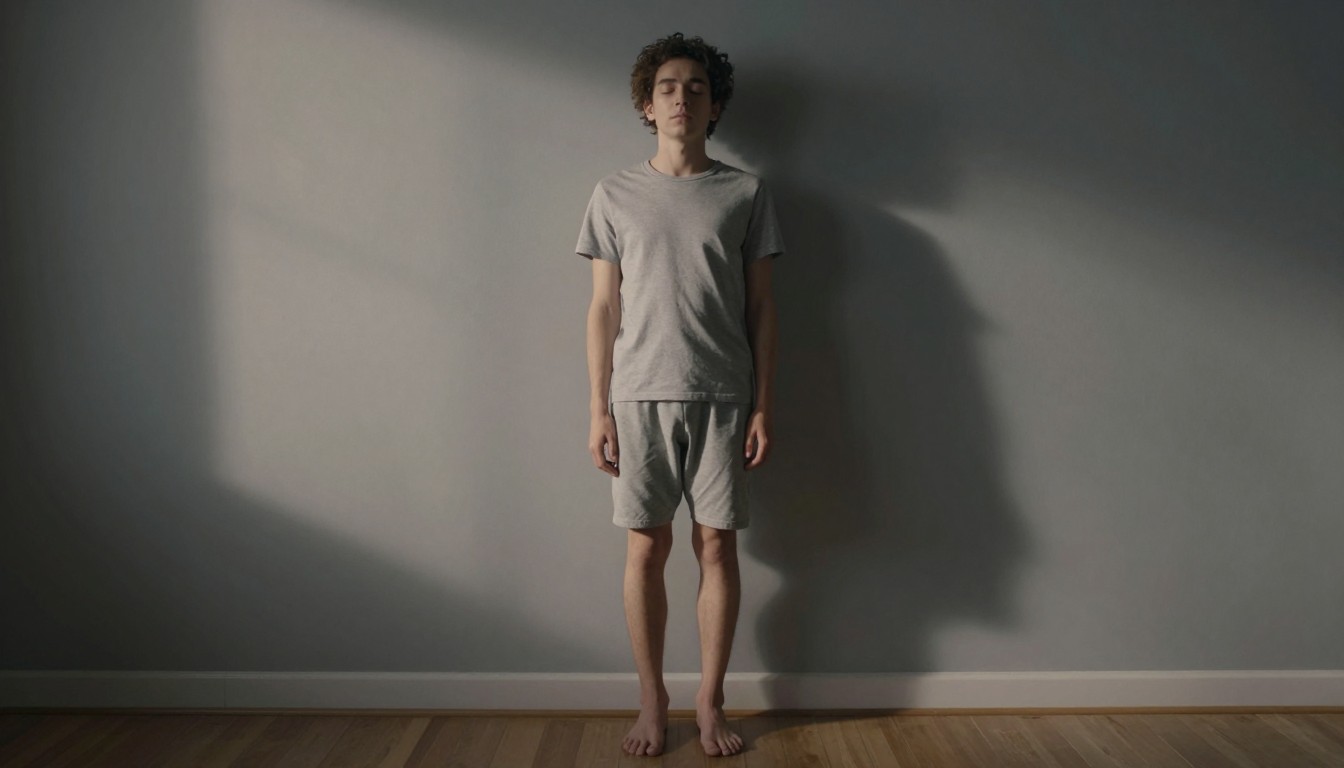
by Quick answer: Humans may briefly appear to doze while upright, but unsupported standing isn't a realistic or safe position for sustained sleep. Sit or lie down before sleep takes hold.
- ScienceDaily describes sleep as a state of natural rest observed across the animal kingdom.
- AlphaScience identifies sleep-related muscle atonia as a biological limit on unsupported standing sleep.
- AlphaScience also points to the vestibular system, which controls orientation and balance, as part of the explanation.
Updated July 2026 · Reviewed for accuracy
A fleeting nod-off and a normal period of sleep aren't the same thing. Someone may sway, close their eyes, or lose track of a moment while standing, but that doesn't make standing a workable sleep posture.
I’d treat any sleep-like lapse on your feet as a signal to get supported. The basic conflict is simple: standing requires continuous balance, while sleep reduces the deliberate control that keeps an unsupported body upright.
That distinction matters because leaning on a wall, being held by a support, and sitting upright are sometimes described as “sleeping standing up.” Mechanically, they’re different positions.
What sleeping standing up actually means
An unsupported standing person has no seat, backrest, or broad surface carrying body weight. Remaining upright depends on the feet, joints, postural muscles, and balance system continuing to make small corrections.
That can happen automatically while you’re awake and alert. As wakefulness fades, however, those corrections become less reliable. The person may dip at the knees, sway, jerk back to attention, grab a nearby object, or start to fall.
This is why reports of someone “sleeping on their feet” need context. The person may have been extremely drowsy, may have entered a very brief sleep-like lapse, or may have been supported by a wall, rail, harness, or crowded surroundings. None of those situations proves that an unsupported human can maintain ordinary sleep while standing.
The practical test: If removing the wall, rail, or other support would cause the person to collapse, the support is carrying part of the job. That isn't truly unsupported standing sleep.
Closing your eyes also isn’t enough to settle the question. Rest, drowsiness, and sleep can look similar from the outside. The useful question is whether the position remains stable after active postural control fades. For an unsupported standing human, the answer is generally no.
Why the body can't keep standing through normal sleep
Muscle atonia is the clearest biological obstacle. AlphaScience’s explanation of standing sleep identifies this reduction in muscle activity, along with vestibular control, as a reason the body cannot reliably preserve an unsupported stance through sleep.
Standing and sleep ask opposite things of the body. A stable stance requires enough muscle engagement to keep the knees, hips, trunk, and head aligned. Sleep permits control and muscle activity to change. Once the body can no longer make dependable corrections, gravity still has the final say.
The vestibular system adds another part of the answer. AlphaScience points to this balance and orientation system because standing depends on knowing how the body is positioned and responding when it shifts. Receiving orientation information is only useful if the body can keep acting on it.
Why the posture breaks down
- The body has only a narrow base of support beneath the feet.
- Staying upright requires continuing muscular corrections.
- Sleep-related changes in control make those corrections unreliable.
- A sway that would be corrected while awake can become a stumble or fall.
This doesn’t mean every drowsy person immediately drops to the floor. People often wake as their posture changes. A sudden buckle or sway can interrupt the lapse before sustained sleep develops. That reaction explains how someone can repeatedly nod off without ever maintaining stable standing sleep.
ScienceDaily describes sleep as a natural state of rest, not merely a decision to stop moving. A person can’t make standing compatible with normal sleep simply through discipline or practice. Practice may improve an awake stance, but it doesn’t remove the biological limits identified by AlphaScience.
Standing, leaning, and sitting are not the same
A seat changes the mechanics immediately because the pelvis and usually the back become supported. A wall changes them only partly. That difference is why an upright passenger may sleep in a chair while an unsupported standing passenger keeps waking as balance slips.
| Position | What carries the body | My practical assessment |
|---|---|---|
| Unsupported standing | Feet and active postural control | Not a stable position for sustained sleep |
| Leaning against a wall | Feet plus partial contact with the wall | More supported, but slipping and falling remain possible |
| Seated upright | Seat, with optional back and head support | A plausible resting posture, but not standing |
| Reclined or lying down | A broad supporting surface | The body can relax without preserving an upright stance |
Leaning may look like standing because the feet remain on the floor. Yet the wall is accepting some of the body’s load and limiting movement in one direction. If the knees soften or the body rotates away from the surface, that partial support may disappear.
Sitting upright is a much bigger change. The seat supports body weight even when the legs relax, while a backrest and headrest can reduce the effort needed to hold the torso and head. Calling this “standing sleep” confuses appearance with construction. From a support standpoint, it belongs in the seated category.
Movement records don’t change that mechanical distinction. Readers interested in how motion is used to estimate rest can see my guide to wrist actigraphy and sleep. A tracker label should never be taken as evidence that unsupported standing has become a suitable sleep position.
What to do if you nod off on your feet
The first useful move is physical: get your body fully supported. Sit in a stable chair or lie down in a safe place instead of trying to prove that you can remain standing.
Move away from traffic, stairs, platforms, sharp objects, hot surfaces, machinery, water, and any other setting where a loss of balance could have serious consequences. If you’re responsible for a vehicle or equipment, stop the activity safely rather than trying to force yourself awake.
Don’t use a wall as your long-term solution. It may prevent a sway in one direction, but it doesn’t support the body the way a seat or lying surface does. Sliding downward, twisting away, or buckling at the knees can still leave you without protection.
Safety first
Unexpectedly nodding off while standing is a practical hazard. Get somewhere supported, let another person know if necessary, and don’t continue an activity in which a brief lapse could injure you or someone else.
If the pattern keeps happening unexpectedly, consider discussing it with a qualified clinician. That isn’t a diagnosis, and this article can’t identify the cause. It’s simply a sensible response to repeated sleepiness that is interfering with safe, ordinary activity.
It can also help to describe the event accurately. Note whether you were merely fighting heavy eyelids, whether your knees buckled, whether someone observed you, and whether a wall or object was holding you up. Clear context is more useful than saying only that you “slept standing up.”
Better supported ways to rest upright
A chair with a stable seat, back support, and a place for the head removes much of the balance demand that makes standing unsuitable. The goal is to let the support surface carry the body instead of relying on sleeping muscles to preserve posture.
If you need to remain upright for a reason already discussed with a clinician, follow that clinician’s positioning advice. Don’t improvise with unstable stacks, narrow stools, or a wall. A support that can shift or tip creates a new problem rather than solving the original one.
For ordinary rest, a reclined or lying position spreads the load across more of the body. That broad support is the crucial difference. It lets the legs and trunk relax without requiring constant corrections to prevent a fall.
A simple support checklist
- Your body weight is carried by a stable surface.
- Your head cannot drop into an unsupported position.
- Your feet and legs don’t have to preserve balance.
- You’re away from edges and other fall hazards.
Resting quietly is still worthwhile even if sleep doesn’t begin immediately, but rest shouldn’t be confused with sleep. My guide to yoga nidra and sleep explains that distinction in the context of guided relaxation.
If settling down is the real difficulty, use a wind-down routine once you’re safely seated or lying down. Gentle movement can be part of that transition, and these yoga-for-sleep ideas offer a place to start. The aim isn’t to become relaxed enough to sleep on your feet. It’s to reach a supported place before sleepiness takes over.
My verdict on standing sleep
My verdict is firm: humans aren’t built for sustained, unsupported sleep while standing. A brief nod, eye closure, or momentary lapse may look like sleep, but the posture becomes unstable as the control needed for standing fades.
Muscle atonia and vestibular balance are the key physiological pieces identified by AlphaScience. The construction problem is just as plain. Two feet provide a narrow base, while a chair or bed carries the body across a much broader area.
So don’t treat standing sleep as a skill to learn. If you’re drifting off, get seated or lie down somewhere safe. If it happens repeatedly without warning, consider raising it with a qualified clinician.
FAQ
Can humans actually fall asleep while standing up?
A person may appear to doze or cross briefly into a sleep-like lapse, but sustained unsupported sleep is not realistic. AlphaScience identifies muscle atonia, vestibular control, and biological limits as reasons an upright stance cannot remain dependable through sleep.
Does leaning against a wall count as sleeping standing up?
Not in the strict sense. The wall is supporting part of the body and limiting movement, so the person is no longer relying entirely on standing balance. It can still be unstable because the body may slide, buckle, or move away from the surface.
Why can someone sleep sitting up but not standing?
A seat carries the pelvis and body weight even after the legs relax. A backrest or head support can carry more of the upper body. Unsupported standing leaves the body dependent on continuing postural corrections, which is the exact requirement that conflicts with sleep.
Can you train yourself to sleep while standing?
Training may make an awake stance feel easier, but it cannot remove the biological limits described by AlphaScience. Sleep still changes the control needed to remain upright, so practice doesn’t turn unsupported standing into a reliable sleep position.
What should I do if I keep nodding off while standing?
Move to a safe place and support your body with a stable chair or lying surface. Stop any activity in which a brief lapse could cause harm. If the episodes are unexpected or keep interfering with daily activity, consider discussing them with a qualified clinician.