
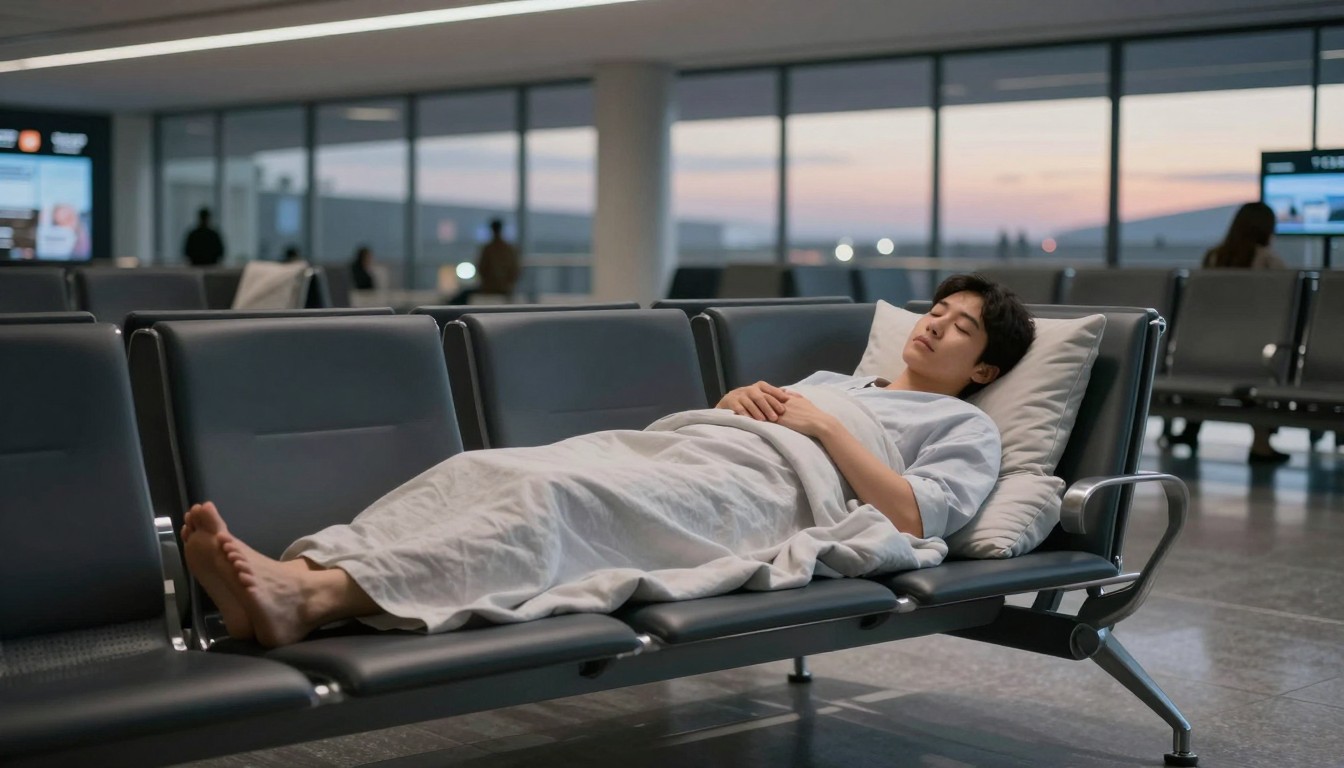
 by
by Quick answer: Yes, sometimes. Only rely on it after confirming the terminal stays accessible overnight and airport rules permit you to remain. Choose a visible area, secure your belongings, and keep a backup plan.
- TravelShifu’s airport sleep guide puts zone choice at the center of the overnight plan.
- The same guide emphasizes personal safety habits during an airport stay.
- It also covers a compact sleep kit and lounge or hotel alternatives.
Updated July 2026 · Reviewed for accuracy
Yes, you can sometimes sleep overnight in an airport. There isn’t a blanket answer for every terminal, though, so I wouldn’t arrive assuming that an early flight automatically gives you permission to stay all night.
The sensible approach is simple: confirm access, choose your resting area carefully and prepare for broken sleep. If any part of that plan remains unclear, have somewhere else to go.
Can the terminal actually host you overnight?
A boarding pass for an early departure doesn’t, by itself, answer whether you may remain inside. Your first job is to check the airport’s official information for the terminal you’ll use and the date of your trip.
Look for precise wording about terminal opening and overnight access. “Open” can be too vague for planning purposes, so contact the airport directly if its published information doesn’t clearly address sleeping or remaining inside between flights.
I’d also check with the airline about the parts it controls, including baggage handling and access to your departure area. Keep the questions narrow so you get useful answers rather than a generic description of airport hours.
Questions to settle before you travel:
- Will your specific terminal remain accessible throughout the overnight gap?
- May a ticketed passenger wait inside until the next departure?
- Will you need to leave the secure side and pass through screening again?
- What happens to checked baggage during the connection?
- Are any overnight restrictions affecting your terminal or concourse?
Save the answer or the relevant official page where you can retrieve it easily. Check again shortly before leaving, especially if your flight or terminal changes. If the airport and airline give conflicting information, I’d plan around the more restrictive answer until they clarify it.
International travel needs extra care because border processing, baggage collection and onward access may alter where you can wait. Don’t guess. Ask what you’ll be required to do after landing and whether the area you hope to use will still be reachable.
Choose an area that favors safety over silence
A deserted corridor may sound peaceful, but isolation is a poor trade for quiet. TravelShifu’s airport sleep guide gives zone choice and safety habits a central role, and I think that’s the right priority.
Look for a permitted area that remains visible to airport personnel or other passengers without placing yourself in the middle of foot traffic. A spot near an active staffed point can be more reassuring than a remote gate, but visibility never replaces attention to your surroundings.
Avoid doorways, emergency access points and routes needed by passengers or airport crews. Don’t settle beside an exit merely because the floor is open, and never block accessible seating or circulation space with luggage.
My rule: choose the safest permitted area you can find, not the darkest corner. You’re looking for managed rest in a public building, not bedroom-level privacy.
Keep your passport, phone and other essential items on your body or in a secure interior pocket. Close the main bag and position it so someone can’t move it without waking you. A shoulder strap around an arm or leg can provide a physical cue, provided it doesn’t create a trip hazard.
I wouldn’t use anything that makes it difficult to wake, understand an announcement or respond to staff. If you use earplugs, leave yourself able to hear information you may need. Travelers resting alone should be especially conservative about how deeply they try to sleep.
If the atmosphere changes or someone makes you uncomfortable, move. Perfect sleep isn’t the goal. Staying aware enough to protect yourself and follow airport instructions matters more.
Build a low-profile sleep setup
A workable airport setup should pack away quickly. You need to be able to gather everything and move if staff asks, without leaving loose belongings spread across several seats.
Start with the seating that’s actually available and permitted. If fixed armrests prevent you from lying down, don’t rearrange airport furniture. Sitting upright with neck support may be less comfortable, but it keeps your setup compact and avoids creating an obstruction.
If staff permits floor resting, place a clean layer between you and the surface and stay clear of walking routes. Keep your head and belongings away from wheels, doors and spaces that airport crews may need. Never lie where another traveler could easily trip over you.
A considerate setup should:
- Fit within the space you’re actually occupying.
- Leave doors, aisles and priority areas clear.
- Keep every bag closed and within reach.
- Use headphones rather than a phone speaker.
- Pack away without requiring a lengthy repack.
Assume lighting and activity may continue around you. An eye mask can reduce visual distraction, while clothing layers let you adjust without carrying bulky bedding. Keep shoes on or immediately beside you so you can move without searching for them.
Set an alarm with enough margin to complete the airline’s required departure steps. Use vibration if it reliably wakes you, and keep the volume respectful. Check your gate and flight information after waking rather than relying solely on what was displayed before you rested.
Be ready for interruption. Staff may need access to the area, a gate assignment may change or the space may become busy. A low-profile setup makes those changes easier to handle.
Pack for an uncomfortable, interrupted night
An eye mask and a warm layer will usually earn their space more readily than bulky bedding. TravelShifu’s guide recommends a compact airport sleep kit, which suits the reality of moving through terminals with limited room.
I’d build that kit around comfort, awareness and mobility. Everything should fit in your normal carry-on rather than becoming a separate pile that you have to supervise.
Useful items for the kit:
- A compact travel pillow or a soft layer that can serve as support.
- An eye mask that comes off quickly when you need to move.
- Earplugs or headphones used at a level that still allows necessary awareness.
- A warm, flexible layer that packs down easily.
- A charging cable and an approved portable battery.
- Tissues or wipes for basic cleanup.
- A refillable bottle used in accordance with airport screening rules.
- A compliant snack in case nearby food options don’t suit your overnight window.
Charge your phone while you’re awake and keep it beside you rather than leaving it at a distant outlet. Store travel documents where they’re secure but easy to present. If a battery or other item is subject to airline rules, confirm that it’s allowed before packing.
Don’t let the kit become more troublesome than the night itself. Large blankets, inflatable furniture and loose accessories take space and make a quick move harder. Compact gear is easier to control in a public setting.
The same light-packing principle helps on ground transport, although a moving vehicle creates different constraints. My guide to sleeping on an overnight train or bus covers that situation separately.
Compare the terminal with lounges, pods and hotels
Public terminal seating keeps you close to your flight, but it offers little control over privacy, light or surrounding activity. TravelShifu’s overnight guide includes lounges and hotels as alternatives, and they deserve serious consideration before you commit to a seat or floor.
A lounge can be useful only if your access is valid during the period you need it. A sleep pod can provide more separation where one is actually available. A hotel offers the most conventional rest, but you must account for the journey away from the terminal and your return.
| Option | Best fit | Check first | Main tradeoff |
|---|---|---|---|
| Public terminal area | You have confirmed permission and can accept interrupted rest. | Terminal access, permitted waiting areas and secure-side rules. | Minimal privacy and little control over the environment. |
| Airport lounge | You qualify for entry and want a more managed waiting space. | Opening period, entry conditions and location relative to security. | Access may not cover your entire overnight gap. |
| Sleep pod | You want an enclosed resting space without leaving the airport. | Availability, booking rules and whether you can reach it overnight. | Pods aren’t an option unless your airport offers an accessible one. |
| Airport or nearby hotel | Reliable sleep matters more than remaining beside the gate. | Check-in arrangements, transport and the time needed to return. | It adds a transfer and requires a separate booking. |
If your overnight gap is largely consumed by arrival procedures and the required departure buffer, leaving for a hotel may not make sense. If you have enough time and need dependable rest for the following day, the added control can justify the transfer.
Families, travelers carrying valuable equipment and anyone who can’t rest safely in a public area should set a higher bar before choosing terminal sleep. Accessibility needs also matter. Confirm that your waiting area, restroom route and backup option are workable rather than assuming the nearest quiet corner will do.
Decision filter: If you can’t confirm permission, maintain control of your belongings or function after fragmented sleep, don’t build the trip around sleeping in the terminal.
Follow an arrival-to-departure plan
Your most useful decisions happen before fatigue sets in. Save the airport’s official access information and the details of a realistic backup before beginning the trip.
Before travel: Confirm terminal access, secure-side rules and any airline requirements affecting your connection. Keep your backup lodging or transport information somewhere you can reach even if your connection is unreliable.
After arrival: Complete any required baggage, airline or border procedures before looking for a sleeping spot. Ask airport staff which areas may be used for overnight waiting if the answer still isn’t clear.
Before resting: Use the restroom, charge essential devices while awake and secure every bag. Set your alarm, check the current departure details and tell a trusted contact where you are if that would make your plan safer.
During the night: Keep belongings attached or within immediate reach. Follow staff directions, remain aware of announcements and move if the area stops feeling safe.
Before departure: Pack everything away and check the current gate information. Allow the time required by the airport and airline rather than treating your sleeping area as if it were already the departure gate.
Give every plan a failure point. Decide in advance what would make you abandon terminal sleep, such as unclear permission, loss of access to the intended area or an environment where you can’t protect your belongings.
My bottom line is cautious: sleeping overnight in an airport can be workable when the airport explicitly allows it and you’re prepared for poor-quality rest. If access is uncertain or you need predictable sleep, use an available lounge, pod or hotel instead.
FAQ
Is it legal to sleep overnight in an airport?
There isn’t one universal answer for every airport. Check the current official rules for your terminal and ask staff whether ticketed passengers may remain overnight. Permission at one airport doesn’t establish permission anywhere else.
Can I stay past security overnight?
Don’t assume that an open terminal means the secure side will remain accessible. Ask whether you’ll have to leave that area and when you may return for screening. Checked bags or arrival procedures may also affect what you need to do.
How do I keep my belongings safe while sleeping?
Keep essential documents and your phone on your body, close every bag and position the main bag so movement will wake you. Rest in a visible permitted area rather than an isolated corner. No setup removes all risk, so change plans if you can’t remain reasonably aware.
Safety reminder: Airport sleep should remain a flexible waiting plan. Never obstruct an exit, leave luggage unattended or ignore a request from airport personnel to move.
What should I do if airport staff wakes me?
Respond politely and follow the instruction you’re given. Keep your boarding information and identification accessible if staff asks to see them. If you must leave, use the backup plan you arranged before traveling.
Is a lounge, sleep pod or hotel a better choice?
It can be if you need more control over your surroundings and the option is accessible throughout your overnight gap. TravelShifu’s guide specifically treats lounges and hotels as alternatives, while pods are worth checking where offered. For an onward ground journey, my overnight train and bus sleep guide explains how resting in a moving vehicle differs from waiting in a terminal.