
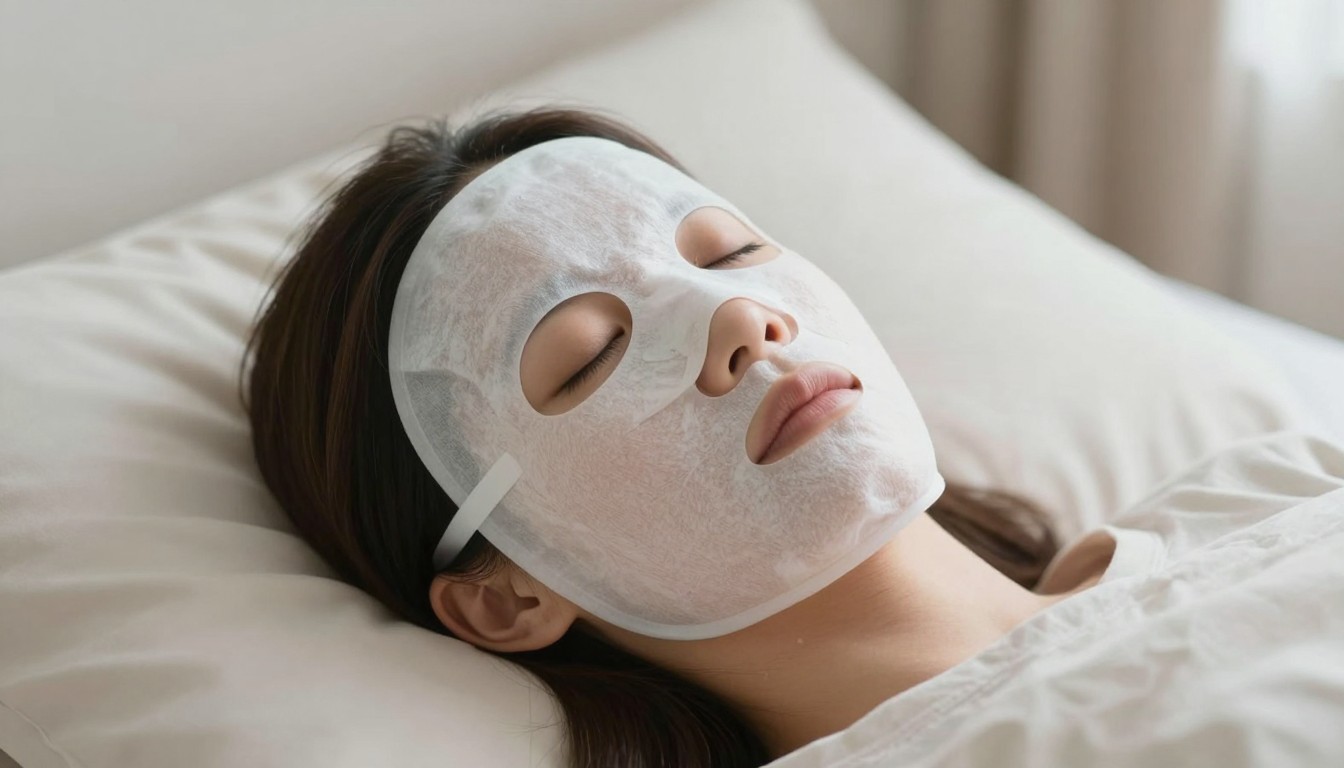
 by
by Quick answer: You can, but I wouldn’t sleep all night in a cold compress face mask unless its maker explicitly permits overnight wear. A short, cool session before bed is the more cautious default.
- Manta Sleep says some people sleep through the night in a cool compression eye mask.
- Its cooling-mask guide advises limiting a cooling session to about 10 minutes.
- The same guide notes that not everyone is comfortable with weight over the eyes.
Updated July 2026 · Reviewed for accuracy
The cold isn’t the only issue. The mask’s weight, straps, coverage and intended use all matter once you’re no longer awake to adjust it.
My rule is simple: treat a cold facial compress as a short-use product unless its written instructions clearly say it can be worn while sleeping. Feeling comfortable for a few minutes doesn’t automatically make a mask suitable for unattended overnight wear.
Can You Wear a Cold Face Mask While Sleeping?
Manta Sleep’s published guidance puts a cooling session at about 10 minutes, although it also acknowledges that some people wear cool compression eye masks all night. That distinction matters. What works for one purpose-built eye mask doesn’t establish that every gel facial compress is intended for sleep.
Start with the wording on the product. If the manufacturer explicitly describes it as an overnight or sleeping mask, follow its fitting and cooling instructions. If the packaging only calls it a cold compress, facial-spa mask or reusable hot-and-cold pack, I’d remove it before falling asleep.
A plain blackout eye mask is a different category because it doesn’t necessarily contain a chilled insert or add noticeable weight. If that’s what you meant, see my separate guide on whether you can sleep with a mask on.
| Mask situation | My recommendation | Reason |
|---|---|---|
| Soft cooling eye mask specifically approved for sleep | Consider overnight wear if it stays comfortable and properly positioned | The intended use matches the way you plan to wear it |
| Gel facial compress with no overnight instructions | Use it while awake, then remove it | The label hasn’t established that it’s a sleep product |
| Rigid, tightly strapped or uncomfortably heavy mask | Don’t sleep in it | You may not notice shifting or increasing discomfort while asleep |
| Leaking, split or damaged insert | Stop using it | The mask is no longer in the condition intended by its maker |
Why the Mask’s Construction Matters Overnight
An eye mask and a full-face compress don’t cover the same area. An eye mask generally stays around the eyes, while a facial compress may extend over the forehead and cheeks. More coverage gives the product more opportunity to shift when you change position.
The cold source matters too. A chilled insert begins warming as you wear it, so keeping it on all night doesn’t mean receiving the same cool sensation all night. It may simply become a damp or heavy layer resting on your face.
Compression comes from the insert’s weight and the tension needed to hold it in place. Manta Sleep specifically notes that some people aren’t accustomed to weight over their eyes. If you already notice pressure while awake, I wouldn’t expect sleep to make the fit more appropriate.
Coverage around the nose and mouth deserves a direct check. The mask should stay in its intended position without creeping toward either area when you turn your head. If it can’t do that without being pulled tightly, it isn’t a good candidate for overnight wear.
The label test:
Look for the actual words “sleep,” “overnight” or equivalent instructions from the manufacturer. “Cold compress,” “facial spa” and “relaxing” don’t mean the same thing.
A marketplace result surfaced by Pinterest describes one reusable hot-and-cold facial mask as a home facial-spa product and mentions a separate eye mask. That wording shows why category names aren’t enough: a facial treatment accessory and an eye mask made for sleep can have different intended uses.
How to Use a Cold Compress Face Mask Before Bed
The first instruction to find is the manufacturer’s chilling method. Some masks may be intended for a particular cooling process, so don’t substitute a freezer, appliance or preparation method that the label doesn’t permit.
I’d use the following sequence whenever the instructions don’t explicitly authorize overnight wear:
- Inspect the mask. Check the outer fabric, insert and seams. Don’t use it if the material is split, leaking or no longer sits flat.
- Cool it exactly as directed. More intense cold isn’t automatically better. The preparation method on the label should control.
- Check the fit before reclining. Align any eye, nose or mouth openings and confirm that the mask stays in place without excessive strap tension.
- Remain awake during the session. Manta Sleep’s guide uses about 10 minutes as its cooling-period reference. A manufacturer’s shorter instruction should still take priority for that particular mask.
- Remove it before sleep. Don’t rely on waking later to take it off if the product wasn’t designed for overnight use.
- Clean and store it as directed. Let reusable components dry if the care instructions require it, then check the seams again before the next session.
Don’t improvise with temperature.
If the maker specifies one cooling method, use that method. A mask that feels pleasantly cool is easier to monitor while you’re awake than one that feels painfully cold or stiff.
Once you remove the compress, you can switch to an ordinary fabric sleep mask if you want darkness and its own instructions allow overnight wear. Keep the cooling session and the sleep accessory separate rather than assuming one product can do both jobs.
If a clinician has given you product-specific instructions following a procedure or for an existing concern, those directions take priority over a general consumer guide.
How to Tell Whether a Cooling Mask Is Made for Sleep
The words “sleep mask” and “cold compress” aren’t interchangeable. I’d want written overnight instructions, not just packaging that shows a bed or uses general relaxation language.
A suitable label should explain how the mask is cooled, fitted and cared for. It should also make clear whether the chilled insert remains inside during sleep or is intended to be removed after a short session.
Use this construction checklist before considering overnight wear:
- The manufacturer expressly permits sleeping in the mask.
- The mask stays aligned without a tight strap.
- Its edges and insert remain soft enough to follow your sleeping position comfortably.
- Openings remain unobstructed when you turn your head.
- The insert lies flat rather than bunching over one area.
- The seams are intact and show no sign of leakage.
- The cleaning and storage directions are clear enough to follow consistently.
Material certification can answer a different question, but it doesn’t establish overnight suitability. Amazon’s explanation of OEKO-TEX STANDARD 100 says every component of a certified textile product, including thread, buttons and trims, is checked against a list of more than 1,000 regulated and unregulated chemicals that may be harmful. That tells you about the certification’s scope, not whether a particular cold insert should remain on your face while you sleep.
The same distinction applies to search categories such as “cold sleeping mask.” A marketplace category or seller phrase isn’t a substitute for the individual product’s written instructions. If the overnight-use answer isn’t clear, I’d treat the mask as an awake-use compress.
When to Remove the Mask or Skip Overnight Wear
Pain, leaking, shifting or interference around your nose or mouth ends the session. You don’t need to tolerate an uncomfortable mask simply because its cooling effect initially felt pleasant.
I’d also remove it if the insert becomes lumpy, the strap needs constant tightening or the material feels too stiff against your sleeping position. Those are practical signs that the construction isn’t working for unattended wear.
Stop using the mask if:
- It feels painful or uncomfortably cold.
- It shifts toward your nose or mouth.
- The insert or outer shell leaks.
- You can’t loosen or remove it easily.
- The manufacturer’s instructions conflict with overnight use.
If you accidentally fall asleep in it, remove the mask when you wake and inspect it before using it again. Don’t assume that one uneventful night proves the product is suitable for repeated overnight wear.
Keep separate sleep issues separate. If joint discomfort is also affecting your rest, my sleep with arthritis tips guide addresses that topic, but it doesn’t change the face mask manufacturer’s instructions.
My Bottom Line
Yes, you can sleep with certain cooling masks, but only when the manufacturer clearly designed and approved that particular mask for sleep. Manta Sleep notes that some users wear cool compression eye masks all night, while also advising a much shorter cooling period and acknowledging that eye pressure isn’t comfortable for everyone.
My default: use an ordinary cold facial compress for a brief, awake session. Reserve overnight wear for a soft cooling sleep mask with explicit instructions supporting it.
FAQ
Can you sleep with a cold compress face mask?
You can if the manufacturer specifically permits overnight wear and the mask remains comfortable and properly positioned. If it’s described only as a facial compress or spa mask, use it while awake and remove it before sleep.
How long should you wear a cooling face mask?
Manta Sleep’s cooling-eye-mask guide advises a period of about 10 minutes. Follow the individual mask’s instructions if they specify a different limit, because one product’s guidance doesn’t automatically apply to another construction.
Can you sleep with a frozen face mask?
I wouldn’t freeze a mask unless its manufacturer explicitly instructs you to do so, and freezing approval still doesn’t equal overnight approval. Prepare the mask only as directed and remain awake if the label treats it as a short-use compress.
Is a cooling eye mask the same as a full-face cold compress?
No. Their coverage, insert shape, weight and intended use can differ, so instructions for a purpose-built cooling eye mask shouldn’t be transferred to a full-face compress.
What should you do if you fall asleep wearing one?
Remove it when you wake, then inspect the insert, seams and outer material for damage or leakage. Don’t resume overnight use unless the manufacturer clearly says the mask was designed for it.