 by
by Not all "organic" mattresses are equally certified. The two certifications that actually matter are GOLS (for organic latex) and GOTS (for organic textiles like cotton and wool). Our #1 pick, the Amerisleep Organica, documents its certifications material by material (OEKO-TEX Standard 100, Rainforest Alliance and eco-INSTITUT for its Talalay latex). Our #2, the Saatva Zenhaven, holds GOLS and GOTS along with GREENGUARD Gold — the right choice if a full-product GOLS seal is your one non-negotiable. The PlushBeds Botanical Bliss is the specialist alternative, stacking GOLS, GOTS, and GREENGUARD Gold on a configurable all-latex design.
Our #1 Certified-Materials Pick: Amerisleep Organica
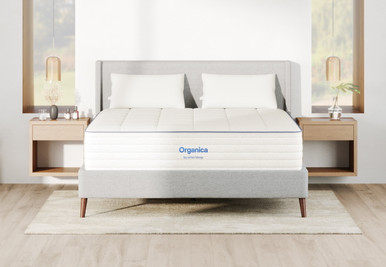
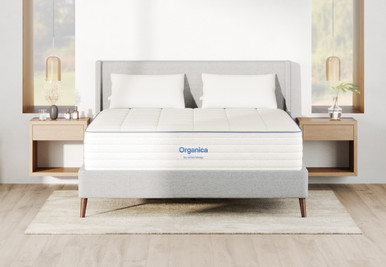
The Amerisleep Organica is the strongest example on this page of doing organic certification the right way — component by component. The box-quilted cover is organic cotton over a layer of organic wool (OEKO-TEX Standard 100; Amerisleep's product FAQ describes the wool as GOTS-certified), which doubles as the fire barrier — no fiberglass, no chemical sprays, and the two Talalay latex comfort layers are certified by OEKO-TEX Standard 100, the Rainforest Alliance and eco-INSTITUT. Note the precision: those certifications apply to the documented materials — Amerisleep does not claim a finished-mattress GOLS seal, which is exactly the kind of honest labeling this comparison exists to reward.
Beyond the paperwork it is simply a good mattress: 12" tall, a 3" dual-layer Talalay comfort section over 8" pocketed coils, a balanced medium feel that suits back, side and combination sleepers, endorsed by the American Chiropractic Association. Queen pricing runs $1,299 on sale ($1,799 MSRP), with a 100-night trial and 20-year warranty. A softer Organica Plush variant exists for dedicated side sleepers.
Amerisleep Organica
9.3/10
- Organic cotton cover and organic wool fire barrier (wool OEKO-TEX Standard 100) — no fiberglass, no chemical sprays
- Talalay latex certified by OEKO-TEX Standard 100, the Rainforest Alliance and eco-INSTITUT
- Real hybrid build: dual-layer Talalay over pocketed coils with a reinforced edge
- $1,299 in Queen on sale ($1,799 MSRP)
- Endorsed by the American Chiropractic Association; fiberglass-free
- Certifications are component-level — Amerisleep does not claim a finished-mattress GOLS seal (honest labeling, but the Zenhaven below carries it)
- Single Medium firmness on the standard model (a softer Organica Plush exists)
- Coil core transfers more motion than all-latex designs
The Organica takes the top spot because it pairs honest, component-level organic certification with the best value execution in the category: certified latex and organic cotton and wool on a real coil hybrid — and it never claims a seal it hasn’t earned. For shoppers who want the full finished-product GOLS stack instead, the Zenhaven below remains the benchmark.
Saatva Zenhaven
9.2/10
- GOLS-certified organic natural latex core — verifiably organic, not just "natural"
- GOTS-certified organic New Zealand wool as fire barrier, no chemical flame retardants
- Dual-sided: flip between Luxury Plush (4-5/10) and Gentle Firm (7-8/10)
- GREENGUARD Gold and eco-INSTITUT certified for low VOC emissions
- Free white-glove delivery, setup, and mattress removal
- Premium price — above most non-latex mattresses
- Dual-sided design requires a solid foundation (slats need a bunkie board)
- Buoyant latex feel is different from memory foam; not right for everyone
The Zenhaven is our #2 pick, and the most fully certified, because it achieves the full stack of third-party certifications (GOLS for the latex, GOTS for wool and cotton, GREENGUARD Gold for emissions) without relying on any polyurethane foam. The dual-sided construction gives it practical versatility very few organic mattresses match.
The certification landscape
There is no single government standard for "organic mattress" in the United States. The word "organic" on a mattress label is unregulated unless it is backed by a named third-party certification. Several independent bodies cover different materials and different parts of the production chain. Understanding each one lets you cut through marketing language and evaluate what is actually certified.
Key certifications explained
GOTS — Global Organic Textile Standard
GOTS is the gold standard for organic textiles. It certifies that cotton, wool, or other textile components are grown without synthetic pesticides or fertilizers and processed without harmful chemicals. A mattress cover or fire barrier labeled GOTS has been verified from farm to finished product. GOTS requires 70% or more organic content for "made with organic" labeling and 95% or more for "organic" labeling. It also mandates social and environmental compliance throughout the supply chain.
GOLS — Global Organic Latex Standard
GOLS certifies that latex is derived from certified organic rubber tree plantations. It requires 95% organic raw latex content and prohibits most synthetic additives. Only Dunlop and Talalay latex produced from organically farmed rubber trees can receive GOLS certification, synthetic "latex" blends cannot. If a mattress claims GOLS, the latex core was grown and processed under defined organic and ecological standards.
OEKO-TEX Standard 100
OEKO-TEX Standard 100 tests the finished product for harmful substances: pesticide residues, heavy metals, formaldehyde, and pH levels. It does not certify the growing or manufacturing process as organic, but it confirms the finished product does not leach harmful chemicals under normal use. CertiPUR-US is the foam equivalent, certifying that polyurethane foam is free of certain harmful substances, but CertiPUR-US says nothing about organic sourcing.
GREENGUARD Gold
GREENGUARD Gold certifies low chemical emissions (VOCs) in finished products. New mattresses can off-gas chemicals during their first weeks of use, and GREENGUARD Gold sets the strictest threshold, including criteria designed for children's spaces. Many all-latex and hybrid mattresses carry this certification alongside GOLS and GOTS.
Rainforest Alliance / FSC
These certifications apply to sustainably managed rubber plantations and are relevant for latex mattresses. They are not organic certifications, but they indicate environmentally responsible sourcing of raw materials.
What a fully certified organic mattress looks like
| Component | Relevant certification | What it guarantees |
|---|---|---|
| Latex core | GOLS | 95%+ organic raw latex, no harmful additives |
| Cotton cover / wool fire barrier | GOTS | Organically farmed, no toxic processing chemicals |
| Finished mattress emissions | GREENGUARD Gold | Low VOC emissions within the specified certification limits |
| Latex sourcing | eco-INSTITUT / Rainforest Alliance | Pollution-free, sustainably sourced rubber |
Very few mattresses hold all of these at once. The Saatva Zenhaven carries GOLS, GOTS, GREENGUARD Gold, and eco-INSTITUT on a single product. The PlushBeds Botanical Bliss stacks GOLS, GOTS, GREENGUARD Gold, and Eco-INSTITUT as well. Most mattresses marketed as "organic" or "natural" hold only one or two of these certifications.
Comparison: top certified-organic mattresses
| Mattress | Type | GOLS | GOTS | GREENGUARD Gold | Trial | Queen price |
|---|---|---|---|---|---|---|
| Saatva Zenhaven | All-latex, dual-sided | Yes | Yes | Yes | 365 nights | ~$3,274 (sale) |
| PlushBeds Botanical Bliss | All-latex, configurable | Yes | Yes | Yes | 365 nights | ~$2,649 |
| Avocado Green | Latex hybrid | Yes | Yes | Yes | 365 nights | ~$1,899 |
| Naturepedic Chorus | Hybrid latex/coils | Yes | Yes | Yes | 90 nights | ~$2,099 |
| Saatva Classic | Innerspring hybrid | No | No | Yes | 365 nights | ~$1,895 (sale) |
PlushBeds Botanical Bliss
9.1/10
- GOLS, GOTS, GREENGUARD Gold, and Eco-INSTITUT certified — same full stack as Zenhaven
- Two firmness options
- Exceptional pressure relief (10/10 per NapLab) with a 5.25" latex comfort layer
- Excellent cooling (9.0/10) — organic wool and cotton breathe naturally
- Very low motion transfer (9.8/10) — unusual for latex, helped by soft feel
- Premium price — $2,649 queen
- Strong latex odor for about 10 days after unboxing (rubber smell, not chemical)
- Weak edge support — 4.75" sitting sinkage vs 3.84" average
If you want the most configuration flexibility from a fully certified-organic latex mattress, the Botanical Bliss wins on customization and has exceptional pressure-relief data. It costs less than the Zenhaven ($2,649 vs $3,274 queen on sale), offers two firmness options and is particularly strong for side sleepers who need a thicker comfort layer.
Red flags in organic mattress marketing
- "Natural latex": Does not mean certified organic. Latex can be blended with synthetic rubber and still be called "natural."
- "Eco-friendly": No standard definition. Meaningless without a named third-party certification.
- "Non-toxic": Look for GREENGUARD Gold or OEKO-TEX Standard 100 to back this claim with actual testing data.
- "Organic materials": Could mean only a small percentage of the mattress contains organic content. Ask which specific certifications apply to which layers.
- Self-certification: Any brand can claim organic on its website. Only third-party certification from GOLS, GOTS, GREENGUARD Gold, or eco-INSTITUT is independently verifiable.
Price premium of certified organic mattresses
GOTS and GOLS certified mattresses typically cost $1,800 to $3,500 for a queen, compared to $800 to $1,800 for non-certified latex or foam options. The premium reflects higher raw material costs (organic latex typically runs 30 to 50% more than conventional) and ongoing certification fees paid by the manufacturer. For chemically sensitive individuals, people with allergies or asthma, or parents buying for young children, this premium is generally considered justified. GREENGUARD Gold and CertiPUR-US certified non-organic mattresses may cost less, but the certifications have different scopes and do not establish equivalent health safety.
See our full organic mattress guide and non-toxic mattress guide for deeper comparisons.
Frequently asked questions
What is the difference between GOTS and GOLS certification?
GOTS (Global Organic Textile Standard) certifies that textile components like cotton and wool are organically grown and processed. GOLS (Global Organic Latex Standard) certifies that latex is derived from certified organic rubber tree plantations. A fully certified organic latex mattress would carry both: GOLS for the latex core and GOTS for the cotton and wool cover.
Is OEKO-TEX the same as organic?
No. OEKO-TEX Standard 100 certifies that a finished product is free of harmful substances. It tests what is in the product, not how it was grown or manufactured. A mattress can be OEKO-TEX certified while still containing conventional, non-organic materials. It is a safety certification, not an organic one.
What does GREENGUARD Gold mean on a mattress?
GREENGUARD Gold certification means the mattress has been tested for very low chemical emissions below levels considered safe for children's spaces. It reduces off-gassing concerns. It does not indicate organic sourcing, but confirms the finished product meets strict emission standards independently of the organic question.
Are certified organic mattresses worth the higher price?
For most healthy adults, the evidence that certified organic mattresses provide measurable health benefits over GREENGUARD Gold or CertiPUR-US certified alternatives is limited. For chemically sensitive individuals, people with allergies or asthma, or parents buying for young children, the premium is more clearly justified. The key is verifying actual third-party certifications rather than paying for marketing language.
Does Saatva make a certified organic mattress?
Yes. The Saatva Zenhaven is Saatva's fully certified-organic all-latex model. It carries GOLS certification on the latex core, GOTS certification on the organic New Zealand wool fire barrier and organic cotton cover, GREENGUARD Gold for low emissions, and eco-INSTITUT certification. Saatva notes that the Zenhaven is not marketed as a 100% organic mattress overall (no mattress is, once you count every component), but the core and textile certifications are comprehensive and third-party verified.
OUR VERDICT
The Organica wins this comparison on honest labeling and value: certified materials, no finished-mattress claims it can’t back, $1,299 in Queen. Want the full GOLS-certified-product seal instead? The Saatva Zenhaven is the #2 pick above.
THE ORGANIC PICK WE’D BUY
Amerisleep Organica
- $1,299 in Queen on sale ($1,799 MSRP)
- Organic cotton cover + organic wool fire barrier — no fiberglass, no chemical sprays
- Talalay latex certified OEKO-TEX, Rainforest Alliance & eco-INSTITUT — 100-night trial, 20-year warranty