
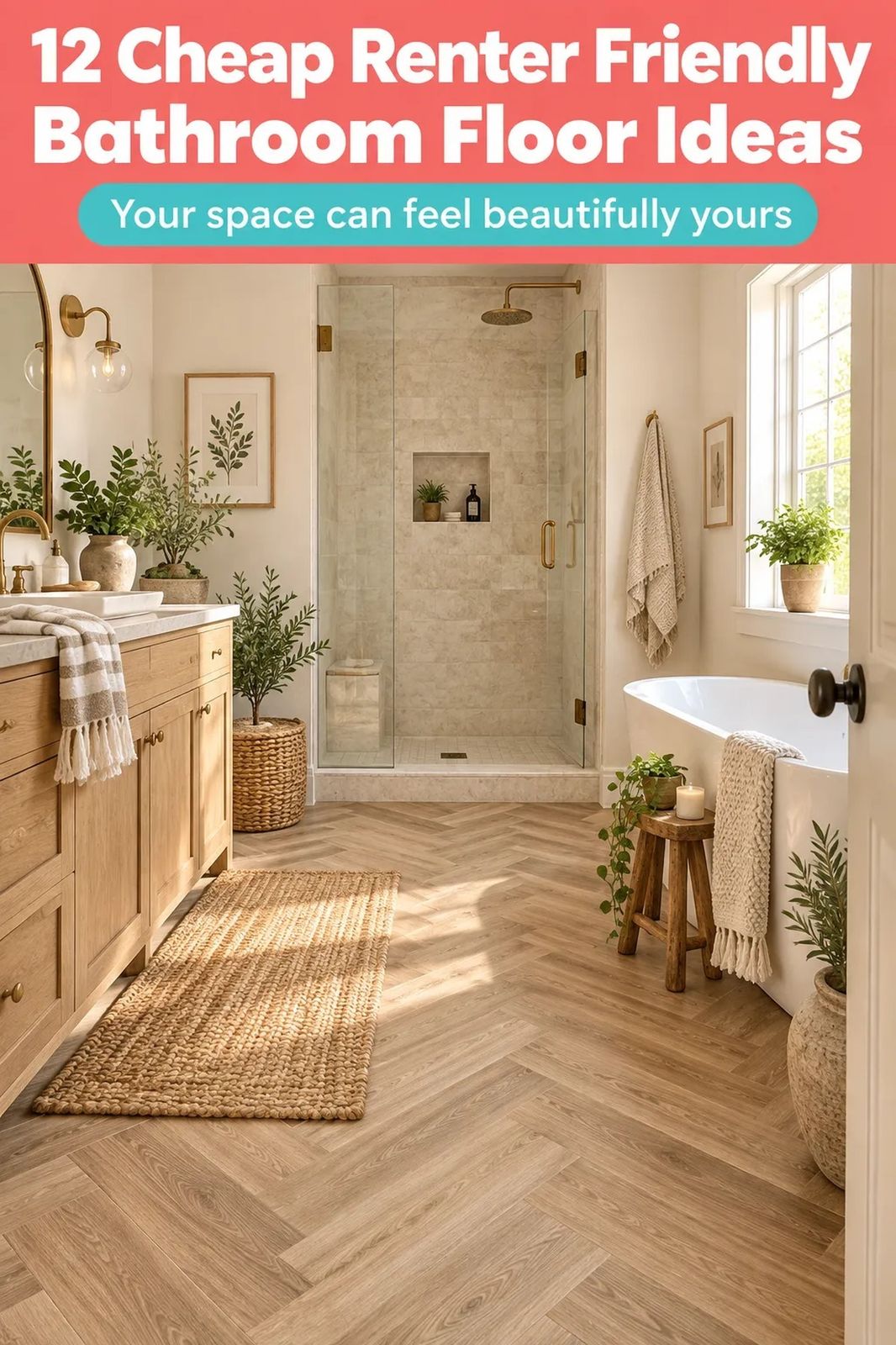
 by
by The short answer: a renter friendly bathroom floor costs $40 to $100 and comes up in one afternoon. I ruined a security deposit once, back in 2019, by using the wrong adhesive on a sheet vinyl remnant. Peel-and-stick has gotten good. Genuinely good. Here's what works.
- Start with peel-and-stick vinyl plank in matte oak
- Skip the tile, lay a rubber-backed runner instead
- Float a stick-on hex tile grid over the ugly stuff
- Anchor the room with a teak shower mat and let it do the heavy lifting
- Can you really paint a rental bathroom floor?
- Lay interlocking cork tiles for warmth underfoot
- Roll out a printed vinyl remnant and cut it to fit
- Build a two-mat layering system by the tub
- Mix penny tile stickers into a border instead of covering everything
- Swap the grout color before you swap the floor
- Frame the floor with a painted baseboard shift
- Layer a plant cluster in the dead corner
1Start with peel-and-stick vinyl plank in matte oak
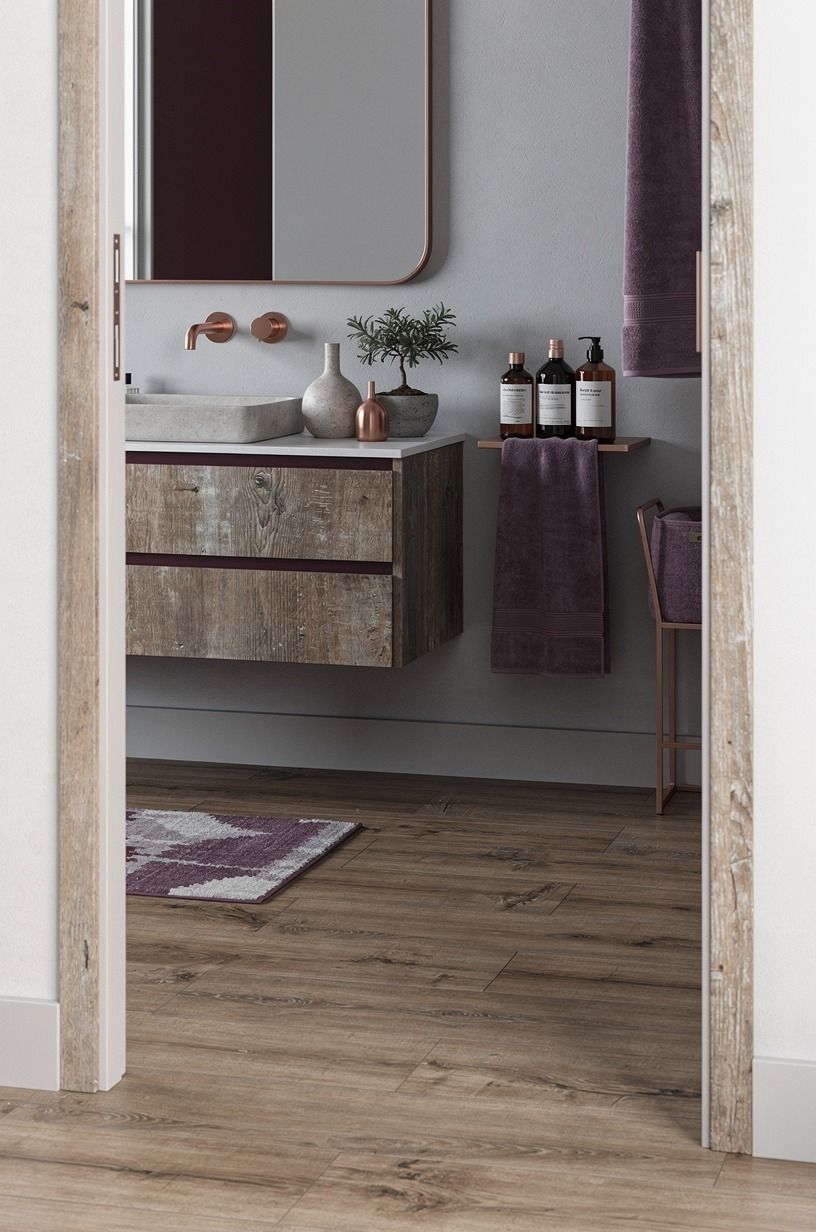
Peel-and-stick vinyl plank is the cheapest way to cover ugly rental tile, and it's the one I'd do first. A 20 sq ft box runs about $25 to $35, so a standard 5x8 bathroom lands near $60 total. Look for the matte finish versions, not the shiny ones, because gloss reads plastic the second light hits it at an angle.
The move with the floor underneath is boring but it matters: you need it clean and bone dry. I wipe with denatured alcohol and let it sit an hour.
Lucida Surfaces BaseCore planks in a reclaimed weathered teak tone have a subtle grain that doesn't repeat every third plank, which is the tell on cheap vinyl. And they lift off in one piece when you move, assuming you didn't roll them down over a damp subfloor.
Cut them with a utility knife and a straight edge. No saw.
You'll want a fresh blade every ten planks or so, because a dull one drags and tears the wear layer. Worth it.
2Skip the tile, lay a rubber-backed runner instead
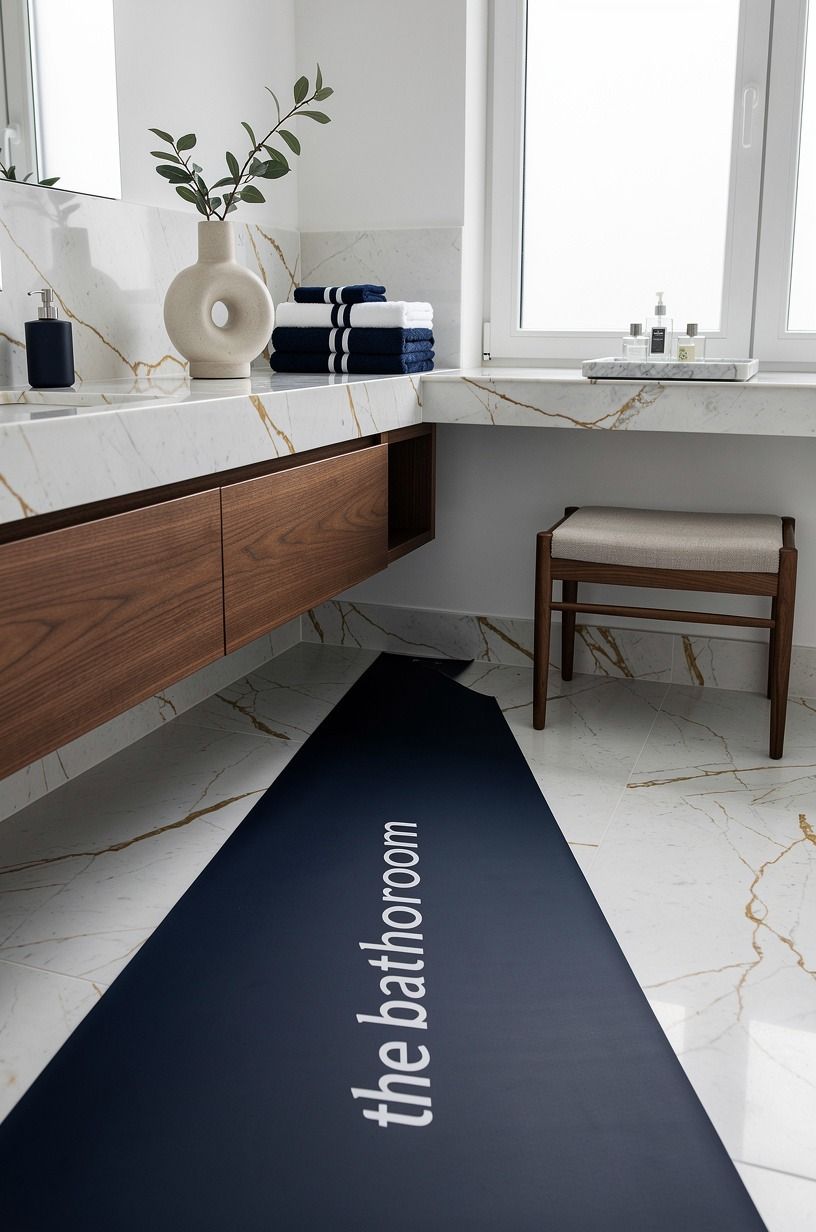
Here's the thing about rental bathrooms: sometimes you shouldn't cover the floor at all. You should cover the path. A 2x6 ft runner with a rubber backing costs $30 to $50, hides the traffic lane where the grout is worst, and requires exactly zero commitment.
Look for a washable flatweave with a Calacatta-marble pattern and subtle gold veining over tufted plush. Tufted holds water, and a bathroom runner that holds water starts smelling like a gym bag by week three.
Flatweaves dry in a couple of hours and go in the washing machine on cold. I've run the same one for two years now.
The mistake I made was buying too small. A 2x3 bath mat in front of the sink looks like a postage stamp on a floor you're trying to disguise.
Go long. The runner should reach from the door to the tub, which in most rentals is somewhere around 60 inches, the length of a standard 60x30 in tub.
Measure it.
3Float a stick-on hex tile grid over the ugly stuff
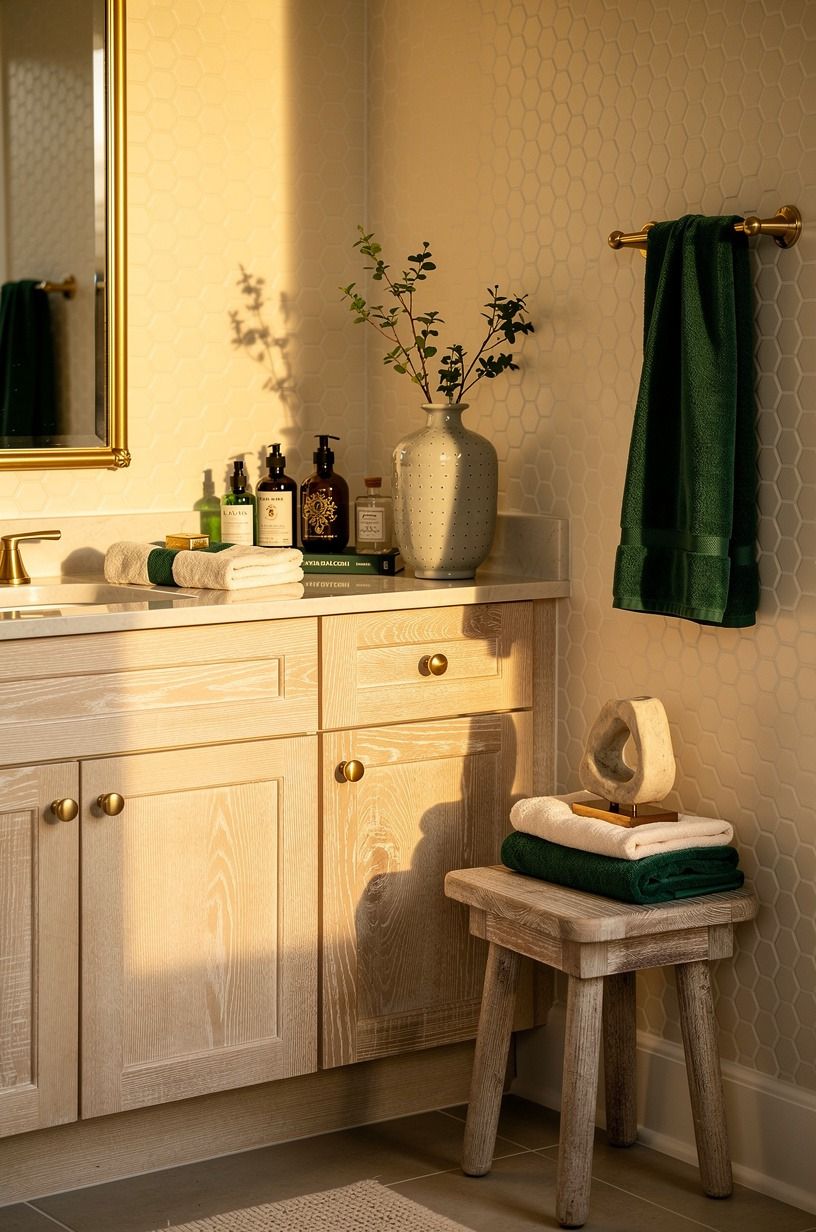
Hex is having a moment in small rental bathrooms, and peel-and-stick hex sheets are how you get it for $3 to $5 a square foot instead of $15.
4Anchor the room with a teak shower mat and let it do the heavy lifting
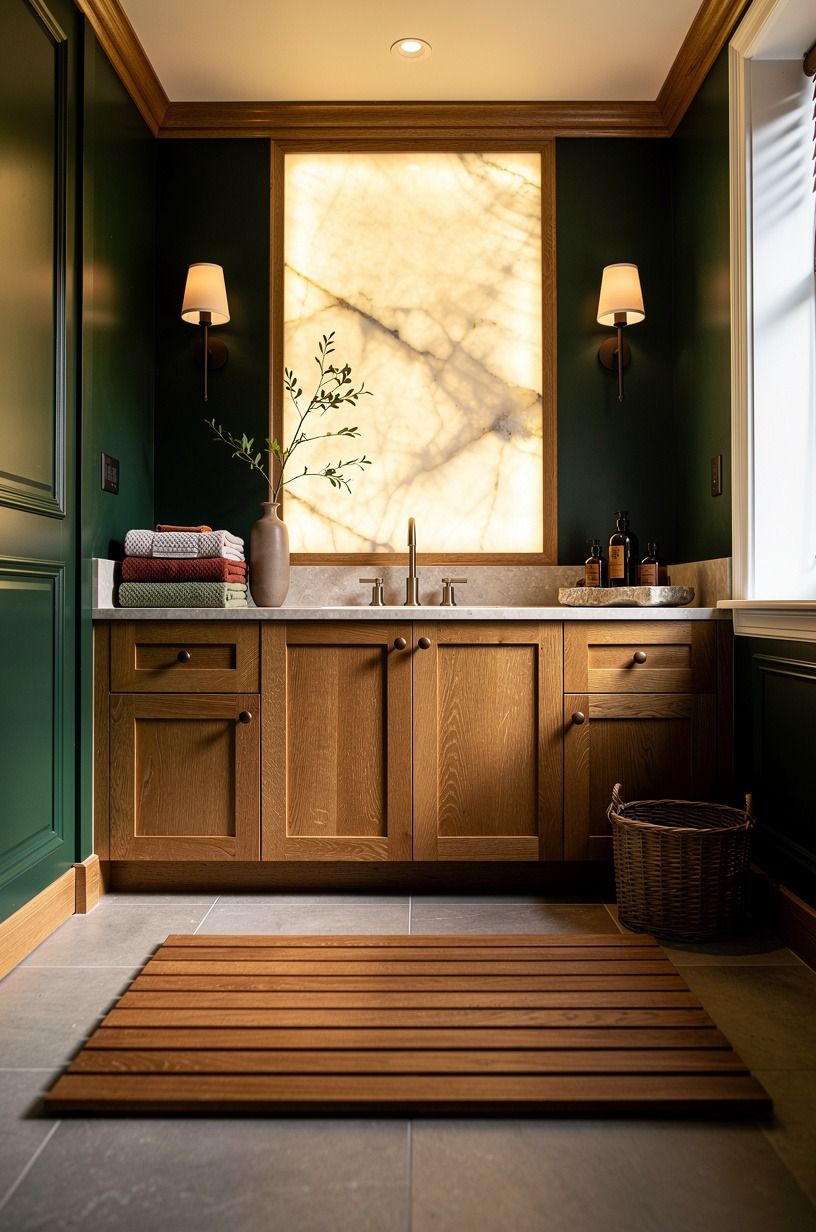
A slatted mat with a backlit translucent onyx look is the single most calming thing you can put on a bathroom floor, and it costs $35 to $60. It sits over whatever you've got, elevates nothing structurally, and reads spa immediately.
Solid grade-A teak with stainless hardware, not the bamboo ones. Bamboo splits along the grain after about six months of standing water and then it's splinters. Teak has enough natural oil in it that it just goes silver and keeps working.
Prop it against the wall to dry after a shower. If you leave it flat on a wet floor every day it'll still outlast the bamboo, but the underside gets that gray film and you'll be scrubbing. Ask me how I know.
5Can you really paint a rental bathroom floor?
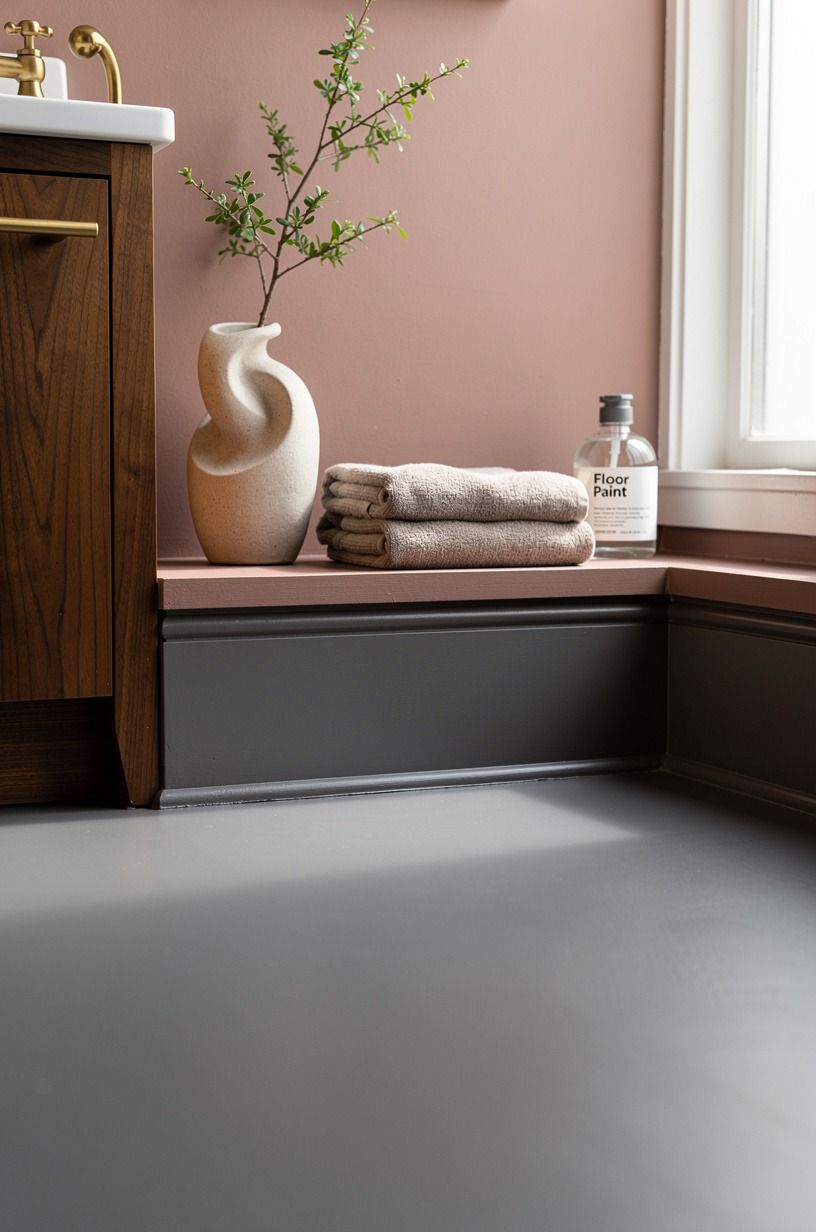
Yes, if it's vinyl or sealed concrete, and no, not if it's real ceramic you care about. This is the cheapest option on the list: a quart of porch and floor enamel runs $25 to $40 and covers a small bathroom twice.
The order matters more than the paint. Degrease, scuff with 120 grit, one coat of bonding primer, two thin coats of enamel, then two coats of water-based polyurethane.
Skip the poly and you'll have shoe scuffs in a month. A dusty rose enamel works beautifully here if you want the floor to recede into a small space.
And yes, you have to check your lease. Most leases care about permanent alteration, and floor paint on vinyl is arguable, so ask in writing first. I've had two landlords say yes and one say absolutely not.
6Lay interlocking cork tiles for warmth underfoot
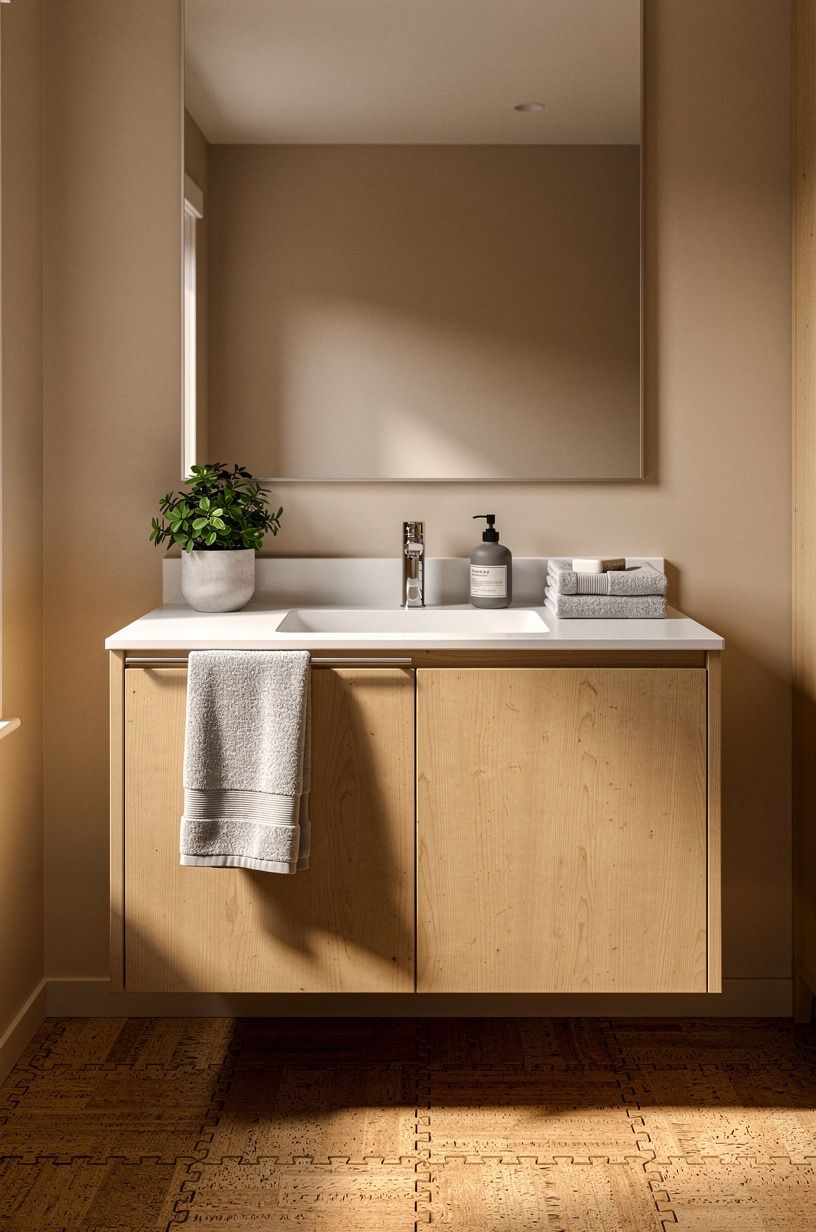
Cork is the most underrated rental floor there is. It's soft, it's quiet, it's warm at 6am in February, and click-together cork tiles in a warm travertine tone run $2 to $4 per square foot. No adhesive at all, which means no argument when you leave.
The real benefit is acoustic. Rental bathrooms echo like a stairwell, all that hard tile bouncing sound, and cork kills it instantly.
Your whole apartment gets quieter. If underfoot warmth is the thing you're actually chasing, our limestone bathroom floor guide covers the permanent version of the same idea.
One caution: cork drinks standing water at the seams. It's fine for splash, it's not fine for a leaking toilet you ignore for a week. Pull the tiles up, dry them, put them back.
That's the whole repair.
7Roll out a printed vinyl remnant and cut it to fit
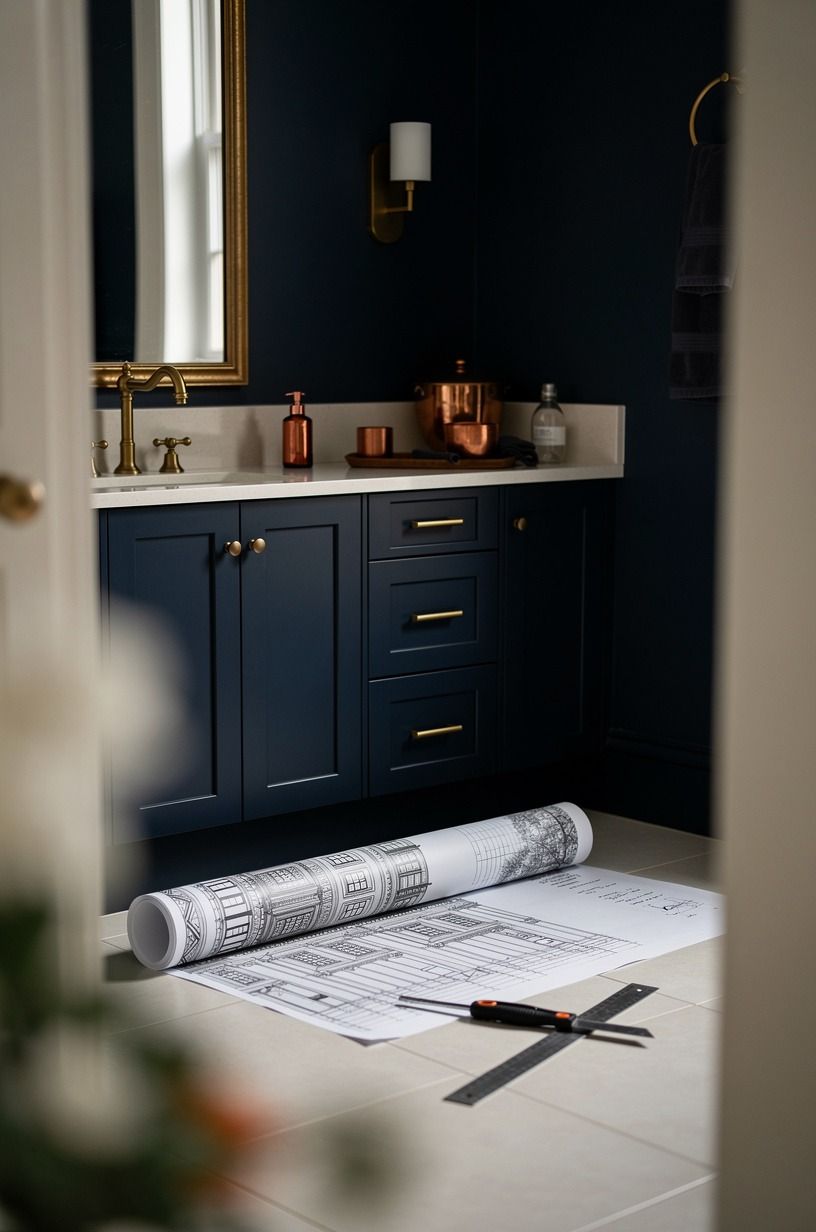
A vinyl sheet remnant from a flooring store's off-cut bin costs $1 to $2 a square foot, sometimes less if the roll end is awkward.
8Build a two-mat layering system by the tub
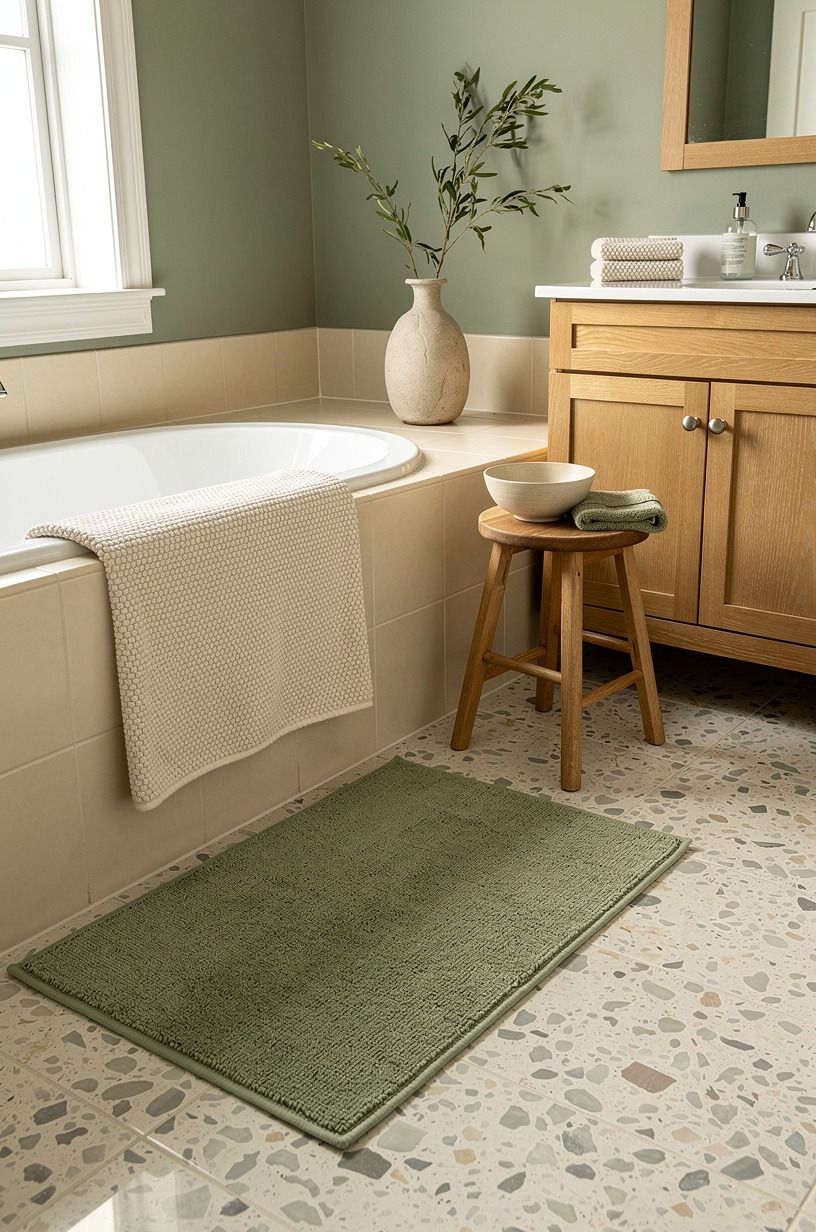
The Two-Mat Rule: one absorbent mat where you step out, one flatweave where you stand at the sink. Most people buy one mat and ask it to do both jobs, and that's why it's always damp.
For the tub side, 600gsm Turkish cotton in a stone or oatmeal tone. Heavy enough to actually dry your feet, thin enough to launder. For the sink side, a low-pile flatweave in a pattern, because that's where toothpaste and makeup land and a pattern hides sins.
Total for both, about $45 to $70 at Target Threshold. That's less than dinner out for two! And a layered floor reads intentional in a way one lonely mat never does.
9Mix penny tile stickers into a border instead of covering everything
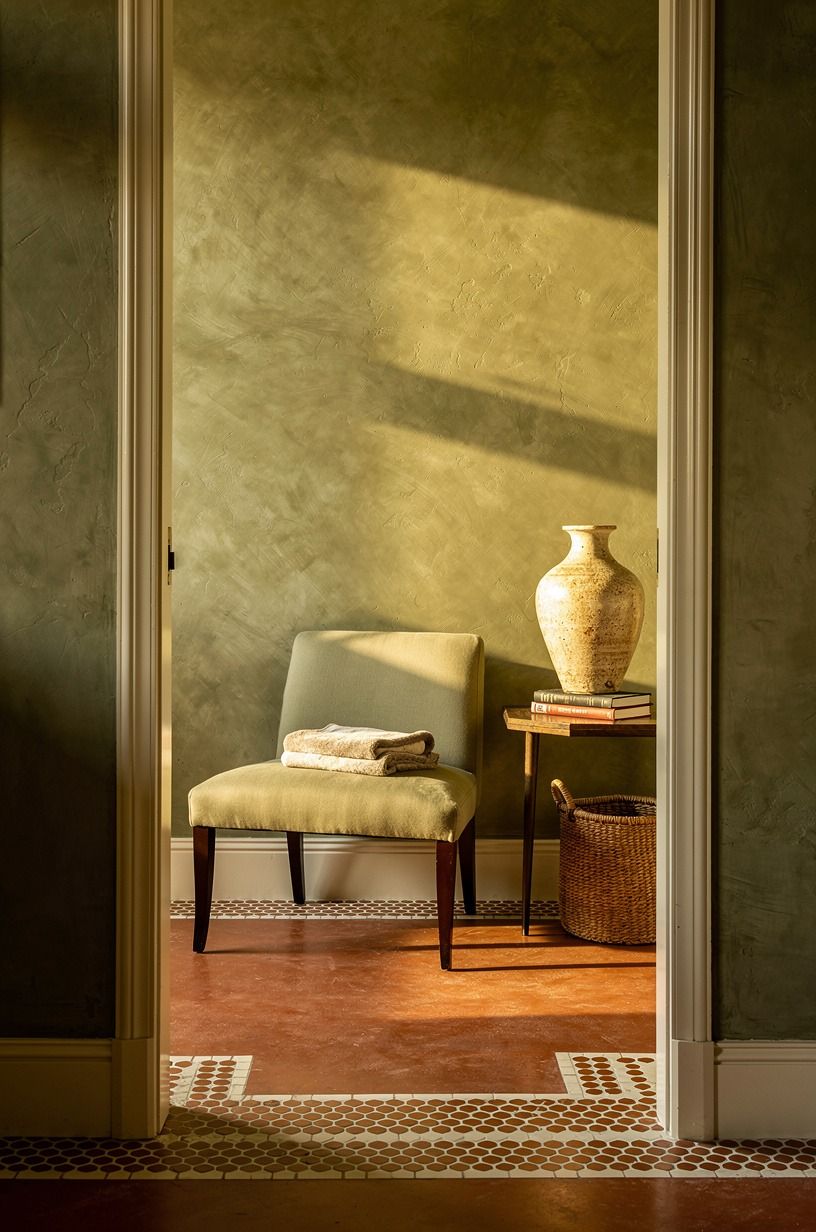
You don't have to cover the whole floor. A border of peel-and-stick penny round along the perimeter, framing whatever's already there, is a smaller job and often a better looking one in a tight rental bathroom.
This works especially well when the existing tile is plain white and boring but not offensive. A 4-inch terracotta penny border around the edge turns a builder-basic floor into something that looks planned. Twelve dollars of material, maybe.
Measure your toilet clearance before you commit to a border width. You need 21 in of clearance in front of the bowl minimum, and a fussy border that dies awkwardly behind the tank looks worse than no border. Run it, or don't.
10Swap the grout color before you swap the floor
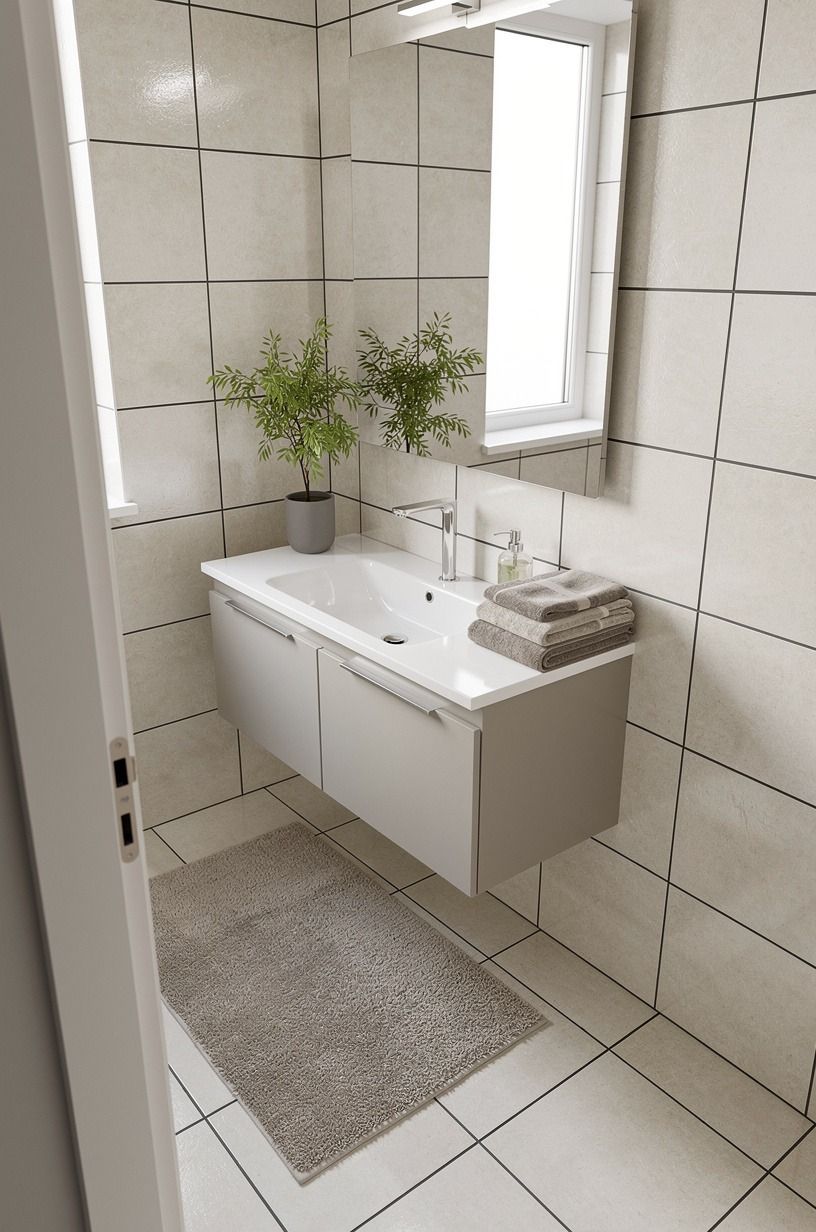
Sometimes the floor is fine and the grout is the problem.
11Frame the floor with a painted baseboard shift
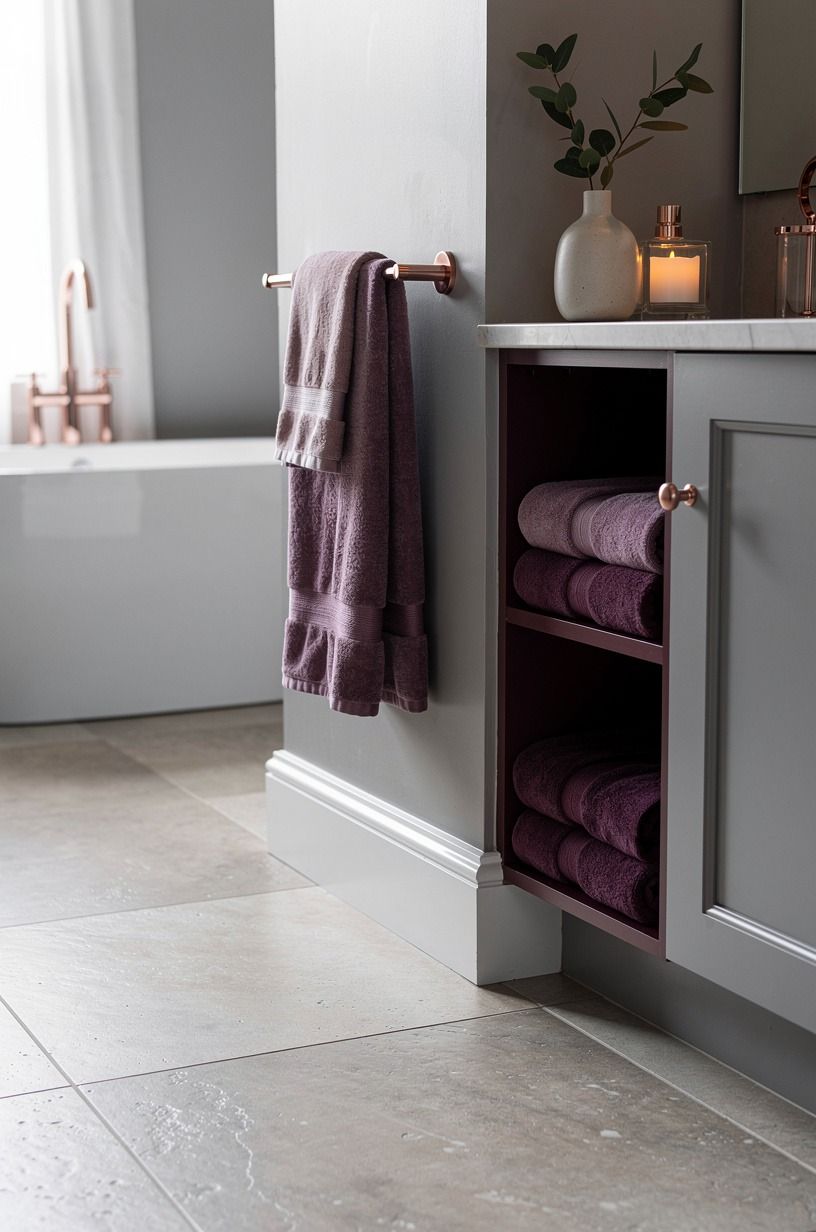
The floor doesn't stop at the floor. Where it meets the wall changes how big the room reads, and painting the baseboard the same value as the floor makes a small rental bathroom feel noticeably larger.
Try a muted plum on both baseboard and a dark vinyl floor if you're going moody, or match a pale baseboard to a pale floor if you want airy. Either direction works. What doesn't work is a bright white baseboard cutting a hard line around a dark floor, which chops the room into a box.
A sample pot covers the baseboard in a bathroom this size. Eight dollars.
And if your lease is strict, peel-and-stick baseboard covers exist in vinyl, though honestly they look like what they are up close. Paint's better if you're allowed.
12Layer a plant cluster in the dead corner
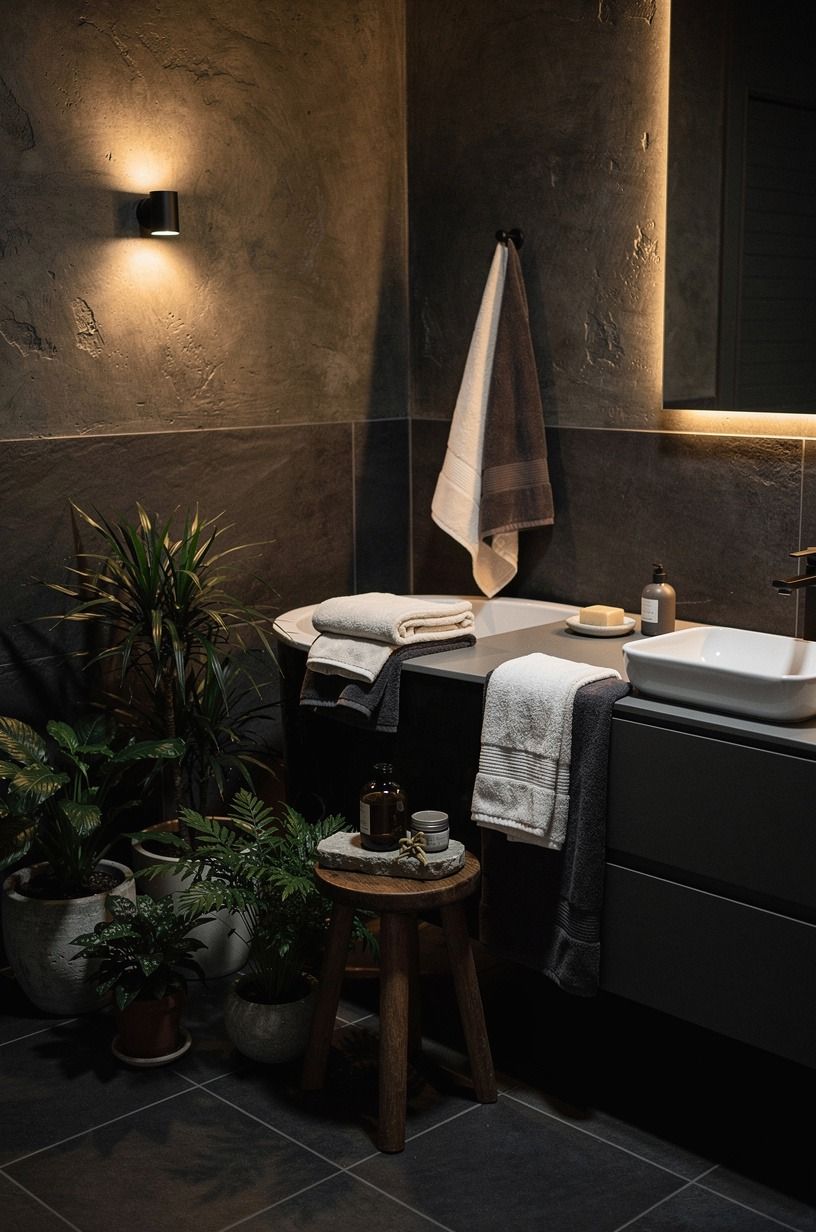
Every rental bathroom has one useless corner behind the door. Put three plants in it at different heights, and the floor stops being the thing you notice.
This is the cheapest idea here and the one people compliment most. A pothos on a small walnut stool, a snake plant on the floor, a trailing thing on the tank.
Under $40 for all three at a hardware store. If you've got pets, check our pet safe bathroom plants list first, because pothos is not cat friendly and I learned that expensively.
Grouping matters more than the plants themselves. Three at varied heights reads deliberate; one lonely pot on the floor reads forgotten. And a bathroom with a green corner feels cared for, which is the whole game in a place you don't own.
What a rental bathroom refresh actually costs
Here's the honest picture, including the tiers you're not doing as a renter. Useful context, because it explains why the peel-and-stick route is such good value.
And for comparison, the permanent materials you're mimicking:
Everything on this list lands under $100 because it's borrowing the look of the middle column without the labor. That's the whole arbitrage.
What I'd Tell You If You Were Standing In My Bathroom
I've done cheap flooring in four rentals now, and the thing nobody tells you is that the floor isn't really the problem. The problem is that rental bathrooms are designed to be invisible, and invisible reads as sad.
Builder-grade means nobody made a single choice in there. Not one.
The tile was chosen by cost per square foot in a spreadsheet, the grout was whatever came in the bucket, and the lighting was picked to pass inspection.
So when you put down a $60 floor, what you're actually doing is making the first deliberate choice that room has ever had. That's why it works so far out of proportion to the money.
Here's my honest framework for deciding. If the existing floor is structurally fine and just ugly, recolor the grout and add a runner.
Forty bucks, an evening, fully reversible, and you're eighty percent of the way there. If the floor is genuinely damaged, chipped tile, cracked vinyl, water staining you can't scrub out, then cover it completely with peel-and-stick plank and stop looking at it. And if you're in a place for less than a year, do nothing permanent at all.
Two mats and a plant cluster. Save the effort.
Where people go wrong is the middle path. They spend $200 on a half-measure, printed vinyl over half the floor, one section of hex, a border that doesn't quite land, and the result looks worse than the builder tile did because now it looks like someone tried and gave up. Commit or don't.
I also think renters undervalue reversibility as a design feature. When you know you can pull something up in twenty minutes, you're willing to try something bolder. I'd never paint a floor Hague Blue in a house I owned, too much commitment.
In a rental? The stakes are low enough to be interesting. That freedom is worth something, and most people don't use it.
The other thing: do the floor last. Paint, mirror, and light fixture first, because the floor is the thing that ties them together, and choosing it before you know your wall color is how you end up with a warm oak floor under cool gray walls.
I've made that exact mistake. It's a warm, serene room now, but it took a second $60 to get there.
The Questions I Get Asked Most
What is the best renter friendly bathroom floor for a small bathroom?
Peel-and-stick vinyl plank in a reclaimed weathered teak tone, or a large flatweave runner if you want zero installation. Both come up clean. Look at Lucida Surfaces for the plank and Target Threshold for textiles. In a small room, fewer seams read calmer.
Where can I buy cheap flooring for a rental bathroom on a budget?
Home Depot and Lowe's for peel-and-stick plank, IKEA for cork and textiles, Wayfair and Target for runners and teak mats. The off-cut bin at a local flooring store is the real value, vinyl remnants at $1 to $2 a square foot. Facebook Marketplace for teak.
How much does a rental bathroom floor makeover cost?
About $40 to $100 for most of these, and up to $300 if you're doing the floor plus grout plus paint. Regrouping mats you already own costs nothing. So does deep-cleaning the existing grout, which sometimes solves the whole problem.
Can I do renter friendly floor upgrades on a budget?
Yes, and the cheapest options are often the best. Oxygen-bleach the existing grout.
Regroup your mats into a two-mat layout. Move a plant cluster into the dead corner.
Three free moves, one afternoon, and you'll know whether you even need to buy anything.
Are rental bathroom upgrades worth it in a small space?
Yes, more than in a big one. A small bathroom needs 40 square feet of material instead of 120, so your dollar goes three times further.
Keep the floor pattern small-scale in a tight room. Big patterns shrink small floors.
Is peel-and-stick a good idea for a rental?
Yes, with two rules: bone-dry subfloor before you lay it, and never over unsealed wood. Removable is the whole point. Pair it with a tension rod and a removable mirror film, and your renter friendly non-toxic bedroom approach works here too.
What floor color is trending for 2026?
Warm putty and greige, moving away from cool gray. Soft terracotta is creeping back in small doses. If you want the handmade look without the install, the zellige tile bathroom ideas guide shows where that palette's heading.
The One I'd Do Tonight
If I had to pick one, I'd recolor the grout. It's the only change that fixes the specific thing making your bathroom read dirty, and no floor you lay on top will look right over grid lines that still say neglected.
Eight dollars. Pin it for later.