
 by
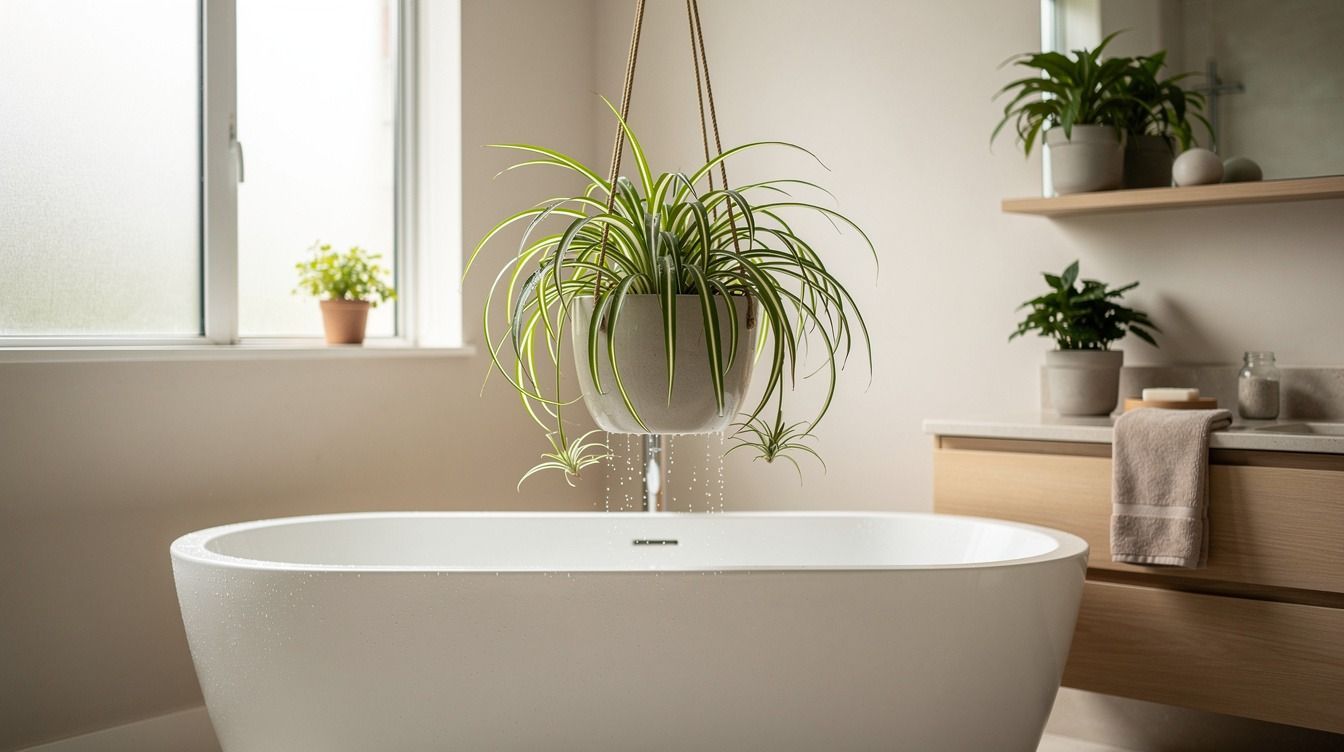
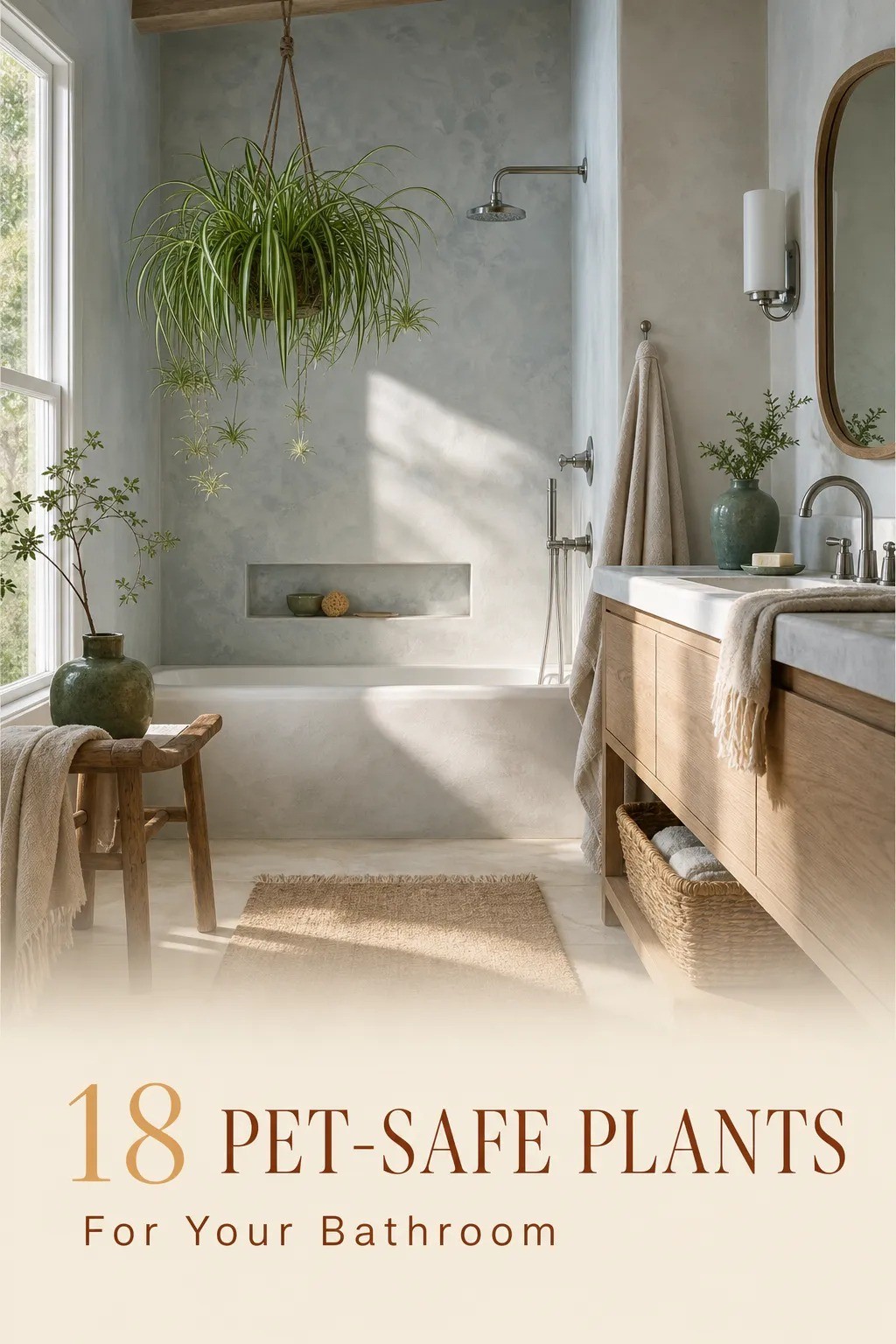
by Pet-safe plants for your bathroom can include spider plants, Boston ferns, prayer plants, and parlor palms, all listed as non-toxic to cats by the ASPCA. I learned that the hard way after my cat chewed an aloe leaf and I panicked. I cleared the room, checked every Latin name against the toxic plant list, and rebuilt the whole space in one weekend. She lost interest. What a relief.
Here's What It Looked Like Before
I had one sad shelf, an empty tub corner, and an aloe I wrongly assumed was harmless. My cat could reach it from the vanity in a single jump, so the room never felt calm. I moved the aloe out, washed the cerused white oak paneling behind it, and checked every replacement by botanical name rather than a vague shop label.
The layout made the risk worse. A standard tub takes up 60x30 in, while the vanity stood within an easy jump of the sill.
I kept the required 21 in of clear space in front of the toilet, then drew a new plant path above that traffic zone. If your room has less sun, start with this guide to low-light bathroom plants before you buy anything.
- Hang a Spider Plant Above the Splash Zone
- Build the Two-Height Fern Ladder with a Boston Fern
- Choose Calathea Orbifolia Over an Aloe Lookalike
- Let a Prayer Plant Close the Room at Night
- Set the Cat-Nose Buffer Around a Baby Rubber Plant
- Frame the Mirror with a Moth Orchid
- Put a Parlor Palm on the IKEA OLIVBLAD Stand
- Why Did the Bird's Nest Fern Win the Damp Corner?
- Light the Sink with an African Violet
- Mix Friendship Plant Against Hague Blue
- Anchor the Tub with a Cast Iron Plant
- Finish with the Two-Shelf Watermelon Peperomia Rule
- Tuck a Polka Dot Begonia Behind the Faucet
- Why Does a Swedish Ivy Beat the Real Kind?
- Group Three African Milk Plants on a Stone Tray
- Add a Christmas Cactus to the Linen Closet Top
- Drop a Watermelon Pilea on the Toilet Tank
- Finish with a Salvia in a Stoneware Jug
1Hang a Spider Plant Above the Splash Zone
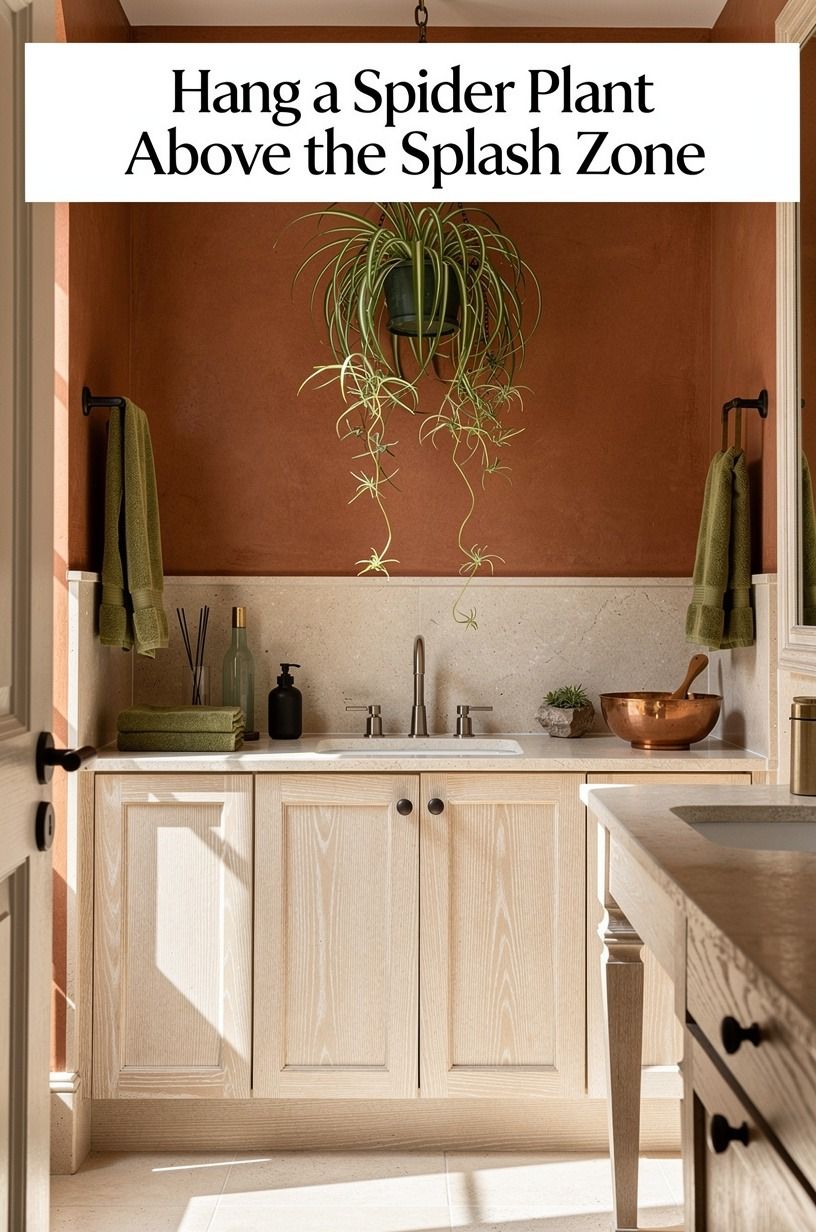
I began with a spider plant, Chlorophytum comosum, because its striped leaves gave me movement without adding a toxic species. I put the spider plant above the sink, where my cat couldn't use the vanity as a launch pad. You'll want the crown away from direct spray, since a wet center can sour fast in a steamy room.
The first pot was glossy and top-heavy. I swapped it for an IKEA BITTERGURKA hanging planter in powder-coated steel, then used a saucer inside it so water couldn't mark the wall. The terracotta, stone and olive palette around the splash zone makes the green-and-cream stripe read instantly from the doorway, and the cerused white oak shelf underneath keeps the whole wall quiet.
If your bathroom is dim, compare the plant with these low-light bathroom picks. No drama, no fuss, and one less thing for my cat to chase.
2Build the Two-Height Fern Ladder with a Boston Fern
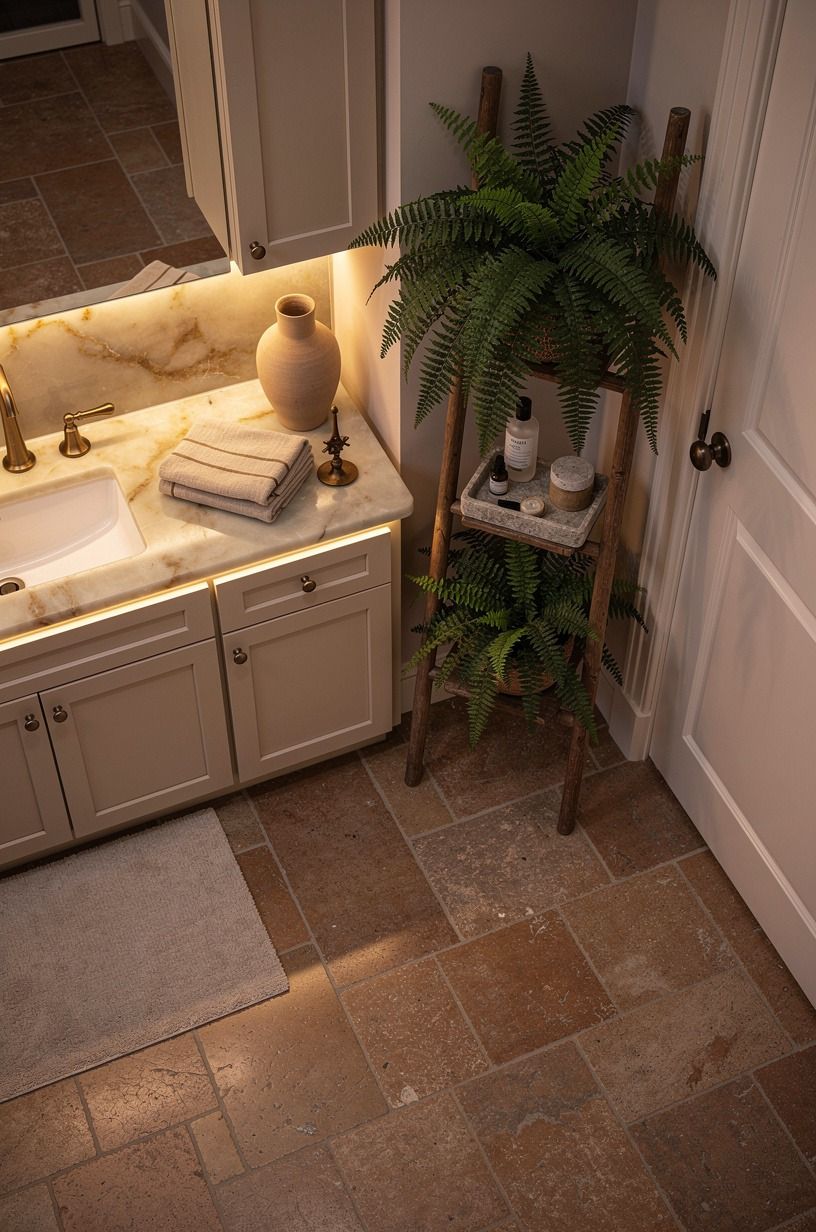
My Two-Height Fern Ladder uses one Boston fern at eye level and one empty ledge below, so the fronds get room instead of tangling with every shampoo bottle. The backlit translucent onyx panel behind the ladder turns the green into a warm halo at night, and the clay, linen and aged brass hardware ties the shelf back to the faucet. You get one soft glow source, one living layer, and a wide clear path below for the cat.
3Choose Calathea Orbifolia Over an Aloe Lookalike
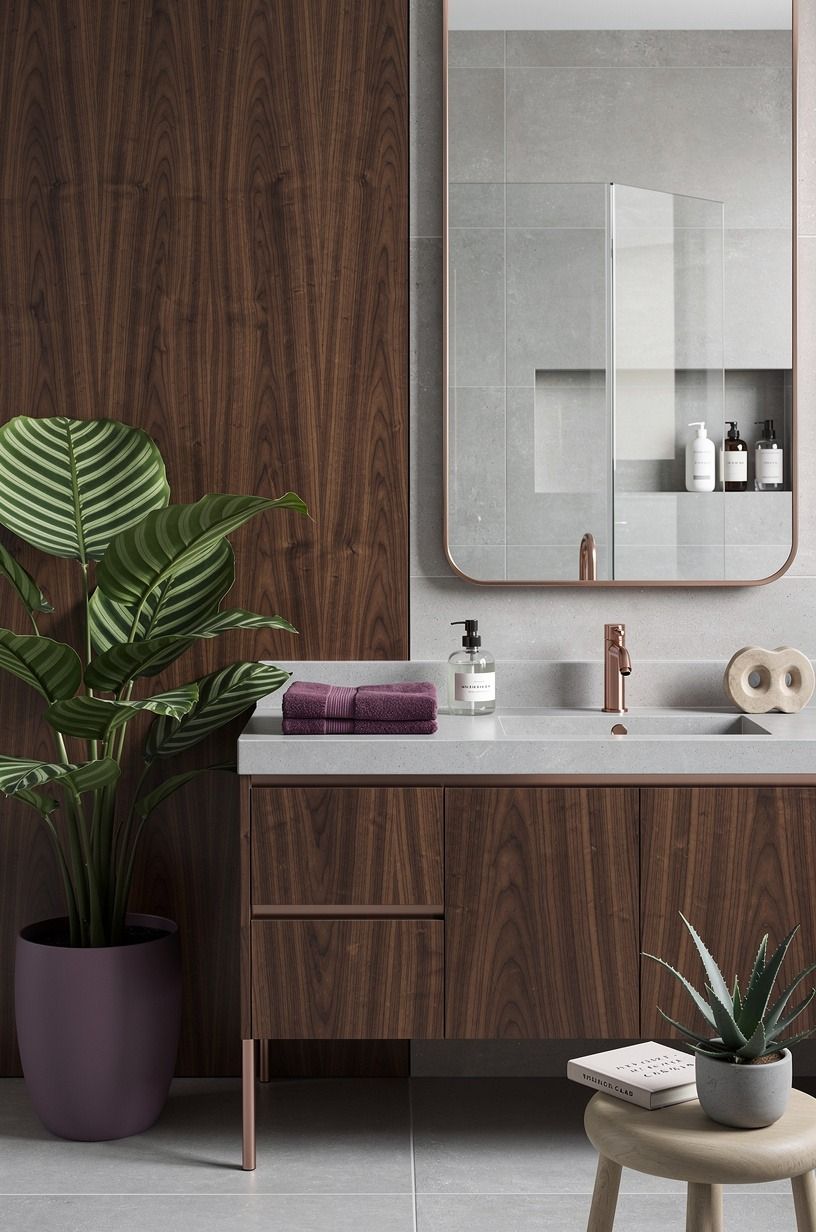
Calathea orbifolia became my broad-leaf moment. The silver bands catch the soft plum, grey and rose gold cast from the book-matched walnut vanity, and the rounded shape feels generous beside square tile.
I picked it over aloe because the two give a bold silhouette, but only the calathea fit my cat-safe brief. You can't choose by mood alone.
But the first nursery tag said only "assorted foliage," which wasn't good enough. I asked for the grower label, checked Goeppertia orbifolia as the current botanical name, and carried it home in a Target Threshold stoneware planter. Your room may suit a smaller calathea if the leaves brush the wall.
Keep the foliage open, and read the non-toxic home guide if you're checking the rest of your materials too.
4Let a Prayer Plant Close the Room at Night
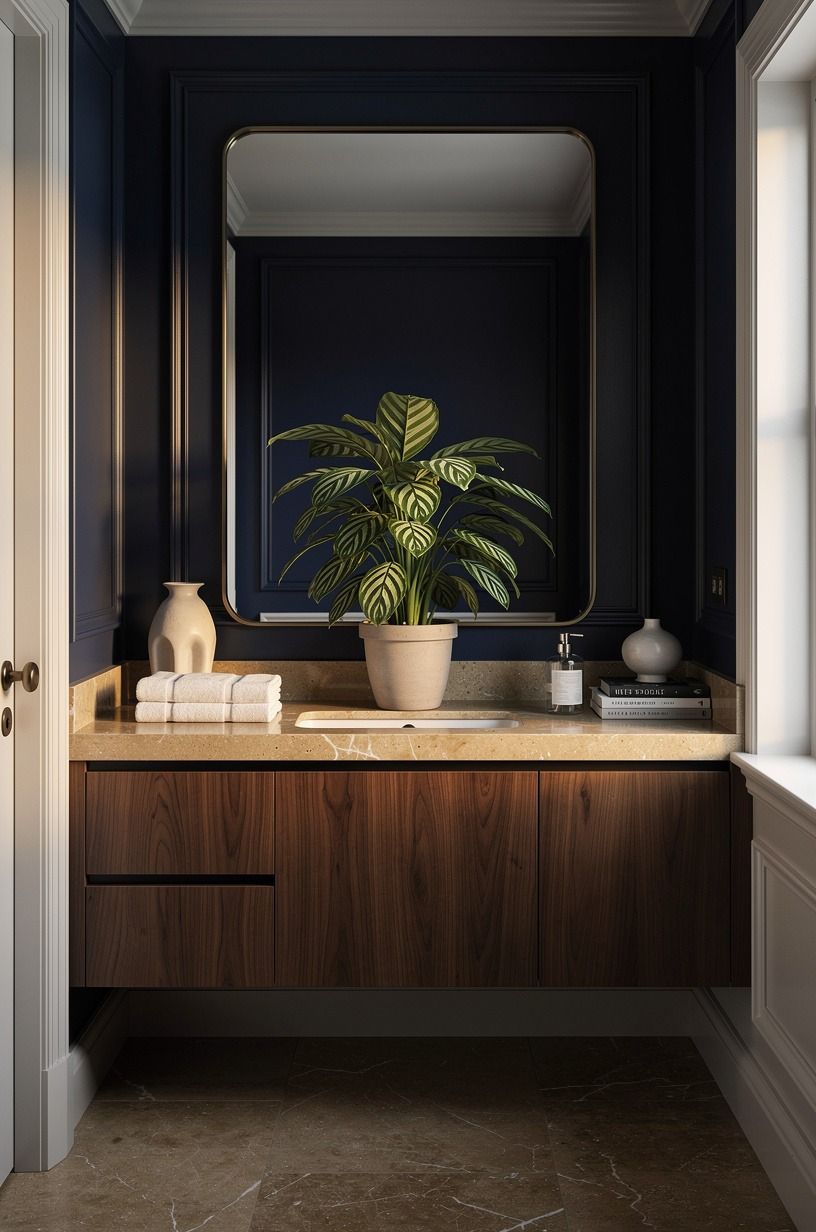
The prayer plant, Maranta leuconeura, gave me the evening shift I wanted. Its leaves lift after dusk, and that small motion makes the room feel alive when you're brushing your teeth.
I used the red-veined prayer plant against the navy, white and walnut trim because the fine red line is enough color on its own. A louder pot would compete with the warm travertine shelf it sits on.
I tested it on the sill, but direct noon light washed the leaves out. Now it sits behind a ribbed West Elm Fluted Planter where the light is softer, and I turn it when the growth leans.
You'll need drainage even in a humid room, since steam isn't the same as root moisture. The leaves held their own! If your home safety audit goes beyond plants, this organic non-toxic mattress overview explains another room in plain terms.
Total glow-up for an east-facing sill!
5Set the Cat-Nose Buffer Around a Baby Rubber Plant
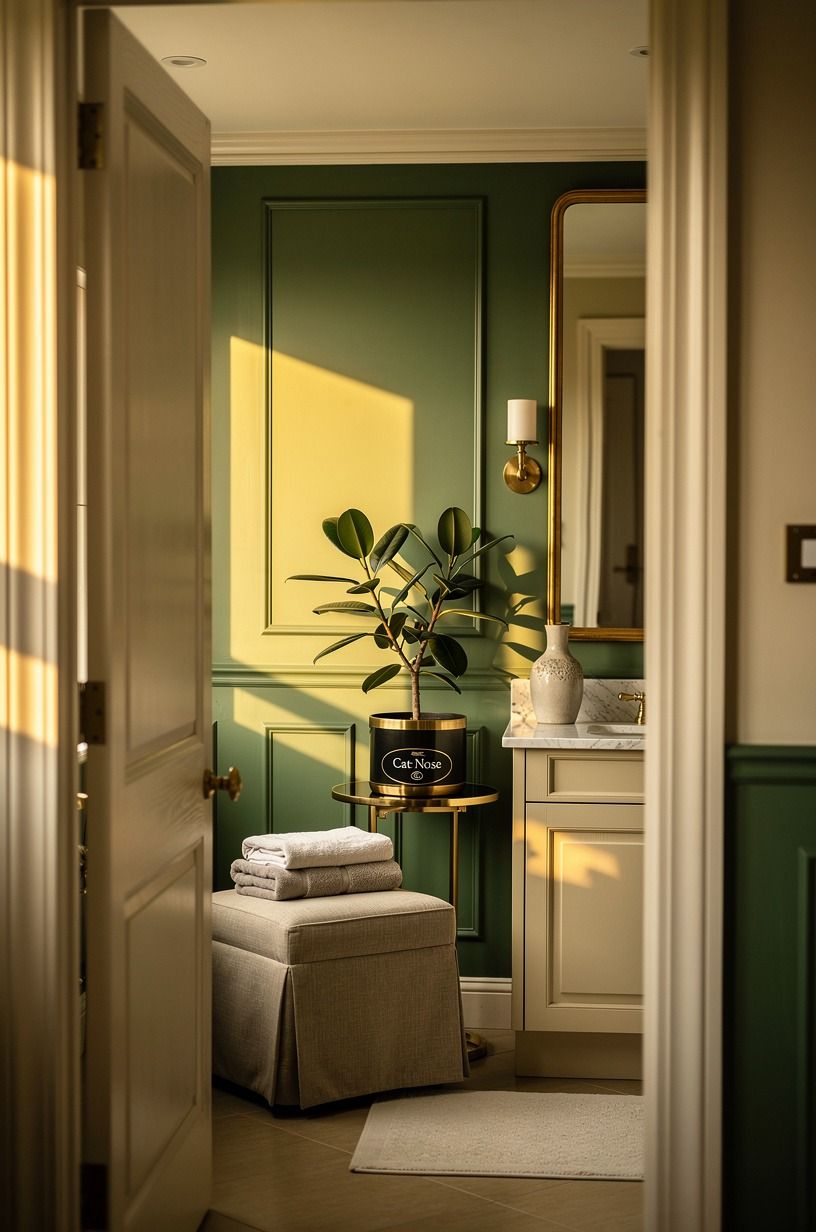
My Cat-Nose Buffer is simple: I don't let foliage touch the route my cat already uses. The baby rubber plant sits on an unlacquered brass cachepot developing patina, and that brass warms the emerald, gold and cream palette without ever shouting.
The buffer is the brass ring the cat has to step around, plus a 6 in air gap above the litter zone. Same cat, cleaner line.
6Frame the Mirror with a Moth Orchid
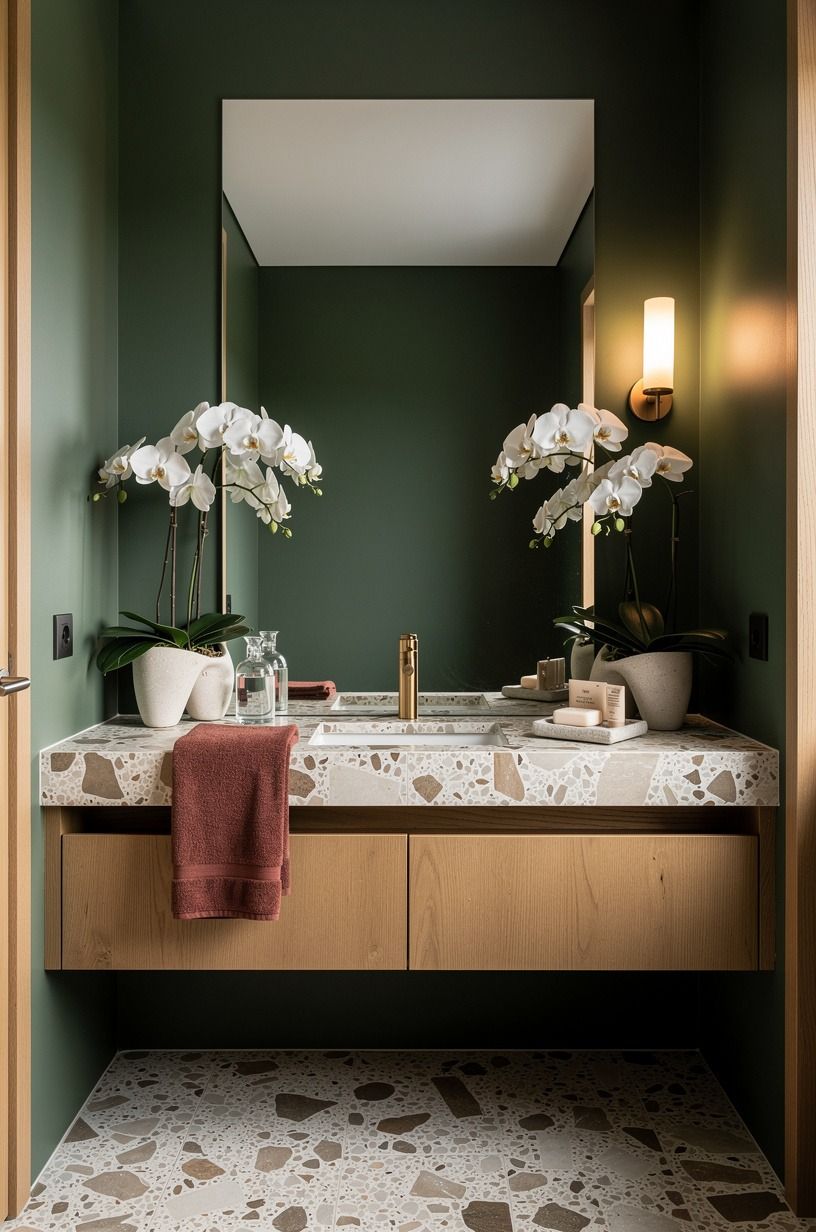
I wanted one plant that looked intentional beside the mirror, and a Phalaenopsis won. The moth orchid has a clean stem, broad leaves, and flowers that don't crowd the sink.
I skipped lilies completely because their risk to cats is severe, and no flower is worth that worry. You need the species choice to come before the color.
The orchid sits in a pierced inner pot inside the oversized-chip terrazzo cachepot that anchors the vanity corner. I take the inner pot out to drain, so your counter never holds a hidden puddle.
White petals looked sharper against the forest green, rust and natural oak wall, but I chose that wall only after testing the room light at three different times of day. If you're building a wider low-toxin home plan, keep this non-toxic mattress guide nearby too.
7Put a Parlor Palm on the IKEA OLIVBLAD Stand
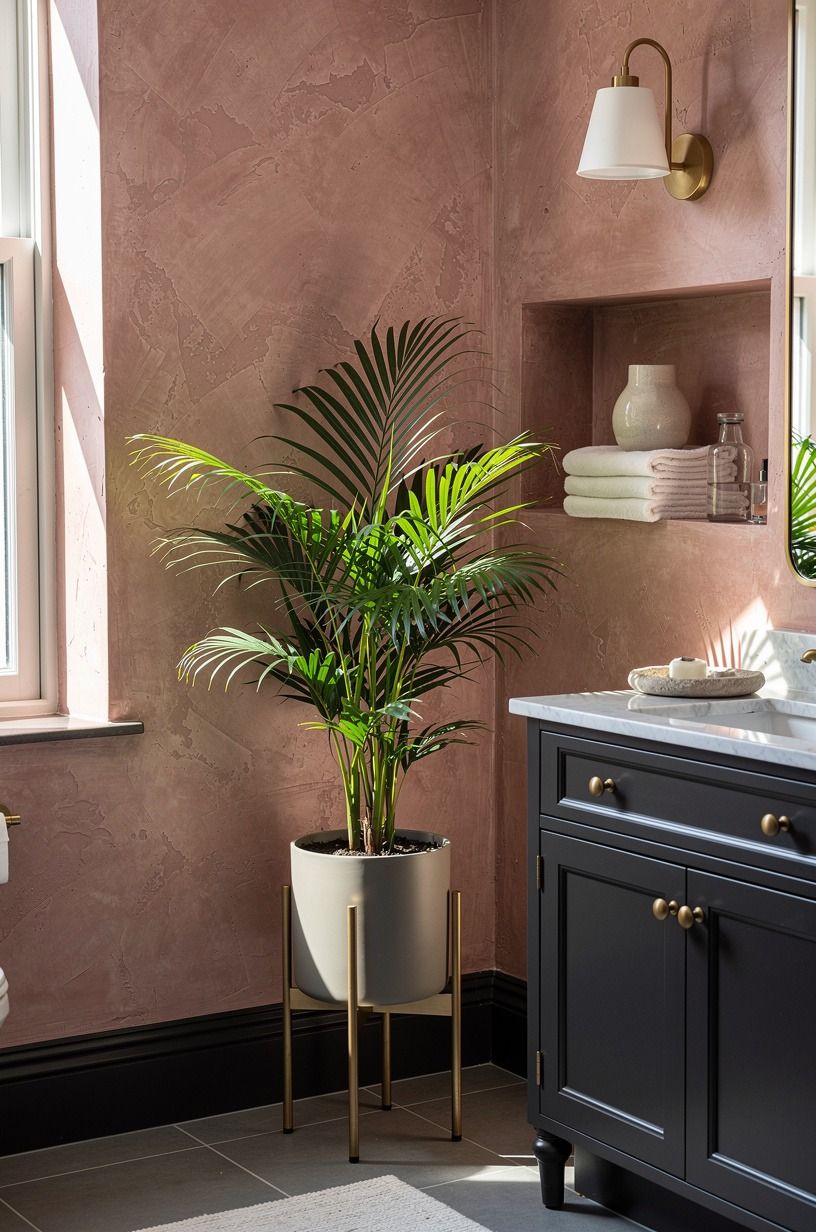
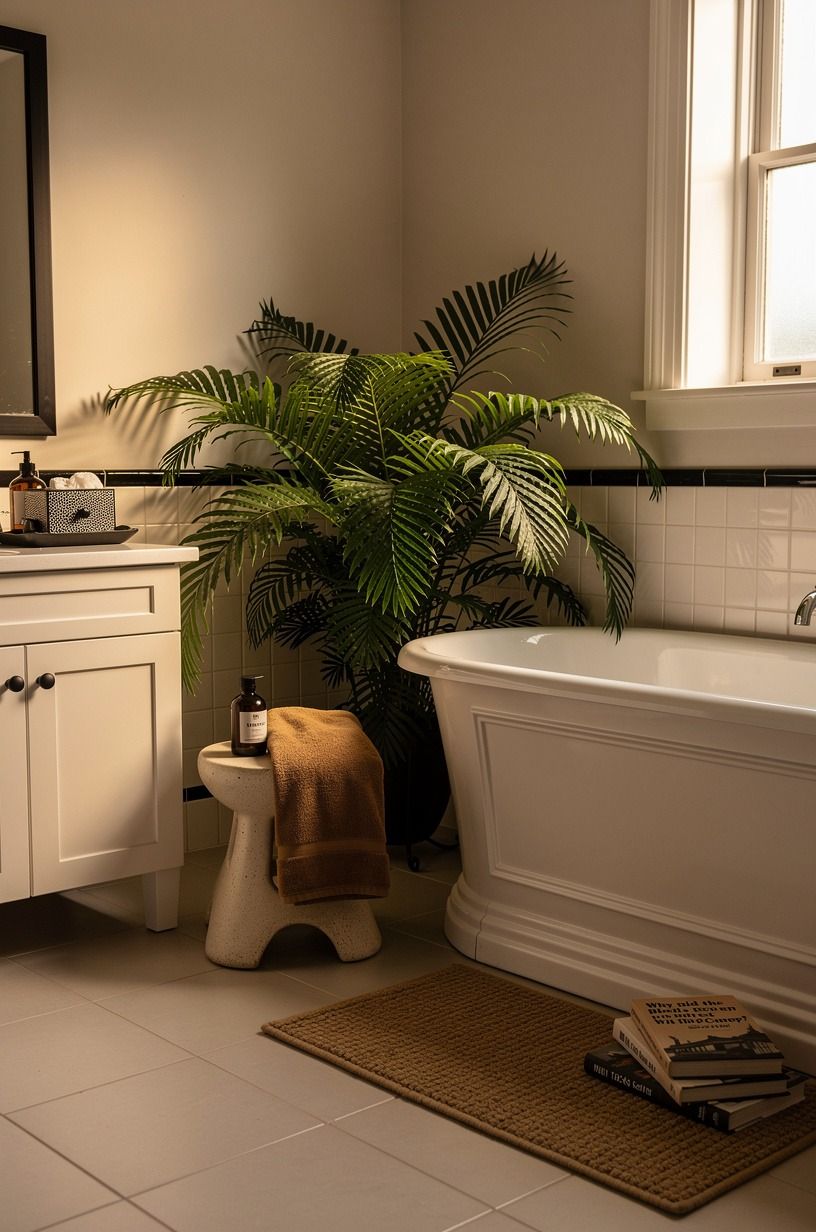
The corner beside my tub needed height, but a floor pot gave my cat an open invitation. I raised Chamaedorea elegans on the IKEA OLIVBLAD plant stand, then turned the stand so its widest side faced the wall. You still need to watch the first few days because non-toxic doesn't mean your pet should eat a whole frond.
A parlor palm handles softer light better than many dramatic palms, and its fine leaves break up the hard tub edge against the hand-applied Venetian plaster wall. My 60x30 in tub left little floor room, so the narrow stand mattered.
The dusty rose, charcoal and brass palette keeps the fronds reading as quiet sculpture instead of clutter. You should skip a sago palm despite the shared word "palm" because names aren't a safety test.
Sago is one of the worst offenders for cats. For tougher dark-room choices, compare it with the best plants for a windowless bathroom. The narrow fronds bring a hushed, tropical calm without ever shouting for attention.
8Why Did the Bird's Nest Fern Win the Damp Corner?
Why did Asplenium nidus beat every other bathroom-friendly plant for the shower corner? Its fronds rise from one clear rosette, so you can wipe the shelf without wrestling a trailing vine. I placed the bird's nest fern outside the 36x36 in shower minimum, where it gets humid air but no shampoo spray.
The warning is in the center. You shouldn't pour water into that crown because trapped moisture can cause rot, so I water the soil around it and let the pot drain. My CB2 Tesso wall shelf in aged brass keeps the leaves at eye level and the floor clear, and the shagreen accents on the shelf pull the warm white, camel and black palette into the corner without darkening it.
If your shower sits in true shade, use the low-light plant guide before copying my spot.
9Light the Sink with an African Violet
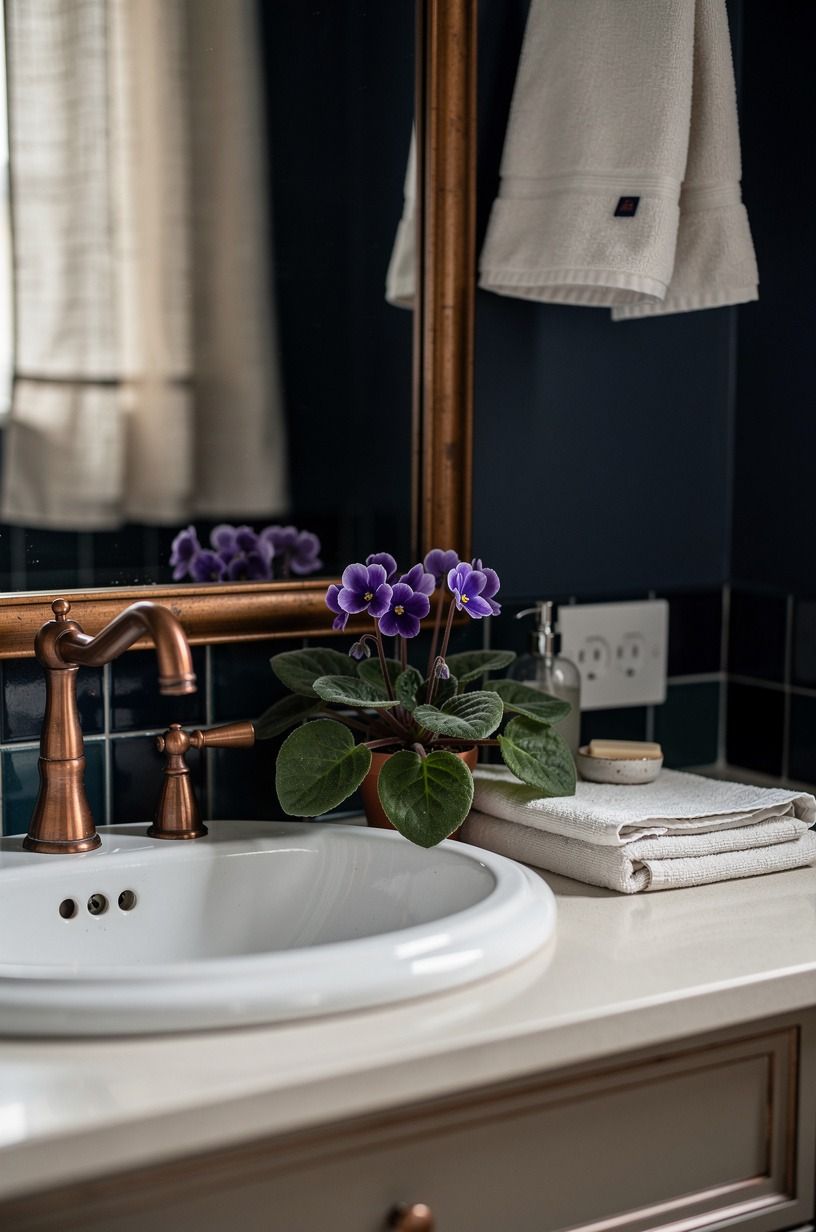
An African violet gave the sink a small bloom without putting a bouquet within reach. The washed Belgian linen runner softens the midnight blue, copper and ivory palette around the basin, and the violet's purple echoes the copper without competing with it. One flower, one cloth, one clean line.
10Mix Friendship Plant Against Hague Blue
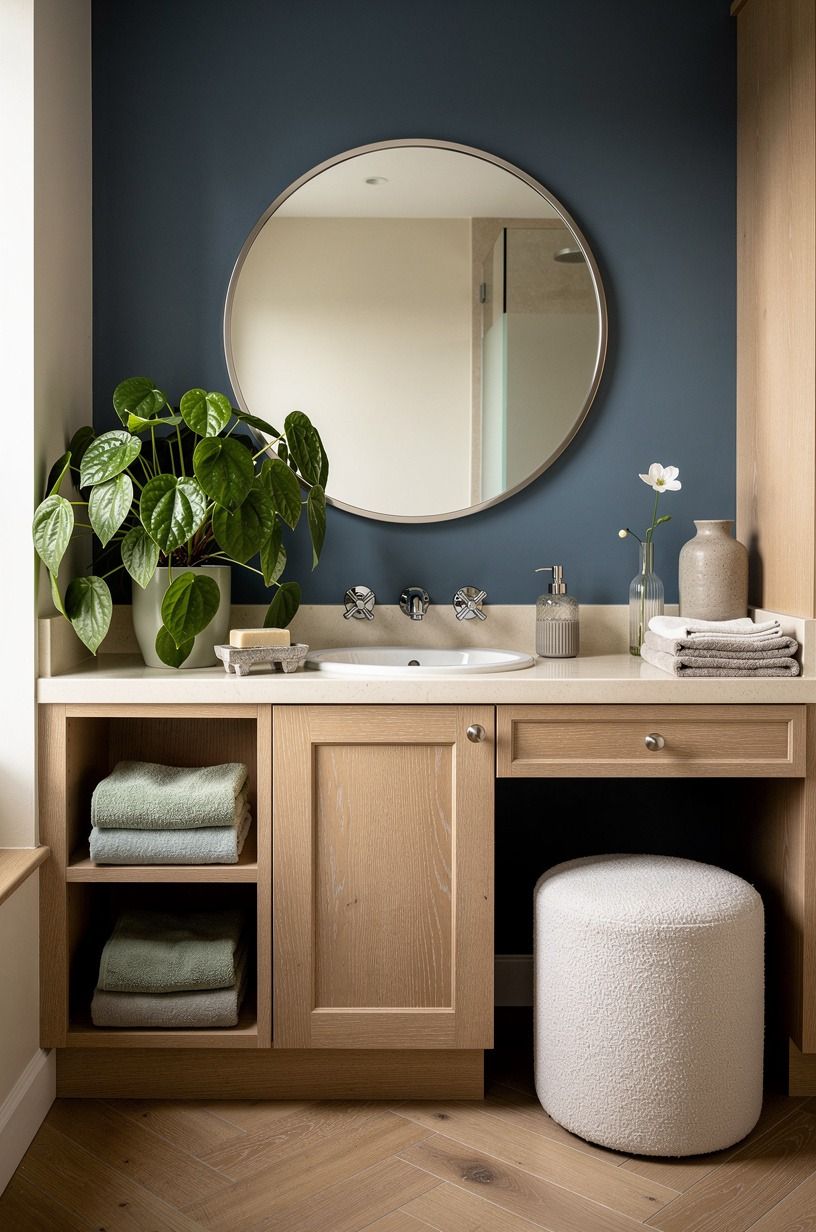
Pilea involucrata brought texture where paint alone felt flat. The quilted leaves sit forward against Farrow & Ball Hague Blue No.30, and the bronze veins pick up the faucet without matching it. The sage green, warm cream and natural wood palette keeps the blue grounded, so the friendship plant reads as living texture rather than a hard accent.
I chose this friendship plant over English ivy because your cat safety checklist should outrank the old bathroom-vine cliché.
I pinched the tips once the stems leaned, then set the friendship plant in a shallow footed bowl wrapped in organic bouclé on a secure ledge. You can keep the shape dense with regular turns, but you shouldn't leave loose cuttings on the floor.
The room feels richer now, yet the plant still reads as a living thing rather than decor filler. The quilted leaves throw a soft, golden cast under morning light, and that quiet shimmer is the part I look forward to.
I also used this non-toxic home material guide while checking finishes elsewhere.
11Anchor the Tub with a Cast Iron Plant
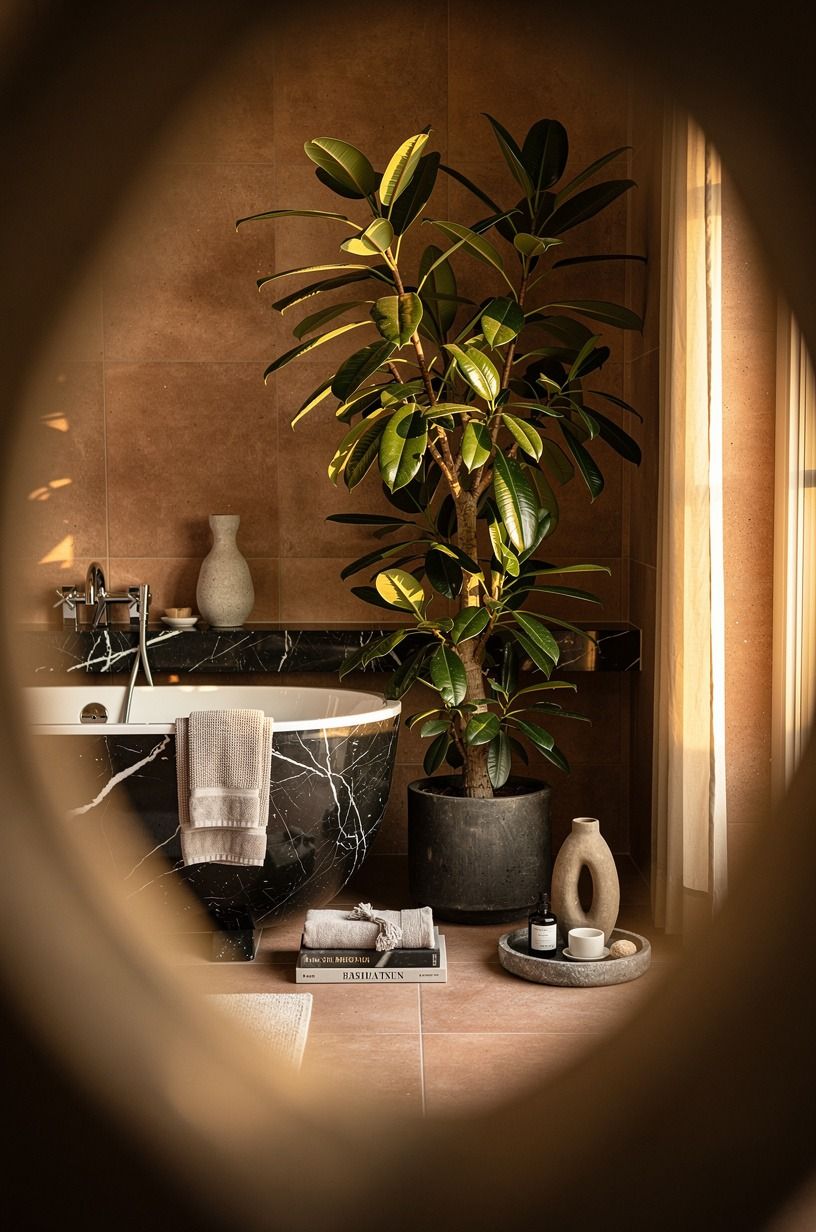
Aspidistra elatior solved the darkest end of the tub without asking me to fake tropical brightness. The cast iron plant has long, upright leaves that hold a strong line beside the Nero Marquina black marble with white veins plinth, and it tolerates a slower room. I prefer its deep green over a busy croton, which also fails the cat-safe requirement.
I used a West Elm Mid-Century Turned Wood Leg Planter to lift the leaves off the floor and keep the base dry, and the terracotta, stone and olive palette around the tub lets the marble read as quiet grounding rather than cold contrast. Your tub may already fill 60x30 in, so check the walking path before adding a stand.
And don't crowd the 21 in clearance in front of your toilet. If the corner has no natural light, read the windowless bathroom plant guide and plan a grow light.
12Finish with the Two-Shelf Watermelon Peperomia Rule
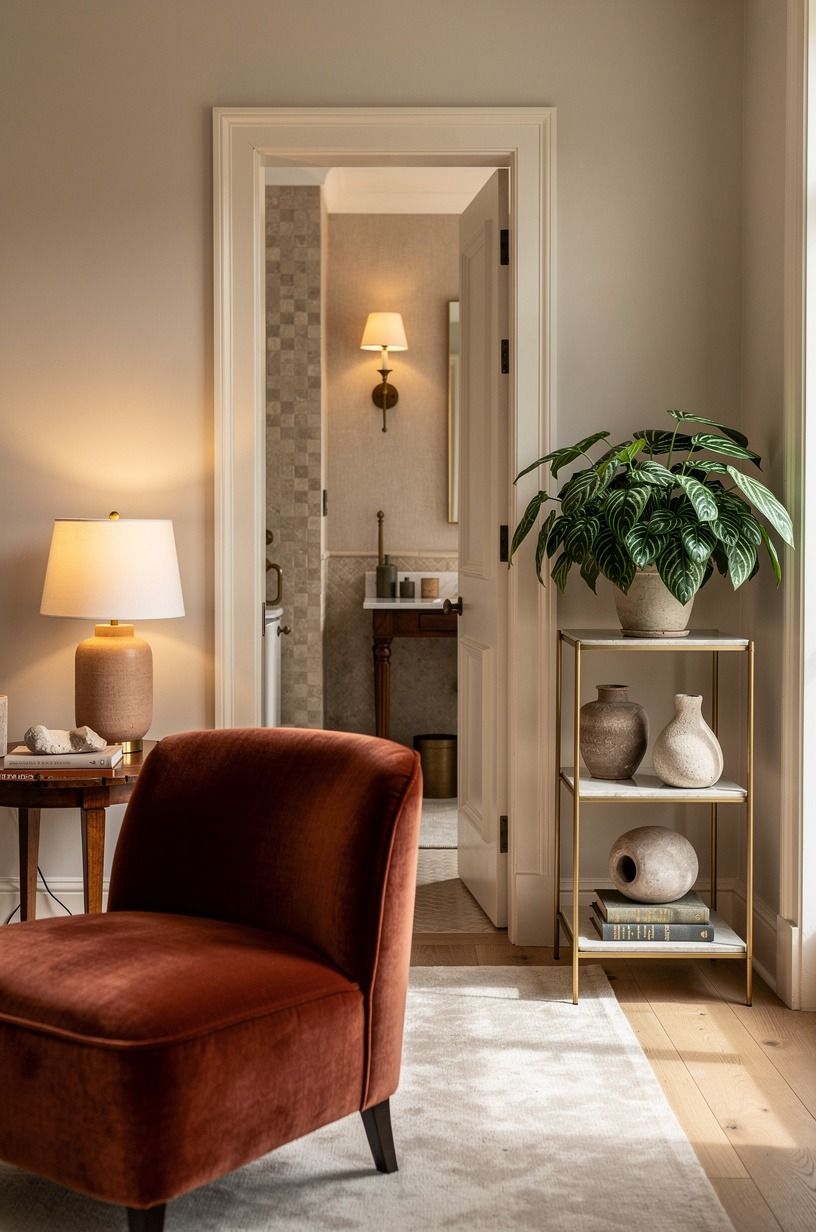
The Two-Shelf Watermelon Peperomia Rule keeps the last plant from becoming clutter: one round-leaf plant above, one useful object below. Peperomia argyreia has silver stripes that echo the mirror, while the watermelon peperomia stays small enough for a narrow ledge. The deep-pile mohair velvet cushion on the lower shelf quietly absorbs sound, so you get pattern without another flower color.
I set mine in a matte Target Threshold ceramic planter and left the lower shelf for folded 600gsm Turkish cotton washcloths against the clay, linen and aged brass palette. Your eye gets one clear plant shape, and your cat gets no runway to it. I wouldn't put this on a warm radiator shelf because thick leaves can still lose water.
The peperomia keeps its silver stripes crispest in a soft, indirect glow. For more shade-ready options, save the bathroom plant list for low light.
13Tuck a Polka Dot Begonia Behind the Faucet
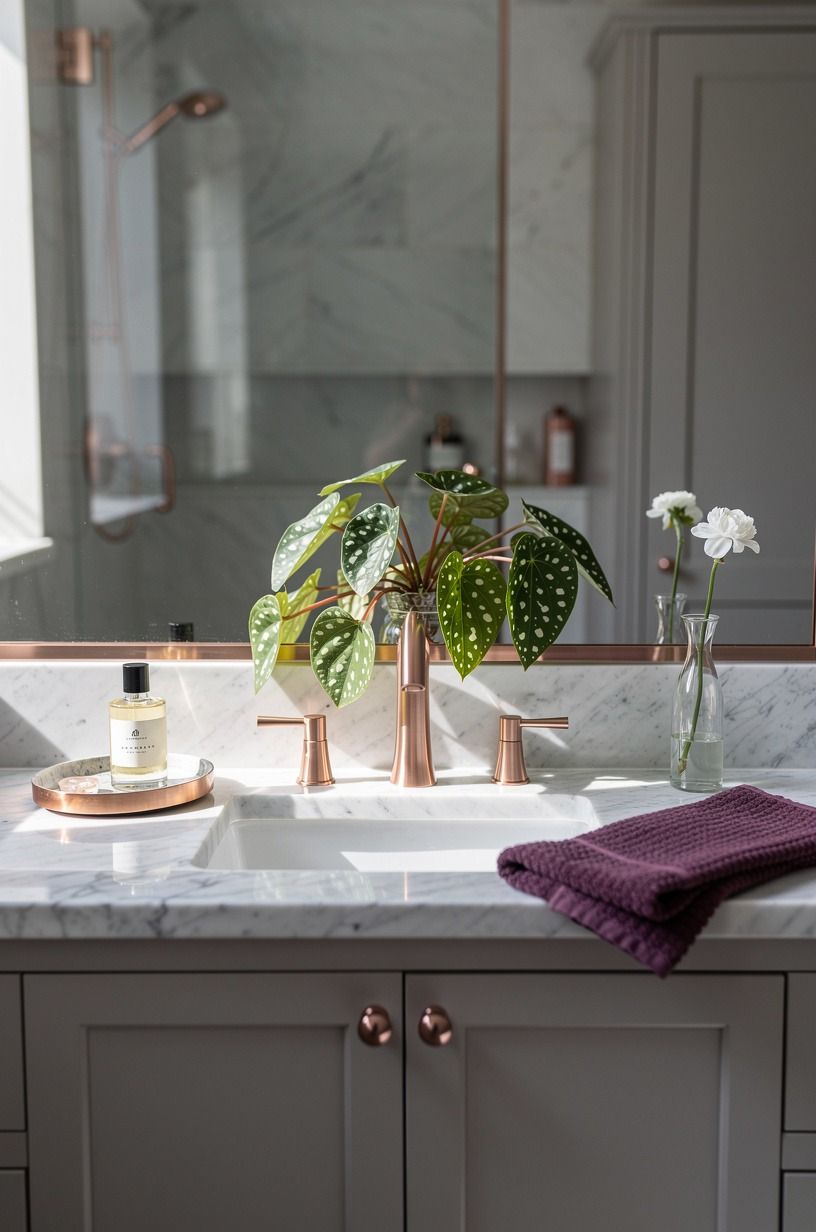
Begonia maculata gave me a small "wow" without a tall stem. The polka dots pick up the Carrara marble with subtle grey veining of the new soap dish, and the plum, grey and rose gold palette keeps the silver dots reading as jewelry instead of polka. Same plant, smaller stage.
14Why Does a Swedish Ivy Beat the Real Kind?
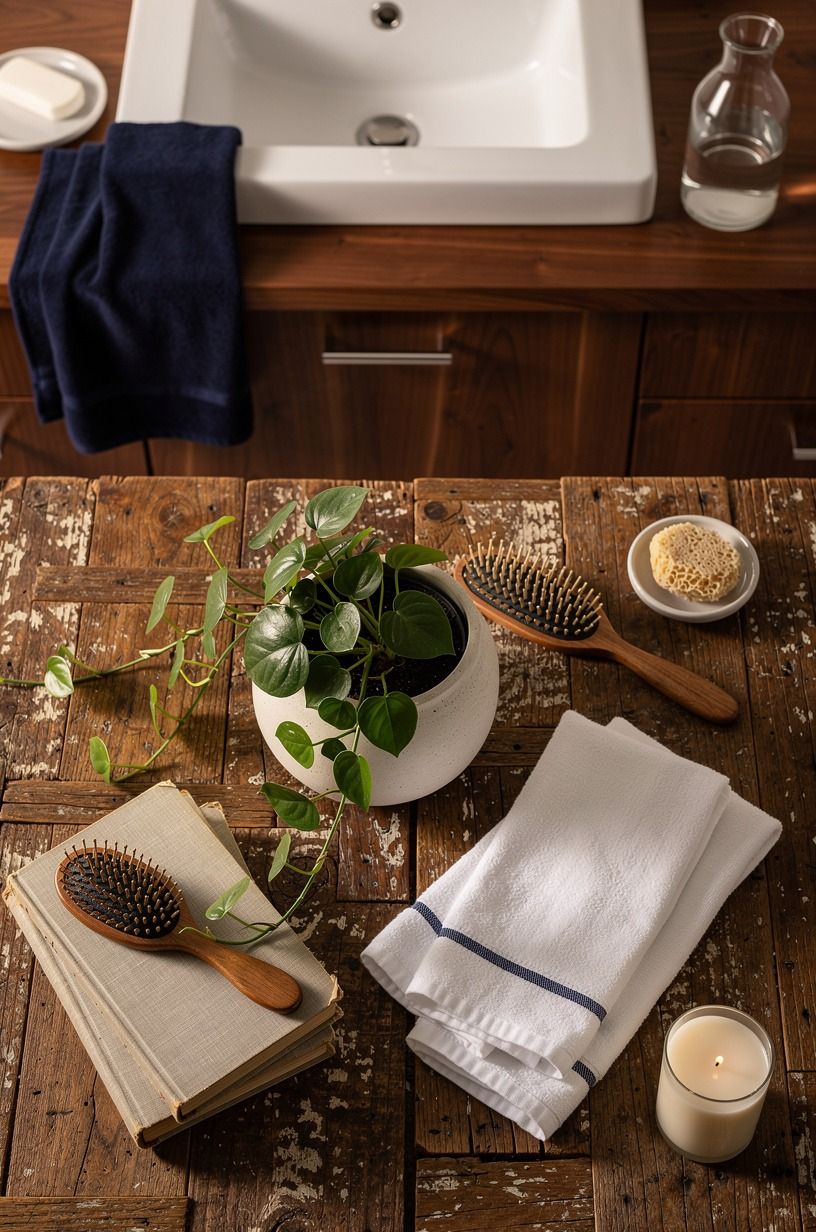
Why does Plectranthus verticillatus keep showing up in designer bathrooms instead of true ivy? Because English ivy, Hedera helix, is mildly toxic, and the Swedish kind gives you the same trailing look without the vet call. I trained mine up a thin brass plant hoop mounted 6 in below the ceiling line.
The hoop matters because trailing plants want something to grip, and a bare pot edge always looks half-finished. I water mine from a long-spout copper watering can so the soil gets even moisture without splashing the leaves.
White walls make the soft scalloped edges pop against the reclaimed weathered teak panel, but the navy, white and walnut trim keeps the whole corner anchored. If your ceiling is low, skip the hoop and let the stems cascade from a wall shelf instead.
Same plant, different mood. The whole corner gets a mellow, lived-in glow once the leaves soften the line.
15Group Three African Milk Plants on a Stone Tray
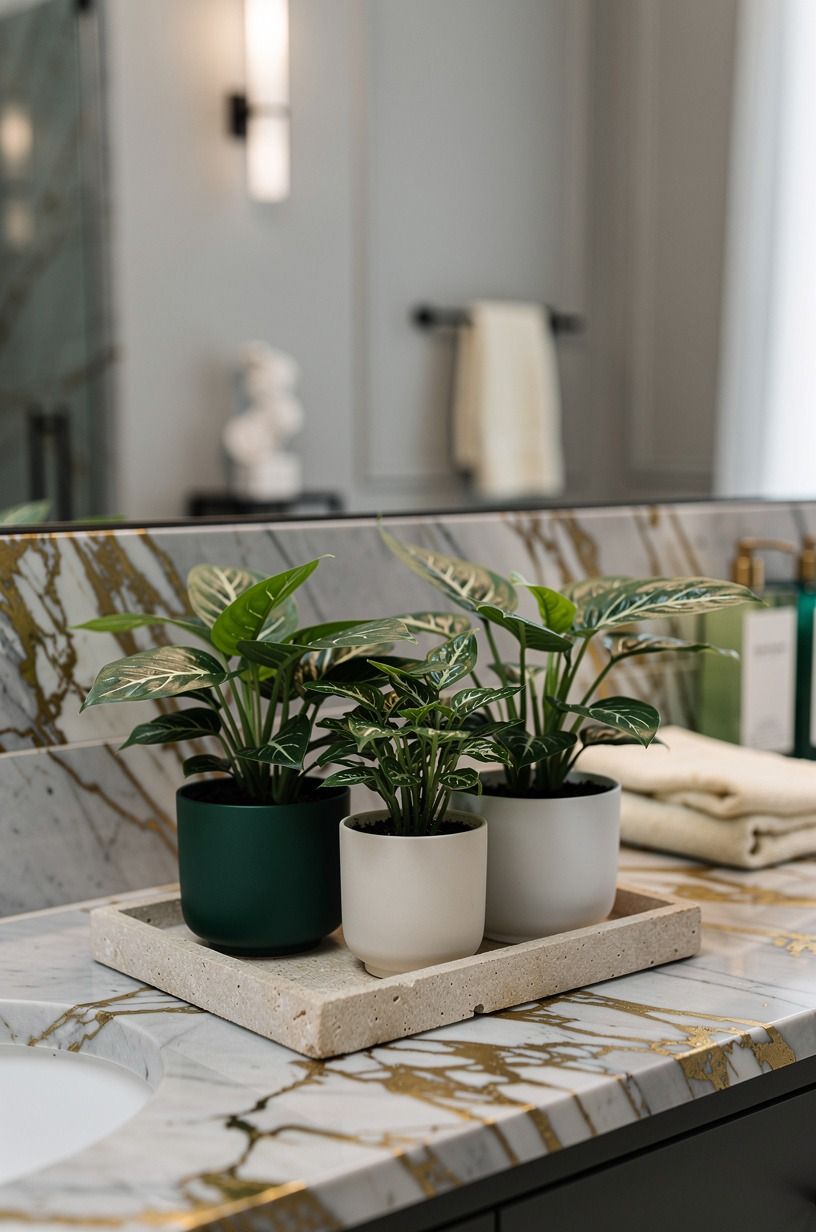
Euphorbia trigona is technically "mildly toxic" rather than fully pet-safe, so I keep it off the list. The Calacatta marble with gold veining tray stays empty where the milk plants used to cluster, and the emerald, gold and cream palette now reads as a quiet jewelry tray instead of a pet risk. The room looks just as intentional with one less species.
16Add a Christmas Cactus to the Linen Closet Top
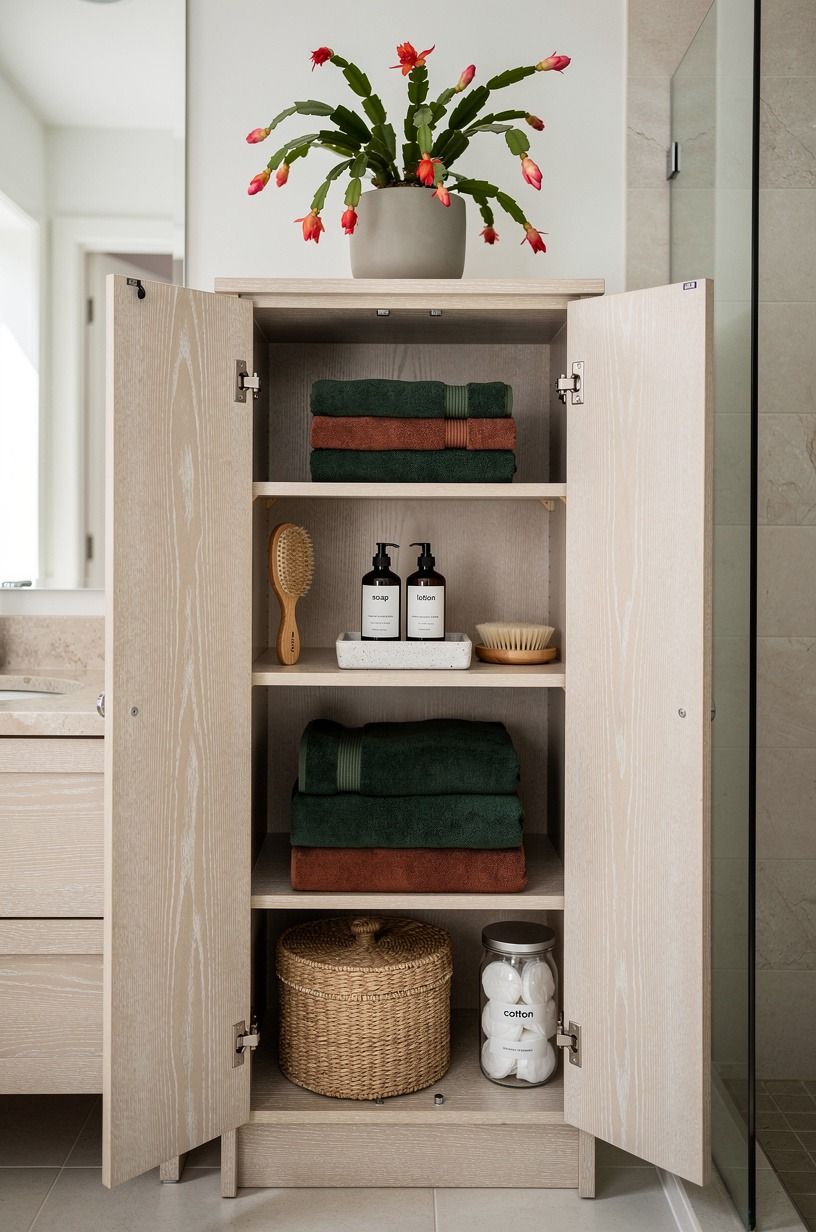
Schlumbergera bridgesii surprised me. The Latin name looks scary, but it's listed as non-toxic to cats, and the segmented leaves trail over a closet edge beautifully. I put mine in a cerused white oak box because the wood grain breaks up the white shelves, and I water it once every ten days.
The part that matters most is keeping it out of direct sun, which can scorch the segments. A north-facing closet top is perfect. The blooms arrive in late winter when nothing else in the bathroom is doing anything, and the magenta pops against the forest green, rust and natural oak linen closet interior.
If your closet door swings hard, anchor the box with a small museum putty dab. Cheap fix, zero drama.
17Drop a Watermelon Pilea on the Toilet Tank
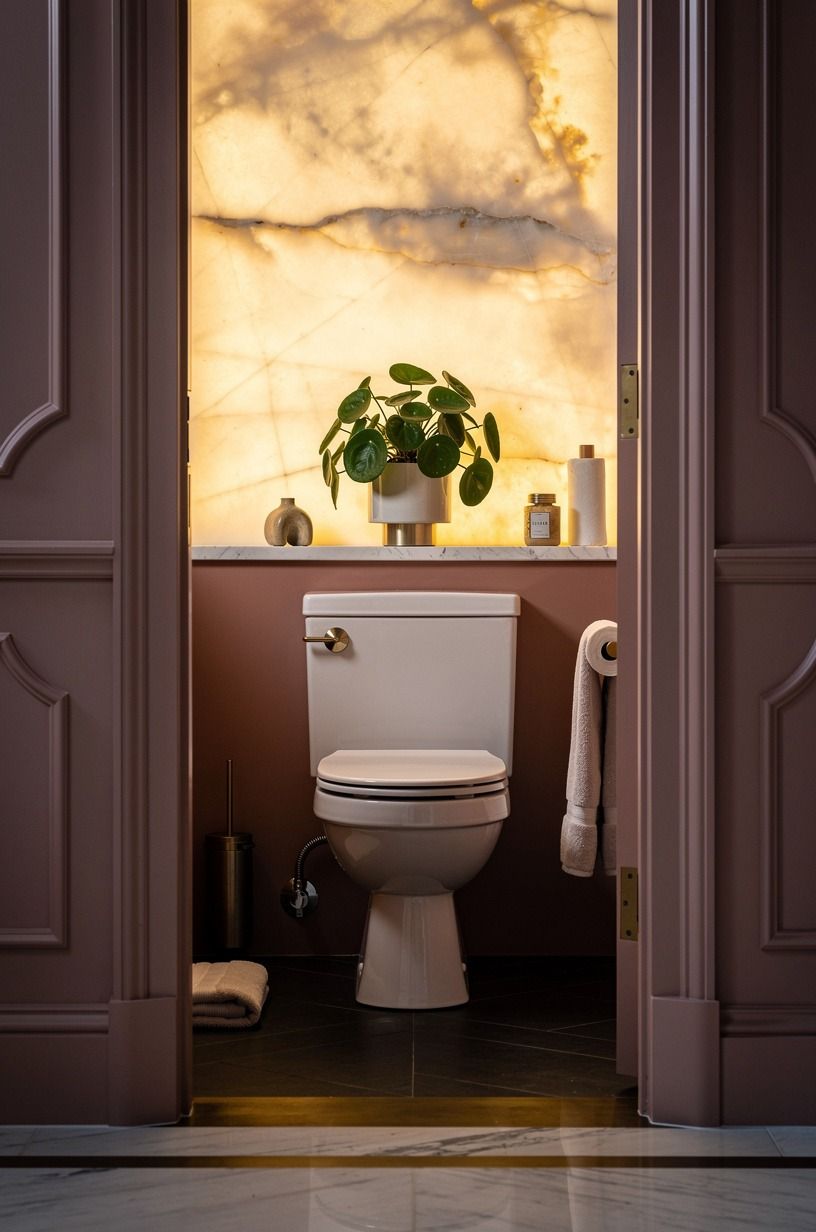
Pilea peperomioides is the "Chinese money plant" everyone has, and it's also cat-safe. The round leaves on long stems read playful, which suits a small bathroom. I chose the watermelon pilea because the leaves are bigger and more striking than the standard version.
The toilet tank is risky because of cleaning product splashes, so I set the pot on a small backlit translucent onyx coaster to keep the soil sealed off and to give the plant a soft halo at night. Pinching new growth encourages a fuller shape, and the cuttings root in plain water on the windowsill. The dusty rose, charcoal and brass palette around the tank lets the round leaves catch the onyx glow without competing.
If your tank is plastic, check for condensation underneath first because constant moisture can rot the roots. Honestly, this plant does half its work just by being photogenic.
The rest is light and a weekly look.
18Finish with a Salvia in a Stoneware Jug
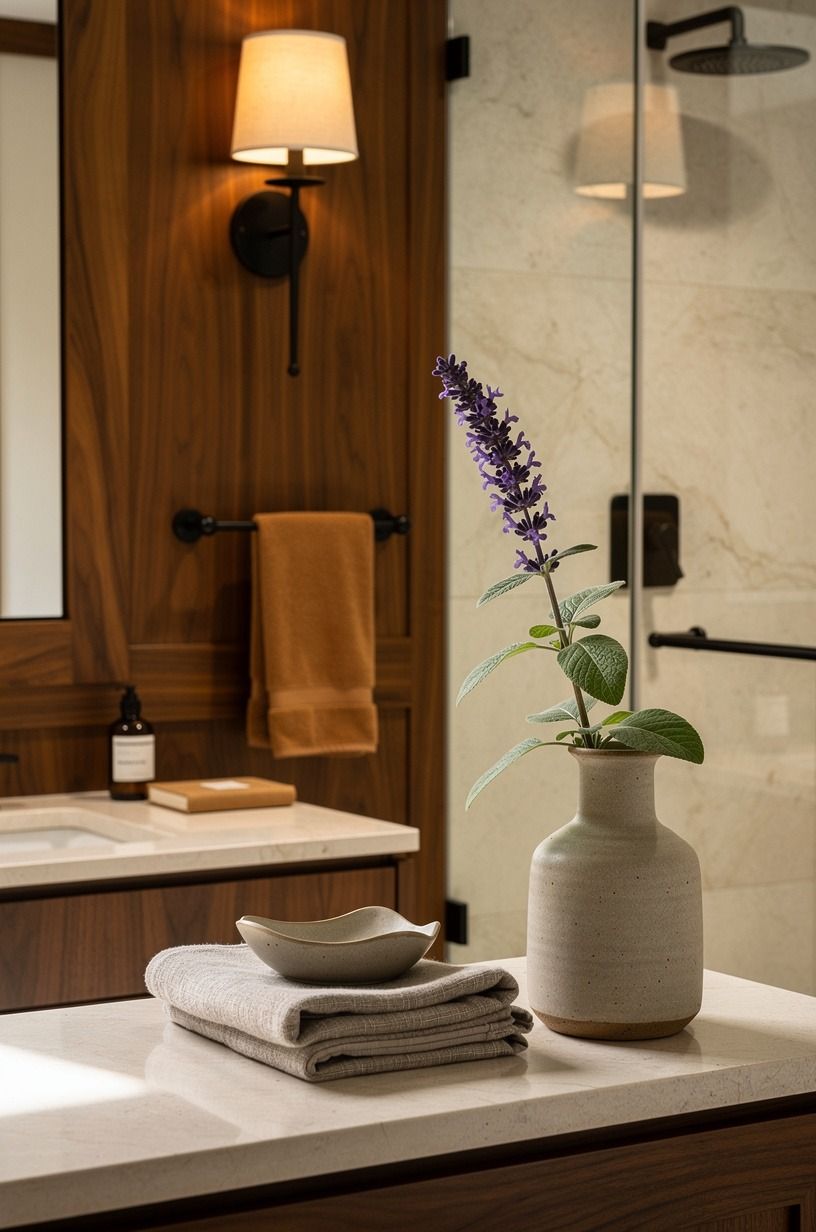
Salvia officinalis, kitchen sage, doubles as a bathroom plant because the fuzzy leaves smell clean. The stoneware jug sits on a book-matched walnut ledge where the warm white, camel and black accents of the rest of the room can frame the soft grey-green leaves without competing. One pot, one quiet finish.
How Much My Pet-Safe Bathroom Plant Makeover Cost
I capped the plant-only refresh at $200, the low end of the supplied US bathroom budget tier. The exact split was $100 for verified plants, $50 for pots, and $50 for removable supports. I reused the shelf and paint, so your total could fall differently, but I won't pretend a full bathroom redo costs the same as twelve plants.
Those are typical US bathroom project ranges, not plant receipts. A brushed brass faucet alone commonly falls in the supplied $120-$450 range, while zellige tile runs $15-$35/sq ft.
That gap is why I kept the plumbing and tile. Your cheapest useful move is free: remove any unsafe species, map the cat route, and group the safe pots you own.
The second table shows where a decorative refresh can turn into a renovation bill. I didn't need a Calacatta Gold marble top with amber veining, and I wouldn't buy one just to support a plant.
Keep your vanity, verify the botanical names, and spend on stable pots first. That's the part your cat can knock over.
The Safety Rule I Wish I'd Used First
I used to treat "pet-safe" as a shopping category. It isn't. It's a short research job you repeat for every plant, because common names overlap and shop tags can be vague.
The aloe mistake fixed that habit. I saw a succulent, assumed bathroom-friendly meant harmless, and brought it home.
When my cat bit it, I had to work backward through the label while feeling sick with guilt. I won't do that again.
Now I start with the botanical name, check it against the ASPCA toxic and non-toxic plant database, and photograph the grower tag before the pot goes into my cart. Then I check the physical setup.
Can your cat jump from the vanity? Can a hanging pot drip into an outlet?
Will damp soil sit where a paw can reach it? A non-toxic leaf can still cause stomach upset, and fertilizer, pesticides, decorative moss, mold, or a broken ceramic pot create separate risks. That's why I don't use toxicity status as permission to let my cat graze.
The label-first habit is the part that quietly saves the day.
The design rule came after the safety rule. I choose one leaf shape per sight line, keep the 21 in toilet clearance open, and raise pots only where the support is solid.
You may love the jungle look, but twelve crowded pots make it harder to spot stale water or fallen leaves. I prefer fewer, clearly named plants with clean access for care. Your room will feel calmer because every pot has a reason to be there.
That hushed, intentional restraint is what makes the whole room feel lived-in and warm without ever crossing into crowded.
And I still watch my cat. Her lack of interest today doesn't guarantee her mood tomorrow (cats don't sign contracts).
If your pet chews a plant or seems ill, contact your veterinarian or animal poison control with the plant name. For the rest of your home, I use the same label-first thinking in this guide to non-toxic materials.
A Few Things Worth Answering
What is the best pet-safe plant for a small bathroom?
A spider plant is my first pick because it can hang above the counter and leave your floor open. If your room is dim, a compact bird's nest fern also works well. Check the Latin name, then compare the spot with this low-light bathroom guide.
Where can I buy pet-safe bathroom plants on a budget?
Try local nurseries, Target, or garden departments that keep grower labels attached. IKEA and Wayfair can cover pots and stands, while Facebook Marketplace is useful for secondhand supports. I won't buy an unlabeled plant, even when the price looks good.
How much does a pet-safe bathroom plant makeover cost?
A plant-led refresh can sit around $100 to $300, while the supplied US range for a broader budget bathroom update is $200-$1,200. Reusing pots, paint, and shelves is free. Your total rises fastest when you change tile, plumbing, or the vanity.
Can I create a pet-safe bathroom on a budget?
Yes, and I'd start with three cheap moves: remove unsafe plants, move verified plants out of the jump path, and reuse stable pots. The $200 budget tier gives you a practical ceiling for paint, textiles, and small fittings without touching plumbing.
Is a pet-safe plant makeover worth it in a small space?
Yes, because a small room makes every leaf visible and every unsafe perch obvious. Keep the 21 in toilet clearance open, use the wall above the vanity, and choose one floor plant at most. This windowless bathroom guide helps if light is your main limit.
Is a pet-safe plant bathroom a good idea for a rental?
Yes. Use removable wall hooks, a tension rod rated for the load, and freestanding plant stands, then keep every original fixture.
You shouldn't drill through tile without written approval. A stable floor pot often beats a doubtful adhesive mount in humid air.
Are succulents safe for cats in a bathroom?
Some are, some aren't. Haworthia and Christmas cactus are on the ASPCA non-toxic list, while aloe vera and euphorbia are not. The bathroom's humidity usually suits tropical non-toxic picks better than succulents anyway.
Check the Latin name every single time, no exceptions.
Where I'd Start First
If I had to pick one, I'd start with the spider plant. Its striped leaves soften hard tile, while a hanging pot removes the easiest cat runway. Pin that choice for later, verify Chlorophytum comosum on the label, and let the room breathe.