
 by
by Quick answer: A mattress closeout is worthwhile only when the condition, total cost, and return terms are clear. If they aren’t, I’d skip the gamble and compare the premium-tier Saatva Classic.
- The alternative is a premium benchmark, not a claim of the lowest price.
- Per the manufacturer, a current offer is available, but the live terms control.
- Any applicable delivery, setup, removal, or financing costs belong in the price comparison.
Updated July 2026 · Reviewed for accuracy
Deep discounts can be real, but the clearance label alone proves almost nothing about value.
I’d judge the mattress by its all-in cost, exact condition, construction details, and written after-sale terms, then compare that complete package with a regular current offer.
Start by decoding what “closeout” means
The word “closeout” tells me only that a seller wants a particular mattress out of inventory. It doesn’t tell me whether the bed is unopened surplus, a discontinued model, a showroom sample, a customer return, or an item with damaged packaging.
Ask the seller to classify it in writing. “New” is too vague by itself. I want to know whether anyone has slept on it, whether it has been displayed, whether the packaging remains factory-sealed, and whether the mattress has any cosmetic or structural damage.
The exact model identity matters just as much. A familiar collection name may cover different versions or constructions. Record the model name, size, identifying code, cover design, and any version information shown on the label. Without that detail, you may end up comparing the clearance price with a different mattress.
Get these details before discussing the markdown:
- The mattress’s exact model and version
- Whether it is unopened, displayed, returned, or damaged
- What parts, accessories, or foundation are included
- Whether the manufacturer or the retailer handles post-sale problems
- The complete return, exchange, and cancellation policy
A discontinued mattress isn’t automatically a poor choice. The deciding issue is documentation. If the seller can identify the construction and explain what support remains available, you can make a sensible comparison. If the seller can’t even establish the bed’s history, I’d treat the discount as compensation for uncertainty rather than free savings.
A previously slept-on bed belongs in a different category from unopened stock. If that’s what you’re considering, use the stricter checks in our guide to buying a used mattress before deciding whether the lower price justifies the added condition risk.
Build an honest all-in price picture
The only useful price comparison starts with the same model, size, version, condition, and included components. Comparing a bare clearance mattress with a current package that includes other services or products creates a misleading result.
I ignore the crossed-out reference price until the seller explains what it represents. The better baseline is the current selling price for a genuinely comparable new mattress. If that exact version is no longer sold, compare construction, materials, policies, and included services rather than trusting an old reference price.
Next, add every charge that applies to the transaction. That may include delivery, setup, old-bed removal, a required support system, protective materials, taxes, or pickup charges if the mattress must be returned. A low sticker price can lose its appeal once the complete invoice is visible.
My value equation: mattress price plus every required charge, weighed against condition risk, policy limits, and the cost of solving a problem after delivery.
Run the same calculation for a regular manufacturer promotion. Per the manufacturer, a current offer is available for the premium alternative discussed here, but offer terms can change. Check the live price and conditions on the official site rather than relying on an old screenshot or a remembered sale.
Our walkthrough of a brand-specific mattress sale provides another useful framework: identify the exact model, read the live terms, and compare the final package rather than reacting to the largest promotional language on the page.
Financing deserves the same discipline. A smaller payment isn’t necessarily a lower total cost. Read the financing agreement, identify any interest or fees, and find out what happens to the financing arrangement if the mattress is returned or the order is canceled.
I’d pass on the deal if:
- The seller won’t provide an itemized total
- The comparison price belongs to a different version or condition
- Required fees appear only near payment
- The financing terms are harder to understand than the discount
Inspect the mattress, not just the packaging
A torn cover, bowed edge, uneven surface, open seam, or missing factory label can erase the appeal of a markdown. Inspect the mattress itself whenever the seller permits it. Sealed-looking packaging isn’t a substitute for a clear written condition statement.
Start with the top panel, border fabric, piping, seams, corners, and underside. Look across the sleep surface from a low angle so changes in shape are easier to see. Ask the seller to record every mark, tear, indentation, stain, or packaging defect on the receipt.
Construction affects how I think about durability. Foam density, layer thickness, coil design, edge structure, and cover quality can all help explain how a mattress is built, but a clearance tag reveals none of them. If the seller can’t identify the internal design, I won’t assign the bed a durability advantage based on brand recognition or appearance.
| Area to check | What to establish | Why it affects value |
|---|---|---|
| Sleep surface | Whether it is level, clean, and free from disclosed damage | Visible condition can reveal problems the sale label doesn’t explain |
| Edges and seams | Whether stitching, piping, and border materials remain intact | Repairs may be difficult after a final-sale purchase |
| Internal build | The stated foam, coil, and support construction | You need a like-for-like basis for comparing price and durability |
| Labels and documents | Model identity, condition disclosure, and seller information | Missing documentation makes future support harder to evaluate |
| Packaging | Whether it is original, opened, resealed, or visibly damaged | Packaging condition helps clarify how the item has been handled |
Ask how the mattress was stored and moved. You don’t need a vague promise that it was handled “properly.” You need the seller to disclose any known exposure to moisture, open storage, prolonged display, or handling damage and to put that disclosure in writing.
For a floor sample or return, request clear photographs before traveling or arranging delivery. Photographs don’t replace an inspection, but they can reveal whether the seller’s description matches the visible condition. Save the listing and written messages with the final receipt.
The Nut’s rule: If the condition can’t be described precisely, it can’t be priced precisely. Uncertainty needs a meaningful discount and a level of risk you’re genuinely willing to accept.
Read the return and warranty terms before paying
“Final sale” is the line I look for before spending more time on the price. A mattress with no practical return route requires more confidence in its comfort, condition, and construction than one backed by clear written options.
Ask whether the bed can be returned, exchanged, or canceled before delivery. If a comfort period is offered, get its start date, eligibility requirements, pickup process, and applicable charges in writing. Don’t assume the policy for regular inventory also covers clearance merchandise.
Keep the retailer’s policy separate from the manufacturer’s warranty. Ask whether this specific item, condition, and sales channel remain eligible for manufacturer coverage. Then request the actual warranty document and identify who handles a claim. A salesperson’s reassurance isn’t a replacement for written terms.
| Question | Document to request | What you’re trying to avoid |
|---|---|---|
| Can I return or exchange it? | Clearance return policy | Discovering after delivery that all sales are final |
| Who pays for pickup? | Return-fee schedule | An unexpected charge that changes the deal |
| Is warranty coverage valid? | Manufacturer warranty and eligibility confirmation | Relying on coverage that doesn’t apply to the item |
| What if delivery reveals damage? | Delivery damage procedure | Losing the chance to report a problem correctly |
| Can the order be canceled? | Cancellation terms | Being committed before the mattress leaves the seller |
Plan for delivery before the truck arrives. Know who must be present, what access the delivery team needs, and how visible damage must be reported. Follow the seller’s written process, photograph the mattress and packaging, and make sure any problem appears on the delivery record.
Also confirm foundation requirements and room access. A mattress that needs a different support setup or can’t reach the intended room may create additional expense. Those practical details belong in the buying decision even though they don’t appear on the clearance tag.
Policy check: If a term matters to your decision, it belongs on paper before payment. Verbal flexibility can disappear when the mattress has already been delivered.
My verdict on clearance value
An unopened discontinued mattress and a slept-on return don’t belong in the same risk category. The right buying route depends on how much documentation, condition certainty, and after-sale protection you need, not just how aggressively the price is presented.
| Buying route | What needs proof | Best fit | Reason to walk away |
|---|---|---|---|
| Unopened clearance stock | Model identity, packaging, condition, and policies | A buyer comfortable with limited model choice | The seller can’t document why it is discounted |
| Discontinued model | Exact version, construction, and support terms | A buyer who prefers value over the newest design | The reference price belongs to a different build |
| Floor sample or return | Use history, visible condition, and return eligibility | A risk-tolerant buyer able to inspect carefully | Condition disclosures are incomplete or verbal only |
| Regular current promotion | Live total, included services, and current terms | A buyer prioritizing clearer purchase conditions | The full cost exceeds the planned budget |
| Premium direct alternative | Current price, configuration, delivery, and policies | A buyer willing to pay more for a different purchase route | Premium pricing conflicts with the budget |
My verdict is simple. Consider the clearance mattress if the exact item is documented, the all-in savings remain meaningful, and the written policies match your tolerance for risk. Walk away if the deal depends on a vague comparison price, missing condition history, or promises that won’t appear on the receipt.
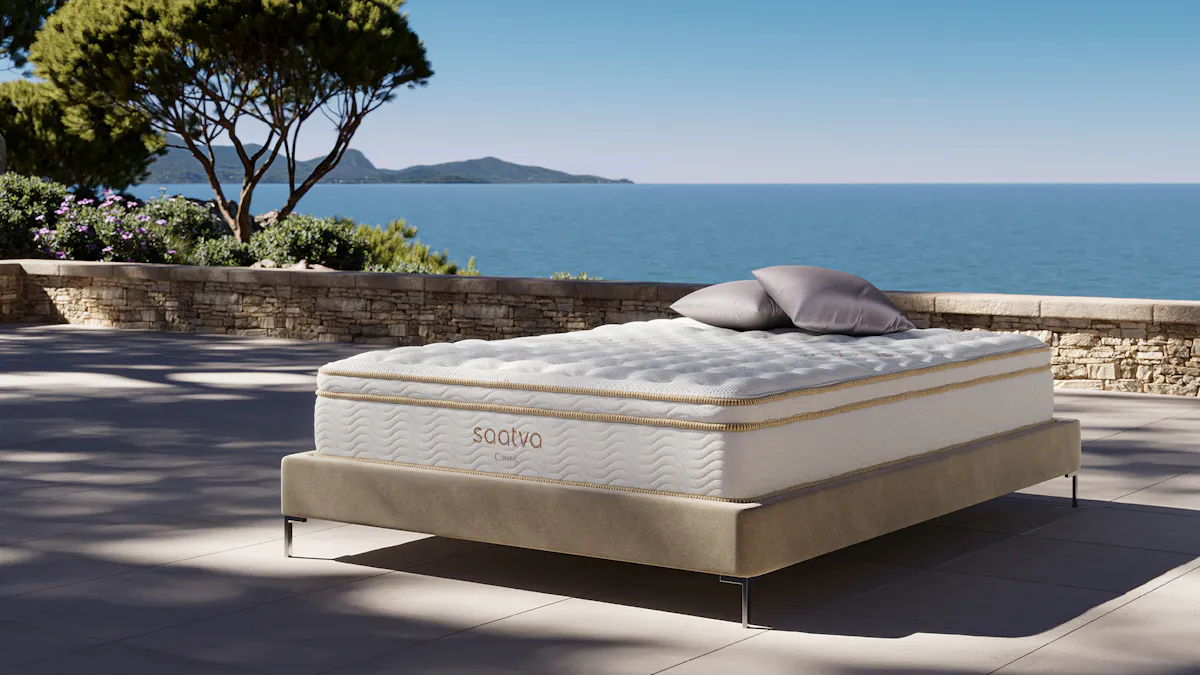
Premium alternative: The Saatva Classic is the comparison I’d make if a murky closeout no longer feels worthwhile. It isn’t presented as the cheapest choice. Confirm its current price, configuration, delivery terms, trial, returns, and warranty on the official site before deciding.
Clearance makes the most sense for a careful buyer who can inspect the item, verify the paperwork, and comfortably accept any stated policy limits. If you need broad flexibility after delivery or don’t have enough information to judge the construction, a regular purchase with clearer live terms is the more defensible choice.
ONE OPTION WORTH COMPARING
Shopping as well as reading? Here is one current option worth comparing: the Saatva Classic. Check today’s price, sizing and return terms on the official product page before you order.
Saatva Classic
- 365-night home trial and lifetime warranty, per saatva.com
- Handcrafted in the USA, free white-glove delivery
- Flexible financing available
FAQ
Are closeout mattresses always new?
No. I wouldn’t infer condition from the sale label alone. Ask whether the mattress is unopened stock, a display model, a return, or an item with packaging or cosmetic damage, then have the answer added to the receipt.
Is a discontinued mattress a bad buy?
Not automatically. A discontinued design can still suit your needs, but you should verify the exact construction, condition, foundation requirements, warranty eligibility, and return terms before comparing its price with current models.
Can I return a clearance mattress?
Only the seller’s written policy can answer that for the specific item. Confirm return and exchange eligibility, pickup responsibilities, applicable charges, deadlines, and cancellation terms before paying rather than assuming the regular store policy applies.
How can I tell whether the markdown is genuine?
Compare the mattress with the current price of the same model, size, version, condition, and included services. Then calculate the complete cost after every applicable fee; an impressive reference price means little if it describes a different package.
Is a floor model worth considering?
It can be, but only if you can inspect it closely and the seller documents its use history, visible condition, and after-sale terms. I’d skip it when the price difference is modest or the seller won’t provide clear written disclosures.