 by
by Quick answer: The coolest sleeping mattresses are hybrids and latex builds that move air through a coil core. My top pick for hot sleepers is the Saatva Classic, a dual-coil luxury innerspring that breathes by design. Premium tier, so check the current offer on the official site.
- Coil and latex constructions sleep cooler than dense all-foam designs because air circulates through the core instead of trapping body heat.
- Cooling tech placed near the sleep surface (phase-change covers, gel or copper infusions) works faster than cooling buried in deep layers.
- A generous home trial matters more than marketing claims, because "cool" is personal and you need weeks of real sleep to judge it.
Updated July 2026 · Reviewed for accuracy
If you wake up sweaty at 3 a.m., your mattress is usually the main suspect, not your thermostat. Heat is one of the most common reasons people sleep badly, and if that sounds familiar, the mattress deserves scrutiny before you blame yourself. The good news: mattress construction has a massive effect on surface temperature, and some builds genuinely sleep cold. Here's how to find one.
Why you sleep hot in the first place
Your body dumps heat all night. That's normal. The problem starts when your mattress absorbs that heat and radiates it right back at you. Dense memory foam is the worst offender. It contours by softening under warmth and pressure, which means it wraps around you, seals off airflow, and holds heat against your skin for hours.
According to verified owner reviews across major retailers, "sleeping hot" is one of the top complaints about traditional all-foam beds, especially budget models with thick, low-density comfort layers. The foam compresses, airflow drops to zero, and you're lying in a warm pocket of your own making.
The Nut's take: A mattress can't refrigerate you. What it can do is get out of the way, move your body heat away from the surface, and let air circulate. Every genuinely cool-sleeping bed does one or both of those things through construction, not chemistry alone.
Room temperature and bedding matter too, but they're secondary. Per independent sleep-product reviewers, hot sleepers who switch from dense foam to a breathable hybrid report the biggest single improvement in overnight temperature, bigger than switching sheets or dropping the thermostat a few degrees.
The materials that actually move heat
Not all "cooling" labels mean the same thing. Here's what each technology does, based on manufacturer specifications and materials science, so you can tell real engineering from marketing paint.
- Open coil systems: The single most effective cooling feature is empty space. An innerspring or hybrid core is mostly air, and body heat dissipates through it instead of building up. Individually wrapped coils breathe almost as well as open Bonnell units while adding motion isolation.
- Natural latex: Latex foam has an open-cell structure and is typically molded with pinholes through the core. It doesn't contour as tightly as memory foam, so less of your body is in contact with the surface. Owner feedback consistently rates latex among the coolest-feeling foams.
- Phase-change covers: These fabrics absorb heat when you're too warm and release it when you cool down. Per the manufacturers using them, they create an actively cool-to-the-touch surface rather than a merely neutral one.
- Gel, copper, and graphite infusions: These additives pull heat away from the body faster than plain foam. Copper and graphite conduct heat well; gel absorbs it. The effect is real but limited, and it fades as the foam saturates with warmth over the night.
- Breathable cover fabrics: Organic cotton and moisture-wicking knits let heat and humidity escape. A thick, quilted polyester cover can undo the cooling work of the layers beneath it.
The pattern here is simple. Airflow beats infusion. A coil core with a thin, breathable cover will out-cool a slab of gel foam every time, because the coil bed never stops ventilating while the gel bed's effect tapers off as the night goes on.
Comparing options? The Saatva Classic is the pick we keep coming back to — see the final verdict ↓
Which mattress types sleep coolest
Type is the strongest predictor of sleeping temperature, stronger than any individual feature. Here's how the main constructions stack up for hot sleepers.
| Mattress type | Why it sleeps cool (or not) | Feel | Best for |
|---|---|---|---|
| Innerspring / coil hybrid | Core is mostly air; heat vents continuously all night | Responsive, lifted, buoyant | Serious hot sleepers, back and stomach sleepers |
| Natural latex | Open-cell foam with pinhole ventilation; minimal body hug | Springy, floating, slightly firm | Hot sleepers who dislike the feel of springs |
| Latex hybrid | Combines ventilated latex with an airy coil core | Responsive with gentle contouring | Combination sleepers who run warm |
| Cooling-engineered foam | Gel, copper, or graphite pulls heat from the surface; effect fades overnight | Classic contouring hug | Moderately warm sleepers who love foam |
| Traditional memory foam | Dense, closed structure traps heat against the body | Deep, slow sink | Cold sleepers, not you |
Hybrids and latex win this category on physics alone. That doesn't mean every hybrid sleeps cold. A hybrid with a thick memory foam pillow top and a dense quilted cover can still run warm, because the surface layers are what touch your skin. Construction order matters as much as construction type.
Cool to the touch vs. merely neutral
Here's a distinction most roundups skip. Plenty of mattresses marketed as "cooling" actually sleep neutral. They don't heat up, but they never feel cold either. For mildly warm sleepers, neutral is fine. For serious hot sleepers, it's a disappointment with a premium price tag.
According to owner feedback on cooling-specific models, the beds that feel genuinely cold share one trait: the cooling technology sits at or near the sleep surface. A phase-change cover, a cool-touch knit, or a thin gel layer directly under the fabric delivers immediate heat transfer the moment you lie down. Cooling gel buried three layers deep under regular foam does almost nothing you can feel.
Rule of thumb: When you read a spec sheet, count how far the cooling material is from the top of the mattress. The closer to the surface, the stronger the effect. Coils are the exception: their cooling works from below by exhausting heat all night long.
Firmness plays a role too, and it surprises people. Firmer mattresses keep more of your body on top of the surface rather than in it. Less contact means less heat transfer into the mattress and more skin exposed to room air. Per independent reviewers, hot sleepers often do better one firmness step up from what they'd pick on comfort alone.
Who actually needs a dedicated cooling mattress
Not everyone. If you sleep comfortably most nights and only overheat during heat waves, breathable sheets and a lighter duvet will fix you. A cooling mattress earns its premium for people in these situations:
- You sleep hot year-round, regardless of room temperature or bedding changes.
- You share the bed. Two bodies double the heat load, and foam beds trap it between you. Couples shopping together should put airflow at the very top of the checklist.
- You sink deeply into your current bed. Heavy contouring equals heat. If you wake up in a body-shaped crater, you need a more responsive surface.
- Your current mattress is old. Foam softens and sags with age, and sagging increases sink and heat retention.
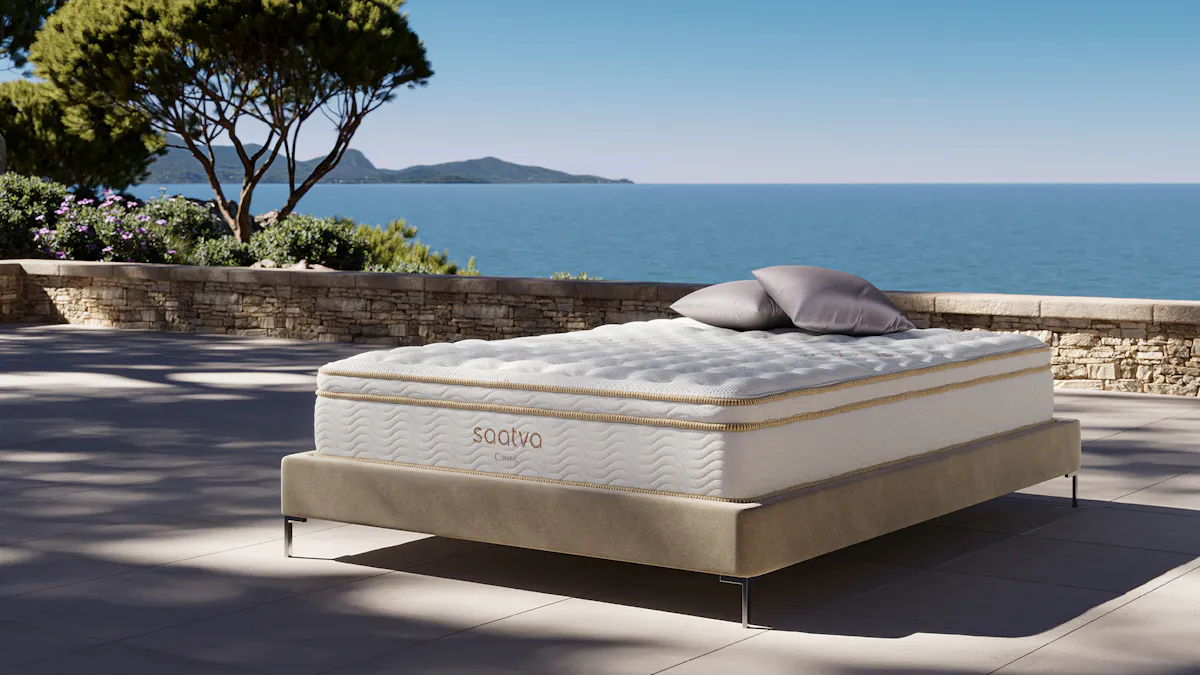
If you're in one of those camps, my recommendation is the Saatva Classic. It's a luxury innerspring hybrid built around a dual-coil design, so the core of the mattress is largely open air, and heat has somewhere to go. It comes in multiple firmness options, so you can pick a firmer, cooler-lying surface without guessing. Per the manufacturer, it's handcrafted in the USA, and the brand positions it as America's best-selling luxury mattress, with flexible financing, a generous home trial, and a lifetime warranty backing it up. It sits in the premium tier, so check the current offer on the official site before you decide.
What to check before you buy
Cooling claims are cheap. Real-world cool sleep is not. Before you hand over money for any mattress sold on temperature regulation, run through this list.
Hot sleeper's checklist
- Coil or latex core, not solid foam
- Cooling material at or near the sleep surface
- Thin, breathable cover instead of thick quilting
- A generous home trial with straightforward returns
- A long warranty that covers sagging, since sag means heat
- Firmness options, so you can lie more on the bed than in it
The trial period deserves emphasis. Per verified owner reviews, plenty of buyers find a mattress feels cool in a showroom or for the first week, then warms up once the initial novelty of the cover fabric wears off. A long home trial with a fair return policy is the only real protection against that. Read the return terms on the manufacturer's site before checkout, not after.
Warranty length matters for a less obvious reason. Cooling performance degrades as materials age. Low-density foams soften, sag, and trap more heat within a few years. Per the better manufacturers' warranty pages, long warranties that cover meaningful sag depth are a signal the build will hold its shape, and its airflow, over time.
FAQ
What type of mattress sleeps the coolest?
Innerspring and coil-hybrid mattresses sleep coolest because their cores are mostly open air, which vents body heat continuously. Natural latex comes next, thanks to its open-cell structure and minimal contouring. Dense memory foam sleeps warmest, per owner feedback across major review platforms.
Do cooling gel mattresses actually work?
Partially. Gel, copper, and graphite infusions do conduct heat away from your body faster than plain foam, but the effect fades as the material saturates with warmth through the night. According to independent reviewers, infused foam helps mildly warm sleepers but rarely satisfies serious hot sleepers on its own.
Does a firmer mattress sleep cooler?
Usually, yes. A firmer surface keeps your body on top of the mattress instead of sunk into it, which reduces heat transfer and leaves more skin exposed to room air. Hot sleepers often do well choosing a slightly firmer option than pure comfort preference would suggest.
Can I make my current mattress sleep cooler without replacing it?
You can improve it. Switch to breathable cotton or linen sheets, drop the thick mattress protector, and use a lighter duvet. Some hot sleepers even experiment with sleeping on the floor with a thin mattress, since heat rises and floor-level air stays cooler. If you still overheat after those changes, the mattress itself is the problem.
Is a cooling mattress worth the premium?
For year-round hot sleepers, yes. Per verified owner reviews, switching from heat-trapping foam to a breathable hybrid is one of the highest-impact sleep upgrades you can make. Just make sure the cooling comes from construction, coils and surface-level tech, rather than marketing language, and use the home trial to confirm it works for your body.
FINAL VERDICT
Bottom line for the coolest-mattress search: if you want cool sleep from construction, not gimmicks, the Saatva Classic is the safer buy — the 365-night trial and lifetime warranty put the risk on the brand, not on you.
OUR CATEGORY-MATCHED PICK · UP TO $334 OFF
Saatva Classic
- 365-night home trial and lifetime warranty, per saatva.com
- Handcrafted in the USA, free white-glove delivery
- Flexible financing available