 by
by Quick answer: A shiki futon mattress suits floor sleepers, small spaces, and anyone who wants firm, breathable support. For organic cotton and wool builds, I'd start with the Futon Best Selling lineup at The Futon Shop.
- Shikibuton are low-profile Japanese floor mattresses, noticeably thinner and firmer than Western beds.
- Common builds include organic cotton, cotton-wool blends, and some latex or foam-insert variants, per retailer listings.
- They roll or fold for storage, but they need regular airing and sunning to stay fresh, according to care guidance from specialty futon retailers.
Updated July 2026 · Reviewed for accuracy
Shiki futon mattresses get searched a lot and understood a little. People see a photo of a neatly folded Japanese floor bed, imagine minimalist bliss, then get surprised by how firm the thing actually is. This page is the product info and review context I wish every buyer read first: what a shikibuton is, how it's built, how it sleeps, and who should skip it entirely.
What a shiki futon mattress actually is
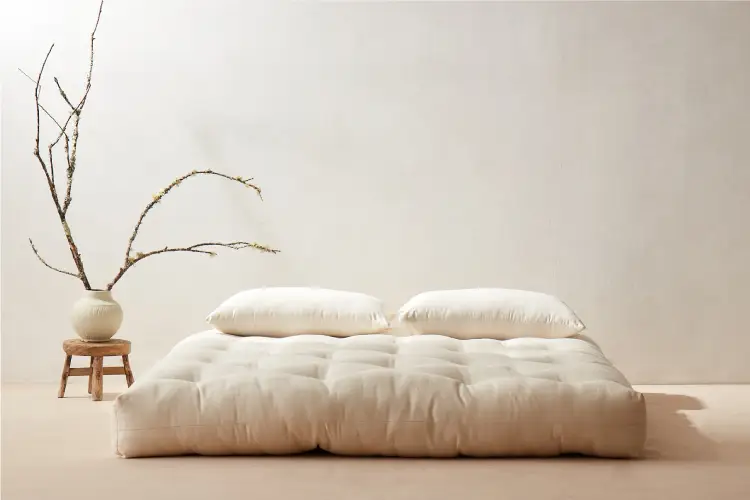
A shiki futon, or shikibuton, is a traditional Japanese sleeping mattress designed to lie directly on the floor or on a low platform. No box spring, no tall bed frame. You unroll it at night, fold or roll it away in the morning, and the room becomes usable space again.
That daily fold-away ritual is the whole point. In Japan, sleeping rooms often double as living space, so the mattress is built for portability. It's lightweight enough to carry, flexible enough to fold, and thin enough to store in a closet.
What it is not: a plush Western futon sofa mattress, and definitely not a memory foam bed. Buyers coming from a pillow-top hybrid will find a shikibuton spartan. Buyers coming from a camping pad will find it luxurious. Your reference point decides everything.
The Nut's take: a shikibuton is a sleep system, not just a mattress. Floor, tatami, or platform underneath changes the feel as much as the filling does. Judge the whole setup, not the pad alone.
Materials and construction
Per specialty retailers like The Futon Shop, shiki futon lines span a real material spectrum. At one end you have simple organic cotton batting, flat and firm. In the middle sit cotton-wool blends, which add breathability and a touch of loft. Some lines add latex or foam inserts for extra cushioning, and a few use alternative plant-based fills. Tri-fold designs exist too, built specifically for storage.
The filling mix drives everything: firmness, temperature behavior, weight, and price. Cotton-only builds sleep firmest and pack down tightest. Wool blends regulate heat better across seasons, which is why wool shows up so often in mid-to-premium tiers. Latex-insert versions soften the surface slightly but add weight and cost.
Thickness runs much thinner than any Western mattress, and that shapes the experience. There is no deep comfort layer to sink into. Support comes from the floor or platform underneath, with the futon acting as a firm, breathable buffer between you and a hard surface.
Construction quality varies more than shoppers expect. Look for even fill distribution, tight tufting or stitching that keeps batting from migrating, and a cover fabric that breathes. Certifications matter here too: organic cotton claims and third-party textile certifications are worth verifying on the product page, because "natural" is an unregulated word.
Comparing options? The Futon Best Selling is the pick we keep coming back to — see the final verdict ↓
How a shikibuton feels to sleep on
Firm. Minimal contouring. Very little of the cradling sensation foam sleepers expect. According to verified owner reviews across futon retailers, back sleepers and stomach sleepers tend to adapt fastest, while strict side sleepers often need a thicker build or a soft topper to protect hips and shoulders.
Breathability is the genuine strong suit. Air moves through cotton and wool batting far more freely than through dense polyurethane foam, and sleeping close to the floor keeps you in the coolest air in the room. Hot sleepers consistently call this out in owner feedback as the reason they switched.
Motion transfer is nearly a non-issue. There's so little bounce and so little depth that a partner's movement barely registers. Edge support, on the other hand, barely exists as a concept here. You don't sit on the edge of a floor mattress, you just get up.
| Factor | Shiki futon | Typical Western mattress |
|---|---|---|
| Firmness | Firm, floor-influenced | Wide range, plush to firm |
| Contouring | Minimal | Moderate to deep (foam/hybrid) |
| Cooling | Excellent airflow | Varies by material |
| Storage | Rolls or folds away | Permanent setup |
| Best for | Small spaces, floor sleepers, guests | Primary everyday beds |
If you read this table and feel the pull toward a conventional bed instead, our roundup of the best futon mattresses covers thicker Western-style options, and the Zoma mattress reviews page is worth a look if pressure relief for side sleeping is your priority.
Care, airing, and durability
Here's the part most reviews skip: a shikibuton is a maintenance commitment. Cotton and wool batting absorb moisture from your body overnight. If you leave the futon on the floor day after day, that moisture has nowhere to go, and the fill compacts, mildews, or both.
Per care guidance from specialty futon retailers, the routine is simple but non-negotiable. Fold or roll the futon each morning so the floor beneath can dry. Air it outside or near a window regularly. Sun it when you can; sunlight refreshes the fibers and drives out moisture. Rotate or flip it periodically for even wear, especially with layered builds.
Shikibuton care checklist
- Fold or roll daily so the floor underneath dries out
- Air outdoors or by an open window on a regular schedule
- Sun the futon periodically to refresh fibers and reduce moisture
- Rotate and flip to spread wear across the fill
- Avoid carpet with poor airflow; use tatami or a breathable base
Treated well, owner reviews suggest these mattresses hold up for years of nightly use. Treated badly (left flat on carpet in a humid room), they can deteriorate surprisingly fast. Longevity is on you more than on the factory.
Who should buy one, and who shouldn't
Buy a shiki futon if you sleep on your back or stomach, run hot, live in a small space, need a real guest bed that stores in a closet, or genuinely want to try floor sleeping. It's also a strong pick for kids' rooms, since it's low, light, and easy to move.
Skip it if you want plushness, deep pressure relief, or a bed you never think about. Skip it if you have mobility issues that make getting up from the floor difficult. And skip it if you know you won't keep up the airing routine; a neglected shikibuton is a short-lived shikibuton.
On the buying side, my advice is to shop material-first. Decide cotton-only versus cotton-wool before you look at anything else, because that choice sets firmness and temperature behavior. The Futon Best Selling collection at The Futon Shop is a reasonable starting point for comparing organic cotton and wool builds side by side. Check the current price and material options on the official site, since availability shifts.
One more scenario worth naming: the hybrid approach. Some buyers pair a shikibuton with a conventional mattress elsewhere in the home, using the futon for guests. If your main bed needs an upgrade too, our Zoma hybrid mattress reviews break down a coil-and-foam option at the other end of the firmness spectrum.
What to verify before you buy
Shiki futon listings are less standardized than Western mattress pages, so do the homework the listing won't do for you.
- Exact thickness and size. Confirm the stated thickness and that the dimensions match your space and sheets. Shikibuton sizing doesn't always map cleanly onto twin, full, and queen.
- Fill composition. Cotton, cotton-wool, latex-insert, or alternative plant fills. Get the actual breakdown, not a marketing adjective.
- Cover. Included or optional? Removable and washable, or fixed? This matters for hygiene on a floor bed.
- Certifications. Organic claims and textile safety certifications should be named on the product page. Verify them.
- Trial and return terms. Per brand policy pages, these vary widely across futon retailers. Read the return policy before checkout, especially for a firmness profile you may never have slept on.
- Foundation. Confirm whether the futon works on your floor type, or whether you need tatami mats or a slatted platform underneath for airflow.
That last point deserves emphasis. A shikibuton on a hard, sealed floor in a humid climate without daily airing is a mold risk, full stop. The futon itself isn't flawed; the setup is.
FAQ
Is a shiki futon good for your back?
Many back sleepers in owner reviews report comfortable, well-supported sleep on the firm surface. That said, firmness preference is personal, and no mattress guarantees back comfort. If you have existing pain, try before you commit or choose a retailer with a workable return policy.
Can you sleep on a shikibuton every night?
Yes, plenty of people do; that's its traditional role. The catch is the care routine: daily folding and regular airing aren't optional for a nightly-use floor mattress. Commit to the maintenance and it's a legitimate primary bed.
Do shiki futons work for side sleepers?
They're the toughest fit for strict side sleepers, because the thin, firm profile offers little cushioning at the shoulder and hip. According to owner feedback, side sleepers who make it work usually pick a thicker build or add a soft topper.
How do you store a shiki futon?
Fold or roll it and keep it in a dry, ventilated spot (a closet or storage chest works). Make sure it's fully aired and dry before storing it for long stretches, since trapped moisture is what degrades the fill.
What's the difference between a shikibuton and a Western futon mattress?
A shikibuton is thinner, lighter, and designed for the floor and daily folding. A Western futon mattress is thicker, built for a convertible sofa frame, and closer to a conventional mattress in feel. They're different products that happen to share a name.
Bottom line: a shiki futon mattress is a firm, breathable, space-saving sleep surface that rewards owners who maintain it and punishes those who don't. Know your sleep position, know your climate, verify the fill and the return terms, and you'll land on the right side of this purchase.
FINAL VERDICT
Bottom line for a shiki futon researcher: if you want the traditional futon experience done right, the Futon Best Selling is the safer buy — it's the proven seller in this category, not a gamble on a no-name import.
OUR CATEGORY-MATCHED PICK
Futon Best Selling
- Organic cotton and cotton-wool builds you can compare side by side
- Firm, breathable feel suited to floor sleeping and small spaces
- Rolls or folds away for storage between uses