 by
by Quick answer: If accountability is why you want a made-in-USA cooling blanket, start with an established American sleep brand: the Sleep Number True Temp™ Weighted blanket is my top pointer — temperature-balancing tech, premium tier, check the current price on the official site.
- Real cooling comes from fabric construction: moisture-wicking fibers, phase-change finishes, breathable weaves.
- "Made in USA" and "assembled in USA" are different claims — the label and the product page tell you which one you're buying.
- Per the manufacturer, temperature-balancing blankets aim to hold a steady feel rather than deliver an icy blast.
Updated July 2026 · Reviewed for accuracy
Shopping for a cooling blanket made in the USA sounds simple until you read the fine print. Half the market sews a cover stateside and ships the guts from overseas. The other half slaps "cooling" on a polyester throw and calls it innovation. I've spent years pulling apart bedding marketing, and this category has more label games than almost any other. Here's how I separate the real thing from the noise.
Why "Made in USA" actually matters for cooling blankets
Start with the obvious: a blanket's cooling performance lives in its materials. Fiber quality, weave tightness, finish chemistry. Domestic manufacturing isn't a magic quality stamp, but it usually means tighter oversight of those inputs and clearer accountability when something goes wrong. In practice, buyers of domestically produced bedding tend to report fewer surprises between the advertised spec and what shows up at the door.
There's a practical angle too. Warranty claims and returns are simpler when the company, the factory, and the customer all sit in the same country. Workmanship coverage exists precisely because stitching, fill distribution, and fabric finishes fail — and a US-based operation is usually simpler to deal with when they do.
Nut tip: "Designed in the USA" is not "made in the USA." Neither is "assembled in the USA with imported materials." The FTC requires country-of-origin labeling to reflect where the product was substantially made — read the sewn-in label, not the homepage banner.
None of this means every import is junk. It means that when a brand commits to full domestic production, it's a signal they control the supply chain — and in a category built on fabric claims, control is everything.
The cooling tech that actually works
Every cooling blanket on the market uses one of four mechanisms, and you should know which one you're paying for before you buy:
- Moisture-wicking fabrics. Polyester performance knits and bamboo-derived lyocell pull sweat off your skin so it evaporates. You feel cooler because you're drier, not because the blanket is cold.
- Phase-change materials. These finishes absorb heat when you're warm and release it when you cool down. Per the manufacturers that use them, the goal is temperature balance, not refrigeration.
- Breathable natural fibers. High-cotton blends and open weaves let body heat escape instead of trapping it. Old school, but it works.
- Two-sided designs. A cooling surface on one face, a cozier or quilted surface on the other. Flip with the seasons.
I've written a full breakdown of the science on how cooling blankets work if you want the deep version. The short version: moisture management beats marketing. According to bedding reviewers who track wash-cycle durability, wicking performance is the feature most likely to degrade over time, so fiber quality matters more than any finish.
What I check on any product page:
- Exact fiber composition of cover and fill, spelled out in writing
- Whether "cooling" is a fabric property, a finish, or a vague claim
- Country of origin for the whole product, not just the sewing
- Care instructions — delicate-only care kills real-world value
Comparing options? The True Temp™ Weighted blanket is the pick we keep coming back to — see the final verdict ↓
How to verify a blanket is really made in the USA
Here's my process, and it takes about two minutes per product. First, find the fiber content and origin statement on the product page — reputable brands state it plainly. Second, cross-check the sewn-in label language in customer photos; verified owner reviews often include them. Third, email the brand if anything is ambiguous. A company that's genuinely manufacturing stateside answers that question fast and proudly.
Red flags: origin info buried or absent, phrases like "crafted with global materials," and review pages where owners report the label says something different than the listing. According to consumer advocates who track labeling disputes, bedding is a repeat offender category, so the skepticism is earned.
Weighted and cooling: the combination worth paying for
The most interesting corner of this market is the weighted cooling blanket — deep-pressure comfort without the sweatbox effect of a traditional weighted throw. Traditional weighted blankets trap heat because dense fill blocks airflow. The better designs solve it with breathable covers and fill that doesn't insulate, and per the manufacturers in this space, temperature-balancing surfaces do the rest.
My decision shortcut: if you run hot but want the calming pressure of a weighted blanket, buy from an established American sleep brand with real fabric engineering behind it — that's why I point people to the Sleep Number True Temp™ Weighted blanket, which pairs gentle weight with a temperature-balancing cover designed to keep the feel steady through the night. It's priced in the premium tier, so check the current price on the official site before deciding. If you want a second data point on this category, my Gravity cooling weighted blanket review covers how a direct competitor handles the same problem.
According to verified owner reviews in this category, the split is predictable: hot sleepers who pick breathable-cover designs report sleeping through the night, while owners of cheap, dense-fill versions report kicking the blanket off by midnight. Construction decides the outcome, not the label.
Good to know: Weighted blanket weight guidance is proportional to your body weight — most makers suggest a modest fraction of it. Start lighter than you think. An overstuffed, too-heavy blanket traps more heat regardless of the cover fabric.
Care, durability, and what owner reviews reveal
A cooling blanket you'll actually use has to survive your washing machine. This is where the category splits hard. According to owner feedback across bedding review sites, machine-washable blankets with simple cold-water cycles hold up well, while delicate-fabric designs develop pilling, finish wear, and clumped fill — and that's when the cooling sensation fades.
Before buying, scan the one-star and three-star reviews for two phrases: "after washing" and "stopped working." Those reviews tell you the honest lifespan of the cooling effect. Per brand warranty pages, some makers back workmanship with multi-year coverage, which matters when a finish or stitch fails early — a long warranty from a domestic brand is one of the strongest signals in this category.
One more thing: colorfastness. Lighter fabrics show sweat staining, and some dark dyes bleed in early washes. Owners flag both quickly in reviews, so a two-minute scan saves you a return.
FAQ
What actually makes a blanket "cooling"?
Either moisture-wicking fabric that keeps you dry, a phase-change finish that absorbs and releases heat, or a breathable weave that lets warmth escape. If the product page can't tell you which mechanism it uses, the claim is probably marketing, according to bedding reviewers who track these specs.
Is a cooling blanket made in the USA worth the higher price?
Usually, yes — domestic production tends to come with clearer material disclosure and easier warranty service, per consumer guides that compare origin and ownership experience. Check the current price on the brand's official site and weigh it against the warranty and return window.
Are weighted blankets too hot for summer?
Traditional ones often are, because dense fill blocks airflow. Cooling-weighted designs with breathable covers exist specifically to fix that, and per manufacturer specs, temperature-balancing surfaces keep the feel neutral. I maintain a running list of warm-weather picks in my guide to the best cooling weighted blankets for summer.
Is bamboo better than cotton for cooling?
Bamboo-derived lyocell wicks moisture faster, which helps sweaty sleepers. High-cotton blends breathe well and usually wash more durably. According to owner reviews, bamboo feels cooler on contact while cotton wins on long-term toughness — pick based on which problem you actually have.
How do I know if the "made in USA" claim is legit?
Check the sewn-in label in customer photos, read the origin statement on the product page, and watch for weasel phrases like "designed in" or "assembled in." Genuine domestic makers state it plainly, and consumer advocates recommend contacting the brand directly when the listing is vague.
Bottom line: buy the mechanism, not the marketing. Verify the origin, confirm the wash instructions, and make sure the warranty and return policy give you room to test the feel at home. Do that, and a cooling blanket made in the USA is one of the easiest bedding upgrades to get right.
FINAL VERDICT
Bottom line for a made-in-USA cooling blanket search: if you want an established American sleep brand accountable for its claims, the True Temp™ Weighted blanket is the safer buy — real temperature control from a company you can still find next year, not a marketplace listing that vanishes.
OUR CATEGORY-MATCHED PICK
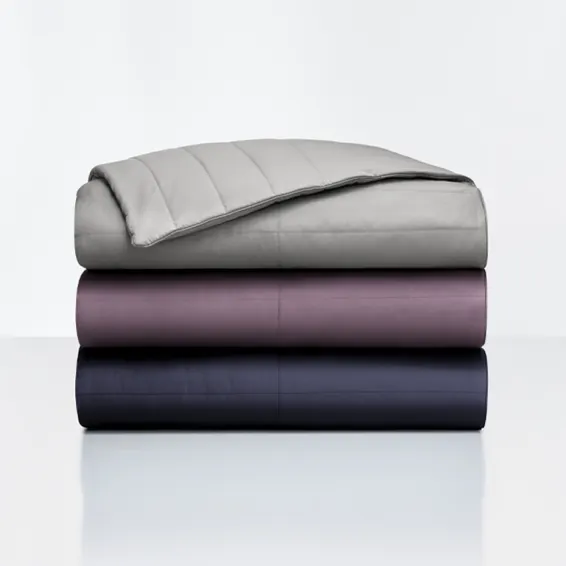
True Temp™ Weighted blanket
- From an established American sleep brand with real fabric engineering
- Temperature-balancing cover designed to hold a steady feel all night
- Gentle weighted pressure without the sweatbox effect of dense fills