
 by
by Quick answer: A cooling neck pillow should manage warmth without lifting, dropping, or steering your head into an awkward position. Choose the loft and shape for your sleep position first. Then look for a clearly explained cooling cover, ventilated core, moisture-managing fabric, or combination of those features.
- Buy for neck fit first, because cooling cannot rescue the wrong pillow height.
- Separate an initially cold cover from airflow through the entire pillow.
- Favor adjustable fill if you regularly move between sleeping positions.
- Check the cleaning instructions before relying on a specialized cover.
Updated July 2026 · Reviewed for accuracy
My verdict: A cooling neck pillow makes the most sense for a warm sleeper who already understands the height and support needed beneath the neck. It is a poor buy when “cooling” is the only clearly described feature or when a fixed contour fights your normal sleeping position.
I approach this category by tracing two separate paths. The first is the support path from mattress to shoulder, neck, and head. The second is the heat path from your skin through the pillowcase, cover, core, and surrounding air. A good design needs both paths to work for your body.
Start with the heat path, not the cooling label
A cold-touch knit can change how the pillow feels when your cheek first meets it. The core determines more of what happens after your head settles and blocks airflow at the surface. That is why I do not treat a chilly cover and a breathable pillow as the same thing.
According to AARP’s pillow testing and buying guidance, cooling designs may rely on airflow, moisture management, or materials intended to draw heat away from the sleeper. Those approaches address different complaints. A person bothered by sweat may value moisture handling, while someone who dislikes a warm patch beneath the face may care more about surface heat transfer and ventilation.
Gel components, phase-change fabrics, mesh panels, and plant-derived covers also appear in this category, according to AARP. I read each as a construction clue rather than proof of performance. Gel is a component. Mesh creates a possible airflow route. A technical fabric can manage the surface environment. None of those labels explains the complete pillow by itself.
A phase-change cover is intended to buffer changes at the surface, while perforations or channels are intended to give air somewhere to move. Moisture-wicking fabric primarily addresses dampness near the skin. A listing should identify which job its material is meant to perform instead of grouping every temperature-related feature under one vague claim.
The Nut’s materials check: Follow the heat from your face outward. If the description stops at the cover and says nothing meaningful about the core, expect the strongest sensation near the surface rather than assuming the whole pillow manages heat the same way.
A pillowcase can change that sensation. A thick protector or dense case places another fabric layer between your skin and the engineered cover. That may be a sensible hygiene tradeoff, but it can soften the immediate cool-touch effect. Check what the manufacturer permits before adding a protector, especially around specialized surface materials.
Room temperature and humidity still matter. A pillow does not create refrigerated air, and it cannot release heat effectively when the surrounding environment is already very warm and still. Think of cooling construction as a way to reduce trapped warmth, not as a replacement for sensible bedroom temperature and breathable bedding.
Set the loft from your sleep position and mattress
Side sleeping leaves a shoulder-sized gap between the mattress and head. According to AARP’s sleep-position guidance, side sleepers commonly need more loft than back or stomach sleepers. The useful height, however, is the compressed height beneath your head, not the unweighted height shown in a product photo.
A side sleeper needs enough material to stop the head from dipping toward the mattress. Too much height tilts it in the opposite direction. Broad shoulders and a firmer mattress can leave more space to fill, while a softer mattress may let the shoulder sink farther and reduce that space.
Back sleepers usually need a more moderate profile. The pillow should support the curve beneath the neck without crowding the chin toward the chest. A central cradle can help distribute the head’s weight, but the raised neck area still has to match the sleeper rather than simply looking ergonomic.
Stomach sleepers should be cautious with tall foam blocks and pronounced cervical contours. AARP says a thinner pillow, or sometimes no pillow, may suit stomach sleeping better. Adding cooling fabric does not change the head rotation and height created by the underlying shape.
For a closer look at how profile affects a contoured design, see this guide to neck pillow size and support. The transferable lesson is simple: select the profile that supports your natural position, not the size name that sounds most familiar.
- Side position: Fill the shoulder gap without tipping the head upward.
- Back position: Support the neck while leaving the chin in a relaxed position.
- Stomach position: Keep the profile low enough to avoid adding more rotation.
- Mixed positions: Look for controlled adjustability or a forgiving shape.
Your mattress belongs in this calculation. A pillow that fits on a firm sleep surface can feel too tall after moving to a bed that allows deeper shoulder sink. The reverse can happen when moving from a soft mattress to a firmer one. Pillow and mattress are parts of the same support stack.
I would also judge the pillow under normal sleeping conditions. A foam core can look modest before use yet resist compression beneath the head. Loose fill may look lofty but settle substantially. Construction tells you more than the outline in a staged photograph.
Read the core before judging the cover
A solid memory-foam block gives the head and neck a continuous support surface. It molds gradually and can hold a defined contour, but the original construction guidance correctly notes that a solid core may retain warmth more readily than loose fill unless ventilation is built into the design.
Perforations, channels, and cutouts can create airflow paths through foam. Their usefulness depends on how those paths connect with the cover and open air. A decorative pattern that remains sealed beneath dense fabric tells me less than a clearly explained route through the core.
Shredded foam behaves differently. The pieces can shift, creating room to change loft and redistribute material. That flexibility is useful for mixed-position sleepers, but loose foam may need occasional refluffing and can feel uneven if the enclosure does not keep it distributed.
Construction shortcut: Solid foam favors a stable, repeatable shape. Loose fill favors adjustability. A shaped cervical core guides position more strongly. Decide which behavior you want before comparing cooling fabrics.
Fiber-style fill tends to feel more familiar to people coming from a conventional bed pillow. It can allow air between its strands, although its support depends on how quickly it compresses and whether the fill stays evenly spread. Softness at first touch is not the same as stable neck support after settling.
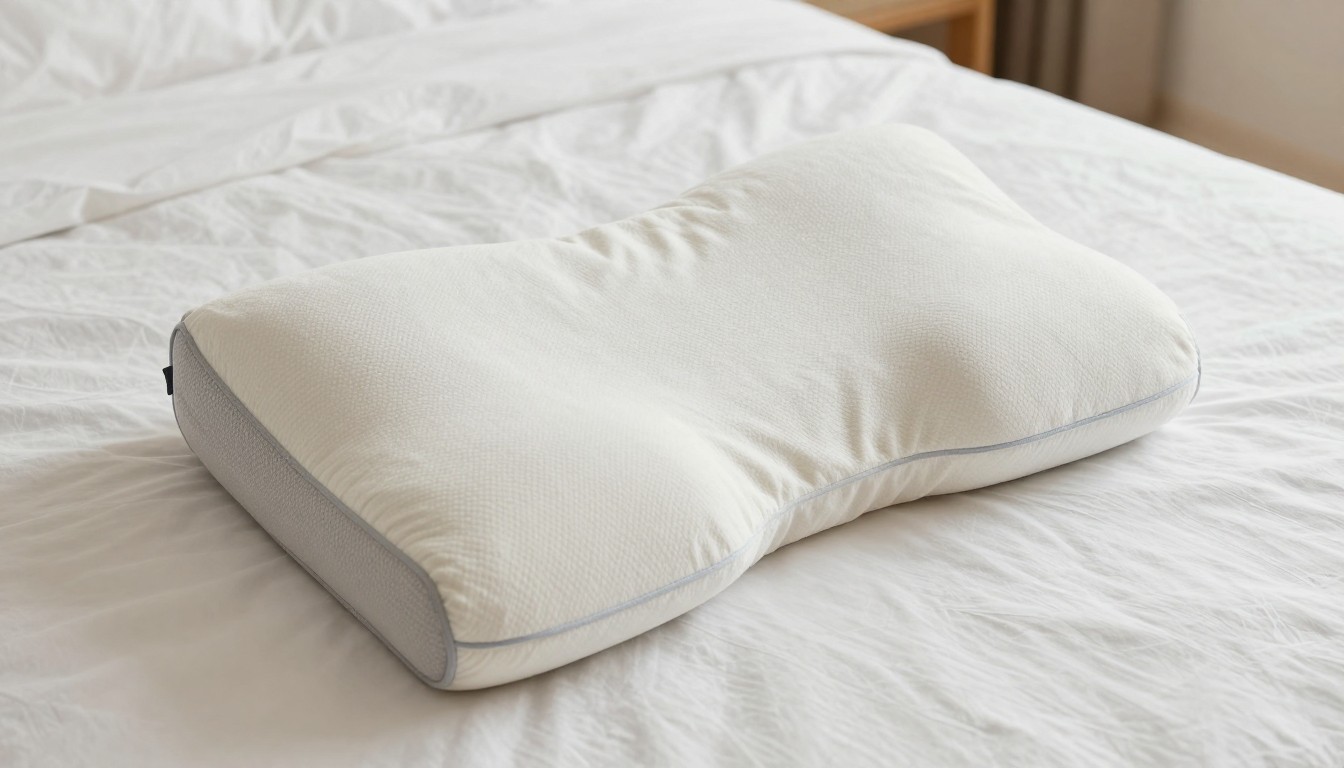
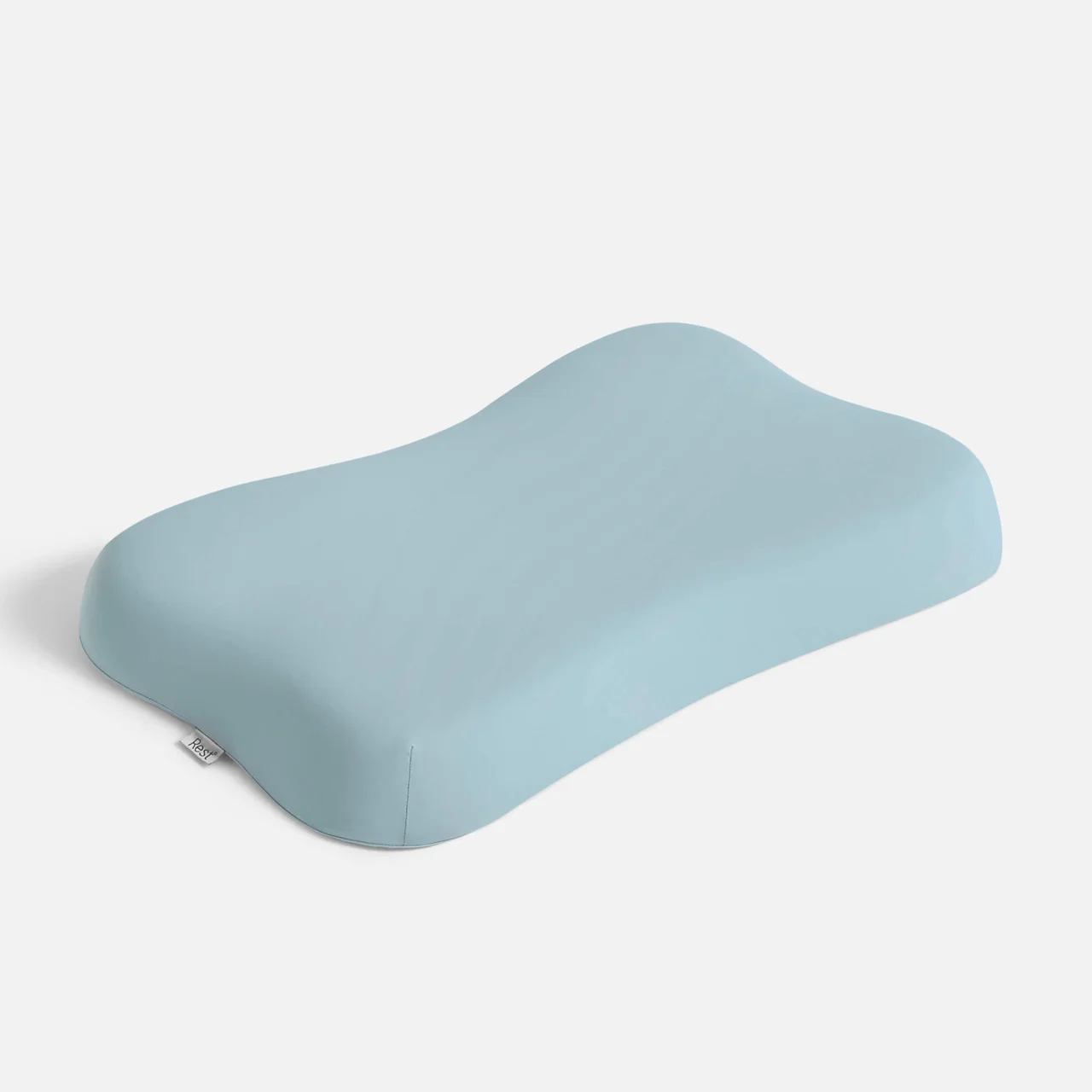
A cervical shape adds raised and recessed areas to the support system. That can suit a sleeper who remains mostly on the back or side and likes a defined resting place. It can frustrate an active sleeper who wants to use the full surface or rotate the pillow during the night.
The cover controls more than appearance. Cotton, TENCEL, technical knits, and mesh can change surface texture, moisture handling, stretch, and ease of care. A highly elastic cover may let a contoured core respond more freely, while a restrictive cover can change how the pillow compresses.
Durability also starts inside. A removable cover shields the core from skin oils and sweat. Secure internal compartments can reduce fill migration. A resilient core may preserve its intended shape better than a poorly contained loose fill. I look for those structural details before giving much weight to words such as “premium” or “luxury.”
Adjustability helps only when the base materials work
A zippered fill chamber gives you a direct way to change height. According to AARP, adjustable pillows allow sleepers to tune loft and firmness, which is especially relevant for people who shift positions during the night.
Adjustment cannot transform every pillow into every shape. Removing fill from a loose-fill model lowers the profile, but it can also reduce stability or create a hollow center. Adding material may increase support while making the surface feel crowded beneath the head.
Layered foam is another form of adjustability. Removable inserts can change the overall profile while preserving a more uniform surface than shredded fill. The tradeoff is that the available settings are defined by the supplied layers rather than freely tuned across the entire chamber.
- Confirm which material can actually be removed or rearranged.
- Check whether the cooling feature sits only on one side of the cover.
- Make small loft changes rather than emptying the chamber at once.
- Redistribute loose fill so the neck area does not become a thin spot.
I would make an adjustment based on alignment, not plushness. A very soft pillow can still be too tall if its core resists compression. A firmer pillow can still fit if its shape and height place the head where it naturally wants to rest.
Adjustability also adds a maintenance question. Loose fill can move during cleaning or handling, and removable layers need a clean, dry place for storage. If that sounds irritating, a correctly sized fixed core may be the more practical ownership choice.
Match the construction to how you actually sleep
A warm side sleeper needs two distinct features: enough compressed material to bridge the shoulder gap and a heat path that remains open under pressure. I would inspect the core ventilation after establishing that the profile can support side sleeping.
A back sleeper should focus on the center and neck zones. A shallow cradle may feel less intrusive than a dramatic contour. If the cooling treatment appears only on one face, check that the intended orientation also places the raised and recessed areas where you need them.
A combination sleeper benefits from a broader usable surface. Adjustable fill can help, but shape matters just as much. Deep wings, rigid contours, or a narrow cradle may restrict movement even when the height itself can be changed.
If you prefer a conventional shape instead of cervical sculpting, this overview of a pillow with cooling features helps separate temperature-management features from neck-specific geometry. That distinction keeps the buying decision focused on the problem you are actually trying to solve.
- Mostly side sleeping: Prioritize compressed loft and edge stability.
- Mostly back sleeping: Inspect the cradle depth and neck transition.
- Frequent position changes: Favor a wide surface and adjustable support.
- Mostly stomach sleeping: Be skeptical of tall or strongly sculpted cores.
People dealing with neck discomfort should keep the role of a pillow in perspective. A pillow can influence position and comfort, but it is not a treatment for an underlying condition. Persistent or worsening symptoms call for attention beyond swapping bedding.
This discussion of the relationship between pillow construction and neck pain offers more context on matching support characteristics to sleep position. Use construction guidance to identify fit priorities, not as a promise that one material suits every neck.
Care rules can erase an otherwise good choice
A non-removable cover places every spill, skincare residue, and night of perspiration closer to the core. AARP notes that care rules vary among cooling pillows, with some models limited to spot cleaning or supplied without a removable cover.
A removable cover is the easier setup only when its instructions suit your routine. Removable does not automatically mean machine washable. Check the manufacturer’s care language for washing, drying, bleaching, and exposure to heat before putting specialized fabric into a normal laundry cycle.
Foam cores usually need more cautious handling than an ordinary fiber pillow. Soaking or aggressive agitation can alter the material and make thorough drying difficult. Follow the instructions for the core separately from those for the cover.
A protector introduces a tradeoff. It can limit direct contact with oils and moisture, but a thick or non-breathable layer may mute the feel of the cooling surface. I would choose the lightest protective setup permitted by the manufacturer that still meets your hygiene needs.
- Does the outer cover unzip?
- Can that cover be washed, or is it spot-clean only?
- Can the core be cleaned separately?
- Will an ordinary pillowcase interfere with the intended cooling surface?
- Does loose fill require regular redistribution?
Drying deserves as much attention as washing. Moisture trapped inside dense foam or a packed fill chamber can create an unpleasant ownership problem. Give every component the ventilation and drying method stated by its manufacturer before rebuilding the pillow.
Regular care also makes it easier to notice construction changes. Permanent lumps, a collapsing neck zone, a damaged zipper, or a cover that no longer sits flat can alter both support and surface temperature. Those are more useful replacement clues than an arbitrary calendar date.
Use a spec-based check before buying
A product description that says “cooling” without naming the mechanism has left out the most useful detail. Before considering price or appearance, I want to know what touches the skin, what supports the head, and where retained heat is expected to go.
Start with your dominant sleeping position and current mattress feel. Then identify the intended pillow profile, the behavior of its core, and the amount of guidance created by its shape. Cooling belongs after that fit assessment, not ahead of it.
- Fit: Decide whether you need a low, moderate, or fuller compressed profile.
- Shape: Choose between a conventional surface, gentle cradle, or defined cervical contour.
- Core: Identify solid foam, loose fill, layered inserts, or another disclosed construction.
- Cooling: Separate cool-touch fabric, moisture control, and internal ventilation.
- Care: Read the instructions for both the cover and core.
- Terms: Read the current return language directly rather than assuming it resembles another pillow’s policy.
Be cautious with unexplained superlatives. A dramatic fabric name does not tell you how the core breathes. An ergonomic silhouette does not tell you which shoulder width or sleep surface it fits. An adjustable label does not tell you how stable the remaining fill feels after material is removed.
My buying rule: If the seller cannot explain the support structure and cooling method in plain language, do not fill in the missing details with optimistic assumptions.
Also check the live commercial terms on the seller’s own page. Return conditions can include requirements about packaging, cleanliness, or permitted use. I would read those conditions on their own merits rather than treating one model as having stronger terms without a documented comparison.
Optional product context
One model you may encounter: If you are considering the Evercool® Cooling Pillow, judge it from its current official listing and terms. Confirm the disclosed cooling mechanism, core construction, profile, care routine, and return conditions against the checklist above. The name alone does not establish neck fit or how the pillow handles warmth after you settle into it.
My final cooling neck pillow verdict
The best starting point is not the coldest-sounding cover. It is a profile that supports your head without forcing it away from a comfortable position. Once that fit is established, airflow, moisture handling, and surface heat transfer can make the pillow more pleasant for a warm sleeper.
Choose a solid contoured core if you value a repeatable resting position and its shape suits you. Consider loose or modular fill if your height needs vary or you change positions often. In either case, check that the cooling method works with the core rather than existing only as a surface slogan.
Skip a tall fixed contour if you mainly sleep on your stomach. Skip a highly structured cradle if you dislike being guided into one area. Skip a difficult-care cover if easy laundering is important to you. Those practical mismatches tend to matter more than an impressive material name.
My bottom line is straightforward: get the support path right, verify the heat path, and read the care instructions. Cooling is valuable when it improves an already suitable pillow. It is not a substitute for fit.
ONE OPTION WORTH COMPARING
Shopping as well as reading? Here is one current option worth comparing: the Evercool® Cooling Pillow. Check today’s price, sizing and return terms on the official product page before you order.
Evercool® Cooling Pillow
- One model you may encounter: If you are considering the Evercool® Cooling Pillow, judge it from its current official listing and terms
FAQ
What is a cooling neck pillow?
A cooling neck pillow combines neck-focused support with a temperature-management feature. According to AARP, that cooling function may come from a cold-touch surface, airflow, moisture control, or a heat-dispersing component. The shape and loft still determine how the pillow supports your head.
Do cooling pillows remain cold through the night?
Not necessarily. AARP distinguishes between designs that improve airflow or wick moisture and those intended to feel cooler at the surface. The initial sensation can fade as temperatures equalize, so inspect the core construction as well as the cover.
What loft is best for neck support?
Sleep position is the practical starting point. AARP associates side sleeping with a fuller profile, back sleeping with a more moderate one, and stomach sleeping with a thinner pillow or no pillow. Shoulder build and mattress sink then refine that general guidance.
Is adjustable fill worth choosing?
It can be useful for combination sleepers or anyone uncertain about pillow height. According to AARP, adjustable designs let the sleeper tune loft and firmness. The fill must still remain supportive, breathable, and evenly distributed after adjustment.
Can a cooling pillow fix neck pain?
A pillow should not be treated as a cure for persistent neck pain. Its practical role is to provide a comfortable support surface and avoid an obviously unsuitable sleeping angle. Ongoing or worsening discomfort deserves attention beyond changing a pillow.