
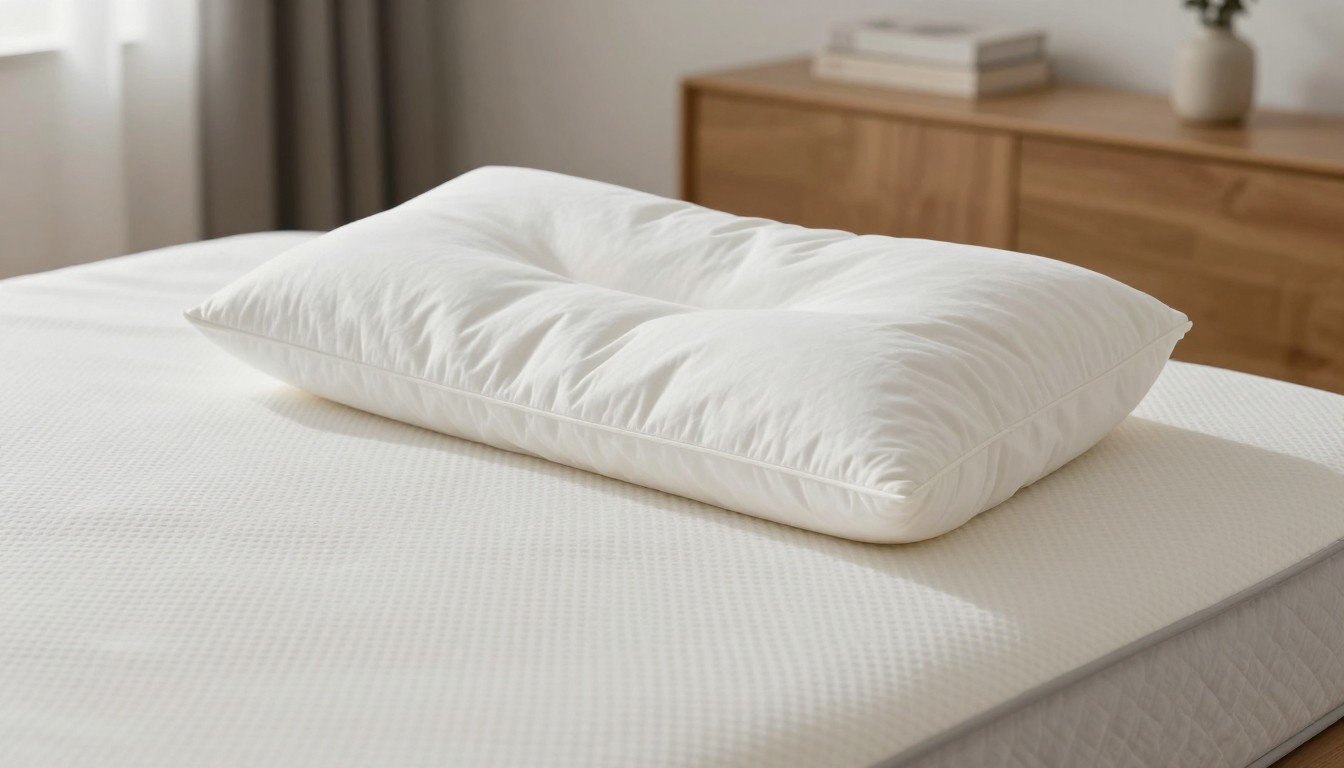
 by
by Quick answer: The iso cool pillow is a sensible pick for mildly warm sleepers who want a washable phase-change cover. Skip it if you expect active, all-night cooling.
My verdict: The iso cool pillow gets the construction basics right. Its Outlast cover can make the surface feel cooler as you settle in, while the foam core provides a stable, shaped feel. The limitation is simple: solid foam still holds warmth, and the name covers several versions with different cores and profiles. Check the exact build before buying.
- Iso-Cool is a pillow family, not a single standardized construction.
- The manufacturer describes an Outlast Adaptive Comfort cover that absorbs and releases heat.
- Retailer descriptions may show memory foam or Serene foam, depending on the version.
- The removable cover is described as machine washable, while the foam core requires spot cleaning.
Updated July 2026 for construction, care, availability, and buying guidance.
What the Iso-Cool Name Actually Covers
The first detail to understand is that Iso-Cool identifies a range rather than one fixed pillow. Contour and traditional shapes have both appeared under the name, and the foam inside can vary. That makes the individual retailer specification more useful than the family name printed at the top of the page.
Carpenter Co. is identified as the foam manufacturer behind the line. Iso-Cool pillows have appeared through major retailers including Amazon, Walmart, and Wayfair, although selection can differ between sellers. A product photo alone may not reveal which foam core or profile is being offered.
Walmart lists an Iso-Cool pillow at $65, according to Walmart's Iso-Cool category page. That figure should be treated as a retailer-specific reference rather than a universal price because stock, seller, and model can change. Before judging the value, confirm that the listing identifies the core, shape, care instructions, and return terms.
- Shape: Check whether the pillow is contour-shaped or a traditional rectangle.
- Core: Look for memory foam or Serene foam in the material description.
- Cover: Confirm that the removable shell is the Outlast version.
- Care: Read the sewn-in label instead of assuming every model has identical washing directions.
- Seller terms: Review the return and warranty language attached to that exact item.
Construction: A Cooling Cover Over Solid Foam
The layer order is straightforward: your pillowcase sits over a removable temperature-regulating cover, and that cover surrounds a solid foam core. This matters because most of the cooling work happens near the surface. The foam underneath controls the pillow's support, response, and ability to release accumulated warmth.
According to the manufacturer, the Outlast Adaptive Comfort material absorbs heat when the sleeper is warm and releases it as conditions cool. Phase-change material uses microscopic components that change state within a target temperature range. That process can buffer a surface temperature swing, but it does not pump heat out of the bedroom or create refrigerated airflow.
The shell is described as a soft cotton-blend cover. A smooth, well-fitted shell can affect how refined a pillow feels before the foam itself even comes into play. My guide to why hotel pillows feel so comfortable explains why the cover, loft presentation, and pillowcase can matter as much as the filling at first contact.
The Nut's tip: Do not buy from the product name alone. Open the material details and identify the core. Similar-looking Iso-Cool pages can describe meaningfully different pillow feels.
Traditional memory foam usually has a slower, more conforming response. It compresses under the head and holds a defined impression before gradually recovering. That can feel secure to sleepers who dislike shifting fill, but a solid memory-foam block has fewer open pathways for heat to escape than a loose or ventilated construction.
Some Iso-Cool descriptions identify Carpenter's Serene foam instead. The manufacturer positions that material as a more responsive, breathable alternative to conventional memory foam. I would still treat that as model-specific language, not a promise that every Iso-Cool pillow contains the same foam or feels equally springy.
Active Air Technology also appears in descriptions of some variants. The practical point is potential airflow through the core, but the wording should be present on the exact product being considered. If a retailer omits it, do not assume that feature is hidden inside merely because another Iso-Cool model includes it.
- Outlast cover: Handles the initial temperature-buffering role, according to the manufacturer.
- Memory-foam core: Favors slow contouring and a more fixed shape.
- Serene-foam version: Is presented by the manufacturer as the more responsive option.
- Ventilation language: Must be verified on the individual model rather than inferred from the family name.
Does the Iso-Cool Pillow Stay Cool?
The strongest cooling effect should occur where the Outlast fabric meets the sleeper. When the cover begins cooler than your skin, its phase-change material can take in some heat and soften the first-contact temperature. That is a credible use of the material, but it is different from continuously carrying heat away.
The solid core sets the ceiling on performance. Foam is useful because it compresses and supports without loose fill moving around, yet that same mass can retain warmth. As the cover and core move closer to body temperature, the cool sensation may become less obvious. I would describe the result as temperature buffering rather than active cooling.
Phase-change material also needs cooler conditions to release stored heat. A pillow left in a warm room has less opportunity to reset than one exposed to cooler air. This is why bedroom temperature and airflow can affect the experience even though neither changes the cover itself.
- Thin, breathable pillowcase: Keeps fewer insulating layers above the Outlast cover.
- Heavy pillowcase: Can soften the immediate cool-to-the-touch effect.
- Waterproof protector: May add a less breathable barrier over the cooling fabric.
- Warm bedroom: Reduces the temperature difference available to the phase-change layer.
- Solid foam core: Can become warmer as heat accumulates around the head.
A pillowcase can therefore change what you feel. Plain cotton or crisp percale tends to interfere less than a thick synthetic fabric or dense sateen. The goal is not to leave the pillow bare, but to avoid burying its temperature-regulating cover under several insulating layers.
Moisture management is a separate issue. A surface may feel cool initially without moving much moisture, and a breathable fabric can manage humidity without feeling cold. People who sleep very hot should look at both jobs rather than treating the words “cooling pillow” as a complete construction specification.
Gel-infused foam takes another approach, but gel does not automatically solve heat retention inside a dense core. My explanation of how gel cooling pillows handle heat covers the distinction between a cooler initial surface and sustained heat movement.
Cooling reality: Iso-Cool's cover is the useful part of the design for temperature control. The foam remains the limiting layer, so this makes more sense for mild warmth than for someone expecting a cold surface until morning.
Shape, Loft, and Sleep-Position Fit
The contour version has raised sections and a recessed area for the head. Its purpose is to occupy the space between the neck and mattress more deliberately than a flat slab. Side sleepers often need more support in that gap because the shoulder keeps the head farther from the sleep surface.
Back sleepers may also like the contour shape when the central cradle lets the head settle without forcing it too far forward. The fit still depends on body build, mattress firmness, and the actual profile of the pillow. A deeply conforming mattress lets the shoulder sink farther, which can change the amount of pillow loft that feels comfortable.
The traditional version gives sleepers a familiar rectangular surface. It is easier to approach from different angles, which can suit people who change positions. Stomach sleepers usually need less height beneath the head, so they should be especially careful with a tall, shaped foam model that cannot be fluffed down.
- Contour profile: Structured support with a defined head and neck area.
- Traditional profile: An even surface that is easier to use in several positions.
- Side sleeping: Often pairs better with the contour shape if its height matches the shoulder gap.
- Back sleeping: Can work with either shape, depending on how far the head settles.
- Stomach sleeping: Usually calls for the lower-feeling option available from the range.
Firmness cannot be predicted reliably from the Iso-Cool name. Core material, cut, and temperature all influence how a foam pillow responds. A retailer calling a pillow supportive tells me less than a clear material description and an accurate profile photograph.
Pillowcase fit also deserves attention. Contour models can be shaped differently from conventional pillows, while traditional versions are easier to place in a familiar case. Check the dimensions shown by the seller against the cases you already own, but do not assume dimensions transfer from one Iso-Cool variant to another.
Fit check: Your sleep position narrows the choice, but the listed profile should make the final call. A contour label by itself does not reveal how high the support area will feel on your mattress.
Response, Support, and Everyday Comfort
A solid core gives Iso-Cool a more stable surface than a pillow filled with loose clusters. The head should settle into the foam rather than pushing filling toward the edges. Sleepers who repeatedly reshape conventional pillows may appreciate that consistency, while people who like to fold or bunch a pillow may find solid foam restrictive.
Memory foam tends to emphasize close contouring. The sensation can feel slower and more enveloping, especially after the material has warmed. Serene foam is marketed by the manufacturer as having a quicker response, but the actual version must be confirmed because sellers do not always use the family name consistently.
There is no adjustable fill in the constructions described for this line. That keeps the design simple, but it removes a way to tune the height at home. If your comfort depends on adding or removing material, a fixed foam core is an important limitation rather than a minor detail.
- Choose solid foam if: You prefer a stable shape and do not want filling to migrate.
- Be cautious if: You frequently fold, scrunch, or adjust your pillow during the night.
- Check the core if: Slow memory-foam response and springier foam feel different to you.
- Check the profile if: You are sensitive to small changes in pillow height.
Cleaning the Cover Without Damaging the Core
The removable cover is the easiest part to maintain. According to the manufacturer's care description, it can be machine washed. The sewn-in label on the pillow should control the exact cycle and drying method because care directions can vary between versions.
- Unzip the cover carefully and remove it without pulling at the foam.
- Follow the temperature and drying directions printed on that cover's care label.
- Allow the cover to dry fully before putting it back around the core.
- Spot-clean the foam only, using as little moisture as practical.
- Let the core dry completely in moving air before reassembling the pillow.
The foam itself should not go into the washing machine or be soaked. A saturated foam block can hold water deep inside after the surface feels dry. Spot cleaning protects the structure and makes complete drying more manageable.
A protector can reduce how often the decorative cover needs washing, but there is a cooling tradeoff. Thick or plastic-backed protectors may mute the Outlast layer. If temperature is the reason you chose this pillow, use the lightest breathable barrier that meets your needs.
Care warning: Never judge the foam's dryness from the outside alone. Re-covering damp foam can trap moisture, so give the core ample time in a well-ventilated area after spot cleaning.
Solid foam generally avoids the clumping associated with loose fiberfill, but it still ages. Repeated compression can gradually soften the area beneath the head. Heat, moisture, and rough handling may also affect how evenly the core recovers.
Replacement is worth considering when the pillow no longer returns close to its intended shape, develops a lasting depression, or cannot maintain comfortable support. Those signs are more useful than following a fixed calendar because use and care differ from one sleeper to another.
Iso-Cool pillows are described as carrying limited warranty coverage, but the manufacturer indicates that terms can vary by model and seller. Read the policy attached to the exact item, note what it excludes, and keep the purchase record. Do not assume one retailer's terms apply to a visually similar version elsewhere.
- Save the retailer description showing the model and core material.
- Keep the receipt or digital order record.
- Photograph the care label before it becomes faded.
- Read both the seller return policy and the model-specific warranty language.
Value and Who the Iso-Cool Suits
At the price shown on Walmart's Iso-Cool page, the appeal rests on getting a phase-change cover and solid foam construction without moving into a more specialized category. Value still depends on receiving the version you expected. A lower price does not help if the listing leaves the core or profile unclear.
- Good fit: Mildly warm sleepers who see surface cooling as a useful bonus.
- Good fit: People who prefer a fixed foam shape over loose, shifting fill.
- Good fit: Shoppers willing to verify the exact variant before ordering.
- Less suitable: Sleepers expecting active cooling through the entire night.
- Less suitable: Anyone who needs adjustable fill or an easily scrunched pillow.
The contour model has the clearest use case for side and back sleepers who want a defined support area. The traditional shape is less restrictive for combination sleeping and may be easier to fit into existing bedding. Neither should be chosen solely because the cover says Iso-Cool.
Guest-room use can also make sense because the washable cover simplifies routine care and the fixed foam core keeps a consistent shape. The drawback is fit: a strongly contoured pillow is less universal than a traditional profile, so the conventional shape is the safer guest-room choice.
A pillow only affects the area around the head. If warmth builds across the rest of the bed, changing the bedding layers can matter more than swapping one pillow. My guide to wool mattress pads for hot sleepers looks at temperature and moisture management across the sleep surface.
Best reason to buy: You want a stable foam pillow with a washable cover that can soften the initial warm feeling. Best reason to skip: Cooling is your overriding requirement and a passive cover will not satisfy you.
Optional Context for Hotter Sleepers
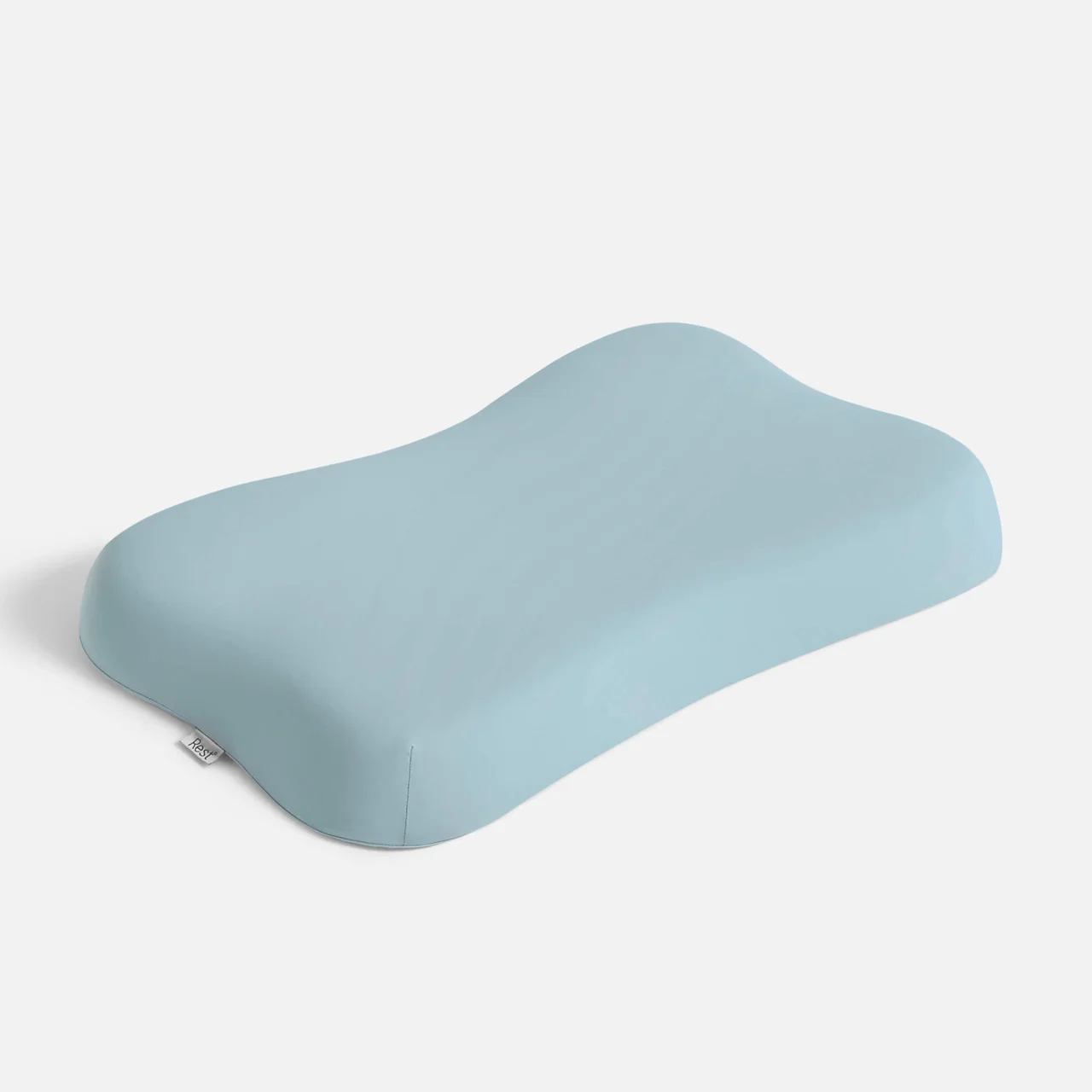
Another model you may encounter: Evercool® Cooling Pillow is sold as a cooling-focused option. I would not call it a winner or direct upgrade without matched construction and policy details. Compare its materials, care requirements, and seller terms separately before treating it as an alternative.
The Nut's Final Verdict
The Nut's verdict: Iso-Cool earns a conditional recommendation for its sensible layer design. The Outlast cover addresses surface temperature, the removable shell makes routine cleaning practical, and the foam supplies a stable shape. Its weakness is not a hidden defect, it is the thermal limit of putting passive cooling fabric over a solid core. Buy for comfort with some temperature buffering, not for an actively chilled sleep surface.
My decision rule is simple: proceed if the seller clearly identifies the shape, core, cover, care instructions, and return terms. Walk away from a vague listing. The meaningful differences live in those construction details, not in the Iso-Cool name by itself.
ONE OPTION WORTH COMPARING
Shopping as well as reading? Here is one current option worth comparing: the Evercool® Cooling Pillow. Check today’s price, sizing and return terms on the official product page before you order.
Evercool® Cooling Pillow
- Optional Context for Hotter Sleepers Another model you may encounter: Evercool® Cooling Pillow is sold as a cooling-focused option
FAQ
Does the Iso-Cool pillow really keep you cool?
The iso cool pillow can feel cooler when you first settle onto it because the manufacturer says its Outlast cover absorbs heat and releases it as conditions change. The effect is passive and concentrated near the surface. As the foam warms, the sensation may become more neutral.
Can you wash an Iso-Cool pillow?
The manufacturer describes the removable cover as machine washable. The foam core should be spot-cleaned rather than soaked or machine washed. Follow the care label on your particular version and let every component dry fully before reassembly.
What sizes and shapes does the Iso-Cool pillow come in?
The range has included traditional and contour shapes, but specifications vary between models and sellers. Check the dimensions and profile shown on the exact product page, then compare them with your pillowcase and preferred sleeping position.
Is the Iso-Cool pillow suitable for side sleepers?
The contour version is the more targeted option for many side sleepers because its raised profile is intended to fill the space between the head and mattress. Comfort still depends on shoulder build, mattress firmness, and the model's actual height. Back sleepers may also like the cradle, while stomach sleepers should be cautious with a tall contour.
Where can you buy an Iso-Cool pillow?
Iso-Cool pillows have appeared through Amazon, Walmart, and Wayfair. Availability and model details can differ by seller, so confirm the foam core, shape, care label, return policy, and warranty terms before ordering.