
 by
by Topic Overview / What Matters
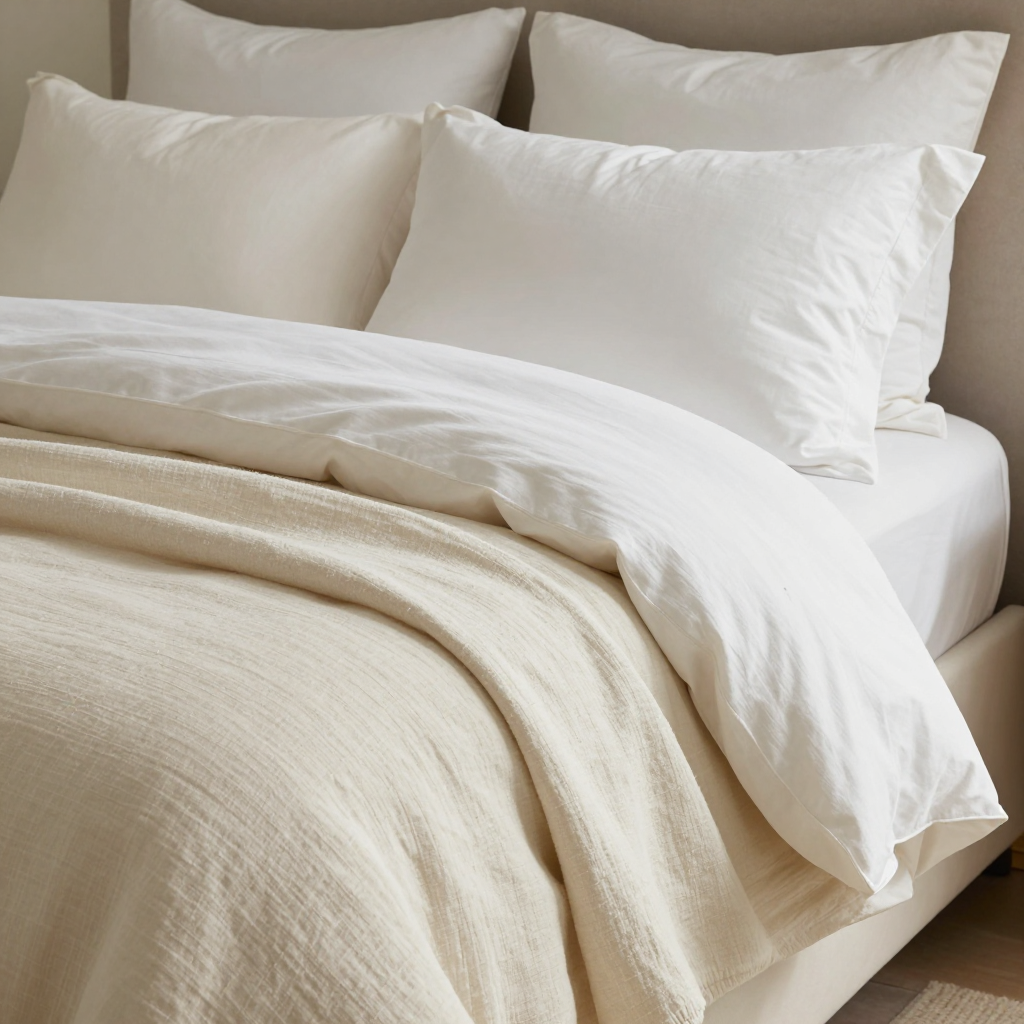
Cotton blankets occupy the year-round bedding sweet spot: breathable enough for summer, warm enough as a winter layer under a comforter, and durable enough to last a decade with normal care. Unlike sherpa or fleece (synthetic, hot, short-lived) or wool (heavy, expensive, dry-clean), cotton offers a balanced practical choice that handles weekly washing without complaint. The category includes thermal weave, waffle weave, herringbone, knit, and quilted constructions, each delivering different feel and warmth profiles. Long-staple cotton (Pima, Supima, Egyptian certified) lasts dramatically longer than standard cotton. Organic cotton skips chemical processing for health and environmental benefits. This review breaks down the constructions, the weight ranges for different climates, the care requirements, and explains where Saatva organic cotton blankets fit in the premium-but-reasonable tier.
Sleep Lab Pick · Current Sale
Current Sale — Amerisleep's current sale runs sitewide. Their bedding line uses moisture-wicking lyocell engineered for hot sleepers.
Material / Type Comparison
| Type | Best For | Avoid If | Price Range |
|---|---|---|---|
| Cotton Knit | Year-round bed layer | Want plush feel | $80-$220 |
| Thermal Weave | Summer breathability | Cold climates alone | $60-$180 |
| Waffle Weave | Texture, mild warmth | Smooth modern decor | $80-$240 |
| Herringbone Cotton | Year-round, tailored | Bohemian, casual | $120-$280 |
| Quilted Cotton | Bed accent layer | Minimalist style | $150-$400 |
| Cotton/Wool Blend | Maximum warmth, washable | Pure cotton preferred | $180-$400 |
Cotton knit is the most versatile, working as bed layer or couch throw across all seasons. Thermal weave (loose grid pattern) maximizes breathability for summer use. Waffle weave adds tactile texture and traps a bit more air for mild warmth. Herringbone delivers tailored looks with year-round comfort. Quilted cotton brings styling weight to the bed as an accent layer or top cover. Cotton-wool blends extend warmth without losing washability. All cotton categories outlast polyester or rayon variants by 3 to 5 times.
Performance & Care
Cotton blankets handle weekly washing without trouble. Wash cold to warm with mild detergent, skip fabric softener (it coats fibers and reduces breathability). Tumble dry low or line dry. Cotton blankets soften with each wash for the first 10 to 15 cycles, then plateau at a comfortable broken-in feel. Quality long-staple cotton lasts 8 to 15 years. Standard cotton lasts 5 to 8 years. The thermal and waffle weaves wash slightly differently, the open weave can snag on rough surfaces, separate from denim and rough fabrics during washing. Quilted cotton blankets need gentle cycle to preserve stitching, stress points at corners and seams need monitoring. Cotton blankets resist pilling well due to natural fiber length. Iron only if styling demands it, low to medium heat works fine.
View Saatva organic bedding collection
The Saatva Bedding Choice
Saatva All-Year Cotton Blanket and Organic Cotton Quilted Throw lead the natural fiber bed layer category. The All-Year Cotton Blanket is a 100 percent GOTS-certified organic long-staple cotton blanket weighing in at a versatile mid-weight, working under comforters in winter and alone in summer. Pricing runs around $145 to $245 across sizes. The Quilted Throw adds decorative styling and slightly more warmth, around $245 to $345. Both ship free with 45-day returns. Compared to Boll & Branch ($180 to $280, similar quality, no GOTS certification on all lines), Pottery Barn Belgian Linen Cotton ($150 to $300, mixed sourcing), and Brooklinen ($129 to $189, Oeko-Tex but not GOTS), Saatva pulls ahead on full organic certification while remaining competitively priced. For year-round cotton bed layering, this is the practical premium choice.
Buying Decision Framework
Cotton blankets make sense for year-round bed layering, hot sleepers needing summer-only blankets, allergy sufferers avoiding polyester or wool, parents needing washable bedding, and buyers prioritizing natural fibers without the wool dry-cleaning hassle. Match construction to use. Thermal weave for summer-heavy climates. Waffle weave for mild four-season climates. Knit or herringbone for cold winter rooms (paired with comforter). Quilted for styled bedrooms. Budget at minimum $100 for long-staple cotton durability. Below that, expect short-staple cotton that pills and shrinks within two years. Match the size to your bed plus 6 to 12 inches of overhang on each side for proper layering.
Bottom Line
Cotton blankets remain the most practical year-round bedding category. Breathable, washable, durable, and broadly stylish across decor types. Long-staple organic cotton justifies the premium for 8 to 15 year lifespans. Saatva All-Year Cotton Blanket and Organic Cotton Quilted Throw deliver certified organic materials at fair prices for buyers wanting natural fiber bed layering done right.
Get Saatva bedding - free shipping
FAQ
Are cotton blankets warm enough for winter?
A single cotton blanket alone may not provide enough warmth in cold rooms (under 65F). However, layered under a comforter, cotton blankets add meaningful insulation while staying breathable. For dedicated winter warmth, choose heavier cotton or cotton-wool blends, or layer the cotton blanket between sheet and comforter.
Cotton or wool blanket, which is better?
Different uses. Cotton wins for year-round versatility, machine washing, summer use, and hot sleepers. Wool wins for maximum warmth, year-round temperature regulation, and decade-plus durability. Cotton costs less and demands less care. Wool costs more and lasts longer. Many homes own both for layering.
Do cotton blankets shrink?
Quality long-staple cotton blankets shrink minimally (2 to 4 percent) on first wash if pre-shrunk during manufacturing. Standard short-staple cotton can shrink 5 to 8 percent. Wash on cold and tumble dry low to minimize shrinking. Buy slightly oversized to account for any shrinking, especially for unwashed organic cotton.
What weight cotton blanket for summer?
For summer-only use or hot sleepers year-round, choose lightweight thermal or waffle weave cotton, around 3 to 4 pounds queen size. Heavier cotton blankets (5 to 7 pounds) work better as winter layers under comforters. The thermal grid weave breathes maximally and keeps you comfortable in rooms above 75F.
Is organic cotton blanket worth the extra cost?
For sensitive skin, allergy sufferers, and environmentally conscious buyers, yes. GOTS-certified organic cotton skips formaldehyde, bleach, and harsh dyes used in conventional cotton processing. The fibers also tend to be longer staple, lasting 20 to 30 percent longer. The 30 to 50 percent price premium pays back over the blanket's lifespan.