 by
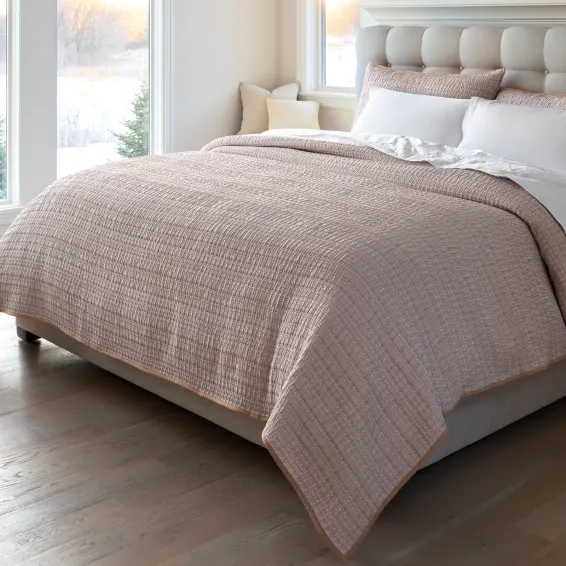
by Quick answer: A cotton matelassé coverlet is my pick for an airy, textured bed layer. The Channel-Stitched Coverlet Set is worth considering if its official materials and finish fit your room.
- Matelassé is a raised woven texture, not a conventional filled quilt.
- Cotton versions are generally positioned as breathable, lighter bedding layers.
- Sets can include matching shams, so check exactly what the package contains.
Updated July 2026 · Reviewed for accuracy
A cotton matelassé coverlet makes the most sense when you want texture without the bulk of a traditional quilt. I like the category for a neatly made bed that still feels practical: it can stand alone in warmer weather or work as a light layer when the room cools down.
The catch is that “matelassé” describes a look and weave effect, not one universal construction standard. Read the fiber label, package contents, care label, and finished measurements before buying. Those details decide whether you get an easy everyday layer or a handsome coverlet that does not fit your bed the way you expected.
What a cotton matelassé coverlet actually is
Matelassé starts with the surface. The word is used for a woven, quilted-looking fabric with a raised pattern, often made through a jacquard-style weave. According to general bedding guides covering matelassé construction, the dimension comes from the weave itself rather than the thick batting associated with many traditional quilts.
That distinction matters on the bed. A standard quilt usually brings a layered build, with an outer fabric, filling, and backing. A cotton matelassé coverlet is commonly chosen for its patterned texture and lighter profile. It can make a plain sheet set look finished without adding the visual puffiness some sleepers dislike.
Retail listings for cotton matelassé coverlets commonly describe them as lightweight and breathable. That makes sense as a use case, but I would still treat “lightweight” as a relative term. A tightly woven cotton coverlet can feel more substantial than a loose cotton blanket, while remaining less bulky than a filled quilt.
The Nut’s take: Buy matelassé for its weave and its clean drape. Do not buy it expecting the insulation of a comforter or the plush loft of a quilt.
The word “coverlet” also deserves a quick check. A coverlet is generally a decorative and functional top layer that may sit higher on the mattress than a bedspread and may not reach all the way to the floor. If you are sorting out the vocabulary before choosing a size, my guide to what a coverlet is explains the role in more detail.
The weave is the reason this bedding feels different
The raised pattern is the whole point of matelassé. Diamond, channel, basketweave, floral, and geometric motifs can all create a dimensional look, yet they do not behave identically. A deeper pattern may show stronger shadows and feel more tactile, while a restrained channel pattern can look cleaner and less traditional.
Cotton is a sensible fiber for this kind of texture because it is widely used in washable bedding and is valued for breathability. The research on cotton matelassé coverlets describes the material as suitable for year-round layering, with the actual warmth depending on the density of the weave, the surrounding bedding, and the room rather than the word “matelassé” alone.
I would inspect product photography with a practical eye. Look for close shots that show whether the pattern is woven through the fabric or merely printed onto a flat face. A printed pattern can still be attractive, but it is not the same thing as the tactile, raised effect most people mean when they search for cotton matelassé.
Also check both sides of the coverlet. Some designs are intended to be reversible, while others have one clearly finished display side. The manufacturer’s product page should make that plain. If it does not, customer photos from verified owner reviews can reveal how the fabric hangs, whether the pattern is visible at distance, and how the surface looks after routine use.
- Raised weave: the defining feature to confirm.
- Cotton content: check whether the label says all cotton or a blend.
- Pattern scale: larger motifs read more decorative, smaller ones more tailored.
- Reverse side: useful to know before you expect a reversible look.
Texture has a tradeoff. More relief gives the bed more character, but it can also catch lint, pet hair, or loose threads more readily than a smooth sateen-style layer. That is not a flaw. It is simply part of choosing a tactile weave over a flat one.
Comparing options? The Channel-Stitched Coverlet Set is the pick we keep coming back to — see the final verdict ↓
Fit matters more than the label on the package
A coverlet’s drop is often shorter than shoppers expect. The research notes that cotton matelassé coverlets are sold in common bed sizes, but exact dimensions vary across retailers and collections. “Full/Queen” in particular is not a promise that one coverlet will drape the same way over every mattress.
Measure your mattress width, length, and depth, then decide the look you want before comparing listed measurements. A shallow drop gives a tailored hotel-style appearance. A wider drop hides more of the mattress sides and may feel more relaxed. Neither is automatically better, but a mismatch is visible every time you make the bed.
Mattress depth changes the result. A coverlet that looks generous on a low-profile mattress may sit noticeably higher on a bed with a thick mattress and additional topper. The product description can tell you the finished size; your own mattress setup tells you whether that size will work.
Shams are another easy place to make a wrong assumption. Retail listings may offer a coverlet alone or a set with matching shams, and the sham count can vary by size. Confirm what comes in the package before treating a set photo as a complete promise. If you want a very spare bed, a standalone coverlet may be all you need. If you want the bed to look coordinated without extra hunting, matching shams have real value.
| What to check | Why I check it | Where to verify |
|---|---|---|
| Finished coverlet measurements | Bed labels do not guarantee the same side drop. | Manufacturer or retailer specification page |
| Mattress depth | A deeper mattress uses up more fabric at the sides. | Your own measurement |
| Included shams | Set contents vary by listing and bed size. | Package-contents description |
| Care instructions | The label tells you how the weave should be washed and dried. | Product care label or official page |
For a deeper explanation of how this layer differs from a blanket, quilt, or bedspread, see what a coverlet is for on a bed. It is a small distinction, but it prevents a lot of disappointing purchases.
Who should choose cotton matelassé, and who should skip it
A cotton matelassé coverlet is a good match for sleepers and decorators who run warm, dislike bulky bedding, or want a polished top layer that does not overwhelm the bed. The breathable, woven profile described in retailer listings is especially appealing for a guest room, a warm-climate setup, or anyone who changes layers with the season.
I also like it for people who prefer texture over shine. A matelassé surface adds visual interest without relying on a loud print, which makes it easier to pair with patterned sheets, colored pillows, or a separate blanket at the foot of the bed. The result can look considered without feeling over-styled.
Skip this category if your main goal is serious insulation. Cotton matelassé can be a useful layer, but it is not designed to replace a thick comforter for someone who sleeps cold. In that case, use it as the visible top layer and add warmth underneath or above it as your climate requires.
It may also be the wrong choice if you want a perfectly smooth sleeping surface. Raised motifs are attractive, but they are deliberately textured. If you are sensitive to texture against your skin, place the coverlet over your top sheet and assess whether you use it primarily for looks, light warmth, or both.
Practical buying checklist: Confirm the fiber content, check the finished measurements against your mattress, verify sham inclusions, read the care label, and inspect verified owner photos for the real-world drape and texture.
Care is where a good woven pattern earns its keep
Cotton matelassé is generally described as machine washable in the research, but the exact washing and drying directions belong to the individual item’s care label. Follow that label, particularly if the fabric has a colorfast finish, a specialized dye treatment, or a pronounced raised pattern.
High heat and harsh detergents are common things to avoid when the goal is preserving color and woven texture, according to general matelassé care guidance. I would not turn that into a universal rule for every coverlet, though. The official instructions for the specific piece should always control, because construction and finishing methods differ.
The texture may relax and soften after washing, according to the research. That can be appealing if you prefer a lived-in look. If you bought the coverlet for crisp definition, handle drying with more care and do not assume the display sample’s initial texture will remain unchanged forever.
Wash the coverlet before an accidental spill becomes a permanent problem, but do not overwork it merely because the raised weave makes you notice every bit of lint. A gentle shake, light spot care when the label permits it, and regular laundering according to the manufacturer can keep it looking more intentional than constant aggressive cleaning.
For shoppers comparing cotton to regenerated fibers in the rest of their bedding, my breakdown of viscose versus cotton sheets and bedding is useful context. Fiber choice affects feel and care, while matelassé construction affects the visible texture.
My buying advice before you choose a coverlet
The best cotton matelassé coverlet is not necessarily the most ornate one. I would start with the pattern, then work backward through material content and care. A simple channel or diamond weave usually gives you more flexibility with sheets and pillows. A dramatic floral or medallion pattern makes a stronger decorative statement and asks more of the rest of the room.
Next, decide whether you need an all-season light layer or mainly a decorative finish. If you expect to sleep under it often, prioritize a cotton composition, a texture you are comfortable touching, and care instructions that suit your routine. If it will mostly sit at the foot or top of the bed, the visual pattern and drape may matter more.
Then assess the package honestly. A set can be convenient, but only if you want the included shams and their size works with your pillows. A coverlet-only purchase can be smarter if you already own pillowcases you like or want to mix fabrics.
The Channel-Stitched Coverlet Set belongs on the short list only after you review its official product details for fiber content, available options, included pieces, and care requirements. I would check the current price on the official site rather than assume that a premium-looking coverlet is priced like every other cotton matelassé option.
My verdict: Cotton matelassé is a strong choice for breathable texture and flexible layering. Get the fit right, verify the care label, and let the weave, not a generic set label, make the final decision.
FAQ
Is a cotton matelassé coverlet warm enough to use by itself?
It can be enough for sleepers who prefer a light top layer, especially in warm rooms or seasons. Retail and bedding-guide descriptions position cotton matelassé as breathable and lighter than traditional quilts, so cold sleepers may want to pair it with another layer.
Is matelassé the same as a quilt?
No. Matelassé refers to a raised woven effect that creates a quilted appearance, according to general matelassé guides. A traditional quilt usually relies on separate layers and filling for loft and warmth.
Can I machine wash a cotton matelassé coverlet?
Many cotton matelassé coverlets are described as machine washable in the research. Still, use the item’s official care label for wash temperature, detergent guidance, and drying instructions because finishes and weave structures differ.
Will a coverlet fit over a deep mattress?
It may, but the side drop depends on the coverlet’s finished measurements and your mattress depth. Measure your bed before ordering and compare that measurement with the manufacturer’s listed dimensions rather than relying on the size name alone.
Do cotton matelassé sets always include shams?
No. The research notes that package contents vary, with some options sold as a coverlet alone and others including matching shams. Verify the listing’s included pieces before purchase, especially if a coordinated pillow look matters to you.
FINAL VERDICT
Bottom line for a cotton matelassé coverlet search: if you want that airy, textured top layer, the Channel-Stitched Coverlet Set is the safer buy — you get the textured, breathable top layer this style is about, sized as a full set.
OUR CATEGORY-MATCHED PICK
Channel-Stitched Coverlet Set
- See the product page for full specs and current pricing